






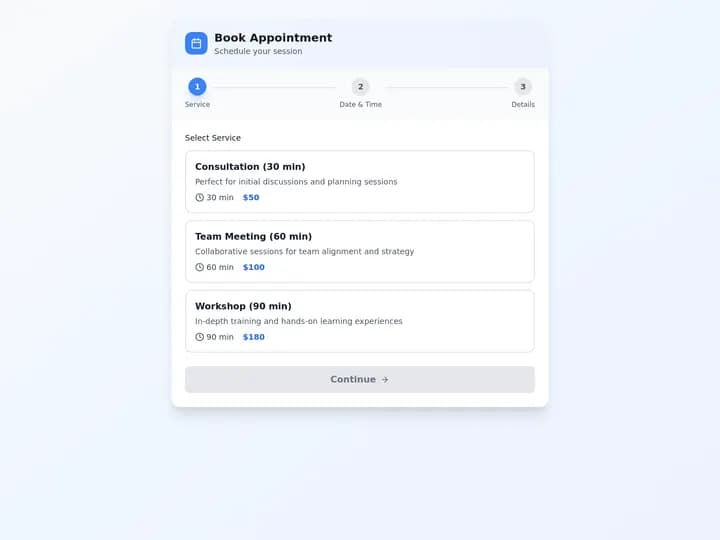
Taskade Genesis gives field-service crews a dispatch board, crew schedule, and customer records from one prompt, without Homebase retail time-clock assumptions or per-seat pricing that treats truck rolls like counter shifts. This guide compares honest Homebase alternatives for field crews in 2026.
TL;DR: Homebase wins hourly retail and restaurants with payroll adjacency. Taskade Genesis wins field crews who dispatch jobs and need client portals. Start from the Homebase alternative crew scheduler, pair a dispatch board when work orders outnumber shifts, and keep payroll, tax filing, and fleet GPS on the tools that already do them. Generate a Homebase alternative crew scheduler →
Pricing below uses publicly listed or widely reported ranges as of July 2026. Vendors change tiers and packaging constantly, so confirm live quotes before you buy.
Related: Housecall Pro alternative for small crews, field service dispatch software you own, HVAC dispatch board you own, ServiceTitan alternative for small crews.
🧰 What Field Crews Actually Need From a Schedule
A field crew schedule answers five questions every morning. Hourly shift software answers two of them well and forces workarounds for the rest.
- Who is on which truck today, and who is covering the callout?
- Which jobs are committed to which arrival windows?
- What does the tech need to know before knocking — gate code, dog, unit model, last visit?
- Which customers are waiting on a status update, an estimate, or an invoice?
- What slipped yesterday and has to be re-promised today?
Questions 1 and 2 are shift-shaped. Questions 3, 4, and 5 are job-shaped and customer-shaped. That is the whole split. A barista shift has no address, no equipment history, and no client who will call at 2pm asking where the truck is.
| Daily need | Hourly scheduling default | Living dispatch board in Taskade Genesis |
|---|---|---|
| Who works when | Native shift grid | Crew column on the job board |
| Arrival windows | Shift blocks, not promises | Window field per job with customer visible |
| Customer context | Not modeled | Customer record linked to every job |
| Access notes and equipment | Free-text note if any | Named fields you rename per trade |
| Client status updates | Not included | Home services portal |
| Punch clock and payroll | Core strength | Not included. Keep your payroll provider |
| Who configures the fields | Vendor template | You, by chatting with Taskade EVE |
If your week is questions 1 and 2 only, an hourly scheduler is the faster default and this article should talk you out of switching. If questions 3 through 5 are where your day breaks, you are shopping for a dispatch board, not a shift grid.
📜 Why This Problem Exists in the First Place
Homebase was designed around a shift. That was the right unit for the businesses it grew up serving: cafes, retail floors, restaurants, front counters. The schedule is a grid of hours, the compliance surface is breaks and overtime, and the payoff is a clean handoff to payroll.
Three things pulled field crews into that grid anyway.
- Field crews are small and price-sensitive. A four-truck HVAC shop does not want a five-figure field-service suite. Hourly scheduling software is cheap, familiar, and available today, so crews adopt it for the schedule and improvise the rest.
- The improvisation always lands in group chat. The shift grid holds who works. The group text holds which job, which address, which gate code, and what the customer was promised. Two systems, one of which nobody can search.
- The customer is nowhere in the schedule. Retail scheduling has no customer object because the customer walks in. Field work is the opposite: the customer is the reason the truck moves, and the customer's history is the difference between a 20-minute call and a return visit.
That drift is the real cost. Not the seat price — the fact that dispatch truth lives in a thread and evaporates when the person who sent it takes a day off. In 2026 you can generate a board that holds jobs, customers, and crew assignment together, then reshape the fields yourself instead of filing a template request.
Every box after "assign" is job-shaped. That is the loop a dispatch board owns and a shift grid does not.
💵 2026 Pricing Reality: Homebase, When I Work, Deputy, Field-Service Suites
Treat this as a budget sketch, not a quote. Figures are publicly listed or widely reported ranges as of July 2026 — confirm live before you commit, because packaging in this category moves every few quarters.
| Product | Free tier | Practical paid start | Meter | Notes for field crews |
|---|---|---|---|---|
| Homebase | Yes, single-location basics | Per-location monthly tiers | Location + add-ons | Strong time clock and payroll adjacency; scheduling is shift-shaped |
| When I Work | Limited trial/free use | Per-user monthly | Per user | Clean shift scheduling; job and customer records are not the unit |
| Deputy | Trial | Per-user monthly | Per user | Good compliance and award interpretation; still shift-first |
| Field-service suites (Housecall Pro, Jobber, ServiceTitan class) | No | Per-technician monthly, often with a floor | Per tech | Job-shaped by design; price climbs fast per added tech |
| Taskade Genesis | Yes, $0 | Pro $10/mo billed annually ($20 monthly) | Workspace plan | Own the dispatch board; pair payroll, GPS, payments |
The comparison that actually matters is not "which vendor is cheapest per seat." It is which meter grows the way your business grows. Per-tech pricing punishes the exact thing a healthy field business does: add techs.
How the meters diverge as you add techs
| Techs touching the schedule | Per-user hourly tool (~$5/user) | Per-tech field suite (~$50/tech) | Taskade Genesis |
|---|---|---|---|
| 3 | low, but no job or customer records | ~$150/mo | Pro $10/mo billed annually ($20 monthly) |
| 6 | still low, drift is now in group chat | ~$300/mo | Same workspace plan |
| 12 | cheap seats, no dispatch truth | ~$600/mo | Business $25/mo billed annually ($50 monthly) if you need more workspace depth |
| 20 | schedule works, jobs do not | ~$1,000/mo and climbing | Same workspace plan |
Those competitor columns are illustrative shapes, not quotes — real numbers depend on tier, term, and add-ons. The point is the slope, not the intercept.
How Taskade Genesis changes the equation: Taskade sells workspace plans, not per-technician dispatch licenses. Free is $0 and includes a one-time grant of 6,000 AI credits — 1,000 at signup plus 5,000 with your first build, sized to fund one complete app end to end. Pro is $10/mo billed annually ($20 monthly) and Business is $25/mo billed annually ($50 monthly). Published app end users and AI credit usage follow Taskade plan rules, which is a different meter than "every tech is a license." Check the pricing page for current details before you plan headcount.
🧭 Who Should Switch to an Owned Dispatch Board
Switch (or dual-run) when several of these are true:
- You dispatch jobs with addresses, not shifts at a fixed location.
- Your real system of record today is group chat plus a whiteboard, and the schedule tool only holds hours.
- Customers call asking "where is the truck?" and someone has to go find out.
- You want fields named for your trade — refrigerant type, roof pitch, panel amperage, gate code, dog on site — without waiting on a vendor template.
- You already have payroll somewhere that works, and you are not trying to replace it.
- Per-tech quotes are climbing faster than the revenue the extra tech brings in.
Good fits: HVAC and plumbing shops with 2 to 15 techs, electrical contractors, landscaping and pest crews with route work, cleaning companies, mobile repair, and property maintenance teams that mix internal work orders with customer calls.
Start points, all real generators:
- Homebase alternative crew scheduler
- Housecall Pro alternative dispatch board
- HVAC daily dispatch board
- Crew work orders board
- Technician daily run sheet
- Field service scheduling board
- Daily crew timesheet when you need hours beside jobs but payroll stays put
Related ownership stories: field service dispatch software you own, Jobber alternative dispatch board, Excel job log to dispatch app.
🛟 Who Should Stay on Homebase (Honestly)
Homebase is genuinely good at things Taskade Genesis does not attempt. Stay when any of these is the requirement you refuse to compromise:
- Time clocks you can defend. Homebase's clock-in, break tracking, and timesheet-to-payroll handoff is a mature, purpose-built path. If your labor compliance exposure runs through punches, that is a real product doing real work.
- Payroll adjacency in one vendor. Getting hours into payroll without an export dance is a legitimate reason to keep a shift tool. Taskade Genesis does not do payroll, tax filing, or certified time clocks — full stop.
- Hourly team messaging and shift trades. Open-shift claiming, swap requests, and availability collection are packaged workflows in Homebase. Rebuilding that on a dispatch board is possible but is not free labor.
- Mixed retail plus field operations. If half your headcount stands behind a counter, the counter half is exactly Homebase's home turf.
When I Work and Deputy deserve the same respect for the same reason: they are shift-scheduling products with real depth in availability, compliance, and labor cost forecasting. Deputy in particular is often chosen for complex award and break-rule interpretation. None of those three is "wrong." They are matched to a unit of work that is not a truck roll.
| Constraint you refuse to drop | Lean this way |
|---|---|
| Certified time clock plus payroll handoff | Homebase |
| Complex break and overtime rule interpretation | Deputy |
| Shift trades, open-shift claiming, availability collection | Homebase or When I Work |
| Live truck maps and turn-by-turn routing | A dedicated fleet or telematics tool |
| Consumer booking plus review marketing for residential trades | Housecall-style field suites |
| Job plus customer plus crew on one board you own | Taskade Genesis |
Honest buyers pick the constraint they will not compromise, then buy the product shaped around it.
⚡ Taskade Genesis: Best When You Dispatch Jobs, Not Counter Shifts
Taskade Genesis turns a plain-language description of your field operation into a deployed app. Projects hold customers and jobs, AI agents draft follow-ups and triage incoming work, and automations chase invoices and review requests.
Why field crews use it:
- Schedule crews against jobs with customer context on the same row
- Rename fields for HVAC, plumbing, electrical, or landscaping without a support ticket
- Publish a client login for job status without buying a second product — see Taskade Genesis app access controls
- Flat workspace pricing instead of seat fees that scale with every tech you add
- Multiple project views over the same records, so dispatch sees a Board and the owner sees a Calendar — Board view, Calendar view, Table view
Where Homebase still wins: hourly employee scheduling with time clocks and payroll-adjacent workflows for non-field businesses. Taskade Genesis does not replace certified payroll or tax filing, so keep those on Gusto, QuickBooks, or Homebase.
Skip Taskade Genesis if: you run a cafe with no trucks and need punch clocks today. Homebase is the faster default for that profile, and switching would cost you a working system for a board you do not need.
New to how a generated app actually gets built and published? Your first Taskade Genesis app and publishing a Taskade Genesis app walk the whole path.
🧮 The Data Model Behind a Crew Dispatch Board
Most dispatch pain is a modeling problem wearing a scheduling costume. If the customer, the job, and the crew assignment are three separate spreadsheets, no amount of scheduling UI will make Tuesday legible.
Read that as a checklist. Nine relationships across eight records, and a shift grid models exactly one of them: crew to assignment. Everything else — the site, the equipment on it, the service history, the money stages, the customer-visible status — is where the group text takes over.
| Entity | Why it earns its own record | Where it usually hides instead |
|---|---|---|
| Customer | One phone number, many jobs over years | A contact in someone's phone |
| Site | Address, gate code, parking, dog, access hours | A note in the job description |
| Job | Status, window, crew, trade, priority | A row in the shift grid or a text |
| Equipment | Model, serial, install date, warranty | The tech's memory |
| Service record | Last visit, what was replaced, what was deferred | A photo in a camera roll |
| Estimate | Sent date, amount, follow-up date | An email thread |
| Invoice | Sent, due, paid, chased | Accounting software only |
| Portal status | What the customer is allowed to see | A phone call to the office |
Model those eight and dispatch stops being a memory exercise. That is what Taskade Genesis generates, and the data model builder is the surface to use when you want to sketch the shape before you commit to fields.
🧬 Workspace DNA: Projects, Agents, Automations
Taskade Genesis apps are not static templates. They run on Workspace DNA — Memory, Intelligence, and Execution reinforcing each other.
| Pillar | Component | Role on a crew dispatch board |
|---|---|---|
| Memory | Projects | Customers, sites, jobs, equipment, crew assignments, visit notes |
| Intelligence | AI Agents | Triage inbound calls, draft job briefs, flag conflicts, write follow-ups |
| Execution | Automations | Morning crew summary, arrival-window texts, invoice chase, review request |
The loop: an inbound call writes Memory, an Agent proposes priority and crew, an Automation notifies the tech and the customer, completion writes Memory again. The board gets sharper the more the crew uses it, because every closed job leaves history on the site and the equipment.
What you generate first:
- Jobs as the system of record for committed work.
- Customers and sites linked, so history is not tribal knowledge.
- Crew assignment as a field on the job, not a separate grid.
- Agents only after the board holds real jobs. An agent on demo rows is theater — see custom agents and the built-in agent tools for what they can actually reach.
- Automations last, one at a time. Start with the morning summary. Automation triggers covers what can start a flow.
Browse live patterns in the Community Gallery before you generate yours, and read Workspace DNA if you want the concept in full.
🏗️ What Taskade Genesis Owns vs What You Pair
Honest boundaries matter more than feature checklists.
Taskade Genesis is a strong fit for:
- Dispatch boards, crew assignment, and arrival-window tracking
- Customer and site records with equipment history
- Client-visible job status pages via Taskade Genesis app access controls
- Estimate and invoice stage tracking beside the job
- Intake forms for inbound work requests
- AI agents grounded on your own Projects, not a bolted-on chatbot
Honest gaps — what Taskade Genesis does not do today:
- No fleet GPS or live truck maps. Keep your telematics provider. Job status goes on the board; breadcrumbs stay where they are.
- No offline-first rugged tech app. Crews in dead zones are better served by a purpose-built field client.
- No payroll, tax filing, or certified time clock. Keep Gusto, QuickBooks, or Homebase for the punch-to-payroll path.
- No payment processing of its own. Payments sit beside the board through integrations you choose.
- Not "Homebase with cheaper seats." It is a different product category: a living ops app instead of a packaged hourly scheduler.
| Capability | You own it in Taskade Genesis | You pair it |
|---|---|---|
| Job and crew board | Yes | — |
| Customer and equipment history | Yes | — |
| Client status portal | Yes | — |
| Estimate and invoice stages | Yes (stages) | Accounting tool for the ledger |
| Payments | — | Stripe or your processor |
| Payroll and punch clock | — | Gusto, QuickBooks, Homebase |
| Fleet GPS and routing | — | Your telematics vendor |
| SMS delivery | — | Your SMS provider via automations |
Taskade connects to over 100 integrations bidirectionally — triggers pull events in, actions push data out — plus a hosted MCP server on every paid plan for AI clients that need to read your workspace. If a salesperson or an AI summary tells you Taskade Genesis replaces payroll and fleet GPS, that is overselling. Walk away from that pitch no matter who makes it, including us.
📋 Migration Checklist: Homebase to an Owned Dispatch Board
Run a two-week parallel period. Do not cut over during a heat wave or a freeze.
Week 0: Decide the nouns and the boundaries
- Name the four nouns you cannot lose: customer, job, crew assignment, client-visible status
- Name the optional nouns: site, equipment, estimate, invoice stage, arrival window
- Write down what stays put: payroll, punch clock, GPS, accounting, payments
- Export employee and shift history from Homebase to CSV for your records
- Decide who owns the board day to day (usually the dispatcher, not the owner)
Week 1: Generate and load real work
- Generate the Homebase alternative crew scheduler
- Add five real open jobs, not demo rows — real addresses, real windows
- Import customers by CSV and link them to those jobs
- Add crew columns and the status labels your techs already say out loud ("On the way," "Waiting part," "Needs callback")
- Rename fields for your trade before anyone else logs in
- Invite the dispatcher and one senior tech first, then the rest
Week 2: Portal, automations, follow-ups
- Publish the home services portal for job status
- Turn on exactly one automation: the morning crew summary
- Add the post-job review request board once statuses are trusted
- Wire the estimate-to-invoice pipeline if money stages need to sit beside jobs
- Add a triage agent only after a week of real data
- Freeze the old schedule for new work; keep it read-only for history
Cutover rules
- New jobs enter the new board only. No exceptions, or you will run two truths forever.
- Emergencies may still page by phone. The record still lands on the board within the hour.
- Payroll stays on your provider through the entire migration. Move dispatch truth first, and only revisit payroll after the schedule has been stable for a full billing cycle.
- Group chat stays open for chatter, not for dispatch. The moment an address or a promise goes in a text, it also goes on the board.
| Day | Focus | Done looks like |
|---|---|---|
| 1 | Generate the scheduler | Columns match how your dispatcher talks |
| 2 | Crew columns and status labels | A tech can read a row without asking |
| 3 | Import open jobs and customers | Every open job has an owner and a window |
| 4 | Site and access notes | Two jobs have gate codes on the record, not in a text |
| 5 | One automation | Morning summary lands before the first truck rolls |
| 6-7 | Tech feedback | Rename one confusing field, delete one unused one |
| 8-10 | Client portal live | One customer checks status without calling |
| 11-14 | Parallel quiet | Old schedule has zero new jobs |
🆚 Side-by-Side: Homebase vs When I Work vs Deputy vs Taskade Genesis
| Question | Homebase | When I Work | Deputy | Taskade Genesis |
|---|---|---|---|---|
| Primary unit | Hourly shift | Hourly shift | Hourly shift | Job + customer |
| Product shape | Hourly ops suite | Shift scheduler | Shift + compliance | Living ops app platform |
| Time clock | Core strength | Yes | Yes | Not included |
| Payroll adjacency | Strong | Moderate | Moderate | Not included |
| Customer records | Not modeled | Not modeled | Not modeled | First-class |
| Client status portal | Limited | Limited | Limited | Home services portal |
| Field dispatch | Workarounds | Workarounds | Workarounds | Crew scheduler |
| Own the schema | Vendor template | Vendor template | Vendor template | Yes, reshape by chatting |
| Fleet GPS | Add-on territory | No | No | No. Pair telematics |
| Meter | Location tiers | Per user | Per user | Workspace plan |
Feature depth vs ownership (qualitative)
| Capability | Packaged hourly scheduler | Taskade Genesis dispatch board |
|---|---|---|
| Shift grid | Excellent | Good when modeled as crew-day rows |
| Punch clock and breaks | Excellent | Not a strength. Pair a tool |
| Job with address and window | Workaround | Excellent |
| Customer and equipment history | Absent | Excellent |
| Client-visible status | Limited | First-class |
| Custom fields per trade | Vendor-defined | Change the app yourself |
| AI on your own data | Vendor features | Agents grounded on your Projects |
| Multi-use workspace | Scheduling-shaped | Dispatch plus adjacent ops in one workspace |
Use the row that matches your constraint, not the vendor with the longest feature PDF.
🧪 A Day in the Life on an Owned Dispatch Board
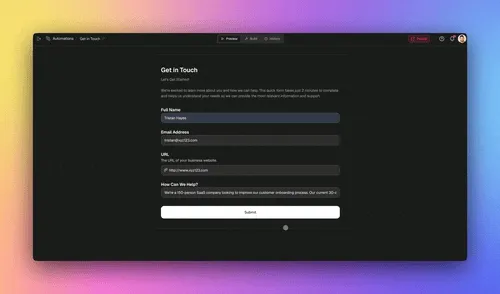
06:50 The dispatcher opens the Board view. Yesterday's two unfinished jobs are at the top with age and reason. Nothing to reconstruct from a group text.
07:10 The morning automation has already sent each crew its run sheet: three jobs, addresses, windows, and the access notes that used to live in someone's head.
08:35 A customer calls with a no-heat emergency. Intake becomes a job in seconds. A triage agent suggests "emergency / HVAC / north route," a human confirms and assigns, and the customer gets a window by text.
10:15 A tech closes a repair with three photos and a note that the capacitor is aging. That note lands on the equipment record, not just the job — so the next visit starts informed.
11:40 An estimate sent Monday hits its follow-up date. The automation nudges the office, not the customer, so a human decides whether to call.
14:20 A homeowner checks the client portal instead of calling. The office phone does not ring. That is the whole feature.
16:45 The owner opens one board. Open jobs, jobs waiting on parts, unpaid invoices past 30 days, and estimates with no answer are all visible without exporting anything.
17:30 Hours for the day go to payroll on the payroll provider, exactly as before. Nothing about the dispatch board touched that path.
That day needs no GPS breadcrumbs and no certified punch clock inside Taskade. It needs a board the crew trusts and a customer record that remembers.
If your work mixes customer calls with internal facility maintenance, keep the dispatch board and add a preventive maintenance schedule board rather than forcing one schema to do both badly. Adjacent reading: UpKeep alternative for small maintenance teams, recurring service agreements for field ops.
🧠 How to Choose in One Afternoon
- Count hourly punches vs job dispatches you run in a typical week. Whichever number is bigger picks your product category.
- List the four nouns you cannot lose: customer, job, crew assignment, client visibility.
- Name your non-negotiable: certified punch clock, live truck maps, or a board you can reshape.
- Generate one board with five real open jobs. Not demo data — real addresses.
- Show it to your dispatcher, not your owner. The dispatcher will tell you in ten minutes whether the columns match reality.
- Keep payroll where it is until dispatch has been stable for a full billing cycle.
An afternoon is enough because the expensive question is not "which vendor," it is "which unit of work." Answer that and the shortlist writes itself.
🔌 Integration Reality Check
Taskade Genesis connects ops through automations and webhooks across 100+ bidirectional integrations — triggers pull events in, actions push data out. QuickBooks, Stripe, and SMS providers typically sit beside the board rather than inside it. Homebase bundles more for hourly payroll adjacency.
Choose bundled when punch clocks and tax filing must stay in one vendor. Choose owned when job fields must match your trade and the customer record has to remember what happened last February.
| Job to be done | Where it lives | How it connects |
|---|---|---|
| Dispatch and crew assignment | Taskade Genesis board | Native |
| Arrival-window texts | SMS provider | Automation action |
| Invoice ledger and taxes | Accounting tool | Integration or export |
| Card payments | Payment processor | Integration, linked from the job |
| Payroll and punches | Payroll provider | Stays separate by design |
| Truck locations | Telematics vendor | Referenced in job notes |
| AI clients reading your workspace | Hosted MCP server | Available on every paid plan |
Note how MCP works here: the hosted server that lets an AI client read your workspace is available on every paid plan. Outbound connections to third-party MCP servers run through the MCP Client step inside an automation, on every plan including Free — so plan integrations around automations and webhooks either way, and do not expect an agent to dial a remote server on its own.
❓ FAQ: Homebase Alternatives for Field Crews
What is the best Homebase alternative for field crews?
Taskade Genesis is the strongest option when you dispatch jobs to trucks, need customer history beside the schedule, and want a client status portal without buying a second product. Homebase still wins hourly retail and restaurant teams with payroll-adjacent workflows. When I Work and Deputy compete on packaged hourly scheduling with real depth in availability and compliance. Generate the Homebase alternative crew scheduler and validate with five real jobs before you cancel anything.
Can Taskade Genesis replace Homebase payroll?
No. Taskade Genesis does not replace payroll, tax filing, or certified time clocks. It covers dispatch boards, job assignment, customer records, and follow-up automations. Keep payroll on Gusto, QuickBooks, or Homebase if that stack already works, and move dispatch truth to the new board first.
Does Taskade Genesis include GPS fleet tracking?
No native fleet GPS or offline truck apps today. Taskade Genesis wins office dispatch, work-order tracking, and client status pages. Crews that require live truck maps should keep a dedicated fleet tool or stay on a field-service package with a GPS module.
Can I use Taskade Genesis for office staff and field techs together?
Yes. Run office tasks in projects beside the dispatch board, or generate separate views per role so schedulers, techs, and managers each see the slice they need. Role-based access from Owner through Viewer lets you keep customer notes editable for dispatch and read-only for everyone else. Payroll still lives on your payroll provider.
Does Taskade Genesis replace Homebase messaging and shift trades?
Partly. Taskade Genesis includes workspace chat and automation notifications, so a morning job summary or an overdue invoice reminder reaches the crew from the same board that holds the schedule. Open-shift claiming and swap requests are packaged workflows in Homebase, so teams deeply invested in those should plan a parallel run and keep both channels live until dispatch truth has fully moved.
What about recurring maintenance routes and service agreements?
Pair dispatch with the recurring service agreement tracker when contracts need renewal dates beside open work orders, and the preventive maintenance schedule board when interval work drives the calendar. Deeper walkthrough: recurring service agreements for field ops.
Where do estimates and invoices fit?
Use the estimate-to-invoice pipeline when money stages must track beside crew assignment, and the AR aging board when unpaid invoices need a queue of their own. The board owns the stage; your accounting tool still owns the ledger. Related: estimate-to-invoice workflow for trades.
Do I need to write code to build a crew dispatch board?
No. Taskade Genesis turns a plain-language description of your field operation into a deployed app, so you describe crews, jobs, and customers instead of wiring tables by hand. Rename fields for HVAC, plumbing, electrical, or landscaping to match your trade. Start with your first Taskade Genesis app if you want the mechanics before the migration.
How much does a Taskade Genesis dispatch board cost?
Taskade starts free at $0 with a one-time grant of 6,000 AI credits — 1,000 at signup plus 5,000 with your first build. Pro is $10 per month billed annually ($20 monthly) and Business is $25 per month billed annually ($50 monthly). Pricing is a workspace plan instead of a seat fee that scales with every tech you add. See the pricing page for current details.
How do I keep control of my customer and job data?
Customers, sites, jobs, crew assignments, and client-visible statuses live in projects inside your own Taskade workspace, and you decide which tools sit beside them. Open jobs arrive by CSV during migration, and QuickBooks, Stripe, or SMS providers connect through automations and webhooks rather than owning your records. That is the practical difference between bundled hourly software and a dispatch board you own.
📚 Related Reading
- Field service dispatch software you own
- Housecall Pro alternative for small crews
- HVAC dispatch board you own
- Jobber alternative dispatch board
- ServiceTitan alternative for small crews
- Preventive maintenance software for small crews
- Excel job log to dispatch app
- Missed-call text-back and speed to lead
- Best AI ops dashboard builders
- Taskade Community Gallery
🚀 Own the Board, Pair the Rest
Homebase earned its place by making hourly scheduling and time clocks approachable for small businesses. Field crews still deserve a second question in 2026: are we buying a shift grid, or are we renting one while the actual dispatch lives in a group text?
If you need certified punch clocks, payroll adjacency, and shift trades, stay on Homebase, When I Work, or Deputy with clear eyes. If you need jobs, customers, crew assignment, and a client status page on a board you can reshape yourself, generate the dispatch board and keep payroll, GPS, and payments in their lanes. Memory, Intelligence, Execution — ▲ ■ ● — is what turns a schedule into a system that remembers.
Ready to dispatch jobs instead of counter shifts? Generate a Homebase alternative crew scheduler, build a dispatch board, or start free in Taskade Genesis.