






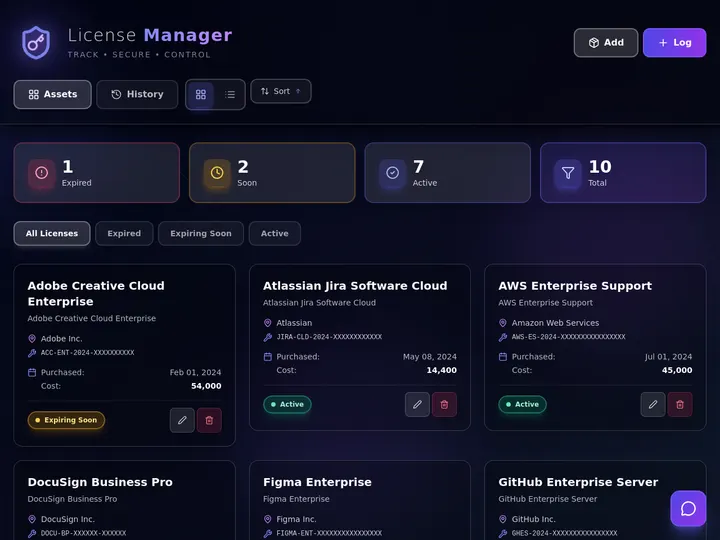
Taskade Genesis gives small field-service crews a preventive maintenance schedule board, customer equipment history, and renewal reminders linked to daily dispatch, without enterprise membership modules or spreadsheets nobody opens until a contract expires. This guide covers honest PM software choices in 2026.
TL;DR: Enterprise field-service suites win complex membership billing and call-center upsells. Spreadsheets win until the first renewal slips. Taskade Genesis wins small crews who want PM schedules sitting beside dispatch in one system they own and reshape. New accounts get a one-time 6,000 credit grant, which is enough to generate the board and look at real fields before paying. Generate a preventive maintenance schedule board →
Related: HVAC dispatch board you own, recurring service agreements for field ops, ServiceTitan alternative for small crews.
Competitor figures below are publicly listed or widely reported ranges as of July 2026. Vendors change tiers, and ServiceTitan does not publish a list price at all. Confirm live quotes before you sign anything.
🧰 What Small Crews Actually Need From PM Software
A full field-service management suite promises memberships, pricebooks, dispatch, marketing attribution, payroll, inventory, and call recording. A five-truck shop lives in a much narrower week:
- A contract exists, and somebody has to remember it exists.
- A visit comes due, and the office needs to see it before the customer calls.
- The visit gets batched with nearby jobs so the truck is not crossing town twice.
- The tech closes with equipment notes so next year's visit is not archaeology.
- The contract nears its end, and somebody asks for the renewal before it lapses.
That spine is a schedule board with equipment memory. It is not a membership billing engine. Confusing the two is how small shops end up paying enterprise per-technician rates for a calendar they could own.
| Weekly need | Packaged FSM default | PM board in Taskade Genesis |
|---|---|---|
| Contract list | Membership module (often upper tier) | Project rows with start, end, auto-renew |
| Next visit due | PM scheduler inside the suite | Date field driving a filtered view |
| Equipment memory | Asset registry | Linked records: model, serial, filter size |
| Batching by zone | Route optimizer add-on | Group by area on the board view |
| Renewal chase | Marketing/automation tier | Renewal sequence automation |
| Customer visibility | Branded portal add-on | Home services customer portal |
| Who changes a field | Vendor template or support ticket | You, by chatting with Taskade EVE |
If your week is those five steps, you are shopping for ownership of a board. If your week is tiered membership billing with attribution on every renewal, stay in a suite built for it.
📜 Why PM Contracts Die in Spreadsheets
Preventive maintenance is the most predictable revenue a service business has, and it is the revenue most often lost to a file nobody opens. The failure is structural, not lazy:
- Renewal dates live in a tab dispatch never reads. The office schedules from today's job list. A renewal three months out is invisible in that view.
- Equipment notes sit in last year's email. The tech who did the visit remembers the filter size. That memory leaves with the truck.
- Seasonal tune-ups batch into chaos. Nothing flags March furnace contracts in March, so 60 visits pile into one week in September.
- Customers cancel because they forgot they had a contract. No touchpoint between visits means the renewal conversation starts cold.
- Two systems disagree. The billing sheet says quarterly, the calendar says annual, and nobody knows which one is true.
Three things changed for small crews recently, and they explain why the spreadsheet stopped being good enough:
- PM became the margin, not the extra. As new-install competition tightened, recurring agreements went from nice-to-have to the thing that funds slow months. Losing a renewal now costs real money, so tracking it casually stopped being acceptable.
- Enterprise suites moved PM up-tier. Membership and recurring-service modules commonly sit above the entry plan in packaged field-service tools. A shop that wants PM discipline gets quoted the tier that also includes a call-center feature set it will never open.
- App generation collapsed the cost of a custom board. In 2026 you describe a schedule board in a sentence and get a working app with your own fields. That moves the buying question from "which suite?" to "do we rent a schema or own one?"
Here is the loop a working PM board has to close. Every arrow is a place a spreadsheet drops the thread.
The board owns that loop. Payroll, fleet tracking, and your accounting ledger stay where they are.
💵 2026 Pricing Reality for PM Tracking
Treat this as a budget sketch, not a quote. The point is not which vendor is cheapest, it is what makes your bill grow.
| Product | Entry point | Practical paid start | What pushes cost up | Note for small crews |
|---|---|---|---|---|
| ServiceTitan | Quote only, no list price | Contractor-reported ~$245-$500+/tech/mo | Techs added, modules, implementation ($5k-$15k+ commonly cited for small shops) | Built for shops with a dedicated office desk |
| Jobber | Trial | Published tiers reported ~$39-$249/mo | Tier jumps and team size | Common small-crew default; strong packaged basics |
| Housecall Pro | Trial | Published bands reported ~$59-$199+/mo | Seats and higher-tier feature gates | Strong residential booking and payments |
| MaintainX | Free Basic (limits) | Essential ~$20/user/mo annual | Every full user; inventory depth on Premium | CMMS-shaped, per-seat, real free tier |
| Taskade Genesis | Free plan, one-time 6,000 credits | Pro $10/mo billed annually ($20 monthly) | Plan tier for AI usage and app users, not techs | You own the board; pair parts and GPS elsewhere |
Business is $25/mo billed annually ($50 monthly) when you need the wider workspace feature set. Note what is not on the Taskade row: a per-technician meter. You invite the people who run the board, and published app end users follow Taskade plan rules rather than stacking like field-service seats.
What actually moves your bill
| Cost driver | Enterprise FSM suite | Packaged small-business FSM | Per-seat CMMS | Taskade Genesis |
|---|---|---|---|---|
| Add technician #6 | New per-tech line | Possible tier jump | New paid seat | No new seat meter |
| Turn on PM tracking | Often a module | Often a tier up | Often a tier up | Field on the board you already own |
| Add a customer portal | Add-on or upper tier | Upper tier | Rarely native | Generate one |
| Change a field | Support ticket or template | Configuration limits | Configuration limits | Ask Taskade EVE in chat |
| Contract length | Annual, common | Monthly or annual | Monthly or annual | Monthly or annual |
That last row matters more than any monthly number. An annual contract on a suite you outgrow in month four is the expensive mistake, not the sticker price.
🧭 Who Should Switch to a PM Board They Own
Switch, or dual-run, when several of these are true:
- You run roughly 1 to 15 people touching schedules, not a call center with a dispatch desk.
- Your PM system today is a spreadsheet plus somebody's memory, and the pain is visibility, not billing complexity.
- You want fields specific to your trade — filter sizes, refrigerant type, roof zones, kiln IDs, elevator car numbers — without waiting on a vendor template.
- Your commercial accounts have multiple sites under one customer, and the suite's schema fights you on it.
- You already have accounting and payroll working, and you do not want to migrate them to get a calendar.
- Renewal chasing is manual and inconsistent, and one forgotten email costs more than a year of software.
Good starting shapes, depending on where your pain concentrates:
| Your pain | Start here | Add next |
|---|---|---|
| Visits due, nobody sees them | PM schedule board | HVAC daily dispatch board |
| Contracts and billing rhythm drift | Recurring service agreement tracker | Job to invoice board |
| Reactive work drowns PM | Work order board | PM calendar board |
| Compliance and safety rounds | Field inspection audit board | Fleet audit board |
| Owner cannot see the whole shop | Field service ops dashboard | Trades job costing dashboard |
If your maintenance is property-side rather than customer-side, the property maintenance ops dashboard is the closer fit, and the UpKeep alternative work order board is the CMMS-shaped sibling.
🛟 Who Should Stay on ServiceTitan, Jobber, or Housecall Pro
These are good products. They are not the wrong answer because we sell something else. Stay when the packaged depth is the thing you operate:
Stay on ServiceTitan when memberships are a real product line with tiered pricebooks, when call-center booking and marketing attribution on every renewal drive your growth, and when you have office staff whose job is running the system. Its reporting depth across a multi-location shop is genuinely hard to reproduce, and its membership billing handles proration and tier changes that a general board would need real work to match.
Stay on Jobber when you want good defaults on day one with no build step. Quoting, scheduling, invoicing, and client communication arrive already wired together, and for a lot of small crews that packaged coherence beats flexibility. Its recurring job templates handle straightforward PM cadences well.
Stay on Housecall Pro when residential booking, payment collection, and review generation are your funnel. Consumer-facing booking flow and card handling are mature there, and rebuilding a payments experience is not a weekend project.
Stay on a per-seat CMMS when parts inventory with costing and purchase orders, meter-based or condition-based intervals, or a certified offline mobile client for dead-zone techs are non-negotiable. Taskade Genesis has none of those.
| Constraint you refuse to drop | Lean this way |
|---|---|
| Tiered membership billing with proration | ServiceTitan |
| Packaged quoting, scheduling, invoicing on day one | Jobber |
| Residential booking plus card payments plus reviews | Housecall Pro |
| Parts inventory, POs, meter-driven PM, offline client | A dedicated CMMS |
| Own the schema, agents, and automations on one board | Taskade Genesis |
🧬 Workspace DNA: Why the Board Gets Sharper
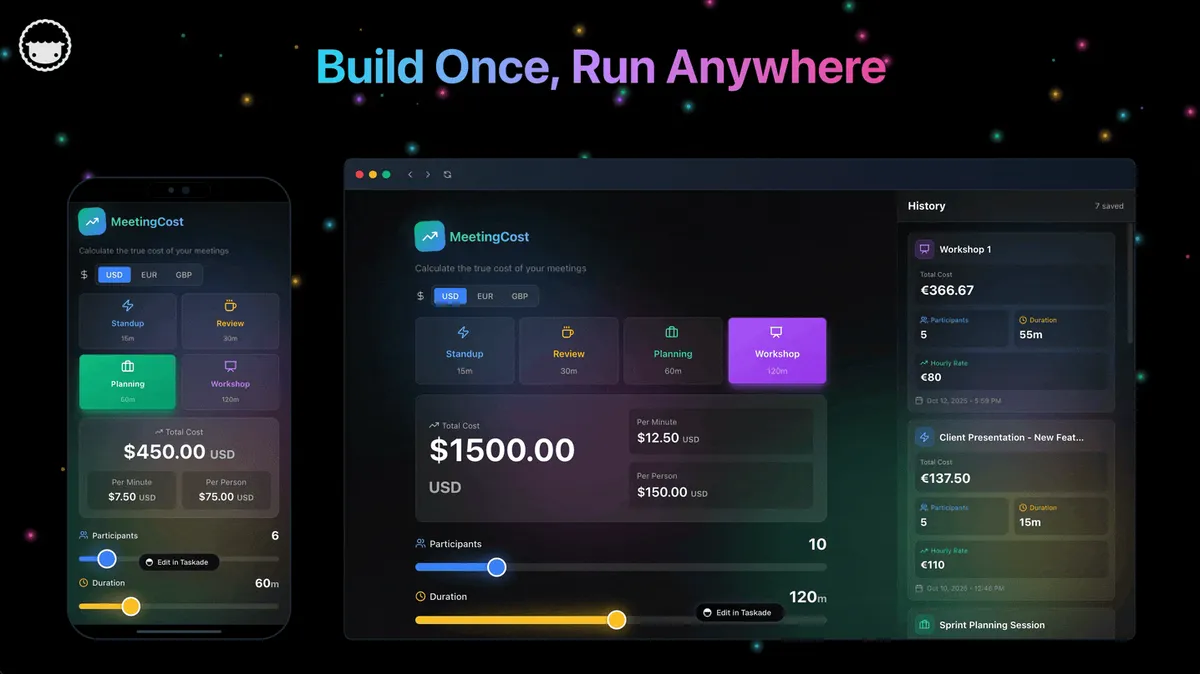
Taskade Genesis apps are not static templates. They run on Workspace DNA — Memory feeds Intelligence, Intelligence triggers Execution, Execution writes new Memory.
| Pillar | Component | Role on a PM board |
|---|---|---|
| Memory | Projects | Contracts, equipment records, visit history, site notes |
| Intelligence | AI Agents | Flag overdue tune-ups, draft renewal notes, brief the tech |
| Execution | Automations | Remind the office, send confirmations, escalate lapses |
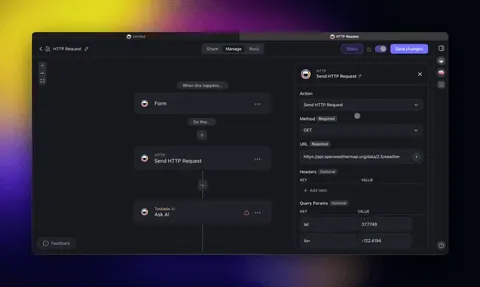
The practical version: a closed visit writes equipment notes, a preventive maintenance nudge agent reads the interval and flags the next one, a renewal sequence automation drafts the customer email, and the reply lands back on the same contract row. Nothing has to be re-typed into a second system.
Agents worth adding once the board holds real rows, not sample data:
- PM reminder agent — surfaces what is due and what slipped
- Dispatch triage agent — sorts emergency calls against booked PM windows
- Parts risk agent — flags visits likely to need a part you do not stock
- Browse the full field service agent set before you build one from scratch
An agent on empty rows is theater. Load ten real contracts first. Step-by-step setup lives in custom agents, and automation wiring in automation triggers and scheduled runs.
🗂️ What Belongs on a PM Schedule Board
This is the schema most small crews converge on. It is also the schema you can change in a sentence, which matters more than getting it right the first time.
| Field | Why it matters | Links to |
|---|---|---|
| Customer and site | Multi-property commercial accounts need per-site clarity | Home services customer CRM |
| Equipment model and serial | Tech prep, warranty lookups, recall checks | — |
| Filter or consumable spec | The single most-asked question on arrival | Parts inventory board |
| Contract start and end | Drives the renewal window, not just the visit | Agreement tracker |
| Auto-renew flag | Separates "chase this" from "confirm this" | — |
| Visit frequency | Monthly, quarterly, semiannual, annual | Field scheduling |
| Next due date | The one field the whole board sorts on | Calendar view |
| Last visit summary | Continuity without digging through email | — |
| Assigned tech or crew | Continuity of relationship on commercial accounts | Technician run sheet |
| Invoice rhythm | Billing cadence behind the visit cadence | Job to invoice board |
| Zone or route area | Makes batching possible instead of aspirational | — |
Because contracts, equipment, sites, and visits are separate records that reference each other, one customer with four rooftop units across two buildings stops being four disconnected spreadsheet rows.
That shape is why a rescheduled visit does not orphan its equipment history, and why the customer portal can show a live window instead of a stale date staff has to explain by phone.
🏗️ What Taskade Genesis Owns vs What You Pair
Honest boundaries beat feature checklists. If a pitch tells you one tool does all of this, walk away — including if the pitch is ours.
| Capability | Taskade Genesis | Where it usually lives instead |
|---|---|---|
| PM schedule, intervals, next-due | Owns it | — |
| Equipment and site history | Owns it | — |
| Renewal reminders and drafted emails | Owns it | — |
| Customer-facing visit windows | Owns it | — |
| Parts inventory, POs, cycle counts | Not a strength | A dedicated CMMS or inventory app |
| Fleet GPS and telematics | Not available | Your existing telematics vendor |
| Certified offline rugged mobile client | No parity today | A vendor mobile CMMS built for it |
| Tiered membership billing with proration | Not a strength | An enterprise FSM suite |
| Accounting general ledger | Not available | QuickBooks, Xero, your accountant |
| Card payments on the doorstep | Not available | Stripe or your payments provider |
Taskade ships 100+ bidirectional integrations, multiple project views (Timeline is part of Gantt — see Gantt view), role-based access from Owner down to Viewer, and built-in agent tools. The hosted MCP server is available on every paid plan for connecting AI clients to your workspace. Outbound calls to third-party MCP servers run through the MCP Client step inside an automation, on every plan including Free — put that call in a workflow rather than expecting an agent to make it on its own. For everything that does not speak MCP, the 100+ native connectors do the same job.
🌡️ A Season in the Life: HVAC PM, March to October
Early March. The board filters to annual furnace agreements with a next-due date before fall. Forty-one rows. Nobody had to remember; the field sorted them.
Mid March. Office groups those rows by zone. Eleven are within four miles of each other, so they become two batch days instead of eleven separate truck rolls.
April. Confirmations go out through an appointment reminder automation. Six customers reschedule inside the same window. The board reflects the new dates, so the portal does too.
Day of visit. The row moves to the HVAC daily dispatch board with a tech and a window attached. The tech opens the record and already knows the filter size.
On site. A twelve-year-old condenser is flagged. The tech starts an estimate to invoice record from the visit instead of writing it on a napkin.
After visit. Equipment notes update, next due date stamps forward, and a review request fires for the customers who were happy.
45 days before contract end. A renewal email drafts itself for the office to review and send. Nobody cancels because they forgot they had a contract.
October. The owner opens one board. Renewals closed, visits completed, overdue count, and upsell revenue traced back to PM visits — without exporting anything.
| Month | Board does | Human does |
|---|---|---|
| March | Surfaces all annual contracts due before fall | Confirms the list looks right |
| March | Groups rows by zone | Picks the batch days |
| April | Sends confirmations, absorbs reschedules | Handles the two awkward phone calls |
| May-Sept | Feeds due visits to daily dispatch | Assigns techs and windows |
| Any day | Captures equipment notes and upsell estimates | Prices the upsell |
| Rolling | Drafts renewal emails 45 days out | Reviews, edits, sends |
📋 Migration Checklist: Spreadsheet or Suite to a Board You Own
Run two weeks in parallel. Do not cut over during a heat wave.
Week 0: decide the nouns
- Name the five you cannot lose: customer, site, equipment, contract, next due date
- List optional nouns: zone, assigned tech, invoice rhythm, last visit summary
- Write down what stays put: accounting, payroll, parts, GPS, payments
- Decide which system is the authority for each noun (the board owns visit status; accounting owns the invoice of record)
Week 1: generate and load real truth
- Generate the preventive maintenance schedule board
- Import ten real contracts, not demo rows named "Customer A"
- Attach equipment records with model, serial, and consumable spec
- Link those customers to whatever dispatch board you already run
- Mirror the words your office already says for status ("booked", "needs callback", "done")
- Invite the office first, then techs — permission levels run Owner down to Viewer
Week 2: automate exactly one thing
- Turn on one automation: the renewal reminder sequence
- Add a PM reminder agent once statuses are trusted
- Publish the customer portal if customers call to ask about windows — see publishing
- Freeze the old sheet for new contracts, keep it read-only for history
- Rename the one field your office keeps misreading
| Day | Focus | Done looks like |
|---|---|---|
| 1 | Generate the board | Columns match how the office talks |
| 2 | Ten real contracts loaded | Every row has a next due date |
| 3 | Equipment records attached | Filter spec visible without asking |
| 4 | Customers linked to dispatch | One click from contract to job |
| 5 | Renewal automation live | A test contract drafts its email |
| 6-7 | Office feedback | One confusing field renamed |
| 8-10 | Portal or agent (pick one) | Customers stop calling for dates |
| 11-14 | Parallel quiet | Old sheet gains zero new rows |
The renewal path is the one worth wiring first, because it is the only step where doing nothing costs revenue directly.
🆚 Side by Side: PM Tracking Options in 2026
| Question | Enterprise FSM | Packaged FSM | Per-seat CMMS | Taskade Genesis |
|---|---|---|---|---|
| Product shape | Suite with call center | Finished small-business app | Maintenance-shaped CMMS | Living ops app you shape |
| Cost meter | Per tech plus modules | Plan tier | Per full user | Workspace plan |
| Own the schema | Limited | Limited | Limited | Yes, edit by chatting |
| PM plus dispatch together | Yes, in one suite | Yes, with defaults | PM strong, dispatch thin | Yes, linked boards |
| Parts and GPS | Native or add-on | Add-on | Native parts | Pair outside |
| Best for | Shops with an office desk | Crews wanting defaults now | Facilities with a parts room | Crews owning the board |
PM board vs recurring agreement tracker
Two boards, two jobs. Small crews run both and link them to the same customer.
| Dimension | PM schedule board | Recurring agreement tracker |
|---|---|---|
| Centers on | Visit dates and equipment | Contract value and billing rhythm |
| Key field | Next due date | Renewal amount and cadence |
| Feeds | Daily dispatch | Invoicing and AR aging |
| Question it answers | "Who is due this month?" | "What is this contract worth?" |
| Owner in the shop | Whoever schedules | Whoever bills |
❓ FAQ
Can clients see upcoming PM visits?
Yes, through a home services customer portal. Homeowners check their next tune-up window without calling the office, and because the portal reads the same board the office schedules against, a rescheduled visit shows the current window instead of a stale date.
How is this different from the recurring service agreement tracker?
The PM schedule board focuses on visit dates and equipment: model, serial, filter size, next due date. The recurring service agreement tracker focuses on contract billing rhythm and renewal dollars. Link both to the same customer and the office sees the next visit and the money behind it without opening two systems.
Does Taskade Genesis handle automatic billing?
Billing typically wires through Stripe or QuickBooks beside the board. Taskade Genesis tracks contract status and automates renewal reminders. It does not replace your accounting general ledger. Pair it with the agreement tracker for rhythm and the estimate to invoice pipeline when a visit turns up upsell work.
Can I run PM and emergency dispatch on one system?
Yes. PM due dates feed the HVAC daily dispatch board while emergency no-cool calls stay on today's view. PM visits batch by zone on slower days. Both boards link to the same customer record, and a dispatch triage agent can sort urgent calls against already-booked windows.
Do I need to code to build a PM schedule board?
No. You describe the board in plain language and Taskade Genesis generates it with contract dates, visit frequency, equipment notes, and next due date. Office staff edit fields directly. Reshaping a field later is a chat message to Taskade EVE, not a support ticket. Read living software for how apps keep changing after they ship.
What does running a PM schedule board cost?
Taskade is free to start. New accounts get a one-time 6,000 credit grant — 1,000 at signup plus 5,000 with your first build — which is enough to generate a preventive maintenance board and look at real fields before paying anything. Paid plans are Pro at $10 per month billed annually ($20 billed monthly) and Business at $25 per month billed annually ($50 billed monthly). There is no per-technician meter.
Will I lose my maintenance history if I switch?
Not if you run the two-week parallel period instead of cutting over on an emergency. New contracts enter Taskade Genesis only, and the old sheet or suite stays read-only so past visits remain reachable. Load ten real contracts, get office feedback, and only then cancel anything.
Can we keep our current suite for billing and use Taskade Genesis for the board?
Yes, and dual-running is common. Put PM visibility, equipment memory, and customer-facing windows on the board. Keep membership billing and payments where they already work. Avoid double entry by naming one authority per noun: the board owns visit status, the suite owns the invoice of record.
Where do inspections and safety rounds fit?
On a field inspection audit board, linked to equipment where possible. That is usually the second surface small crews add after the schedule board, especially when an insurer or commercial customer wants an audit trail. Fleet-side checks belong on a fleet audit board.
What if PM keeps losing to reactive work?
Separate the queues. Keep callbacks on a callback queue board so they stop eating the PM windows, and give the crew a daily run sheet that shows both. When PM visits and emergencies share one undifferentiated list, PM always loses.
📚 Related Reading
- HVAC dispatch board you own
- Recurring service agreements for field ops
- ServiceTitan alternative for small crews
- Free ServiceTitan alternative you own
- Jobber alternative dispatch board
- Housecall Pro alternative for small crews
- UpKeep alternative for small maintenance teams
- MaintainX alternative for small shops
- Estimate to invoice workflow for trades
- Field service dispatch software you own
- Missed call text-back for field crews
- HVAC appointment confirmation automation
- Custom domains for published apps
- Browse maintenance apps in the Community Gallery
🚀 Own the Schedule, Pair the Rest
Preventive maintenance is the most forgiving revenue a service business has, right up until the moment it becomes the most forgettable. Enterprise suites solve that with modules you will pay for whether you open them or not. Spreadsheets solve it until the first renewal quietly lapses.
If memberships with tiered pricebooks are a real product line, stay on the suite and negotiate with clear eyes. If parts, POs, and offline techs are non-negotiable, keep the CMMS. If what you actually need is visits you can see, equipment your techs remember, and renewals that chase themselves, generate the board and keep accounting, payroll, and GPS in their own lanes.
Memory ▲ Intelligence ■ Execution ● — contracts feed the board, the board briefs the agent, the agent triggers the renewal, and the renewal writes the next contract back into memory.