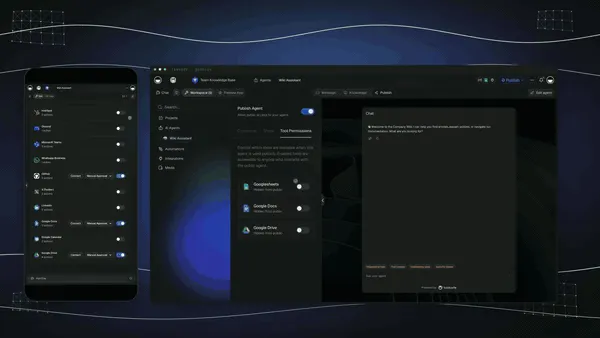
Overview
Taskade Genesis is the AI app builder that turns a single prompt into living software — complete with AI agents, databases, and automations.
- 📚 Memory (Projects): Your workspace's structured data and knowledge base
- 🧠 Intelligence (Agents): Your workspace's reasoning/decision-making layer
- ⚡ Execution (Automations): Your workspace's actions and workflows

While Projects provide structured memory and Automations execute workflows, AI Agents supply the reasoning, decision-making, and context comprehension.
They actively participate in your work by:
- Learning from Memory: Agents continuously train on workspace knowledge.
- Making Decisions: They analyze context and determine the course of action.
- Triggering Execution: Agents can start automations and orchestrate workflows.
- Evolving Over Time: The more a workspace grows, the smarter agents become.
💡 Note: When you create a Taskade Genesis app, your agents become its intelligence layer — processing requests, assimilating information, and making context-aware decisions based on business knowledge.
In this guide, you'll learn how to build and train custom AI agents.
What Are AI Agents?
AI Agents are specialized assistants designed to automate activities like research, data analysis, and content creation. You can create custom AI Agents and use them in your projects to save time and get more done faster and smarter.
AI Agents & Vibe Coding
Taskade is the only vibe coding platform where your apps can think, not just display. Every Taskade Genesis app can embed custom AI agents that:
- Answer questions using your workspace data as context
- Trigger automations based on conversations
- Learn from project memory to improve over time
- Connect to external tools via MCP connectors
This is what makes Taskade's approach to vibe coding unique — living software with built-in intelligence, not static generated code.
💡 Note: Custom AI Agents are part of Taskade AI. Jump here to learn more.
When to Build?
Creating AI agents is a practical decision based on the frequency and duration of tasks you perform. Here are a few rules that may help you decide if you need one:
- You repeat specific tasks multiple times a week
- You spend over two hours a week on particular activities
- You perform tasks that can be easily automated or follow a set pattern
- You need to streamline processes to focus on more strategic work
- You want to add intelligent, context-aware support to your Taskade Genesis apps.
Still trying to decide? Here are a few things agents can help you with:
| 🤹♂️ Area | ✅ Tasks |
|---|---|
| Task Automation | Auto-categorize tasksPrioritize by keywordsEstimate durationRecommend task owners |
| Knowledge Retrieval | Fetch relevant documentsAnswer team questionsRecommend reading materialSuggest internal resources |
| Feedback & Improvement | Collect and analyze feedbackOffer improvement insightsBenchmark against past projectsHighlight success stories |
| Meetings | Summarize the discussionsRecommend next steps |
| Creative Assistance | Offer writing/editing aidBrainstorm content ideasProvide content inspirationSuggest out-of-the-box approaches |
Create Custom Agents
The process of creating an AI agent takes less than a few minutes.

The AI Agents Tab
The AI Agents Tab aggregates all AI Agents inside a workspace/app.
- Go to the Agents tab in your workspace/app.
- Choose one of the available methods to create your first agent:
- Method 1: Use the AI Agent Generator.
- Method 2: Use EVE (Taskade Assistant Agent) (see the next section).
- Method 3: Use one of the available agent templates.
- Method 4: Create from scratch (scroll down for detailed steps).

Use Taskade EVE (Taskade Assistant Agent)
You can create new agents from anywhere in Taskade, while building Taskade Genesis apps, inside your automation workflows, in projects, or from the new main sidebar.
💡 Note: Read our guide to EVE (Taskade Assistant Agent) to learn more.
- Click the Chat button in the top-left corner to open EVE.
- Describe the agent you want to generate to EVE.
- e.g. "Create a support agent for onboarding FAQs with a friendly tone."
Wait for EVE to generate the new agent.
The agent is now available in the workspace/app.
Edit your agent (scroll down for detailed instructions).

Start From Scratch
Step 1: Fill Out General Details
Think of each AI agent as a digital team member. It can have a unique name, skills, set of objectives, and even a tone of voice it will use in conversations.
- Choose the General tab on the left and add agent details:
- Name: A unique name will help you identify your AI agent.
- Description: Describe the core behavior and personality of your agent.
- Persona: Give your agent a unique personality.
- Tone: Tailor agent interactions with a specific tone of voice.
- Tools: Enable additional tools like web browsing or plugins.

Step 2: Train Your Agent
Agents have a basic understanding of the world. You can make their responses more relevant to your work by "training" them using various resources.
💡 Note: Visit Agent Knowledge & Data to learn more.
- Choose the Knowledge tab in the sidebar on the left.
- Enable the Knowledge toggle on the right.
- Use one of the available options to train your agent:
- 🤏 Drag & drop: Drag files from your device to upload.
- 📄 Add Media: Choose files from the Media Manager.
- 📄 Add Project: Select projects from a workspace/app (see below).
- 🌐 Add link: Choose external resources like websites and blogs (see below).
- 🎞️ Add YouTube: Choose one or multiple YouTube videos for transcription.
- 📦 Add with Google Drive, Dropbox, or Box
The agent will use the source to provide contextual answers to your queries.

Step 3: Enable Agent Tools
Agent Tools give your agents the ability to create projects and tasks, seamlessly exchange information with external platforms, and interact with each other.
Here's how to enable and use tools with your agents:
- Go to the 🔧 Tools tab in the sidebar on the left.
- Click ➕ Add tool and choose one of the available options.
- Prompt the agent to use a specific tool during a conversation, e.g.
- "Send a message to #general channel: 'Team meeting at 3 PM.'"
- "Send an email to [email protected] titled 'Meeting Reminder.'"
- "Draft a new post in WordPress titled 'Productivity Tips.'"
💡 Note: Visit Tools for AI Agents for a full list of tools.

Step 4: Add Custom Commands
Each agent can include multiple custom/commands. Think of them as "levers" that allow you to interact with the agent, and the agent to interact with the world.
Choose the Commands tab on the left.
Click ➕ New command and define the prompts:
- 🔤 Name: This will pop up when you type / + "command name".
- ⏩ Prompt: Define the behavior of the custom command.
- 🚦 Command Mode: Decide how the agent should approach tasks.
- 🟢 Default: Agent operates based on your prompt without setting goals.
- 🔵 Plan & Execute: Agent sets structured goals based on your prompt.
Click Create to save the changes.
💡 Note: Not sure where to start? Visit our Guide to Writing Agent Prompts.

Generate with AI
The AI Agent Generator lets you instantly generate AI agents for any task.
💡 Note: Visit our AI Agent Generator to learn more.

- (method #1) Describe the type of agent you want to create.
- (method #2) Choose one of the prompt examples.
💡 Note: Click Add Knowledge to create your agent with business context.
- Hit ⌨️ Enter and wait for the generator to finish.
- Click Create & Launch Agent to add the agent to the Agents tab.

Create AI Teams
An AI Team is a group of AI agents working together. You can create a team to collaborate with all agents at once and use their combined expertise.
💡 Note: Visit our AI Teams guide to learn more.
- Navigate to the AI Teams tab in your workspace/app (left sidebar).
- Click ➕ Create Team.
💡 Note: Click Create with AI to instantly generate a complete AI team.
- Customize your AI team.
- 🔤 Choose a name for the team.
- 👥 Add individual AI agents.

Use Agent Templates
Taskade features a collection of AI agent templates designed for various use cases. Each agent has a unique prompt and set of commands. To use agent templates:
- Go to the AI Agents tab at the top of your workspace/app.
- Pick one of the available templates.
- Click Create to save the new agent.
- (optional) Customize the new agent.