

TL;DR: Roam Research has no free plan: $15/month, $165/year, or $500 for five years after a 31-day trial. Taskade is Free Forever, with linked notes that feed AI agents, automations, and Taskade Genesis apps. Pro is $10/mo billed annually for 10 seats. Try Taskade Genesis free →
Is Roam Research free?
No. Roam Research has no free tier at any level. You get a 31-day free trial, and after that a subscription is required to keep writing in your graph. There is no permanently free plan, no free personal tier, and no free seat for collaborators — every person in a shared graph needs their own paid subscription.
If you want a networked-notes tool that stays free indefinitely, Roam is not it. Taskade is Free Forever with unlimited projects, linked notes, basic project views, real-time multiplayer, and AI agents included at $0 — and all views on any paid plan.
Roam Research pricing in 2026
Roam Research charges $15/month, $165/year, or $500 for five years, per user, with no free plan. Those three numbers have not moved since launch.
| Roam plan | Price | Effective monthly | Notes |
|---|---|---|---|
| Free trial | $0 for 31 days | — | Full Pro access, then payment required |
| Pro (monthly) | $15/month | $15.00 | Billed monthly, cancel anytime |
| Pro (annual) | $165/year | $13.75 | Roughly 8% cheaper than monthly |
| Believer | $500 once, covers 5 years | $8.33 | Early feature access, community calls, priority support |
| Scholars discount | Application-based | — | Full-time researchers, under-22s, financial hardship |
A note on conflicting numbers. Roam's own pricing lives inside a client-side app rather than a crawlable page, so third-party pricing aggregators dominate this search result and several of them are simply wrong. Two errors are common: quoting Roam's annual plan as $180/year (that is just $15 × 12, and ignores the real discounted annual SKU), and quoting Believer as $41.67/month (that is $500 ÷ 12, when the plan actually covers 60 months). The correct Believer math is $500 ÷ 60 = $8.33/month. Figures here were verified on 11 August 2026 against Ness Labs' Roam Research FAQ and ToolRadar's Roam pricing breakdown, which agree on the same $15 / $165 / $500 triple. Check Roam's own in-app pricing before you buy.
Roam Research vs Taskade pricing, side by side
Taskade's Free Forever plan is the direct answer to Roam's missing free tier. Where Roam charges per user, Taskade Pro includes 10 seats in a single subscription.
| Taskade | Roam Research | |
|---|---|---|
| Free plan | Free Forever, unlimited projects | None |
| Trial | Not needed — start free | 31 days |
| Entry paid | Pro $10/mo billed annually ($120/yr, 10 seats) | Pro $15/mo or $165/yr, 1 user |
| Monthly billing | Pro $20/mo | Pro $15/mo |
| Team tier | Business $25/mo billed annually, unlimited seats | No team tier — per-user only |
| High capacity | Max $100/mo billed annually | Not applicable |
| Enterprise | $250/mo billed annually, custom SLA | Not applicable |
| Prepay option | Not applicable | Believer, $500 for 5 years |
Run the arithmetic over three years for a five-person team. Roam Pro annual is $165 × 5 users × 3 years = $2,475. Taskade Pro is $120 × 3 years = $360 total, and covers up to 10 people rather than 5. Even Roam's cheapest route, five Believer plans at $500, is $2,500 upfront.
See the alternative working — clone in 60 seconds
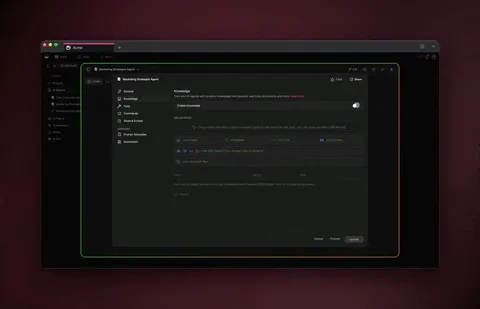
No signup, no credit card. Live AI knowledge base
| Capability | Roam Research | Taskade |
|---|---|---|
| Free plan | ❌ 31-day trial only | ✅ Free Forever |
| Cloneable live demo | ❌ | ✅ |
| Built-in AI agents | Extension-based assistants | ✅ Built-in toolkit + custom tools |
| Automation engine | ❌ | ✅ Durable runtime, 100+ integrations |
| Workspace DNA loop | ❌ | ✅ ▲ Memory · ■ Intelligence · ● Execution |
More real examples live in the Community Gallery, where every published app can be cloned into your own workspace.
What is Roam Research?
Roam Research is a networked-thought note-taking app founded by Conor White-Sullivan in 2017 and launched publicly in 2020. It popularised bidirectional links, daily notes, block references, and the bottom-up, Zettelkasten-inspired thinking model, and it effectively started the "tools for thought" movement. Obsidian, Logseq, Tana, and RemNote all owe part of their design vocabulary to Roam.
Roam Research at a glance: Block-level bidirectional linking, daily notes, block references and embeds, Datalog queries, and roam/js extensibility. No free tier. No native AI agents, no app builder, no workflow automation engine. Best understood as a single-player thinking tool, priced per user.
Roam is still shipping — a monthly community changelog runs through 2026, roamOS was released, and users have reported improvements to tables and namespace views. Its own community is genuinely split: some long-time users describe development as stagnant relative to Logseq and RemNote, while others are renewing a second five-year Believer plan. Anyone telling you Roam is abandoned is overstating the case. The fairer description is a mature product, developed slowly, priced at 2020 levels, with a mobile app its users consistently criticise.
Choose Roam Research if…
Roam does three things better than almost anything else, and if any of these is your core workflow, you should stay.
1. Block references and embeds are unmatched. In Roam, any individual block has its own address. You can reference it in 30 places and edit it once, and every reference updates. Taskade's linking model works at the project and task level, not the individual block level. If your thinking depends on transcluding the same atomic idea across dozens of contexts, Roam still does this better than the alternatives — this is the single most cited reason people who leave Roam come back.
2. Bottom-up, structure-free capture. Roam never asks where a note belongs. You write into today's daily note, link as you go, and structure emerges from the links rather than from folders. If you think in connections rather than hierarchies, that model is genuinely freeing, and tools built around projects and folders will feel like a constraint.
3. Datalog queries over your own graph. Roam exposes a real query language over your notes, so you can build live views that assemble themselves from anything matching a pattern. That is a power-user capability most note apps never attempt, and combined with roam/js it makes Roam highly programmable for people willing to invest in it.
Why teams choose Taskade
Taskade is Free Forever where Roam is paid-only, and it includes 10 seats on Pro at $10/mo billed annually instead of charging per user. Linked notes are not the destination — they are the substrate that AI agents reason over, automations act on, and Taskade Genesis ships as deployed apps. Teams get real-time multiplayer with chat and video at no cost, multiple project views over the same content on paid plans, and 100+ bidirectional integrations. The table below is the honest summary.
| Capability | Roam Research | Taskade |
|---|---|---|
| Cost of entry | $15/mo per user | $0 Free Forever |
| Seats included on entry paid plan | 1 | 10 (Pro, $10/mo billed annually) |
| AI agents over your notes | Extension-based | Built-in toolkit, persistent memory |
| Automations | None | Durable workflows, 100+ integrations |
| Ship a note graph as an app | None | Taskade Genesis, one prompt to deployed |
| Views over the same content | Outline, Graph | Multiple views |
| Team collaboration | Shared graphs | Multiplayer, chat, video on Free |
Migrating a Roam graph to Taskade
Moving a Roam graph takes about ten minutes and does not require a converter script. The full walkthrough with screenshots is in Import from Roam.
- In Roam, click ☰ All Pages, tick the top box to select everything, then click the export button and choose Markdown. Roam downloads a ZIP containing one
.mdfile per page. - Unzip the archive.
- In Taskade, click the arrow beside New Project, choose Import, and drag the
.mdfiles into the Import with AI tab. You can select all of them at once. - Click Create Project. Each Roam page becomes a Taskade project with its block hierarchy preserved.
What survives, and what needs a pass
| Roam concept | Taskade equivalent | Migration quality |
|---|---|---|
| Page | Project | Clean |
| Block / nested block | Task / sub-task | Clean, hierarchy preserved |
| Headings, plain text | Same | Clean |
TODO / DONE |
Task and checked state | Clean |
Tags (#tag) |
Tags | Clean |
| Daily Notes | One project per date, in a folder | Clean |
[[Page links]] |
Rebuild via project hierarchy | Arrives as plain text |
((block refs)) and embeds |
Rebuild as links or agent knowledge | Arrives as plain text |
| Datalog queries | Recreate as agent prompts or saved filters | Manual |
| Attachments and media | Re-upload | Roam stores media encrypted; export separately |
Two honest cautions. Bidirectional links do not survive as live links, so a large graph needs a reconnection pass — the practical move is to import first, then let an AI agent trained on the imported workspace surface the connections rather than rebuilding every [[link]] by hand. And media files in a Roam export are encrypted, which is the most common thing people get stuck on when leaving Roam regardless of destination. Export attachments separately.
What linked notes become in Taskade
In Roam, the graph is the product. In Taskade, the graph is the input. This is the structural difference, and it is what the rest of this page is really about.
AI agents that reason over the graph
AI Agents v2 ship with a large built-in toolkit — web search, file analysis, image generation, code execution, project management — plus persistent memory and custom tools you define. Point an agent at your imported Roam notes and it answers questions with citations, surfaces related concepts across projects, and triggers automations. Agents have access to 15+ frontier models from OpenAI, Anthropic, and open-weight providers, with no API keys to wire up.
Automations that act on what the agents find
Automations are durable workflows across 100+ bidirectional integrations — Slack, Gmail, Stripe, HubSpot, Salesforce, Notion, Shopify, Google Sheets, GitHub, Calendly and more. Triggers pull events in, actions push data out. A research note tagged for follow-up can open a task, notify a channel, and write the outcome back into the workspace.
Taskade Genesis turns the graph into a deployed app
Describe a knowledge portal, an internal wiki, a client-facing intake form, or a public learning hub, and Taskade Genesis returns a deployed application — custom domains, password protection, email-and-password app sign-in, and AI agents embedded inside it. A five-year Roam graph is a personal archive. The same content in Taskade can be a product your team or your customers actually use.
Multiple project views over the same content
Four inline tabs — List, Board, Table, and Mind Map — plus Docs (Beta), Gantt Chart, Calendar, Actionsheet, and Org Chart under the More Views menu. Free covers the basic views; all views come with any paid plan. Switching views never duplicates data — the same notes render as an outline, a board, a calendar, or a mind map. Mind Map is the closest analogue to Roam's graph view for anyone arriving from a linked-notes habit.
Frequently asked questions
Is Roam Research free?
No. Roam has no free tier — only a 31-day free trial, after which Pro is $15/month or $165/year, or Believer is $500 for five years. Taskade is Free Forever with unlimited projects, AI agents, basic views, and real-time collaboration; all views come with any paid plan.
How much does Roam Research cost in 2026?
Pro is $15/month billed monthly, or $165/year billed annually ($13.75/month effective). Believer is a single $500 payment covering five years, or $8.33/month. All prices are per user. Verified 11 August 2026.
What is the Roam Research Believer plan?
A five-year prepay tier: $500 once, covering 60 months, which is $8.33/month. It adds first access to new features, community calls, and priority support. Aggregators that list it as $41.67/month divided $500 by 12 instead of 60.
Is there a genuinely free Roam Research alternative?
Taskade's Free Forever plan includes unlimited projects, linked notes, basic project views, real-time multiplayer with chat and video, and AI agents; all project views come with any paid plan. Obsidian and Logseq are also free for personal use, though both are local-first tools without built-in team collaboration or automations.
Can I import my Roam graph into Taskade?
Yes. Export from Roam as Markdown, then drop the .md files into Taskade's Import with AI tab. Block hierarchy, headings, tags, and TODO markers carry over. Wikilinks and block references arrive as plain text and get rebuilt through project hierarchy. See Import from Roam.
Does Taskade have bidirectional links and a graph view?
Taskade has linked notes, backlinks, mentions, tags, and a Mind Map view. It does not replicate Roam's block-level reference model exactly. What it adds is AI agents with persistent memory that traverse the workspace semantically and surface connections you did not link manually.
Is Roam Research still being actively developed?
Yes, but slowly. Roam publishes a monthly community changelog, released roamOS, and users have reported table and namespace improvements through mid-2026. Its community is split between people who consider development stalled and subscribers renewing five-year plans.
What does Taskade cost compared to Roam Research?
Taskade is Free Forever. Pro is $10/month billed annually ($120/year) and includes 10 seats. Business is $25/month billed annually with unlimited seats. Roam Pro is $165/year for one user, so a single Roam seat costs more per year than a 10-seat Taskade Pro subscription.
Does Taskade replace Roam for daily notes?
For most people, yes. Taskade supports a daily-notes workflow, and a Roam export creates one project per date inside a folder, preserving the habit. Where Taskade differs is what happens next: an agent can summarise the week, and an automation can route action items into the right project.
Explore Taskade
- AI App Builder — Full applications from one prompt
- AI Agent Platform — Digital teammates with a large built-in toolkit
- AI Second Brain — Train agents on your own notes
- Workflow Automation — Durable workflows across 100+ integrations
- Import from Roam — Step-by-step migration guide
- Browse Community Apps — Clone a working app into your workspace
Related reading
- The Build Without Permission manifesto
- How Workspace DNA Works — The architecture behind the loop
- How to Train AI Agents With Your Knowledge
- Origin of Living Software — Where apps are headed
- Vibe Coding for Teams
Roam wires ideas together and leaves them there. Taskade runs the loop where that network becomes the input AI reasons over, automations execute against, and Taskade Genesis ships as a working app. ▲ Memory · ■ Intelligence · ● Execution.