
TL;DR: Taskade Genesis is a workspace that turns notes into projects, agents, and deployed apps. Google Keep is a free sticky-note tool bundled with a Google account. Taskade is Free Forever with 3 Genesis apps and 1 agent. Pro is $10/mo billed annually for 10 seats. Try Taskade Genesis free →
See the alternative working — clone in 60 seconds
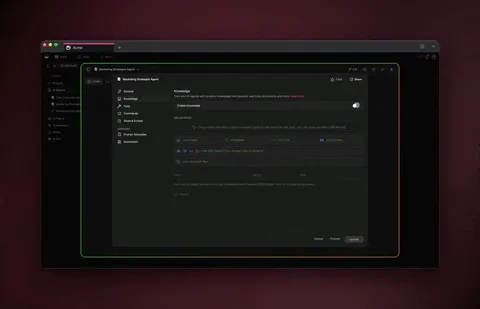
No signup, no credit card. Live AI knowledge base
| Capability | Google Keep | Taskade Genesis |
|---|---|---|
| Pricing (starting) | Free (bundled with Google account) | $0 Free · $10/mo Pro billed annually (10 seats) |
| Cloneable live demo | ❌ | ✅ |
| Built-in AI agents | Writing assistant only | ✅ built-in tools |
| Automation engine | Database-only automation | ✅ Durable runtime, 100+ integrations |
| Workspace DNA loop | ❌ | ✅ ▲ Memory · ■ Intelligence · ● Execution |
What Is Google Keep?
Google Keep is Google's lightweight note-taking service launched in 2013. It is bundled with every Google account and works as a digital sticky-note board. Notes can be color-coded, pinned, transcribed from voice, and shared with collaborators for basic to-do lists. There is no formatting, no hierarchy, and no real workspace.
Google Keep at a glance: Sticky notes for the Google ecosystem. Quick capture, color tags, voice transcription. Built for personal jottings, not collaborative work.
What Is Taskade?
Taskade is an AI-native workspace founded by John Xie, Dionis Loire, and Stan Chang in 2017 (Y Combinator-backed). It combines documents, projects, custom AI Agents, Automations, and the Genesis app builder in one platform. Notes captured in Taskade can grow into structured projects, become inputs for AI agents, or be the seed for a deployed Genesis app — all in the same workspace.
Taskade routes across 15+ frontier models from OpenAI, Anthropic, and open-weight providers. The free plan includes unlimited projects, real-time collaboration, the Genesis app builder (3 apps), custom AI Agents, basic project views (Gantt Chart, Actionsheet, and Org Chart need a paid plan), and workflow templates.
Google Keep vs Taskade
Google Keep is a sticky note. The interface is friendly, the price is zero, and the integration with Gmail is convenient. For a personal grocery list or a stray idea, that's exactly enough.
Taskade is a workspace. The same quick-capture surface scales up into structured documents, multi-view projects, AI agents, automations, and deployed apps. Notes don't have to die on a card — they can become the brief, the plan, the project, or the app.
The Workspace DNA advantage
Google Keep stores notes. Taskade is built on Workspace DNA: a self-reinforcing loop between three pillars.
- Memory (Projects) — Your notes, docs, files, and structured data become the substrate every agent reasons over. The longer you work, the smarter the workspace gets.
- Intelligence (AI Agents) — Custom AI Agents with persistent memory, built-in tools, and the ability to read your notes and act on them. Agents draft, summarize, brainstorm, and execute.
- Execution (Automations) — Durable workflows triggered by external events (Calendar events, Gmail threads, Sheets updates, Slack messages) that read from Memory, act through Intelligence, and write the results back into Memory. The loop closes.
Read the full architecture in How Workspace DNA Works.
Taskade Pricing
| Plan | Price | Best For |
|---|---|---|
| Free Forever | $0 | Solo users and small teams |
| Pro | $10/mo annual (10 seats) | Growing teams |
| Business | $25/mo (unlimited seats) | Larger teams |
| Enterprise | $250/mo with custom SLA | Organizations with security/compliance needs |
When to choose each
Choose Google Keep if:
- You only need personal sticky notes for quick capture.
- You never need formatting, hierarchy, or collaboration.
Choose Taskade if:
- You want notes that can grow into projects, agents, and apps.
- You want native two-way Google Calendar sync plus 99 other integrations.
- You collaborate with anyone — even one teammate.
- You want AI agents that read your notes and act on them.
Build without permission
- Build with Genesis — One prompt, one deployed app
- Browse the Community Gallery — Clone apps from other teams
- How Workspace DNA Works — The architecture