






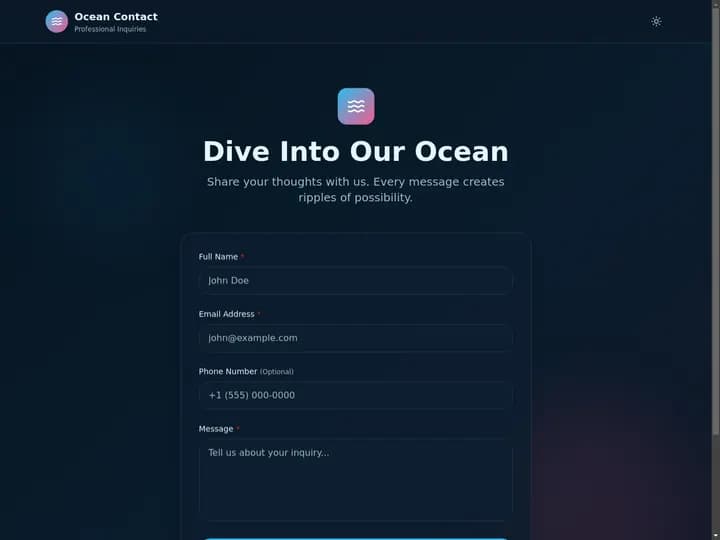
Taskade Genesis wires missed call text-back into a speed-to-lead CRM you own, so every hang-up becomes a lead record, an automatic SMS within 60 seconds, and a human follow-up task instead of voicemail limbo. This playbook ranks setups honestly for 2026.
TL;DR: Telephony tools detect the miss. Your CRM plus automation sends the text and assigns the call-back. Taskade Genesis owns the ops layer. Generate a speed-to-lead appointment setter →
Related: speed-to-lead CRM, Follow Up Boss alternative for solo agents, field service agents.
Vendor figures below are publicly listed or widely reported ranges as of July 2026. Phone systems, call-tracking platforms, and SMS carriers reprice often, and per-message fees vary by country and carrier. Confirm live quotes on the vendor's own pricing page before you buy anything.
📞 What Buyers Actually Need From Missed Call Text-Back
Most shops shopping for "missed call text-back" describe a feature and buy a phone system. The job is narrower than a phone system and wider than a canned auto-reply. In practice a working setup has to do six things in the same minute:
- Detect that a ring went unanswered (telephony's job).
- Normalize the caller's number so the same human is never two records.
- Create or update one lead record with a timestamp you can audit.
- Send one short text that names the business and offers a next step.
- Assign a named human a timed call-back task, not a group notification.
- Keep the reply, the call-back, and the booked appointment on that one record.
Steps 1 and 4 are what vendors demo. Steps 2, 3, 5, and 6 are where conversion actually leaks.
| Daily need | Phone-system default | Living ops board in Taskade Genesis |
|---|---|---|
| Detect the missed ring | Native, reliable | Not native. Consume the webhook |
| Send the first text | Native auto-reply | Automation + your SMS integration |
| One record per caller | Thread in an inbox | Lead row matched on normalized phone |
| Named call-back owner | Shared inbox, nobody owns it | Assigned task with a due time |
| Reply lands on the lead | Separate SMS thread | Note on the same lead record |
| Booked appointment linked | Usually another tool | Same board, multiple project views |
| Who reshapes the fields | Vendor settings screen | You, by chatting with Taskade EVE |
If your week is those six steps, you are shopping for ownership of the record — not for another phone plan. If you mostly need carrier-grade voice quality, IVR menus, and call recording compliance, you are shopping for a phone system and should buy one.
📜 Origin: Why the Missed Call Became the Biggest Leak
Missed calls were not a crisis when the alternative was a competitor's missed call. Three shifts made them expensive.
Callers stopped leaving voicemail. Voicemail retrieval collapsed over the last decade. A caller who reaches a recording now hangs up and dials the next result. Your voicemail box is not a queue; it is a graveyard with good acoustics.
Paid acquisition got expensive enough to notice. When a trades lead or a listing lead costs real money, an unanswered ring is a purchased impression thrown away at the last inch. Owners who never tracked response time started tracking it because the media bill forced them to.
Text became the default acknowledgment channel. People will answer an unknown text faster than an unknown call, because a text is cheap to ignore and cheap to answer. That asymmetry is exactly what makes a 60-second text-back work.
The result is a mismatch. Telephony vendors solved detection and shipped auto-reply. Nobody shipped the accountability layer, so shops bolt an auto-reply onto a phone system and still lose the lead — because a text with no record, no owner, and no due time is just a politer voicemail.
Telephony handles detection. Ops software handles memory and accountability. Confusing the two is how shops buy a seat and still miss the job.
💵 2026 Cost Reality: What Each Layer Actually Meters
The most useful thing to compare is not the sticker price. It is the meter — because meters are what make a cheap tool expensive at month six. Approximate public ranges as of July 2026; confirm live.
| Layer | Example tools | What it meters | Approx. entry (July 2026, confirm live) |
|---|---|---|---|
| Business phone | OpenPhone, RingCentral, Google Voice | Per user per month | Roughly $10–$30/user/mo depending on tier |
| Call tracking | CallRail | Per plan + tracked numbers + minutes | Plan-based; read the included-minute and number caps |
| Raw SMS / voice API | Twilio and similar CPaaS | Per message segment + per number + registration | Usage-based; no flat seat price |
| Bolt-on text-back app | Various SMB add-ons | Per location or per number | Widely variable; read the overage terms |
| Ops board and automations | Taskade Genesis | Workspace plan, not per technician | Free plan available; Pro $10/mo billed annually ($20 monthly) |
Where each meter bites
| Meter | Feels cheap when | Gets expensive when | Watch for |
|---|---|---|---|
| Per user | 2–3 people answer phones | Every tech, lead, and office admin needs write access | Paid "full user" vs free viewer seats |
| Per tracked number | One number, one campaign | Every truck, city, and ad set gets a number | Included-minute caps, then per-minute overage |
| Per message segment | Short texts, low volume | Long templates split into 2–3 segments | Segment counting, plus carrier pass-through fees |
| Per location | One shop | Multi-location rollout | Per-location minimums |
| Workspace plan | Whole crew reads one board | You genuinely need per-technician CMMS licensing | Published app end users and AI credit usage follow plan rules |
How Taskade Genesis changes the equation: you are not buying a phone seat for everyone who touches a lead. You buy a workspace that holds Projects, Agents, and Automations, then invite the people who run the board. The Free plan includes a one-time grant of 6,000 AI credits — 1,000 at signup plus 5,000 with your first build — which is sized to fund one complete build, not a monthly allowance. Pro is $10/mo billed annually ($20 monthly) and Business is $25/mo billed annually ($50 monthly). See pricing for current plan details and confirm the numbers for your headcount and AI usage.
🧭 Who Should Wire This on a Board They Own
Build the owned version when several of these are true:
- You have 1 to 15 people touching inbound leads, not a 200-seat contact center.
- Your "CRM" today is a phone inbox plus a spreadsheet, and nobody can say who owed the last caller a ring back.
- You need custom fields for your trade — roof zone, unit serial, listing address, insurance carrier — without waiting on a vendor settings screen.
- You already pay for a phone system you like and only need the accountability layer on top.
- You want AI drafting grounded on the actual lead record, not a generic chatbot that cannot see your fields.
- You are about to spend on ads and want the response clock measured before the spend, not after.
Good fits: HVAC and plumbing shops, roofing and restoration crews, solo real-estate agents, med spas and clinics with front-desk overflow, small agencies whose intake is phone-first.
Start points that already exist:
- Missed call text-back app — the narrow starting board
- Speed-to-lead appointment setter — adds the booking surface
- Inbound lead SLA board — if response time is the metric you are defending
- Callback queue board — when the backlog of owed call-backs is the real problem
- Missed call text-back CRM for agents — real-estate flavored
- AI receptionist booking app — when after-hours volume justifies it
🛟 Who Should Stay on Their Phone System's Built-In Text-Back
This is the honest part. Several buyers should not build anything.
Stay on OpenPhone if a shared team inbox is genuinely your workflow. Its real strengths: shared numbers so any teammate can pick up a thread, clean voicemail transcription that makes triage fast, and a mobile app people actually open. If your whole team already lives in that inbox and the auto-reply covers you, adding a board is overhead until the "who owed them a call?" question starts costing money.
Stay on CallRail if attribution is the decision you are funding. Its real strengths: reliable per-source and per-keyword call attribution, call recording plus transcription tied to the originating campaign, and reporting your media buyer already trusts. Nothing on an ops board replaces knowing which ad produced the ring.
Stay on RingCentral or a full UCaaS suite if you need IVR trees, call queues, compliance-grade recording retention, and desk phones that a vendor supports. That is a telephony product, and it is a real one.
Stay on raw Twilio if you have a developer and want total control of the message pipeline. It is the cheapest per message at volume and the most flexible, and it will happily let you build exactly what you want.
| Constraint you refuse to drop | Lean this way |
|---|---|
| Which ad drove the call, per keyword | CallRail (keep it, and pipe the webhook onward) |
| One shared inbox for the whole team | OpenPhone as the primary surface |
| IVR menus, queues, desk phones, retention | RingCentral or a comparable UCaaS suite |
| Lowest per-message cost with a developer on staff | Twilio or a comparable CPaaS |
| One record that owns lead, owner, reply, and booking | Taskade Genesis board |
None of those tools is wrong. They are purpose-built for detection, attribution, or transport. Taskade Genesis is purpose-built for the record and the accountability. The mistake is expecting either side to be both.
🧬 Workspace DNA: Projects, Agents, Automations
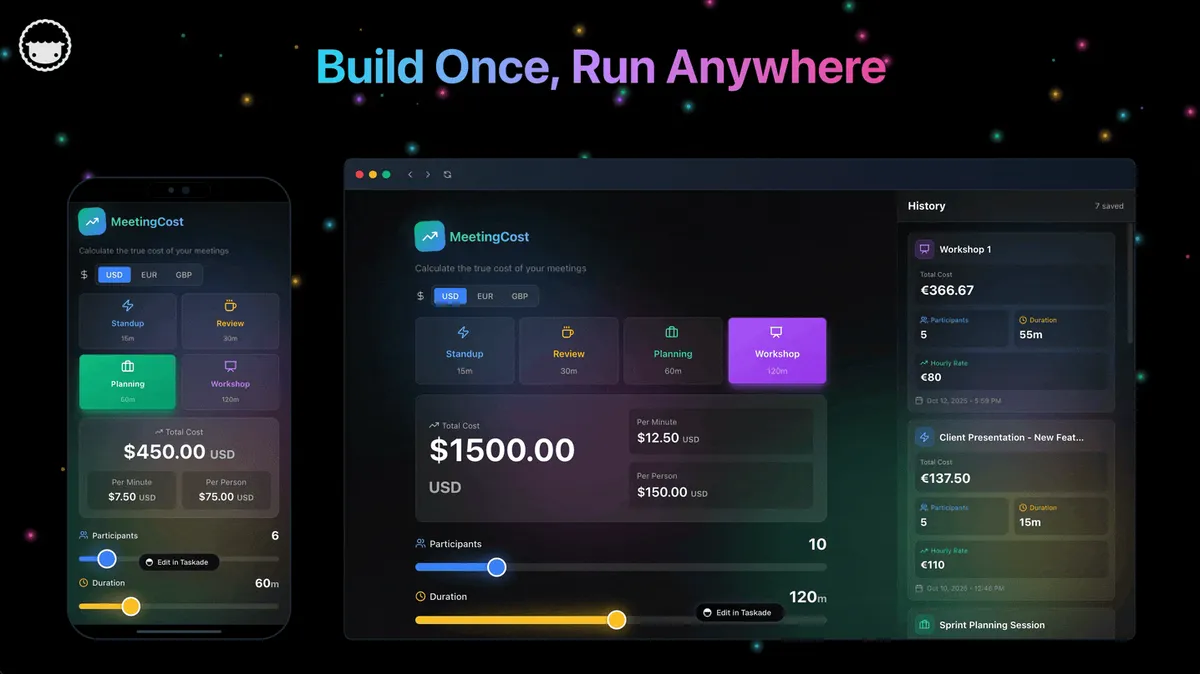
Taskade Genesis apps are not static templates. They run on Workspace DNA — see the three pillars and the Taskade Genesis loop for the concept.
| Pillar | Component | Role on a missed-call board |
|---|---|---|
| Memory | Projects | Lead rows, call timestamps, reply notes, appointment links |
| Intelligence | AI Agents | Draft the first text, classify urgency, summarize the thread |
| Execution | Automations | Fire the SMS, assign the owner, escalate a broken SLA |
The loop: a missed call writes Memory, an Agent proposes urgency and copy, an Automation texts and assigns, the call-back outcome writes Memory again. The board gets sharper the more calls it sees, because the history is on the record instead of in someone's phone.
Agents get built-in tools and can read the board they live on, which is why a drafted text can reference the caller's last job instead of a generic greeting. Browse live patterns in the Community Gallery before you generate yours.
🗃️ The Data Model That Prevents Double-Texting
Most broken setups are broken at the schema, not the automation. If the caller's number is not the key, you will create duplicates, send two texts, and destroy your own SLA numbers.
The rules that follow from that shape:
phone_e164is the key. Normalize to E.164 before you match.(415) 555-0100,415-555-0100, and+14155550100are one human.- A second miss updates the lead, it does not create one. Increment a counter, append a note, and suppress the duplicate text inside a cooldown window.
first_text_atminusfirst_miss_atis your only honest SLA metric. Everything else is vibes.- The task carries the accountability, not the message. A text with no
TASKrow is a politer voicemail.
| Field | Why it exists | Common mistake |
|---|---|---|
phone_e164 |
Dedupe key | Storing raw display format |
source |
Which line or ad rang | Overwriting on the second call |
first_miss_at |
Start of the SLA clock | Using record-created time instead |
first_text_at |
End of the SLA clock | Not logging it at all |
owner |
A named human owes a ring | Assigning to a group |
stage |
Pipeline position | Free-text status nobody agrees on |
Store this in a database project so the same rows drive the board, the dashboard, and the automations.
🏗️ What Taskade Genesis Owns vs What You Pair
Honest boundaries matter more than feature checklists.
Strong fit:
- Lead records with an auditable response clock
- Automations that text, assign, escalate, and nudge
- Agents that draft copy and classify urgency from the record
- Booking and quote surfaces on the same board
- Requester-facing status views when a caller wants an update
- 100+ integrations so the webhook, the SMS, and the calendar all land in one place
Honest gaps — what Taskade Genesis does not do today:
| You need | Taskade Genesis | Pair with |
|---|---|---|
| Detect the unanswered ring | No native telephony | Your phone system or call tracker |
| Carry the SMS to the carrier | No native telco | Your SMS provider or integration |
| Per-keyword call attribution | Not an attribution product | A call-tracking platform |
| IVR menus and call queues | No | A phone suite |
| 10DLC or local registration | Not a registrar | Your messaging provider |
| An agent that dials a third-party MCP server by itself | No, the call goes in an automation | The MCP Client step, on every plan |
| Call a third-party MCP server from a workflow | Yes, MCP Client step, every plan | — |
| Let an AI client read your board | Hosted MCP server, every paid plan | Your AI client of choice |
If a salesperson or an AI summary tells you Taskade Genesis replaces your phone system and sends texts with no provider, that is overselling. Walk away from that pitch no matter who makes it, including us. What it replaces is the spreadsheet, the shared inbox, and the "I thought you called them back" conversation.
✍️ Copy Templates (Customize, Do Not Spam)
Keep the first message under 320 characters so it does not split into extra billable segments. Name the business in the first six words — an unnamed text reads as spam and gets reported.
| Situation | Template shape | Why it works |
|---|---|---|
| HVAC / trades | "Sorry we missed you at {Business}. We're on another line. Reply TIME for a call-back or book here: {link}" | Names the shop, offers two exits |
| Solo agent | "{Agent} here — saw your call about {area}. Free for 10 minutes at {slot}? Reply YES or pick a time: {link}" | One question, one tap |
| Agency intake | "Thanks for calling {Agency}. We'll call back within 15 minutes. Prefer email? Reply here." | Sets a keepable promise |
| After hours, non-urgent | "{Business} here — we're closed until {time}. You're first on the list tomorrow. Emergency? Reply 911." | Honest, still triages |
| After hours, emergency line | "{Business} on-call has your number. Someone will ring you within {window}." | No booking link when they need a human |
Three rules that matter more than the wording:
- Never promise an arrival window you cannot deliver. A broken promise costs more than the missed call did.
- One exit, not four. A text with a booking link, a reply prompt, an email address, and a web form gets none of them used.
- Match the channel's tone. Draft with a customer follow-up agent or an after-hours agent grounded on the record, then have a human approve the template once and reuse it.
⏱️ SLA Your Team Can Actually Keep
| Step | Target | Owner | Fails when |
|---|---|---|---|
| SMS after the miss | Under 60 seconds | Automation | Webhook retries silently |
| Lead row exists | Instant | Automation | Duplicate created on second call |
| Named call-back owner | Under 2 minutes | Routing rule | Assigned to a group |
| Human call-back | Under 15 minutes, business hours | Named human | Nobody watches the queue |
| Reply logged on the lead | Same minute | Two-way SMS integration | Reply stays in a phone thread |
| Booking or disposition | Same conversation | Human | Thread ends with no outcome field |
Break the SLA and conversion drops even with perfect automation. Wire an SLA escalation and a first-response timer so the board notices before a customer does.
Metrics worth a dashboard
| Metric | Definition | Healthy direction |
|---|---|---|
| Median seconds to first text | first_text_at − first_miss_at |
Under 60 |
| Reply rate within 24h | Replies ÷ texts sent | Up |
| Call-back completion rate | Tasks closed ÷ tasks created | Toward 100% |
| Booked rate from missed calls | Appointments ÷ missed calls | Up |
| Duplicate rate | Extra rows ÷ unique callers | Toward 0 |
| Recovered revenue | Won jobs where the thread started with a text-back | Up |
Put those on a field service ops dashboard or a local business ops dashboard rather than exporting a spreadsheet each Monday. For the broader category map see ops dashboard builders.
The only ROI math that matters
Do not model this on industry averages. Model it on your own recovered jobs, because that is the number your bookkeeper can verify.
| Input | How to get it | Notes |
|---|---|---|
| Missed calls per month | Your phone system's own report | Most owners guess low by half |
| Recovered conversations | Threads that started with a text-back and got a reply | Count from the board, not memory |
| Booked from recovered | Appointments traced to those threads | The honest numerator |
| Average job value | Your accounting system | Use median, not your best job |
| Monthly stack cost | Phone + messaging + workspace plan | Include per-message fees |
If one recovered job per month covers the messaging fees and the workspace plan, the setup pays for itself and everything above that is margin. Owners who instrument this for the first time routinely find they were losing several warm calls a month to voicemail — not because anyone was careless, but because nothing on any screen said a call-back was owed.
Leadership needs one view: missed calls today, median seconds to first text, call-backs owed, appointments booked. Without that visibility, automation becomes blameless and nobody owns the failures.
📋 Rollout Checklist: From Voicemail to Owned Text-Back
Run this in parallel with what you have. Do not switch your main line on a Monday in peak season.
Week 0: Decide the nouns and the promise
- Name the four nouns you cannot lose: caller, missed call, owner, due time
- Write the call-back promise you can actually keep (15 minutes? same day?)
- Confirm your phone system emits a missed-call webhook, and where
- Confirm which SMS provider sends, and whether registration is required
- List the tools that stay: phone system, call tracking, accounting, calendar
Week 1: Generate the board and the first automation
- Generate the missed call text-back board
- Wire the webhook trigger from your phone provider
- Normalize the phone number and add a filter step so repeat calls update one row
- Add the SMS action using your provider or the Twilio integration
- Add an assign-task step with a due time
- Test from three real handsets, including one already in the board
Week 2: Routing, after-hours, and one agent
- Add a branch step for business hours vs after hours
- Add a short delay before any second nudge
- Route by source or area with new service lead routing
- Turn on one escalation, not five
- Add a triage agent only after the board holds real calls — an agent on sample rows is theater
- Add a booking surface: speed-to-lead appointment setter
Cutover rules
- Every missed call lands on the board, even ones a human already handled by phone.
- The old spreadsheet goes read-only for history; no new rows.
- One system is the authority per noun: the board owns lead status, the phone system owns call recordings, the calendar owns the appointment.
| Day | Focus | Done looks like |
|---|---|---|
| 1 | Generate the board | Columns match how your team talks |
| 2 | Webhook connected | A test miss creates exactly one row |
| 3 | SMS live | Text arrives in under 60 seconds |
| 4 | Owner assignment | A named human, with a due time |
| 5 | Reply capture | Your reply appears on the lead |
| 6–7 | Team feedback | Rename one confusing field |
| 8–10 | After-hours rules | Quiet hours honored, emergencies still page |
| 11–14 | Parallel quiet | Old sheet has zero new rows |
🆚 Side-by-Side: Choosing Your Missed-Call Stack
| Question | OpenPhone | CallRail | Raw CPaaS | Taskade Genesis |
|---|---|---|---|---|
| Product shape | Team phone inbox | Call tracking + analytics | Messaging API | Living ops app platform |
| Detects the miss | Yes | Yes | Yes, you build it | No, consume webhook |
| Sends the first text | Native auto-reply | Via integrations | Yes, you build it | Automation + your provider |
| One lead record per caller | Inbox thread | Call log row | Whatever you build | Yes, keyed on phone |
| Named owner with a due time | Not really | No | You build it | First-class task |
| Attribution by ad or keyword | Limited | Strength | You build it | Reads what you pass in |
| Reshape the schema yourself | Vendor settings | Vendor settings | Full control, needs a developer | Chat with Taskade EVE |
| Best for | Teams living in one inbox | Media buyers | Developer-led shops | Shops owning the record |
Feature depth vs ownership
| Capability | Packaged phone or tracker | Taskade Genesis board |
|---|---|---|
| Missed-call detection | Excellent | Not native |
| Auto-reply text | Excellent, generic | Strong, grounded on the record |
| Response-time reporting | Varies | First-class, from your own fields |
| Call-back accountability | Weak | Strength |
| Custom trade fields | Limited | Change the app, not a ticket |
| Multi-use workspace | Phone-shaped | Leads, jobs, and adjacent ops in one DNA |
| AI on your own data | Vendor features | Agents on your Projects |
🧪 A Day in the Life on a Missed-Call Board
07:52 Two calls came in before opening. Both already have lead rows, both got the after-hours text, and both sit at the top of the call-back queue by age.
08:04 A homeowner calls about no heat while the tech is on a roof. Ring goes unanswered, webhook fires, and the text lands before the caller has put the phone down. A job triage agent tags it urgent / heating / north route. A human confirms.
09:10 The caller replies "CALL ME AT 3." The reply lands on the lead, not in a separate SMS app, and the call-back task moves to 3:00 PM with the same owner.
11:30 A second call from the same number does not create a second row or a second text. It appends a note and bumps urgency, because phone_e164 is the key.
15:02 Dispatcher calls back with the job history visible. Quote goes out from the same record via a quote tracker.
17:40 Owner opens one board: missed calls today, median seconds to first text, call-backs owed, appointments booked. Nobody exported anything.
That day needs no IVR tree and no attribution warehouse. It needs a record people trust and a task nobody can quietly drop. If missed calls turn into truck rolls, hand off to a crew work order board or an HVAC daily dispatch board rather than forcing the lead board to do dispatch badly.
🔁 Duplicate Prevention, Reply Handling, and After Hours
Duplicates. Same caller twice should update one lead row. Match on normalized phone in the webhook step and hold a cooldown window before any second text. Duplicate rows destroy SLA metrics and annoy callers with double texts — the fastest way to get your number reported.
Reply handling. When a prospect texts "CALL ME AT 3," that reply must land on the CRM record and create a timed task. Two-way SMS without record linkage is just another inbox. Wire SMS to action or work request intake so the reply becomes a row, not a notification.
After hours and holidays. Trades emergencies need different copy after 6 PM. Realtors may pause texts on Sundays. Use a business-hours branch and document the rule in the automation note so future you remembers why Sunday is quiet. Pair with an appointment reminder or an HVAC confirmation SMS once the appointment exists.
Wiring pattern with a call tracker. Keep attribution where it works and pass the record forward:
- Call tracker fires the missed-call webhook.
- The board's webhook trigger creates or updates one lead row.
- Automation sends the SMS template through your provider.
- Owner gets a mobile notification and a task with a due time.
- Outcome and disposition are logged when the call completes.
Swap the source for OpenPhone, RingCentral, or a Zapier bridge — the ops spine does not change. If your provider only offers outgoing hooks, use outgoing webhooks and an HTTP request step to close the loop.
⚖️ Legal and Carrier Notes
SMS rules vary by country and carrier. In the US, register 10DLC where your provider requires it, honor STOP replies immediately, respect quiet hours, and log consent source on the lead record — form checkbox, ad lead, or inbound call. A missed-call reply to a caller who just dialed you is a different consent posture than a cold blast, but that judgment is yours and your counsel's, not an automation's.
Taskade automations are only as compliant as your provider setup and your message content. This guide is ops architecture, not legal advice.
✅ Testing Checklist Before Production
- Trigger a miss from three different handsets
- Confirm exactly one lead row per caller
- Confirm the SMS lands in under 60 seconds
- Confirm a second call updates rather than duplicates
- Confirm the owner notification fires to a person, not a group
- Confirm a reply updates the lead record
- Confirm the booking link opens correctly on mobile
- Confirm STOP handling and quiet hours
- Confirm the after-hours branch uses local time
Run the checklist on a quiet afternoon, not at Monday peak.
⚠️ Common Mistakes
- No assigned owner. Automation without accountability stalls. The text is the first mile; a named human calling back is the second.
- Promising instant on-site arrival you cannot deliver.
- Skipping normalization. Raw display formats guarantee duplicates by week two.
- Ten automations on day one. Ship the text and the task, then add one rule at a time.
- Compliance neglect. Honor STOP replies and quiet hours from the first message.
- Measuring nothing. If you cannot report median seconds to first text, you did not build a speed-to-lead system.
❓ FAQ: Missed Call Text-Back in 2026
What is the best missed call text-back tool in 2026?
There is no single tool, and vendors that claim otherwise are selling one layer. Use a phone system or call tracker for detection, your SMS provider for transport, and Taskade Genesis for the lead record, the timed call-back task, and the reporting. Start from the missed call text-back board and validate with real calls before you change phone vendors.
Does this replace a call center?
No. It covers the first touch when you miss a ring, and it makes the owed call-back visible. High-volume shops still need a staffing plan; the board just stops leads from evaporating between shifts.
Should I keep OpenPhone or CallRail?
Usually yes. Keep OpenPhone if a shared team inbox is genuinely how your people work, and keep CallRail if per-keyword attribution funds your ad decisions. Pipe the missed-call webhook into the board and let each tool do the job it is best at.
Can AI agents draft the text-back copy?
Yes. Field service agents and a speed-to-lead agent can personalize from business context once records exist. Have a human approve the template once, then let the automation reuse it — per-message AI drafting is rarely worth the latency for a 60-second SLA.
How is this different from a speed-to-lead CRM?
Speed-to-lead covers every inbound channel: forms, ads, chat, and calls. Missed call text-back is one high-intent trigger inside it. Read the full speed-to-lead pipeline if you are wiring more than the phone, and use a lead capture form for the web side.
Do field service businesses need this more than others?
They feel it hardest, because homeowners call three shops while standing next to the problem. Pair the board with a field service ops dashboard so returned calls show job history, and see the ServiceTitan alternative guide if dispatch is also on your list.
What does Taskade cost for this?
The Free plan is $0 and includes a one-time grant of 6,000 AI credits — 1,000 at signup plus 5,000 with your first build. Pro is $10/mo billed annually ($20 monthly) and Business is $25/mo billed annually ($50 monthly). You invite the people who run the board with role-based access from Owner down to Viewer, rather than licensing every technician. Published app end users and AI credit usage follow Taskade plan rules, so confirm current pricing for your headcount.
Can an AI assistant read my missed-call board?
Yes, through the hosted Taskade MCP server, available on every paid plan. The board can also reach outward: the MCP Client step in an automation calls tools on a third-party MCP server, on every plan including Free. Plan that call as a workflow step, not as something an agent does on its own.
How do I stop double-texting repeat callers?
Normalize to E.164, match on that field, and hold a cooldown window before a second automated message. Increment a counter and append a note instead of creating a row. This one rule fixes most "our automation is embarrassing us" complaints.
What if the caller never replies?
Define day 1 and day 3 nudges, then archive to a reactivation list instead of texting forever. A lead reactivation dashboard turns that archive into a quarterly campaign rather than a graveyard.
Where do recurring customers fit?
Missed calls from existing customers should surface history, not a first-touch greeting. Link the lead to a home services customer CRM record or a recurring service agreement tracker so the call-back opens with context.
How do I test safely without spamming real customers?
Trigger a miss from your own handset outside business hours, confirm one SMS and one task, then repeat from a handset already in the board to prove dedupe. Only then point your main line at it.
📚 Related Reading
- Speed-to-lead CRM text-back system — the full pipeline
- Follow Up Boss alternative for solo agents — solo agent CRM
- Ops dashboard builders — category ranking
- ServiceTitan alternative for small crews — dispatch side
- UpKeep alternative for small maintenance teams — internal maintenance side
- Solo agent CRM generator
- Speed-to-lead CRM generator
- Home services portal
- Field scheduling board
- Dispatch triage agent
- Callback agent
- Speed-to-lead SMS automation
- Field service speed-to-lead SMS
- Real estate speed-to-lead SMS
- Webhook concepts in the wiki and webhook integrations
- Taskade Community Gallery
🚀 Own the Record, Pair the Rest
Missed call text-back is not a feature you buy. It is a clock you defend. Telephony vendors already solved detection, and they solved it well — that is why the honest advice is usually "keep your phone system." What almost nobody ships is the layer that turns a detected miss into a record with a name, a due time, and a reportable response clock.
If you need IVR menus, keyword attribution, or the lowest per-message rate at volume, buy those from the specialists and negotiate with clear eyes. If you need every hang-up to become a lead, a text, an owed call-back, and a booked job on one board you can reshape yourself, generate it and wire the webhook this week.
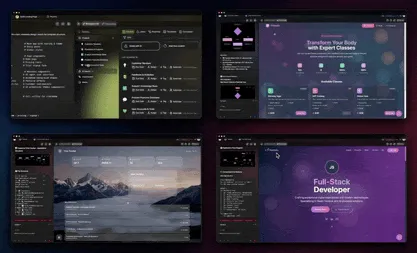
Memory ▲ Intelligence ■ Execution ● — a missed call writes memory, an agent reads it, an automation acts, and the outcome writes memory again.
Create your missed-call recovery app in Taskade Genesis → or start from the speed-to-lead appointment setter.