

All competitor prices verified from each vendor's own pricing page on 2026-08-11. Bubble's pricing page renders its numbers in script, so no figure is quoted here rather than repeating a second-hand one.
TL;DR: Taskade Genesis is the Glide alternative when data, AI agents, automations, and the client-facing app should be one system with one flat bill. Glide remains strong for a mobile app over a spreadsheet you already maintain. Free costs $0. Try Taskade Genesis free →
Why Teams Look for a Glide Alternative in 2026
The most common reason is not price. It is forecastability. Glide's metering unit has moved more than once over the platform's life - from spreadsheet edits, to "updates", to active users, and now to credits on GlideOS. Each change lands mid-project on people who already quoted a number to a client or a finance team.
That pressure is public. A Glide team member replying on Glide's own community forum on 2026-07-30 wrote that transparency on credit consumption "is one of the biggest pieces of feedback we've received over the last couple of months" and that the team was working through how to address it. That is a company acknowledging the problem in its own venue, which is a fairer signal than any review-site aggregate.
Glide now sells two separate products
This is a structural fact worth knowing before you invest a quarter in a build, and it comes from Glide's own pricing page. Verified 2026-08-11, Glide states that GlideOS "is a standalone product, completely separate from the original Glide platform (Glide Classic)", that it "has its own plans and pricing", that it "will require a separate subscription to use", and that "it is not accessible through the Glide Classic platform."
Practically, that means a Glide Classic builder evaluating GlideOS is evaluating a different platform with a different bill and no in-place upgrade. It also means most "Glide alternatives" articles still in the search results describe plan names that no longer exist.
The second-vendor problem
Glide's pitch is that you upload a spreadsheet and it builds the app. That is a real strength, and it is also the shape of the dependency. On the GlideOS free plan there is no database included at all, so your data has to live in someone else's product. Even on paid plans, the classic Glide build is deliberately spreadsheet-backed: Google Sheets, Excel, Airtable, QuickBooks, Salesforce, PostgreSQL, or Snowflake.
When the data lives there and the interface lives here, three things follow: two subscriptions, two sets of limits, and a row cap set by a company you did not choose for that reason.
GlideOS Pricing in 2026, Read From the Source
Verified from glideapps.com/pricing on 2026-08-11. Every rate on that page is presented as a monthly figure.
| GlideOS plan | Price | Projects | Apps | Storage | Team members | Credits |
|---|---|---|---|---|---|---|
| Free | $0/mo | 1 | 1 | 100 MB | 2 | Limited |
| Solo | $25/mo | 5 | Unlimited | 25 GB | 2 | 100, with steps to 10,000 |
| Team | $125/mo | 20 | Unlimited | 100 GB | From 5, slider to 100 | 500 + 50 per member |
| Enterprise | Custom | Custom | Unlimited | Custom | Custom | Custom |
Three details matter more than the headline $25:
- The database is not on Free. "Database included" first appears on Solo. The free plan is a place to learn the builder, not to run a business system.
- Two members is the ceiling until $125. Free and Solo both cap at 2 team members. The first plan that supports an actual team is Team, at $125 per month for five.
- Credits sit on top of the plan, not inside it. Solo's slider runs 100, 250, 500, 1,000, 2,500, 5,000, 7,500, 10,000 credits. The plan price is the floor; the invoice is the floor plus consumption.
The 9 Best Glide Alternatives in 2026
1. Taskade Genesis - best when the app, the data, and the AI should be one system
Taskade Genesis takes a prompt and ships a working app with its database, its AI agents, its automations, and its hosting already wired together. There is no second vendor holding your rows, because your Taskade projects are the database - the same records that the Table view shows, the agents read and write, and the automations act on.
That matters most to the people who run several systems at once. An IT program manager running a field-service dashboard, a revenue-operations consultant running a CRM, and a one-person agency shipping client portals all have the same problem: every extra tool is another bill, another login, and another sync that can drift.
Strengths
- Flat, forecastable pricing. Free is $0. Pro is $10/mo billed annually for up to 10 seats. Business is $25/mo billed annually with unlimited seats and custom domains. The number does not move because a build was busy this month.
- App end users are not workspace seats. People who sign in to a published Taskade Genesis app are managed separately from your workspace seats, so app adoption does not inflate your subscription.
- AI agents that act on the records. Taskade AI Agents v2 carry persistent memory, custom slash commands, and a built-in toolkit spanning web search, code execution, file analysis, multi-agent collaboration, and public embedding inside the app itself.
- Automations on 100+ bidirectional integrations. Triggers pull events in from Slack, Gmail, Stripe, HubSpot, Salesforce, Shopify, GitHub, and Calendly; actions push data back out.
- Multiple project views on one dataset. List, Board, Table, and Mind Map in the toolbar, plus Docs (Beta), Gantt Chart, Calendar, Actionsheet, and Org Chart under More Views. Gantt Chart, Actionsheet, and Org Chart need a paid plan.
- Frontier models from top AI labs, routed automatically so nobody manages API keys.
Trade-offs. Live web hosting for a published app starts on Pro, and custom domains start on Business. Free covers up to three Taskade Genesis apps rather than unlimited. And if your organization's data genuinely must stay in an existing Airtable base as the system of record, a portal tool that reads that base natively is the more direct fit.
Pricing. Free $0 (2 workspace members) · Pro $10/mo billed annually, $20 monthly · Business $25/mo billed annually, $50 monthly · Max $100/mo billed annually · Enterprise $250/mo billed annually.
2. Softr - best for a client portal over an existing Airtable base
Softr is the most direct like-for-like swap for a Glide build that reads Airtable. The block-based editor is quick, the permission model is mature, and the output is a clean web portal rather than a phone-shaped app.
Watch the app-user line. Verified on softr.io/pricing on 2026-08-11: Basic is $19/mo with 1 app user included and additional app users at $5/mo each; Pro is $99/mo with 2 included and $10/mo each after; Business is $329/mo with 3 included and $20/mo each after. Additional custom domains are $15/month, or $13/month billed annually. If your portal's whole point is that many clients log in, model that column before you commit.
Choose Softr if your system of record is Airtable and it is staying that way.
3. Noloco - best for an agency delivering client systems
Noloco titles its own pricing page around agencies and client delivery, and the plan shape reflects that. Verified 2026-08-11: Free $0; Build $79/month including 250 AI credits, 10 team seats with extra seats at $6 each, up to 1,000 client seats, and 25,000 records with additional blocks of 25,000 at $25. Credit packs run from $40 for 400 up to $1,850 for 10,000, and extra storage is $15/month per 10 GB.
It is a genuinely strong internal-tools builder with real permission depth. The thing to price honestly is that credits, records, seats, and storage are four separate meters.
Choose Noloco if you need granular per-client permissions on top of Airtable or a SQL database and you are comfortable managing four usage dials.
4. Stacker - best for relational client portals
Stacker sells one plan with everything in it and prices by credits. Verified 2026-08-11: Standard starts at $50/mo for 250 credits, then $100 for 500, $200 for 1,000, $500 for 2,500, $1,000 for 5,000, and $2,000 for 10,000. A free trial ships $100 in credits with no card.
The relational data model is a real upgrade over a flat sheet, and portals are the product's centre of gravity rather than a use case. The consideration is the same one that sends people away from GlideOS: your bill tracks consumption, so a busy month costs more than a quiet one.
Choose Stacker if you want a portal-first product with relational tables and you can live with credit-based billing.
5. AppSheet - best for Google Workspace field teams
AppSheet is Google's own no-code builder and it is the natural choice when your data already lives in Google Sheets and your team already has Workspace accounts. Offline capture, barcode scanning, and location capture are strong, which is exactly what a safety-inspection or work-order app needs in the field.
Verified on appsheet.com/pricing on 2026-08-11: Starter $5 USD per user per month, Core $10 USD per user per month, Enterprise Plus $20 USD per user per month. Publisher Pro apps can be used by an unlimited number of users for $50/mo/app.
Choose AppSheet if you are a Google Workspace shop with field staff and a predictable headcount. Per-user pricing is fine when the user count is known and stable; it is the wrong shape when a portal is meant to grow.
6. Adalo - best for true native iOS and Android apps
Adalo publishes to the App Store and Google Play, which Glide's web-app output does not do. Verified 2026-08-11: Free $0; Starter $36 per month billed annually; Professional $52 per month billed annually; Team $160 per month billed annually, with annual billing saving 20%. Store publishing also carries an Apple Developer account at $99/year and a Google Play account at a one-time $25.
Choose Adalo if a store listing is a hard requirement rather than a nice-to-have.
7. Bubble - best for a full web SaaS product
Bubble is the most capable general-purpose visual builder in this list. If you are building a real product with accounts, billing, marketplaces, and custom logic - not an interface over a table - Bubble is the ceiling-raiser.
It is also the steepest learning curve here, and its capacity model is workload-based rather than seat-based, which is its own forecasting exercise. Bubble's pricing page renders its figures in script and did not return quotable numbers to a raw fetch on 2026-08-11, so check it directly rather than trusting a number copied from a competitor's blog.
Choose Bubble if you are building a product, not an internal tool, and you have time to learn it.
8. Retool - best for developer-built internal tools
Retool is aimed at engineers wiring interfaces onto databases and APIs they already run. Verified 2026-08-11: Free $0 per builder and $0 per end user with 250 AI credits per month; Team $10/mo per builder and $5/mo per end user; Business $50/mo per builder and $15/mo per end user; Enterprise custom.
Choose Retool if you have developers, your data is already in Postgres or an internal API, and the interface is the only missing piece. Do not choose it if the person building is the same person who was building in Glide because Glide required no code.
9. FlutterFlow - best for a dev team shipping native apps
FlutterFlow generates real Flutter code you can export, which makes it the strongest answer to "what if we outgrow the platform". Verified 2026-08-11: Free $0; Basic $39/month; Growth $80 for the first seat and $55 for the second; Business $150 for the first seat and $85 for seats 2-5. Annual billing is advertised at roughly 25% off.
Choose FlutterFlow if you have engineering capacity and code ownership is a requirement.
Which Glide Alternative Fits Your Job?
| Your job | Best fit | Why |
|---|---|---|
| Field-service or work-order app for staff on phones | AppSheet, or Taskade Genesis | Offline-friendly capture vs. one system with agents on the records |
| Client portal over an existing Airtable base | Softr or Stacker | Native Airtable reads and mature permissions |
| Several client systems delivered by a small agency | Taskade Genesis or Noloco | Flat unlimited seats vs. agency-shaped seat tiers |
| Safety-inspection or compliance tracker | Taskade Genesis | Agents triage submissions and automations escalate them |
| Helpdesk with automated triage | Taskade Genesis | Agents classify and route tickets without a separate tool |
| App that must be in the App Store | Adalo or FlutterFlow | Real store publishing |
| Full SaaS product with billing and accounts | Bubble | General-purpose logic and data modelling |
| Internal tool on a database you already run | Retool | Built for engineers and existing infrastructure |
Is There a Free Glide Alternative?
Yes, and the honest answer is that "free" means very different things across this list. GlideOS Free gives you 1 project, 1 app, 100 MB of storage, 2 team members, a limited credit allowance, and no database, which makes it a place to learn the builder rather than a place to run something.
Taskade Free is $0 for 2 workspace members with public-link sharing, unlimited projects and tasks, the Free project views (Gantt Chart, Actionsheet, and Org Chart need a paid plan), up to three Taskade Genesis apps, and no AI credits at the start: you earn credits with referrals and invites, or buy a credit pack on any plan.
| Free tier | Seats | Apps | Database included | AI included |
|---|---|---|---|---|
| Taskade Free | 2 workspace members, public-link sharing | 3 Taskade Genesis apps | Yes - projects are the database | No AI credits at the start (earn or buy credits) |
| GlideOS Free | 2 team members | 1 app, 1 project | No | Limited credits |
| Softr Free | Free plan published | Limited | External (Airtable/Sheets) | Limited |
| Noloco Free | Free plan published | Unlimited apps, 2,000 records | External or Noloco tables | Limited |
| Retool Free | Free builders and end users | Limited | Your own database | 250 credits/mo |
Two caveats on the Taskade side, stated plainly: live web hosting for a published app starts at Pro ($10/mo billed annually), and custom domains start at Business ($25/mo billed annually). Free is enough to build and use three real apps; it is not enough to serve one on your own domain.
Pricing Compared: An Agency Running Five Client Systems
This is the scenario that separates the tools, because it is where per-seat and per-credit models compound. Assume a five-person agency running five client systems - a field-service tracker, a CRM, two client portals, and a helpdesk - with roughly 60 client-side users signing in across them.
| Cost line | GlideOS Team | Softr Pro | Retool Business | Taskade Business |
|---|---|---|---|---|
| Platform, 5 internal people | $125/mo | $99/mo | $250/mo (5 builders × $50) | $25/mo billed annually |
| 60 client-side users | Member slider above 5 | 2 included, then $10/mo each ≈ $580/mo | $15/mo each ≈ $900/mo | Included - app end users are separate from seats |
| AI usage | 500 credits + 50/member, then metered | Add-on | 3,000 credits/mo on plan | Monthly allowance + optional packs |
| Custom domain | Not listed on the pricing page | $15/mo per extra domain ($13 annual) | n/a | Included on Business |
| Data source | Included on paid; external Sheets or Airtable billed separately | Airtable billed separately | Your own database | Workspace is the database |
| 12-month platform floor | $1,500 | $1,188 before app users | $3,000 before end users | $300 |
The floor is the only honest thing to compare, because three of these four columns have a variable on top of it. That variable is the whole point: an agency that quoted a client a fixed monthly figure cannot absorb a bill that moves with how hard the AI worked that month.
For a solo operator the gap is smaller but the shape is the same. GlideOS Solo is $25/mo with 2 team members and 100 credits; Taskade Pro is $10/mo billed annually with 10 seats and unlimited Taskade Genesis apps.
Why Teams Choose Taskade Genesis Over Glide
Glide is a front end over a spreadsheet you rent separately; Taskade Genesis is one system where the data, the AI agents, the automations, and the client-facing app all live together. That means one bill instead of two, and no row limit set by a company you chose for a different reason. The price is flat and annual, so the number you approve is the number you pay. And the people who log into your published app are managed separately from your workspace seats, so success does not raise your invoice.
| Capability | Glide (GlideOS) | Taskade Genesis |
|---|---|---|
| Billing model | $25/mo Solo or $125/mo Team, plus metered credits | Flat $10 or $25/mo billed annually |
| Seats on the entry paid plan | 2 team members | 10 seats on Pro, unlimited on Business |
| Charge per app end user | Member-based on Team | No - end users are separate from seats |
| Database | Included on paid plans; free plan has none | The workspace itself, on every plan |
| AI agents on your records | Glide Agent, credit-metered | Agents v2 with persistent memory and a built-in toolkit |
| Automations | Workflows within the platform | 100+ bidirectional integrations |
| Views on the same data | App views | Multiple project views; Gantt Chart, Actionsheet, and Org Chart are paid-only |
| Custom domain | Not listed on the pricing page | Business and above |
| Workspace DNA loop | Not applicable | ▲ Memory · ■ Intelligence · ● Execution |
Every Taskade Genesis app runs on Workspace DNA: ▲ Memory (your projects and records), ■ Intelligence (agents that reason over them), ● Execution (automations that act and write back). Glide executes one slice of that loop extremely well - interface generation over existing spreadsheet data. The loop only closes when execution writes back into the same memory the intelligence reads from, which requires the database to be inside the system rather than rented next to it.
Choose Glide If...
Glide is the right answer for real situations, and pretending otherwise would waste your time.
- You need a polished mobile-first app this week and your data is already in a spreadsheet. Uploading a sheet and getting a phone-ready app out the other side is what Glide does better than almost anyone, and the visual output needs no design work.
- Your field team lives on phones. Glide's mobile output is its centre of gravity, not an afterthought, and that shows in day-to-day use for technicians, inspectors, and drivers.
- You want to start from a template. Glide's template marketplace and its spreadsheet-reading step mean you can be looking at a working app before you have decided on your data model, which is a genuinely good way to think.
Migrating From Glide
Your data moves; the app does not. No platform in this list imports a Glide app, so plan for a rebuild of the interface, the permissions, and the logic no matter which direction you go.
- Export your tables to CSV from Glide or from the underlying Google Sheet or Airtable base.
- Map your data model first. Decide which sheets become tables and which columns become relations before you touch a builder.
- Import into a Table view in a Taskade project, which turns those rows into live records rather than a static import.
- Describe the app you want and let Taskade Genesis generate the interface, the agents, and the automations on top of the records you just imported. Walk through a first build in five minutes.
- Rebuild permissions deliberately rather than replicating whatever accreted in the old app.
See a Working System Before You Rebuild
You do not have to take any of this on faith. These are live systems you can open, inspect, and clone - no signup, no credit card.
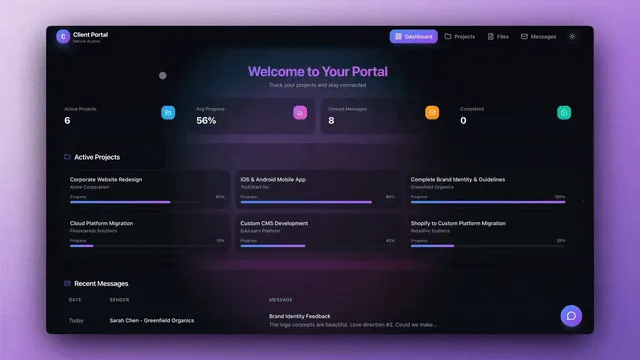
- Field service ops dashboard - the dispatch-and-status surface a program manager runs
- Field inspection audit board - safety and compliance checks from the field
- Work order board - jobs, assignees, and status in one place
- Preview a home-services client portal - the client-facing surface an agency ships
- Help desk tool with automated triage - tickets classified and routed by an agent
- Spreadsheet to ops app generator - the direct answer to a Glide-shaped build
- Browse the Community Gallery - real apps from real teams, cloneable
Frequently Asked Questions
Is there a free Glide alternative?
Yes. Taskade Free costs $0 with 2 workspace members and public-link sharing, unlimited projects and tasks, the Free project views (Gantt Chart, Actionsheet, and Org Chart need a paid plan), up to three Taskade Genesis apps, and no AI credits at the start (earn credits or buy a credit pack). Adalo, Softr, Noloco, Retool, Bubble, and FlutterFlow all publish free tiers too, though most cap you at one app or a small record count. GlideOS Free covers 1 project, 1 app, 100 MB storage, and no database.
What are the best Glide alternatives in 2026?
It depends on the job. Taskade Genesis when the database, agents, automations, and app should be one system. Softr and Stacker for Airtable-backed client portals. Noloco for agency client delivery. AppSheet for Google Workspace field teams. Adalo and FlutterFlow for native mobile. Bubble for full web SaaS. Retool for developer-built internal tools.
How much does GlideOS cost in 2026?
Verified on glideapps.com/pricing on 2026-08-11: Free $0 with 1 project and 1 app; Solo $25/mo with 5 projects, unlimited apps, a database, and 100 credits; Team $125/mo for 5 members with 20 projects and 500 credits plus 50 per member; Enterprise custom. Every rate on that page is shown monthly.
Is GlideOS the same product as Glide?
No. Glide's pricing page states that GlideOS is a standalone product, completely separate from the original Glide platform, with its own plans and pricing, requiring a separate subscription, and not accessible through the Glide Classic platform.
Why do teams look for a Glide alternative?
Forecastability. Glide's metering unit has changed more than once - spreadsheet edits, then updates, then active users, now credits - and each change resets a budget someone already approved. Glide itself has acknowledged the credit-transparency feedback publicly on its community forum.
What is Glide genuinely good at?
Getting a polished mobile-first app out of a spreadsheet faster than almost anything else, with a large template marketplace and connections to Google Sheets, Excel, Airtable, QuickBooks, Salesforce, PostgreSQL, and Snowflake. For a field team that needs a phone app over existing data this week, it is a strong choice.
Do I pay per person who uses the app I build?
Not on Taskade - end users of a published Taskade Genesis app are managed separately from workspace seats. Several alternatives price the other way: Softr adds app users at $5 to $20 per month, Retool charges $5 to $15 per month per end user, AppSheet is $5 to $20 per user per month, and Noloco adds seats at $6 above the included ten.
Can I keep using my existing spreadsheet data?
Yes. Import a CSV or Google Sheets export into a Taskade project's Table view and it becomes the app's database directly, or keep an external sheet in sync through Taskade's Google Sheets automation actions. The spreadsheet becomes optional rather than load-bearing.
Which alternative is best for a client portal?
Softr and Stacker if an Airtable base is the permanent system of record. For an agency shipping several portals, compare Noloco's agency plan against Taskade Business, where unlimited seats, custom domains, and app end-user management are included at $25/mo billed annually.
What project views does Taskade have?
List, Board, Table, and Mind Map in the toolbar, plus Docs (Beta), Gantt Chart, Calendar, Actionsheet, and Org Chart under More Views. The timeline lives inside Gantt Chart rather than being its own view. Gantt Chart, Actionsheet, and Org Chart need a paid plan.
Does Taskade Genesis include AI agents and automations?
Yes. Agents v2 carry persistent memory, custom slash commands, and a built-in toolkit covering web search, code execution, file analysis, multi-agent collaboration, and public embedding. Automations run across 100+ bidirectional integrations, and work is routed across frontier models from top AI labs.
Can I move my Glide app to another platform?
Your data moves; the app does not. Export tables to CSV, import them into the new tool, and rebuild the screens. On Taskade you import into a Table view and then describe the app you want, which collapses the rebuild into a prompt.
Ready to Compare It Yourself?
The fastest way to judge any of this is to build one of your five systems twice and see which bill you can predict. Taskade Free costs $0 and includes the full Taskade Genesis builder.
Explore Taskade Genesis
- AI App Builder - complete apps from one prompt
- AI Agent Platform - digital teammates that work around the clock
- AI Automation Platform - workflow automation across 100+ integrations
- AI Second Brain - searchable team knowledge
- Vibe Coding - natural-language app creation
Learn the Architecture
- How Workspace DNA Works - Memory, Intelligence, Execution
- Your first Taskade Genesis app in 5 minutes - step-by-step
- Custom AI agents - the Intelligence pillar
- Projects and databases - the Memory pillar
- What are project views? - the views that ship, and which are paid-only
Related Reading
- Best no-code builders 2026 - 10 platforms compared
- 15 best AI app builders compared - the wider category
- Client portal builder - ship a branded portal in five minutes
- How to build an internal tool without code - the internal-tools path
- Migrate from spreadsheets to AI dashboards - leaving the sheet behind
- Vibe coding for non-developers - shipping without code
- AI tools built with Taskade Genesis - real apps from real teams
- Origin of living software - why apps should keep running