Build Without Permission: Beyond Data Organization
We believe the future of work isn't just humans using AI. It's humans and AI working as one.
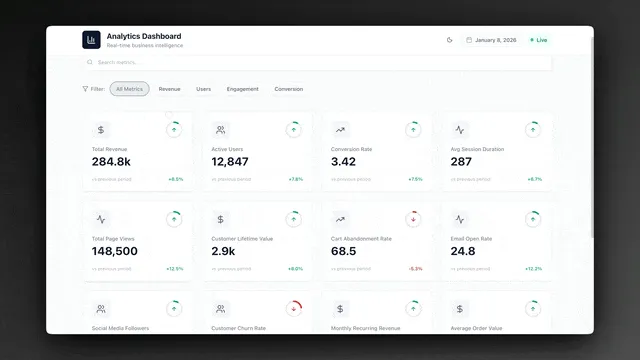
- One prompt = one app
- Your workspace = the backend
- Your agents = the team
- Your automations = the execution
Software should be alive. And now, it is.
What Is Airtable?
Airtable revolutionized database management when Howie Liu, Andrew Ofstad, and Emmet Nicholas launched it in 2012, creating a hybrid tool that merges spreadsheet simplicity with database power. This cloud-based platform democratized database creation, allowing non-technical users to build complex data structures without coding.
Airtable's database-first approach:
- Spreadsheet-like interface with database functionality
- Customizable field types and relational linking
- Multiple views (Grid, Calendar, Gallery, Kanban, Form)
- Basic automation through simple trigger-action rules
- App ecosystem for extended functionality
While Airtable excels at organizing and visualizing data, it remains fundamentally a static database system. Records require manual creation and management, insights depend on manual analysis, and scaling beyond data storage becomes challenging.
The Airtable reality:
- Data organization without intelligent action
- Manual record management and workflow progression
- Limited automation with rigid rule-based triggers
- No built-in communication or AI capabilities
- Performance issues with large datasets
Features of Airtable
Airtable has a few features to help you store and organize your data.
An Airtable Workspace contains Bases, which contain all your project information. Each Workspace will ideally have a few unique Bases which contain organizational information relating to that area.
Bases contain Tables, which take some inspiration from spreadsheets. Information in Airtable is stored within Tables, and you can have multiple Tables within your Base.
For example, you could have a content workspace, which contains an editorial base. Your editorial base would then contain a few tables such as an article ideas table, a blog schedule table, and other tables relating to editorial.
After storing your data, you can switch between a few views including the classic Spreadsheet view, Kanban, Gallery, Calendar, and Gantt view.
Airtable isn’t exactly beginner-friendly, but if used correctly it can be a powerful tool to store and organize your information. To make things easier for beginners, Airtable has templates available to help kickstart your project since every project begins as a clean slate.
In contrast, Taskade is a better free alternative to Airtable because Taskade is intuitive and has awide range of Templatesto help you organize just about anything.
Airtable also works with Zapier and Workato so that you can integrate with other apps within your Airtable and also automate certain tasks.
Additionally, you can also create interactive apps in Airtable for your team to use. Apps that you create will be stored by Airtable which means that it’s quite a hassle-free experience.
Airtable can be a powerful database tool to have, but that’s just about what it is. Sure, you can create customized reports and new workflows, but it simply isn’t a fullproject managementsuite that allows for real-time collaboration such as Taskade.
What Is Airtable Good For?
Every Airtable project starts as an empty sheet, which means that you can use it to input any sort of information. It is a flexible database tool that you can use to organize your data. You can use Airtable for accounting, inventory management, CRM, and more.
If spreadsheets are your cup of tea, then Airtable is for you. You can use it to create new processes and set up new sheets to help make reports easier to manage.
Although you can use Airtable for simple project management, we wouldn’t recommend using it for more complex projects that require collaboration as Airtable has limited communication and collaboration features.
What Are Some Limitations of Airtable?
Although Airtable works well as a database management tool, it is not beginner-friendly. Seasoned Airtable users and spreadsheet experts can probably make full use of Airtable’s capabilities.
However, if you’re a beginner, you’re likely to feel overwhelmed. If organizing information in excel is not your strongest suit, Airtable will probably be a complicated tool for you to master. You could learn how to use Airtable, but be prepared to invest some time in learning how to use it to your advantage.
If you’re here, it probably is because you’re looking for software to manage projects and to-do lists, and Airtable simply doesn’t have enough features for you to do this efficiently.
Airtable lacks proper communication features to help you communicate with your team. When it comes to real-time communication for project management, Taskade is the best free Airtable alternative. This is because Taskade offersfree and unlimited chatandvideo conferencingbuilt-in to every project so that you can communicate with your team without having to toggle between apps.
Airtable also does not support linking between bases. This means that if you need to access information from multiple bases, you will have to manually toggle between them.
Airtable is more of a replacement for Excel, not a project management tool. It is hard to communicate and assign tasks within Airtable. Although it is a good software to use for organizing data, there are better alternatives out there. If you’re a user looking for a tool to manage your projects, Taskade would be a better option for you.
Airtable Pricing
Airtable has 3 main pricing plans which include the Free Plan, Plus Plan, and Pro Plan. There is also an additional Enterprise plan which can be unlocked by getting in touch with their team.
Airtable Free Plan
A Free Plan is perfect for you if you’re a beginner to Airtable. It comes with everything you need to try out Airtable such as unlimited bases and 2GB of maximum storage per base. The free plan also includes all available views within Airtable and gives you the ability to create 1 app per base.
The Free Plan comes with 1200 records per base.
Airtable Plus Plan
If you require more features, Airtable’s Plus Plan brings up the maximum number of records to 5000 with 5GB of max storage per base. Airtable will also store your version history for up to 6 months so that you can revert your project back to a previous version.
The Plus plan lets you collaborate with unlimited users and gives you the ability to create 3 apps per base.
Airtable’s Plus Plan starts at $10 per user per month.
Airtable Pro Plan
The Pro Plan gives you up to 50,000 records with up to 20GB maximum storage per base, which means that it is catered more towards bigger businesses. It unlocks the Gantt and Timeline views plus keeps your version history for up to a year.
You can also create up to 10 apps per base with the option to create personal views that only you can see.
Airtable’s Pro Plan starts at $20 per user per month.
What Is Taskade?
Taskade transforms data organization into intelligent action. Founded by John Xie, Dionis Loire, and Stan Chang in 2017, this Y Combinator-backed platform takes the best of database management and adds the intelligence that Airtable lacks - AI agents, automated workflows, and Taskade app generation.
While Airtable organizes data, Taskade organizes intelligence. Every database becomes a potential application, every record becomes an automation trigger, and every team member gets AI agents that actively participate in data management.
What makes Taskade revolutionary:
Taskade App Building: From Database to Application
Transform data structures into live applications instantly. Describe your database need - "Create a customer relationship management system with automated follow-ups" - and watch complete business applications appear with forms, databases, AI agents, and automation workflows.
AI Agents: Intelligent Data Management
Deploy AI agents that actively manage databases - creating records based on patterns, automatically categorizing information, identifying data inconsistencies, and generating insights from your structured information.
Intelligent Data Organization
Experience databases that think. Records automatically organize by relevance, patterns trigger smart notifications, and data relationships get optimized based on usage patterns. Your information becomes predictive and proactive.
8 Dynamic Views, Not Just Tables
Switch seamlessly between Grid, List, Board, Mind Map, Calendar, Table, Org Chart, and Action views - all with real-time data synchronization. Your team can work in their preferred view while data stays perfectly synchronized.
Built-in Collaboration Intelligence
Chat, video calls, and real-time editing work seamlessly within every database. AI enhances data discussions with context, suggests data improvements, and ensures nothing gets lost in your information management.
Experience database management that actually thinks and acts. Start building today.
Key Features of Taskade
Project Views. Visualize your projects in several different ways. Cycle between the List, Mind Map, Org Chart, and Board views to work the way you want.- List View. This is the default view on Taskade. Create new listshere.
Board View. This view lets you work horizontally like a Kanban board. Visualize your workflow and tasks in this full-width view.
Mind Map View. This view lets you work in a horizontal tree-structured manner and map out what you have in mind.
Action View. Work in table view and stay organized with your task due dates, and more.
Org Chart View. Break down larger tasks into smaller ones to help you get things done.
Fold/Unfold. Fold (collapse) a parent task/bullet element to hide its subtasks. Indent outline elements with ⌨️ Tab and unfold lists with ⌨️ Shift+Tab.
Real-time Communication. Chat and video conference with your team while collaborating in real-time on the same page.
500+ Templates. Choose from 500+ templates across 26 categories to improve your productivity and workflows. Customize existing templates or create new ones across your workspaces.Zoom In, Zoom Out. Get a bird’s-eye view of the workflow by zooming out on all project views, or zoom in to focus on a specific area.
Multi-Select. Select and format multiple blocks or bulk assign them as tasks to other team members. You can also copy, paste, or indent selected blocks.
Customize Sub-Tasks. Customize the format of your sub-tasks at individual levels. Choose from headings, numbered lists, shapes, and more.
Recurring Tasks. Add due dates with start and end times to tasks within your project and set them to repeat daily, weekly, monthly, or even yearly.
Move Tasks. Move and copy selected tasks to other projects across any workspace. You’ll receive a pop-up notification on completion.
User Roles & Permissions. Manage collaborators and assign user roles/editing privileges (Owner, Admin, Editor, Checker, Viewer).
Sort Tasks. Sort sub-tasks/children elements by completed/uncompleted stats or the due date. Task sorting can be accessed from a convenient pop-up menu.
Search. Search within projects or globally across workspaces and subspaces. Instantly browse and jump between projects anywhere in the Taskade.
Keyboard Shortcuts. Navigate projects, create content blocks, reorder elements, and complete tasks using a set of handy keyboard shortcuts.
Team Calendar. Aggregate all tasks and projects in a shared calendar. The Taskade calendar integrates with Google (two-way), Apple, and Outlook.
Reorder Tasks. Lists in Taskade aren’t set in stone. Reorder tasks and find them a new home with intuitive drag-and-drop mechanics.
Project History. See all the changes made by you and other collaborators. Click on the entries to navigate to the edited items within the project.
Version History. Taskade saves snapshots of your project so that you can restore a previous version of your project with a single click.
Export and Print. You can export your projects as plain text or markdown files. Attach them to emails, presentations, or for print.
Cloud File Upload. Share files directly from Google Drive, Dropbox, Instagram, and Box in your projects with our integrations.
Breakdown Larger Tasks. Organize your thoughts with Taskade’s unlimited hierarchy to break down large projects into tasks.
Quick Search. Use CMD / CTRL + K to jump between any projects within Taskade web and apps.
For an exhaustive list of Taskade’s features, clickhere.
Taskade Pros
- Free-forever plan is loaded with features
- Unlimited tasks and projects even on the free plan
- Real-time collaboration within the same project
- Free built-in video call and chat function in each project
- Customizable templates to give you a headstart
- Work and chat in the same window, in the same app
- Frequent updates based on user/yourfeedback and suggestions
- Tabbed workflow for working with multiple Projects
Taskade Cons
- No custom APIs (yet)
Taskade Pricing
Taskade Free Plan
- Unlimited Tasks & Projects
- Unlimited Members & Guests
- Unlimited Folders & Teams
- Templates, Calendar, Repeat Tasks
- Real-time Collaboration
- Built-in Free Chat and Video Call
Taskade Unlimited Plan– Starts from $5/month
- Everything in Free, plus:
- Version History
- Advanced Permission
- Cloud Upload Integration
- 2-Way Calendar Integration
Taskade is a better alternative to Airtable because it offers a more robust solution for your productivity needs at a competitive price. Taskade offers unlimited tasks and projects even with our free plan to help you organize your projects and to-do lists.
Click herefor more information.
Airtable vs Taskade
Airtable and Taskade are both popular productivity tools that offer unique features for organizing and managing tasks, projects, and data. While both have their strengths, Taskade edges ahead in several key areas.
Airtable is a powerful database management tool that allows users to create and customize their own databases, spreadsheets, and collaborative workspaces. It offers a range of templates and advanced filtering options, making it ideal for data-heavy projects. Airtable also integrates with various apps and services, providing seamless workflow automation.
Taskade, on the other hand, offers a more intuitive and flexible approach to task management. It combines features of project management, note-taking, and team collaboration into a unified platform. Taskade’s sleek interface and minimalist design make it user-friendly, allowing for quick and effortless task creation and organization. It offers a variety of project templates tailored to different industries and use cases.
What sets Taskade apart is its emphasis on real-time collaboration. Multiple users can work simultaneously on the same project, making it perfect for remote teams. Taskade also offers integrated chat and video conferencing, eliminating the need for third-party communication tools. This seamless collaboration ensures effective teamwork and enhances productivity.
Additionally, Taskade takes productivity to the next level with Taskade AI — Your very own AI productivity assistant. Built into every project, Taskade AI gives you access to AI-powered chat, workflow generators, intelligent task lists, mind maps, and more! Powered by the OpenAI GPT-4 API and ChatGPT, Taskade AI helps you and your team work smarter to get more things done together.
Not only that, but Taskade shines in terms of mobility as well. It provides native apps for all major platforms, including desktop, web, iOS, and Android. Users can seamlessly switch between devices while maintaining a consistent experience. Taskade also offers offline access, enabling users to work without an internet connection and sync their changes once they are back online.
While Airtable’s extensive database capabilities make it a suitable choice for data-centric projects, Taskade’s user-friendly interface, real-time collaboration, and mobility features make it the more favorable option for team collaboration and task management. Taskade’s versatility, intuitive design, and seamless integration of project management and communication make it a standout choice for teams looking for an all-in-one solution to streamline their workflows.
Why Teams Choose Taskade Over Airtable
The fundamental difference is evolution: Airtable represents traditional database management, while Taskade embodies intelligent data transformation.
Static Records vs. Intelligent Data
Airtable excels at storing and organizing structured data through customizable fields, views, and basic automation. You create databases, input records, and analyze information through various visualizations. It's powerful but requires constant manual oversight.
Taskade transforms data into intelligent systems. Your information becomes the foundation for AI agents that work autonomously, automations that handle routine data management, and applications that evolve with your business needs.
Manual Management vs. AI-Powered Insights
Airtable requires manual data entry, categorization, and analysis. Creating relationships between records, maintaining data consistency, and generating insights all depend on human intervention and expertise.
Taskade works through intelligent automation. Describe your data management challenge, and watch complete solutions appear - with AI agents handling data entry, smart categorization, and predictive analytics.
Per-User vs. Team Intelligence
Airtable's per-user pricing model becomes expensive as teams grow. A 20-person team pays $480/month for Pro features, and costs escalate quickly with advanced database capabilities.
Taskade's flat-rate team pricing includes AI agents, automation, and advanced features for the entire team. Our $19/month Pro plan supports 20 team members - that's $461 less per month than Airtable Pro.
Rule-Based vs. Adaptive Intelligence
Airtable's automation follows simple trigger-action rules that break when data structures change. "When record is created, then send email" works until your database schema evolves or business requirements shift.
Taskade's AI-powered automation adapts to changing conditions, learns from data patterns, and makes intelligent decisions. Your workflows evolve with your business instead of requiring constant reconfiguration.
Database-Only vs. Complete Applications
Airtable stops at data storage and basic visualization. Building actual business applications requires external tools, complex integrations, and often custom development work.
Taskade transforms databases into complete applications instantly. Your data becomes the foundation for forms, dashboards, automation workflows, and AI-powered business systems - all generated from natural language descriptions.
The Bottom Line
Choose Airtable if you need a sophisticated database with spreadsheet-like functionality and don't mind manual data management.
Choose Taskade if you want your data to become intelligent systems that think, learn, and act autonomously while your team focuses on strategic work instead of data maintenance.
Ready to experience intelligent data management? Start with Taskade and see how AI transforms the way teams work with information.
Current Pricing Comparison
Taskade
- Free Plan: AI agents, unlimited projects, intelligent data management
- Pro Plan: $19/month for 20 team members with Taskade app building
- Business Plan: $49/month for 50 team members with enterprise AI
Airtable
- Free Plan: Very limited (1,200 records per base, basic features)
- Team Plan: $24/month per user (20 users = $480/month)
- Business Plan: $54/month per user (20 users = $1,080/month)
Taskade delivers more intelligence, better collaboration, and complete application building at a fraction of Airtable's cost - with AI capabilities that transform data management beyond traditional databases.