

TL;DR: Bubble is the deepest visual builder for complicated logic, with Starter at $59 a month and Growth at $209. Taskade Genesis is the pick when you want the app plus the workspace that runs it: one prompt returns a deployed app with AI agents, automations, and 100+ integrations. Free Forever, Pro $10/mo billed annually. Try Taskade Genesis free →
The 9 best Bubble alternatives at a glance
Every price below was read directly from each vendor's own published pricing page in August 2026. Where a vendor offers an annual discount, the annual figure is shown and labeled.
Why teams look for a Bubble alternative
Bubble is one of the most capable no-code platforms ever built, and it has stayed capable — the current plans include a native mobile editor and app store publishing alongside the web builder, which is a meaningful expansion. Teams still shop around, usually for one of four reasons.
The editor has a real learning curve. Bubble is visual programming, not templating. Pages, data types, workflows, conditionals, and states are all concepts you have to hold in your head. People who have the time find it powerful. People who need something working this week often do not get there.
App editor seats are tiered tightly. Free and Starter both include 1 app editor. Growth includes 2. Team includes 5. If two people need to work in the builder at once, that is a $209/month decision, not a preference.
Workload units are a capacity ceiling to plan around. Bubble bundles workload into every plan — 50K/month on Free, 175K on Starter, 250K on Growth, 500K on Team — and its own FAQ confirms you can disable overages so the app never bills past its allowance. That removes the surprise-invoice risk, but it means growth conversations become plan-upgrade conversations.
The entry price to go live is $59/month. Free is a development plan. A live website on a custom domain starts at Starter, billed annually.
None of that is a criticism of the product. It is a description of a specific trade — depth and control in exchange for time and money.
What Bubble actually costs in 2026
This is worth stating plainly because a large share of the "Bubble alternatives" articles currently ranking still quote Bubble's older pricing structure. The figures below were read from Bubble's own pricing page:
| Bubble plan | Price (billed annually) | App editors | Workload units/mo | Notable |
|---|---|---|---|---|
| Free | $0 | 1 | 50K | Development version, API connector, native mobile editor, on-device testing, 6 hrs server logs |
| Starter | $59/mo | 1 | 175K | Live website, custom domain, recurring workflows, basic version control, 5 app store build submissions/mo, 3 live app versions |
| Growth | $209/mo | 2 | 250K | Premium version control, two-factor authentication, 10 custom branches, 10 build submissions/mo, 5 live app versions |
| Team | $549/mo | 5 | 500K | Sub apps, 25 custom branches, 20 build submissions/mo, 8 live app versions, 20 days server logs |
| Enterprise | Custom | Custom | Custom | Choice of hosting location, customizable server, dedicated support, pay by invoice or ACH |
Bubble advertises savings of up to 20% for paying annually. Two details most roundups miss: the native mobile editor and on-device testing are available on the Free plan, and workload overages can be disabled entirely, so the metered-billing anxiety that dominated older articles no longer describes the product accurately.
What it costs to launch one app
Headline prices are not comparable across these platforms because they bill on different units — editors, developers, projects, members, credits, records. The most honest single comparison is: what is the cheapest paid plan that lets one person publish one real app, monthly equivalent, with annual billing where the vendor offers it.
What each number does and does not include:
- Taskade $10 — Pro, up to 10 seats, unlimited apps. Custom domains for Taskade Genesis apps are a Business feature at $25/month billed annually.
- Softr $19 — Basic, 1 builder included (additional builders $5/month), custom domain, conditional form logic, Softr API and MCP.
- Replit $20 — Core billed annually, $25 of monthly credits, up to 5 collaborators, publish in any region, badge removed.
- WeWeb $20 — Essential, which adds code export, GitHub sync, and unlimited WeWeb Cloud sessions. Going live on a custom domain adds a WeWeb Cloud plan starting at $13/month.
- Lovable $25 — Pro, 100 monthly credits, unlimited users, custom domains, credit rollovers, badge removed.
- Glide $25 — Solo, 5 projects, database included, 100 credits, 25 GB storage.
- Adalo $36 — Starter billed annually, 1 published app, 1 app editor, custom domain, web publishing, automated app store publishing, and explicitly no usage-based charges.
- FlutterFlow $39 — Basic, unlimited projects, source code and APK download, custom domain, one-click app store deployment, 100 Lite credits/month.
- Bubble $59 — Starter billed annually, 1 app editor, live website with custom domain, 175K workload units/month.
- Knack $59 — Starter billed monthly, with unlimited users and roles, 20K database records, and 25 AI credits. New customers currently see a promotional $19/month for the first three months.
The pattern: the platforms that ask you to learn a visual editor mostly cost more than the platforms that ask you to describe what you want. That gap did not exist two years ago.
What six months actually costs
Entry price is not the whole bill. Here is a six-month run for a small team operating one client portal, priced from each vendor's own published rates. Bubble is costed on Growth rather than Starter because this team needs two people in the builder, and Growth is the first tier that allows it.
Bubble, on Growth:
- Plan: $209/month billed annually × 6 = $1,254
- Plugins for AI, payments, and analytics: roughly $30/month × 6 = $180
- One-time help tuning performance and workload consumption: roughly $1,000
- Workload: 250K units/month included, and overages can be disabled, so the ceiling here is capacity rather than cost
Six-month total: roughly $2,434.
Taskade Genesis, on Pro:
- Plan: $10/month billed annually × 6 = $60, covering up to 10 seats
- Data layer, AI agents, automations, hosting, and real-time collaboration included
Six-month total: $60.
The consulting line is the honest variable — plenty of teams never spend it. Take it out entirely and Bubble Growth still lands near $1,434 against Taskade's $60. The gap is not really the subscription. It is everything the subscription does not cover.
The nine alternatives, reviewed
1. Taskade Genesis — best when you want the app, not the editor
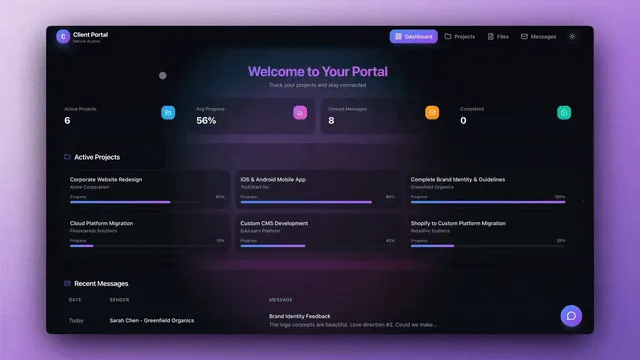
Taskade Genesis is the AI app builder inside the Taskade workspace. You describe what you need — "a client portal where each customer sees only their own projects, with a weekly status email" — and Taskade Genesis ships a deployed app with an interface, a data layer, AI agents, and automations already wired together.
There is no page editor. Taskade EVE, the meta-agent that orchestrates Taskade Genesis builds, provides access to 15+ frontier models from OpenAI, Anthropic, and open-weight providers so nobody manages API keys or rate limits.
Underneath the app sits a real workspace rather than a black box: projects and tasks across multiple views (List, Board, Table, Mind Map, Docs (Beta), Gantt Chart, Calendar, Actionsheet, and Org Chart; Gantt Chart, Actionsheet, and Org Chart are paid-only), 100+ bidirectional integrations where triggers pull events in and actions push data out, real-time multiplayer editing with comments and chat, and a hosted MCP server on every paid plan so Claude Desktop, Cursor, and VS Code can read from the same data.
Free plan: unlimited projects and tasks with basic views, 2 workspace members with public-link sharing, 3 Taskade Genesis apps across the workspace, 1 AI agent, 10 automation runs per month, 250 MB storage, a template library, and a one-time grant of 1,000 AI credits on signup verification plus 5,000 on your first build — deliberately sized to fund one complete app end to end.
Paid, billed annually: Pro $10/month for up to 10 seats, Business $25/month with unlimited seats, SSO/SAML, and custom domains for Taskade Genesis apps, Max $100/month, Enterprise $250/month with SCIM and a custom SLA. Monthly billing is $20, $50, $200, and $500.
Best for: founders, operators, and teams who need a working internal system quickly and are happy for the AI to make the interface decisions.
Not for: consumer products where a distinctive, pixel-controlled interface is the product. That is a Bubble, Webflow, or FlutterFlow job.
2. Softr — portals and business apps without the canvas
Softr builds business apps, client portals, member directories, and internal tools using visual blocks on top of structured data. The free tier is unusually generous for the category: unlimited apps, databases, workflows, and forms with 3 builders, 5 app users, 5,000 database records, 500 workflow actions per month, and 5 AI credits per month. Basic at $19/month adds a custom domain, conditional form logic, Softr API and MCP access, and 10 AI credits per month, with 1 builder included and additional builders at $5/month.
Check the record and workflow-action ceilings against your actual data volume before committing — they are the constraint that arrives first.
Best for: gated portals where the value is controlled access to data, not a custom interface.
3. Glide — apps shaped like your spreadsheet
GlideOS builds internal business apps from a spreadsheet, a prompt, or a file, and it is billed separately from the original Glide platform. Free covers 1 project with limited credits and 100 MB of storage. Solo at $25/month gives you 5 projects, an included database, 100 credits, and 25 GB. Team at $125/month starts at 5 members with 50 credits included per member, a team dashboard, member-only sign-in, and 100 GB. Enterprise adds single sign-on, custom connectors, and 90-day backups.
Best for: operations teams whose source of truth is already a sheet and who want a clean mobile-friendly front end on it.
4. Knack — the unlimited-users option
Knack is a no-code relational database with a front-end web app designer on top, and its defining commercial feature is that users and roles are unlimited on every tier. Starter is $59/month billed monthly with unlimited users, unlimited tables, fields and pages, unlimited emails and forms, 3 apps, 20,000 database records, 2 GB file storage, basic SSO, and 25 AI credits. Pro at $130/month adds unlimited apps, branding removal, scheduled tasks, e-commerce payments, 2FA for app users, 1 custom domain, 50,000 records, and 10 GB. Corporate starts at $300/month with advanced SSO, app restores, 3 custom domains, and 125,000 records. New customers currently see promotional first-three-month pricing of $19 and $49 on the first two tiers.
Best for: membership systems, work-order tracking, and anything where hundreds of people need logins.
5. Adalo — flat pricing for App Store publishing
Adalo builds mobile and responsive web apps on a drag-and-drop canvas with a hosted Postgres database, and it markets hard on the absence of usage metering — every tier is labeled "no usage-based charges." Free gives you 500 records per app, unlimited app actions, 1 app editor, unlimited screens, and unlimited test apps. Starter at $36/month billed annually publishes 1 app with a custom domain, web publishing, automated app store publishing, branding removal, and 5 GB of team storage. Professional at $52/month adds 2 published apps, 5 app editors, custom integrations, push notifications, geolocation, and app analytics. Team at $160/month gives 5 published apps, 10 app editors, Xano integration, the Collections API, version history, and white labeling.
Best for: getting an app into the App Store and Google Play with a bill you can forecast a year out.
6. FlutterFlow — the exit-path option
FlutterFlow builds mobile, web, and desktop apps visually and generates real Flutter source code you can download and take with you. Free covers up to 2 projects with the visual environment, 1,000+ templates, API and data integration, web publishing, and 10 Lite credits. Basic at $39/month unlocks unlimited projects, source code and APK download, custom domain web publishing, and one-click app store deployment. Growth is $80 for the first seat and $55 for the second, adding GitHub integration, real-time collaboration for 2 users, branches, and localization. Business is $150 for the first seat and $85 for seats 2 through 5, adding collaboration up to 5 users, automated tests, and Figma frame import.
The code export is the real argument here. If there is any chance you will hand this to engineers later, FlutterFlow is the only mobile option in this list that makes that handoff clean.
Best for: teams building a mobile product they may eventually want to own as code.
7. WeWeb — front end only, backend yours
WeWeb deliberately does not try to be your backend. It builds the front end visually and connects to whatever data layer you already run. Free includes the visual editor, API and data integration, imported coded components, responsive web apps, WeWeb Cloud hosting up to 1,000 sessions, and 1 million AI tokens. Essential at $20/month adds code export, self-hosting, GitHub sync, unlimited cloud sessions, unlimited MCP server access, and 10 million AI tokens. Pro at $50/month per developer adds seats and collaboration, hourly auto-backups, and 25 million tokens. Hosting is priced separately through WeWeb Cloud, starting at $13/month for a custom domain and climbing to $208/month at the top published tier.
Best for: teams that already have a Supabase, Xano, or custom API and only need a front end.
8. Lovable — describe it, get a real web app
Lovable is an AI software engineer you chat with. Free includes workspace-private projects, unlimited collaborators, 5 lovable.app domains, and free daily grants. Pro at $25/month adds 100 monthly credits, credit rollovers, on-demand top-ups, unlimited lovable.app domains, custom domains, user roles and permissions, and badge removal. Business at $50/month adds a team workspace, role-based access, internal publish, SSO, a security center, and design templates. Enterprise adds SCIM directory sync, audit logs, publish restrictions, data residency, and GitHub Enterprise support.
Note the credit expiry mechanics before you buy: Lovable's own FAQ states monthly plan credits expire two months after issue, annual plan credits expire one month after the annual period ends, and top-up credits last twelve months.
Best for: builders who want production web app code from a conversation and are comfortable reading what came out.
9. Replit — AI building inside a real dev environment
Replit pairs an AI agent with a full cloud development environment, which makes it the most technical option in this roundup and the most capable if things go sideways. Free Starter includes daily agent credits, a built-in database for full-stack apps, and 1 published project. Core is $20/month billed annually with $25 of monthly credits, up to 5 collaborators, 2 parallel agents, unlimited workspaces, and badge removal. Pro is $95/month billed annually with $100 monthly credits, up to 15 collaborators, 50 viewers, 10 parallel agents, access to the most powerful models, and 28-day database rollbacks. Enterprise adds SSO/SAML, custom seat limits, VPC peering, and single-tenant environments.
Best for: technical founders who want AI speed without giving up a terminal.
How to choose
The question that resolves most of this is not "which is most powerful" — it is "what do you want to be responsible for."
Three checks that catch most bad shortlists:
- Count the editors you need. Bubble, Adalo, and FlutterFlow all tier collaborative editing. If two people build together, price the tier that allows it, not the entry tier.
- Separate build cost from run cost. WeWeb prices hosting separately. Bubble meters workload. Lovable and Replit meter credits. Adalo and Taskade do neither. The number on the pricing card is not the bill.
- Decide whether you need an exit path. FlutterFlow, WeWeb, Lovable, and Replit all let you leave with code. The others do not. That is worth real money if the app succeeds.
When Bubble is still the right call
Stay on Bubble if the interface is genuinely the product and you need control over every element, if you want one platform covering web and native mobile from a shared backend and database, if you value the plugin ecosystem and the depth of the workflow engine, and if you have the time to become fluent in the editor. Bubble's sub-apps, custom branches, and premium version control on higher tiers are real engineering-grade capabilities that most of this list does not attempt.
Look elsewhere if you need something working before you could finish learning the editor, if more than one person needs to build simultaneously on a small budget, or if you would rather describe the outcome than construct it.
Clone a working app instead of building one
If you want to see the describe-it-and-ship path before committing, these are live and cloneable:
- Client portal
- CRM dashboard
- Or describe the app you need and Taskade Genesis builds it from that prompt
Frequently asked questions
How much does Bubble cost in 2026?
Billed annually: Free at $0, Starter at $59/month, Growth at $209/month, Team at $549/month, and Enterprise quoted custom. Bubble advertises savings of up to 20% for paying annually. Many comparison articles still quote the older $32 to $399 range, which no longer matches the published pricing page.
Did Bubble raise its prices in 2026?
Yes, and the entry tier roughly doubled. Bubble's older published entry price sat in the $29 to $32 range depending on billing period; Starter is now $59/month billed annually, with Growth at $209 and Team at $549. If you budgeted against the old entry price, renewal is the moment that shows up.
Does Bubble have a free plan?
Yes, and it is more capable than most articles suggest — a development version, the API connector, 1 app editor, 50,000 workload units per month, the component library, the web debugger, the native mobile editor, the mobile debugger, and on-device testing.
Does Bubble's free plan let me launch a live app?
Not on your own domain. Free is a development plan: you can build, preview, and test on device, but a live website on a custom domain starts at Starter, $59/month billed annually. Taskade Genesis publishes a real, shareable app on the Free plan, and a custom domain for that app is a Business feature at $25/month billed annually.
What are workload units and should they worry me?
Workload units are Bubble's single usage metric, aggregating the server resources needed to host and run your app — 50K/month on Free, 175K on Starter, 250K on Growth, 500K on Team. Bubble's own FAQ confirms overages can be disabled at any time so the app never exceeds its allowance. The thing to plan for is capacity, not an unexpected invoice.
How does Bubble's workload unit pricing compare to flat-rate pricing?
Bubble bundles an allowance into each plan and prices consumption beyond it, and since overages can be switched off the app stops at the allowance rather than billing past it. That makes growth a plan-upgrade conversation. Taskade is flat-rate — Pro $10/month, Business $25/month, Max $100/month, billed annually — with hosting, AI credits, agents, and automations included and nothing metered to forecast.
Can Bubble build native mobile apps now?
Yes. Current plans include a native mobile editor, a mobile debugger, and on-device testing on Free, with app store build submissions on paid tiers — 5 per month on Starter, 10 on Growth, 20 on Team. Articles describing Bubble as responsive web only are out of date.
What are Bubble's strengths?
Depth. Granular control over every element on a page, a workflow engine that handles genuinely complex logic, a plugin marketplace more than a decade in the making, and engineering-grade features on higher tiers — sub apps, custom branches, premium version control. If the interface is the product and you have time to learn the editor, nothing else on this list matches it.
What is the best free Bubble alternative in 2026?
For non-technical builders who want a working app fast, Taskade Genesis is free forever with unlimited projects and tasks, 3 Taskade Genesis apps, 1 AI agent, 10 automation runs per month, and a template library. Softr's free tier is the most permissive for building several apps. Glide's covers 1 project. Bubble's own free plan is real too, so the question is which build model fits you.
What is the cheapest Bubble alternative?
Among paid entry tiers, Taskade Pro at $10/month billed annually is the lowest in this roundup, followed by Softr at $19 and Replit Core and WeWeb Essential at $20. Among free tiers, Softr's is the most permissive for building multiple apps, and Taskade's Free plan is the only one that includes AI agents and automations at no cost.
Which Bubble alternative is best for mobile apps?
Adalo and FlutterFlow, and both publish to the Apple App Store and Google Play. Adalo's automated app store publishing starts at $36/month billed annually with no usage-based charges. FlutterFlow's one-click deployment starts at $39/month and hands you real Flutter code, which is the cleanest exit path here. Bubble itself now includes app store build submissions on its paid tiers.
Which alternatives let me export the code?
FlutterFlow exports Flutter source and APKs on Basic and above. WeWeb offers code export and self-hosting from Essential. Lovable and Replit produce real code you own. Bubble, Softr, Glide, Knack, Adalo, and Taskade Genesis are hosted platforms without a code export path.
Can more than one person edit at the same time?
Bubble: 1 editor on Free and Starter, 2 on Growth, 5 on Team. Adalo: 1, 1, 5, 10 across its four tiers. FlutterFlow: 2 users on Growth, 5 on Business. Knack and Lovable advertise unlimited users. Taskade includes real-time multiplayer editing, comments, and chat on every plan, with 2 workspace members and public-link sharing on Free and up to 10 seats on Pro.
How long does it take to ship an app with each platform?
Taskade Genesis is minutes from prompt to deployed app, because there is no interface to design. Bubble, Adalo, FlutterFlow, and WeWeb are hours to days for a first real version. Softr and Glide land in between when the data already exists. The number that matters is not the feature count — it is how long until version one is in front of someone.
Can I migrate an existing Bubble app?
There is no automated import into any of these platforms. Migration means rebuilding, which is why "how long to rebuild" matters more than any feature matrix. Prompt-driven builders compress that rebuild the most; visual editors compress it the least but give you the most control over the result.
How is Taskade Genesis different from Bubble?
Bubble is a visual platform where you place and wire every component in a page editor. Taskade Genesis is an AI workspace where you describe the app and it ships — interface, data layer, AI agents, and automations across 100+ integrations, deployed and connected. No page editor, no workflow canvas, no usage allowance to plan around.
Do I need to learn a visual editor to use Taskade Genesis?
No, and that is the structural difference from most of this list. Bubble, Adalo, FlutterFlow, and WeWeb all ask you to become fluent in an editor before you ship anything. With Taskade Genesis you describe the app in plain language and get it back built.
How does Taskade pricing compare to Bubble?
Taskade is flat-rate: Pro $10/month billed annually for up to 10 seats, Business $25/month billed annually with unlimited seats, SSO/SAML, and custom domains for Taskade Genesis apps. Bubble's equivalent launch tier, Starter, is $59/month billed annually with 1 app editor. Both include hosting.
Does Taskade Genesis include AI agents?
Yes, and they stay inside the finished app — persistent memory, a built-in tool set, custom tools you define, and public embedding inside Taskade Genesis apps. The Free plan includes 1 agent. Bubble has no native AI agents; AI arrives through paid plugins or your own API calls.
Do any of these include AI agents that keep working after the app ships?
This is where the category splits. Lovable and Replit use AI to build the app; the running app is ordinary code. Taskade's agents live inside the finished app, so they keep categorizing, routing, and drafting after launch. Knack, Softr, Glide, and Adalo all ship AI assistant features on paid tiers with narrower scope.
Which AI models does Taskade Genesis use?
15+ frontier models from OpenAI, Anthropic, and open-weight providers. Taskade EVE, the meta-agent that orchestrates Taskade Genesis builds. Nobody wires up API keys, manages providers, or watches rate limits.
Does Taskade Genesis include workflow automations and integrations?
Yes — automations across 100+ bidirectional integrations including Slack, Gmail, Stripe, HubSpot, Salesforce, Notion, Shopify, Google Sheets, GitHub, and Calendly. Triggers pull external events in, actions push data out, and the automations ship with the app rather than being bolted on afterwards. The Free plan includes 10 automation runs per month.
Does Taskade require a credit card to start?
No. The Free plan is free forever and includes a one-time grant of 1,000 AI credits on signup verification and 5,000 on your first build — enough to build one complete Taskade Genesis app end to end.
Get started with Taskade Genesis
Describe the app you need. Taskade Genesis builds it — interface, data, agents, and automations — with no visual editor to learn and no workload metering to plan around.
Explore Taskade Genesis
- AI App Builder — Build complete apps from one prompt
- Vibe Coding — Natural language app creation
- AI Website Builder — Create websites without code
- AI Agent Platform — Digital teammates that work around the clock
- AI Automation Platform — Workflow automation across 100+ integrations
- AI Second Brain — Searchable team knowledge
Learn the Taskade Genesis architecture
- First-app guide — 5-minute tutorial
- Custom AI Agents — The Intelligence pillar
- Projects & Databases — The Memory pillar
- Automations & Workflows — The Execution pillar
- How Workspace DNA Works — Memory, Intelligence, and Execution
- Origin of Living Software — The vision behind Taskade Genesis
Build without code
- AI App Generator — Full apps from prompts
- AI Dashboard Generator — Business dashboards
- AI Website Generator — Sites in seconds
- AI Form Generator — Smart intake forms
- Browse Community Apps — Clone and customize
Related reading
- The Build Without Permission article — Our manifesto
- AI Tools Built With Taskade Genesis — Real apps from real teams
- Vibe Coding for Non-Developers — Build apps without code
- Vibe Coding for Teams — Ship faster together
- Agentic Workflows That Replace Busywork — Automation patterns