






TL;DR
If you searched for a free ServiceTitan alternative, you are probably not looking for a discounted enterprise FSM suite. You are looking for crew ops you can actually run: jobs, dispatch, status, and customer history, without a five-figure onboarding bill or a per-tech tax that grows faster than your payroll.
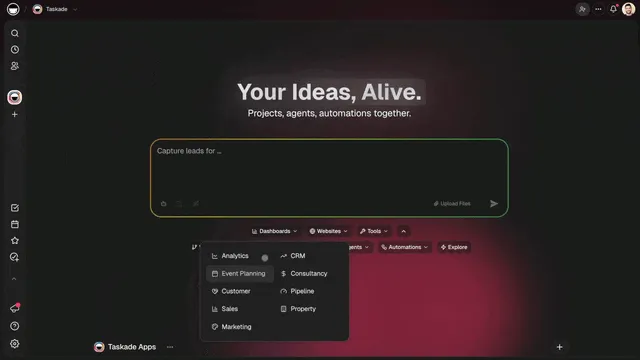
Taskade Genesis is a different bet. You prompt a living app (projects as memory, agents as intelligence, automations as execution, UI as the interface) that you own and reshape. It is not a full field service management platform. It is not GPS fleet tracking. It is not a card processor. For 1-5 truck shops that need an owned dispatch board and crew cadence more than Marketing Pro modules, that honesty is the point.
- Start free: Create a workspace
- Ship crew ops now: ServiceTitan-free alternative crew ops kit
- Dispatch board kit: ServiceTitan alternative dispatch board
- Crew scheduler kit: Homebase-style crew scheduler
- Compare the Jobber free path: Free Jobber alternative
Why "free ServiceTitan alternative" is a real search (not a fantasy)
ServiceTitan sits at the top of home-service software for a reason. HVAC, plumbing, and electrical shops with dedicated CSRs, pricebooks, and multi-million revenue often need that depth. The search query exists because most shops that type it are not that shop.
A two-tech residential crew rarely needs:
- Phones Pro and Marketing Pro stacked on a base seat fee
- A 3-12 month implementation project
- A 12-month contract before the first clean dispatch week
They need:
- Who is going where today
- What job status is real (queued, en route, on site, done, follow-up)
- Customer + equipment notes that survive the next phone call
- A board they can change when the workflow changes (seasonal surge, warranty-only lane, same-day emergency queue)
Search data and contractor forums tell the same story in different words: owners discover ServiceTitan through a peer who "runs everything on it," open a demo, then see a quote shaped for a different org chart. The rebound search becomes "free ServiceTitan alternative," "ServiceTitan for small business," or "ServiceTitan without implementation fee." Those queries are not asking for a pirated clone. They are asking for proportionate software.
"Free" in this search usually means one of three intents:
| Intent behind "free" | What people actually want | What often shows up instead |
|---|---|---|
| Zero software bill | Spreadsheet + group chat + hope | Payment-subsidized "free" FSM with processing lock-in |
| Free to start | Trial that becomes a real ops system | Demo theater that ends in a custom quote |
| Free of vendor lock | Exportable data + editable workflows | Closed SaaS where your process is rented |
Taskade Genesis targets the third intent hardest: ownership. You generate an app from a kit, keep the data in your workspace DNA, and edit the board when reality changes, without waiting on a vendor roadmap.
There is also a fourth, quieter intent: psychological permission. Owners know a spreadsheet is brittle, but they refuse to sign a year of seats for a tool their techs will fight. A free or free-to-start path lets them prove the operating rhythm before they commit cash. That is rational, not cheap.
The cost math that pushes 2-tech shops out of ServiceTitan
ServiceTitan does not publish a public price list. Contractor-reported ranges in 2025-2026 consistently land around $245-$500+ per technician per month, with small-shop implementation commonly cited at $5,000-$15,000 (larger rollouts climb much higher, sometimes into the $30,000-$50,000 band for complex orgs). Add annual contracts and optional Pro modules, and year-one cost stops looking like "software" and starts looking like a second truck payment.
For a 2-tech shop, even the floor of that range is brutal.
Year-one illustration (2 technicians)
Figures below use publicly discussed contractor ranges, not a ServiceTitan quote. Your demo number may differ. The shape of the math rarely does.
| Cost line | Low case | Mid case | High case |
|---|---|---|---|
| Per-tech subscription | $245 x 2 = $490/mo | $350 x 2 = $700/mo | $500 x 2 = $1,000/mo |
| Annual subscription | ~$5,880 | ~$8,400 | ~$12,000 |
| Implementation (small shop band) | $5,000 | $10,000 | $15,000 |
| Year-one software + setup (before add-ons) | ~$10,880 | ~$18,400 | ~$27,000 |
That is before Marketing Pro, Phones Pro, payments markups, or the opportunity cost of a multi-month go-live. For a shop doing $400k-$900k revenue with an owner who still runs calls, that spend has to buy proven utilization gains, not a nicer login screen.
Put the mid case against a concrete shop week: two techs, one owner-dispatcher, ~40-60 jobs per month. If software costs ~$18,400 in year one, you need the system to recover more than $300 per week in saved callbacks, faster invoice cycles, or recovered billable hours. Some shops can show that. Many cannot until they have office staff who live in the tool eight hours a day.
How mid-market FSM compares for the same shop
| Platform | Typical public / reported range | Pricing shape | Fit for 2-tech crew |
|---|---|---|---|
| ServiceTitan | ~$245-$500+/tech/mo + $5k-$15k+ impl | Per tech + implementation + modules | Usually oversized |
| Jobber | ~$39-$249/mo across Core-Grow style tiers (higher Plus tiers exist for larger teams) | Plan tier + team size | Common default for small crews |
| Housecall Pro | ~$59-$199+ base; GPS / proposals / price book often extra | Plan + add-ons | Strong if you want polished customer UX + upsells |
| "Free" FSM (Kickserv free tiers, ServiceM8 limited free, Odoo Community) | $0 sticker, limits or ecosystem work | Caps, seats, or DIY ERP | Fine for experiments; often payment-subsidized or ops-heavy |
Important nuance on "free" FSM: Kickserv-style free entry, ServiceM8's limited free plan (historically single-user / job-capped), and Odoo Community are real options. They are also frequently constrained (job caps, user caps) or indirectly monetized (payments, hosting, partner implementation). Free is rarely free of tradeoffs.
Monthly cash comparison at 2 techs (steady state, after year one)
| Option | Rough monthly software cash | What you are paying for |
|---|---|---|
| ServiceTitan (reported band) | ~$490-$1,000+ | Enterprise FSM depth + seat growth tax |
| Jobber (Core to Grow band) | ~$39-$249 | Finished small-business FSM product |
| Housecall Pro (entry to mid) | ~$59-$199+ before add-ons | Customer UX + sales workflows |
| Limited free FSM | $0 (+ processing / caps) | Constrained product or DIY ERP time |
| Taskade Genesis crew ops | Taskade plan / usage, not per-truck FSM seats | Owned board + editable system |
Break-even framing (not a sales script)
If your answer to "enterprise FSM depth" is no, you are not failing at software selection. You are refusing to buy a factory for a garage bay.

What "you own" means in Taskade Genesis
Competitors sell seats in their product. Taskade Genesis sells a system assembled in your workspace.
That difference matters on day 30, not day 1. Day 1, every tool looks like columns and a calendar. Day 30, you discover whether changing a status name requires a support ticket, whether a warranty lane can exist without a professional services SOW, and whether your customer notes still belong to you if you leave.
Workspace DNA vs rented FSM
| Layer | In a classic FSM | In a Taskade Genesis crew ops app |
|---|---|---|
| Memory | Vendor database + their objects | Projects / tables you control (jobs, techs, customers, zones) |
| Intelligence | Rules + occasional AI add-ons | Agents that can triage, summarize, or nudge follow-ups |
| Execution | Built-in automations | Flows you wire (reminders, status pings, intake routing) |
| Interface | Their dispatch screen | A generated board you can restyle and extend |
Ownership is not a slogan. It shows up when:
- You add a warranty-only column without begging for a feature flag
- You rename statuses to match how your techs actually talk
- You keep customer history in a project that exports with your workspace, not a dead vendor archive
- You spin a seasonal "heat wave overflow" lane in July and archive it in October without paying for a module you will not touch again until next summer
Honest boundaries (read this twice)
Taskade Genesis is a powerful builder for crew ops surfaces. It is not:
| Capability | Full FSM (ServiceTitan / mature Jobber / HCP) | Taskade Genesis crew ops kits |
|---|---|---|
| Dispatch board + job pipeline | Yes | Yes (generate and own) |
| Full field service management suite | Yes | No |
| Built-in GPS / telematics | Often yes (sometimes paid) | No - use phone maps / fleet tools |
| Native card processing / merchant stack | Often yes | No - use Stripe, Square, or your processor |
| Pricebook + call booking center depth | Yes at enterprise tiers | Partial / DIY via projects + UI |
| Multi-month vendor implementation | Common | Minutes to hours to first board; you iterate |
If you need a closed-loop FSM with payments, GPS breadcrumbs, and marketing automation in one vendor contract, buy that. If you need an owned operating system for a small crew, generate the board and keep processors and maps where they already work.
Taskade Genesis is not "ServiceTitan free forever," and it does not pretend to be. What you actually get is narrower and more useful: own the ops board and the data model, integrate payments and location the same way a smart 2-tech shop already does (processor + phone), and stop renting every column of your morning ritual.
Decision tree: ServiceTitan, Jobber/HCP, "free" FSM, or Taskade Genesis
Quick chooser table
| If this is true... | Choose... | Why |
|---|---|---|
| You are buying a growth platform for 15+ techs with marketing + phones | ServiceTitan (or peer enterprise FSM) | Depth matches the org chart |
| You want polished FSM defaults and can pay $39-$249/mo (Jobber) or $59-$199+ (Housecall Pro) | Jobber / Housecall Pro | Faster "standard shop" fit |
| You will tolerate job/user caps or ERP DIY for $0 sticker | Limited free FSM / Odoo Community | Cost first, flexibility second |
| You want a dispatch system you can reshape weekly | Taskade Genesis kits | Ownership + speed to first board |
| You require GPS + processor inside one app | Not Taskade Genesis alone | Pair it with FSM/payments vendors that do those natively |
Related deep dives:
- ServiceTitan alternative for small crews
- Jobber alternative dispatch board
- Housecall Pro alternative for small crews
- Free Jobber alternative comparison
Migration path: from spreadsheet (or rented FSM) to an owned board
You do not need a six-month "implementation partner." You need a sequence that protects jobs-in-flight.
Shops fail migrations for predictable reasons: they import ten years of junk on day one, they change every status label mid-week, or they ask techs to abandon the phone GPS ritual before the board is trustworthy. The path below is deliberately boring.
Recommended path (1-2 weeks, part-time)
Step checklist
- Generate the system, do not design it from zero. Start with servicetitan-crew-ops or the dispatch board kit.
- Map only the fields you use every day. Customer, address, job type, tech, priority, status, notes. Ignore vanity CRM fields until week two.
- Parallel-run for 3-5 dispatch mornings. Trust is earned when the board matches the truck.
- Keep payments and GPS where they already work. Continue Stripe/Square and phone navigation. Owning your board in Taskade Genesis does not require moving card processing or fleet tracking into it.
- Automate the boring second. After the board is real, add reminders or follow-up flows. Do not automate a broken status model.
- Optional: crew scheduling surface. If shifts and availability are the pain, layer homebase-scheduler.
Data you should bring (minimum viable migration)
| Source today | Bring into Taskade Genesis as... | Skip on day one |
|---|---|---|
| Google Sheet job list | Jobs project / table | Historical jobs older than 90 days |
| Text threads / iMessage | Notes on customer or job | Full message archive |
| QuickBooks customers | Customer list (name, phone, address) | Full ledger sync |
| Paper route sheet | Today's assignments on the board | Perfect zone optimization |
| Photos of equipment nameplates | Attachments / notes on customer | Full media DAM project |
Cutover rule of thumb
Stay in parallel run until two conditions are true on the same morning: (1) the owner would bet lunch that the board matches reality, and (2) techs updated status without a Slack nag. If either is false, keep the sheet one more week. Ownership without adoption is just a prettier graveyard.
What the free ServiceTitan-alternative kits actually give you
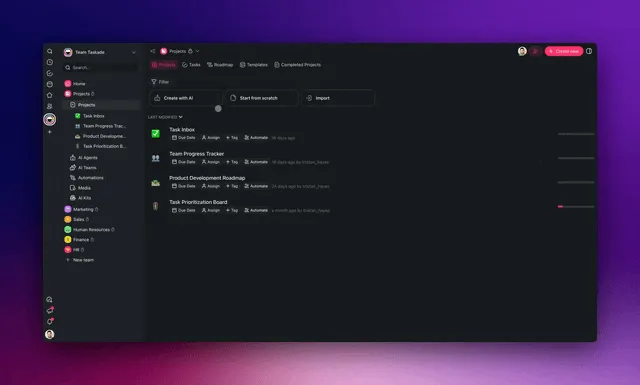
These kits are opinionated starting points for crew ops, not ServiceTitan clones. Think of them as scaffolds: jobs, people, statuses, and a board that already speaks field-service language, so you are editing instead of inventing.
| Kit | Best when... | Generates toward... | Start |
|---|---|---|---|
| ServiceTitan-free alternative crew ops | You want the whole small-crew loop | Jobs + techs + board + light ops cadence | Open kit |
| ServiceTitan alternative dispatch board | Chaos is "who is where" | Visual board, statuses, assignment | Open kit |
| Homebase alternative crew scheduler | Chaos is shifts / coverage | Scheduling surface for crews | Open kit |
A practical way to choose:
- If mornings are chaos and afternoons are fine, start with the dispatch board kit.
- If mornings are fine but weekends and PTO wreck coverage, start with the crew scheduler kit.
- If both are messy and notes live in five places, start with the crew ops kit and accept that week one is about consolidation, not beauty.
Pair with narrative guides when you are still deciding:
- Small-crew ST angle: /blog/servicetitan-alternative-crews
- Jobber-shaped dispatch: /blog/jobber-alternative-dispatch
- HCP-shaped small crews: /blog/housecall-pro-alternative
- Free Jobber compare page: /compare/free-jobber-alternative
Feature honesty matrix: buy FSM vs build crew ops
Use this when a salesperson says "you will grow into it."
| Need | Buy full FSM | Build on Taskade Genesis |
|---|---|---|
| Morning dispatch board | Included | Generate + own |
| Job status visible to office | Included | Projects + UI |
| Tech mobile experience | Native apps | Web app / phone browser workflows (validate with your crew) |
| Card processing | Often native | External processor |
| GPS / breadcrumb fleet | Often native or add-on | External |
| Marketing automation | Paid modules | Separate tools or later automations |
| Custom workflow in a week | Ticket / professional services | Edit the app you own |
| Year-one cost for 2 techs | Often five figures | Start from Create + kits; scale Taskade plan with usage, not per-truck FSM seats |
A note on "growing into" enterprise FSM
Growing into ServiceTitan can be right. The mistake is paying enterprise rent while you are still a two-truck organism. Use Jobber or Housecall Pro when you want a finished product. Use limited free FSM when you are testing discipline under caps. Use Taskade Genesis when the product is your process and you need the board to bend without a quote.
FAQ
Is Taskade a free ServiceTitan replacement?
No. It is a free-to-start path to owned crew ops that replaces the slice of ServiceTitan small shops actually use: board, jobs, assignment, notes, follow-up. It does not replace the full FSM stack.
Why do free ServiceTitan alternatives disappoint?
Because "free" often means limited seats/jobs, payment revenue subsidizing the sticker, or community ERP that shifts cost into your time. Kickserv free tiers, ServiceM8 limited plans, and Odoo Community can be legitimate experiments. They are not magic. Taskade Genesis is free-to-start as a builder workspace model: you own the app shape, and GPS and payments stay with the tools that already handle them.
Should a 2-tech shop ever buy ServiceTitan?
Sometimes: franchise requirements, private-equity ops standards, or a clear plan to 15+ techs with office staff. If you are buying it to "look enterprise" while the owner still dispatches from a phone, re-run the year-one table first.
Jobber at ~$39-$249/mo vs Taskade Genesis?
Jobber wins when you want a finished FSM product with invoices and client communication defaults. Taskade Genesis wins when the product is your process and you refuse to rent every column. Many shops use Jobber-class tools until workflow pain exceeds subscription comfort, then move the ops board to something owned. See /compare/free-jobber-alternative.
Housecall Pro at ~$59-$199+?
Strong when customer-facing polish and sales workflows matter. Watch add-ons (GPS, proposals, price book) so the real bill does not quietly leave the "Basic" shelf. For small-crew alternatives, see /blog/housecall-pro-alternative.
Will my techs hate another app?
They hate apps that add taps without removing chaos. If the board replaces a group text and a sheet, adoption is possible. If it sits beside both forever, it will die. Parallel-run, then cut over. Do not collect tools like fridge magnets.
Start: own the board this week
- Create your Taskade workspace
- Generate ServiceTitan-free alternative crew ops
- If the board is the only wound, use ServiceTitan alternative dispatch board
- If coverage is the wound, add Homebase alternative crew scheduler
- Keep reading: small-crew ST alternative, Jobber dispatch alternative, HCP small-crew alternative, free Jobber compare
You do not need a free clone of ServiceTitan. You need crew ops you own, priced like a shop that still has to buy copper and gasoline, not like a software company that bills per human in a truck.