






Taskade Genesis turns one prompt into a live ops system with database, AI agents, automations, and client portals in the same workspace, while AI app builders like Lovable and Bolt.new ship code you still deploy, secure, and maintain. This guide compares both paths honestly for operators in 2026.
TL;DR: Lovable and Bolt win forkable React when engineers will host production. Taskade Genesis wins when the business must run on a living system this week. Free to start with a one-time 6,000-credit grant, then $10 per month billed annually. See ops dashboard builders ranked →
Related: Taskade Genesis vs Bolt vs Lovable, AI app builders for business, field service dispatch you own.
Pricing below uses publicly listed 2026 figures. Vendors reprice often, so confirm live quotes before you buy.
Two Different Promises
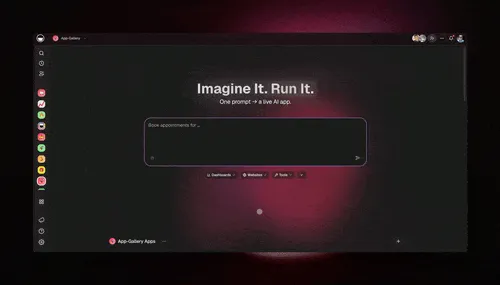
The two categories are marketed with the same three words and sell two different deliverables. An AI app builder hands you a codebase. Taskade Genesis hands you a running system. Everything downstream, from cost to who gets paged at 7pm, follows from that one difference.
AI app builders optimize for:
- Generated React or Next.js repos
- Developer control of hosting
- Design polish in hours
Taskade Genesis optimizes for:
- Running business memory (Projects)
- Intelligence (AI agents)
- Execution (automations)
- Client logins (App Users)
Confusing the two is how you end up needing a running system and receiving a GitHub export instead.
What Operators Actually Need in Week One
Ops buyers do not need a component library. They need five things working by Friday, and every one of them lives past the demo.
| Week-one need | Code builder default | Taskade Genesis default |
|---|---|---|
| Records with real fields | You design the schema and DB | Projects as the database |
| Somewhere to see open work | You build the board | Multiple project views incl. Board and Gantt |
| Client or customer login | You wire auth yourself | App Users, role-based access from Owner to Viewer |
| Chase and reminder logic | You add a workflow layer | Automations on the same records |
| Answers about your data | You integrate an AI API | Agents grounded on Projects |
If four of those five are the job, you are shopping for a runtime, not a repo. If your real requirement is custom React reviewed in pull requests, the rest of this comparison will tell you to stay in code, and it means it.
Why This Category Confusion Exists
"AI app builder" got coined in 2023 for tools that wrote frontend code from a prompt, and the label was accurate then. Three shifts since made it a bad label for buying decisions.
- The generation problem got solved before the operating problem did. Producing a clean React screen from a sentence is now table stakes across half a dozen tools. Keeping that screen connected to real records, real logins, and real reminders six months later is still where projects die.
- Operators started buying software directly. The shop owner, the transaction coordinator, and the agency lead now evaluate tools without an engineer in the room. A GitHub export reads as a deliverable to a developer and as a dead end to them.
- Runtime platforms started generating too. Once a workspace could generate its own database, agents, and portals from a prompt, the same "one prompt, one app" language covered both categories and stopped distinguishing them.
The result is a shopping list where a browser code sandbox and a hosted ops runtime look identical on a feature grid. The architecture difference is what you actually buy. Read they generate code, we generate runtime for the long version of that argument, or what living software means for the plain definition.
2026 Pricing Reality Across Both Categories
Published list pricing as of July 2026 for the entry paid tier most operators land on. Confirm live before you buy, because credit and token meters change more often than the sticker price.
| Product | Free tier | Common entry paid tier | Meter | What the bill excludes |
|---|---|---|---|---|
| Taskade Genesis | Yes, one-time 6,000 credits | Pro $10/mo billed annually ($20 monthly) | Flat plan, AI credits | Nothing to host separately |
| Lovable | Limited daily credits | Pro $25/mo | Credits | Production hosting, auth hardening, engineer time |
| Bolt.new | Daily token allowance | Pro $25/mo | Tokens | Deploy, DB, auth, monitoring |
| Vercel v0 | Small monthly credit | Premium $20/mo | Credits | Everything past the component |
| Replit | Hobby free | Core $25/mo | Effort credits | Ops workflows, client logins |
Retool and Softr price per seat with free entry tiers and publish quote-driven upper tiers, so run their calculators against your real headcount rather than trusting a blog number.
The line item nobody puts in the table: on a code path, the deploy pipeline, auth review, backups, and integration maintenance are labor, not subscription. That labor is free only if you already employ the person doing it.
| Cost line | Code builder path | Taskade Genesis path |
|---|---|---|
| Tool subscription | $20-$25/mo typical entry | $10/mo billed annually on Pro |
| Hosting and database | Separate bill, scales with use | Included with published apps |
| Auth for client logins | Build and maintain | App Users included |
| Reminder and chase logic | Add a workflow tool | Automations included |
| Ongoing engineer hours | The dominant cost | Operator edits, no ticket queue |
Business at $25 per month billed annually ($50 monthly) is where custom domains and larger App User counts land. Neither path bills you for the thing you actually feel, which is the week you spent not shipping.
Taskade Genesis: Best for Live Ops Systems
Taskade Genesis generates the whole spine at once. You describe the operation, and you get records, views, agents, automations, and a published surface in one workspace instead of four purchases stitched together.
Operator outcomes already shaped as generators:
- Field service ops dashboard
- Transaction coordinator CRM
- AR aging dashboard
- Student parent portal
- Ops command board
- Field service agents
Why Taskade Genesis wins this comparison for ops: agents and automations share the same records as dispatch and CRM. A work order triage agent reads the same rows a daily ops digest sends, so basic chase workflows need no separate integration layer.
Where Taskade Genesis does not win: teams that mandate source code in their own environment with custom React components reviewed in CI. That team should use Lovable or in-house engineering, and this guide will say so again later without hedging.
Lovable: Best Code-First UI
Lovable produces React plus Supabase projects operators can fork, and its design velocity is genuinely strong. Three things it does better than a runtime platform: component-level design control, two-way GitHub sync so engineers work in their normal loop, and full source ownership when a client contract or audit demands it.
Production ops on that output still needs:
- Auth hardening
- Role-based client scoping
- Backup and monitoring
- SMS and payment integrations maintained
Choose Lovable when a product team exists. Choose Taskade Genesis when the owner-operator is the product team.
Bolt.new: Best Sandbox Prototypes
Bolt.new iterates UI in the browser faster than most agencies can wireframe, and the in-browser runtime means you watch the app build itself with zero local setup. That is a real advantage for exploration and for pitching a layout to a stakeholder in one call. Treat the output as a prototype unless engineering owns the deploy path.
v0 and Peers: Component Factory
Vercel v0 and its peers excel at clean, opinionated components in a consistent design system. If you need a polished screen to drop into an existing app, this is the shortest path. It is a components tool, not an operations tool, and it does not pretend otherwise. Replit sits nearby with a full cloud IDE for teams that want to keep coding after generation.
Retool and Softr: Adjacent Categories
| Tool | Sweet spot | Who owns it | Where it strains |
|---|---|---|---|
| Retool | Internal tools on existing SQL | Engineering | Non-technical ownership, seat cost |
| Softr | Portals on Airtable | Ops with tables | Logic depth beyond the base |
| Taskade Genesis | Generated ops runtime | The operator | Parts inventory, GPS, custom source |
| Lovable | Deployable React | Product team | Anything you must not maintain |
Full ranking: Best AI Ops Dashboard Builders. Portal-specific comparison: Softr alternative for living client portals.
Workspace DNA: Why the Runtime Compounds
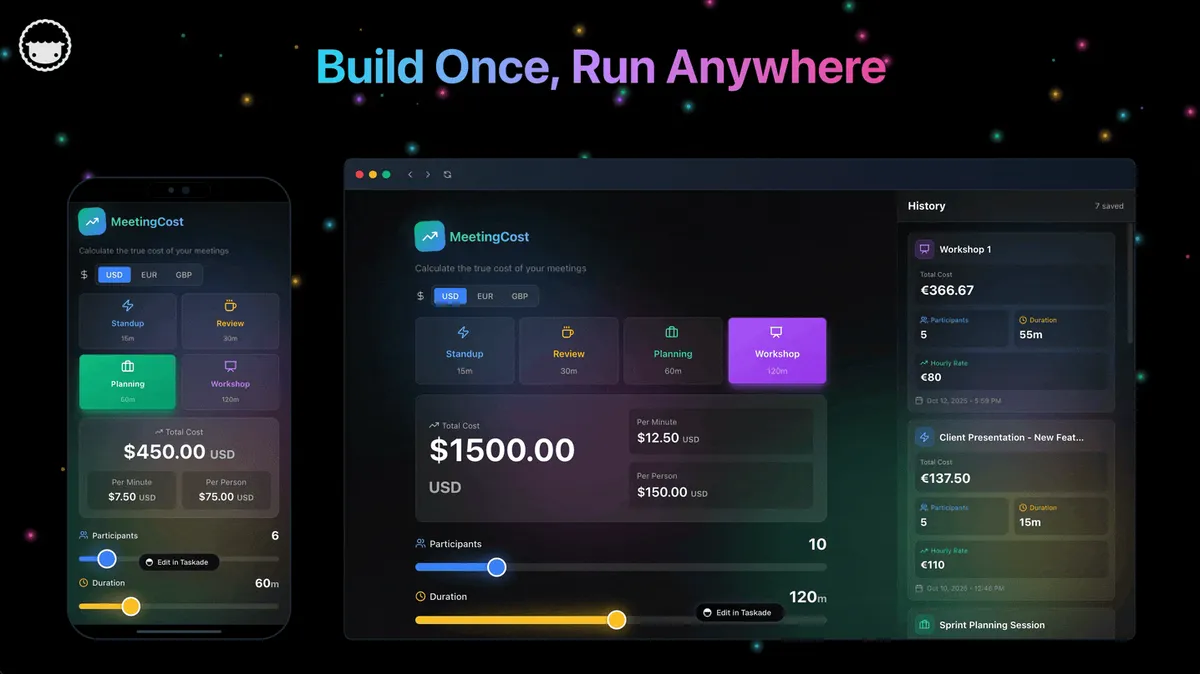
Taskade Genesis apps are not static output. They run on Workspace DNA, where Memory, Intelligence, and Execution feed each other on the same records.
| Pillar | Component | Role in an ops system |
|---|---|---|
| Memory | Projects | Jobs, customers, invoices, assets, statuses |
| Intelligence | AI Agents | Triage intake, draft replies, flag overdue work |
| Execution | Automations | Notify assignees, escalate, update portals |
A generated React repo has no equivalent loop. Each of those three jobs is a separate library, service, or contractor. Here is the loop on one intake:
Because the loop writes back to Memory, the next agent run sees better data than the last one. That is the compounding a code export cannot give you: the repo is exactly as smart on day 200 as it was on day one. See Workspace DNA and the one prompt, one app definition for how those pieces are named in product.
The Ops Data Model You Get for Free
Every ops system reduces to a handful of nouns with relationships. On a code path you design, migrate, and maintain this yourself. On Taskade Genesis it is generated as linked Projects, and you reshape fields by chatting with Taskade EVE.
Start from a shaped model instead of a blank canvas: app data model template, CRM schema generator, or the data model agent when you want it interrogated before you build.
Who Should Stay on a Code Builder
This is the section most vendor comparisons skip. Stay in code when the constraint you refuse to drop is one a runtime cannot honor.
- Source code is the deliverable. Client contracts, acquisitions, and some audits require a repo you hand over. A runtime is the wrong answer, full stop.
- You are building a product, not running an operation. Vertical SaaS you intend to sell needs custom UI, its own billing, and its own roadmap.
- Pixel-level design control is the differentiator. Marketing surfaces and consumer apps live and die on layout nuance.
- You already employ the people who host things. If DevOps is salaried and idle, hosting is close to free for you and the calculus flips.
- Your stack has hard environment requirements. Specific regions, private networking, or a compliance regime your security team already certified.
| Constraint you refuse to drop | Lean this way |
|---|---|
| Handing a client the source repo | Lovable or in-house engineering |
| Fastest UI exploration in a browser | Bolt.new |
| Polished components into an existing app | Vercel v0 |
| Internal tools on an existing SQL warehouse | Retool |
| Portals on data already in Airtable | Softr |
| Live ops system with agents and portals | Taskade Genesis |
Lovable, Bolt.new, v0, Retool, and Softr are not weak products. They are precise ones. The failure mode is buying a precise product for a problem shaped differently, which is what happens when both categories share a label.
Feature Comparison (Honest)
| Capability | Taskade Genesis | Lovable / Bolt / v0 |
|---|---|---|
| Time to live dispatch board | Hours | Days to weeks with engineering |
| Database included | Projects, generated | You provision and model it |
| Client logins | App Users, native | Build auth yourself |
| Permission granularity | Owner to Viewer | Whatever you implement |
| AI agents in the app | Native, built-in tools | Integrate an API separately |
| Automations on records | Native | Wire a workflow tool |
| Integrations | 100+ bidirectional | Per-integration engineering |
| Hosted MCP server | Every paid plan | Not applicable |
| Source code export | Portable app bundle, not React source | Core value |
| Custom React layout | Chat edits with Taskade EVE | Full control |
| Who changes a field | The operator | A developer, or a ticket |
Where the Two Categories Overlap Least
| Job to be done | Best category | Why |
|---|---|---|
| Ship a marketing microsite | Code builder | Design nuance dominates |
| Run tomorrow's dispatch | Taskade Genesis | Records, roles, reminders wired |
| Prototype a layout for a pitch | Bolt.new | Fastest visual loop |
| Give 40 clients a status login | Taskade Genesis | App Users, no auth build |
| Sell the app as a product | Code builder | You need the source and the roadmap |
| Answer "what is open right now" | Taskade Genesis | Views over live records |
Ops Shapes Taskade Genesis Covers Today
These are generated starting points, not screenshots. Each one produces records, views, and a place to add agents.
| Operation | Start here | Add next |
|---|---|---|
| Field service | Field service ops dashboard | Dispatch triage agent |
| Work orders | Work order dispatch board | PM reminder agent |
| Speed to lead | Appointment setter | Speed-to-lead CRM |
| Agencies | Multi-client ops hub | Retainer scope board |
| Billing chase | Estimate to invoice | AR aging dashboard |
| Client portals | Client status portal | Portal intake agent |
| Internal tools | Operations dashboard tool | Approval workflow |
Spreadsheet refugees should start at Google Sheets to ops app or the sheets-to-ops generator. If you already generated something in a code tool, read from AI app builder to ops system.
A Day in the Life on Each Path
Same five-person service business, same Tuesday.
| Time | On a generated code repo | On a Taskade Genesis ops system |
|---|---|---|
| 07:40 | Someone checks the deployed preview, wonders if last night's push broke it | Board shows open work by age and priority |
| 08:05 | New request arrives by text, lands in nobody's system | Intake form creates a record, agent suggests priority |
| 10:20 | Tech texts a photo to the owner's phone | Tech closes the record with notes and photos |
| 11:00 | Customer calls to ask for status | Automation already pushed status to the portal |
| 14:00 | Owner asks for a new field, files it with the developer | Owner adds the field by chatting with Taskade EVE |
| 16:30 | Owner exports to a spreadsheet to see totals | Owner opens one view; counts are live |
| 22:00 | Auth library advisory lands in the inbox | Nothing to patch; the runtime is managed |
The code path is not worse at any single step. It is worse at being unattended, and unattended is what an operator is buying.
Migration Checklist: Code Builder to Taskade Genesis
Run two weeks in parallel. Do not cut over during a busy week.
Week 0: Decide the nouns
- Name the four nouns you cannot lose: customer, job, owner, due date
- List the optional nouns: invoice, asset, location, portal user
- Write down what stays put: accounting, payroll, telematics, payments
- Export CSV from Supabase, Airtable, or whatever holds the records today
Week 1: Generate and load real data
- Generate the closest ops board or dispatch board
- Import 10 to 20 real open records, not demo rows
- Mirror the status words your team already says out loud
- Set roles and permissions with leads first, then everyone else
- Publish a client portal to two friendly customers only
Week 2: Agents, automations, cutover
- Turn on exactly one automation, usually an overdue ping
- Add one agent after the records are trusted, such as an ops digest agent
- Freeze the old repo for new work and keep it read-only for history
- Point your custom domain at the published app if clients see it
| Day | Focus | Done looks like |
|---|---|---|
| 1 | Generate the board | Columns match how you talk |
| 2 | Import open work | Every open item has an owner |
| 3 | Link customers | Two records show real history |
| 4 | Portal for two clients | A client logs in without a call |
| 5 | One automation | Overdue items ping a channel |
| 6-7 | Team feedback | Rename one confusing field |
| 8-10 | One agent | Agent suggests, human confirms |
| 11-14 | Parallel quiet | Old repo gets zero new records |
Step-by-step walkthroughs: build your first app, build an internal tool, build an AI dashboard, build a customer portal.
Security and Compliance Posture
Code builders put auth in your repo, which means the review, the patching, and the incident are yours. Taskade Genesis handles workspace auth, App User scoping, and hosting for published apps, with role-based access from Owner down to Viewer.
| Concern | Code builder | Taskade Genesis |
|---|---|---|
| Auth patching | Your on-call | Managed runtime |
| Client data scoping | You implement it | App User scoping |
| Permission model | Build your own | Owner to Viewer |
| Private environment mandate | Possible, you own it | Not the fit; stay in code |
| Audit trail your auditor knows | Depends what you build | Workspace-level history |
Teams with strict private-environment requirements should stay on self-hosted code. Teams without a security bench usually sleep better on a managed runtime for anything a client logs into.
What Taskade Genesis Owns vs What You Pair
Honest boundaries beat feature checklists.
Strong fit: job and work-order boards, CRM records, invoicing and AR chase, client and parent portals, intake forms, approval routing, agents grounded on your Projects, 100+ bidirectional integrations.
Honest gaps:
- No GPS or fleet telematics. Keep your existing provider and reference job status on the board.
- No MLS or IDX listing feed. Real estate ops work; listing syndication does not come included.
- Not a React source repo. GitHub export ships a portable app bundle, not component source you refactor.
- No agent that dials MCP servers on its own. Both directions of the protocol work — the hosted MCP server is on every paid plan so external tools can reach your workspace, and the MCP Client step inside an automation calls tools on a third-party server on every plan including Free. What an agent cannot do is reach a remote server by itself; it hands that call to the automation step and reads the result back.
If any pitch tells you a runtime replaces custom source ownership, walk away from it no matter who is making it, including us.
Total Cost Over 24 Months
Model tool cost, hosting, and human hours together. The subscription line is rarely the decisive one.
| Line item | Code builder path | Taskade Genesis path |
|---|---|---|
| Tool over 24 months | ~$480-$600 at $20-$25/mo | $240 at Pro $10/mo billed annually |
| Hosting and database | Separate, usage-based | Included for published apps |
| Auth and portal build | 20-60 engineer hours up front | Included |
| Integration maintenance | Recurring engineer hours | Configuration, not code |
| Field changes over 2 years | Ticket queue | Operator chat edits |
Small shops without salaried engineers usually show Taskade Genesis ahead on two-year total cost. Product startups with engineering staff often show a code builder ahead on control, which is a legitimate thing to buy.
Hybrid Pattern: Prototype in Code, Run in Taskade Genesis
Some agencies prototype client-facing UI in Bolt.new, then rebuild ops in Taskade Genesis once workflows stabilize. That beats running production dispatch on an unmaintained prototype repo. Set an explicit migration date before you start, because "we will move it later" becomes production by accident.
Can I Export the Code?
Not as React source, and that distinction matters. Taskade Genesis pushes a portable app bundle to GitHub, which round-trips Projects, agents, automations, and theme into another workspace. What it does not hand you is a component tree you refactor in your own build pipeline. Code builders optimize export; Taskade Genesis optimizes the system that answers your phone on Monday. Decide which of the two you actually need before you start.
Ops Maturity Model
- Spreadsheets (chaos threshold approaching)
- Rental SaaS (defaults help until seats and schema hurt)
- Owned runtime (Taskade Genesis-style customization)
- Custom engineering stack (Retool or Lovable with headcount)
Most operators stall between 2 and 3. Use this comparison to pick 3 or 4 on purpose instead of by default. Excel job log to dispatch app is the stage-1 exit; prompt to ops dashboard is the stage-3 shape.
Questions to Ask Vendors (Both Categories)
- Who maintains auth for client logins, and who gets paged when it breaks?
- Where do automations run, and can I see the log?
- Can the owner change a field without an engineer?
- What happens to the app if we stop paying?
- What is included in the bill, and what arrives as a second invoice?
Taskade Genesis answers favor operator control. Code builders answer favor export and hosting control. Write the answers down before the demos blur together.
Three Mistakes That Cost Operators the Most
- Buying a runtime when a contract mandates source code. Know the constraint before the demo.
- Ignoring client auth. A pretty dashboard with no App Users still generates status phone calls.
- Assuming GPS or IDX comes included. Neither path ships fleet tracking or listing feeds on its own. Taskade Genesis is strongest on the office side, and both paths need a real integration beyond that.
How to Choose in 15 Minutes
- Do you have engineering to host production apps?
- Do you need client logins and automations on day one?
- Is source ownership a contractual or compliance requirement?
- No engineering plus yes to ops means Taskade Genesis. Engineering plus yes to source means a code builder.
FAQ
Is Taskade Genesis an AI app builder?
It builds apps, and what you get is a running ops runtime rather than a code archive. Compare what each category is for, not the shared marketing label. Living software is the closer description.
Can Taskade Genesis and Lovable coexist?
Yes. Prototype UI in Lovable and run operations in Taskade Genesis until your needs converge on one. Set a date for that convergence so the prototype does not quietly become production.
Where do I start with Taskade Genesis?
/create, or a targeted generator such as field service ops dashboard. The first app walkthrough covers the first hour.
What does the Taskade Genesis path cost?
Free to start. Every new account gets a one-time 6,000 credit grant, 1,000 at signup plus 5,000 with your first build, which covers one complete app end to end. From there, Pro is $10 per month billed annually ($20 month to month) and Business is $25 per month billed annually ($50 month to month). There is no separate hosting or deploy bill stacked on top of the plan.
Do I get a database, or do I bring one?
You get one. Projects are the database, with multiple views over the same records including Board, Table, Calendar, and Gantt. On a code path you provision and model the database yourself. See database projects.
How do client logins work without building auth?
App Users are native. You publish the app, invite the people who need a login, and scope what they see. Permissions run from Owner down to Viewer. Details in App Users and roles and permissions.
Can I connect the tools we already use?
Yes, through 100+ bidirectional integrations, where triggers pull events in and actions push data out. Model Context Protocol works in both directions too: the hosted MCP server is available on every paid plan for AI tools that need to reach your workspace, and the MCP Client step inside an automation calls tools on a third-party MCP server on every plan including Free. That outbound call lives in the automation rather than inside an agent, so an agent decides what it needs and hands the step the work.
What if my requirement really is a React repo?
Then use Lovable, Bolt.new, or in-house engineering, and do not let a runtime comparison talk you out of it. That is a legitimate requirement, and a managed runtime is the wrong tool for it.
Which path is cheaper for a five-person shop?
Usually Taskade Genesis, because the code path's dominant cost is engineer hours rather than subscription. Run both numbers with hosting, auth build, and 24 months of field changes included before you decide.
Related Reading
- Best AI ops dashboard builders ranked
- Taskade Genesis vs Bolt vs Lovable, verified pricing
- From AI app builder to ops system
- They generate code, we generate runtime
- Field service dispatch software you own
- AR aging tracker for agencies
- Softr alternative for living client portals
- Client portal builder guide
- ServiceTitan alternative for small crews
- Best AI app builders in 2026
- Taskade Community Gallery
- AI apps overview
Final Recommendation
If you are an operator reading this because dispatch broke again, choose Taskade Genesis or a packaged rental tool, not a code sandbox. If you are an engineer building a productized vertical SaaS, choose Lovable, Bolt.new, or in-house engineering. Both are legitimate paths, and they answer different questions.
Memory holds the records. Intelligence reads them. Execution moves them, and the loop writes back to Memory. ▲ ■ ●
Pick the path that matches who maintains production. Generate an ops dashboard or compare Taskade Genesis vs Lovable in depth.