






In the early 1880s, a young German philosopher named Hermann Ebbinghaus sat at a desk with a pool of syllables that meant nothing: a consonant, a vowel, a consonant. He drew lists of 13 of them and read each list aloud at a steady pace until he could recite it without error. Then he waited 20 minutes, or an hour, or a day, or a month, and learned the same list again.
He did this for years, alone, as both the scientist and the subject. In 1885 he published the results as Über das Gedächtnis (On Memory). The book gave psychology its first measured law of forgetting. It also contained, almost as an aside, the discovery that every study app on your phone still runs on: repetitions spread over time beat the same repetitions crammed together.
This post tells the whole story, with the primary sources. It runs from Ebbinghaus's syllables to a schoolteacher's poetry test in 1913, a cardboard box in 1972, a Polish student's spreadsheet of intervals in 1985, an open-source app in 2006, a language company's machine-learning model in 2016, a scheduler written by an undergraduate in 2022, and the language models that now write the cards. Then it explains the science, the link to metacognition, the parallel with neural networks, and a schedule you can start today.
TL;DR: Active recall is how you review (retrieve the answer before you look). Spaced repetition is when you review (at gaps that grow). In Roediger and Karpicke's 2006 study, students who recalled a passage three times remembered 61% of it a week later, against 40% for students who reread it four times. Turn your notes into cards and a schedule.
What Are Spaced Repetition and Active Recall?
Spaced repetition is a study method in which you review each item at gaps that grow longer, ideally just before you would forget it. Active recall, also called retrieval practice, is the act of pulling an answer out of memory instead of rereading it. Spaced repetition decides when you review. Active recall decides how. Dunlosky and colleagues' 2013 review rated these two techniques, practice testing and distributed practice, the only two of ten with high utility.
The two ideas come from different research lines and different decades. The spacing effect was measured first, by Ebbinghaus in 1885. The testing effect (the benefit of recall itself) was measured in classrooms by Gates in 1917 and Spitzer in 1939, and made famous by Roediger and Karpicke in 2006. A flashcard is the meeting point. The front of the card forces a recall attempt. The schedule decides the day the card comes back.
| Active recall | Spaced repetition | |
|---|---|---|
| Question it answers | How should I review? | When should I review? |
| Core research effect | Testing effect (retrieval practice) | Spacing effect (distributed practice) |
| First measured | Gates 1917, Spitzer 1939 in classrooms | Ebbinghaus 1885 on himself |
| Landmark modern study | Roediger and Karpicke, 2006 | Cepeda et al. meta-analysis, 2006 |
| What it looks like | Flashcards, practice tests, blank-page recall, explaining aloud | Review calendars, card boxes, scheduling algorithms |
| What it is not | Rereading, highlighting, recognizing a multiple-choice answer | Reviewing the same thing five times in one evening |
The phrase people search for, "active recall and spaced repetition," treats them as one method. In practice they are one habit, because a well-built flashcard routine does both at once. But they fail in different ways. You can space your reviews and still review passively (rereading a chapter every week). You can test yourself hard and still mass it (fifty flashcards the night before the exam). The history below is, in large part, the story of people learning to combine the two.
The 140-Year Timeline at a Glance
The history of spaced repetition runs from one man's self-experiment in 1885 to scheduling algorithms trained on hundreds of millions of reviews. The table below lists each milestone with its primary source. Every row is covered in its own section further down.
| Year | Who | What happened | Primary source |
|---|---|---|---|
| 1885 | Hermann Ebbinghaus | Forgetting curve, savings method, first spacing result | Über das Gedächtnis (English: Memory, 1913) |
| 1913 | Philip Boswood Ballard | Reminiscence: children recall more of a poem days later | Obliviscence and Reminiscence, British Journal of Psychology Monograph Supplement no. 2 |
| 1917 | Arthur Gates | Recitation beats rereading in schoolchildren | Recitation as a factor in memorizing |
| 1932 | C. A. Mace | Recommends revision at "gradually increasing intervals" | The Psychology of Study |
| 1939 | Herbert F. Spitzer | 3,605 Iowa sixth graders: early tests protect memory | Studies in Retention, J. Educational Psychology |
| 1967 | Paul Pimsleur | Graduated-interval recall, 5 seconds to 2 years | A Memory Schedule, Modern Language Journal |
| 1972 | Sebastian Leitner | The card box with compartments | So lernt man lernen (Herder) |
| 1978 | Landauer and Bjork | Expanding retrieval practice for names | Optimum rehearsal patterns and name learning |
| 1985 | Piotr Wozniak | SM-0, a paper-and-pencil interval system | Master's thesis, Optimization of Learning (1990) |
| 1987 | Piotr Wozniak | SM-2 in SuperMemo 1.0 for DOS | Same thesis, SM-2 description |
| 1989 | McCloskey and Cohen | Catastrophic interference in neural networks | Psychology of Learning and Motivation, vol. 24 |
| 1991 | Nelson and Dunlosky | The delayed-JOL effect | Psychological Science 2(4) |
| 1994 | Robert Bjork | "Desirable difficulties" | Metacognition: Knowing about Knowing (MIT Press) |
| 1999 | Piotr Wozniak | Twenty rules of formulating knowledge | super-memory.com article |
| 2006 | Damien Elmes | Anki, birthdate 5 October 2006 | Anki project history |
| 2006 | Roediger and Karpicke | Test-Enhanced Learning | Psychological Science 17(3) |
| 2006 | Cepeda et al. | Meta-analysis: 839 assessments of spacing | Psychological Bulletin 132(3) |
| 2007 | Rohrer and Taylor | Interleaved math practice: 63% vs 20% | Instructional Science 35 |
| 2013 | Dunlosky et al. | Ten study techniques ranked | Psychological Science in the Public Interest 14(1) |
| 2016 | Settles and Meeder | Half-life regression at Duolingo | ACL 2016 |
| 2018 | Michael Nielsen | Augmenting Long-term Memory | augmentingcognition.com |
| 2019 | Matuschak and Nielsen | Quantum Country, the "mnemonic medium" | quantum.country |
| 2022 | Jarrett Ye and co-authors | FSRS research published at ACM KDD | KDD 2022 |
| 2023 | Damien Elmes | FSRS ships in Anki 23.10 as an option | Anki release notes, deck options manual |
| 2026 | Kirkby and Matuschak | Evaluation of language-model flashcards | Memory Machines report, memory-machines.com |
The same history reads as four eras. Each era kept the core finding and changed who did the scheduling: the scientist, the learner with a calendar, a fixed algorithm, and finally a model fitted to the learner's own data.
Hermann Ebbinghaus and the Forgetting Curve (1885)
The forgetting curve is Hermann Ebbinghaus's 1885 measurement of how fast memory fades: the effort he saved when relearning a list fell steeply in the first hour and then leveled off, to about one third after a day and about one fifth after a month. He was the first person to measure forgetting with a controlled method, and he did it with one subject, himself.
Ebbinghaus (1850 to 1909) wanted material that carried no meaning, so that old knowledge could not help him. He built a pool of consonant-vowel-consonant syllables and drew lists of 13. His measure was savings: if a list first took 1,000 seconds to learn and later took 600 seconds to relearn, he had saved 40% of the work. Savings is subtle and useful. A memory you cannot recall can still make relearning faster, so savings detects traces that a recall test misses.
His experiment on forgetting ran 163 double tests. Each test was one learning session and one relearning session after a fixed delay. The figures below are his savings values, as reproduced in later analyses of his tables, including the 2015 replication by Murre and Dros.
| Delay after learning | Savings on relearning | Ebbinghaus's own words |
|---|---|---|
| 20 minutes | 58.2% | |
| 1 hour | 44.2% | About half of the work had to be done again |
| 8.8 hours | 35.8% | About two thirds of the first effort was lost |
| 1 day | 33.7% | "after 24 hours about one third was always remembered" |
| 2 days | 27.8% | |
| 6 days | 25.4% | About one fourth |
| 31 days | 21.1% | "after a whole month fully one fifth of the first work persisted in effect" |
The shape matters more than any single number. Most of the loss happens in the first hours. After that, what survives decays slowly. That shape is why a review the next day protects so much, and why a review three weeks later still pays.
The spacing result hidden in chapter 8
The forgetting curve made Ebbinghaus famous. The more useful finding for students sat in a later chapter. He compared two ways to prepare a 12-syllable series for a relearning test. In one, he spread 38 repetitions over the three preceding days. In the other, he made 68 repetitions on the single day before. The two gave about the same result. Spreading the work saved almost half of it. His conclusion, in the 1913 English translation, which he offered as a probable assumption:
"It makes the assumption probable that with any considerable number of repetitions a suitable distribution of them over a space of time is decidedly more advantageous than the massing of them at a single time."
Hermann Ebbinghaus, Memory: A Contribution to Experimental Psychology, 1885 (trans. 1913), chapter 8, section 34
That sentence is the spacing effect, stated 141 years ago. Frank Dempster later made the same point in a 1988 paper in American Psychologist with a pointed title: The Spacing Effect: A Case Study in the Failure to Apply the Results of Psychological Research. Schools, he argued, had ignored for a century one of the most reliable results in psychology.
Did the forgetting curve replicate?
Yes. In 2015, Jaap Murre and Joeri Dros published a single-subject replication in PLOS ONE. Dros spent about 70 hours learning 70 lists of syllables under Ebbinghaus's conditions. The curve had the same shape. The authors also found evidence of a small upward jump at the 24-hour point, which a night of sleep can explain, although they write that the sleep explanation "remains to be established." Their 31-day value came out lower than Ebbinghaus's.
What the forgetting curve does not say
The forgetting curve is the most misquoted graph in study advice. Three corrections are worth knowing before you read any infographic:
| Claim you will see | What the data actually show |
|---|---|
| "You forget 70% of what you learn within 24 hours" | Ebbinghaus measured savings on relearning nonsense syllables, not the share of meaningful material you can recall. At 24 hours his savings were about one third. The figure does not transfer to a lecture or a book chapter. |
| "Everyone forgets at the same rate" | Ebbinghaus himself found that stanzas of a poem took less than half the repetitions of his shortest syllable lists to learn. Rate depends on the material, prior knowledge and how well you first learned it. |
| "The curve is an exponential law" | The best-fitting equation is still debated. Ebbinghaus fitted a logarithmic formula. Later work compared power and exponential functions, and Rubin, Hinton and Wenzel (1999) found that none of the 105 two-parameter equations they tested fit their data adequately. |
The honest summary: forgetting is fast at first and slow later, it is slower for meaningful material, and each review flattens it. Everything else is decoration.
Reminiscence, Recitation and Mace: The Quiet Decades (1913 to 1939)
Between Ebbinghaus and the first apps, three findings shaped the field: memory can improve after a delay (Ballard, 1913), reciting from memory beats rereading (Gates 1917, Spitzer 1939), and reviews should come at growing intervals (Mace, 1932). None of them reached most classrooms. All three reappear in modern flashcard software.
Ballard and reminiscence (1913)
Philip Boswood Ballard was a school inspector in England. He gave groups of children a poem to learn with too little time, then asked them to write out what they remembered. A few days later he asked again. Many children wrote more lines correctly on the second test than on the first. He called this reminiscence: "we not only tend to forget what we have once remembered, but we also tend to remember what we have once forgotten." The study appeared in 1913 as a monograph supplement to the British Journal of Psychology.
Reminiscence proved fragile. Later reviewers found it hard to replicate, and Donald Laming argued in 2022 that Ballard's choice of which lines to analyze can make part of the effect an artifact. The lasting lesson is narrower and still useful: a first test that feels like a failure is not the final state of a memory. The act of trying to recall changes what you can recall next time.
Gates, Spitzer and the first testing effect (1917 and 1939)
In 1917 Arthur Gates had schoolchildren study short biographies and nonsense material, and varied how much of their time went to reading versus reciting from memory. More recitation produced better recall. Twenty-two years later, Herbert F. Spitzer ran one of the largest memory experiments ever done in schools. He tested 3,605 sixth-grade students in 91 elementary schools in nine Iowa cities. The children read two articles of about 600 words each, one on peanuts and one on bamboo, and took tests on schedules that ran up to 63 days.
Spitzer's result, published in the Journal of Educational Psychology in December 1939, was blunt: "in every case recall was beneficial to retention." An early test protected the memory. A late first test helped less, because by then the children had forgotten much of what they could have rehearsed. Spitzer also noted a risk that every flashcard user meets: recall can strengthen wrong answers too. That is why feedback after a test matters.
Mace and the first expanding schedule (1932)
The first published advice to space reviews at growing intervals came from the British psychologist Cecil Alec Mace, in his 1932 book The Psychology of Study:
"Acts of revision should be spaced in gradually increasing intervals, roughly intervals of one day, two days, four days, eight days, and so on."
C. A. Mace, The Psychology of Study, 1932
That is a doubling schedule, written forty years before the card box and more than fifty years before SuperMemo. Wozniak's own history of spaced repetition credits Mace with the idea and notes that it "did not permeate into the practice of study."
Paul Pimsleur and Graduated-Interval Recall (1967)
Graduated-interval recall is a fixed review schedule that Paul Pimsleur published in February 1967 in The Modern Language Journal, in a three-page paper titled A Memory Schedule. Each interval is roughly five times the last, from 5 seconds to 2 years. It was the first precise schedule designed for language learners, and it still structures the Pimsleur audio courses.
Pimsleur, then at Ohio State University, wrote that "there is no generally accepted term for such a schedule," so he named it himself. His schedule:
| Review | Interval after the previous exposure |
|---|---|
| 1 | 5 seconds |
| 2 | 25 seconds |
| 3 | 2 minutes |
| 4 | 10 minutes |
| 5 | 1 hour |
| 6 | 5 hours |
| 7 | 1 day |
| 8 | 5 days |
| 9 | 25 days |
| 10 | 4 months |
| 11 | 2 years |
Two details in the paper are often lost. First, Pimsleur said the schedule is exponential in form and that it "would be foolish" to use one and the same schedule for every situation. Second, the early intervals are measured in seconds and minutes. That matches a finding modern apps also use: a brand-new item needs a few quick recalls inside the first session (the "learning steps" in Anki) before it can survive a gap of days.
The weakness of the schedule is the same as its strength. It is fixed. It cannot know that you found one word easy and another word impossible. Settles and Meeder made exactly this point in 2016, when they described Pimsleur's method as pre-recorded and unable to adapt to the learner's actual ability.
Landauer and Bjork: Expanding Versus Equal Spacing (1978)
Expanding retrieval practice is a schedule in which each recall attempt comes after a longer gap than the one before. Thomas Landauer and Robert Bjork tested it in a 1978 book chapter, Optimum rehearsal patterns and name learning. On a test soon after practice, expanding gaps beat equal gaps. Later research found that the advantage often disappears, or reverses, on tests days later.
Landauer and Bjork had people study first-name and last-name pairs, then try to recall each name several times on different schedules, among them expanding, equal-interval, contracting and massed. On the final test, given shortly after practice, the expanding schedules gave the best recall. The logic was persuasive. An early, short gap makes the first retrieval likely to succeed. Each success then supports a longer gap.
For almost three decades the field treated expanding schedules as the best kind of spacing, with few direct tests. Then the tests came:
| Study | Final test delay | Result |
|---|---|---|
| Landauer and Bjork, 1978 | Shortly after practice | Expanding beats equal-interval |
| Karpicke and Roediger, 2007 | Soon after practice vs 2 days | Expanding wins on the early test, equal-interval wins at 2 days |
| Storm, Bjork and Storm, 2010 | Delayed | Asks when and why expanding gaps still help, and finds they depend on what fills the gaps |
| Kang, Lindsey, Mozer and Pashler, 2014 | Long-term | Notes that recent research often finds no advantage for expanding gaps |
What survives is the part that matters most. Spacing beats massing, nearly always. Whether the gaps should expand, and by how much, depends on the material, the learner and the test date. That is why modern software stopped arguing about one ideal schedule and started fitting a schedule to each card.
Robert Bjork will come back later in this story, with a far bigger idea than expanding gaps: that the conditions which make learning feel hard are often the ones that make it last.
Sebastian Leitner and the Card Box (1972)
The Leitner system is a paper method for spaced repetition in which flashcards move through a box with several compartments: a correct answer moves a card one compartment back, where it is reviewed less often, and a wrong answer sends it to the front. Sebastian Leitner published it in So lernt man lernen (How to Learn to Learn), which Herder published in 1972.
Leitner (1919 to 1989) was born in Salzburg and worked as a journalist and popular-science writer in Germany. His insight was mechanical rather than mathematical. He did not need a formula, because the box did the scheduling. In his original design the five compartments had different depths: 1, 2, 5, 8 and 14 centimeters. You worked on a compartment only when it was full. The deep back compartments filled slowly, so the cards in them came up rarely. The cards you knew drifted to the back on their own. The cards you kept missing stayed at the front, in your hands every day.
The diagram shows only the forward path. The rule that makes the system work is the other direction: any card you miss, in any compartment, goes back to Box 1. A wrong answer resets the card to the most frequent review. That single rule is the ancestor of the "lapse" in every modern algorithm.
Most people today use a calendar version instead of compartment sizes. Each box gets a fixed review rhythm. The rhythm below is a common modern variant, not Leitner's original, and you can adjust it to your test date.
| Box | A common review rhythm | What a card in this box means |
|---|---|---|
| Box 1 | Every study day | New, or missed recently |
| Box 2 | Every 2 days | Recalled once |
| Box 3 | Every 4 days | Recalled twice in a row |
| Box 4 | Every 8 days | Fairly stable |
| Box 5 | Every 16 days or more | Well learned, check now and then |
| Retired | Only before a final exam | Mastered for your purpose |
The Leitner box is still the best way to understand spaced repetition, because you can see every part of it. Its limits are also visible. All cards in a box share one interval, whether they are easy or hard. And the intervals are set by hand. The next step needed a computer.
Piotr Wozniak and SuperMemo: SM-0 to SM-2 (1985 to 1999)
SuperMemo is the spaced repetition program that Piotr Wozniak, a Polish student, began as a paper-and-pencil system (SM-0) in 1985 and turned into the first computer algorithm, SM-2, in December 1987. SM-2 gave each item its own "easiness factor," so easy and hard items got different intervals. A modified SM-2 ran inside Anki for more than fifteen years.
Wozniak's story starts with frustration. As a student he was learning English vocabulary and biology, and he kept forgetting what he had learned. In his 1990 master's thesis at the Poznań University of Technology, Optimization of Learning, he wrote: "At the beginning of 1985 I designed two experiments which consequently revolutionized my learning methodology and lead to the formulation of the SuperMemo method."
SM-0 (1985). In 1985 he ran experiments to estimate the longest gaps at which he could still recall pages of English words. From 25 August 1985 he used the result as a fixed table of intervals, on paper, for whole pages of items: 1, 7, 16 and 35 days. After that he assumed each interval doubled. That assumption, he later wrote, was "based on intuition rather than on experiment."
SM-2 (1987). In December 1987, Wozniak wrote SuperMemo 1.0 for the IBM PC in Turbo Pascal 3.0, over 16 evenings. He started his first computer repetitions on 13 December 1987, with his human biology material. The computer could do what paper could not: track every item separately. The algorithm was named SM-2 after SuperMemo 2.0, because that was by far the most popular version that used it. Its rules, from Wozniak's own description:
| SM-2 element | Rule |
|---|---|
| Grade scale | After each recall, grade yourself from 0 (complete blackout) to 5 (perfect response) |
| First interval | I(1) = 1 day |
| Second interval | I(2) = 6 days |
| Later intervals | I(n) = I(n-1) multiplied by EF, rounded up |
| Easiness factor (EF) | Starts at 2.5 for every item |
| EF update | EF' = EF + (0.1 - (5 - q) x (0.08 + (5 - q) x 0.02)), where q is the grade |
| EF floor | If EF drops below 1.3, set it to 1.3 |
| Lapse | A grade below 3 restarts the item's intervals, and EF stays the same |
| Same-day repeat | Repeat every item graded below 4 until each one scores at least 4 |
Run the numbers for an item that you always grade 4. EF stays at 2.5, so the intervals go 1 day, 6 days, 15 days, 38 days, about 95 days and so on. Five reviews cover about five months. An item that you keep grading 3 sees its EF fall toward 1.3, and its intervals grow much more slowly. That is the whole trick: the schedule spends your time on the items that need it.
SuperMemo itself left SM-2 behind in 1989 and has released many newer algorithms since. But SM-2 had three properties that made it spread: it was published, it was simple, and it worked well enough. Almost every free flashcard app of the next two decades used a version of it.
The twenty rules of formulating knowledge (1999)
Wozniak's most useful contribution for everyday learners is not an algorithm. It is an essay from February 1999, Effective learning: Twenty rules of formulating knowledge. He argued that a schedule cannot rescue a badly written card, and that most failures in spaced repetition are failures of card design. His rule list:
| Rule | Title | What it means in practice |
|---|---|---|
| 1 | Do not learn if you do not understand | Make cards after you understand, not instead of understanding |
| 2 | Learn before you memorize | Build the big picture first |
| 3 | Build upon the basics | Simple cards first, details later |
| 4 | Stick to the minimum information principle | One small fact per card |
| 5 | Cloze deletion is easy and effective | Blank out a key word in a sentence |
| 6 | Use imagery | A picture can replace many words |
| 7 | Use mnemonic techniques | Use memory aids for hard items |
| 8 | Graphic deletion is as good as cloze deletion | Hide part of a diagram |
| 9 | Avoid sets | Do not ask for an unordered list |
| 10 | Avoid enumerations | Break long ordered lists into overlapping cards |
| 11 | Combat interference | Separate items that look alike |
| 12 | Optimize wording | Cut every word that does not help recall |
| 13 | Refer to other memories | Link a new fact to one you know |
| 14 | Personalize and provide examples | Use your own examples |
| 15 | Rely on emotional states | Vivid items stick better |
| 16 | Context cues simplify wording | A short label can replace a long question |
| 17 | Redundancy does not contradict minimum information principle | Ask the same fact from two directions |
| 18 | Provide sources | Note where a fact came from |
| 19 | Provide date stamping | Mark facts that can change |
| 20 | Prioritize | Not everything deserves a card |
Rule 4, the minimum information principle, is the one that matters most. Wozniak's reason: with a simple item you can "make sure your brain works in the exactly same way at each repetition." A complex card gets recalled by a different route each time, so the schedule cannot measure it. We come back to card writing in the practice section below.
Anki and the Open-Source Era (2006)
Anki is a free, open-source flashcard program that the Australian programmer Damien Elmes started in 2006, originally to learn Japanese. Its name is the Japanese word for memorization. Its official birthday is 5 October 2006, the date of the oldest record Elmes could find. Anki made spaced repetition free, cross-platform and programmable, and it became the default tool for medical students and language learners.
Anki's first scheduler was based on SuperMemo's SM-5. Elmes switched to SM-2 after SM-5 showed what looked like wrong behavior. He later said the fault could have been a bug in Anki's own implementation. The SM-2 in Anki is not Wozniak's original. It uses four answer buttons (Again, Hard, Good, Easy) instead of a 0 to 5 scale, and it calls the easiness factor "ease," with a default starting ease of 250%, the same 2.5 that SM-2 used.
Three things made Anki the reference app:
| What Anki added | Why it mattered |
|---|---|
| Free desktop app, open source under AGPLv3 | Anyone could inspect, change and extend the scheduler |
| Shared decks | Communities built decks for medical boards and languages |
| Add-ons and card templates | Users could add cloze cards, images, audio and their own experiments, including the first version of FSRS |
Anki 2.0 shipped on 6 October 2012 and 2.1 on 6 August 2018. Version 23.10, released on 31 October 2023, moved to year.month version numbers and added FSRS as an option. In February 2026 Elmes announced a plan to move Anki's business operations and open-source stewardship, over time, to AnkiHub.
Nielsen, Matuschak and the "mnemonic medium" (2018 to 2019)
Anki also pulled spaced repetition out of exam prep and into research and reading. In July 2018 the physicist and writer Michael Nielsen published Augmenting Long-term Memory, a long essay on how he used Anki to read research papers and learn new fields. His best-known line: "Anki makes memory a choice, rather than a haphazard event, to be left to chance."
In March 2019, Nielsen and Andy Matuschak published Quantum Computing for the Very Curious at quantum.country, an essay with review questions built into the text and a schedule that brings them back over the following weeks and months. They called the form a "mnemonic medium." It moved spaced repetition from a separate app into the reading itself, an idea that AI tools now try to scale.
Duolingo and Half-Life Regression (2016)
Half-life regression (HLR) is a spaced repetition model that Burr Settles of Duolingo and Brendan Meeder presented at the ACL conference in Berlin in August 2016. Instead of fixed rules, HLR learns from millions of real practice records how long each word lasts in a student's memory. In the paper it cut prediction error by more than 45% against several baselines and raised daily student engagement by 12% in an operational user study.
The core idea is the half-life: the time after which the chance that you recall a word falls to one half. HLR predicts the recall probability with a simple formula:
p = 2 ^ ( -Δ / h )

p  = predicted probability of recall
Δ  = time since the word was last practiced
h  = estimated half-life of the word in this student's memory
h  = 2 ^ ( θ · x )     (x = features such as times seen, times correct,
                        times wrong, and the word itself; θ = learned weights)
Two things made the paper important beyond Duolingo. First, it showed that a scheduler could be trained, not just designed. The weights came from data, so the model could learn that some words are hard for everyone. Second, the authors released their code and data on GitHub, which gave later researchers a public benchmark. In the abstract they also noted that the learned weights "shed light on which linguistic concepts are systematically challenging for second language learners."
FSRS: The Scheduler That Fits Your Own Memory (2022 to 2023)
FSRS, the Free Spaced Repetition Scheduler, is an open-source algorithm created by Jarrett Ye, built on research he did at the language-learning company MaiMemo and published at ACM KDD in 2022. It predicts, for every card, the probability that you can recall it today, and it schedules the review when that probability falls to a target you choose, 90% by default. Anki added it as an option in version 23.10 in 2023.
Ye wrote the KDD paper as an undergraduate. In 2022 he released the model as an Anki add-on, fsrs4anki. The add-on grew into a project with its own wiki, datasets and benchmark, and Damien Elmes later built it into Anki itself. The research behind it appears in two papers: A Stochastic Shortest Path Algorithm for Optimizing Spaced Repetition Scheduling (KDD 2022) and Optimizing Spaced Repetition Schedule by Capturing the Dynamics of Memory (IEEE TKDE, 2023).
FSRS describes each card with three numbers, from the three-component model of memory:
| Variable | Definition | How it changes |
|---|---|---|
| Difficulty (D) | A per-card number from 1 to 10, roughly how hard the card is | Set at the first rating, then changes only when you review the card |
| Stability (S) | The number of days it takes for recall probability to fall from 100% to 90% | Grows after a successful review, drops after a lapse |
| Retrievability (R) | The probability that you can recall the card right now | Decays every day between reviews |
Two features separate FSRS from SM-2. The first is desired retention. You choose the share of due cards you want to recall, and FSRS sets intervals to hit it. The Anki manual calls the 90% default "a good balance of retention and workload." A higher target means many more reviews. A lower target means fewer reviews and more forgetting. The second is the optimizer, which uses machine learning to fit the model's parameters to your own review history. With little history (the manual names fewer than a few hundred reviews), FSRS can perform poorly, so the default parameters carry you until you have enough data.
Is FSRS better than SM-2?
FSRS predicts recall more accurately than older models in the open benchmark that its developers maintain. Keep the source in mind: the benchmark is run by the FSRS project, on Anki review logs. On its dataset of about 10,000 Anki users and roughly 727 million reviews, the table reports these errors (lower is better):
| Model | Log loss (lower is better) | RMSE, binned (lower is better) |
|---|---|---|
| FSRS-7 | 0.3401 | 0.0634 |
| FSRS-6 | 0.3460 | 0.0653 |
| HLR (Duolingo, 2016) | 0.4694 | 0.1275 |
| Ebisu v2 | 0.4989 | 0.1627 |
Source: open-spaced-repetition/srs-benchmark, results without same-day reviews, read on 2026-11-10.
The same benchmark shows neural sequence models (LSTM, GRU and RWKV variants) with lower error still on both metrics, so FSRS is not the last word. SM-2 does not appear in the main results table. A better predictor helps you in two ways: fewer reviews spent on cards you already know, and fewer surprises on cards you thought you knew. Whether that adds up to a large time saving for you depends on your deck. Treat any exact "percent fewer reviews" claim from a vendor as unverified unless it names its data.
How Does Anki Work?
Anki works in a loop of four steps: it shows the front of a card that is due today, you try to recall the back, you reveal the answer and grade yourself (Again, Hard, Good or Easy), and the scheduler, SM-2 based by default or FSRS if you switch it on, uses that grade to set the card's next due date. New cards first pass through short "learning steps" in the same session, then graduate to intervals of days.
The loop has one weak point, and it is human. The grade is your own judgment. If you press Good on an answer you only half recalled, the scheduler stretches the interval for a card you do not know. Every scheduler, from Leitner's box to FSRS, is only as honest as the grades you give it. We return to that in the section on metacognition.
Leitner vs SM-2 vs Half-Life Regression vs FSRS
The four main spaced repetition algorithms differ in one thing: who decides the interval. Leitner uses fixed boxes, SM-2 uses fixed rules per card, half-life regression uses a model trained on many learners, and FSRS uses a memory model fitted to one learner's own history. Each step trades simplicity for accuracy.
| Leitner system | SM-2 | Half-life regression | FSRS | |
|---|---|---|---|---|
| Year | 1972 | 1987 | 2016 | 2022 (Anki option 2023) |
| Creator | Sebastian Leitner | Piotr Wozniak | Settles and Meeder, Duolingo | Jarrett Ye and contributors |
| Runs on | Paper box or a calendar | Any app, a few lines of code | Duolingo's servers | Anki, other open-source apps |
| Per-card memory | Box number only | Interval and easiness factor | Features of the word and history | Difficulty, stability, retrievability |
| Learns from data? | No | No, fixed rules | Yes, from many learners | Yes, from your own reviews |
| Target you can set | None | None | Not exposed to learners | Desired retention, 90% default |
| After a miss | Back to Box 1 | Restart at 1 day | Half-life shrinks | Stability drops, not a full reset |
| Best for | Paper cards, children, small decks | Simple apps, predictable behavior | Large platforms with many learners | Serious long-term decks |
The class diagram makes the progression concrete. Each algorithm stores a little more about every card. Leitner stores one number. FSRS stores a full memory state. None of them stores anything about whether you understood the card. That part is still yours.
The AI Turn: Cards Written by Language Models (2023 to 2026)
The newest change in spaced repetition is not the schedule but the cards: since 2023, language models can turn a PDF, a lecture video or a page of notes into flashcards in seconds. The best evidence so far says to use them as a first draft. In a 2026 evaluation by Ozzie Kirkby and Andy Matuschak, the best-scoring model still wrote unusable review prompts 36% of the time.
For most of the history above, the bottleneck was never the algorithm. It was the hours it took to write good cards. Wozniak's twenty rules exist because card writing is hard. Language models removed that cost. A student can now paste a chapter and get a deck. But two lines of research suggest caution.
The cards themselves. Kirkby and Matuschak's report, Memory Machines: Can LLMs create lasting flashcards from readers' highlights?, built a dataset of about 1,500 prompts tied to reading highlights across 93 sources. They asked frontier models to write prompts that would still work after months of review. The best model still produced unusable prompts 36% of the time, about 10% off-target and 26% that needed rework. Their key finding: "Models are rarely off-target; the dominant failure mode is construction." The cards asked about the right thing, but they were vague, wordy, missing context or open to several valid answers. No model they tested classified good and bad prompts with more than 70% accuracy. Showing the judge model a few human-labeled prompts for the same highlight raised its precision from 56% to 78%.
The learner's own effort. In 2022, Steven Pan and colleagues published six experiments in the Journal of Applied Research in Memory and Cognition titled User-generated digital flashcards yield better learning than premade flashcards. Students who made their own cards remembered more on definition questions (an estimated advantage of d = 0.45) and often did better on application questions (d = 0.29). That study compared self-made and premade cards, not AI cards. But AI cards are premade cards, so the finding is a warning: a deck you never wrote can skip part of the learning.
| Step in a flashcard routine | Who should do it in 2026 | Why |
|---|---|---|
| Find the key facts in a long source | AI drafts, you confirm | Models are good at spotting what matters |
| Write the card wording | AI drafts, you edit every card | Construction errors are the main failure mode |
| Decide what deserves a card at all | You | Prioritizing is Wozniak's rule 20, and it depends on your goal |
| Schedule the reviews | Software | Algorithms do this better than people |
| Grade your own recall | You, honestly | No tool can see inside your memory |
| Explain why an answer is right | AI as a tutor, after you try first | Feedback after recall corrects errors |
The pattern is the same one this blog found in the history of agent memory: AI is strongest where the work is drafting and weakest where the work is judgment. The AI flashcard makers and AI quiz generators guides compare the tools. This post stays with the science.
Why Does Active Recall Work? The Testing Effect
Active recall works because the act of retrieving a memory strengthens it more than another look at the same material does. This is the testing effect. In Roediger and Karpicke's 2006 study, students who took recall tests on a prose passage remembered 56% of it a week later, against 42% for students who spent the same time rereading it. On a test five minutes after study, the rereaders were ahead.
Henry Roediger and Jeffrey Karpicke published Test-Enhanced Learning in Psychological Science in 2006. The paper is short, and it reshaped how researchers talked about tests: not as a way to measure learning, but as a way to cause it. Students read short science passages, then either studied a passage again or took a free-recall test on it, with no feedback. A final test came 5 minutes, 2 days or 1 week later.
The crossover is the whole lesson. Restudy wins at five minutes. Testing wins at two days and at one week, and the gap grows. The authors also noted that the tested group recalled as much after one week as the restudy group did after only two days. One recall test, with no feedback, bought five extra days of memory.
Experiment 2 pushed the point further. One group read the passage four times (SSSS). One read it three times and recalled it once (SSST). One read it once and recalled it three times (STTT).
| Condition | Times the passage was read | Recalled after 5 min | Recalled after 1 week | Forgot over the week | Predicted memory (1 to 7) |
|---|---|---|---|---|---|
| SSSS (read 4 times) | 14.2 | 83% | 40% | 52% | 4.8 |
| SSST (read 3, test 1) | 10.3 | 78% | 56% | 28% | 4.2 |
| STTT (read 1, test 3) | 3.4 | 71% | 61% | 14% | 4.0 |
Look at the last column. The students who reread four times were the most confident that they would remember the passage a week later, and they remembered the least. They had read the passage 14.2 times in total, against 3.4 times for the repeated-test group. That gap between feeling and fact is the reason this post has a section on metacognition. Your sense of how well you know something is a poor guide to how well you will know it next week.
Most students do not use active recall
If the testing effect is so strong, why do students reread? Karpicke, Butler and Roediger asked them. In a 2009 survey published in Memory, students listed their study strategies. 84% listed rereading, and 55% ranked it as their number one strategy. Only 11% listed practicing recall. The authors concluded that many students "experience illusions of competence while studying," and that those illusions shape which strategies they choose.
This is why the format of active recall matters. A multiple-choice question lets you recognize the answer, which is easier and weaker than producing it. A card that shows the answer next to the question is not recall at all. The strongest forms make you generate the answer from a blank: a flashcard with a hidden back, a blank page on which you write everything you remember, or an explanation out loud in plain words, which is the heart of the Feynman technique.
Why Does Spacing Work? The Spacing Effect
Spacing works because a review after a gap, when the memory has partly faded, forces a harder retrieval, and a harder successful retrieval strengthens the memory more than an easy one. Cepeda and colleagues' 2006 meta-analysis pooled 839 assessments of distributed practice from 317 experiments in 184 articles, and found spaced study beat massed study across them. The best gap grows with the time until the test.
Cepeda, Pashler, Vul, Wixted and Rohrer (2006), in Psychological Bulletin, reviewed more than a century of verbal-recall studies. Their key result is about two numbers: the gap between study sessions, and the retention interval, the time from the last session to the test. The gap that produced the best retention increased as the retention interval increased.
In 2008 the same group ran the experiment that turned that finding into a map. In Spacing Effects in Learning: A Temporal Ridgeline of Optimal Retention, more than 1,350 people learned a set of obscure facts, reviewed them after a gap of up to 3.5 months, and took a final test up to a year later. The best gaps they observed:
| Time until the final test | Best gap observed between study and review | Best gap as a share of the test delay |
|---|---|---|
| 7 days | 1 day | About 14% |
| 35 days | 11 days | About 31% |
| 70 days | 21 days | About 30% |
| 350 days | 21 days | About 6% |
The published abstract summarizes it as an optimal gap that falls "from about 20 to 40% of a 1-week test delay to about 5 to 10% of a 1-year test delay." Those figures come from a model fitted to the data, so they differ from the ratios in the table, which use only the gaps the study tested. In the fitted model, the best gap for a 350-day test was 23 days, about 7%. Two practical rules follow. If your test is next week, review tomorrow or the day after. If you want to remember something for a year, a gap of three weeks costs you little, and a gap that is too short costs you more than a gap that is too long.
Other studies point the same way:
| Study | What it found |
|---|---|
| Ebbinghaus, 1885 | 38 repetitions over 3 days matched 68 repetitions in 1 day |
| Bahrick, Bahrick, Bahrick and Bahrick, 1993 | Over years of foreign-vocabulary study, 13 sessions 56 days apart matched 26 sessions 14 days apart |
| Dempster, 1988 | Called the spacing effect "remarkably robust" and asked why schools ignored it |
| Kornell, 2009 | Spacing beat cramming for 90% of participants, yet 72% believed cramming had worked better |
Kornell's 2009 study, Optimising learning using flashcards: Spacing is more effective than cramming, also found a trap that many flashcard users fall into. Students often split a deck into small stacks and study each stack until they know it. A small stack shortens the gap between repetitions of each card, which is a form of massing. One large stack, studied straight through, produced more learning.
Why does the gap help at all? The mechanism is still debated. One leading account is Robert and Elizabeth Bjork's "new theory of disuse," which we turn to next.
Dunlosky 2013: Which Study Techniques Actually Work?
The most cited ranking of study techniques is Dunlosky, Rawson, Marsh, Nathan and Willingham's 2013 review in Psychological Science in the Public Interest. It rated ten common techniques for how well they help students across ages, materials and tests. Only two earned high utility: practice testing (active recall) and distributed practice (spaced repetition). Rereading and highlighting, the two most popular, earned low utility.
| Rating | Technique | What it is |
|---|---|---|
| High | Practice testing | Self-testing or practice tests, including flashcards |
| High | Distributed practice | Spreading study sessions out over time |
| Moderate | Elaborative interrogation | Asking and answering "why is this true?" |
| Moderate | Self-explanation | Explaining how new information relates to what you know |
| Moderate | Interleaved practice | Mixing different kinds of problems in one session |
| Low | Summarization | Writing summaries of the text |
| Low | Highlighting or underlining | Marking parts of the text while reading |
| Low | Keyword mnemonic | Linking a word to a vivid keyword image |
| Low | Imagery for text | Forming mental images while reading |
| Low | Rereading | Reading the material again |
"Low utility" does not mean useless. A summary can help you organize a topic before you write cards, and note-taking methods such as the Cornell page turn notes into self-test questions. The rating means the technique, on its own, did not reliably improve learning across the conditions the authors reviewed. The two high-utility techniques are exactly the two that a flashcard routine combines.
Desirable Difficulties, Interleaving and the Illusion of Fluency
A desirable difficulty is a condition that makes learning feel slower and harder in the moment but improves long-term retention, such as spacing, recall tests and mixing problem types. Robert Bjork named the idea in a 1994 chapter. It explains a pattern that runs through every study above: the method that feels best during practice is often the worst a week later.
Bjork introduced the term in Memory and metamemory considerations in the training of human beings, a chapter in the 1994 MIT Press book Metacognition: Knowing about Knowing. Two years earlier, Robert and Elizabeth Bjork had proposed the theory behind it, the new theory of disuse. It splits memory strength in two:
| Storage strength | Retrieval strength | |
|---|---|---|
| What it is | How well a memory is learned and connected | How easy the memory is to access right now |
| What you feel | Nothing directly | Fluency, the sense of "I know this" |
| What builds it | Effortful retrieval, especially when retrieval strength is low | Recent exposure, rereading, cramming |
| Does it decay? | In the theory, it does not decay | Yes, quickly |
| What a test next week measures | Mostly this | Only a little of this |
The counterintuitive rule: the lower the retrieval strength at the moment you successfully recall something, the more storage strength you gain. A review right after study is easy, feels great and adds little. A review after a gap is hard, feels uncertain and adds a lot. That is the best available account of why spacing works, and why a successful recall after a struggle is worth more than a smooth one.
Interleaving: shuffle the problem types
Interleaving means mixing different kinds of problems in one practice session instead of doing all problems of one kind before moving on (blocking). Doug Rohrer and Kelli Taylor tested it in a 2007 study in Instructional Science. College students learned to find the volume of four obscure geometric solids. Students who practiced the problem types blocked did better during practice. One week later, the students who practiced them interleaved scored 63% on the test, against 20% for the blockers.
Interleaving works for a reason that is easy to miss. In a blocked set, you know which formula to use before you read the problem, because every problem in the set uses the same one. On an exam, choosing the method is half the problem. Interleaving trains that choice. Kornell and Bjork found a similar result in 2008 for learning painters' styles: paintings shown mixed with other artists' work taught the style better than paintings shown in a block, even though most participants rated the block as equally or more effective.
The illusion of fluency
The illusion of fluency is the mistake of judging how well you know something by how easy it feels to read or recognize. Rereading creates fluency. So does a deck you just reviewed, a highlighted page, or a worked example you follow without solving. Fluency is real, but it measures retrieval strength now, not storage strength next week.
The box at the bottom right is the limit of the idea. Bjork and Bjork have written that a difficulty becomes undesirable when the learner lacks the background to respond to it successfully. A recall test on material you never understood produces only failure. That is why Wozniak's first rule, do not learn if you do not understand, sits upstream of every schedule.
| Feels like learning | Actually builds long-term memory |
|---|---|
| Reading the chapter a third time | Closing the book and writing what you remember |
| Reviewing a deck you finished an hour ago | Reviewing it again in two days |
| Twenty problems of the same type in a row | Twenty problems of five types, mixed |
| Following a worked example line by line | Solving the next problem, then checking the example |
| Recognizing the right option in a list | Producing the answer from a blank prompt |
| A smooth, confident study session | A session with some failed recalls you then corrected |
Why a Review Schedule Is an External Metacognitive Monitor
A spaced repetition schedule is an external metacognitive monitor: it decides when you review based on a record of your past recall, instead of on your feeling of how well you know something. This matters because people judge their own memory badly. In Nelson and Dunlosky's 1991 study, judgments made right after study predicted later recall with a correlation of only .38. The same judgments made after a short delay reached .90.
Metacognition is thinking about your own thinking, and it has two halves. Thomas Nelson and Louis Narens described them in a 1990 framework: monitoring, the information that flows up from your memory to your judgment (how well do I know this?), and control, the decisions that flow back down (what should I study next, and for how long?). Every study decision is a control decision, and it can only be as good as the monitoring behind it. The what is metacognition guide covers the full framework. Here is the part that matters for flashcards.
Judgments of learning and the delayed-JOL effect
A judgment of learning (JOL) is your own prediction of whether you will recall an item later. In Nelson and Dunlosky's 1991 paper in Psychological Science, people studied word pairs and rated how likely they were to recall each one. When they made the rating immediately after studying a pair, the correlation between their ratings and their later recall was +.38. When they made the rating after a short delay, with only the cue shown, it rose to +.90, close to the maximum of 1.0.
The explanation is simple once you see it. Right after study, the answer is still in short-term memory, so everything feels known. After a delay, the judgment has to rely on an actual attempt to retrieve the answer from long-term memory, which is the same thing the later test will require. A delayed judgment is, in effect, a small recall test.
That is exactly what a flashcard review is. Each time a card comes due, you make a delayed judgment by actually trying to recall the answer. The scheduler then records the result. Over weeks it builds a record of your memory that your feelings could never give you.
| Human monitor | External monitor (a review schedule) |
|---|---|
| Judges by fluency, which rereading inflates | Judges by actual recall at the due date |
| Immediate judgments are poor predictors (.38 in Nelson and Dunlosky) | Every review is a delayed judgment by design |
| Forgets which items were weak last month | Keeps a history for every card |
| Tends to stop studying an item once it feels known | Brings the item back after a gap anyway |
| Overrates massed study (72% in Kornell 2009) | Spaces reviews whether you like it or not |
| Can grade itself generously | Is only as honest as the grades you enter |
The last row is the honest limit. A schedule replaces your judgment about when to review. It still depends on your judgment of whether you recalled. Grade strictly: if you could not produce the answer before you revealed it, press Again. A strict grade on a hard day protects the whole schedule.
Machines Forget Too: Catastrophic Forgetting and Replay
Neural networks forget as well, often far more suddenly than people do. In 1989, Michael McCloskey and Neal Cohen trained a network on simple addition facts, then trained it on a second set, and found that it lost most of the first set. They called this catastrophic interference. The standard fix is the same idea as spaced repetition: mix old material back in while you learn new material, which researchers call replay.
McCloskey and Cohen's chapter, Catastrophic Interference in Connectionist Networks: The Sequential Learning Problem, appeared in The Psychology of Learning and Motivation (volume 24, pages 109 to 165). The network learned the "ones" addition facts (1 + 1, 1 + 2, and so on), then the "twos." After training on the twos, it had almost completely forgotten the ones. New learning overwrote the same weights that held the old.
| Human memory | Artificial neural network | |
|---|---|---|
| How forgetting looks | Gradual, along a forgetting curve | Can be sudden and nearly total |
| Main cause | Decay of access and interference from similar items | New training changes the weights that held old knowledge |
| Remedy | Spaced retrieval of old items among new ones | Replay of old examples during new training |
| Biological parallel | The hippocampus replays recent experience during sleep | Complementary learning systems theory (McClelland, McNaughton and O'Reilly, 1995) |
| Other remedies | Interleaving, linking new facts to old ones | Protecting important weights, for example elastic weight consolidation (Kirkpatrick et al., 2017) |
The parallel is not a metaphor stretched too far. McClelland, McNaughton and O'Reilly argued in 1995 that the brain has two learning systems for exactly this reason: a fast one in the hippocampus that records new experience, and a slow one in the neocortex that learns from interleaved replay of that experience, so new learning does not overwrite old. A spaced repetition deck is a manual version of the same design. The sibling post on catastrophic forgetting covers the machine side in depth, and the wiki entries on continual learning and memory consolidation go further into the theory. The Bitter Lesson explainer shows why the problem is still open for today's AI models.
A Spaced Repetition Schedule You Can Follow
A practical spaced repetition schedule reviews new material after about 1 day, then 3 days, 1 week, 2 weeks, 1 month and 3 months, and sends any item you miss back to a short gap. That is a starting template, not a proven optimum. Research shows the best gaps depend on the material, the learner and the test date, which is why software that adapts per card beats any fixed table.
Use one of the three templates below, depending on your goal. In all three, every review is a recall attempt, not a reread.
Template 1: long-term learning (languages, medicine, a new field)
| Review | When | If you miss it |
|---|---|---|
| First recall | Same day, a few minutes after learning | Study it again, then recall once more |
| Review 1 | 1 day later | Back to review 1 tomorrow |
| Review 2 | About 3 days later | Back to review 1 |
| Review 3 | About 1 week later | Back to review 2 |
| Review 4 | About 2 weeks later | Back to review 2 |
| Review 5 | About 1 month later | Back to review 3 |
| Review 6 | About 3 months later | Back to review 3 |
| Then | Every 6 months or more | Back to review 3 |
If you use an app, let the scheduler replace this table. SM-2 and FSRS will produce gaps close to it for average cards, wider for easy cards and shorter for hard ones.
Template 2: an exam in four weeks
| Day | What to do |
|---|---|
| Day 1 | Learn the topic, write your cards, do one recall pass the same evening |
| Day 2 | First review of every card |
| Day 4 | Second review. Rewrite any card you missed twice |
| Day 8 | Third review, mixed with the next topic's new cards |
| Day 15 | Fourth review. Do one full practice test on paper |
| Day 22 | Fifth review of everything, missed cards first |
| Day 27 | Final review, then a practice test under exam timing |
| Exam day | No new material. A short recall pass on the hardest cards only |
Birmingham City University publishes a shorter alternative, the "2357 method," for revision that starts at least 18 days before an exam: sessions 18, 11, 6, 3 and 1 days before the test, so the gaps between them are 7, 5, 3 and 2 days. It runs the gaps backward from the exam, which suits a fixed date. Either way, the Cepeda finding holds: if the exam is weeks away, a first review after a day or two and a later review a week or more out work well.
Template 3: a daily habit that does not collapse
| Rule | Why |
|---|---|
| Do your due reviews before you add new cards | Reviews protect what you already invested in |
| Add a fixed, small number of new cards per day | Each new card creates several reviews over the next weeks |
| Review at the same time every day | A skipped week turns into a pile that ends most habits |
| Grade strictly: no recall before the reveal means Again | A generous grade stretches the interval of a card you do not know |
| Suspend or rewrite a card you miss again and again | Repeated misses usually mean a bad card, not a bad memory |
| Keep one large mixed deck per subject | Small stacks shorten the gaps, as Kornell found in 2009 |
What a schedule does to the forgetting curve
The chart below is an illustration, not data. It uses the simple exponential model of forgetting, R = e^(-t/S), where S is stability, with made-up stability values that grow after each successful review. It shows the shape that every spaced repetition guide tries to draw: without review, recall falls toward zero. With reviews at growing gaps, each review resets recall, and each new decline is slower.
Notice that the points just before each review rise: 51%, 61%, 67%, 70%, 79%. That rising floor is the goal. Each review is spent when recall is still possible but no longer easy, which is the desirable difficulty at work. The x-axis is not to scale, because the gaps grow from 1 day to 14 days.
How to Write a Good Flashcard
A good flashcard asks one clear question that has one correct answer, which you can produce from memory in a few seconds. Wozniak's 1999 minimum information principle is the core rule: split complex knowledge into the smallest items you can, because a simple card is recalled the same way each time and a complex one is not. Most "spaced repetition does not work for me" stories are stories of bad cards.
| Weak card | Strong card | Rule it follows |
|---|---|---|
| Q: Mitochondria? | Q: Which organelle produces most of a cell's ATP? A: The mitochondrion | One clear question |
| Q: Who measured the forgetting curve, when, and with what material? | Three cards: who (Ebbinghaus), when (1885), what material (nonsense syllables) | Minimum information |
| Q: List the ten study techniques in Dunlosky 2013 | Q: Which two techniques did Dunlosky 2013 rate high utility? | Avoid sets |
| Q: Spacing is better than massing. True or false? | Q: What is the name for the benefit of spreading reviews over time? A: The spacing effect | Production, not recognition |
| Q: Explain SM-2 | Q: In SM-2, what is the second review interval? A: 6 days | One fact, one answer |
| Q: The ____ effect | Q: Testing beats rereading on a test a week later. Which effect is this? A: The testing effect | Enough context to have one answer |
| A whole paragraph pasted from the textbook | A cloze sentence: Roediger and Karpicke published Test-Enhanced Learning in ____ (2006) | Cloze deletion |
Five more rules from practice and from Andy Matuschak's guide How to write good prompts:
| Rule | Example |
|---|---|
| Ask why and how, not only what | "Why does a delayed judgment of learning predict recall better than an immediate one?" |
| Ask the same fact from two directions | "Who created FSRS?" and "What did Jarrett Ye create?" |
| Add a short source or context tag | "(Cepeda 2008)" on a card about optimal gaps |
| Use an image when the knowledge is visual | A diagram of the Leitner box with one box blanked out |
| Delete cards you no longer need | Wozniak's rule 20: prioritize |
The "Learn it first" branch is deliberate. A card is the last step of learning, not the first.
Common Spaced Repetition Mistakes
Most spaced repetition failures come from a handful of habits: too many new cards at once, cards made before the material is understood, generous self-grading, and a backlog after missed days. Each one has a simple correction, and none of them needs a better algorithm.
| Mistake | What happens | Correction |
|---|---|---|
| Adding many new cards in one burst | Reviews pile up a week later and the habit breaks | Add a small fixed number each day |
| Making cards from material you do not understand | Recall fails or you memorize words without meaning | Explain the topic in plain words first |
| Pressing Good on a half-remembered answer | The card's interval grows while your memory does not | If you did not produce it before the reveal, press Again |
| Missing a week, then quitting | The backlog feels impossible | Do the overdue cards over several days, oldest first, and add no new cards until it clears |
| Only recognition cards (true or false, multiple choice) | Easy reviews, weak memory | Rewrite as questions you answer from a blank |
| Long cards with several facts | You recall a different part each time, so grades mean little | Split them, minimum information principle |
| Small separate stacks studied until known | Gaps shrink, so the spacing effect shrinks | One large mixed deck per subject |
| Never rewriting a card you keep missing | The same card fails for months | Rewrite, split or delete it |
| Using an AI-generated deck without reading it | Vague or wrong cards, and none of the benefit of writing your own | Edit every card before it enters your deck |
| Reviewing cards but never using the knowledge | Facts stay isolated | Apply them in problems, writing or teaching |
Myths and Facts About Spaced Repetition and the Forgetting Curve
Several popular claims about memory have no good evidence behind them, and two of them appear on almost every page about spaced repetition. The learning pyramid's retention percentages trace back to no published study, and the "you forget 70% in 24 hours" figure misreads Ebbinghaus's 1885 data.
| Myth | Fact |
|---|---|
| "We remember 5% of lectures and 90% of what we teach" (the learning pyramid) | The percentages have no traceable study behind them. The research credited to the National Training Laboratories has never been produced, and reviewers such as Letrud (2012) call the numbers untrustworthy. Teaching others can help learning, but not by those amounts. |
| "You forget 70% of what you learn in 24 hours" | Ebbinghaus measured savings on relearning nonsense syllables. About one third of the work was saved after a day. Meaningful material fades more slowly. |
| "There is one optimal interval schedule" | The best gap depends on how long you need to remember (Cepeda 2008), the material and the learner. Fixed tables are templates. |
| "Expanding gaps are always best" | Expanding gaps win on early tests. On delayed tests, equal gaps often do as well or better (Karpicke and Roediger 2007). |
| "Spaced repetition only works for vocabulary" | It has been tested in medicine, history, science facts, music and more. It is weakest for complex skills that do not split into items. |
| "More reviews always mean more learning" | A higher target retention costs many more reviews. FSRS lets you choose the trade-off, with 90% as the default. |
| "If it feels easy, I have learned it" | Fluency measures access now, not memory next week. The SSSS group in Roediger and Karpicke was the most confident and remembered the least. |
| "People learn best in their preferred learning style" | Reviews of the learning-styles literature (for example Pashler and colleagues, 2008) found little evidence that matching instruction to a preferred style improves learning. |
Where AI Helps With Spaced Repetition, and Where It Does Not
AI helps most with the slow parts of spaced repetition that are not memory: finding the key facts in a long source, drafting card wording, generating practice questions and explaining an answer after you miss it. It does not help with the parts that build memory: your own recall attempt, an honest grade, and the decision of what is worth knowing.
| Task | AI helps | Why or why not |
|---|---|---|
| Turn a 40-page PDF into a first set of cards | Yes | Saves hours of extraction. Edit the result |
| Turn a lecture video into cards or a quiz | Yes | Transcripts make video searchable and testable |
| Write a practice test in exam format | Yes | More question variety than a deck of cards |
| Explain why your answer was wrong | Yes, after you try | Feedback after recall corrects errors. Spitzer warned that recall can strengthen wrong answers |
| Build a study calendar to a deadline | Yes | Scheduling is arithmetic plus your constraints |
| Decide what deserves a card | Partly | Only you know your goal and what you already know |
| Recall the answer for you | No | The retrieval itself is the learning |
| Grade your recall | No | Only you know whether the answer came before the reveal |
| Replace understanding | No | Wozniak's rule 1 applies to AI decks too |
The study with AI guide turns this table into a weekly workflow, and the AI tutors and AI homework helpers guides cover the "explain it after I try" role. For reading-heavy subjects, AI study guide makers, AI reviewer makers and AI research assistants handle the step before the cards: finding and organizing the material.
Run a Spaced Repetition Routine in Taskade
Taskade can turn your study material into cards, quizzes and a study schedule, and its AI agents and automations can run a review routine for you. It does not include a built-in SM-2 or FSRS scheduler, and it has no dedicated Anki export. If you want FSRS, keep your long-term deck in a dedicated flashcard app and use Taskade to draft cards, plan study time and quiz yourself. To move cards into Anki, put the front and back in two Table view columns, click Export CSV, and import the file with Anki's text importer.
Start from what you already have:
| You have | Start here | What you get |
|---|---|---|
| A PDF chapter or lecture slides | PDF to flashcards | A first draft of question-and-answer cards |
| A PDF you want to test yourself on | PDF to quiz converters | Practice questions from the document |
| A lecture or tutorial on YouTube | YouTube to flashcards | Cards from the video's content |
| Only a topic name | AI flash card maker | A starter deck to edit |
| A syllabus and a deadline | Education to study plan or the study schedule generator | A day-by-day plan with review sessions |
| A language to practice | Flashcard tutor agent | An agent that quizzes you in conversation |
To run the routine itself, describe it to Taskade Genesis in one prompt: a table of cards with a box number and a next-review date, a custom AI agent that writes cards from your notes and quizzes you on the ones due today, and an automation with the Schedule trigger that runs every morning and lists the due cards. That is the Leitner box, rebuilt as a small app. Automations run on every plan. Free includes 10 automation runs per billing period, so a daily run covers about 10 days of each period. The automation hub shows what else they can connect to with 100+ integrations, and premium integrations need a paid plan.
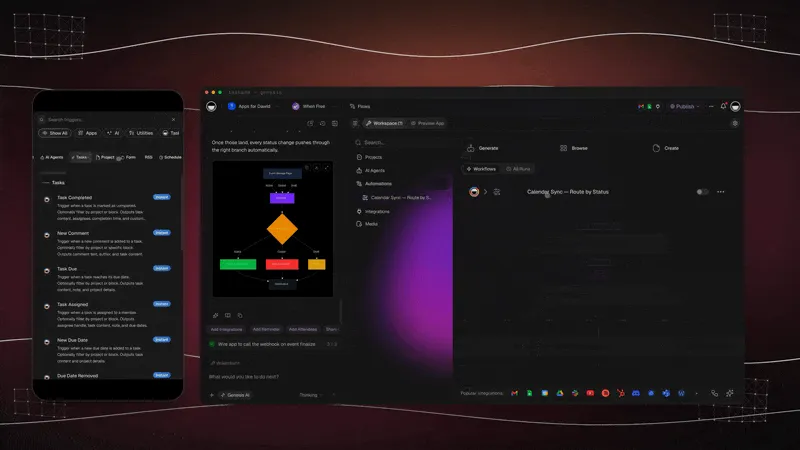
A ready-made version. The Spaced Repetition App below is a live Taskade Genesis app in the Taskade App Factory. You paste notes, an AI agent drafts question and answer cards, and you approve each card. The app shows the cards due each day, and a miss sends a card back to day one. The kit holds 4 projects, 2 AI agents and 3 automations (checked 2026-11-12). It is free to open and preview. Cloning it needs a paid plan, because it holds automations and more than the 1 agent that Free allows. For a plain card box with no AI step, the Flashcard Review Boxes kit brings missed cards back tomorrow and known cards back later. It holds 3 projects and 1 automation, so cloning it also needs a paid plan.
Clone the Spaced Repetition App into your workspace (a paid plan is needed to clone a kit with automations).
Agents work from the material you give them. You can attach your notes, PDFs and links as agent knowledge, so the questions come from your course, not from general knowledge. A PDF upload needs a paid plan. Browse ready-made study tools in the Taskade App Factory, or start from the agent directory.
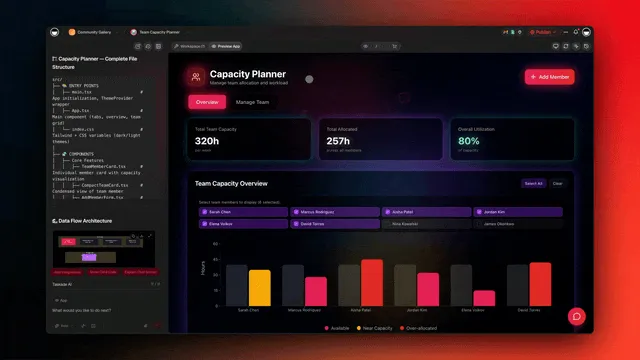
Two honest limits. First, the box-and-date rules in a table are a Leitner-style schedule, which is simpler than SM-2 or FSRS. For a deck of thousands of cards that you keep for years, a dedicated scheduler is the better tool. Second, an agent can quiz you, but the recall still has to be yours: answer before you read the reply. On Free, you earn free AI credits with referrals and invites, and you can upgrade any time.
What 140 Years of Memory Research Adds Up To
The history of spaced repetition compresses into four findings, each confirmed by a different generation of researchers: forgetting is fast and then slow (Ebbinghaus, 1885), recall strengthens memory more than rereading (Spitzer 1939, Roediger and Karpicke 2006), spacing beats massing and the best gap depends on the test date (Cepeda 2006 and 2008), and people misjudge all three (Nelson and Dunlosky 1991, Kornell 2009).
Everything else in this post is engineering on top of those four facts. Leitner's box, SM-2, half-life regression and FSRS are four answers to one question: given that people cannot feel when a memory is about to fade, how do you schedule the next recall for them? AI cards are an answer to a different question: how do you lower the cost of writing the items in the first place? Neither question replaces the act at the center, which is a person trying to remember something and finding out whether they can.
That is also why the topic connects to how you organize knowledge, not only how you study. A system such as PARA decides where knowledge lives. A review schedule decides which of it stays in your head. The AI study planners guide covers tools that put both on one calendar.
Primary Sources
The sources below are the originals behind each claim in this post, in date order. Where a primary text was not available online, the post cites the most direct secondary account and says so.
| Year | Source | Used for |
|---|---|---|
| 1885 | Ebbinghaus, H. Über das Gedächtnis. English: Memory: A Contribution to Experimental Psychology, trans. Ruger and Bussenius, 1913. Chapters 7 and 8 | Forgetting curve, savings, 38 vs 68 repetitions |
| 1913 | Ballard, P. B. Obliviscence and Reminiscence. British Journal of Psychology Monograph Supplements, no. 2 | Reminiscence |
| 1932 | Mace, C. A. The Psychology of Study. Methuen | First expanding-interval advice |
| 1939 | Spitzer, H. F. Studies in retention. Journal of Educational Psychology 30(9), 641 to 656 | 3,605 children, testing effect |
| 1967 | Pimsleur, P. A memory schedule. The Modern Language Journal 51(2), 73 to 75 | Graduated-interval recall |
| 1972 | Leitner, S. So lernt man lernen. Herder | The card box |
| 1978 | Landauer, T. K., and Bjork, R. A. Optimum rehearsal patterns and name learning. In Practical Aspects of Memory, 625 to 632 | Expanding retrieval |
| 1988 | Dempster, F. N. The spacing effect. American Psychologist 43(8) | Failure to apply the spacing effect |
| 1989 | McCloskey, M., and Cohen, N. J. Catastrophic interference in connectionist networks. Psychology of Learning and Motivation 24, 109 to 165 | Machine forgetting |
| 1990 | Wozniak, P. Optimization of Learning, master's thesis, Poznań University of Technology. SM-2 description | SM-0, SM-2 |
| 1990 | Nelson, T. O., and Narens, L. Metamemory: A theoretical framework and new findings. Psychology of Learning and Motivation 26 | Monitoring and control |
| 1991 | Nelson, T. O., and Dunlosky, J. When people's judgments of learning are extremely accurate. Psychological Science 2(4), 267 to 270 | Delayed-JOL effect |
| 1992 | Bjork, R. A., and Bjork, E. L. A new theory of disuse and an old theory of stimulus fluctuation | Storage and retrieval strength |
| 1994 | Bjork, R. A. Memory and metamemory considerations in the training of human beings. In Metacognition: Knowing about Knowing, MIT Press | Desirable difficulties |
| 1999 | Wozniak, P. Effective learning: Twenty rules of formulating knowledge | Card writing |
| 2006 | Roediger, H. L., and Karpicke, J. D. Test-enhanced learning. Psychological Science 17(3), 249 to 255 | Testing effect figures |
| 2006 | Cepeda, N. J., et al. Distributed practice in verbal recall tasks. Psychological Bulletin 132(3), 354 to 380 | Spacing meta-analysis |
| 2007 | Rohrer, D., and Taylor, K. The shuffling of mathematics problems improves learning. Instructional Science 35, 481 to 498 | Interleaving |
| 2008 | Cepeda, N. J., et al. Spacing effects in learning: A temporal ridgeline. Psychological Science 19(11) | Optimal gaps |
| 2009 | Karpicke, J. D., Butler, A. C., and Roediger, H. L. Metacognitive strategies in student learning. Memory 17(4), 471 to 479 | Student strategy survey |
| 2009 | Kornell, N. Optimising learning using flashcards. Applied Cognitive Psychology 23, 1297 to 1317 | 90% vs 72% |
| 2013 | Dunlosky, J., et al. Improving students' learning with effective learning techniques. Psychological Science in the Public Interest 14(1), 4 to 58 | Technique ranking |
| 2015 | Murre, J. M. J., and Dros, J. Replication and analysis of Ebbinghaus' forgetting curve. PLOS ONE | Replication |
| 2016 | Settles, B., and Meeder, B. A trainable spaced repetition model for language learning. ACL 2016, 1848 to 1858 | Half-life regression |
| 2018 | Nielsen, M. Augmenting Long-term Memory | Anki for research reading |
| 2022 | Pan, S. C., et al. User-generated digital flashcards yield better learning than premade flashcards. Journal of Applied Research in Memory and Cognition 12(4), 574 to 588 (online 2022, print 2023) | Self-made vs premade cards |
| 2022 | Ye, J., et al. A stochastic shortest path algorithm for optimizing spaced repetition scheduling. ACM KDD 2022 | FSRS research |
| 2026 | Kirkby, O., and Matuschak, A. Memory Machines: Can LLMs create lasting flashcards from readers' highlights? | AI card quality |
Further reading beyond the primary studies: Gwern Branwen's long essay on spaced repetition, the Wikipedia article on spaced repetition, and Wozniak's own history of SuperMemo.
Frequently Asked Questions
What is spaced repetition in simple terms?
Spaced repetition is a study method in which you review a fact again just before you are likely to forget it, and you make each gap longer than the last. A fact you recall today comes back in a few days, then in a week or two, then in a month or more. The method rests on the spacing effect, which Hermann Ebbinghaus measured in 1885 and which hundreds of experiments have confirmed since.
What is the difference between active recall and spaced repetition?
Active recall is how you review: you pull the answer out of memory before you look at it, instead of rereading. Spaced repetition is when you review: at gaps that grow over time. They are separate effects that work best together. A flashcard app combines them, because every card forces a recall attempt and the scheduler decides the day each card comes back.
What is the forgetting curve?
The forgetting curve is the graph Hermann Ebbinghaus published in 1885 after he memorized lists of nonsense syllables and relearned them after delays from 20 minutes to 31 days. The time he saved on relearning fell fast at first and then slowly: about 58 percent after 20 minutes, about a third after one day, and about a fifth after a month. Each review makes the next drop slower.
What is the best spaced repetition schedule?
No single schedule is best for every learner and every test date. A practical default is to review new material after 1 day, then about 3 days, 1 week, 2 weeks and 1 month, and to restart a fact at a short gap when you miss it. Research by Cepeda and colleagues in 2008 found that the best gap grows with the time until the test, and shrinks as a share of it.
How does Anki work?
Anki is a free, open-source flashcard program that Damien Elmes started in 2006. It shows you the front of a card, you try to recall the back, and then you grade yourself Again, Hard, Good or Easy. A scheduler uses that grade to set the next due date. For years the scheduler was a modified version of SuperMemo's SM-2. Since version 23.10 in 2023 you can switch on FSRS, which fits a memory model to your own review history.
What is FSRS and is it better than SM-2?
FSRS, the Free Spaced Repetition Scheduler, is an open-source algorithm by Jarrett Ye, first published in 2022 and added to Anki as an option in version 23.10. It tracks three numbers per card, difficulty, stability and retrievability, and schedules each review for a target recall rate, 90 percent by default. In the open benchmark that its developers maintain, FSRS predicts recall with lower error than older models. SM-2 still works, but it uses fixed rules instead of your data.
What is the Leitner system?
The Leitner system is a paper method for spaced repetition that the German science writer Sebastian Leitner published in his book So lernt man lernen, usually dated 1972. You keep flashcards in a box with several compartments. A card you answer correctly moves to the next compartment, which you review less often. A card you miss goes back to the first compartment, which you review every day.
Who invented spaced repetition?
No one person invented it. Hermann Ebbinghaus measured the spacing effect in 1885. C. A. Mace recommended reviews at gradually increasing intervals in 1932. Paul Pimsleur published a fixed expanding schedule in 1967, Sebastian Leitner a card-box method in 1972, and Piotr Wozniak the first computer algorithm, SM-2, in 1987. Most modern apps descend from Wozniak's work.
Does spaced repetition work for understanding, or only for facts?
It works best for knowledge that you can split into small, clear items, such as vocabulary, definitions, formulas, dates and drug names. It can also hold concepts in memory if you write cards that ask why and how, not only what. It does not replace first understanding the material. Piotr Wozniak's first rule of formulating knowledge is: do not learn if you do not understand.
Can AI make flashcards for me?
Yes, and it saves time, but check every card. In a 2026 evaluation by Ozzie Kirkby and Andy Matuschak, the best-scoring language model still wrote prompts that were unusable for long-term review 36 percent of the time, mostly because the cards were vague, wordy or allowed several answers. A 2022 study by Pan and colleagues also found that students who wrote their own cards learned more than students who used premade ones. Let AI draft, then edit. The Spaced Repetition App kit in the Taskade App Factory works in that order: an AI agent drafts cards from your notes, and you approve each card.
Is the learning pyramid true?
No. The learning pyramid claims fixed retention rates, such as 5 percent for lectures and 90 percent for teaching others. Those percentages have no traceable study behind them. The research that the National Training Laboratories cited has never been produced, and reviewers such as Letrud in 2012 call the numbers untrustworthy. The evidence-based ranking of study techniques is Dunlosky and colleagues' 2013 review, which rates practice testing and distributed practice highest.
Related Reading
The study-tools series (this post is the science hub):
- AI flashcard makers: tools that turn notes, PDFs and videos into cards
- AI quiz generators: practice tests from any material
- AI reviewer makers: exam reviewers from your course content
- AI study guide makers: structured guides before you write cards
- AI homework helpers and AI tutors: explanations after you try first
- Study with AI: a weekly workflow that combines all of the above
- AI research assistants: finding and reading sources
- Catastrophic forgetting explained: why neural networks forget, and how replay helps
Learning science and knowledge management:
- What is metacognition? and the wiki entry on metacognition in AI
- The Feynman technique: active recall by explaining in plain words
- Types of note-taking compared
- The history of agent memory
- The Bitter Lesson explained
▲ ■ ● Memory decays, recall renews it, and a schedule decides when. Keep your cards, your notes and your study plan in one place, and let an agent and an automation run the routine: Memory feeds Intelligence, and Intelligence triggers Execution. Build your study app from one prompt, or explore ready-made apps.