






Once in a while, we all come across awesome ideas that have the potential to change the world. The tricky part is evaluating startup ideas, separating the wheat from the chaff, and acting on real gems with fine business potential.
Here’s what you’re going to learn in this article:
🌟 Why is evaluating startup ideas key?
💭 What problems are worth solving?
💸 How to market your product/startup?
🥊 Who are you going to compete with?
🛠 How do you build a minimum viable product?
📈 How to establish a growth roadmap?
💡 Before you start... Each section of this article comes with several handy templates that’ll make evaluating startup ideas much easier. Apply them sgenerously!
💡 Why Should You Evaluate Startup Ideas?
“As a founder, your first job is to get the first things right, because you cannot build a great company on a flawed foundation.”
Peter Thiel, Zero to One: Notes on Startups, or How to Build the Future(1)
Pursuing good ideas instead of mediocre ones isn’t a foolproof recipe for success. But it puts you on the right track and ups the odds that your business will fly.
Evaluating startup ideas, on the other hand, will help you save time and money, both your own and those of investors who’ll take interest in what you’re offering.
For instance, in the wee days of Apple, Steve Jobs and Steve Wozniak had to sell some of their valued possessions―a VW bus and an HP 65 calculator― to source the components required for building the Apple-1 computer.
"To come up with the $1,000 we thought we'd need ... I sold my HP 65 calculator for $500. [...] Steve sold his VW van for another few hundred dollars. He figured he could ride around on his bicycle if he had to. That was it. We were in business".
Steve Wozniak, iWoz: Computer Geek to Cult Icon(2)
Wozniak and Jobs put their own money at stake because they believed in their product and knew its iterations will get enough traction to into a profitable business.
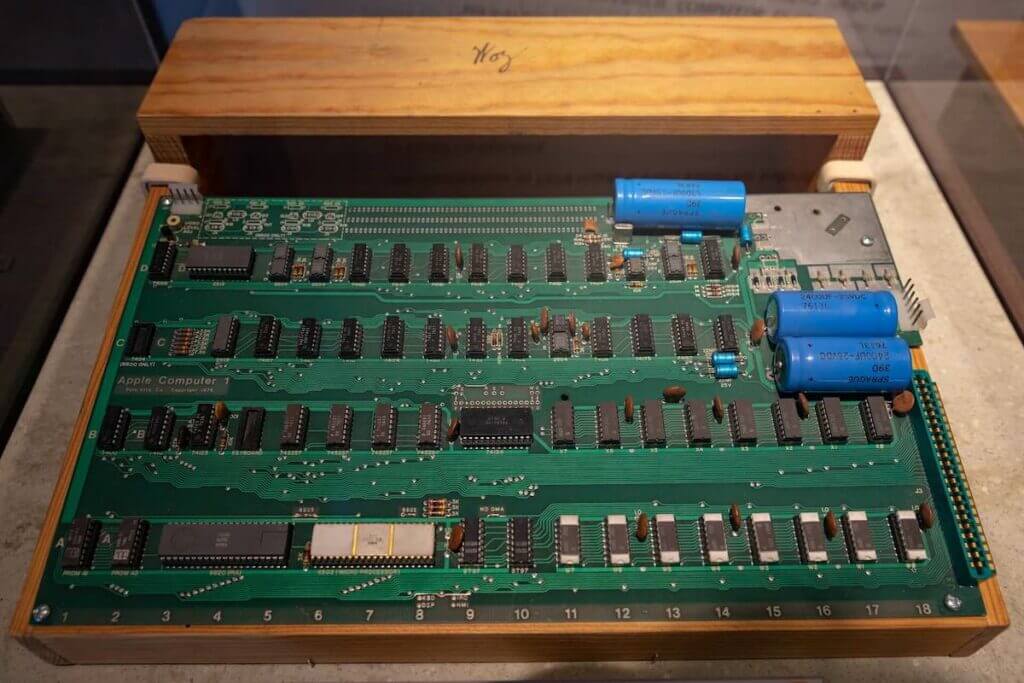
Apple 1 circuit board by The Computer History Museum via Wikipedia(3)
Noble goals aside, at some point you too will want to convert your brilliant idea into a business that generates money. And you can’t do that without a solid foundation.
💭 6-Step Framework for Evaluating Startup Ideas
1. What’s the Problem You’re Trying to Solve? (Product)
According to Y Combinator partner Jessica Livingstone, one of the best ways to find the right kind of startup ideas is to start with those that solve problems:
“My advice to those of you who are still looking for an idea is to solve a problem that you yourself have. Then you'll know it's something at least one person really wants. And when you're part of the target market, you'll have insights about it that you wouldn't otherwise.”(4)
And that’s how Taskade came to life.
By the time we started the company, we had been working together as a remote team for many years. We enjoyed the freedom and flexibility, but we were also frustrated about having to hack together multiple tools to get things done.
Few of the communication, collaboration, and project management tools in the typical "remote stack" felt like they were designed for and by remote teams.
We wanted to solve our own problem but we also knew that thousands of remote teams around the world could benefit from our solution. So we built it! 👇

Team Taskade (Dionis, Stan, John) at Y Combinator
Not sure where to start? The following questions will help you zero in on the problem and find out if it’s worth solving in the first place:
🟡 What kind of problem does your product solve?
🟡 Can you explain how it solves the problem?
🟡 Would you pay somebody to solve that problem?
🟡 Is it something you’re struggling with personally?
🟡 Who else has the same kind of problem?
🟡 Was it prompted by friends/family/coworkers?
🟡 How will your product/business generate revenue?
🟡 Is it a seasonal need or a long-term, reusable solution?
🟡 Are you really passionate about developing the solution?
🟡 Have somebody tried to solve this problem before?
Startup Idea Templates 🐑
Brainstorming doesn’t have to be boring. Use these free templates to aggregate ideas, organize thoughts, and draft your business roadmap.
2.Who and Why Should They Care? (Customers)
Figuring out what exactly your product does is just the first step. Next, you need to figure out who your potential customers are and where they’re hanging out.
As Jessica Livingston continues:
“[...] you should graduate from making something just for yourself to making something for other people as fast as you can. And to know what they want, you have to understand them”(4)
To find your customers, consider the bigger picture. What are the odds that other people need help with solving their problem? What would convince them?
Here’s a set of warm-up questions:
🔵 Who are the people you’re trying to sell to?
🔵 How would you describe your perfect customer?
🔵 How often do your customers encounter the problem?
🔵 Who is getting the most value out of your product?
🔵 What do they value most and what do they want to achieve?
🔵 Which customers should you go after first?
🔵 Which customers should you run away from?
🔵 Does your product offer obvious benefits?
🔵 How big is the market you’re targeting?
🔵 Are people searching for this type of product?
Finding your customers isn’t enough. It’s the “why” part that determines whether they’d consider choosing you over the competition.
“Is your product 10X better than the competition? If it is, then you potentially have an unfair advantage and it has to be very, very clear. Someone should be able to look at your product and go, like, oh shit, this is so much better than everything else I've ever seen.”
Kevin Hale, Y Startup School(5)
Finally, understanding your potential customers is much easier if you share the same pain points and know when they’re coming from.
Customer-Oriented Templates 🐑
Still looking for your perfect customer? Use these Taskade templates to narrow down your search and find the people who’ll love your product.
3. How Will You Convince Them? (Marketing)
Of course, pushing your product to the market, especially one that’s already ripe with competitors, simply because “why not” wouldn’t make much sense, right?
So, what’s your competitive edge? Your product may cheaper, more customizable, better specced, available in higher quantity… enter your reasons here.
Once you’ve zeroed in on the benefits, you need a way to convince people tied to your competitors that your offering is really worth the conversion.
Your best bet?
Find your unique angle and make it part of your brand/product storytelling:
"If you want to launch something ambitious on the scale of [Apple CEO Steve] Jobs, you need to get amazing (not adequate) at communicating why people--investors, consumers, prospective hires--should care about whatever it is you're trying to build. Great storytelling can be your most powerful tool for disseminating and scaling your vision."
Steve Vassallo, partner at Foundation Capital(6)
A solid brand/product narrative will not only boost your overall marketing results but also make it much easier to create a clear roadmap for the future.
Start by asking yourself the following questions.
🟤 What motivated you to solve your customer’s problem?
🟤 What kind of values and vision drive your idea?
🟤 How will customers interact with your company?
🟤 How easy is it for your customer to find your product?
🟤 Do you understand the language your customers use?
🟤 How technically complex is your product?
🟤 Can you briefly describe how it solves the problem?
🟤 How will you communicate your solution?
🟤 What social media platforms and channels will you use?
🟤 What is your competitive advantage?
Your narrative should focus on the problem/solution side of things and weave in personal motivation that put you in the business in the first place.
If you can’t explain the purpose of the product to your friends and family early on, chances are you won’t be able to explain it to investors and your customers.
Product Marketing Templates 🐑
Marketing a new business or product is a multi-layered endeavor. These Taskade templates will help you narrate your product story with class.
4. Who Are You up Against? (Competition)
Stumbling on completely fresh ideas is rare. Chances are there’s already somebody who either figured out what you’re trying to accomplish or will copy your idea.
The larger the scale of the problem you’re trying to solve, the higher the gains but also the possibility that the competition is already there.
“The perfect target market for a startup is a small group of particular people concentrated together and served by few or no competitors. Any big market is a bad choice, and a big market already served by competing companies is even worse.”
Peter Thiel, Zero to One(7)
With that in mind, consider the following questions next:
🔴 Are there similar products around?
🔴 Who are your top competitors?
🔴 How is your competition marketing their products?
🔴 What advertising channels do they use?
🔴 Is your idea unique or does it improve on other products?
🔴 Is there something their products don’t do but yours can?
🔴 How much do they charge their customers?
🔴 What distribution channels does your competition use?
🔴 What is your competitors’ market share?
🔴 What’s their content marketing strategy?
According to Twitter co-founder Evan Williams, the formula for launching a successful product boils down to Tractability, a combination of technical difficulty and competition:
“How advanced are the other solutions? Building a new blogging tool today is less-tractable, because the bar is higher. Building the very first web search engine was probably pretty easy. Conversely, building the very first airplane was difficult, even though there wasn't any competition.”(8)
Products with high tractability increase the odds of a successful launch for fledgling businesses. With limited resources at hand, you can build the critical mass much faster.
5. How Will You Grow Your Startup Ideas? (Development)
Remember what we said about building a solid foundation? Williams argues that your product idea should leave some headspace to grow/evolve in the future:
“The most successful products give benefits quickly (both in the life of a product and a user's relationship with it), but also lend themselves to continual development of and discovery of additional layers of benefit later on.”(8)
The capacity for growth may depend on how quickly the problem escalates, the way technology develops, or stem from paradigm shifts, like the 2020 pivot to remote work.
Use these questions to create a roadmap for your product:
🟢 How much value can you ultimately deliver? (Evan Williams)
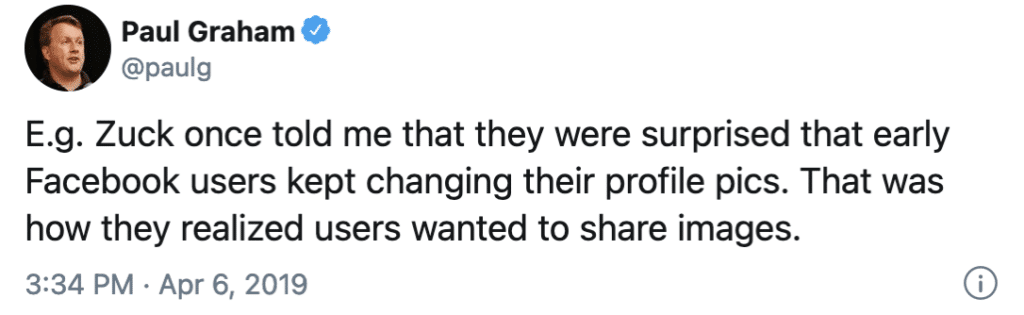
🟢 How is what users want different than you expected? (Paul Graham, YC)
🟢 Are people using your product in unexpected ways? (Paul Graham, YC)
🟢 Are different people using it than you expected? (Paul Graham, YC)
🟢 Will your market position be defensible 10-20 years from now? (Peter Thiel)
Sometimes, the evolution will come about organically as users become more familiar with the product. Other times, it may be pure luck. 👇
Product Development Templates 🐑
6. Creating the Minimum Viable Product (MVP)
Let’s say you’ve finally settled on your million-dollar idea. You’ve figured out the problem, zeroed in on your target audience, and analyzed the competition.
What next?
Well, it’s time to build the minimum viable product that’ll let you field-test the demand for your solution. It’ll also help you find out what functionality your users expect, and narrow down the list of features to focus on after the launch.
“You need to condense [...] what your initial user needs, to a very simple set of things. A lot of times, founders want to address all of their users' problems and all of their potential users, when in reality, they should just focus on a small set of initial users and their highest-order problems [...]”
Michael Seibel, Y Startup School(4)
Use the following questions for guidance:
🟣 What are the key features your MVP will include?
🟣 What are the secondary features you want to include?
🟣 What’s the minimum package your customers expect?
🟣 Will you charge customers to use your MVP?
🟣 What’s your product hypothesis?
🟣 What kind of metrics/user actions will you focus on?
🟣 How will you gather feedback on your MVP?
🟣 Are your customers willing to pay for an early first version?
🟣 What goals do you want your users to achieve?
🟣 How will your MVP generate revenue?
🎞️ If you want to learn more about launching an MVP, be sure to watch Michael Seibel’s “How to Plan an MVP” presentation. It’s good stuff.
MVP Templates 🐑
🐑 Parting Words
Figuring out which business opportunities are worth pursuing doesn’t have to be difficult. All you need is a solid framework and a bunch of accurate questions to boot.
So, why wait any longer? Grab our free templates, get your co-founders on board, and start brainstorming awesome startup ideas today.
And speaking of frameworks… here’s a handy Taskade template that packs in everything we’ve discussed in this article. Put it to good use!
If you’re still up for some reading, be sure to check out these articles on our blog:
🧩 Hierarchical Thinking: Solve Complex Problems The Easy Way
🌊 Google Wave’s Lesson for Modern Real-Time Collaboration Tools
Frequently Asked Questions About Evaluating Startup Ideas
How do you judge a startup idea?
Judge a startup idea by assessing its uniqueness and innovation. Ensure there's a large enough market size. Evaluate the potential for profitability and financial sustainability. Consider the team's capability to execute the idea. Identify and evaluate potential risks and challenges.
How do I know if my startup idea is good?
You can tell if your startup idea is good by looking for high customer interest and engagement. Consistent positive feedback from initial users is a good sign. Identify a clear market gap that your idea fills. Ensure the idea has potential for scalability and growth. Finally, confirm clear and sustainable revenue potential.
What are the best ways to validate a startup idea?
Validate a startup idea by conducting thorough market research through surveys and interviews. Develop a Minimum Viable Product (MVP) to test with users. Create landing pages to gauge interest and collect emails. Offer pre-sales to test demand. Engage on social media to get feedback from potential customers.
How to assess a startup idea?
To assess a startup idea, analyze the market demand to ensure there's a need for your product or service. Identify your target audience and understand their pain points. Evaluate the competition to see how your idea stands out. Determine a viable business model and revenue streams. Lastly, assess the technical and financial feasibility of your idea.
🔗 Resources
https://www.amazon.com/Zero-One-Notes-Startups-Future/dp/0804139296
https://www.amazon.com/iWoz-Computer-Geek-Cult-Icon-ebook/dp/B000VUCIZO
https://commons.wikimedia.org/wiki/File:Apple_1_Woz_1976_at_CHM.agr_cropped.jpg
https://www.ycombinator.com/library/6e-how-to-evaluate-startup-ideas
https://www.fastcompany.com/3064384/designing-the-next-steve-jobs
https://www.amazon.com/Zero-One-Notes-Startups-Future/dp/0804139296