





In 1973, a fifteen-year-old high-school student in Park Ridge, Illinois got access to the PLATO terminal at the University of Illinois, a time-sharing computer system with the first commercial online forum software, called PLATO Notes. He spent his teenage years writing software for it. His name was Ray Ozzie.
Sixteen years later, on December 7, 1989, five years to the day after he founded Iris Associates, Ozzie's team shipped Lotus Notes 1.0. It was the first integrated workspace platform the world had seen: email, document database, threaded discussions, workflow automation, and bidirectional replication all in one client. IBM eventually paid $3.5 billion for the company that distributed it. At peak it had ~145 million users.
Then Ozzie did the same thing again at Groove Networks. Then at Microsoft, where he succeeded Bill Gates as Chief Software Architect. Then at Talko. Then at Blues Wireless. Fifty years of iterating on the same architectural conviction: that humans should collaborate through software that respects their context.
In 2026, Taskade Genesis is the AI-native node on that lineage. This is the story.
TL;DR: Lotus Notes (December 7, 1989) was the first integrated workspace platform, email + database + workflow + replication in one client. Built by Ray Ozzie and his PLATO co-conspirators at Iris Associates. IBM acquired Lotus in 1995 for $3.5B. Notes peaked at ~145M users. Ozzie went on to Groove (1997, MS acquired 2005), Microsoft CSA (succeeded Bill Gates), Talko, and Blues Wireless. HCL bought Notes from IBM for $1.8B in 2018. Taskade Genesis applies the same Workspace DNA loop, Memory + Intelligence + Execution, with frontier LLMs replacing Notes' formula language. Try Taskade Genesis →
🗺️ Ray Ozzie's Workspace Lineage in One Diagram
Fifty years, eight companies, one architectural conviction.
🎓 Pre-History: PLATO, VisiCalc, and the Iris Founders
To understand Lotus Notes, you have to understand PLATO, the time-sharing computer system Control Data Corporation built for the University of Illinois starting in 1960. PLATO was a wonder of its era: high-resolution graphics terminals, programmable courseware, and, critically, the first commercial online forum software, PLATO Notes, written by David R. Woolley in 1973.
PLATO Notes was a multi-user threaded discussion system. Anyone with a PLATO account could post a note; replies were threaded; notes were searchable. It was, by every reasonable definition, the first electronic discussion forum. It also taught a generation of Illinois students (and a few enterprising teenagers from the Chicago suburbs) that software could be a place where people talked.
Ray Ozzie was one of those teenagers. He started writing PLATO software at age fifteen and stayed on the system through his UIUC undergrad years. He met three lifelong collaborators there: Tim Halvorsen, Steve Beckhardt, and Len Kawell. All four would eventually co-found Iris Associates.
Ozzie's post-UIUC trajectory:
| Year | Where | What |
|---|---|---|
| 1979 | UIUC | BS Computer Science |
| 1979-1981 | Data General | Reported to Jonathan Sachs (later Lotus 1-2-3 co-author) |
| 1981-1984 | Software Arts | Contributed to VisiCalc and TK Solver alongside Bricklin and Frankston |
| 1984 | Lotus | Recruited by Mitch Kapor to lead the Lotus Symphony project (integrated productivity suite) |
| Dec 7 1984 | Iris Associates | Co-founded with Halvorsen, Beckhardt, Kawell |
Two important threads run through that resume. PLATO Notes showed Ozzie that software could host collective conversation. VisiCalc showed him that one piece of software could change an industry. Iris Associates was his attempt to combine both insights into a single product.
🏢 The Iris Author/Publisher Deal
Iris Associates needed funding and a distribution channel. Mitch Kapor at Lotus was happy to provide both. The deal, finalized in early 1985, was an unusual structure for the time:
- Iris builds the product (which would become Lotus Notes)
- Lotus owns marketing, sales, and support rights
- Iris remains independently owned and operated
- Iris royalties flow from Lotus product revenue
- Lotus has an option to acquire Iris in the future
The structure looked like the book-publishing world's author/publisher arrangement, and that's exactly how Ozzie framed it. Iris was the author; Lotus was the publisher.
The independence let Iris move fast. Within eighteen months they had the architectural skeleton of what would become Lotus Notes:
- A document-centric data model (each Notes document is a record in a database)
- A replication engine that synchronized databases between users and servers
- An email system embedded in the same client
- A formula language for scripting documents
- A workflow engine for routing documents through approval steps
- RSA public-key encryption for client/server auth (one of the first widely deployed PKI deployments in commercial software)
Building this with the technology of 1985-1989 was genuinely hard. PCs of the era ran DOS, then early Windows; networks were small and unreliable; encryption was politically fraught (the US government still treated strong encryption as a munition). The Iris team pulled it off.
📅 December 7, 1989: Lotus Notes 1.0 Ships
On Iris Associates' fifth anniversary, December 7, 1989, Lotus Notes 1.0 shipped. The launch was unusual: Notes was sold direct to large enterprises by Lotus sales reps, not through retail channels. Initial pricing was around $60,000 per server plus per-seat licensing. Early customers included Boeing, Citibank, Pfizer, and dozens of other Fortune 500 names.
What Notes 1.0 actually did:
┌────────────────────────────────────────────────────────┐
│  Lotus Notes 1.0 · December 1989                       │
│                                                        │
│  ┌─ Mail Database ─────────────────────────────────┐  │
│  │  Email + threaded replies + attachments         │  │
│  │  Same data model as every other Notes DB        │  │
│  └─────────────────────────────────────────────────┘  │
│                                                        │
│  ┌─ Document Databases ────────────────────────────┐  │
│  │  Discussion DBs · Knowledge bases · CRM         │  │
│  │  Custom apps via formula language               │  │
│  └─────────────────────────────────────────────────┘  │
│                                                        │
│  ┌─ Workflow ──────────────────────────────────────┐  │
│  │  Routing · Approvals · Notifications            │  │
│  └─────────────────────────────────────────────────┘  │
│                                                        │
│  ┌─ Bidirectional Replication ─────────────────────┐  │
│  │  Work offline, sync when connected              │  │
│  │  Server-to-server replication for branch offices│  │
│  └─────────────────────────────────────────────────┘  │
│                                                        │
│  All wrapped in: RSA-encrypted auth + access control  │
└────────────────────────────────────────────────────────┘
If you squint, this is a 1989 sketch of what AI workspaces would be in 2026, Memory (databases), Intelligence (formula language + agents), Execution (workflow). Notes didn't have AI because LLMs didn't exist; everything else was there.
💰 The 1995 IBM Acquisition: $3.5 Billion for the Workspace
By 1994, Lotus Notes was a corporate phenomenon. The 2.0 (1991), 3.0 (1993), and 4.0 (1995) releases had added Windows support, broader application development tools, and aggressive performance optimizations. Major enterprises were betting Notes as their email-plus-collaboration backbone.
Lotus acquired Iris Associates outright in 1994 for approximately $84 million, exercising the option built into the original publishing deal. Ozzie and his co-founders became Lotus employees (or, in some cases, Lotus board members).
In 1995, IBM made a hostile takeover bid for Lotus at $60 per share, about $3.3 billion total. After board negotiations the deal closed at $64 per share, approximately $3.5 billion. CEO Lou Gerstner had decided IBM needed Notes specifically to compete with Microsoft's growing office productivity strategy.
Analysts at the time estimated ~$3 billion of the $3.5 billion purchase price was attributable to Lotus Notes (the rest being Lotus 1-2-3, AmiPro, and the broader Lotus product family). At the time it was one of the highest-priced single software products in the history of enterprise acquisitions.
📈 Peak Notes: 145 Million Users
Lotus Notes vs Microsoft Exchange: three decades head-to-head
| Year | Notes seats | Exchange seats | Notes price (seat / yr) | Exchange price (seat / yr) | Where each led |
|---|---|---|---|---|---|
| 1995 | ~6M | ~200K | $375 | $80 + Windows Server | Notes — replication, databases, offline-first |
| 2000 | ~75M | ~70M | $158 | $35 (bundled) | Notes — feature breadth; Exchange — calendar UX |
| 2005 | ~120M | ~250M | $145 | bundled in Office Pro | Exchange overtakes — Outlook UX wins, Microsoft AD lock-in |
| 2010 | ~145M (peak) | ~470M | $130 | $48 | Exchange — mobile (BlackBerry/iOS push); Notes — security in regulated industries |
| 2015 | ~85M | ~700M+ | $115 | bundled in Office 365 | Exchange — cloud-native via Office 365; Notes — internal stagnation |
| 2020 | ~12M | ~1B+ | HCL pricing | bundled in Microsoft 365 | Exchange wins SMB / general enterprise; Notes wins regulated workloads |
| 2026 | ~10M (HCL Notes 14) | ~1.5B+ (M365 estimate) | HCL pricing | bundled in M365 + Copilot | Exchange wins consumer + general; Notes runs forever in regulated shops |
Through the late 1990s and 2000s, Lotus Notes (now IBM Lotus Notes, later just IBM Notes, later IBM Lotus Notes and Domino, later HCL Notes) became the dominant enterprise collaboration platform alongside Microsoft Exchange.
Cumulative deployment metrics (largely IBM-reported, so treat as upper-bound):
| Year | Notes/Domino mailboxes |
|---|---|
| 1993 | ~1 million |
| 1995 | ~5 million |
| 2000 | ~50 million |
| 2005 | ~120 million |
| 2008 | ~145 million cumulative licenses (peak per Wikipedia) |
| 2015 | declining as Exchange + Google Apps gained share |
| 2018 | HCL acquires from IBM for $1.8B |
145M Notes users in 2008 meant Notes was one of the most widely deployed enterprise products in history. Adoption was concentrated in financial services, government, healthcare, and large industrials, the slow-changing enterprise sectors that had standardized on Notes in the 1990s and stayed.
🔁 The Killer Feature Nobody Copied for 30 Years: Replication
Lotus Notes's defining technical innovation was bidirectional replication. Each Notes user had a local replica of the document databases they cared about. They could read and write to the replica offline; when they connected to a Domino server, changes synced both directions.
This was revolutionary in 1989 and remains revolutionary 37 years later. Most enterprise software still treats networks as always-available. Notes treated them as intermittent and unreliable by default.
This is the 1989 fork in the road for collaborative software. Two paths diverged:
- Replication path: Lotus Notes → Groove Networks → CRDT research → Yjs / Automerge → local-first software → Linear sync
- Operation transform path: GROVE (Ellis & Gibbs 1989, same year as Notes!) → Jupiter at PARC → Etherpad → Google Wave → ShareJS / ot-json0 → Taskade Projects
See our History of Real-Time Collaboration and OT vs CRDT posts for the full fork-in-the-road analysis. Ray Ozzie picked replication in 1989, and stuck with it through Groove and SharePoint. The whole CRDT and local-first software movement of the 2010s and 2020s is rediscovering his bet.
🌐 1997–2005: Groove Networks: Ozzie's Second Act
Ozzie left IBM/Lotus in 1997 to found Groove Networks in Beverly, Massachusetts. The thesis was a more radical version of Notes' replication: peer-to-peer collaboration with no central server.
Where Notes replicated through a Domino server, Groove replicated directly between users' machines. Each user had a local replica; changes propagated peer-to-peer via cryptographically secure channels. There was no central authority. There was no central database. It was the architectural ancestor of today's local-first software movement.
Groove was technically beautiful and commercially difficult. The peer-to-peer model was hard to sell to enterprise IT departments who wanted centralized control. The encryption story made it attractive to government and defense customers but limited to niches. After eight years, Microsoft acquired Groove on March 10, 2005 for approximately $120 million.
Ozzie joined Microsoft as Chief Technical Officer (CTO).
🔔 October 28, 2005: The "Internet Services Disruption" Memo
The opening of Ray Ozzie's Oct 28, 2005 memo — Microsoft's pivot to cloud  ┌───────────────────────────────────────────────────────────────┐
│ To: Executive Staff and Direct Reports                        │
│ From: Ray Ozzie                                               │
│ Date: October 28, 2005                                        │
│ Subject: The Internet Services Disruption                     │
├───────────────────────────────────────────────────────────────┤
│                                                               │
│   "Today, the technology industry stands at the threshold of  │
│    a transformation as significant as the PC revolution. We   │
│    are in the midst of an industry-wide shift toward          │
│    services delivered over the Internet, augmenting,          │
│    enhancing, and in some cases replacing software running    │
│    locally on a PC or device."                                │
│                                                               │
│   "[T]hree key tenets that are driving a fundamental shift    │
│    in the landscape — all of which contribute to the          │
│    movement we're seeing toward Services:"                    │
│                                                               │
│      1. The power of the advertising-supported economic       │
│         model.                                                │
│      2. The effectiveness of a new delivery and adoption      │
│         model.                                                │
│      3. The demand for compelling, integrated user            │
│         experiences that 'just work'.                         │
│                                                               │
│   "[...] We must reflect upon what changes we must make."     │
│                                                               │
└───────────────────────────────────────────────────────────────┘
Ozzie had been at Microsoft 5 months. The memo defined the
next 20 years of the company: Live Mesh, Office 365, Azure,
and eventually the Microsoft 365 + Copilot stack.
Seven months into his Microsoft tenure, Ozzie wrote one of the most consequential internal memos in tech history. The memo, titled "The Internet Services Disruption," was distributed company-wide on October 28, 2005. Its thesis:
Microsoft has been the foundation of the personal computing era. But the era of software-as-a-product is ending. Internet-delivered services, Google Search, Gmail, Salesforce, eBay, the iTunes Music Store, are the future. If we don't reorient the company toward services, we will become irrelevant.
The memo was Microsoft's wake-up call about cloud SaaS. It directly catalyzed:
- The launch of Windows Live (Microsoft's first SaaS branding)
- The reorganization that became Windows Azure (announced 2008)
- The eventual launch of Office 365 (2011)
- The succession plan that put Ozzie in charge of Microsoft's software architecture
On June 15, 2006, Ray Ozzie succeeded Bill Gates as Microsoft's Chief Software Architect, the rare instance of a founder handing off the technical-strategist role to someone outside the original team. He held the role until October 18, 2010 when he departed Microsoft. Most of the cloud strategy Microsoft executed under Satya Nadella in the 2010s and 2020s was prefigured by Ozzie's 2005 memo.
The 2026 equivalent of the Ozzie memo, written by anyone with credibility, would be titled "The AI Workspace Disruption." It would describe the same architectural shift, products to services, services to AI-native workspaces. That Notes was reaching toward in 1989 and Taskade Genesis is shipping today.
📱 2012–Present: Talko, Blues Wireless, and the Lineage Continues
After leaving Microsoft, Ozzie founded Talko in January 2012. Talko was a mobile voice-plus-text collaboration app, group voice messages, shared transcripts, in-line annotations. Conceptually it was a Notes-for-mobile pattern. Microsoft acquired Talko in December 2015, folding the technology into Skype for Business and later Teams.
In 2017 Ozzie co-founded Blues Wireless, a cellular IoT platform for device makers. Blues lets hardware developers add cellular connectivity to products without managing carrier relationships, certificates, or device-to-cloud pipelines. Blues raised $11 million in April 2020 and continues to grow.
The thread through all of it: software that connects humans (or devices) through their context, despite intermittent networks. Notes was the first version. Groove was peer-to-peer. SharePoint was server-mediated cloud. Talko was mobile voice. Blues is cellular IoT. Same architectural conviction across fifty years.
🏢 2018-Today: HCL Notes: The Third Life
In December 2018, IBM announced the sale of Lotus Notes and Domino (along with several other Lotus-era products) to HCL Technologies for approximately $1.8 billion. The deal closed in July 2019. HCL had been a development partner of IBM's Notes team for years; the acquisition formalized the relationship and let HCL focus product investment that IBM had let lapse.
HCL Notes (formerly IBM Notes / Lotus Notes) continues to ship updates in 2026:
- HCL Notes 14.x is the current branch
- Domino server adds Verse webmail, REST API, modern UI
- Active development of Notes Mobile clients
- Migration tooling to HCL Domino REST APIs for modern integration
Adoption is concentrated in financial services, government, healthcare, and large industrials, the slow-changing enterprise sectors. New deployments are rare; most customers are on stable maintenance contracts while gradually evaluating Microsoft 365, Google Workspace, or AI-native workspace platforms.
🧬 Workspace DNA: Lotus Notes' AI-Native Heir
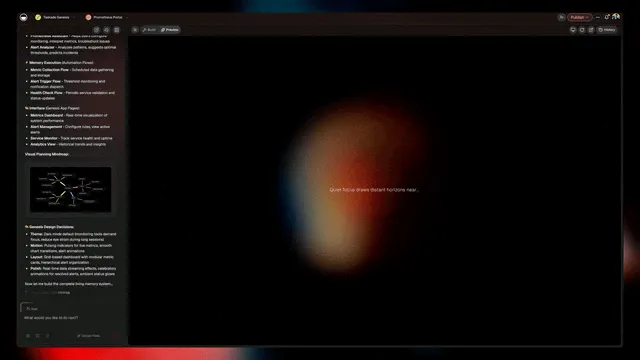
Genesis Capability Map: From the May 2026 Newsletters
| Newsletter chapter | What Taskade ships | Lotus Notes 1989 analogue |
|---|---|---|
| Workspace Memory · Mind Graph | Workspace knowledge graph | NSF document database with cross-DB views |
| Agent Workflows · Tools Wired | built-in agent tools + 100+ integrations | LotusScript + formula language + scripted agents |
| App Payments · Stripe Live | Native Stripe Checkout actions | Notes had no commerce layer |
| Frontier Models · Auto-Routed | Frontier models from OpenAI, Anthropic, Google + open-weight | Notes had no AI half |
| Embed Apps · Anywhere | Genesis Apps embed on any site | Notes was client-installed only |
| Clone Apps · Instantly | 150,000+ apps in Community Gallery; clone in 60 seconds | Notes Template Gallery (paid, slow) |
Plus vibe coding · vibe payments · vibe workflows · vibe marketing · vibe tracking and a hosted MCP server that lets Claude Desktop, Cursor, and VS Code drive your workspace, on every paid plan. 198 platform releases in 2026.
The architectural diagram of Lotus Notes 1989 maps almost directly onto Taskade Genesis 2026:
Notes shipped four of the five Workspace DNA elements in 1989: Memory (NSF databases), Intelligence (formula language + scripted agents), Execution (workflow + replication), and Security (RSA + ACLs).
What Notes was missing: the AI half of Intelligence. Notes "agents" were brittle scripted procedures because LLMs didn't exist. Taskade Agents v2 are LLM-powered coworkers with built-in tools (web search, file editing, image generation, slash commands, web fetch, project read/write, agent-to-agent handoff) and persistent memory accumulating across sessions.
Taskade Genesis is what Lotus Notes wanted to be when it grew up.
The Workspace DNA Loop
Memory feeds Intelligence triggers Execution writes back to Memory. The loop closes. The workspace is alive, living software, not static apps.
What You Can Build
Where a 1989 Lotus Notes developer might build a CRM in 6 weeks via formula scripts, Taskade Genesis builds it from one prompt in seven minutes:
| You say... | Genesis builds (~7 minutes) | Lotus Notes 1989 equivalent |
|---|---|---|
| Customer feedback app with AI sentiment analysis | Ratings DB + photo uploads + AI sentiment + Slack alerts + follow-up workflows | A Notes discussion DB with manual review |
| Booking system with Stripe checkout | Scheduling + payments + confirmations + customer history | A calendar Notes DB with paper-form integration |
| CRM for inbound leads with AI qualification | Multi-source capture + AI scoring + automated nurturing + pipeline | A Notes CRM template with manual scoring |
| Onboarding portal for new hires | Forms + provisioning + checklists + document collection | A Notes onboarding workflow with paper sign-offs |
| Help desk with AI routing | Ticket submission + AI categorization + KB + SLA timers | A Notes help-desk template with manual routing |
Same architectural pattern. AI replaces the procedural-scripting half. The substrate gets smarter.
Taskade Genesis vs the Modern Notes Successors
The "integrated workspace" pattern Ozzie shipped in 1989 spawned a generation of successors. Head-to-head against the three most cited in 2026:
| Capability | Taskade Genesis | Notion | Microsoft 365 (SharePoint + Teams) | ClickUp |
|---|---|---|---|---|
| Memory: documents + databases in one substrate | Workspace DNA — Projects + databases unified | Pages + databases unified | SharePoint lists + Loop components | Docs + Lists |
| Intelligence: AI agents with persistent memory | AI Agents v2 — built-in tools, multi-agent, public embed | Notion AI (chat assistant, no agents) | Copilot (chat layer per app) | ClickUp Brain (assistant) |
| Execution: durable automation engine | Durable execution, 100+ bidirectional integrations | Notion Automations (beta, limited) | Power Automate (separate product, $$) | ClickUp Automations |
| Replication / offline | Real-time sync (OT); offline PWA | Online-first | OneDrive sync | Online-first |
| Build live apps from prompts | Yes — Genesis ships ~7 min apps | No (manual page assembly) | No (Power Apps separate) | No |
| Native Stripe checkout in apps | Yes — first-class action | No | No (Dynamics 365 enterprise only) | No |
| Hosted MCP server (external AI clients connect in) | Yes — every paid plan | No | Limited (Copilot Studio) | No |
| Starter price | $10/mo billed annually | $10/mo | $12.50/user/mo (Business) | $7/mo |
Notion ships the Memory half; Microsoft 365 ships Execution via a separate Power Platform; ClickUp ships task-management at scale. Only Taskade ships all three in one workspace, the architectural pattern Ozzie was reaching for in 1989, now AI-native.
100+ Bidirectional Integrations
Where Notes had replication between Domino servers, Taskade has 100+ bidirectional integrations, Slack, Stripe, Notion, GitHub, Shopify, Salesforce, Calendar, Linear, Monday, Airtable, Telegram, RSS, Webhooks. Triggers pull external events in; actions push data out. Same idea Notes had with cross-database replication, expanded to every modern SaaS API.
Your Workspace as an MCP Server
In 2026, the Model Context Protocol (MCP) is the standard for AI agents to call external tools and data sources, Anthropic's protocol now adopted by OpenAI, Google, ServiceNow, and Taskade. Taskade ships both halves of it, in two different places:
- Taskade-as-Server: Claude Desktop, Cursor, and VS Code connect into your workspace over OAuth and can list projects, inspect them, read tasks, and write files. Available on every paid plan.
- The client direction — calling out to external Notion, Linear, or Sentry MCP servers — runs from an automation's MCP Client step, on every plan including Free. An agent supplies the reasoning and hands the call to the flow rather than dialing out itself, and it still reaches the outside world through its built-in tools and Taskade's 100+ bidirectional integrations.
Same lesson today, Live Artifacts inside Cowork mirrors the local-Notes era of beautiful single-machine files; Taskade Genesis is the server-side, share-link-day-one complement.
MCP is the modern descendant of Notes' cross-Domino-server federation, the same architectural goal Ozzie was reaching for in 1989, finally with a clean cross-vendor protocol.
📚 Five Lessons from Ray Ozzie's Lineage
For builders today:
1. The Same Architectural Problem Keeps Returning
PLATO Notes (1973) → Lotus Notes (1989) → Groove (1997) → SharePoint (2005) → Talko (2012) → Taskade Genesis (2025). Same problem: how do humans collaborate across time and distance through software? Different technologies, same conviction. The next iteration will look as different from Taskade as Talko looks from PLATO Notes, and someone will still be solving the same problem.
2. Replication Was Right, Just Early
Ozzie picked replication in 1989. The web went a different direction (request/response, central authority). Forty years later, the CRDT and local-first movements are rediscovering replication, Yjs, Automerge, Linear sync, Apple Notes Sync. Sometimes the right architectural call needs decades to mature into common practice.
3. Strong Memos Compound
Ozzie's "Internet Services Disruption" memo in 2005 reshaped Microsoft for fifteen years. Bill Gates' "Internet Tidal Wave" memo in 1995 did the same. The 2026 "AI Workspace Disruption" memo is being written by founders building the next generation of workspaces, Taskade among them.
4. Acquisitions Are Continuations, Not Endings
Lotus Notes survived: an IBM acquisition (1995), an HCL acquisition (2018), and 37 years of platform evolution. Groove survived a Microsoft acquisition (2005) and became OneDrive's design ancestor. Talko survived a Microsoft acquisition (2015) and became Teams' voice DNA. Good architectural ideas outlive the corporate vehicles that ship them.
5. Substrate-Authors Get Cited; Surface-Builders Get Forgotten
Ray Ozzie's name appears in dozens of pieces about workspace software, CRDTs, the cloud, Microsoft's transformation, and the AI-native workspace future. He's cited because he kept building substrate. His career is a long demonstration that engineering at the foundation outlives anything you build on top.
🔗 Further Reading
- History of Real-Time Collaboration: From Engelbart to AI Agents, the pillar piece on collaborative software
- OT vs CRDT: The Two Algorithms Behind Every Real-Time App, where the 1989 fork analyzed
- History of CRDTs, the academic side of Ozzie's 1989 replication bet
- History of HyperCard, the parallel "regular people build software" lineage
- History of ServiceNow, enterprise workflow lineage
- What Is Taskade Genesis? Complete History, the AI-native workspace heir to Notes
- Ray Ozzie, Wikipedia
- Iris Associates, Wikipedia
- HCL Notes, Wikipedia
- The Internet Services Disruption, Ray Ozzie memo (Oct 28 2005)
- Knowledge at Wharton, The Man Who Would Change Microsoft
- Blues Wireless
- Quantum Supremacy for App Builders: Why Taskade Genesis Builds in Parallel Branches (2026)
- AI App Builders vs AI Workspace Builders: The Category Split Defining 2026
❓ Frequently Asked Questions
Why was December 7, 1989 a significant date?
It was the fifth anniversary of Iris Associates' founding (Dec 7, 1984). Ray Ozzie deliberately scheduled the launch of Lotus Notes 1.0 to coincide. The date is also (coincidentally) the anniversary of the Pearl Harbor attack, an association the Iris team did not intend but that occasionally came up in press coverage.
Is Lotus Notes the same as IBM Notes or HCL Notes?
Yes, same product, different owners. Originally Lotus Notes (1989), renamed IBM Lotus Notes after IBM's 1995 acquisition, then IBM Notes, then back to IBM Lotus Notes and Domino, then HCL Notes after HCL Technologies acquired the product line from IBM for $1.8B (announced December 2018, closed July 2019). HCL Notes 14.x is the current version in 2026.
What happened to Ray Ozzie's "Internet Services Disruption" memo?
It catalyzed Microsoft's pivot to cloud services. Within five years of the October 2005 memo, Microsoft had launched Windows Live, announced Windows Azure (2008), and was deep into the cloud transformation that culminated in Office 365 (2011) and the Satya Nadella era. The memo is widely considered one of the most consequential internal documents in Microsoft's history.
Did Lotus Notes have AI?
No, not in the modern LLM sense. Notes had "agents" which were background scripts that ran on document databases, written in LotusScript or formula language. They could process incoming documents, trigger workflows, send notifications, and modify data. They were brittle compared to modern AI agents because LLMs didn't exist. The architectural slot was there; the technology to fill it wasn't.
What is the connection to Workspace DNA?
Workspace DNA is Taskade's framing for what Lotus Notes was reaching for in 1989: Memory (Projects + databases) feeds Intelligence (AI Agents v2), Intelligence triggers Execution (Automations across 100+ integrations), Execution writes back to Memory. Notes had Memory (NSF databases), Intelligence (formula language + scripted agents), Execution (workflow + replication), and Security (RSA + ACLs). Taskade Genesis adds the AI half of Intelligence and ships the loop as a 2026-grade product.
Should I still use Lotus Notes (HCL Notes) in 2026?
Depends on your context. If you're a large enterprise with an existing Notes deployment, HCL Notes 14.x is a stable maintenance choice while you evaluate alternatives. If you're a new team or company, modern AI-native workspace platforms like Taskade Genesis ship the same architectural pattern (Memory + Intelligence + Execution) with AI agents and 100+ integrations at a fraction of the deployment complexity. The Notes architectural pattern is right; the Notes implementation is showing its age.
What is Blues Wireless and why does Ray Ozzie work on it now?
Blues Wireless is Ray Ozzie's current company, founded around 2017. It provides cellular IoT connectivity for device makers, adds cellular to hardware products without device makers needing to manage carrier relationships, certificates, or cloud pipelines. The conceptual through-line from Notes to Blues is enabling devices to participate in shared workspaces despite intermittent networks. Notes did this for humans; Blues does it for hardware.
What is the difference between Lotus Notes replication and modern CRDTs?
Lotus Notes replication is field-level last-writer-wins by default, with manual conflict resolution for non-resolvable cases. Modern CRDTs (Yjs, Automerge, Diamond Types) achieve mathematically guaranteed convergence without manual resolution through commutative-associative-idempotent merge logic on every operation. CRDTs are the academic formalization of what Ozzie was building with Notes, guaranteed convergence as a theorem rather than an engineering best-effort. See our History of CRDTs post for the academic lineage.
How much did each Lotus Notes acquisition cost?
- 1994: Lotus acquires Iris Associates for ~$84 million
- 1995: IBM acquires Lotus for ~$3.5 billion
- 2005: Microsoft acquires Groove Networks (Ozzie's second company) for $120 million
- 2015: Microsoft acquires Talko (Ozzie's third company) for undisclosed amount
- 2019: HCL acquires Notes and Domino from IBM for $1.8 billion
That's roughly $5.5 billion in disclosed acquisitions across the Ray Ozzie lineage of workspace software, plus the unreported Talko deal.
Where can I try the AI-native heir to Lotus Notes?
Taskade Genesis is free to start at /create. Free tier includes Genesis apps and live agents. Paid plans (Pro $10/mo, Business $25/mo) unlock more credits, agents, hosted MCP server access, and integrations. 150,000+ apps built since launch. Ray Ozzie would probably enjoy the demo.