






Your business is already a system. Customers, projects, processes, knowledge, the shape is already there, it just lives across four tools that never speak to each other. One prompt turns that shape into software. Taskade Genesis builds the app, connected projects hold the data, AI agents reason over it, and automations keep it running after you close the laptop. Build yours with AI or clone a working one in a click.
TL;DR: Describe your business and Taskade Genesis builds a live app around it: connected projects for memory, AI agents for reasoning, automations for execution. Four whole-business systems are cloneable right now, sales and CRM, field service and ops, client portals, and finance and admin. The free plan runs up to three apps. Clone one free.
What Does It Mean to Run Your Business in One Living System?
Running your business in one living system means your customers, projects, processes, and knowledge sit inside a single Taskade Genesis app instead of four disconnected tools. Connected projects hold the data, agents read it, and automations act on it. You describe the business in plain language, and the app is built around the shape your business already has.
The word doing the work is living. Most tools generate an app and stop, which is the whole reason AI-generated apps go stale the week after you build them. A living system keeps its state. The invoice knows which deal it came from, the agent knows what happened last Tuesday, and the automation fires whether or not anyone is at a keyboard.
Four shapes cover almost every business we see, and each one is cloneable below.
| The system | What it holds | What it stops being |
|---|---|---|
| Sales and CRM | Pipeline, deals, and clients | A contact list plus a deal tracker |
| Field service and ops | Assets, schedules, and service logs | A spreadsheet plus a whiteboard |
| Client portals | Projects, invoices, and messages | A shared folder plus an email chain |
| Finance and admin | Billed, collected, and overdue | A billing tool you paste into |
All four run on the same three-layer loop, Workspace DNA, which is the through-line of everything we ship. Memory feeds intelligence, intelligence triggers execution, and execution writes back to memory.
The kernel coordinating all of it is Taskade TSK-1, and the architecture underneath is laid out in the Workspace DNA teardown.
Clone One. Make It Run.
Every system below is a live app, not a template preview. Each one arrives with projects, agents, and automations already connected, so you clone it, point it at your data, and it runs the same day. This is the Taskade Genesis Apps Live promise in its plainest form.

The Neon CRM Dashboard above is the sales spine: contacts, deals, and follow-ups in a real pipeline rather than a static list. Because it runs on connected projects, the contact, the deal, and the invoice are one linked record instead of three copies you reconcile by hand. That is the same projects-as-databases idea, applied to revenue.
| Live system | What it runs | Clone it |
|---|---|---|
| Neon CRM Dashboard | Pipeline, deals, and clients | Clone → |
| Maintenance Tracker Dashboard | Assets, schedules, and service logs | Clone → |
| Client Portal Nexus | Projects, invoices, and messages | Clone → |
| Invoice Tracker | Billed, collected, and overdue | Clone → |
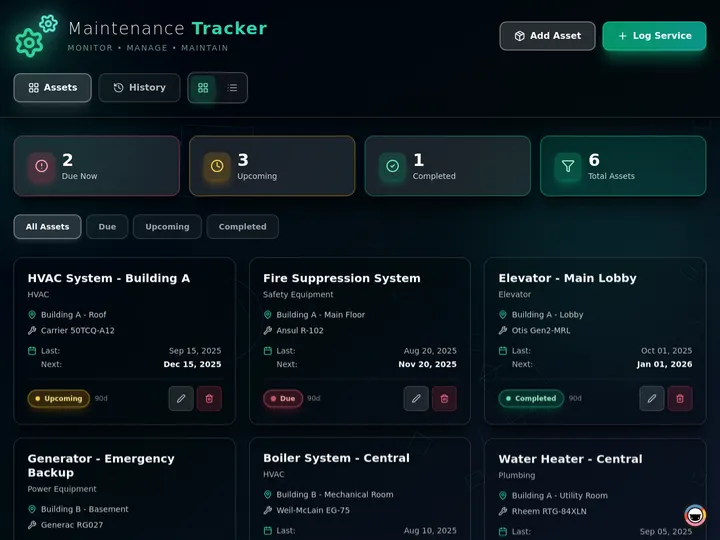
The Maintenance Tracker Dashboard is the field-service version of the same idea, and it is the shape most crews start with because the day already runs on assets and schedules. For the whole-business story behind these four, read run your whole business on one app, then CRM, invoice generator, and client portal for the client-to-cash trio. Step-by-step setup lives in Taskade as a CRM, and CRM templates are a good place to start if you would rather begin from a structure than a blank prompt.
Every Client Gets a Workspace of Their Own
Agencies, consultants, and service businesses are building the software they wish they had. One client or fifty, the shape is the same: a branded front door where each client signs in, and you match their records to that login so they see only what is theirs. Clone it, connect your data, brand it, ship it. Custom domains are available on Business and above.

| Client-facing kit | What it does for your clients | Clone it |
|---|---|---|
| Invoice Generator | Invoices, clients, and revenue in one view | Clone → |
| Time Tracker Tool | Hours and earnings, per project | Clone → |
| Appointment Booking System | Services, times, and confirmed bookings | Clone → |
| Inventory Management Dashboard | Stock levels, orders, and low-stock alerts | Clone → |
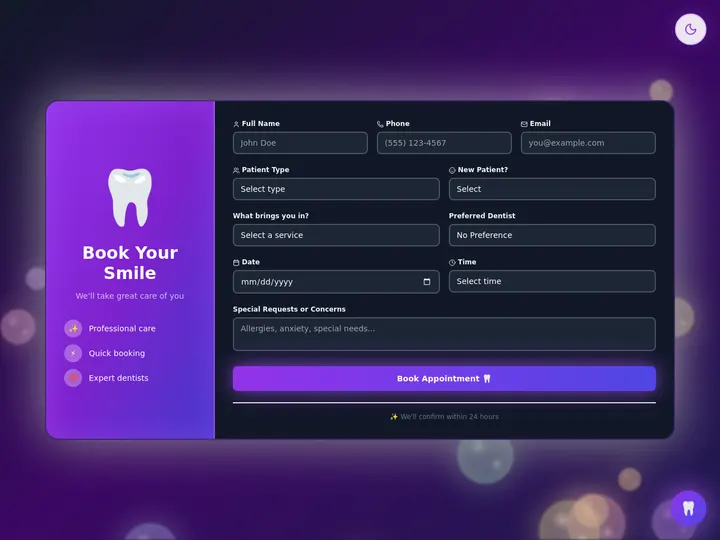
The privacy here is something you set up once, then test. App Users give every client their own sign-in, and you match each client's records to that login so one client does not open another's data. Put that behind your own domain and the front door carries your name and your colors instead of a shared link.
The full walkthrough, domain, sign-in, and per-client access, is in build a customer portal. For the billing half, see automate invoices, licenses, and calculators and invoice automation. If bookings are your bottleneck, book classes and schedule clients and the booking system guide cover the whole flow, and invoice templates will get you to a first draft faster.
Your Customers Ask. Your Workspace Answers.
Put an agent inside a live app or an internal workspace and it answers from the projects, knowledge, and workflows already inside your system. Not a generic model guessing, your actual numbers. You can publish an agent to a live app, or keep it private for your team. You set its instructions, knowledge sources, and tools, then preview it before anyone else sees it.

| Agent system | What it answers | Clone it |
|---|---|---|
| Sales Agent Studio | Qualifies and scores your leads | Clone → |
| Insight Analyst Portal | Revenue, customers, and forecasts | Clone → |
| Client Connect Dashboard | Pipeline insights and next steps | Clone → |
| HR Dashboard | Headcount, leave, and reviews | Clone → |
The reason these answers are useful is that the agent and the data share one workspace. There is no export step, no vector database to maintain, and nothing to re-paste when the pipeline moves.
Agents run on 15+ frontier models from OpenAI, Anthropic, and open-weight providers, switchable per agent, with Auto picking a sensible default so you never open the model menu. AI Agents v2 ship with a built-in toolkit, including web search, file analysis, and custom slash commands. For teams of agents working together, read agent teams and automated workflows and the multi-agent workspace update. Model routing is explained in AI models, and sales agents is a good browse if you want one running today.
From Four Tools to One Connected Spine
The gain is not a nicer interface. It is that the reconciliation work disappears, because the job already knows its customer and the invoice already knows its deal.
| The work | Before, four disconnected tools | After, one living system |
|---|---|---|
| Customers | A spreadsheet of contacts | A Customers project, linked to jobs |
| Projects | A separate task tracker | A Jobs project that references the customer |
| Processes | Steps living in someone's head | Automations that run on a schedule |
| Knowledge | A folder nobody opens | A knowledge base your agents can read |
That connected spine is the memory layer of Workspace DNA, and it is why the agents and automations always have the whole picture. Execution rides on 100+ bidirectional integrations: triggers pull events in from tools like Stripe, Gmail, Slack, and Calendar, and actions push data back out to the same set. Set an automation once and it keeps running, which is the argument in set it once, let it run and in agentic workflows explained. Payment flows in particular are worth a look in Stripe automations and deploy, launch, automate.
What It Costs to Run the Whole Thing
You can build and clone every system on this page free, up to three apps per workspace. Archive one to free a slot, or move to a paid plan to lift the cap. Custom domains unlock on Business and above, and App Users work on every plan.
| Plan (annual billing) | Price | Apps | App Users | Custom domain |
|---|---|---|---|---|
| Free | $0 | Up to 3 | Yes | No |
| Pro ★ | $10/mo | Cap lifted | Yes | No |
| Business | $25/mo | Cap lifted | Yes | Yes |
The math is simple. One Pro seat at $10/month billed annually covers up to 10 users, which is less than a single hour of the office help you would otherwise hire to keep four lists in sync. The Business plan at $25/month billed annually is the line where an internal dashboard becomes a client-facing product on your own domain. Above that sit Max at $100/month and Enterprise at $250/month, both billed annually, for larger teams. Billing questions are answered in the billing FAQ.
Imagine It. Run It Live.
One prompt. One app. One living workspace. The future of software is dynamic: it learns from the way you work and it grows with your business, instead of freezing on the day it was generated. That is the shift from SaaS you rent to living software you run.
Start in Taskade Genesis and describe your business the way you would describe it to a new hire. Or clone a live system and have it running before your coffee is cold. Either way, what you ship is the same architecture: connected projects, AI agents, and automations, stitched into one app that keeps going.
Frequently Asked Questions
What does it mean to run your business in one living system?
Your customers, projects, processes, and knowledge live inside a single Taskade Genesis app instead of four tools that do not talk to each other. Connected projects hold the data, agents reason over it, and automations act on it. You describe the business in plain language and the app is built around the shape it already has.
Which business systems can I clone?
Sales and CRM, field service and operations, client portals, and finance and admin are all live and cloneable in one click, along with dozens more in the Community Gallery. Each arrives with projects, agents, and automations already wired together, so you point it at your own data and it runs the same day.
How many apps can I build on the free plan?
Three Taskade Genesis apps per workspace on the free plan, each one a complete running system with its projects, agents, and automations. Archive an app to free a slot, or move to a paid plan to lift the cap. Pro is $10/month billed annually for up to 10 users and Business is $25/month billed annually.
Do I need to know how to code?
No. You describe the work in plain language, your clients, your jobs, your invoices, and Taskade Genesis turns it into a working app. Non-technical operators across trades, agencies, clinics, and consulting already run production systems this way, with no developer and no setup wizard.
Can I publish an app on my own domain?
Yes, on Business and above. Custom domains are available on Business ($25/month billed annually) and higher. App Users, the branded sign-in, work on every plan, and you match each client's records to their login to control what they see. Clone a system, brand it, connect your data, and publish it at your own address with automatic SSL.
Can I publish an AI agent inside a live app?
Yes. You can publish an agent to a live app, or keep it private for your team. Customize its instructions, knowledge sources, and tools, then preview it before it goes out. AI Agents v2 ship with a built-in toolkit, including web search, file analysis, and custom slash commands.
What can a Taskade Genesis app connect to?
100+ bidirectional integrations. Triggers pull events in from tools like Stripe, Gmail, Slack, and Calendar, and actions push data back out to the same set. A CRM can capture a lead from a form, log the deal, and send the invoice the moment it closes, all inside one connected system.
Which AI models power the agents?
15+ frontier models from OpenAI, Anthropic, and open-weight providers, switchable per agent. Auto routes each task to a sensible default, so the agent in your CRM or portal reads your connected projects and acts on them without you choosing a model by hand.
Read Next: The Run-Your-Business Wave
- Run Your Whole Business on One App →, the operators who did it first, and the three shapes their systems always take.
- Introducing Taskade TSK-1 →, the kernel that coordinates the models, memory, agents, and workflows behind every system on this page.
- Clone, Login, Automate →, the published-app version: clone a live system, add client sign-in, wire the automations.
- CRM, Client Portal, Capacity Planner →, three more shapes worth cloning if none of the four above is quite your business.
▲ ■ ● Memory · Intelligence · Execution
The three-layer architecture behind every Taskade Genesis app, connected projects remember, agents think, automations run. Clone any live system above to feel the loop close itself, or build your own on the same primitives.