






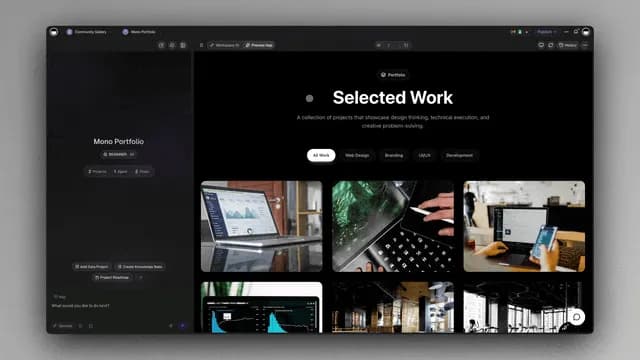
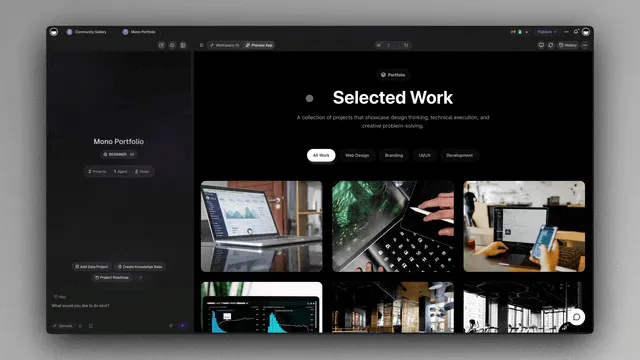
Your apps can now collect files. Photos, PDFs, receipts, and paperwork upload straight into your workspace, where AI agents read them and automations carry them the rest of the way.
TL;DR: Taskade Genesis apps now accept file uploads from published forms, from your phone on site, and from chat. Every file lands attached to its record, where agents can read it and automations can act on it across 100+ integrations. Clone a live app kit like Client Portal or Invoice Generator in one click. Try it free →
What Changed About Files in Taskade?
Files stopped being attachments and became part of the record. When someone uploads a photo, a PDF, or a receipt into a Taskade Genesis app, that file is stored in your workspace next to the job, invoice, or client it belongs to. An AI agent can read it, an automation can act on it, and nothing has to be re-pasted into a prompt or dragged out of an email.
That difference matters more than it sounds. Most tools treat a file as a dead end: it arrives, it sits in a folder, and a person has to go get it. Here the upload is the beginning of the work.
| Where the file comes from | What happens next |
|---|---|
| A published form in your app | Client attaches it, and it lands with their record |
| Your phone, on the job | Snap the paperwork, and an automation reads it into text |
| A chat with Taskade EVE | Drop a screenshot, and Taskade EVE builds from it |
| The workspace file library | It stays connected to everything that references it |
How Does a File Become Finished Work?
The path runs through all three parts of Workspace DNA. Memory holds the file, Intelligence reads it, and Execution moves it along. Because each part feeds the next, the result of the work becomes new memory that the next run can use.
What Can You Actually Automate With an Upload?
You can automate receipts, field-work photos, client intake documents, and invoices, the four patterns that cover most of a small business's weekly paperwork. In each one the upload itself is the trigger: an AI agent reads the file, writes the details into your project, and an automation carries the result the rest of the way.
Receipts. Snap one. An agent pulls out the vendor, the amount, and the date, then sends it to whoever handles finance. No spreadsheet, no retyping.
Field work. Upload the site photo. It attaches to the job it belongs to and triggers the next step, so the office knows the visit happened without a phone call.
Client intake. Collect the documents through a form. The workflow starts automatically the moment the last one arrives.
Invoices. Drop in the PDF. An agent reads the details and the automation tracks what happens next, so you can see who has paid without opening a folder.
Each of these is an automation with a file as its trigger, and each can reach any of the 100+ services Taskade connects to.
Six App Kits You Can Clone Right Now
Client Portal, Invoice Generator, Consultancy Booking, Maintenance Tracker, Appointment Booking, and Store Manager are live Taskade Genesis apps that handle files out of the box. Each one clones in one click and arrives with its projects, agents, and automations already wired together, not a template to assemble, and you can change anything afterwards.
| App Kit | What it handles | Clone |
|---|---|---|
| Client Portal | Clients sign in, and files land with the work | Clone → |
| Invoice Generator | Drop the PDF, and track who paid | Clone → |
| Consultancy Booking | Intake, documents, and the workflow behind them | Clone → |
| Maintenance Tracker | Site photos, attached to the job | Clone → |
| Appointment Booking | One link, and everyone's slots | Clone → |
| Store Manager | Stock, orders, and follow-ups | Clone → |
Six more that lean on the same file-handling, if your week looks different:
- Finance Tracker for receipts and running totals
- Onboarding Portal for new-hire documents
- Recruitment Workflow for resumes arriving in bulk
- Inventory Dashboard for stock records and supplier paperwork
- Expense Splitter for shared bills and their receipts
- ApplyTrack for applications and their attachments
Browse the rest in the Community Gallery.
Why Keeping the File With the Record Matters
Because the same records render in multiple views, one upload shows up wherever you are working. List, Board, Table, and Mind Map sit in the toolbar, and Docs, Gantt Chart, Calendar, Actionsheet, and Org Chart live under More Views. The receipt you attached to a task in List view is the same receipt on that card in Board view and in that row in Table view. There is one copy, and it is the one your agent reads.
This is what stops the usual drift. Files scattered across an inbox, a drive, and a chat thread cannot be reasoned about, because nothing knows which file belongs to which job. Files held on the record can be, which is the whole reason an agent can pick up a receipt and finish the task by itself.
What It Costs to Try
Nothing, to start. The free plan gives you unlimited projects and tasks, room to publish live apps, and a starting credit grant so you can clone an app, upload a file, and watch an agent read it before deciding anything.
When you outgrow it, paid plans start at $10 per month billed annually, and the pricing page lays out what each one adds.
Start With One Thing You Do Every Week
The fastest way in is to pick one piece of paperwork you already handle, receipts, PDFs, client forms, or field reports, and build a live app around that single thing. Describe it to Taskade Genesis and you get the project, the agent, and the automation together, powered by your Workspace DNA. No code and no setup.
Open Taskade → or clone a live app →
Frequently Asked Questions
Can a published Taskade app collect file uploads from clients?
Yes. A published Taskade Genesis app can accept photos, PDFs, and other documents through a form, and the upload lands in your workspace attached to the record it belongs to. Your client does not need a Taskade account to send a file.
What happens to a file after someone uploads it?
It is stored in your workspace as part of the record. From there an agent can read it, an automation can act on it, and anyone with access to that project sees the file next to the job, invoice, or client it belongs to.
Can AI read a receipt or an invoice I upload?
Yes. An agent can read an uploaded document, pull the details out of it, and write those details back into your project. Pair it with an automation and the whole path runs on its own.
Do I need to build this from scratch?
No. Clone a live App Kit such as Client Portal or Invoice Generator and it arrives already wired.
How do files reach my workspace?
Four ways: a published form in your app, your phone on site, a chat with Taskade EVE, and the workspace file library directly.
Can an automation start when a file arrives?
Yes. An upload can act as the trigger, so collecting a document is what starts the work. See Automations for what it can do next.
Do I have to pay to try this?
No. The free plan includes unlimited projects and tasks plus a starting credit grant. Paid plans start at $10 per month billed annually.
Where do the uploaded files show up in my project?
On the record itself and in your workspace file library. Because the same records render in multiple views, the file is the same file in every view.
Read Next
- Run Your Business in One Living System
- Remember, Reason, Run: Inside One Living Workspace
- Paste Your Website, Clone an App Kit, Launch It Live
- Learn: let people send files to your app
▲ ■ ● Memory holds the file. Intelligence reads it. Execution finishes the job.