






The agentic engineering landscape hit an inflection point in 2026. Cursor crossed $1 billion in annualized recurring revenue. Devin slashed its price from $500 to $20 per month. CrewAI landed in 50% of Fortune 500 companies. Replit closed a $9 billion valuation. And Taskade Genesis quietly crossed 150,000 deployed apps — without users writing a single line of code.
As Anthropic CEO Dario Amodei put it: "Coding is going away first." Not in a distant future — now, in 2026, with platforms that turn natural language into deployed, intelligent systems.
This is not a market of incremental improvements. It is a market of category creation. And the category itself is shifting: "2025 was the year of agents. 2026 is the year of harnesses" — the engineering focus is moving from building individual agents to building the environments, verification loops, and supervision layers that make agents reliable at scale.
Agentic engineering — the discipline of designing, deploying, and orchestrating autonomous AI agents — has split into three distinct lanes: no-code platforms for builders, developer frameworks for engineers, and autonomous coders for software teams. Each lane solves a different problem. Each lane has a breakout leader. And each lane is converging toward a single insight: the value is not in the agent itself, but in the agentic workspace that harnesses it.
This guide compares 12 platforms across all three lanes, with real valuations, GitHub stars, pricing, and architectural trade-offs so you can pick the right tool for your stack.
We cover every major player: Taskade Genesis, Replit Agent, Lovable, Bolt.new, CrewAI, LangGraph, AutoGen, OpenAI Agents SDK, Cursor, Devin 2.0, Claude Code, and Amazon Q Developer. Each platform gets a detailed breakdown with pros, cons, pricing, and competitive positioning — plus a new section on why 2026 is the year of harnesses, not just agents.
Updated October 2026: A fourth category now sits above the coding agents: software factory platforms, which run a whole line of agents from intake to ship. See Category 4 for Factory, Warp Factories, 8090, Port and GitLab Duo Agent Platform. The 12 ranked picks are unchanged.
TL;DR: The agentic engineering market has three lanes: no-code builders (Taskade Genesis, Lovable, Bolt.new, Replit), developer frameworks (CrewAI, LangGraph, AutoGen, OpenAI Agents SDK), and autonomous coders (Cursor, Devin 2.0, Claude Code, Amazon Q). Taskade Genesis is the only platform that unifies agents, automations, and app deployment in a single workspace — 150,000+ apps built, free to start with Pro from $10/month billed annually. Try it free →
For deeper dives on specific platforms, see our comparison articles: Claude Code vs Cursor vs Taskade Genesis, best Claude Code alternatives, Taskade Genesis vs Lovable, Taskade Genesis vs Bolt.new, Taskade Genesis vs Replit, and Taskade Genesis vs Cursor. For the philosophical case that code generation is not enough, read our code vs runtime manifesto. To understand the transformer architecture powering all these tools, see how LLMs actually work and what is mechanistic interpretability.
Quick Comparison Matrix
| Platform | Category | Valuation | Pricing (from) | Best For | AI Agents | No-Code | Open Source |
|---|---|---|---|---|---|---|---|
| Taskade Genesis | No-Code | — | Free / $10/mo | Teams, non-devs | built-in tools | Yes | No |
| Replit Agent | No-Code | $9B | Free / $20/mo | Prototyping | Yes | Yes | No |
| Lovable | No-Code | $6.6B | $20/mo | Full-stack apps | No | Yes | No |
| Bolt.new | No-Code | ~$700M | $25/mo | Rapid prototyping | No | Yes | No |
| CrewAI | Framework | — | Free / $99/mo | Multi-agent | Yes | No | Yes (44K stars) |
| LangGraph | Framework | $1.25B | Free / usage | Complex workflows | Yes | No | Yes (24.6K stars) |
| AutoGen | Framework | — | Free | Research, multi-agent | Yes | No | Yes (54.5K stars) |
| OpenAI Agents SDK | Framework | — | Free + API | OpenAI ecosystem | Yes | No | Yes |
| Cursor | Auto Coder | $29.3B | Free / from $8/mo | Pro developers | Tab complete | No | No |
| Devin 2.0 | Auto Coder | $10.2B | $20/mo | Autonomous tasks | Full agent | No | No |
| Claude Code | Auto Coder | — | API pricing | Terminal devs | Full agent | No | Yes |
| Amazon Q | Auto Coder | — | Free / $19/mo | AWS teams | Full agent | No | No |
The Agentic Engineering Landscape
The three categories represent fundamentally different approaches to agentic engineering. No-code platforms abstract away complexity for speed. Developer frameworks expose granular control for customization. Autonomous coders augment existing developer workflows with AI-powered automation.
Three forces are driving the split:
Abstraction gradient: No-code platforms maximize speed by hiding complexity. Developer frameworks maximize control by exposing it. Autonomous coders sit in between — augmenting existing skills rather than replacing or abstracting them.
User identity: A product manager building an internal dashboard has fundamentally different needs than a platform engineer orchestrating a multi-agent research pipeline. Both are doing agentic engineering, but the tooling must match the practitioner.
Deployment model: Some platforms deploy for you (Taskade Genesis, Replit, Lovable). Others give you frameworks to deploy yourself (CrewAI, LangGraph). Others augment your existing deployment workflow (Cursor, Claude Code). Your infrastructure maturity determines which model fits.
The sections below break down each platform in detail, starting with no-code platforms — the fastest-growing category in terms of user adoption.
Category 1: No-Code Agentic Platforms
1. Taskade Genesis — The Workspace-Native Agent Platform
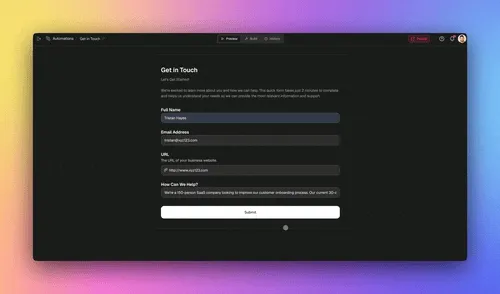
Taskade Genesis is the only agentic engineering platform that ships agents, automations, databases, and deployed applications inside a single workspace. Every other tool on this list solves one piece of the puzzle. Taskade Genesis solves the whole puzzle.
The architecture is built on what Taskade calls Workspace DNA — a self-reinforcing loop of three layers:
- Memory: Projects, documents, knowledge bases, and structured data that persist across every interaction. Your workspace is the database.
- Intelligence: AI agents with custom tools, slash commands, built-in capabilities, persistent memory, and multi-model support across frontier models from top AI labs.
- Execution: Automations powered by a durable execution engine with branching, looping, filtering, and 100+ integrations across communication, email, CRM, payments, development, and more.
These three layers do not operate in isolation. Execution creates Memory. Memory feeds Intelligence. Intelligence triggers Execution. The result is a system that gets smarter and more capable with every workflow you run.
How the prompt-to-app flow works:
You describe what you want in natural language. Taskade Genesis generates a fully deployed application — with a live URL, embedded AI agents, data persistence, and workflow automations — in seconds.
Here is what that looks like in practice:
Prompt: "Build a customer feedback tracker with sentiment analysis,
         auto-categorization, and weekly summary reports sent to Slack."Taskade Genesis generates:
├── Live dashboard with feedback intake form
├── AI agent: Sentiment Analyzer (positive/neutral/negative scoring)
├── AI agent: Category Router (bug, feature request, praise, question)
├── Automation: Weekly digest → Slack channel
├── Database: Structured feedback entries with timestamps
└── Public URL: share.taskade.com/your-app
No repository. No deployment pipeline. No infrastructure configuration. The app is live the moment it is generated.
Feature breakdown:
- AI Agents v2: Build custom agents with persistent memory, slash commands, built-in tools, multi-model selection, and the ability to embed agents publicly. Agents can call external APIs, process documents, query databases, and collaborate with other agents in multi-agent workflows.
- Automations: production-grade durable execution means your workflows survive failures, handle retries, and maintain state across long-running processes. Branch on conditions, loop over datasets, filter by criteria, and connect to 100+ integrations including Slack, Gmail, Stripe, GitHub, Shopify, and HubSpot.
- Multiple Project Views: Visualize any workspace as a List, Board, Calendar, Table, Mind Map, Gantt chart, or Org Chart. Switch views instantly without restructuring data.
- Multi-layer Search: Full-text search, semantic HNSW vector search (1536 dimensions), and file content OCR — find anything across your entire workspace.
- Genesis Apps: Build live dashboards, portals, forms, and websites from prompts. Add custom domains, password protection, and publish to the Community Gallery where 150,000+ apps have already been built.
- Role-Based Access: Owner to Viewer roles for granular control across teams.
- Templates: Hundreds of pre-built workspace templates for project management, marketing, engineering, sales, and operations.
Pricing that undercuts every competitor:
| Plan | Monthly (Annual) | Key Features |
|---|---|---|
| Free | $0 | Core features, limited AI |
| Pro | $10/mo (Popular) | 10 users included, advanced automations, up to 10 custom domains |
| Business | $25/mo | Priority support, unlimited users, SSO |
| Max | $100/mo | Higher limits, advanced workspace controls |
| Enterprise | $250/mo | SSO, dedicated support, SLA |
Compare that to Cursor from $8/month, Devin at $20/month, Lovable at $20/month, or CrewAI Enterprise at $120,000/year. Taskade Genesis delivers more capability at a fraction of the cost — and you do not need to know how to code.
Why Taskade Genesis wins for non-developers:
Most agentic engineering platforms assume you can write Python, configure Docker containers, or at minimum navigate a terminal. Taskade Genesis assumes you can describe what you want in plain English.
This is not a limitation. It is a design philosophy. The insight behind Taskade Genesis is that the bottleneck in software development was never typing speed or syntax knowledge — it was the gap between having an idea and having a deployed system. Taskade Genesis eliminates that gap entirely.
The Community Gallery proves this at scale. Over 150,000 apps have been built by users ranging from solo founders to Fortune 500 teams, across use cases from customer support dashboards to automated content pipelines to internal tool suites.
A concrete example: David, an IT program manager with no engineering team, shipped a production project dashboard — Customers, Jobs, Invoices, and Team — entirely from natural-language prompts inside Taskade Genesis. What would have been a multi-month build with a developer queue became a live, deployed tool in an afternoon. That is the gap agentic engineering closes for non-technical operators.
For teams evaluating vibe coding platforms, the question is not whether AI can generate code. Every platform on this list can do that. The question is whether AI can generate deployed, intelligent, self-improving systems. That is what Taskade Genesis delivers.
Read what the press is saying in our Genesis press reviews roundup, or dive into the ultimate guide to Taskade Genesis for a comprehensive walkthrough. Start building for free →
2. Replit Agent — Cloud IDE Meets Autonomous Building
Replit Agent 4, launched March 11, 2026, is billed as the "fastest agent yet" — capable of shipping production-ready software 10x faster than previous generations. Replit closed a $400 million Series D at a $9 billion valuation in March 2026, making it one of the most heavily funded platforms in the developer tools space. The core pitch: go from idea to deployed app without leaving your browser.
What makes Replit's approach distinctive is its effort-based pricing model. Simple changes cost less than $0.25 per checkpoint, making it one of the most granular pay-as-you-go options in the space. Core costs $20/month, Pro costs $100/month — positioned between no-code platforms and enterprise coding tools.
Replit is also expanding aggressively into international markets including Asia and the Middle East, betting that the next wave of developers will learn to code through AI-first tools rather than traditional bootcamps.
For the full backstory on how Replit evolved from an online IDE to a $9B AI company, read our Replit history deep dive.
Pros:
- Agent 4 ships production-ready software 10x faster than previous agents
- Full cloud IDE with collaborative editing and instant deployment
- Effort-based pricing: simple changes under $0.25 per checkpoint
- Strong educational ecosystem with millions of student users
- Built-in hosting eliminates deployment friction
- Generous free tier for experimentation
- International expansion bringing AI-first development to new markets
Cons:
- Performance limitations for production workloads at scale
- Vendor lock-in to Replit's hosting infrastructure
- No native AI agent orchestration or multi-agent workflows
- No built-in workflow automation engine
- Agent output quality varies significantly across project types
- Pro tier at $100/month is expensive compared to Taskade Genesis Pro at $10/month
Pricing: Free tier available. Replit Core at $20/month. Replit Pro at $100/month with enhanced agent capabilities and compute. Teams plans available for organizations.
For a deeper comparison, see our Taskade Genesis vs Replit head-to-head and Replit alternatives guide.
3. Lovable — Full-Stack Vibe Coding at Scale
Lovable (formerly GPT Engineer) reached a $6.6 billion valuation after its $330 million Series B, with approximately $300 million in annualized recurring revenue and approximately 8 million registered users. The platform generates full-stack web applications from natural language prompts with direct GitHub integration.
The core differentiator is Lovable's focus on production-quality code output. Rather than generating throwaway prototypes, Lovable aims to produce code that professional developers would actually want to maintain. Their Agent Mode adds autonomous debugging capabilities with web search, and Lovable Cloud provides integrated hosting and backend infrastructure — reducing the number of third-party services needed.
For the origin story of how GPT Engineer became a $6.6B company, read our Lovable history deep dive. For a side-by-side analysis, see Taskade Genesis vs Lovable.
Pros:
- Strong code quality with clean, maintainable output
- Agent Mode with autonomous debugging and web search
- Lovable Cloud for integrated hosting and backend
- Native GitHub integration for version control workflows
- Visual editor for post-generation refinement
- Large community (~8M users) and extensive template library
- Supabase integration for backend and authentication
Cons:
- No built-in AI agents or agent orchestration
- No workflow automation capabilities
- Requires Supabase or external backend for data persistence (unless using Lovable Cloud)
- Limited to web applications (no mobile, no desktop)
- Higher starting price than several competitors
- Pricing scales steeply: $20/mo to $199/mo
Pricing: Starter at $20/month, Growth at $50/month, Scale at $100/month, Pro at $199/month, and Enterprise with custom pricing.
For a deeper comparison, see our Lovable review and Lovable alternatives guide.
4. Bolt.new — Rapid Prototyping in the Browser
Bolt.new by StackBlitz runs full-stack development environments entirely in the browser using WebContainer technology. The platform has crossed 5 million users and raised $135 million at an estimated $700 million valuation.
Bolt.new's WebContainer runtime means there is no server provisioning, no Docker configuration, and no cold starts. Everything runs in browser-native WASM containers, making iteration cycles extremely fast.
Pros:
- Instant browser-based development with zero setup
- WebContainer technology for fast iteration cycles
- Strong support for React, Next.js, and Vite projects
- One-click deployment to Netlify
- Active community with rapid feature development
Cons:
- No AI agents or agent orchestration capabilities
- No workflow automation or integration engine
- WebContainer limitations for certain server-side features
- Smaller ecosystem compared to Replit or Lovable
- Code output quality can be inconsistent for complex applications
Pricing: Free tier available. Pro at $25/month with increased tokens and features. Teams at $30/month per seat.
For teams comparing vibe coding platforms, Bolt.new excels at speed-to-prototype but lacks the agent and automation layers that platforms like Taskade Genesis provide. See our bolt.new review, Taskade Genesis vs Bolt.new comparison, and bolt alternatives guide for detailed analysis.
No-Code Platform Comparison Summary
| Feature | Taskade Genesis | Replit Agent | Lovable | Bolt.new |
|---|---|---|---|---|
| AI Agents Built-in | built-in tools | Basic | No | No |
| Workflow Automations | 100+ integrations | No | No | No |
| Multi-Model Support | Frontier models | Limited | Limited | Limited |
| Persistent Memory | Yes (Workspace DNA) | Session only | No | No |
| Custom Domains | Yes | Yes | Via Netlify | Via Netlify |
| Team Collaboration | RBAC | Basic | Git-based | Limited |
| Starting Price | Free | $20/mo | $20/mo | $25/mo |
| Apps Built / Users | 150,000+ apps | Millions | 8M users | 5M+ users |
The no-code category winner depends on your use case. If you need agents and automations alongside app deployment, Taskade Genesis is the only platform that ships all three. If you need a learning-friendly IDE, Replit wins. If you need production-grade web app code, Lovable leads. If you need the fastest prototyping cycle, Bolt.new delivers. For comparisons with platforms not covered here, see Taskade Genesis vs Windsurf and Taskade Genesis vs V0.
Category 2: Developer Frameworks for Agent Orchestration
5. CrewAI — The Multi-Agent Framework That Won the Enterprise
CrewAI is the most commercially successful open-source agent orchestration framework, with 44,000+ GitHub stars, an $18 million Series A, and adoption by 50% of Fortune 500 companies. The framework uses a role-based metaphor: you define agents with specific roles, backstories, and goals, then assemble them into crews that execute tasks sequentially or hierarchically.
The framework's strength is its opinionated design. Rather than giving developers a blank canvas (like LangGraph), CrewAI prescribes patterns for agent collaboration that work well for common use cases: research crews, content generation pipelines, data analysis teams, and customer support workflows.
Pros:
- Intuitive role-based agent design with clear mental model
- 44,000+ GitHub stars and massive community
- Enterprise-proven at Fortune 500 scale
- Sequential and hierarchical task execution patterns
- Built-in memory, caching, and tool integration
- CrewAI Enterprise with managed hosting and monitoring
Cons:
- Requires Python knowledge and development environment
- Less granular control than LangGraph for complex workflows
- Enterprise pricing is steep at $120,000/year
- Opinionated patterns can feel constraining for advanced use cases
- Debugging multi-agent interactions can be challenging
Pricing: Open-source (free), Basic at $99/month for cloud features, and Ultra/Enterprise at $120,000/year.
6. LangGraph — Stateful Graphs for Complex Agent Workflows
LangGraph is the agent orchestration layer built by LangChain, the company valued at $1.25 billion after raising $260 million. With 24,600+ GitHub stars, LangGraph takes a fundamentally different approach from CrewAI: it models agent workflows as directed graphs with explicit state management.
Every node in a LangGraph is a function. Every edge is a conditional transition. State is checkpointed automatically, enabling human-in-the-loop approvals, time-travel debugging, and long-running workflows that survive server restarts.
Pros:
- Granular control over agent workflow topology
- Built-in checkpointing, state management, and persistence
- Human-in-the-loop patterns with approval gates
- Strong integration with the LangChain ecosystem
- LangSmith observability platform for debugging and monitoring
- Supports both Python and JavaScript/TypeScript
Cons:
- Steep learning curve compared to CrewAI
- Graph-based mental model is unintuitive for simple use cases
- Heavy dependency on LangChain ecosystem
- Documentation can be fragmented across LangChain and LangGraph
- Requires significant boilerplate for basic workflows
Pricing: LangGraph framework is free and open-source. LangSmith (observability) has a free tier with paid plans based on usage. LangGraph Cloud for managed deployment is usage-based.
7. AutoGen — Microsoft's Multi-Agent Research Framework
AutoGen holds the GitHub star crown in the agent orchestration space with 54,500+ stars. Originally developed by Microsoft Research, AutoGen pioneered the multi-agent conversation pattern where agents communicate through structured message passing rather than function calls.
In 2026, AutoGen is merging into the broader Microsoft Agent Framework, which consolidates Microsoft's various agent technologies (AutoGen, Semantic Kernel, TaskWeaver) into a unified platform. This merger signals Microsoft's commitment to agent orchestration but also introduces uncertainty about AutoGen's independent roadmap.
Pros:
- 54,500+ GitHub stars — largest community in agent orchestration
- Pioneer of multi-agent conversation patterns
- Strong research backing from Microsoft Research
- Flexible agent topologies (sequential, group chat, nested)
- Integration with Azure AI services and Microsoft ecosystem
- Free and fully open-source
Cons:
- Merging into Microsoft Agent Framework creates roadmap uncertainty
- Research-oriented design can be difficult to productionize
- Less opinionated than CrewAI, requiring more architectural decisions
- Documentation has not kept pace with rapid development
- Azure-centric integrations may not suit multi-cloud teams
Pricing: Fully open-source and free. Compute and model API costs apply based on usage.
8. OpenAI Agents SDK — The Official Multi-Agent Toolkit
The OpenAI Agents SDK (v0.12.1) is OpenAI's official framework for building production-grade multi-agent systems. It replaced the earlier Assistants API approach with a more flexible, composable architecture featuring agent handoffs, guardrails, tracing, and tool integration.
The SDK is deliberately lightweight. Rather than prescribing complex orchestration patterns, it provides primitives — agents, handoffs, guardrails, and traces — that developers compose into custom workflows. This makes it the most accessible entry point for teams already using OpenAI models.
Internal adoption at OpenAI validates the agentic approach: 95% of OpenAI engineers use Codex (their agentic coding tool built on this SDK) daily, managing 10-20 parallel agent threads simultaneously. That level of internal usage suggests the SDK's architecture is battle-tested at scale.
Pros:
- Official OpenAI support with tight model integration
- Clean, minimal API design with composable primitives
- Agent handoff pattern for multi-agent delegation
- Built-in guardrails for input/output validation
- Tracing for debugging and monitoring agent behavior
- Lightweight — minimal dependencies and fast onboarding
Cons:
- Locked to OpenAI models (no multi-model support)
- Newer than CrewAI/LangGraph with smaller community
- Limited built-in state management compared to LangGraph
- No managed hosting or deployment platform
- Feature set is still evolving rapidly
Pricing: The SDK is free and open-source. Costs are based on OpenAI API usage for model calls.
Developer Framework Comparison Summary
| Feature | CrewAI | LangGraph | AutoGen | OpenAI Agents SDK |
|---|---|---|---|---|
| GitHub Stars | 44,000+ | 24,600+ | 54,500+ | — |
| Primary Pattern | Role-based crews | Directed graphs | Conversations | Composable primitives |
| State Management | Built-in memory | Checkpointed graphs | Message history | Manual |
| Human-in-the-Loop | Basic | Advanced | Basic | Guardrails |
| Multi-Model | Yes | Yes | Yes | OpenAI only |
| Enterprise Ready | Yes ($120K/yr) | Via LangSmith | Azure integration | Via OpenAI |
| Learning Curve | Medium | High | Medium | Low |
| Best For | Structured teams | Complex state | Research | Quick start |
For teams already using Taskade Genesis for no-code agent deployment, developer frameworks like CrewAI or LangGraph can complement the stack for backend orchestration tasks that require custom Python logic. The MCP protocol is increasingly bridging these worlds by providing a standard interface for agents to communicate across platforms. See our OpenAPI to MCP code generator guide for practical integration patterns.
For teams exploring alternative approaches to autonomous coding, see our OpenClaw alternatives guide and the complete history of OpenClaw — from weekend project to a $4,700/week service economy with 250K+ GitHub stars.
Category 3: Autonomous Coders
9. Cursor — The $29 Billion AI-Native IDE
Cursor is the highest-valued pure-play AI developer tool, reaching $29.3 billion after its $2.3 billion Series D round. The company reports over $1 billion in annualized recurring revenue and 1 million daily active users. Those numbers make Cursor the fastest-growing developer tool in history.
Cursor is a fork of VS Code with AI deeply integrated into every interaction. Tab completion, multi-file editing, codebase-wide refactoring, and natural language commands work seamlessly within the familiar VS Code interface. The AI does not replace the developer — it amplifies every keystroke.
Pros:
- Fastest and most polished AI code completion on the market
- Familiar VS Code interface with zero learning curve
- Multi-file editing with codebase-aware context
- Strong model options (Claude, GPT, and custom models)
- Massive adoption creates network effects for quality improvement
- Enterprise features with SOC 2 compliance
Cons:
- Desktop application — no browser-based option
- Requires developer skills to use effectively
- No deployment, hosting, or infrastructure management
- No agent orchestration or multi-agent workflows
- No workflow automation or integration capabilities
- Pro plan at $20/month can get expensive for large teams
Pricing: Free Hobby tier with limited completions. Pro at $20/month. Business at $40/month per seat.
For a deeper comparison, see our Cursor review, Taskade Genesis vs Cursor, Anysphere/Cursor history, and Cursor alternatives guide.
10. Devin 2.0 — The Autonomous Software Engineer
Devin 2.0 by Cognition is the most ambitious bet in autonomous coding. At a $10.2 billion valuation with $400 million raised and $73 million in ARR, Cognition is betting that AI can handle entire software engineering tasks — from understanding requirements to writing code to running tests to deploying changes — without human intervention.
The dramatic price drop from $500/month to $20/month in early 2026 signaled a shift from enterprise-only positioning to mass-market accessibility. Devin now competes directly on price with Cursor, Replit, and Lovable. But the price is only half the story — the question is whether full autonomy or human-in-the-loop supervision produces better outcomes. The harness engineering evidence suggests that supervision wins for complex tasks, while autonomy wins for well-scoped, repetitive work.
Pros:
- Fully autonomous end-to-end software engineering
- Can navigate codebases, write tests, debug failures independently
- Handles deployment and infrastructure configuration
- $20/month price point makes it accessible to individuals
- Strong benchmark performance on SWE-Bench tasks
- Learns from codebase patterns and team conventions
Cons:
- Autonomous operation means less developer control
- Output quality is unpredictable for complex or novel tasks
- Cannot match human judgment for architectural decisions
- Limited transparency into reasoning and decision process
- Relatively new with less mature error handling
- Works best for well-defined, scoped tasks
Pricing: $20/month for individual developers. Team and enterprise plans available with higher usage limits. For teams comparing autonomous coders, see our Devin alternatives guide.
11. Claude Code — Terminal-Native Agent Development
Claude Code by Anthropic brings agentic capabilities directly into the terminal. Available as both a Python and TypeScript SDK with MCP (Model Context Protocol) support and 1 million token context windows, Claude Code is designed for developers who live in the command line.
The philosophy behind Claude Code is radical simplicity. The Claude Agent SDK follows a 3-part agent loop — gather context, take action, verify results — and its developers describe it as "the React of agent frameworks." The core insight: "bash is all you need." Rather than building elaborate tool ecosystems, Claude Code trusts the standard development environment as the primary interface.
The adoption numbers validate this approach: 70-80% of Anthropic employees use Claude Code daily for their own engineering work, making it one of the most internally dogfooded developer tools in the industry.
The MCP integration is particularly significant. MCP provides a standardized protocol for AI agents to interact with external tools and data sources, making Claude Code extensible to virtually any development workflow. For teams building custom integrations, see our guide on OpenAPI to MCP code generation.
March 2026 Feature Wave — Channels, Computer Use & Dispatch:
Claude Code's March 2026 updates signal its evolution from a coding tool into a full agentic engineering platform:
- Channels (experimental): Interact with Claude Code via Discord, Telegram, or custom webhooks. One-way channels forward alerts and events; two-way channels enable full chat from mobile devices. Under the hood, channels are MCP servers bridging external systems to Claude Code sessions.
- Computer Use (research preview, macOS): Claude Code can natively control your mouse, keyboard, and take screenshots — extending its reach beyond the terminal into any desktop application.
- Dispatch: Send commands to Claude Code remotely from any device. Combined with Computer Use, Dispatch turns Claude Code into a remote-access agent for your development machine.
These features, combined with the emerging WAT framework (Workflows, Agent, Tools) for building production agentic workflows, position Claude Code as more than a coding agent — it is becoming an orchestration platform for developers. For a detailed breakdown, see our 15 best Claude Code alternatives guide.
Pros:
- 1 million token context window for large codebase understanding
- 3-part agent loop (gather/act/verify) for reliable task completion
- MCP support for standardized tool and data integration
- Terminal-native workflow fits existing developer habits — "bash is all you need"
- Python and TypeScript SDKs for flexibility
- Strong reasoning capabilities from Anthropic's Claude models
- Open-source SDKs with active community development
- 70-80% of Anthropic engineers use it daily — heavy internal dogfooding
- Channels enable external messaging (Discord, Telegram, webhooks) — unique among coding agents
- Computer Use extends agent reach to desktop GUI applications
- Agent Teams — coordinate 2-5 specialized agents (frontend, backend, QA) working in parallel with shared task lists, direct inter-agent messaging, Tmux split pane monitoring, and QA review loops. The closest any coding agent comes to true multi-agent orchestration.
- WAT framework for building production agentic workflows — plan mode → bypass permissions flow, self-healing tools, ~$1.50/run for complete workflows
Cons:
- Terminal-first interface has a steep learning curve (Channels mitigates this partially)
- Requires API access and usage-based pricing
- No visual interface for non-technical users
- No deployment or hosting capabilities — workflows require external infrastructure (trigger.dev, Modal)
- Anthropic model lock-in (though MCP enables tool flexibility)
- Channels and Computer Use are experimental (research preview)
Pricing: Usage-based pricing through Anthropic API. Costs vary by model and token usage. Pro plan at $20/month, Max plans at $100-200/month for higher limits. For a head-to-head comparison, see Claude Code vs Cursor vs Taskade Genesis.
12. Amazon Q Developer — Enterprise Agentic Coding
Amazon Q Developer is AWS's answer to the agentic coding revolution. It achieved the number one ranking on SWE-Bench for autonomous code generation and offers deep integration with the AWS ecosystem — making it the default choice for teams already running infrastructure on AWS.
The free tier offering 50 agent interactions per month makes Amazon Q the most accessible enterprise-grade autonomous coding tool. For teams evaluating agentic engineering within corporate environments, Amazon Q's security certifications and AWS integration create a compelling case.
Pros:
- Number one ranking on SWE-Bench benchmarks
- Free tier with 50 interactions/month
- Deep AWS ecosystem integration (Lambda, CDK, CloudFormation)
- Enterprise security certifications and compliance
- Code transformation for Java upgrades and .NET porting
- Built-in vulnerability scanning and code review
Cons:
- Heavily AWS-centric — limited value outside AWS ecosystem
- Agent capabilities are narrower than Cursor or Devin
- Interface is less polished than dedicated AI coding tools
- Limited community compared to open-source alternatives
- Feature development pace trails Cursor and Devin
- IDE plugin model (not standalone) limits flexibility
Pricing: Free tier with 50 interactions/month. Pro at $19/user/month with higher limits and enterprise features.
Autonomous Coder Comparison Summary
| Feature | Cursor | Devin 2.0 | Claude Code | Amazon Q |
|---|---|---|---|---|
| Valuation | $29.3B | $10.2B | — (Anthropic) | — (Amazon) |
| Pricing From | Free / $20/mo | $20/mo | $20/mo (Pro) | Free / $19/mo |
| Autonomy Level | Copilot (human in loop) | Full autonomous | Agent (terminal + channels) | Agent (IDE plugin) |
| Interface | VS Code fork | Web app | Terminal + Discord/Telegram | IDE plugin |
| External Channels | ❌ | Slack | ✅ Discord, Telegram, webhooks | ❌ |
| Desktop Control | ❌ | ❌ | ✅ Computer Use (macOS) | ❌ |
| Multi-Agent Teams | ❌ (background agents, no communication) | ❌ (single agent) | ✅ Agent Teams (2-5 agents, inter-agent messaging, QA loops) | ❌ |
| Agentic Workflows | ❌ | ✅ (fire-and-forget) | ✅ WAT framework (plan mode → deploy) | ⚠️ (AWS-scoped) |
| Deployment | No | Yes | No | AWS only |
| Multi-Model | Yes | No | Anthropic only | AWS models |
| Best For | Daily coding | Autonomous tasks | Terminal workflows | AWS infrastructure |
| DAU / ARR | 1M DAU, $2B+ ARR | — , $73M ARR | — | — |
The autonomous coder category is the most competitive and fastest-moving segment. Cursor's $29.3 billion valuation reflects the market's belief that AI-augmented IDEs will become the default development environment. But for teams that want AI agents and automations alongside their coding tools, a combined stack with Taskade Genesis provides the workspace layer that no autonomous coder includes.
When to Combine Platforms Across Categories
The strongest stacks in 2026 combine platforms from different categories rather than using a single tool for everything:
Stack for non-technical teams:
Taskade Genesis for everything — app building, AI agents, automations, project management, and collaboration. No additional tools needed.
Stack for startups with one developer:
Taskade Genesis for internal tools, dashboards, and automations. Cursor for custom code. GitHub for version control.
Stack for engineering teams:
Cursor for day-to-day coding. CrewAI or LangGraph for backend agent orchestration. Taskade Genesis for non-engineering team members building their own tools and workflows. Devin 2.0 for autonomous tasks like dependency upgrades and test writing.
Stack for data and ML teams:
LangGraph for complex stateful pipelines. Claude Code for terminal-based exploration. Taskade Genesis for sharing results and building reporting dashboards for stakeholders.
Stack for enterprise (AWS-heavy):
Amazon Q for AWS infrastructure automation. CrewAI Enterprise for multi-agent orchestration. Taskade Genesis for cross-functional collaboration and automations connecting to non-AWS services.
The key insight: agentic engineering is not a single-tool problem. The platforms that win will be the ones that play well with others. Taskade Genesis is designed as the workspace layer that connects to everything else — through its 100+ integrations, AI agents with external API access, and a hosted MCP server that any external AI client can connect into.
Category 4: Software Factory Platforms
A software factory platform runs a whole line of AI agents around software delivery, not one agent in one session. Work arrives from issues, Slack or tickets, agents triage, spec, build, review and verify it, and a person approves at the gates the team sets. Five platforms define the category in October 2026: Factory, Warp Factories, 8090, Port and GitLab Duo Agent Platform.
Categories 1 to 3 give one builder a better tool. Category 4 gives an engineering organization a production line, with the queue, the stations, the gates and the measurement in one system. We list these five without rank numbers, because the category is new and most of these products sell through early access or a sales team. Every row below comes from the vendor's own site, checked on October 20, 2026:
| Platform | What it is | How work starts | Where a person decides | Access (October 20, 2026) |
|---|---|---|---|---|
| Factory | Droid agents that plan, build and validate, plus Missions: multi-day projects split into milestones and features, with a fresh worker session for each feature. Mission Control, model routing and code review | Desktop, terminal, web and CLI, plus automations for recurring work | You approve the mission plan, and validation runs at the end of each milestone | Missions launched in February 2026 for Enterprise and Max plan users |
| Warp Factories | Open infrastructure: a factory defined in code (factory.yaml), a foreman agent that routes work, any model or harness (Claude Code or Codex included), and observer agents that score runs and open PRs against the factory |
Slack, Linear and Jira, or a local coding agent that pushes work in | Human gates in the line, which "stops wherever you decide" | Book a demo. It opened as a closed beta on August 18, 2026 |
| 8090 Software Factory | An "AI-native software development control plane" with Requirements, Blueprints, Work Orders and Feedback modules. Model-agnostic and harness-agnostic | Requirements your team writes with agents in a shared workspace | Every change is traced to your intent and tested. 8090 engineers build with your team | Try it or talk to sales. 8090 hosts and maintains it |
| Port | An "Agentic SDLC platform" to build your AI software factory: Context Lake, MCP hub, agent management, skills registry, governance and metrics | The workflow orchestrator, for example autonomous ticket resolution and self-healing incidents | Human-in-the-loop and governance modules | Try Port or book a demo |
| GitLab Duo Agent Platform | Agents (Planner, Data Analyst, custom, and external agents such as Claude Code and Codex) and flows (Developer, Code Review, Fix CI/CD Pipeline) inside GitLab | A GitLab event, a schedule, or Agentic Chat | A human checkpoint where your policy calls for one. Every agent action traces to a real user | Generally available since GitLab 18.8 on Premium and Ultimate. Features use GitLab Credits |
All five run the same loop. They differ in where the loop lives (your repo, their cloud, your GitLab) and in who owns the definition of the line. A revise decision sends work back to the builders, and monitoring feeds new signals into the next run:
How to pick among them:
- Factory fits a team that wants one vendor from triage to multi-day missions, with the agent product included.
- Warp Factories fits a team that wants to own the factory as code and swap models and harnesses. Warp's own rollout post (October 15, 2026) reports cost per PR down from $80 to $20 in six weeks, with a lower revert rate and 40% higher PR throughput.
- 8090 fits a regulated enterprise or a legacy modernization, where requirements, audit trails and a hosted service matter more than speed of setup.
- Port fits a platform team that already runs a developer portal and wants governance and metrics across many agents.
- GitLab Duo Agent Platform fits a team whose code, CI and reviews already live in GitLab.
In the talk below, Warp CEO Zach Lloyd explains what a software factory is and how Warp runs its own:
Software Factory Platforms vs Autonomous Coders
A software factory platform is not a better coding agent. It is the system around coding agents. An autonomous coder from Category 3 takes one task and returns one change. A factory decides which tasks agents may take, runs several agents per task, checks the result against gates, and measures the line over time.
AUTONOMOUS CODER (Category 3)        SOFTWARE FACTORY (Category 4)
-----------------------------        ------------------------------
one task in, one change out          a queue of work in, a line of stations
one agent, one session               triage, spec, build, review agents
you review every step                gates decide, a person approves
no memory of the line                every run is stored and scored
tool for one developer               infrastructure for a team
The App Factory for Teams Who Do Not Code
Every Category 4 platform assumes engineers, a repository and CI. For a team that needs working business apps instead, Taskade Genesis runs the same loop without code. Taskade Genesis builds a live app with its database from one prompt, Taskade EVE builds and edits it in chat, AI agents with knowledge and tools triage the requests, and automations with 100+ integrations route the work. A person approves and publishes each change.
For the full definition and a five-step setup, read What Is an AI Software Factory?. For a two-track list of code factories and app factories, see the best software factory tools.
The Agentic Mesh Architecture
The agentic mesh is an emerging architectural pattern where multiple AI agents operate as a distributed network with shared context, memory, and tool access. Rather than isolated agents performing single tasks, the mesh enables agents to collaborate, delegate, and orchestrate complex workflows across systems.
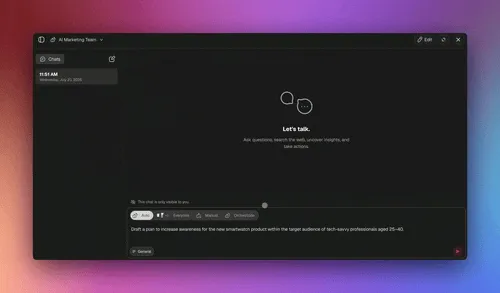
Taskade Genesis implements this pattern natively through Workspace DNA. Each workspace becomes a mesh node where agents share memory, trigger automations, and build on each other's outputs. Developer frameworks like CrewAI and LangGraph let you build custom meshes, but require engineering effort to wire together the memory, orchestration, and execution layers.
Valuation and Funding Rankings
| Rank | Platform | Valuation | Total Raised | ARR |
|---|---|---|---|---|
| 1 | Cursor | $29.3B | $2.3B+ | $2B+ |
| 2 | Devin 2.0 (Cognition) | $10.2B | $400M | $73M |
| 3 | Replit | $9B | $400M+ | — |
| 4 | Lovable | $6.6B | $330M+ | ~$300M |
| 5 | LangChain (LangGraph) | $1.25B | $260M | — |
| 6 | Bolt.new (StackBlitz) | ~$700M | $135M | — |
| 7 | CrewAI | — | $18M | — |
| 8 | Taskade | — | — | — |
| 9 | AutoGen | — (Microsoft) | — | — |
| 10 | OpenAI Agents SDK | — (OpenAI) | — | — |
| 11 | Claude Code | — (Anthropic) | — | — |
| 12 | Amazon Q | — (Amazon) | — | — |
The combined disclosed valuation of the top six companies exceeds $56 billion. The agentic engineering market is attracting more venture capital than any other AI subcategory in 2026.
Note that several platforms — Taskade Genesis, AutoGen, OpenAI Agents SDK, Claude Code, and Amazon Q — are backed by larger parent companies or operate without disclosed valuations. The actual total market cap of companies building agentic engineering platforms is significantly higher than the $56 billion in disclosed venture valuations.
The funding concentration also reveals investor conviction: Cursor alone raised $2.3 billion in a single round. Cognition (Devin) raised $400 million. These are not exploratory bets. Investors are pricing in a future where agentic engineering tools are as essential to software development as cloud computing is today.
GitHub Stars Comparison
| Framework | GitHub Stars | Language | License |
|---|---|---|---|
| AutoGen | 54,500+ | Python | MIT |
| CrewAI | 44,000+ | Python | MIT |
| LangGraph | 24,600+ | Python/JS | MIT |
| OpenAI Agents SDK | — | Python | MIT |
| Claude Code SDK | — | Python/TS | Apache 2.0 |
AutoGen leads in raw star count, but CrewAI has stronger commercial adoption. LangGraph benefits from the broader LangChain ecosystem. The open-source frameworks dominate developer mindshare, but commercial platforms like Taskade Genesis and Cursor capture the majority of paying users.
Decision Framework
ASCII Decision Tree
                    ┌─────────────────────────────┐
                    │   Do you write code daily?   │
                    └──────────────┬───────────────┘
                          ┌───────┴───────┐
                         YES              NO
                          │                │
                  ┌───────┴───────┐  ┌────┴─────────────┐
                  │ Need agent    │  │ Need deployed     │
                  │ orchestration?│  │ apps or agents?   │
                  └───────┬───────┘  └────┬─────────────┘
                    ┌─────┴─────┐    ┌────┴────┐
                   YES          NO  YES        NO
                    │            │    │          │
              ┌─────┴─────┐ ┌──┴──┐ │    ┌─────┴─────┐
              │ Python or  │ │Best │ │    │ Content / │
              │ TypeScript?│ │IDE? │ │    │ Research? │
              └─────┬──────┘└──┬──┘ │    └─────┬─────┘
              ┌─────┴──┐   ┌──┴──┐  │     ┌───┴───┐
            Python    TS  Cursor  │  │    YES     NO
              │        │    ▲     │  │     │       │
         ┌────┴────┐   │   │   Devin│  Claude  Browse
         │ Multi-  │ Claude │   2.0 │  Code   Templates
         │ agent?  │ Code   │    ▲  │   ▲
         └────┬────┘   ▲    │    │  │   │
         ┌────┴───┐    │    │    │  │   │
        YES      NO    │    │    │  │   │
         │        │    │    │    │  │   │
    ┌────┴───┐  Lang  │    │    │  │   │
    │ Opinionated?│  Graph │    │  │   │
    └────┬───┘    ▲   │    │    │  │   │
    ┌────┴───┐    │   │    │    │  │   │
   YES      NO    │   │    │    │  │   │
    │        │    │   │    │    │  │   │
  CrewAI  AutoGen │   │    │    │  │   │
    ▲       ▲     │   │    │ ┌──┴──┴───┘
    │       │     │   │    │ │
    │       │     │   │    │ │ TASKADE GENESIS ◄──────
    │       │     │   │    │ │ Best for non-devs
    │       │     │   │    │ │ and teams wanting
    │       │     │   │    │ │ agents + automations
    │       │     │   │    │ │ + deployed apps
    │       │     │   │    │ │ in one platform.
    └───────┴─────┴───┴────┴─┘
By Skill Level
| Skill Level | Best Platform | Why |
|---|---|---|
| No coding experience | Taskade Genesis | Natural language to deployed app with agents and automations |
| Beginner / Learning | Replit Agent | Full IDE with guided agent building and free tier |
| Frontend developer | Lovable or Bolt.new | Vibe coding for web apps with familiar frameworks |
| Python developer | CrewAI | Opinionated multi-agent framework with clear patterns |
| Senior engineer | LangGraph or Cursor | Granular control over agent workflows or AI-augmented IDE |
| Platform / ML engineer | AutoGen or Claude Code | Research-grade flexibility or terminal-native agents |
| AWS-focused team | Amazon Q Developer | Deep AWS integration with free tier |
| Enterprise team | Taskade Genesis or CrewAI Enterprise | Deployed agents at scale with security and compliance |
By Use Case
| Use Case | Best Platform | Runner-Up |
|---|---|---|
| Build internal tools | Taskade Genesis | Replit Agent |
| Customer support agents | Taskade Genesis | CrewAI |
| Code generation & editing | Cursor | Devin 2.0 |
| Multi-agent research pipelines | CrewAI | AutoGen |
| Complex stateful workflows | LangGraph | CrewAI |
| Rapid web app prototyping | Bolt.new | Lovable |
| Production web applications | Lovable | Replit Agent |
| AWS infrastructure automation | Amazon Q | Claude Code |
| Autonomous software engineering | Devin 2.0 | Claude Code |
| Terminal-based development | Claude Code | Cursor |
| Micro apps | Taskade Genesis | Bolt.new |
| Workflow automation with agents | Taskade Genesis | CrewAI Enterprise |
Mermaid Decision Flow
Pricing Comparison
| Platform | Free Tier | Starter/Pro | Team/Business | Enterprise |
|---|---|---|---|---|
| Taskade Genesis | Yes | $10/mo | $10/mo (10 users) | $25/mo / Custom |
| Replit | Yes | $20/mo | Teams pricing | Custom |
| Lovable | No | $20/mo | $50/mo | Custom |
| Bolt.new | Yes | $25/mo | $30/seat/mo | Custom |
| CrewAI | Yes (OSS) | $99/mo | — | $120K/yr |
| LangGraph | Yes (OSS) | Usage-based | Usage-based | Custom |
| AutoGen | Yes (OSS) | Free | Free | Free (Microsoft) |
| OpenAI Agents SDK | Yes (OSS) | API pricing | API pricing | Custom |
| Cursor | Yes | from $8/mo | Pooled team usage | Custom |
| Devin 2.0 | No | $20/mo | Custom | Custom |
| Claude Code | No | API pricing | API pricing | Custom |
| Amazon Q | Yes (50/mo) | $19/user/mo | $19/user/mo | Custom |
Taskade Genesis is free to start, with Pro from $10/month for a platform that includes agents, automations, and deployed applications. Pro includes 10 users, making it $1.00 per user per month, far below any competitor. See full pricing →
How to Evaluate an Agentic Engineering Platform
Before choosing a platform, run through this checklist. Not every criterion matters for every team, but skipping evaluation entirely leads to expensive migrations later.
The Three-Axis Framework
The OpenClaw explosion produced dozens of competing agent products in early 2026 — NemoClaw, Perplexity Computer, Meta's Manis, Anthropic Dispatch, and more. The media frames these as a control spectrum, but three axes actually determine whether a product works for you:
- Where does your agent run? Local, cloud, or hybrid — determines data privacy, security surface area, and who is responsible when the agent breaks something.
- Who orchestrates the intelligence? Single model, multi-model routing, or model-agnostic — determines cost, output quality, and vendor lock-in.
- What is the interface contract? Browser, messaging app, terminal, phone — determines how naturally the tool fits into your existing workflow.
Taskade Genesis scores high on all three: managed cloud with SOC 2 compliance (secure without infrastructure overhead), multi-model with frontier models (no vendor lock-in), and browser + mobile interface (zero setup, accessible to non-technical users). Most OpenClaw alternatives force a trade-off between user control and technical complexity — Taskade eliminates that trade-off entirely.
1. Match the platform to your team's technical depth.
If nobody on the team writes code, eliminate developer frameworks (CrewAI, LangGraph, AutoGen) and autonomous coders (Cursor, Devin, Claude Code, Amazon Q) from consideration. Your shortlist is Taskade Genesis, Replit Agent, Lovable, and Bolt.new. Of these, only Taskade Genesis includes native AI agents and automations.
2. Define your deployment requirements.
Do you need a live URL that customers visit? Do you need an API endpoint? Do you need an agent running on a schedule? The answer determines whether you need a platform with built-in hosting (Taskade Genesis, Replit, Lovable) or one where you manage infrastructure yourself (CrewAI, LangGraph).
3. Count your integration touch points.
If your workflow touches Slack, Gmail, Stripe, GitHub, Shopify, and HubSpot, you need a platform with broad integration support. Taskade Genesis offers 100+ integrations through its automation engine. Developer frameworks require you to build integrations manually.
4. Consider long-term memory requirements.
Will your agents need to remember previous interactions? Will they need access to historical data? Persistent memory is critical for support agents, research pipelines, and any workflow that improves with use. Workspace DNA provides this natively in Taskade Genesis. Most other platforms require external databases and custom memory management.
5. Budget for scale, not just launch.
A platform that costs $20/month for one user might cost $2,000/month for a team of 100. Taskade Genesis Pro at $10/month includes 10 users ($1.00 per user). Calculate your 12-month total cost, not just the starting price. See the pricing comparison for details.
6. Trust generic tools over specialized ones.
Vercel's engineering team proved that removing specialized tools from their agent pipeline improved accuracy from 80% to 100%. When evaluating platforms, favor those with simple, reliable primitives over those with feature-count marketing. More toggles does not mean better agents. This principle applies whether you are building with AI agent builders or evaluating vibe coding platforms.
7. Test with a real project, not a demo.
Every platform demos well. The differences emerge when you build something real. Take your actual use case — a customer onboarding flow, an internal reporting dashboard, a content pipeline — and build it on your top two platforms. The one that gets you to "done" faster with fewer workarounds is the right choice. For guidance on getting started, see our guides on hosting your first AI agent and vibe coding for non-developers.
Workspace DNA: The Self-Reinforcing Loop
Most agentic engineering platforms treat agents as isolated functions. You configure an agent, it runs a task, and the output goes somewhere. The next time you run the agent, it starts from scratch.
Taskade Genesis operates differently. Every agent interaction, every automation execution, and every piece of generated content feeds back into the workspace's memory layer. The AI agents learn from previous outputs. The automations adapt based on accumulated data. The workspace itself becomes an intelligent system that improves with use.
This is the Workspace DNA loop in action:
- Memory stores every project, document, conversation, and data point across your workspace
- Intelligence draws on that memory to power AI agents with persistent context and custom tools
- Execution uses those agents to trigger automations across 100+ integrations
- The results of execution flow back into Memory, creating new data and context
The practical impact: a customer support workspace that has been running for three months is fundamentally smarter than one that launched yesterday. The agents have seen thousands of tickets. The automations have processed hundreds of workflows. The memory layer contains patterns, edge cases, and institutional knowledge that no other platform captures automatically.
This is why Taskade Genesis users report compounding returns over time. The first week, the platform builds what you describe. The third month, the platform anticipates what you need. No other platform on this list — not Cursor, not CrewAI, not Devin — builds this feedback loop into its architecture by default.
Compare this to the developer framework approach: with CrewAI or LangGraph, you can build persistent memory, but you must design, implement, and maintain the memory layer yourself. With autonomous coders like Cursor, there is no memory layer at all — each session starts fresh. The Workspace DNA architecture is what separates a workspace from a tool.
The Agentic Engineering Market in Numbers
The agentic engineering market is growing faster than any previous developer tooling category. Here are the numbers that define the landscape in 2026:
- $56B+ in combined disclosed valuations across the top six platforms
- $2B+ in ARR for Cursor alone, doubling in three months — the fastest any developer tool has scaled
- 150,000+ apps built on Taskade Genesis without users writing code
- 54,500+ GitHub stars for AutoGen, the most-starred agent framework
- 50% of Fortune 500 companies using CrewAI for agent orchestration
- 8M registered users on Lovable in under two years
- $2.3B raised in a single round by Cursor (Series D)
- 97% price reduction for Devin (from $500/mo to $20/mo)
- 100+ integrations available through Taskade automations
- Frontier AI models available in Taskade Genesis
Market trajectory: The agentic AI market sits at approximately $7-8 billion in 2026 and is projected to reach $40-93 billion by 2030 depending on the analyst (conservative: $40-50B; aggressive: $93B). About 25% of enterprises are deploying agentic pilots this year, rising to 50% by 2027. This is not incremental growth — it is an entire industry being built in real time.
Additional signals confirm the mainstream transition:
- 70-80% of Anthropic employees use Claude Code daily for engineering work — with March 2026 Channels and Computer Use features extending agent reach beyond the terminal
- 95% of OpenAI engineers use Codex daily, managing 10-20 parallel agent threads
- 100 SDRs replaced by AI agents at Monday.com (public company, production deployment)
- $9B valuation for Replit after Series D (March 2026)
- ~$300M ARR for Lovable with ~8M registered users
- 80% → 100% accuracy improvement when Vercel removed specialized tools from their agent pipeline
These numbers tell a clear story: agentic engineering has moved from experimental to mainstream. The question is no longer whether AI agents will transform software development — it is which platform will become the default. For a broader perspective on where this leads, read our analysis of agentic workflows toward AGI.
The Convergence: Why Agentic Mesh Will Win
The 12 platforms on this list are converging toward a single architectural vision — the agentic mesh. Every category is expanding toward the others:
- No-code platforms are adding developer extensibility (Replit's code access, Taskade's API integrations)
- Developer frameworks are adding visual interfaces (LangGraph Studio, CrewAI Dashboard)
- Autonomous coders are adding agent orchestration (Cursor's multi-file agents, Devin's autonomous planning)
The winners will be platforms that unify all three capabilities: no-code accessibility, developer extensibility, and autonomous execution. Taskade Genesis is the only platform on this list that already ships all three in a single product.
Common Feature Gaps Across All Platforms
| Feature | No-Code | Frameworks | Auto Coders |
|---|---|---|---|
| Natural language input | Strong | Weak | Medium |
| Agent orchestration | Medium | Strong | Weak |
| Workflow automation | Taskade only | Manual | None |
| Deployment | Built-in | Manual | Some |
| Multi-model support | Taskade only | Yes | Varies |
| Persistent memory | Taskade only | Manual | Limited |
| Visual interface | Yes | Emerging | IDE only |
| Enterprise RBAC | Taskade, Replit | Limited | Cursor, Q |
Garry Tan, CEO of Y Combinator, captured the moment: "We are in the middle of the most important technological transformation since the internet. AI agents are not tools — they are teammates." The platforms that internalize this insight — that agents need memory, context, and autonomy — will define the next decade of software.
The enterprise signal is equally clear. Monday.com's CEO replaced 100 SDRs (sales development representatives) with AI agents — not as a pilot, but as a production deployment. This is not experimentation. This is operational substitution at scale. When a publicly traded company replaces an entire function with agents, the message to every platform builder is unmistakable: agents must be reliable enough for mission-critical workflows, not just impressive demos. That reliability comes from harness engineering, not agent sophistication alone.
What the Convergence Means for Your Stack
If you are building today, here is the pragmatic advice:
Start with the platform that matches your current skill level. Non-developers should start with Taskade Genesis. Python developers should start with CrewAI. Daily coders should start with Cursor. Do not over-engineer your entry point.
Plan for the mesh. Whichever platform you choose today, ensure it can connect to others. MCP support, API access, and webhook integrations are the minimum requirements for future-proofing.
Measure by output, not by features. The best platform is the one where you ship the most. Taskade Genesis users have shipped 150,000+ apps. Cursor users write code faster. CrewAI users orchestrate complex pipelines. Pick the tool that accelerates your specific output. Browse the AI apps gallery for live examples of what teams are building.
Treat agents as team members, not scripts. The platforms that win long-term will be the ones that give agents persistent memory, contextual awareness, and the ability to collaborate. Workspace DNA is one implementation of this principle. Expect every platform to converge on similar architectures. For a vision of where this leads, read the garden of agents: how work will feel in 2030 and our analysis of chatbots vs agents.
The era of single-purpose tools is ending. The era of agentic engineering — where AI agents reason, plan, and execute as autonomous collaborators — is here. The only question is which platform you will use to build your first agentic AI system.
Get started with Taskade Genesis for free →
The Harness Era: What Comes After Agent Building
"2025 was the year of agents. 2026 is the year of harnesses."
The shift became clear at a senior engineering retreat in February 2026, where engineering leaders across the industry converged on three principles that define the harness era:
1. Legible environments matter more than clever agents. Agents need clean, well-documented codebases and structured workspaces to operate reliably. The best agent in the world fails in a messy environment. This is why agentic workspaces — purpose-built environments for agent operation — are becoming the critical investment.
2. Verification is the new prompt engineering. Test-driven development (TDD) has found its second life as the primary mechanism for steering agents. You do not tell an agent what to build — you tell it what "done" looks like through tests, assertions, and verification loops. The gather/act/verify pattern that Claude Code uses internally is a canonical example. As Grant Sanderson (3Blue1Brown) explained in his transformer visualization: factual knowledge lives in the MLP layers while contextual reasoning happens in the attention blocks — verification harnesses exploit this by forcing models to ground their contextual reasoning against external truth sources.
3. Generic tools beat specialized ones. Vercel's engineering team discovered that removing specialized tools from their agent pipeline improved accuracy from 80% to 100%. More features does not mean better outcomes. The most reliable agentic AI systems use fewer, more generic capabilities — which is exactly the "bash is all you need" philosophy from Claude Code.
The Middle Loop: Where Agentic Engineering Actually Happens
The retreat also surfaced a concept gaining traction: "the middle loop." Traditional software engineering has two loops — the inner loop (write code, run tests, iterate) and the outer loop (deploy, monitor, respond to incidents). Agentic engineering introduces a third loop in between: the supervisory work of prompting agents, reviewing their output, correcting course, and managing what the retreat called "cognitive debt" — the accumulated mental overhead of understanding what agents did and why.
This middle loop is where agentic engineering actually happens. It is not about building agents or deploying them. It is about supervising them effectively. The engineering leaders at the retreat compared it to managing a team of junior developers: individually capable, collectively chaotic without structure.
Agent topologies — how you arrange and connect agents — matter as much as agent capabilities. A single powerful agent often outperforms a swarm of specialized ones. Multi-agent teams need explicit coordination patterns. And the workspace itself must be the coordination layer, not the engineer's working memory.
Taskade Genesis addresses this by being the harness itself. The workspace provides the legible environment through structured projects and persistent AI agent memory. Automations handle verification loops with conditional branching and failure handling. And Workspace DNA keeps the feedback loop running — Execution creates Memory, Memory feeds Intelligence, Intelligence triggers Execution. The harness is not a separate tool; it is the workspace.
For teams building multi-agent teams, the harness era means investing in structure over sophistication. Read our guides on best practices for multi-agent systems, training AI agents, and agentic workflows toward AGI for practical frameworks.
What the Harness Era Means for Platform Selection
The harness insight changes how you should evaluate every platform on this list:
- Taskade Genesis: Already a harness. Workspace is the environment, automations provide verification, Workspace DNA is the feedback loop.
- CrewAI / LangGraph: Excellent agent builders. You must construct the harness yourself through custom memory, monitoring, and deployment infrastructure.
- Cursor / Claude Code: The coding loop is well-harnessed (IDE or terminal provides the environment, tests provide verification). But there is no workspace harness for non-coding agent tasks.
- Devin 2.0: Attempts to be its own harness with autonomous planning, but the "black box" approach limits engineer supervision.
- Lovable / Bolt.new / Replit: App generators, not harnesses. They produce output but do not provide the supervisory middle loop for agentic AI systems.
The Folder-as-Workspace Alternative: When Simplicity Beats Frameworks
A fourth category is emerging that does not fit neatly into the three lanes: folder-as-workspace systems. Instead of choosing a no-code platform, a developer framework, or an autonomous coder, some practitioners are building agent architectures from nothing more than folders and markdown files.
The pattern works on three layers: a root configuration file (the "map") that routes the AI to task-specific context files (the "rooms"), which direct work to organized output directories (the "workspace"). No Python. No databases. No frameworks. Just text files and a Claude Code subscription.
This approach has real advantages. It is maximally transparent — every routing decision is visible in a text file. It is infinitely customizable — change a line of English to change the behavior. And it eliminates the dependency chain: no LangChain version conflicts, no CrewAI breaking changes, no infrastructure to maintain.
But it also reveals the limitations that drive teams toward platforms:
| Capability | Folder System | Agentic Platform |
|---|---|---|
| Context routing | Manual markdown tables | Automatic (agent training) |
| Collaboration | None (single machine) | Real-time multiplayer |
| Integrations | None (copy-paste or MCP) | 100+ native connections |
| Automation | Manual terminal commands | Event-driven triggers |
| Deployment | None (local files) | One-click publish |
| Memory | Session-bound | Persistent across sessions |
| Scalability | One user, one terminal | Teams with RBAC |
The folder-as-workspace pattern is the most honest implementation of the harness principle: structure matters more than sophistication. And it proves that the industry's investment in elaborate agent frameworks may be solving the wrong problem. The bottleneck was never agent capability — it was context engineering.
Taskade Genesis takes this insight to its logical conclusion: a workspace that provides the structure of a folder system with the capabilities of a platform. Your projects are the map. Your agents are the rooms. Your automations are the workspace layer. The harness is built in, not bolted on. Try it free →
What Developers Are Saying (Reddit and HN Threads)
The agentic engineering debate is playing out in real time across developer communities. Here are the recurring themes from Reddit and Hacker News discussions in early 2026:
"The best tool is the one you actually ship with."
Developers consistently report that the platform choice matters less than the commitment to ship. Teams that pick a platform and build with it outperform teams that spend months evaluating every option. The most common regret is not starting sooner.
"No-code is eating the bottom of the market."
Multiple threads note that Taskade Genesis, Lovable, and Replit are handling use cases that previously required a full-time developer. Internal tools, customer portals, and micro apps are increasingly built by non-technical team members using AI platforms rather than waiting in a development backlog. Our guides on vibe coding for teams and what is an agent hosting platform explore this trend in detail.
"CrewAI vs LangGraph is the new Flask vs Django."
The Python agent framework debate mirrors the web framework wars. CrewAI fans prefer its opinionated structure and faster time-to-value. LangGraph fans prefer its flexibility and explicit state management. Both camps agree that AutoGen's Microsoft merger creates uncertainty.
"Cursor is the new VS Code. It just is."
With 1 million daily active users and $1 billion in ARR, Cursor has crossed the adoption threshold where it becomes the default IDE for AI-assisted development. The remaining debate is whether tab completion (Cursor) or full autonomy (Devin) is the better paradigm.
"Agents need memory to be useful. Otherwise they are just expensive API wrappers."
This insight keeps surfacing across discussions. Stateless agents that start fresh on every invocation fail for production use cases. Platforms with persistent memory — like Taskade Genesis's Workspace DNA and LangGraph's checkpointed state — consistently receive more positive reviews for real-world deployments.
"The pricing war is just getting started."
Devin's price drop from $500 to $20 per month shocked the market. Developers expect similar compression across all platforms. The consensus: if you are paying more than $20/month for an AI coding tool in 2027, you are overpaying. Taskade Genesis, free to start with Pro from $10/month, is already positioned below this threshold.
"Coding is going away first — but engineering is not."
Dario Amodei's prediction that coding will be the first cognitive task fully automated by AI resonates across developer forums. But the nuanced version is emerging: writing code is going away. Engineering — the supervisory, architectural, and verification work — is expanding. This maps directly to the harness era thesis. Developers are not being replaced; they are being promoted to agent supervisors. The tools that support this promotion — not just the code generation — will win.
Related Reading
Platform Comparisons:
- Claude Code vs Cursor vs Taskade Genesis
- Taskade Genesis vs Lovable
- Taskade Genesis vs Bolt.new
- Taskade Genesis vs Replit
- Taskade Genesis vs Cursor
- Taskade Genesis vs Windsurf
- Taskade Genesis vs V0
- Ultimate Guide to Taskade Genesis 2026
Platform Reviews and Histories:
- Lovable Review | Lovable History
- Cursor Review | Anysphere/Cursor History
- Bolt.new Review
- Replit Review | Replit AI History
- Anthropic/Claude History
- OpenAI/ChatGPT History
- Genesis Press Reviews
Alternatives Guides:
Agentic Engineering Deep Dives:
- What Is Agentic Engineering? A Complete Guide
- Code vs Runtime Manifesto
- Agentic Workspaces | Agentic AI Systems
- AI Agent Builders | Train AI Agents
- AI Agent Memory | Chatbots vs Agents
- Multi-Agent Teams | Best Practices for Multi-Agent
- Agentic Workflows Toward AGI
- The Garden of Agents: How Work Will Feel in 2030
Vibe Coding:
- Best Vibe Coding Tools | Will Vibe Coding Kill SaaS?
- Vibe Coding for Non-Developers | Vibe Coding for Teams
- Vibe Coding vs No-Code vs Low-Code
Agent Hosting and Protocols:
- Host Your First AI Agent | What Is an Agent Hosting Platform?
- Understanding MCP | OpenAPI to MCP Code Generator
- What Are Micro Apps?
Get Started:
- Browse AI App Templates →
- Explore the Community Gallery →
- Taskade Pricing Plans →
- Build Your First AI App →
Frequently Asked Questions
What is the best agentic engineering platform for beginners?
Taskade Genesis is the best agentic engineering platform for beginners because it requires zero coding knowledge. You describe what you want in natural language, and the platform generates a deployed application with built-in AI agents, automations, and data persistence. Over 150,000 apps have been built on the platform, which is free to start, with Pro from $10/month billed annually. See pricing for full details. For beginners who want to learn coding, Replit Agent provides a full IDE with guided building and a generous free tier. See our vibe coding tools comparison for more options.
How does agentic engineering differ from traditional software development?
Traditional software development requires manually writing code, configuring infrastructure, and deploying applications through multi-step pipelines. Agentic engineering replaces much of this manual work with AI agents that can reason, plan, and execute autonomously. The key shift is from writing instructions to describing outcomes. Platforms like Taskade Genesis take this furthest by generating entire applications from natural language prompts, while frameworks like CrewAI and LangGraph let developers orchestrate multiple agents into complex workflows.
Can I use multiple agentic engineering platforms together?
Yes, many teams use complementary platforms. A common stack is Taskade Genesis for non-technical team members building internal tools and automations, Cursor for developers writing custom code, and CrewAI for backend agent orchestration pipelines. The MCP protocol is emerging as a standard for inter-platform agent communication, and tools like Claude Code support MCP natively for connecting agents across systems.
What is the cheapest way to start with agentic engineering?
The cheapest entry point is Taskade Genesis, which is free to start, with Pro from $10/month billed annually, for a full-featured platform with AI agents, automations, and deployed applications. AutoGen is completely free and open-source for developers who want a Python framework. Amazon Q Developer stopped new sign-ups on May 15, 2026, and AWS now points new users to Kiro. Cursor's Free plan includes limited agent and chat requests, and paid plans start at $8/month. See our pricing comparison for detailed breakdowns.
Which platform has the highest valuation in the agentic engineering space?
Cursor is the largest. SpaceX acquired its parent company, Anysphere, in an all-stock deal valued at about $60 billion that closed on August 14, 2026. Before the deal, Cursor carried a $29.3 billion valuation after its $2.3 billion Series D round. Among the other platforms in this guide, Devin (Cognition) was valued at $10.2 billion, Replit at $9 billion, and Lovable at $6.6 billion.
Is CrewAI better than LangGraph for building AI agents?
CrewAI is better for teams that want an opinionated, role-based framework with clear patterns for multi-agent collaboration. Its 44,000+ GitHub stars and adoption by 50% of Fortune 500 companies validate its enterprise readiness. LangGraph is better for teams that need granular control over agent workflow topology with explicit state management, checkpointing, and human-in-the-loop patterns. Choose CrewAI for faster development; choose LangGraph for complex, stateful workflows.
What happened to Devin's pricing in 2026?
Devin's entry price fell from $500/month to $20/month when Devin 2.0 launched in April 2025. In 2026, Devin replaced ACU-metered billing with quota plans: Free, Pro at $20/month and Max at $200/month, with team plans from $80/month plus $40/month for each full developer seat. The $20 Pro plan puts Devin in direct competition with Cursor's paid plans ($8 to $200/month) for individual developers.
How does Workspace DNA work in Taskade Genesis?
Workspace DNA is Taskade's architectural framework built on three self-reinforcing pillars: Memory (projects, documents, knowledge bases), Intelligence (AI agents with custom tools and persistent memory), and Execution (automations with 100+ integrations and durable execution). These three layers form a loop where Execution creates Memory, Memory feeds Intelligence, and Intelligence triggers Execution. The loop makes the workspace smarter with every interaction.
What is the MCP protocol and why does it matter for agentic engineering?
The Model Context Protocol (MCP) is a standardized protocol for AI agents to interact with external tools, data sources, and other agents. It matters because it enables interoperability between agentic engineering platforms. An agent running in Claude Code, for example, can connect into a Taskade Genesis workspace through its hosted MCP server and work with the same projects and data your workspace agents use. MCP is becoming the HTTP of agent communication, and platforms that support it are better positioned for the emerging agentic mesh architecture.
How many AI models does Taskade Genesis support?
Taskade Genesis supports frontier models from top AI labs. Users can select the best model for each agent based on the task: faster models for simple queries and more capable models for complex reasoning. This multi-model approach avoids vendor lock-in and lets teams optimize for cost, speed, and quality across different workflows. See AI apps for examples of multi-model applications.
Can Taskade Genesis replace traditional project management tools?
Yes. Taskade Genesis includes multiple project views (List, Board, Calendar, Table, Mind Map, Gantt, Org Chart), role-based access control, and real-time collaboration. That matches or exceeds dedicated project management platforms like Asana, Monday, and ClickUp. The key difference is that Taskade adds AI agents and automations on top of project management, making it a unified workspace rather than a single-purpose tool. Browse templates to see pre-built workspace configurations for every team type.
What is vibe coding and how does it relate to agentic engineering?
Vibe coding is the practice of building software through natural language conversation with AI rather than writing code manually. It is a subset of agentic engineering focused specifically on code and application generation. Platforms like Taskade Genesis, Lovable, Bolt.new, and Replit Agent all support vibe coding, but only Taskade Genesis extends beyond code generation to include agent orchestration and workflow automation. Read our analysis of whether vibe coding will replace traditional SaaS for deeper context.
What is a software factory platform?
A software factory platform runs a line of AI agents around software delivery. Work arrives from issues, Slack or tickets, agents triage, spec, build, review and verify it, and a person approves at the gates the team sets. Factory, Warp Factories, 8090, Port and GitLab Duo Agent Platform lead the category in October 2026. See Category 4 above and our guide to the best software factory tools.
Can a team without engineers run a software factory?
Yes, if the output is a business app rather than a codebase. Taskade Genesis builds a live app with its database from one prompt, Taskade EVE edits it in chat, and AI agents and automations with 100+ integrations handle intake and routing. A person approves and publishes each change. The Free plan includes 3 apps, and Pro is $10/mo billed annually. Read What Is an AI Software Factory? for the five-step setup.
▲ ■ ● Memory feeds Intelligence, Intelligence triggers Execution, Execution creates Memory. That is the Workspace DNA loop that makes Taskade Genesis the harness — not just another agent builder. Describe what you want, and it ships a deployed app with agents and automations in one workspace.
Last updated: March 13, 2026. Valuations and pricing reflect publicly available information as of publication date. Visit Taskade Genesis to start building with AI agents, automations, and deployed applications — no code required.
Looking for more comparisons? Browse our guides on Replit alternatives, Lovable alternatives, and Cursor alternatives.