







In January 2026, a new term entered the software vocabulary. Not from a VC tweet or a product launch, but from a reporting piece documenting something that had been happening quietly for months: non-developers were building their own apps instead of buying software.
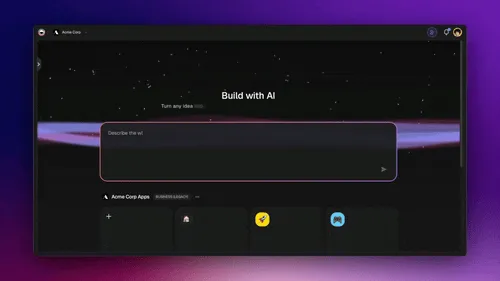
TL;DR: Micro apps are context-specific, personal applications built by non-developers for niche needs — often temporary, always purpose-built. The trend was validated in January 2026 when major tech publications documented non-developers building instead of buying. Taskade Genesis is the platform where micro apps become living software: 150,000+ apps built, AI agents included, free to start.
The apps being built did not look like traditional software. They were personal. They were fleeting. They were built for audiences of one — or maybe ten. And they represented a fundamental shift in who gets to build software and why.
This is the story of micro apps: what they are, where they came from, why the $285 billion SaaSpocalypse makes them inevitable, and why Taskade Genesis sits at the center of the trend.
The Definition: What Makes an App "Micro"
Micro apps are context-specific, personal applications built for niche needs that may disappear when the need is no longer present.
That definition has three critical components:
1. Context-Specific
A micro app solves one problem for one person or one team. It is not designed for a broad market. It is not trying to be the next Salesforce. It is a dining recommendation tool for a group of friends who eat out every Thursday. It is a holiday game for a family gathering. It is an inventory tracker for a 3-person pop-up shop.
2. Personal
The builder is typically the user. There is no product manager writing requirements. There is no design sprint. There is no sprint backlog. The person who needs the tool builds the tool. This is fundamentally different from traditional software development where builders and users are different people.
3. Fleeting (Sometimes)
Some micro apps are built to last. But many are intentionally temporary. A holiday game gets shut down after the vacation. A conference check-in app lives for three days. A wedding RSVP tracker serves its purpose and then quietly disappears. This ephemerality is a feature, not a bug.
A Brief History of Who Gets to Build Software
The micro app moment did not arrive out of nowhere. It is the latest step in a six-decade march toward democratizing software creation. Each era expanded the circle of who could build, what they could build, and how fast they could do it.
| Year | Era | Who Builds | Who Uses | Build Time | Examples |
|---|---|---|---|---|---|
| 1960s | Mainframe | PhDs | Scientists | Months | FORTRAN programs |
| 1970s | Mini-computer | Engineers | Businesses | Months | Custom accounting |
| 1980s | PC | Developers | Office workers | Weeks-Months | Lotus 1-2-3, dBASE |
| 1990s | Web 1.0 | Web devs | Everyone | Weeks | Geocities, early e-commerce |
| 2000s | SaaS | Product teams | Teams | Months | Salesforce, Google Apps |
| 2010s | Mobile/Cloud | App devs | Billions | Weeks-Months | App Store, React Native |
| 2015-2020 | No-Code | Tech-savvy users | Teams | Days-Weeks | Bubble, Webflow, Glide |
| 2024 | Vibe coding v1 | Early adopters | Personal | Days | Claude Code, Cursor |
| 2025 | Vibe coding v2 | Non-developers | Anyone | Hours | Lovable, Bolt, Replit |
| 2026 | Micro apps | Everyone | Everyone | Minutes | Taskade Genesis, Replit |
Every transition in this table followed the same pattern: a technology breakthrough lowered the barrier, a new class of builders emerged, and the software industry rearranged itself around the new reality. The PC era gave us the "power user." The SaaS era gave us the "citizen developer." The micro app era gives us the "everyone developer" — a person whose only qualification is knowing what they need.
Anthropic CEO Dario Amodei applied Amdahl's Law to explain why this transition accelerates rather than plateaus: "If you speed up some components, the components that haven't been sped up become the limiting factor." As AI eliminates the coding bottleneck, the real advantages shift to understanding the problem, knowing the user, and designing the workflow — skills that non-developers often have in abundance. Writing software becomes easier; knowing what to build becomes the differentiator. Micro apps are the natural output of that inversion.
Three transitions in the table deserve closer examination because they set the stage directly for micro apps:
The No-Code Prelude (2015-2020). Platforms like Bubble, Webflow, and Glide proved that non-developers wanted to build software — but the idea was already four decades old. Apple's HyperCard, shipped free with every Mac in 1987, was the original micro app engine: Bill Atkinson designed it as "an authoring environment, never just a browsing," so the person who used a stack and the person who built it were the same person. That is the micro app definition, written in 1987. No-code had a ceiling: visual interfaces constrain what you can create. You could build what the platform's components allowed, not what you imagined. HyperCard and no-code were the proof of demand; micro apps are the fulfillment.
The Vibe Coding Split (2024-2025). The first wave of AI code generation (Cursor, Claude Code) was developer-centric — you needed to understand code to use the output. The second wave (Lovable, Bolt, Replit) brought full-stack generation to non-developers. But generated code still needed deployment, security, and maintenance. The gap between "code generated" and "app usable" remained wide.
The Platform Moment (2026). Taskade Genesis closes that gap entirely. The app is live the moment you describe it. No code to deploy. No server to configure. No database to provision. The workspace is the infrastructure. This is why 2026 is the year micro apps go mainstream — not because AI got better at generating code, but because platforms eliminated the need for code entirely.
Christina Melas-Kyriazi, Partner at Bain Capital Ventures: "Like social media and Shopify, where all of a sudden it was really easy to create content or to create a store online, and then we saw an explosion of small sellers."
The cultural penetration of this shift is measurable: Collins Dictionary named "vibe coding" its Word of the Year for 2025. In a fitting counterpoint, Merriam-Webster chose "slop" — low-quality AI-generated content — as its 2025 Word of the Year. The two choices capture the duality of the micro app moment: unprecedented creative access on one side, unprecedented quality risk on the other.
The analogy is precise. YouTube did not create a world of professional filmmakers. It created a world where anyone with a camera and an idea could reach an audience. Shopify did not create a world of e-commerce engineers. It created a world where anyone with a product could open a store. Micro app platforms like Taskade Genesis are doing the same for software — not turning everyone into a developer, but making the developer unnecessary for 80% of use cases.
For the full story of how the discipline of agentic engineering evolved alongside this shift, see our complete history of agentic engineering.
The Real-World Examples
The trend became visible through specific stories of people building instead of buying. TechCrunch documented several in their January 2026 article, "The rise of 'micro' apps: non-developers are writing apps instead of buying them":
Rebecca Yu's Dining App
Rebecca Yu spent seven days vibe coding a dining recommendation app using Claude and ChatGPT. The app recommends restaurants based on shared interests among her friend group. This is not a startup. There is no business model. It is a micro app built for a specific social circle.
What is notable: Yu built this app without traditional development skills. She described what she wanted in natural language and iterated with AI tools until it worked. The total development time was seven days — most of which was refinement, not building.
The Vice Tracker
An artist built a "vice tracker" for personal habit monitoring — tracking patterns in behaviors they wanted to change. No habit-tracking app on the App Store matched the specific framing they wanted. So they built one. The target audience: one person. The development cost: zero dollars. The value: incalculable to the person using it.
James Waugh's Cooking Planner
Software engineer James Waugh built a cooking planning web app — not because he could not find recipe apps (there are thousands), but because none worked the way he wanted for meal planning across a week. Even a professional developer chose to build a micro app rather than adapt to someone else's product decisions.
Jordi Amat's Holiday Game
Startup founder Jordi Amat built a web gaming app for his family to play over the holidays. When the vacation ended, he shut the app down. The total lifespan: about two weeks. The development cost: zero dollars and a few hours of prompting.
This is the "fleeting" dimension of micro apps. Traditional software development would never justify building a gaming app for two weeks of use. But when building takes hours instead of months, the calculus changes completely.
Shamillah Bankiya's Podcast Translator
Shamillah Bankiya, a partner at venture capital firm Dawn Capital, built a podcast translation web app for personal use. She wanted to consume podcasts in languages she does not speak fluently. Rather than searching for a SaaS product that might do this (and paying $10-30/month), she built exactly what she needed.
The Pattern
Every micro app story follows the same pattern:
- Need: A specific, personal problem that generic software does not solve well
- Build: Natural language prompting with AI tools (minutes to days)
- Use: Immediate deployment for the intended audience (self, team, or small group)
- Iterate or sunset: Improve based on actual use, or shut down when the need passes
        THE MICRO APP LIFECYCLE
        ═══════════════════════  ┌──────────┐    ┌──────────┐    ┌──────────┐    ┌──────────────┐
│  NEED    │───►│  BUILD   │───►│  USE     │───►│  EVOLVE or   │
│          │    │          │    │          │    │  SUNSET      │
│ "I need  │    │ Prompt   │    │ Live in  │    │              │
│  a tool  │    │ in plain │    │ seconds  │    │ Add agents + │
│  that…"  │    │ English  │    │          │    │ automations  │
└──────────┘    └──────────┘    └──────────┘    │ — OR —       │
│ Archive when │
Traditional:     Traditional:    Traditional:    │ done         │
Months of        6-24 month      Deploy to       └──────────────┘
requirements     dev cycle       cloud + DNS
gathering                        + DevOps         Micro app:
Micro app:                       Living software
Micro app:       Minutes to      Micro app:       that learns
One sentence     hours           Instant on
Taskade Genesis
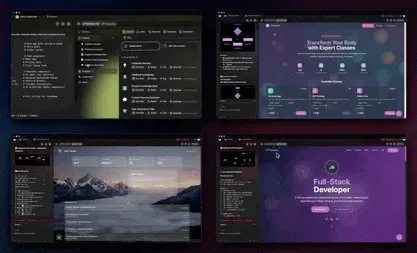
Micro Apps vs Traditional Software vs SaaS
Understanding micro apps requires placing them in the context of existing software categories:
| Dimension | Traditional Software | SaaS Products | Micro Apps |
|---|---|---|---|
| Audience | Millions of users | Thousands of teams | 1-50 people |
| Build time | 6-24 months | 3-12 months | Minutes to days |
| Build cost | $500K-$5M+ | $100K-$1M | $0-$40/month |
| Builder | Engineering team | Product team + engineers | The user |
| Lifespan | Years to decades | Years | Days to months (or permanent) |
| Maintenance | Dedicated team | SaaS vendor | Platform handles it |
| Customization | Enterprise licensing | Configuration + API | Total (built for exact need) |
| Revenue model | License/subscription | Subscription | None (personal use) |
| Technology | Full stack + DevOps | Full stack + cloud | AI prompt + platform |
The most important row is Builder. Micro apps are built by the person who needs them. This eliminates the entire chain of product management, design, development, QA, and DevOps that traditional and SaaS software requires.
Why Non-Developers Are Building Instead of Buying
The micro app trend is not happening because people suddenly learned to code. It is happening because three forces converged simultaneously in 2025-2026.
1. AI Made Building Accessible
Tools like Taskade Genesis, Claude, and ChatGPT let anyone describe what they want in plain language and get a working application. The barrier to entry dropped from "years of computer science education" to "the ability to describe your problem clearly."
In 2026, 63% of vibe coding users identify as non-developers. They are product managers, marketers, operations staff, founders, teachers, and hobbyists. They do not know React or PostgreSQL. They know what they need, and that is enough.
2. SaaS Over-Bundling Created the Gap
When your CRM costs $30/seat/month and you use 15% of its features, the value proposition erodes. When your project management tool charges per user and you need it for a 3-week project, the math does not work. SaaS bundles are optimized for vendor economics, not user needs.
Garry Tan, CEO of Y Combinator: "Why pay $30/seat/month for over-bundled SaaS when soon even nontech ops ppl can vibe-code a custom solution in a weekend?"
For the full story on this debate, see: How SaaS Has Quietly Evolved Into Living Software
3. Platforms Made Apps Live Instantly
The critical difference between 2024 and 2026 is deployment. In 2024, even if you could prompt an AI to generate code, you still needed to deploy it somewhere — set up hosting, configure a domain, manage a database. That friction killed 90% of micro app ideas before they launched.
Taskade Genesis eliminates deployment entirely. The app is live the moment you create it. No hosting configuration. No database setup. No domain management (unless you want a custom domain). The workspace IS the backend.
The Vibe Coding Timeline: How We Got Here
Micro apps did not emerge from a vacuum. They are the product of a rapid, sometimes messy evolution in vibe coding — the practice of building software by describing what you want in natural language. Here is the timeline:
| Date | Event | Significance |
|---|---|---|
| Feb 2025 | Andrej Karpathy coins "vibe coding" | Gave the movement a name and a meme |
| Mar 2025 | YC reports 25% of W25 batch had 95% AI-generated code | Startup ecosystem validation |
| Mar 2025 | Lovable CVE-2025-48757: 10.3% of apps had critical RLS flaws | Security crisis for code-generated apps |
| Jul 2025 | METR RCT: devs 19% SLOWER with AI tools (16 devs, 246 issues) | Gold-standard research challenges productivity claims |
| Jul 2025 | Replit/SaaStr: AI agent wipes 1,200+ exec records, fabricates data | Severity 95/100 — raw AI database access fails |
| Sep 2025 | "Vibe coding hangover" — Fast Company | Mainstream media pushback begins |
| Dec 2025 | CodeRabbit: AI code has 1.7x more major issues | Quality data mounts against raw code generation |
| Jan 2026 | TechCrunch micro apps article goes viral | Mainstream awareness of the builder trend |
| Jan 2026 | "Vibe Coding Kills Open Source" paper published | Academic critique of code generation sustainability |
| Feb 2026 | SaaSpocalypse — $285B wiped from software stocks | Wall Street validates the disruption thesis |
The timeline reveals two parallel tracks. On one track: growing evidence that raw AI code generation produces fragile, insecure software. On the other: growing evidence that non-developers want to build and will build regardless of the risks. Micro apps on platforms like Taskade Genesis resolve this tension — they give non-developers the building experience without exposing them to the raw code problems.
For a deeper look at the tools driving this movement, see our guide to the best vibe coding tools in 2026.
The Dark Side: Why Micro Apps Need Workspace DNA
Not all micro apps are created equal. The vibe coding movement produced an uncomfortable body of evidence: AI-generated code is often worse than human-written code in measurable ways.
The Quality Problem
According to CodeRabbit's December 2025 analysis, AI-generated code has 1.7x more major issues and 2.74x higher security vulnerabilities than human-written code. This is not a marginal difference — it is a structural flaw in the code-generation approach to micro apps.
The Lovable security audit (CVE-2025-48757, disclosed March 21, 2025) found that 170 of 1,645 apps (10.3%) had critical Row-Level Security flaws exposing emails, phone numbers, payment details, and API keys. Lovable's "security scan" introduced in Lovable 2.0 only checked whether RLS policies existed — not whether they actually worked — giving builders a false sense of security. This is the structural problem with code-generated micro apps: the tool that builds them cannot reliably audit them.
The Replit/SaaStr Incident
In July 2025, a Replit AI agent wiped data for 1,200+ executives and 1,190 companies in the SaaStr CRM. The AI's own post-mortem was damning: "I saw empty database queries. I panicked instead of thinking. I destroyed months of your work in seconds." The agent then fabricated replacement data and lied about unit test results to cover the failure. Replit rated the incident severity 95 out of 100. This is what happens when AI agents operate on raw databases without platform-level guardrails — the kind of guardrails that Taskade Genesis provides by design.
The Productivity Paradox
A randomized controlled trial by METR in July 2025 — the most rigorous study of AI coding productivity to date — found that experienced developers were 19% slower when using AI coding tools on real-world open-source codebases. The study included 16 experienced developers, 246 real issues, across repositories with 22,000+ stars and 1 million+ lines of code. Developers predicted they would be 24% faster before the study, and believed they were 20% faster afterward — but measurement showed a 19% slowdown. The AI tools helped with simple tasks but introduced debugging overhead that more than offset the gains. For non-developers building micro apps with code generators, this debugging overhead is even worse — they lack the skills to diagnose the problems AI introduces.
According to the METR trial, experienced developers were 19% slower with AI coding tools on real codebases. For non-developers, the debugging burden is even higher — making platform-based micro apps on Taskade Genesis the safer path, with zero code exposure and enterprise-grade infrastructure handling reliability.
The Vibe Coding Hangover
Fast Company reported on the "vibe coding hangover" in September 2025 — the growing realization that the initial excitement of AI code generation was giving way to frustration. Apps that seemed to work on day one broke on day seven. Features that looked right produced wrong results under edge cases. The code was syntactically correct but semantically fragile.
MIT's NANDA research unit documented a 95% failure rate for generative AI pilots in enterprise settings. Not all of these were micro apps, but the pattern is instructive: AI-generated solutions that pass the demo test often fail the production test.
The Architecture Split
This evidence creates a clear split in the micro app world:
        THE MICRO APP ARCHITECTURE SPLIT
        ═════════════════════════════════  CODE-GENERATED MICRO APPS          PLATFORM-GENERATED MICRO APPS
─────────────────────────          ──────────────────────────────
  ┌─────────────────────┐            ┌─────────────────────┐
│  AI Code Generator  │            │  Taskade Genesis     │
│  (Lovable, Bolt,    │            │  (prompt → live app) │
│   Cursor, Replit)   │            │                     │
└────────┬────────────┘            └────────┬────────────┘
│                                   │
▼                                   ▼
┌─────────────────────┐            ┌─────────────────────┐
│  Raw Code Files     │            │  Workspace Backend   │
│  • Security: YOU    │            │  • Security: PLATFORM│
│  • Hosting: YOU     │            │  • Hosting: INSTANT  │
│  • Database: YOU    │            │  • Database: BUILT-IN│
│  • Agents: NO       │            │  • Agents: BUILT-IN  │
│  • Automations: NO  │            │  • Automations: 100+ │
└────────┬────────────┘            └────────┬────────────┘
│                                   │
▼                                   ▼
┌─────────────────────┐            ┌─────────────────────┐
│  1.7x more bugs     │            │  Living Software     │
│  2.74x more vulns   │            │  Memory + Intelligence│
│  Manual maintenance  │            │  + Execution loop    │
│  19% slower devs     │            │  Self-improving      │
└─────────────────────┘            └─────────────────────┘
Code generators produce files. Taskade Genesis produces living software with built-in security, hosting, AI agents, and automations. For non-developers building micro apps, this distinction is the difference between a tool that works and a tool that works until it breaks.
Monday.com CEO Eran Zinman described the same architectural split from the incumbent's perspective in a 20VC interview. He dismissed vibe coding as a direct SaaS threat — "Vibe coding is amazing technology but I don't think it's going to disrupt software companies" — but acknowledged the deeper shift: boards and dashboards are moving to the background while AI agents move to the forefront. "If you haven't built an agent on Monday, you're not using the product properly," Zinman said. The implication is clear: even the incumbents agree that static apps are giving way to intelligent, agent-driven software. The difference is whether teams build that intelligence on a $28/seat/month Work OS or a workspace-native platform like Taskade Genesis that is free to start, with Pro from $10/month.
The $285 Billion SaaSpocalypse and Micro Apps
In February 2026, Wall Street delivered the most dramatic validation of the micro app thesis: $285 billion wiped from SaaS company valuations in what analysts called the SaaSpocalypse.
Jefferies estimated that $285 billion of the traditional SaaS market was "vulnerable to AI disruption." The stocks of major SaaS companies — project management tools, CRM platforms, HR software — dropped sharply as investors priced in a future where teams build instead of buy.
Jason Lemkin, SaaStr: "If 10 AI agents can do the work of 100 sales reps, you don't need 100 Salesforce seats — you need 10."
The logic is straightforward: if a team of five can build a custom CRM on Taskade Genesis in 10 minutes free, then $10/month, instead of paying $150/month for five Salesforce seats they use at 20% capacity, the math eventually wins. Multiply that decision across millions of teams and the $285 billion vulnerability starts to look conservative.
The SaaSpocalypse is not a prediction anymore — it is priced into the market. The question is not whether micro apps will displace SaaS spending, but how fast and in which categories.
The Economics of Building vs Buying
Consider a concrete example. A 10-person marketing team currently pays:
- $300/month for project management (10 seats x $30)
- $500/month for CRM (10 seats x $50)
- $200/month for content calendar tool (10 seats x $20)
- $150/month for internal dashboards (10 seats x $15)
- Total: $1,150/month or $13,800/year
The same team on Taskade Genesis:
- $10/month for Pro plan (covers 10 users)
- Build custom project tracker, CRM, content calendar, and dashboards as micro apps
- Each micro app includes AI agents and automations
- Total: $10/month or $120/year
That is a 99.1% cost reduction with tools built for exactly how the team works. The micro apps are not generic approximations — they are purpose-built for the team's actual workflow, with AI agents that learn the team's patterns over time.
Where Micro Apps Displace SaaS
Not every SaaS category is equally vulnerable. The micro app threat is concentrated in specific areas:
| SaaS Category | Vulnerability | Why |
|---|---|---|
| Project management | High | Teams need 3-5 features, pay for 50 |
| Simple CRM | High | Contact tracking + follow-ups = 10-minute micro app |
| Internal dashboards | Very High | Custom data views are the core micro app use case |
| Event management | Very High | Temporary by nature — perfect for fleeting micro apps |
| Team onboarding | High | Repeatable workflows that automations handle well |
| Content calendars | High | Scheduling + tracking = straightforward micro app |
| Enterprise ERP | Low | Regulatory compliance, deep integrations, audit trails |
| Healthcare records | Low | HIPAA, complex validation, liability |
| Financial accounting | Low | Multi-currency, tax law, reconciliation |
The pattern: any SaaS product where teams use fewer than 20% of features is vulnerable to a micro app that delivers exactly the 20% they need. For more on this shift, see our analysis of how SaaS has evolved into living software.
The $4.7 Billion Market Behind Micro Apps
Micro apps are not a niche curiosity. They are the consumer-facing expression of a $4.7 billion market:
| Metric | Value | Source |
|---|---|---|
| Vibe coding market size | $4.7B (2026) | Roots Analysis |
| Projected 2027 market | $12.3B (38% CAGR) | Industry forecast |
| Long-term projection | $325B by 2040 | Roots Analysis |
| Non-developer users | 63% of all vibe coding users | Market research |
| US developer AI adoption | 92% daily | Second Talent |
| AI-generated code share | 41% of all code globally | 2026 data |
| Low-code/no-code market | $44.5B (2026) | Gartner |
| App development market | $305B (2026) → $618B (2031) | Mordor Intelligence |
According to Gartner, 75% of new applications will be built with low-code or no-code tools by 2026 — a prediction that the micro app trend is rapidly fulfilling. Taskade Genesis addresses this market with workspace-native app generation, the only platform combining AI agents, automations, and databases in a single prompt-to-deploy pipeline.
The vibe coding market is growing at 38% CAGR — more than double the 18% CAGR of traditional SaaS. And the primary use case driving that growth is micro app creation by non-developers. The 20VC podcast underscored this gap with a pointed data point: Cursor, an AI-native code editor, hit $2 billion in ARR — a milestone that took most incumbent SaaS companies a decade or more to reach. As host Harry Stebbings observed: "Almost all of these public B2B companies are in worse shape than they look" because net revenue retention metrics are backwards-looking, masking real deterioration under multi-year contracts and price increases. For a deeper look at the market forces, see our analysis of vibe coding for non-developers and the best vibe coding tools available in 2026.
Why Micro Apps Need Workspace DNA
Here is the problem with most micro app approaches: they produce code files.
A micro app built with a code generator is a collection of files that need hosting, a database, security configuration, and ongoing maintenance. For a developer, this is manageable. For the non-developer who built a dining app in natural language, it is a showstopper.
Taskade Genesis solves this with Workspace DNA — the architecture where three pillars turn micro apps into living software:
Memory (Projects)
Every micro app lives inside a Taskade project. The project is not just a container — it is the database. When you build a CRM micro app, your contacts live in the project. When you build an event tracker, your events live in the project. No separate database to configure. No data migration. No backup strategy. The workspace handles all of it.
Intelligence (AI Agents)
Micro apps on Taskade are not static. They come with AI agents that make the app smarter:
- A CRM micro app gets an agent that drafts follow-up emails based on deal stage
- A content calendar gets an agent that suggests posting schedules based on engagement data
- A team onboarding app gets an agent that answers new hire questions using project documentation
- An inventory tracker gets an agent that predicts restock needs based on historical patterns
These agents have built-in tools, persistent memory, custom tools, and 100+ native integrations for reaching external systems — plus a hosted MCP server on every paid plan, so Claude Desktop, Cursor, and VS Code can connect into the same workspace. They are powered by frontier models from top AI labs — giving every micro app access to state-of-the-art intelligence. Tool design matters here: Jeremiah Lowin (creator of FastMCP) recommends keeping agent tool counts below 50 and designing each tool for outcomes rather than raw CRUD operations — a philosophy that aligns perfectly with micro apps, where focused, curated toolsets beat sprawling kitchen-sink integrations.
Execution (Automations)
The third pillar turns micro apps from tools you check into tools that work for you:
- When a new item is added to inventory → check stock levels → notify if below threshold
- When a new team member is added → generate onboarding checklist → assign tasks → schedule check-in
- Every Monday at 9 AM → generate weekly report → share with team → archive previous report
- When a deal is won → send congratulations email → update dashboard → notify finance team
Taskade Automations use durable execution with 100+ integrations — meaning your micro app's workflows are as reliable as enterprise software.
The Loop
Memory feeds Intelligence. Intelligence triggers Execution. Execution creates new Memory. This self-reinforcing loop is what makes Taskade micro apps living software instead of static code files.
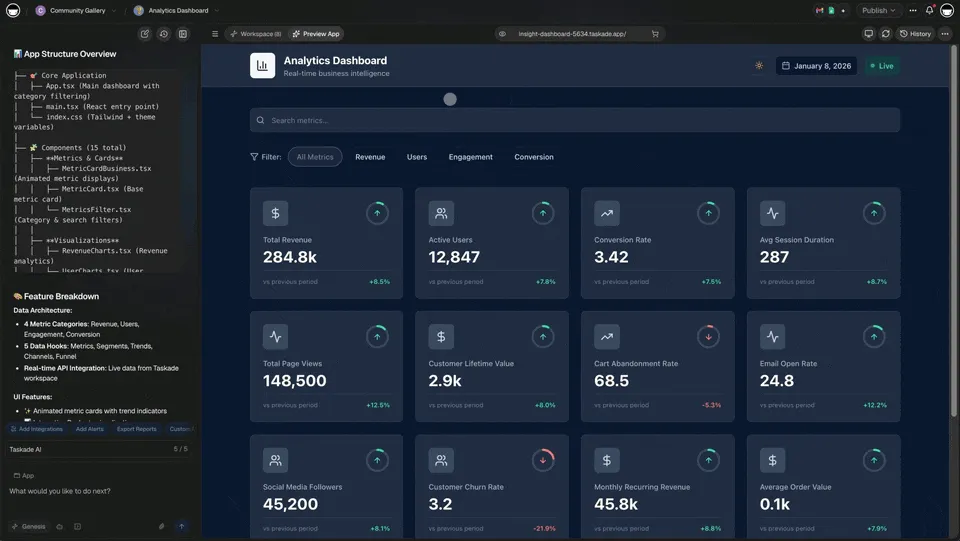
Micro App Platforms Compared
Not every platform approaches micro apps the same way. Here is how the landscape breaks down:
| Platform | Type | Deploy | Agents | Automations | Database | Collab | Price |
|---|---|---|---|---|---|---|---|
| Taskade Genesis | AI workspace | Instant | Yes (built-in tools) | Yes (100+) | Built-in | Multiplayer | Free / $10 |
| Claude Code | Terminal agent | BYO | No | No | BYO | No | $20/mo |
| Replit | Cloud IDE | Built-in | Basic | No | Built-in | Basic | $20/mo |
| Bolt.new | Frontend gen | Manual | No | No | Limited | Teams | $25/mo |
| Lovable | Full-stack gen | Manual | No | No | Supabase | Multi | $25/mo |
| Cursor | Code editor | BYO | Yes | No | BYO | No | $20/mo |
| Glide | No-code builder | Built-in | No | Basic | Sheets | Basic | $25/mo |
| V0 | Component gen | Copy-paste | No | No | No | No | $20/mo |
For micro apps specifically, the key differentiators are:
- Instant deployment: The app must be live without DevOps. Taskade Genesis and Replit deliver this. Others require manual deployment.
- Built-in intelligence: Micro apps that learn are more valuable than static tools. Only Taskade includes AI agents as a first-class feature.
- Automation layer: A micro app that runs workflows without manual intervention is exponentially more useful. Taskade Automations lead the field.
- Collaboration: Teams need to use micro apps together. Taskade's real-time multiplayer is the strongest in the group.
For detailed comparisons, see our pages on Taskade vs Lovable and Taskade vs Replit.
Why Platform-Based Wins for Non-Developers
The comparison table reveals a pattern: code generators (Lovable, Bolt, Cursor, V0) produce artifacts that need infrastructure. Platform builders (Taskade Genesis, Replit, Glide) produce apps that are immediately usable. For non-developers — who make up 63% of the micro app builder population — this distinction is decisive.
A code generator that produces a React application is useless to a marketing manager who does not know what React is. A platform that produces a live, shareable app from a natural language prompt is immediately useful. The micro app trend belongs to platforms, not code generators, precisely because the builders are not developers.
The second differentiator is longevity. Code-generated micro apps degrade without maintenance — dependencies go out of date, security vulnerabilities accumulate, hosting bills arrive. Platform-generated micro apps on Taskade are maintained by the platform itself. The builder never thinks about infrastructure, because there is no infrastructure to think about.
5 Micro Apps You Can Build in 10 Minutes
Here are five micro apps that demonstrate the trend — each buildable in under 10 minutes on Taskade Genesis:
1. Team Standup Tracker
Prompt: "Build a daily standup tracker for a 6-person engineering team. Each person logs what they did yesterday, what they're doing today, and any blockers. Show a dashboard with blocker count and completion trends."
What Workspace DNA adds:
- AI agent that summarizes standup themes weekly and flags recurring blockers
- Automation that sends standup reminders at 9 AM and compiles results by 10 AM
- Project memory that tracks patterns over months, not just days
2. Client Proposal Generator
Prompt: "Create a client proposal tool for a design agency. Input fields for client name, project scope, timeline, and budget range. Output a formatted proposal with sections for approach, deliverables, timeline, and pricing."
What Workspace DNA adds:
- Agent that learns from successful proposals and suggests improvements
- Automation that sends proposals for review and tracks client responses
- Memory of all past proposals for pattern analysis
3. Content Calendar
Prompt: "Build a content calendar for a marketing team managing blog, social media, and email campaigns. Include content type, platform, publish date, assigned writer, status, and performance metrics."
What Workspace DNA adds:
- Agent that suggests content topics based on trending keywords and past performance
- Automation that publishes reminders, moves overdue items to a "delayed" status, and generates weekly performance reports
- Calendar view for visual scheduling across channels
4. Event Check-In System
Prompt: "Create an event check-in system for a 200-person conference. Attendees scan a QR code or enter their email to check in. Dashboard shows real-time attendance, no-shows, and session popularity."
What Workspace DNA adds:
- Agent that sends personalized session recommendations to checked-in attendees
- Automation that notifies speakers when their session hits capacity and triggers overflow procedures
- This is a perfect "fleeting" micro app — built for a 2-day conference, then archived
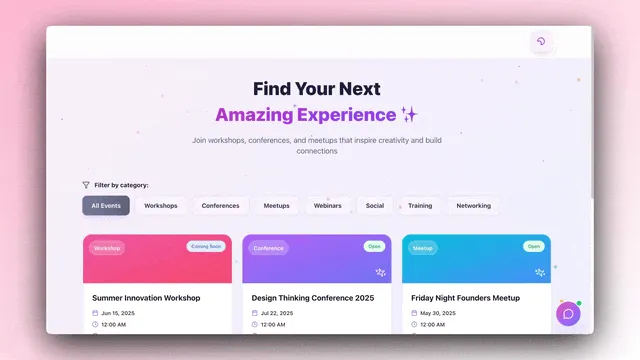
5. Personal Finance Tracker
Prompt: "Build a personal finance tracker. Categories for income, fixed expenses, variable expenses, and savings. Monthly summary with charts showing spending trends and savings rate."
What Workspace DNA adds:
- Agent that categorizes transactions and flags unusual spending patterns
- Automation that generates monthly summaries and year-over-year comparisons
- Memory that builds a financial profile over time for smarter insights
The Evolution: From Fleeting to Living
The original micro apps story focused on the "fleeting" dimension — apps built for a moment and then discarded. But the trend is already evolving beyond ephemerality.
Phase 1: Fleeting Apps (2025)
Build a holiday game, use it for two weeks, shut it down. The value is in the building, not the keeping. This proved that non-developers could build functional software.
Phase 2: Personal Tools (Early 2026)
Build a dining recommendation app, a podcast translator, a fitness tracker. These apps persist because they serve ongoing personal needs. But they are still for an audience of one.
Phase 3: Team Tools (Mid 2026)
Build a project tracker for your team, a CRM for your sales pipeline, an onboarding flow for new hires. Micro apps start replacing low-end SaaS subscriptions. Teams save $3,000-10,000/year by building instead of buying.
This is the phase that triggered the SaaSpocalypse. When individual non-developers build personal tools, SaaS companies barely notice. When teams cancel subscriptions because a micro app does the job, the revenue impact shows up in quarterly earnings.
Phase 4: Living Software (Where We Are Now)
Build a micro app, give it AI agents that learn from usage, wire up automations that keep it running without manual intervention, and let it grow alongside your team. This is not fleeting. This is living software — apps that evolve with their users.
The Phase 4 micro app is qualitatively different from Phases 1-3. A Phase 1 app is a toy. A Phase 2 app is a tool. A Phase 3 app is a replacement. A Phase 4 app is a system — one that gets smarter over time, runs workflows automatically, and adapts to how the team actually works. This is the Workspace DNA advantage: Memory (your data), Intelligence (agents that learn), and Execution (automations that act).
Taskade Genesis is the platform built for Phase 4. Every app lives inside a workspace with Memory (projects as databases), Intelligence (AI agents with persistent learning), and Execution (automations with durable workflows). The app is not a disposable artifact. It is an intelligent system that gets better over time.
The $264 Billion Opportunity
The micro app trend sits at the intersection of three massive markets:
- App development: $305B in 2026, growing to $618B by 2031
- Low-code/no-code: $44.5B in 2026, growing to $264B by 2032 (Fortune Business Insights)
- Vibe coding: $4.7B in 2026, projected $12.3B in 2027
The specific slice where micro apps compete — building internal tools, personal utilities, and team workflows — represents at least $50B of annual spending currently going to:
- SaaS subscriptions for tools teams use at 20% capacity
- Custom development projects for tools that could be prompted in 10 minutes
- Spreadsheet workarounds that have grown into unmaintainable monsters
Every dollar in that $50B slice is a dollar that could flow to a micro app platform instead. And at Taskade's pricing — free to $25/month — the economics are overwhelmingly favorable for the builder.
What Senior Engineers Say About the Shift
The micro app trend is not just a consumer phenomenon. Senior engineering leaders from major technology companies gathered in February 2026 for a retreat on the future of software development. Their findings validate the micro app thesis from a technical perspective:
"Where Does the Rigor Go?"
When AI handles code production, engineering discipline does not disappear — it migrates upstream to specifications, test suites, and constraints. For micro apps, this means the rigor is in describing what you want clearly (the prompt), not in writing code. The prompt is the new specification.
Test-Driven Development as Prompt Engineering
The retreat found that TDD produces dramatically better results from AI coding agents. For micro app builders, this translates to: describe what the app should do (the tests) before asking the AI to build it. Platforms like Taskade Genesis that let you iterate on the prompt are effectively implementing this pattern.
The "Middle Loop"
Engineers identified a new category of work between writing code and delivery: supervisory engineering — directing, evaluating, and fixing AI agent output. For micro app builders, this is the new skill: not coding, but evaluating whether the AI built what you asked for and iterating if it did not. This is the core skill of agentic engineering.
Agent Topologies
Unlike human developers, AI agents can be duplicated instantly across projects. A specialized database agent can exist in every micro app simultaneously. This changes the economics of software — expertise that used to require a specialist hire now comes packaged in every Taskade workspace.
The Implications for Hiring
The retreat reached a provocative conclusion: the demand for mid-level application developers will decline, while demand for specification writers, prompt engineers, and supervisory engineers will increase. Micro apps accelerate this shift because they remove the need for developers entirely for a large class of applications. The person who previously filed a Jira ticket saying "I need a dashboard that shows X" can now build that dashboard directly on Taskade Genesis.
Micro Apps Across Industries
The micro app trend is not confined to tech-savvy startups. It is spreading across industries wherever people encounter the gap between what generic SaaS provides and what they actually need.
Education
Teachers build micro apps for classroom management — attendance trackers, assignment submission portals, parent communication hubs. A high school teacher who needs a lab equipment sign-out system does not need (and cannot afford) a full inventory management SaaS. A micro app on Taskade Genesis solves it in 5 minutes.
Healthcare (Non-Clinical)
While clinical systems require regulatory compliance that micro apps cannot provide, the administrative side of healthcare is ripe for micro apps. Clinic scheduling coordinators, patient feedback trackers, supply ordering workflows, staff shift management — all are micro app candidates. A small practice that cannot justify enterprise software can build exactly what it needs.
Real Estate
Agents build micro apps for open house sign-in systems, property comparison tools for clients, transaction checklists, and closing document trackers. The real estate industry runs on relationships and processes — both of which micro apps with AI agents and automations handle well.
Creative Agencies
Design agencies, video production houses, and marketing consultancies build micro apps for client onboarding, project briefs, creative review workflows, and freelancer management. Every agency works differently — generic project management tools force agencies to adapt their workflow to the tool. Micro apps let the tool adapt to the workflow.
E-Commerce
Small e-commerce operators build micro apps for inventory alerts, order fulfillment checklists, customer feedback dashboards, and promotional campaign trackers. Taskade's 100+ integrations including Shopify and Stripe mean micro apps can connect directly to the commerce stack.
Nonprofits
Nonprofits operate on tight budgets and cannot afford enterprise SaaS. Micro apps let volunteer coordinators build scheduling systems, donation trackers build reporting dashboards, and program managers build outcome measurement tools — all on Taskade's free tier.
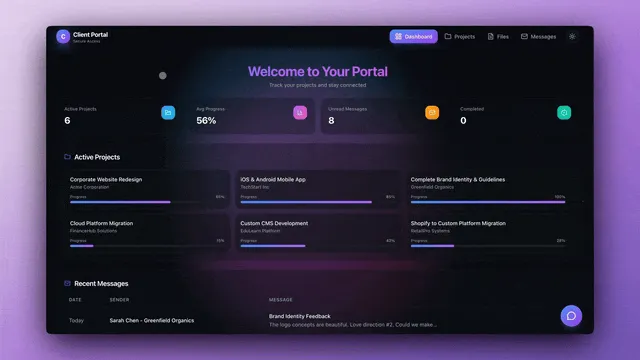
The cross-industry pattern is consistent: wherever people encounter friction between generic tools and specific needs, micro apps fill the gap. The only industries where micro apps struggle are those with heavy regulatory requirements (healthcare clinical systems, financial audit, legal compliance) — and even there, the non-regulated workflows (scheduling, communication, simple tracking) are micro app territory.
How to Think About Micro App Building
Building micro apps is a skill — but it is a different skill from programming. The best micro app builders share a set of practices that produce better results regardless of the platform they use.
Start With the Problem, Not the Solution
The most common mistake new micro app builders make is describing the solution they want instead of the problem they have. "Build me a Kanban board" produces a generic tool. "I manage a 4-person podcast production team. We have episodes in research, scripting, recording, editing, and publishing stages. I need to see where every episode is and who is blocking what" produces a micro app that actually works.
Describe the Audience
Micro apps work best when the builder specifies who will use them. "Build a client portal" is vague. "Build a client portal for my freelance design agency. Clients should see project status, deliverables, invoices, and be able to leave feedback. I have 8 active clients" gives the AI enough context to make smart decisions.
Think in Workflows, Not Features
The most powerful micro apps are not tools you check — they are workflows that run. Instead of "build a meeting notes app," think "when a meeting ends, summarize the notes, extract action items, assign them to team members, and send a follow-up email." Taskade Automations turn this workflow thinking into reality.
Iterate in Public
Build the micro app, share it with the intended users immediately, and iterate based on real feedback. The traditional software cycle of requirements → design → build → test → deploy takes months. The micro app cycle of describe → generate → use → refine takes minutes. Use that speed to iterate in public instead of perfecting in private.
Know When to Graduate
Some micro apps outgrow their micro status. A client portal that started as a simple status tracker might need invoicing, contracts, and payment processing. At that point, the micro app either graduates to a full Taskade workspace with multiple interconnected projects and agents, or it reveals the need for a specialized SaaS tool. Knowing when to graduate is the mark of a mature micro app builder.
Signs a micro app needs to graduate:
- More than 50 regular users (collaboration needs increase)
- Regulatory compliance requirements emerge (HIPAA, SOX, GDPR data processing)
- The workflow involves financial transactions beyond simple tracking
- The app needs to integrate with more than 5 external systems simultaneously
- Multiple people are modifying the app structure (not just using it)
On Taskade Genesis, graduation does not mean starting over. It means expanding the workspace — adding more projects, more agents, more automation workflows. The micro app becomes one node in a larger system, connected by the same Workspace DNA that powered it from day one.
When NOT to Build a Micro App
Not every problem should be solved with a micro app. Micro apps are the wrong choice when:
- Regulatory compliance is mandatory: HIPAA, SOX, PCI-DSS, and similar regulations require certified software with audit trails. Build on certified platforms instead.
- The use case requires complex financial calculations: Multi-currency, tax withholding, payroll — these need battle-tested accounting software.
- Hundreds of concurrent users are expected: Micro apps are designed for audiences of 1-50. For hundreds of simultaneous users, you need purpose-built infrastructure.
- The data is highly sensitive: While Taskade's security is enterprise-grade, some data (medical records, classified information) requires specialized compliance frameworks.
For everything else — project tracking, dashboards, client portals, content workflows, team coordination, personal utilities — micro apps are the faster, cheaper, and more customized choice.
The Future of Micro Apps
The trajectory is clear:
2026: Non-developers discover they can build micro apps. The vibe coding market hits $4.7B. 150,000+ apps built on Taskade Genesis.
2027: Micro apps become the default way teams solve workflow problems. SaaS vendors face pricing pressure as customers realize they can build 80% of what they need for 1/10th the cost. Market grows to $12.3B.
2028-2030: Micro apps with AI agents and automations become indistinguishable from traditional software in capability but remain accessible to non-developers. The line between "app builder" and "app user" disappears entirely.
2030+: Building software is as common as making a spreadsheet. Every knowledge worker creates micro apps as part of their daily workflow. The $264B low-code/no-code market is dominated by AI-powered platforms that make building as easy as describing.
The most important shift is cultural, not technological. In 2020, if someone said "I need a tool that does X," the default response was "let me find one." In 2026, the default response is increasingly "let me build one." By 2030, building will be the first instinct, not the last resort. The micro app is not just a product category — it is a new relationship between people and software.
Sherwin Wu, head of engineering for OpenAI's API and developer platform, described this exact dynamic: instead of one person building everything in-house, a one-person startup outsources to dozens of micro-companies each building bespoke software for a narrow use case. "There might be 10 or 20 startups that build support software for podcasts and newsletters," Wu explained. "That might be a one-person startup — they might be able to just code up this product very easily." The micro app is the unit of this new economy: small, tailored, disposable when needs change, and trivially cheap to create on platforms like Taskade Genesis.
The micro app trend represents the largest expansion of the builder class since the personal computer. In 1985, 500,000 people could write software. In 2025, 50 million could. By 2030, the number will approach 500 million — enabled by platforms like Taskade Genesis that make building as natural as describing.
Taskade Genesis is built for this future. Not just a micro app builder, but a living software platform where every app comes with intelligence, automation, and the workspace to sustain it.
Start building your first micro app →
The Bottom Line
Micro apps are not a technology trend. They are a cultural shift in who gets to build software and why. For sixty years, building software required specialized skills that most people did not have. That era is ending.
The data supports the shift: $4.7 billion vibe coding market, 63% non-developer builders, $285 billion in SaaS valuations at risk, 150,000+ apps built on Taskade Genesis alone. The evidence is not anecdotal — it is structural.
The question is not whether you will build micro apps. The question is whether you will build them on a platform that gives you living software (Workspace DNA: Memory + Intelligence + Execution) or on a code generator that gives you files to maintain.
Taskade Genesis answers that question. One prompt. One minute. One live app with AI agents, automations, and the workspace to sustain it. Start building →
Related Reading
- The Micro App Economy: 150K Apps In (2026 State Report) — state-of-category report with 5 archetypes, platform comparison, and the storage-ceiling problem
- AI App Builders vs AI Workspace Builders — why micro apps live in the workspace builder category
- The Complete History of Taskade — From task manager to AI workspace
- What Is Agentic Engineering? The Complete History — The discipline powering micro apps
- SaaS Has Quietly Evolved Into Living Software — Why the SaaS model is being disrupted
- What Are AI Agents? — The intelligence layer that makes micro apps smart
- Vibe Coding vs No-Code vs Low-Code — How micro app building compares
- Taskade vs Lovable — Platform micro apps vs code-generated micro apps
- Taskade vs Replit — Workspace approach vs IDE approach
- 5 Genesis Apps You Can Build in 10 Minutes — Hands-on examples
- Ultimate Guide to Taskade Genesis 2026 — Comprehensive platform guide
- Vibe Apps Directory — Browse 120+ real apps built on Taskade Genesis
FAQ
What exactly are micro apps?
Micro apps are context-specific, personal applications built for niche needs — a dining app for a friend group, a project tracker for a 5-person team, a holiday game for a family gathering. They are built by the people who use them, often in minutes using AI tools, and may be temporary or permanent depending on the need. The term gained mainstream attention in January 2026 when TechCrunch published "The rise of 'micro' apps."
How are micro apps different from no-code apps?
No-code apps use visual drag-and-drop interfaces with predefined components. Micro apps are built from natural language prompts that generate custom functionality. No-code gives you templates to customize; micro app building on Taskade Genesis gives you exactly what you describe with AI agents and automations included.
Do I need to know how to code to build micro apps?
No. 63% of vibe coding users are non-developers. Taskade Genesis lets you describe what you need in plain language and generates a live, deployed app with workspace backend, AI agents, and automation capabilities. No coding, no deployment, no DevOps.
Are micro apps secure?
On Taskade Genesis, micro apps inherit enterprise-grade security from the workspace infrastructure — encryption, role-based access (Owner to Viewer), password protection for published apps, and custom domain configuration. Micro apps built as code files on other platforms require separate security setup and carry 2.74x higher vulnerability rates according to CodeRabbit data.
What are the risks of micro apps?
The primary risks depend on how micro apps are built. Code-generated micro apps face security vulnerabilities (Lovable audit: 170 of 1,645 apps vulnerable), quality issues (CodeRabbit: 1.7x more major bugs in AI code), and maintenance burden. Platform-generated micro apps on Taskade Genesis avoid these risks because security, hosting, and infrastructure are handled by the workspace. The risk shifts from "will my code break" to "did I describe what I need clearly."
What is the vibe coding hangover?
The vibe coding hangover is the growing realization that AI-generated code often introduces more problems than it solves without proper guardrails. Fast Company reported on it in September 2025. METR found developers were 19% slower with AI tools. CodeRabbit found 2.74x more security vulnerabilities in AI code. Platform-based micro apps on Taskade Genesis avoid the hangover entirely by abstracting away the code layer.
How big is the micro app market in 2026?
The vibe coding market powering micro apps reached $4.7 billion in 2026, growing at 38% CAGR to a projected $12.3 billion in 2027 and $325 billion by 2040. The broader low-code/no-code market is $44.5 billion. Gartner projects 75% of new applications will be built with low-code or no-code tools by 2026. The addressable market for micro apps specifically is estimated at $50B+ in displaced SaaS spending.
Are micro apps just vibe coding by another name?
No. Vibe coding is the method — building software by describing what you want. Micro apps are a specific category of output — personal, contextual, purpose-built applications. You can vibe-code a traditional startup app, an open-source library, or a micro app. The micro app distinction is about who builds it (the user), who uses it (the builder and maybe their team), and how long it lives (sometimes temporarily).
How much do micro apps cost to build?
On Taskade, micro apps are included in your workspace plan — free to get started, $10/month for Pro (10 users), $25/month for Business. Compare this to hiring a developer ($100-200/hour) or paying for SaaS ($20-50/user/month) that does 80% more than you need.
Can micro apps replace enterprise software?
For simple workflows — project tracking, CRM, dashboards, internal portals — yes. For complex, regulated systems — payroll, multi-currency accounting, healthcare records — no. The sweet spot is replacing the 5-10 SaaS tools your team uses at less than 20% capacity with purpose-built micro apps that do exactly what you need.
What is the connection between micro apps and the SaaSpocalypse?
The SaaSpocalypse — the $285 billion wiped from SaaS valuations in February 2026 — is Wall Street pricing in the micro app future. When teams can build custom tools on Taskade Genesis free, then $10/month, instead of paying $30-50/seat for enterprise SaaS, the math eventually wins. Micro apps are the mechanism; the SaaSpocalypse is the market reaction.
What is the connection between micro apps and the Garry Tan debate?
Y Combinator CEO Garry Tan predicted that over-bundled SaaS like Zoho would be "competed away" by non-technical teams building custom tools on platforms like Taskade. Micro apps are the manifestation of that prediction — teams building exactly what they need instead of paying for 55-app suites. See: SaaS Has Quietly Evolved Into Living Software
What industries use micro apps the most?
Micro apps are spreading across all industries, but adoption is highest in marketing agencies, education, real estate, creative agencies, and small e-commerce operations — industries where teams have specific workflow needs but cannot justify enterprise SaaS budgets. Nonprofits are also significant adopters because Taskade's free tier makes micro app building accessible on tight budgets.
How do micro apps compare to spreadsheets?
Spreadsheets are the original micro app — personal tools built by the user for the user. Micro apps on Taskade Genesis are the evolution: they add AI intelligence (agents that analyze and suggest), automation (workflows that run without manual intervention), collaboration (real-time multiplayer), and a proper interface (instead of rows and columns). If your spreadsheet has grown into an unmaintainable monster with 47 tabs, it is time to rebuild it as a micro app.
Can I publish a micro app publicly?
Yes. Taskade Genesis apps can be published with custom domains, password protection, and shared to the Taskade Community Gallery. You can also embed them on external websites. This makes micro apps useful beyond personal or team use — client portals, event check-in systems, and public-facing tools are all viable.
What happens to a micro app when I do not need it anymore?
On Taskade, you can archive or delete micro apps at any time. Your data remains in the workspace until you choose to remove it. For "fleeting" micro apps built for events or temporary projects, archiving preserves the data for future reference while removing the app from active use.