





Updated June 2026. Most AI support tools sell you a smarter ticket queue and bill per resolution. Taskade Genesis builds the whole support app instead, an AI agent on your docs, a ticket hub, and routing automations, all in one workspace you own and reshape. Intercom Fin leads on conversational chat, Zendesk on enterprise routing, Freshdesk on value, Help Scout on email, and Gorgias on ecommerce. But only Taskade Genesis hands you a support system you keep. Try Taskade Genesis free →
Try It Live: An AI Support Agent You Can Actually Run
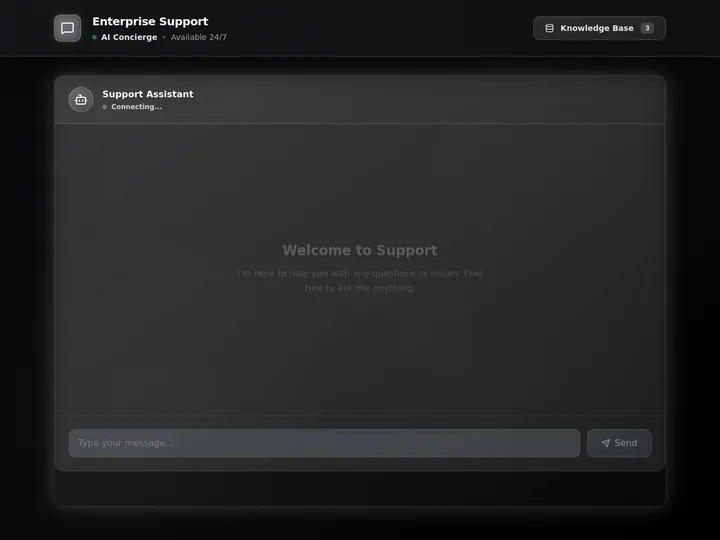
Every other tool on this list logs you into their helpdesk and charges you per seat or per resolution. This one hands you the app. The support agent below was built from a single prompt in Taskade Genesis: an AI agent trained on a knowledge base that answers tickets, a board that tracks every conversation from new to resolved, and automations that route the hard ones to a human. Click it, clone it, and run a support desk you actually own.
Watch a live support-agent app built from one prompt:
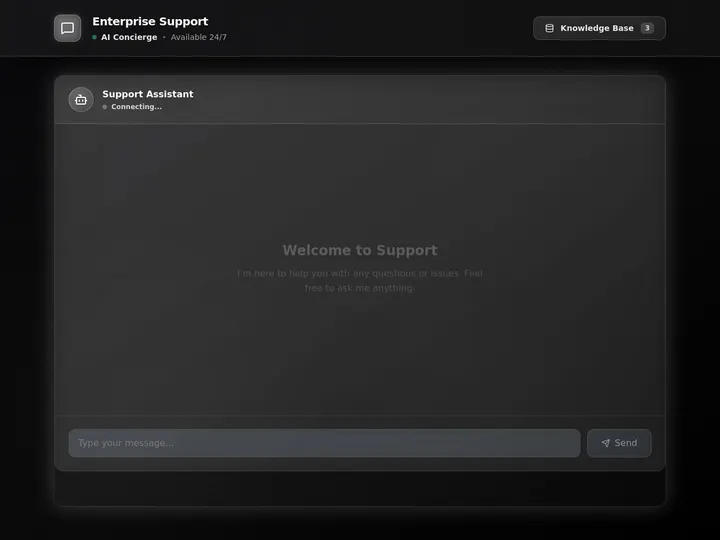
This is the difference the rest of the article is about. A helpdesk you log into is a tool you rent. A support app you generate, own, and reshape is leverage. Clone this app and answer your next ticket with AI →
The Evolution of Customer Support Software: From Shared Inbox to Living App
Customer support software has moved through four eras, and 2026 is the start of the fifth. It began as a shared email inbox where tickets went to die. It became a structured helpdesk with queues, tags, and SLAs. It became an omnichannel suite that pulled chat, email, and social into one screen. It became an AI layer bolted on top, deflecting common questions and drafting agent replies. And now, with Taskade Genesis, it becomes a living app, the support agent and the ticket hub and the routing automations, generated from one prompt and owned outright. Each era kept the last one's job and added a new one. The pattern held: the helpdesk got smarter, but it stayed a place you logged into and paid per seat.
Here is the whole arc, era by era:
Read the same arc as a milestone table, what changed, and what each era still left on the table:
| Era | What you ran | What it added | What it still couldn't do |
|---|---|---|---|
| 1990s–2000s — Shared inbox | A support@ mailbox |
A place for tickets to land | No queues, no ownership, no tracking |
| 2007–14 — Helpdesk | Zendesk, Freshdesk queues | SLAs, tags, agent assignment | Channel-by-channel, all manual |
| 2015–21 — Omnichannel | Intercom, Front, Gorgias | One screen for every channel | Still humans doing every reply |
| 2022–25 — AI layer | Fin, Freddy, Lyro | Deflection + drafted replies | A rented bot inside a vendor silo |
| 2025–26 — Living app | A Taskade Genesis support app (clone it) | An owned agent + ticket hub + routing | — (this is the frontier) |
The plain-English takeaway: every era made support faster or smarter, but it stayed something you logged into and paid per seat. Only the 2026 era hands you the support system as an app you own. That is the whole reason Taskade Genesis tops this list. For the conceptual deep-dive on how prompt-to-app generation works, see our Genesis Loop explainer and the build a knowledge chatbot walkthrough.
What Is the Best AI Customer Support Software in 2026?
Taskade Genesis is the best AI customer support software in 2026 because it closes the loop between answering a ticket and owning the system that answers it. Describe your support flow in one prompt, and Taskade Genesis builds an AI agent trained on your docs that answers tickets, a ticket board across multiple project views, and routing automations that escalate the hard ones. Every other tool on this list logs you into a helpdesk and bills per seat or per resolution; Taskade Genesis hands you a support app you keep, reshape, and clone.
The plain-English version: the support desk that used to take a helpdesk subscription, a chatbot add-on, and an ops person wiring the two together gets generated in an afternoon. Taskade's first self-serve Enterprise customer — an IT program manager with no engineering team — built a production field-service dashboard on Taskade Genesis and put it this way: "What I accomplished in a few weeks would have taken a team of 40+ people 18 months in a Fortune 500." He didn't subscribe to a tool. He generated the app that runs the work.
Rent a Helpdesk vs. Own the Support App: Why Per-Resolution Pricing Isn't Enough
An AI helpdesk gives you a smarter queue inside their product. An app generator gives you the support system itself, agent, tickets, and routing, in a workspace you own. That is the whole gap. Nine of the ten tools below charge you per seat, per resolution, or both, and the bot lives in their silo. The moment you stop paying, the system stops. Taskade Genesis takes the same prompt and returns a working support app, agent, ticket board, and automations. That your team opens, edits, and reshapes the same afternoon, with a flat per-workspace price.
Here is the path a support request actually travels when the tool doesn't stop at a rented queue:
Most tools on this list live in the first two boxes, a smart agent inside their queue. Taskade Genesis is the only one that carries the support request all the way to the last box: a system you own, not a seat you rent.
Side by side, the difference looks like this:
  A RENTED HELPDESK                        AN OWNED SUPPORT APP (Taskade Genesis)
  ────────────────────                     ──────────────────────────────
  [ you ] log into their product          [ you ] describe your support flow
      │                                       │
      ▼                                       ▼
  configure their bot on their docs        generate an agent on YOUR docs
      │                                       │
      ▼                                       ├─ ticket board across multiple views
  pay per seat + per resolution           ├─ routing + escalation automations
      │                                       ├─ flat per-workspace price
      ▼                                       ▼
  stop paying → system stops              clone it → reshape it → keep it
  (locked in their silo)                  (your whole support desk, owned)
The left column is where nine of these tools end. The right column is where you actually own the thing answering your customers.
Why Owning the System Is the Whole Game
The support desk you own is the support desk you can reshape. The 2026 AI support market has a structural problem hiding in plain sight: the bot is smart, but you rent it. Intercom Fin resolves more than half of incoming requests, yet it bills 0.99 dollars per resolution on top of a seat. Zendesk layers 1.50 to 2.00 dollars per resolution on top of a 50-dollar AI add-on on top of a 55-to-169-dollar suite seat. The smarter the bot gets, the more the meter runs, and you never own a line of it. The day you switch tools, your knowledge, your routing, and your history stay behind.
That is the difference between a generator that hands you a queue and one that hands you a system. Every tool on this list can deflect a common question in 2026; AI made that table stakes. The unsolved problem is ownership, the support app you can clone, reshape, and run without a meter. Taskade Genesis is built around that second half: the agent on your docs, the ticket hub, the routing, and a flat price. The deflection is table stakes. The owned app is the product.
How We Ranked
We ranked 10 AI customer support tools on six criteria that matter to the person who has to run support, not just buy it:
- AI resolution quality, how well the agent answers and deflects on your own docs.
- Channels covered, chat, email, tickets, social, and voice in one place.
- What you own, a rented seat in a silo, or a support app you keep and reshape.
- Routing & escalation, how tickets get classified, assigned, and escalated.
- Setup & flexibility, how fast you go live and how freely you can reshape it.
- Pricing, free-tier generosity and the real cost once per-resolution fees stack up.
Scored against those six, here is how the field stacks up at a glance, the column that separates the leader from the pack is "What you own":
| Tool | AI resolution | Channels | What you own | Routing | Price value |
|---|---|---|---|---|---|
| Taskade Genesis | Agent on your docs | Chat + email + tickets | An owned app | Automations | Excellent (free) |
| Intercom Fin | Excellent | Chat-first omnichannel | Rented seat | Strong | Low (per-resolution) |
| Zendesk AI | Strong | Full omnichannel | Rented seat | Excellent | Low (add-on + meter) |
| Freshdesk | Good | Email + chat + voice | Rented seat | Good | Good |
| Help Scout | Good | Email-first + chat | Rented seat | Basic | Good (free tier) |
| Gorgias | Good (ecommerce) | Chat + email + social | Rented seat | Good | Fair (per-resolution) |
| Tidio | Good (SMB) | Chat + email | Rented seat | Basic | Fair |
| Crisp | Good | Chat-first | Rented seat | Basic | Good (per-workspace) |
| Front | Partial (add-on) | Email + chat inbox | Rented seat | Good | Fair (AI extra) |
| HubSpot Service Hub | Good | Tickets + chat + CRM | Rented seat | Strong | Low (per-seat) |
The grid tells the story before you read a word of the reviews: most tools earn "Good" or better on AI resolution, then every single one drops to "Rented seat" on ownership, except the one that hands you an app you keep.
The 10 Best AI Customer Support Software
1. Taskade Genesis: Best Overall: Build a Support App You Own
Taskade Genesis is the only tool on this list that builds a support app you own, instead of renting you a seat in someone else's helpdesk. Describe your support flow in one prompt, "an AI agent trained on my docs that answers tickets, a ticket board, and routing to a human for anything it can't solve", and Taskade Genesis generates the whole thing: an AI agent on your own knowledge base, a ticket board across multiple project views, and reliable automation workflows that tag, assign, and escalate. The agent answers and deflects; the board tracks every conversation from new to resolved; the automations route the hard ones to the right teammate.
That is the structural gap in the whole category. Every competitor logs you into their product, trains a bot on your docs inside their silo, and bills you per seat or per resolution. So the smarter the bot, the more the meter runs, and you never own it. Taskade Genesis hands you the support system as a workspace app you keep, reshape, and clone. The support desk that used to take a helpdesk subscription plus a chatbot add-on plus an ops person to wire them together gets generated in an afternoon.
The agent is the heart of it. Train it on your help docs, product pages, and past tickets, give it the built-in agent tools (web search, file analysis, custom slash commands, persistent memory), and it answers in your voice with your facts. EVE, the meta-agent, orchestrates a whole support team, one agent triages, one drafts the reply, one checks the knowledge base, from a single instruction. Build the agent step by step with the custom agents guide and the knowledge chatbot walkthrough.
Taskade Genesis runs on frontier models from top AI labs, auto-routed so the reply reads like a person, not a template. The workspace ships multiple project views (List, Board, Calendar, Table, Mind Map, Gantt, Org Chart) to see your queue any way you think, a role model (Owner to Viewer) so each teammate sees only the right tickets, and 100+ bidirectional integrations to pull messages in from Slack, email, and your CRM and push replies and status out. Brand the support portal with your logo and a custom domain on Business and above.
Best for: Any team, startup, agency, ecommerce, or growing SaaS. That wants a support desk it owns and reshapes, not a per-seat tool with a per-resolution meter.
Strengths: Only tool that hands you an owned support app; AI agent trained on your own docs; ticket board across multiple views; routing and escalation automations; flat per-workspace pricing; generous free tier.
Weaknesses: It is a workspace platform, not a purpose-built call-center suite, so deep telephony and CSAT survey tooling are things you build rather than toggle on; the support-template gallery is younger than Zendesk's marketplace.
Pricing: Free (Free Forever plan), Pro $10/mo (the Popular tier), Business $25/mo, Max $100/mo, Enterprise $250/mo, all annual billing.
The catch: An honest one, if you need enterprise voice/IVR telephony out of the box, a dedicated contact-center suite ships that natively. Everything around tickets, chat, deflection, and routing is built in and yours to reshape.
Verdict: The clear winner for anyone who wants a support system they own, not a helpdesk they rent.
2. Intercom Fin: Best Conversational AI Chat
Intercom is the conversational-support benchmark, and its Fin AI agent is the most-cited AI resolver in 2026. Fin reads your help content and past conversations and resolves more than half of incoming requests automatically, with a genuinely strong chat experience and a polished agent inbox. For a product team whose support lives in live chat, Fin's resolution quality is a real advantage.
Best for: Product and SaaS teams whose support is chat-first and who want top-tier AI resolution.
Strengths: Best-in-class conversational AI; high autonomous resolution rate; polished inbox; mature omnichannel.
Weaknesses: Fin charges $0.99 per resolution on top of a seat, so costs climb fast at volume; you rent the bot, never own it; pricing gets complex.
Pricing: Seats from around $29/seat/mo; Fin AI at $0.99 per resolution (50-resolution minimum).
The catch: The per-resolution meter means your best month, more questions answered, is also your most expensive, and the system lives entirely in Intercom's silo.
Verdict: Best if support is chat-first and you'll pay a premium for the strongest AI resolution.
3. Zendesk AI: Best Enterprise Omnichannel Suite
Zendesk is the enterprise help-desk standard, and its AI layer, strengthened by the 2026 Forethought acquisition, adds intelligent triage, automated classification, and AI-drafted agent replies. For a large support org that needs SLAs, deep reporting, a vast app marketplace, and omnichannel coverage at scale, Zendesk is the heavyweight, and its routing engine is genuinely excellent.
Best for: Mid-market and enterprise support teams that need full omnichannel, SLAs, and deep reporting.
Strengths: Mature omnichannel suite; excellent routing and triage; huge marketplace; enterprise reporting and security.
Weaknesses: AI stacks a $50/agent/mo add-on plus $1.50–$2.00 per resolution on top of a suite seat; expensive and complex; overkill for a small team.
Pricing: Suite from ~$55/agent/mo (to $169+); Advanced AI ~$50/agent/mo add-on; ~$1.50–$2.00 per automated resolution.
The catch: A 20-agent team resolving 3,000 tickets a month can realistically spend $6,000–$8,000/mo all-in, and still owns none of it.
Verdict: Best for enterprise teams that need the full suite and will pay for the routing and reporting depth.
4. Freshdesk: Best Value Full Help Desk
Freshdesk, from Freshworks, is the value benchmark for a complete help desk. Its Freddy AI handles ticket categorization, suggests agent responses, and surfaces knowledge-base answers, learning from past interactions over time. For a team that wants a real omnichannel help desk, email, chat, and voice, at the lowest per-agent price, Freshdesk is the strongest value play in the category.
Best for: Small and mid-size teams that want a full-featured help desk at the lowest per-agent cost.
Strengths: Cheapest full help desk; Freddy AI for triage and reply suggestions; email, chat, and voice; clean setup.
Weaknesses: AI depth trails Intercom and Zendesk; advanced features sit in higher tiers; you rent the platform, not own it.
Pricing: From around $19/agent/mo (Growth) up to ~$119/agent/mo (Omni Enterprise), annual billing; a free starter tier exists.
The catch: Genuinely good value for a rented help desk. But it's still a per-agent platform, and the support system stays inside Freshworks.
Verdict: Best if you want a complete, affordable help desk and don't need the deepest AI resolution.
5. Help Scout: Best Email-First Support With a Human Feel
Help Scout is the email-first benchmark, built for teams that want shared-inbox support that still feels human. Its AI Answers resolves common questions on your docs, AI Drafts speeds up agent replies, and the whole product is refreshingly simple. For a content, services, or SaaS team where email is the primary channel, Help Scout's clean shared inbox and free starter tier are a real draw.
Best for: Email-centric teams that want a simple, human shared inbox with light AI on top.
Strengths: Clean shared inbox; strong email experience; AI Answers and AI Drafts; free tier for up to 50 contacts.
Weaknesses: Lighter on omnichannel and deep routing; AI Answers bills per resolution; less suited to high-volume ticketing.
Pricing: Free for up to 50 contacts/mo; Standard ~$25/user/mo, Plus ~$50, Pro ~$65; AI Answers ~$0.75 per resolution.
The catch: Lovely for email, lighter everywhere else, and the AI resolution fee sits on top of the per-seat price.
Verdict: Best if email is your main channel and you want simplicity over a sprawling suite.
6. Gorgias: Best for Ecommerce Support
Gorgias is the ecommerce-support specialist, built around Shopify, Magento, and BigCommerce stores. Its AI Agent resolves order-status, returns, and product questions by reading your store data and help content, and its ticket-volume pricing (not per-seat) lets you add unlimited agents. For an online store, the native ecommerce context and order-aware automations are genuinely strong.
Best for: Ecommerce and DTC brands that want AI support wired into their store and order data.
Strengths: Deep ecommerce integrations; order-aware AI replies; volume-based pricing with unlimited agents; strong macros.
Weaknesses: Built for retail, less suited to SaaS or services; $0.90–$1.00 per automated resolution that also counts as a ticket; you rent the platform.
Pricing: Plans from ~$10/mo by ticket volume; ~$0.90 per automated resolution (annual), ~$1.00 (monthly).
The catch: An AI-resolved ticket can be billed twice, as a resolution and as a ticket. So the volume model needs watching at scale.
Verdict: Best for online stores that want support fused to their order and product data.
7. Tidio: Best Lightweight Chat + Lyro AI for SMBs
Tidio is the SMB chat-and-bot benchmark, and its Lyro AI agent answers common questions on your content with a fast, friendly setup. For a small business or solo store that wants a live-chat widget plus an AI bot without a heavy help desk, Tidio's simplicity and free chat tier make it an easy on-ramp.
Best for: Small businesses and solo stores that want simple live chat plus an AI bot.
Strengths: Fast setup; friendly live-chat widget; Lyro AI on your content; free chat tier to start.
Weaknesses: Lyro is a paid add-on with conversation limits; thinner on tickets and routing; pricing jumps sharply at higher tiers.
Pricing: Free chat tier; paid plans from ~$29/mo (Starter) and ~$59/mo (Growth); Lyro AI add-on from ~$39/mo.
The catch: Great for light chat, but the AI and the ticketing depth both cost extra, and it stays an SMB-scale tool.
Verdict: Best for small teams that want chat plus a simple AI bot without a full help desk.
8. Crisp: Best All-in-One Messaging on a Flat Price
Crisp is the flat-price messaging benchmark, bundling live chat, a shared inbox, a chatbot, and a help center into a per-workspace plan rather than per-seat. Its AI answers common questions and its co-browsing and campaign tools round out a tidy all-in-one. For a small team that hates per-seat math, Crisp's per-workspace pricing with a fixed agent count is a genuine relief.
Best for: Small teams that want chat, inbox, and a bot on a predictable per-workspace price.
Strengths: Per-workspace pricing; chat, inbox, chatbot, and help center bundled; clean, modern UI; co-browsing.
Weaknesses: AI depth is lighter than the leaders; agent count is capped per plan; routing is basic.
Pricing: Free tier; Mini ~€45/mo, Essentials ~€95/mo, Plus ~€295/mo per workspace; extra seats ~€10/mo.
The catch: The flat price is friendly, but you still log into Crisp's product, the system isn't yours to reshape or clone.
Verdict: Best for small teams that want an all-in-one messaging suite without per-seat pricing.
9. Front: Best Shared Inbox for Collaborative Teams
Front is the collaborative-inbox benchmark, turning email, chat, and social into one shared workspace where teams reply together with internal comments, assignments, and shared drafts. Its AI Copilot drafts replies and its analytics track team performance. For an operations, logistics, or B2B team that handles support and relationships in email, Front's collaboration model is genuinely strong.
Best for: B2B, operations, and services teams that handle support and relationships out of a shared inbox.
Strengths: Excellent shared inbox and collaboration; assignments and internal comments; AI Copilot drafting; strong analytics.
Weaknesses: AI features are paid add-ons, not included by default; less of a pure ticketing engine; per-seat pricing.
Pricing: Starter ~$25/user/mo, Professional ~$65, Enterprise ~$105, annual billing; AI Copilot and Smart features are add-ons.
The catch: The collaboration is best-in-class, but the AI costs extra and the inbox lives in Front's product, not yours.
Verdict: Best for collaborative teams that live in a shared inbox and want AI as an assist, not the core.
10. HubSpot Service Hub: Best If You Already Run on HubSpot CRM
HubSpot Service Hub is the CRM-native support benchmark, tying tickets, live chat, a knowledge base, and AI assistance directly into HubSpot's customer record. Its Breeze AI drafts replies and surfaces knowledge-base answers, and every conversation sits next to the full marketing-and-sales history. For a team already running on HubSpot, the unified customer view is a real advantage.
Best for: Teams already on HubSpot CRM that want support unified with marketing and sales data.
Strengths: Tickets, chat, and knowledge base inside the CRM; Breeze AI assistance; one customer record across teams; strong reporting.
Weaknesses: Per-seat pricing climbs fast with onboarding fees; best value only if you're already in HubSpot; you rent the platform.
Pricing: Professional from ~$90/seat/mo (with a one-time onboarding fee), Enterprise from ~$150/seat/mo; free and starter tiers exist with limits.
The catch: Brilliant if you live in HubSpot, pricey and less compelling if you don't, and the support system stays a rented seat.
Verdict: Best for existing HubSpot customers who want support in the same record as sales and marketing.
Comparison Table: Ownership, AI Resolution, and the Pricing Wedge
Feature matrices hide the one thing that decides the buy: what you walk away with. This table strips it to the columns the rest of the category quietly skips, what you own (a rented seat or an app you keep), how AI resolution is billed, and the real price. This is where Taskade Genesis is the only green row.
| Tool | What you own | AI resolution billing | Channels | Owned cloneable app | Price (annual) |
|---|---|---|---|---|---|
| Taskade Genesis | An app you own + clone | Flat — no per-resolution meter | Chat + email + tickets | Yes — clone it | Free / $10 / $25 |
| Intercom Fin | Rented seat | $0.99 per resolution | Chat-first omnichannel | No | ~$29/seat/mo + meter |
| Zendesk AI | Rented seat | $50/agent add-on + $1.50–$2/res | Full omnichannel | No | ~$55–$169/agent/mo + AI |
| Freshdesk | Rented seat | Bundled in tiers | Email + chat + voice | No | ~$19–$119/agent/mo |
| Help Scout | Rented seat | ~$0.75 per resolution | Email-first + chat | No | Free / $25–$65/user/mo |
| Gorgias | Rented seat | ~$0.90–$1.00 per resolution | Chat + email + social | No | From ~$10/mo by volume |
| Tidio | Rented seat | Lyro add-on, capped | Chat + email | No | Free / $29–$59/mo + Lyro |
| Crisp | Rented seat | Bundled, lighter | Chat-first | No | Free / €45–€295/workspace |
| Front | Rented seat | AI add-on extra | Email + chat inbox | No | ~$25–$105/user/mo + AI |
| HubSpot Service Hub | Rented seat | Bundled (Breeze) | Tickets + chat + CRM | No | ~$90–$150/seat/mo |
Read the rows top to bottom and the wedge is obvious: a rented seat is where the others finish, and where Taskade Genesis is just getting started. On price, Taskade Genesis starts Free, then Pro $10 (the Popular tier), Business $25, Max $100, and Enterprise $250, and every paid tier ships an owned app with a flat per-workspace price, no per-resolution meter. The field sits at $19–$169 per agent per month plus $0.75–$2.00 per resolution for a system you never own. You are not paying for a smarter queue. You are building a support desk you keep.
Full Capability Matrix: Ten Tools, Eight Columns
This is the detailed grid the buyer's-guide pages bury. It scores all ten tools on the eight capabilities that decide a support workflow, AI agent on your docs, ticket board, routing automations, multi-channel, knowledge base, role-based access, an owned reusable app, and a free tier. Taskade Genesis is the only row that is "Yes" or "Native" straight across the ownership columns.
| Tool | AI agent on your docs | Ticket board | Routing automations | Multi-channel | Role-based access | Owned reusable app | Free tier |
|---|---|---|---|---|---|---|---|
| Taskade Genesis | Yes (your KB) | Yes (multiple views) | Yes (workflows) | Chat + email + tickets | Yes (role-based) | Yes — clone it | Yes (Free Forever) |
| Intercom Fin | Yes | Yes | Strong | Yes | Yes | No | Trial only |
| Zendesk AI | Yes | Yes | Excellent | Yes | Yes | No | Trial only |
| Freshdesk | Yes (Freddy) | Yes | Good | Yes | Yes | No | Yes (limited) |
| Help Scout | Yes (Answers) | Partial | Basic | Email + chat | Yes | No | Yes (50 contacts) |
| Gorgias | Yes (store data) | Yes | Good | Yes | Yes | No | Trial only |
| Tidio | Yes (Lyro) | Partial | Basic | Chat + email | Partial | No | Yes (chat) |
| Crisp | Yes | Partial | Basic | Chat-first | Partial | No | Yes |
| Front | Add-on | Partial | Good | Email + chat | Yes | No | Trial only |
| HubSpot Service Hub | Yes (Breeze) | Yes | Strong | Yes | Yes | No | Yes (limited) |
The shape of the grid is the argument. Most tools earn a column of "Yes" on the agent and channels, then go blank, every single one, on owning a reusable app. Taskade Genesis is the only tool that fills the ownership column, which is exactly where a support desk stops being a rental.
Pricing Matrix: The Real Cost, Tier by Tier
Most support-software pages quote a single "from" price and hide both the per-resolution meter and the seat minimums. Here is the honest annual-billing picture across the field, with what you actually keep at each price. Taskade Genesis is the only one with a real free tier and a flat per-workspace climb instead of per-seat-plus-meter math.
| Tool | Free tier | Entry (annual) | AI resolution fee | Top / Enterprise | What you keep |
|---|---|---|---|---|---|
| Taskade Genesis | Free Forever | Pro $10/mo | None — flat | Max $100 · Enterprise $250 | An app you own + clone |
| Intercom Fin | No (trial) | ~$29/seat/mo | $0.99/resolution | Custom | A rented chat bot |
| Zendesk AI | No (trial) | ~$55/agent/mo | $50 add-on + $1.50–$2/res | $169+/agent/mo | A rented suite seat |
| Freshdesk | Yes (limited) | ~$19/agent/mo | Bundled | ~$119/agent/mo | A rented help desk |
| Help Scout | Yes (50 contacts) | ~$25/user/mo | ~$0.75/resolution | ~$65/user/mo | A rented inbox |
| Gorgias | No (trial) | From ~$10/mo | ~$0.90–$1.00/resolution | Enterprise custom | A rented ecommerce desk |
| Tidio | Yes (chat) | ~$29/mo | Lyro add-on | ~$749+/mo | A rented chat widget |
| Crisp | Yes | ~€45/workspace/mo | Bundled | ~€295/workspace/mo | A rented messaging suite |
| Front | No (trial) | ~$25/user/mo | AI add-on extra | ~$105/user/mo | A rented shared inbox |
| HubSpot Service Hub | Yes (limited) | ~$90/seat/mo | Bundled (Breeze) | ~$150/seat/mo | A rented CRM seat |
The math is the message. Across the field you pay $19–$169 per agent per month, often plus $0.75–$2.00 per AI resolution, and you walk away with a rented seat. Taskade Genesis starts free, climbs by workspace rather than by seat, and every paid tier ships a live, owned, cloneable app. The Business tier at $25/mo adds the custom domain that makes the support portal look like your own product.
Use-Case → Tool Matrix: Pick by What You're Actually Running
Skip the feature war and start from your job. This matrix maps the most common support jobs to the tool that fits, and to the Taskade Genesis route that does the same job and hands you an app you own afterward.
| Your job | Quick pick (rented helpdesk) | Taskade Genesis route (owned app) |
|---|---|---|
| Chat-first SaaS support | Intercom Fin (resolution) | Build a support agent on your docs |
| Enterprise omnichannel | Zendesk AI (suite) | A ticket hub across multiple views |
| Cheapest full help desk | Freshdesk (value) | Routing automations you own |
| Email-first team | Help Scout (inbox) | An owned shared queue |
| Ecommerce store | Gorgias (order data) | A store-aware agent you reshape |
| Small business chat | Tidio or Crisp (simple) | A free support app you keep |
| Collaborative inbox | Front (shared inbox) | A team support board |
| Already on HubSpot | Service Hub (CRM-native) | Support wired to your CRM |
The pattern reads in one glance: every row has a perfectly good rented option, and a Taskade Genesis route that does the same job and leaves you with an owned, reshapeable app instead of a per-seat subscription. That is the whole reason to start on the right-hand column.
From Prompt to Production: What You Can Actually Build
The fastest way to understand the gap is to look at what people ship. These are real outcome shapes, not features, that start from one prompt in Taskade Genesis and end as a running support app. Each is the kind of system that used to need a helpdesk subscription plus a chatbot add-on plus an ops person.
| Outcome you want | What you prompt | What you get to run |
|---|---|---|
| Deflect repeat questions | "Build an AI agent trained on my docs that answers FAQs and escalates the rest" | A live support agent on your knowledge base |
| Track every ticket | "Build a ticket board with new, in progress, waiting, and resolved" | A board on multiple views where every ticket moves to resolved |
| Route to the right human | "Tag tickets by topic and assign urgent ones to the on-call teammate" | A routing automation that classifies and escalates |
| Unify the channels | "Pull email, chat, and form messages into one queue" | One support app fed by 100+ integrations |
| Measure CSAT | "Add a post-resolution survey and a metrics dashboard" | A satisfaction and performance view next to the tickets |
| Brand the portal | "Put the help center on my own domain with my logo" | A branded support portal on a custom domain |
| Knowledge base + bot | "Build a help center and a bot that answers from it" | A self-serve help app the agent answers from |
Each of these is a clone away. The support-agent app above is the same idea ready to run, open it, clone it, and swap in your own docs and routing rules. That single click is the activation event the rest of this category never reaches.
Wiring the desk end to end, Slack, email, your CRM, happens through Taskade's 100+ bidirectional integrations, so the support app isn't an island. Triggers pull customer events in; actions push replies and status out.
The Full Taskade Genesis Capability: What AI Support Looks Like When It's a Platform
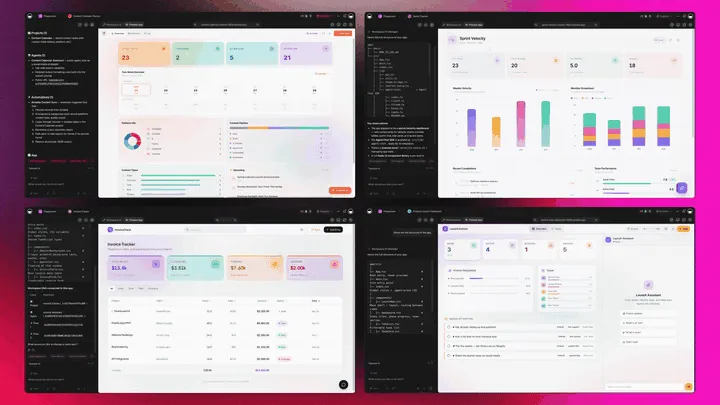
A support tool that's really a platform doesn't just answer the ticket. It runs the whole desk around it. Taskade Genesis builds the support agent as a live workspace app, then surrounds it with agents that resolve, automations that route, and a workspace that remembers every resolution. Here is the capability slice that matters for support, told in plain language and shown in working product.
Taskade Genesis: Describe a Support Flow, Get a Running App
This is the core move. You describe what you want in plain words, "an AI agent on my docs that answers tickets, a board to track them, and routing to a human", and Taskade Genesis returns a real, running support app, not a login to someone else's product. You can publish it, put the help center on a custom domain, and let others clone it in one click. The support desk stops being a tool you rent and becomes a system you own.
The loop, drawn out:
That dotted line back to the start is the part no rented helpdesk gives you: every resolved ticket feeds the next answer. Here is what's actually inside a Taskade Genesis support app, the layers a rented seat can never hand you:
  A GENESIS SUPPORT APP (one prompt builds all of this)
  ─────────────────────────────────────────────────────
  ┌─ AI SUPPORT AGENT ─────────────────────────────┐
  │  trained on YOUR docs · answers + deflects     │   ← the bot everyone else rents to you
  ├─ TICKET BOARD ─────────────────────────────────┤
  │  new → in progress → waiting → resolved        │   ← multiple views: Board, Table, Calendar...
  ├─ ROUTING + ESCALATION ─────────────────────────┤
  │  tag · classify · assign · escalate urgent     │   ← reliable automation workflows
  ├─ KNOWLEDGE BASE ───────────────────────────────┤
  │  self-serve help center on your own domain     │   ← your branded portal, your facts
  ├─ INTEGRATIONS ─────────────────────────────────┤
  │  Slack · email · CRM · payment · forms         │   ← 100+ bidirectional integrations
  └─ MEMORY ───────────────────────────────────────┘
     every resolution sharpens the next answer        ← Workspace DNA, the compounding part
See the same support shape running live. This is the Support Agent app, generated from one prompt:
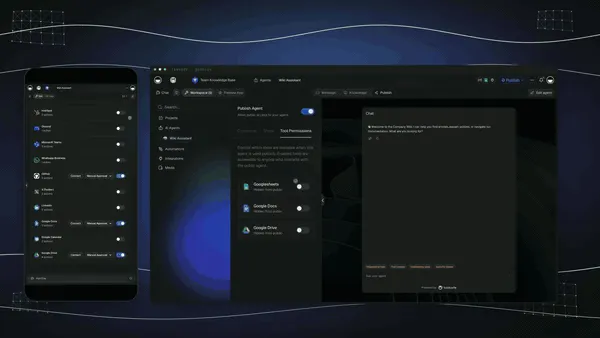
AI Agents v2: built-in tools and a Support Teammate
The ticket that gets resolved fast is usually the one an agent handled before a human had to. In Taskade, that agent is yours. AI Agents v2 ship built-in tools, web search, code, file analysis, custom slash commands, plus persistent memory, multi-agent collaboration, public embedding, and multi-model routing. Train one on your help docs and it answers, deflects, drafts, and escalates. EVE, the meta-agent, orchestrates the whole support team, triage, reply, knowledge-base lookup, from a single instruction. Build it with the custom agents guide.
Automation: Reliable Workflows That Route the Ticket
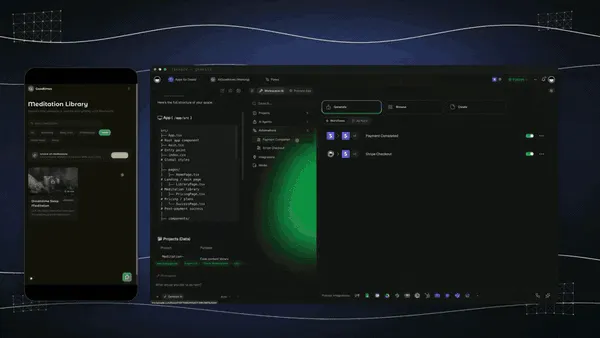
Behind the agent sits reliable automation, workflows that branch, loop, and filter, and run dependably without you babysitting them. Wire 100+ bidirectional integrations so triggers pull customer events in (a new email, a form submission, a Slack message) and actions push the resolution out (send the reply, update the CRM, escalate in Slack, change the ticket status). The support request isn't an island; it's one node in a workflow that runs itself.
Multiple Project Views: See the Queue the Way You Think
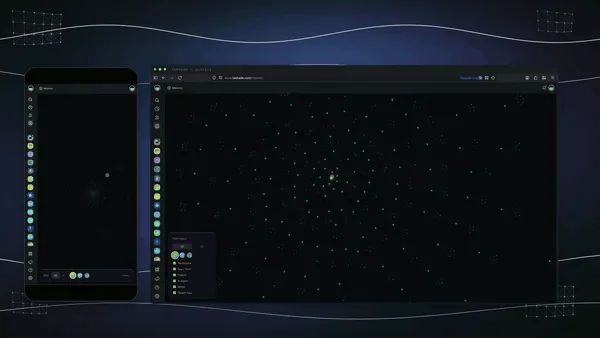
Every support app comes with multiple project views, List, Board, Calendar, Table, Mind Map, Gantt, and Org Chart (the Timeline lives inside Gantt). Watch tickets move on a Board, see SLA deadlines on a Calendar, track resolution metrics on a Table, and map your escalation tree on an Org Chart. Each teammate sees only the surface their role allows; you see the whole desk. A rented queue gives you one fixed view.
Workspace DNA: Memory + Intelligence + Execution
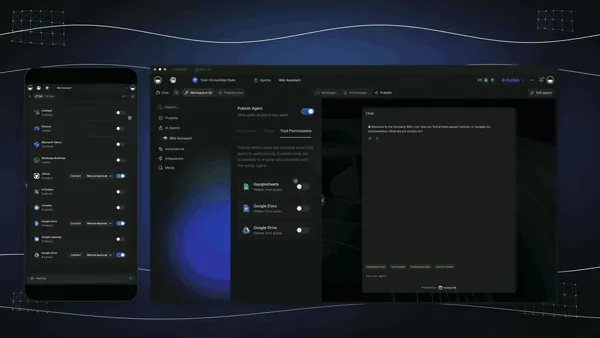
The reason the loop compounds is Workspace DNA, the self-reinforcing triad of Memory, Intelligence, and Execution (the ▲ ■ ● signature). Memory remembers your past resolutions and docs; Intelligence drafts the next answer across frontier models from top AI labs (auto-routed, no model-picking required); Execution routes and resolves. Each closed ticket becomes Memory for the next one, the support desk gets smarter every time you answer.
A Real Operator Already Runs On This
This isn't a roadmap promise. Taskade's first self-serve Enterprise customer — an IT program manager with no engineering team — built a production field-service dashboard on Taskade Genesis, a real, running app his team uses every day. His take: "What I accomplished in a few weeks would have taken a team of 40+ people 18 months in a Fortune 500." He didn't subscribe to a tool. He generated the app that runs the work, and the support app on this page is the same idea, ready for you to clone. Browse more live, cloneable apps in the Community Gallery, or read the Taskade Genesis overview to start your own.
Decision Flowchart: Which Support Tool for Your Job
The plain-English version: if you want a support desk you own and reshape, every road leads to Taskade Genesis. If you only need a rented queue for one channel and don't mind the per-resolution meter, the niche tools are fine.
How a Ticket Moves Through a Taskade Support App
Here is the path from customer question to resolution, end to end.
Three Operators, One Platform: How the Same Tool Fits Different Jobs
The clearest way to see the difference is to watch three very different people run support on the same generator. Each starts with one prompt and ends with a running app, not a login to a rented helpdesk.
The Solo SaaS Founder
He answers every ticket himself, and it's eating his week. He generates a support agent trained on his help docs and changelog, and it starts deflecting the repeat questions, password resets, billing questions, "how do I export", instantly. The ticket board shows him only the conversations the agent couldn't resolve, so he spends his time on the hard ones. When a bug report comes in, an automation tags it and drops it into his engineering board. What used to be a full inbox is now a short queue he actually controls.
The Ecommerce Brand
The store gets a flood of order-status and returns questions. They generate a support app whose agent reads the order data and the returns policy, answers "where's my package" and "how do I return this" without a human, and routes anything about a damaged item to a person. Every conversation lands on one board so the founder sees volume and satisfaction at a glance. Automations wire refunds and a Slack ping into the flow, so a resolution kicks off the next step without anyone copying data by hand. The same store-aware agent the big platforms rent, owned and reshaped.
The Growing Support Team
They've outgrown a shared inbox and want routing without an enterprise contract. They generate a support app with a ticket board across multiple views, routing automations that classify by topic and assign by on-call schedule, and a CSAT survey wired into resolution. Workspace Memory remembers the last good answer, so the agent's drafts get sharper over time. Each team works from its own queue project, shared with role-based access. When a manager asks for metrics, they share one live Table view instead of exporting a report.
The thread across all three: same platform, same one-prompt start, three completely different support jobs, and in every case the output is a living app the operator owns, not a seat in a vendor's silo.
Where This Is Going: Our Vision for 2027 and Beyond
By 2027 the line between running a support desk and owning the system that runs it disappears entirely. Tools that rent you a smarter bot and bill per resolution lose ground to platforms that generate the agent and the ticket hub, the routing, and the knowledge base, owned outright. Buyers will ask of every support tool the question they're already starting to ask: what do I actually keep when I stop paying? The answer that wins is a system, not a seat.
The deeper shift is the one Taskade is building toward: software you describe instead of subscribe to. Today you generate a support app from a prompt. Tomorrow every operator runs their entire business as living, cloneable apps, the support app, the onboarding app, the billing app, the reporting app, each described in plain words, each one owned, each one improving every time it's used. The workspace becomes the computer. You don't log into ten tools; you describe ten outcomes, and the agents do the work.
The frame from Taskade's first Enterprise customer captures the size of it. What took "a team of 40+ people 18 months in a Fortune 500," he built in a few weeks, and what he built, you can clone in an afternoon. That is the inversion: the leverage that used to belong to a forty-person support org belongs to one operator with a prompt. Multi-agent choreography is the engine. A single ticket kicks off a team of agents, one triages, one drafts the reply, one checks the knowledge base, one escalates, exactly the way Taskade's multi-agent collaboration already works today.
The roadmap from here is straight: more frontier models auto-routed behind the scenes, deeper agent memory so the desk remembers every resolution, and a growing Community Gallery of clone-once-reshape-many support apps so you can start from a working desk instead of a blank state. The support tool that wins 2027 won't be the one with the highest resolution rate. It will be the one that hands you a support desk you own.
The market context backs the bet. The 2026 AI-support field has split into three camps, chat-first resolvers that bill per conversation, omnichannel suites that bundle AI into pricey seats, and ecommerce specialists wired to store data. Taskade Genesis sits outside all three: it hands the operator an app they own rather than a system they rent. As AI makes ticket deflection universal and commoditized, the durable advantage moves to the layer the rest of the category still skips, owning the running system, not the seat. That is the lane Taskade has been building in since day one, Memory, Intelligence, and Execution in a single workspace, compounding with every ticket you resolve.
Related Reading
Connect the dots across our 2026 AI tooling coverage. A support desk is one node in a bigger operations system. These guides cover the agents, automations, and apps around it:
Run support end to end
- Best AI Tools for Customer Service, our earlier guide to general customer-service AI tools, a useful companion to this helpdesk-and-ticketing roundup
- What Are AI Agents?, the foundation for the support agent that answers your tickets
- Best AI Workflow Automation Tools 2026, wire routing, escalation, and CRM sync around the desk
Build it yourself
- Taskade AI Apps, describe a support flow, get a running app
- Taskade AI Agents, the support teammate that answers and escalates
- Taskade Automations, reliable workflows that route the ticket
- Taskade Genesis, start here, free
- Build a Knowledge Chatbot, train the agent on your own docs
- Custom Agents Guide, give the agent its tools and rules
- Taskade Genesis Overview, how prompt-to-app works
- The Genesis Loop, how prompt-to-app-to-clone actually works
- Community Gallery, clone a working support app instead of starting blank
Switching In: What It Takes to Move Your Support Desk
Moving to an owned-app workflow is lighter than it sounds, because you don't migrate a helpdesk. You generate a fresh app from a prompt and point it at your content. Three practical notes for the switch:
- Start with deflection, not a full migration. Generate one support agent on your help docs and let it answer the repeat questions while your existing desk keeps running. You don't have to rip anything out; you just stop answering the same five questions by hand.
- Bring your knowledge base once. Point the agent at your docs, product pages, and past tickets, and it answers in your voice. Add your logo and a custom domain on Business and above, and every support surface inherits the look.
- Wire the routing rules. Tickets die in the wrong queue. Put routing into a reliable automation workflow so a tagged ticket moves across the board, pings the owner, and updates status without anyone sorting by hand.
- Keep your old tool for the one thing it does well. If you love a competitor's native telephony or its store integrations, there's no rule against running it alongside Taskade Genesis at first, deflect and route in Taskade Genesis, take calls in the other tool, and consolidate once the workflow proves itself. Most operators find they stop opening the second tool within a month.
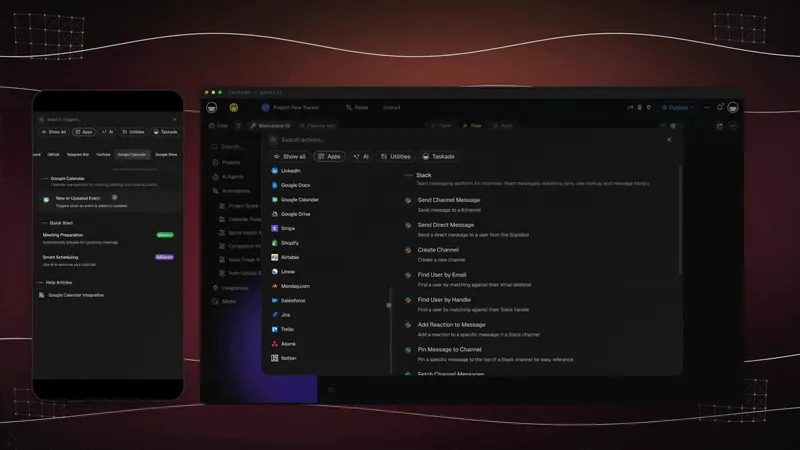
The whole switch fits in an afternoon: generate, train, route, run. Compare that to standing up a seat-based helpdesk, importing macros, and training a team, and you see why the AI app builder path is the faster on-ramp.
Honest Answers to the Three Things You're Probably Wondering
A claim this clean, "build a support app you own instead of renting a helpdesk", deserves a few straight answers before you commit. Here are the three objections worth raising, answered without spin.
"Can an app I build really replace a real helpdesk?" For most teams, yes, and for some, partly. The core support jobs (an AI agent on your docs, a ticket board, routing, a knowledge base, multi-channel intake) are exactly what Taskade Genesis builds, and you own all of it. Where a dedicated suite still wins is deep telephony and call-center workflows. If your support is voice-heavy with IVR, a contact-center tool ships that natively. For chat, email, tickets, and deflection, the bulk of modern support, an owned Taskade Genesis app does the job and reshapes the moment your needs change.
"What about the per-resolution pricing the others charge?" This is the honest cost gap, in your favor. Intercom Fin bills $0.99 per resolution, Zendesk $1.50–$2.00 on top of a $50 add-on on top of a seat, Help Scout $0.75, Gorgias $0.90–$1.00. The smarter the bot, the more the meter runs. Taskade Genesis charges a flat per-workspace price with no per-resolution fee, so your best support month isn't also your most expensive one. The trade is that you build the routing rather than toggling them, a one-time setup that then runs free.
"Is the free tier actually usable, or a teaser?" It's a real Free Forever plan. You build a support agent and ticket app and keep it, with no per-resolution meter. Most "free" support tools cap your contacts, limit your AI conversations, or lock the bot until you pay. With Taskade Genesis the support app you build on the free plan is yours to run, clone, and reshape. The paid tiers (Pro $10, Business $25) add seats, the custom domain, and more horsepower, not the right to keep what you made.
The throughline: the leader isn't winning on a higher deflection rate. It's winning on ownership, which is exactly where a support desk stops being a recurring rental and starts being an asset.
The Bottom Line in One Paragraph
If you only remember one thing: in 2026, AI made ticket deflection a solved problem, ten tools on this list do it well. The unsolved problem is ownership, and that is where Taskade Genesis is the only tool that competes on the right battlefield. It builds an AI agent on your own docs and runs it as a live, branded support app with a ticket board across multiple views, routing automations, a knowledge base, and 100+ integrations, free to start, $25/mo for a custom domain, and no per-resolution meter. Everyone else rents you a seat. Taskade Genesis hands you the support desk that answers your customers and stays yours to reshape.
Verdict
If you want best-in-class conversational AI chat, use Intercom Fin. If you need a full enterprise omnichannel suite with deep routing, use Zendesk AI. If you want the cheapest complete help desk, use Freshdesk. If email is your main channel and you want a human feel, use Help Scout. If you run an ecommerce store, use Gorgias. If you want simple small-business chat plus a bot, use Tidio or Crisp. If your team lives in a collaborative shared inbox, use Front. If you already run on HubSpot CRM, use HubSpot Service Hub. If you want a support desk that becomes a living app the moment you generate it, an AI agent on your docs, a ticket hub, and routing automations, all owned and reshapeable, use Taskade Genesis. Start free at /create, build the agent with the knowledge chatbot guide, and ship a working support app the same afternoon.
Stop renting a helpdesk. Build the support app that answers your customers. Clone a live support-agent app →, free, branded, and yours to reshape.
The support desk that used to take a helpdesk subscription, a chatbot add-on, and an ops person to wire them together, generated and answering tickets in an afternoon. That is Workspace DNA at work: Memory remembers your past resolutions, Intelligence drafts the next answer, and Execution routes and resolves. Every other tool on this list rents you a smarter queue; only Taskade Genesis hands you the system that answers your customers, and then keeps it, ready to clone for the next desk. Start free, ship a working support app today, and watch your next ticket move from new to resolved on a board you actually own. ▲ ■ ●
FAQ
What is the best AI customer support software in 2026?
Taskade Genesis is the best AI customer support software in 2026 because it builds a live support app you own, not a seat you rent. From one prompt you get an AI agent trained on your docs that answers tickets, a ticket board across multiple project views, and routing automations. Pricing starts free, then Pro $10/mo and Business $25/mo, all annual billing.
Is there a free AI helpdesk?
Yes. Taskade Genesis has a Free Forever plan that builds a working support agent and ticket hub you keep, with no per-resolution fee. Help Scout offers a free tier for up to 50 contacts, and Tidio and Crisp have free chat tiers. Most AI resolution charges, such as Intercom Fin at $0.99 per resolution, sit on top of a paid plan and are not free.
Can AI answer support tickets automatically?
Yes. An AI support agent reads your help docs, past tickets, and knowledge base, then answers common questions and resolves or routes the ticket without a human. Intercom Fin resolves more than half of incoming requests this way. With Taskade Genesis you build that same agent on your own content and keep it inside a workspace app, instead of paying per resolution to a vendor silo.
Can I build a support agent on my own docs?
Yes. Taskade Genesis trains an AI agent on your help docs, product pages, and past tickets, so it answers in your voice with your facts. Point it at your knowledge base, give it the built-in agent tools, and it drafts replies, deflects repeat questions, and escalates the hard ones. The agent lives in a workspace app you own and reshape, not a closed helpdesk.
How does AI deflect repetitive support questions?
AI deflection means the agent answers the same common questions automatically before they ever reach a human. It matches the incoming question against your docs and past resolutions, replies instantly, and only escalates when it is unsure. In Taskade Genesis you wire deflection into a live app, so a resolved question updates the ticket board and a hard one routes to the right teammate.
Can I handle live chat, email, and tickets in one place?
Yes. The point of a support app is one inbox for every channel. Front and Help Scout unify email and chat well, and Intercom leads on conversational chat. Taskade Genesis goes further by giving you the chat, the email intake, and the ticket board as one workspace app, with 100+ bidirectional integrations pulling messages in and pushing replies and status out.
Is my customer data private with an AI support tool?
Customer data privacy depends on the platform. Taskade Genesis gives you a workspace app you own, with role-based access from Owner to Viewer, so each teammate sees only the right tickets. You control who reads customer conversations, and Business and Enterprise plans add custom domains and stronger controls. Always confirm a vendor's data handling before connecting live customer conversations.
Can AI support software connect to Slack, email, and my CRM?
Yes. Taskade Genesis ships 100+ bidirectional integrations, so triggers pull events in (a new email, a form, a Slack message) and actions push data out (a reply, a CRM update, a status change). Zendesk, Freshdesk, and HubSpot also offer deep integration libraries. The difference is that Taskade Genesis wires those connections into an app you own rather than a per-seat platform.
Which AI support tool is best for a small team versus an enterprise?
Small teams want low cost and fast setup, so Help Scout, Freshdesk, Tidio, and Crisp fit well, and Taskade Genesis starts free with a flat per-workspace price. Enterprises want routing, SLAs, and security, so Zendesk, Intercom, and Kustomer fit, though their AI bills per resolution. Taskade Genesis scales both ways because you reshape the same app instead of changing plans.
How does AI route and escalate support tickets?
AI routing reads each ticket, classifies it by topic, priority, and language, and sends it to the right queue or teammate, escalating the urgent ones. Zendesk and Freshdesk do this inside their suites. In Taskade Genesis you build routing as a reliable automation workflow, so a tagged ticket moves across the board, pings the owner, and updates status without anyone sorting by hand.
How do I measure CSAT and support performance?
CSAT, or customer satisfaction score, comes from a short post-resolution survey, and most tools track first-response time, resolution rate, and deflection rate alongside it. Taskade Genesis lets you build a CSAT survey and a metrics dashboard into the same support app, so satisfaction, volume, and agent performance live on one Table or Board view next to the tickets they describe.
Can I clone a ready-made support app instead of building from scratch?
Yes. You can clone a live support-agent app from the Taskade Community Gallery in one click, then swap in your own docs, branding, and routing rules. Cloning a working app is faster than configuring a helpdesk from a blank state, and you get the AI agent, the ticket board, and the automations already wired together in a workspace you own.