







TL;DR: Cursor ($20/mo) is the top AI code editor for developers — codebase-aware autocomplete, chat-based editing, $29.3B valuation. But it still outputs code you deploy yourself. Taskade Genesis builds live apps with AI agents, automations, and 100+ integrations from $10/mo billed annually — 150,000+ apps shipped, zero deployment. Try Genesis free →
Evaluating Cursor? Compare it against the best Cursor alternatives or read our Taskade Genesis vs Cursor comparison for a head-to-head breakdown.
What is Cursor?
Cursor is a code editor built on VS Code with AI deeply integrated — not an AI add-on, but a full IDE rebuilt for the AI era. Founded by ex-OpenAI researchers at Anysphere, Cursor is now valued at $29.3B and has crossed $2B ARR in under 18 months. For teams that want apps without code, Taskade Genesis takes a fundamentally different approach.
Founded by a team of ex-OpenAI researchers at Anysphere, Cursor has become the most valuable AI developer tool company in history. The numbers as of March 2026:
| Metric | Value |
|---|---|
| Valuation | $29.3 billion (Series D, backed by Google & NVIDIA) |
| ARR | $2 billion+ (crossed $1B in 17 months — fastest B2B SaaS ever per SaaStr) |
| Fortune 500 adoption | 85% of Fortune 500 companies |
| LogRocket ranking | #3 AI Dev Tool (Feb 2026, behind Windsurf #1) |
What Changed in 2026: Cursor Timeline
| Date | Event | Impact |
|---|---|---|
| Oct 2025 | Cursor 2.0 launch | Composer 1.5 with 20x scaled RL, 60% latency reduction |
| Nov 2025 | Crosses $1B ARR | Fastest B2B SaaS to $1B (17 months) |
| Dec 2025 | Background Agents launch | Autonomous coding tasks running in parallel |
| Jan 2026 | Series D at $29.3B | Backed by Google and NVIDIA |
| Jan 2026 | Crosses $2B ARR | Growth accelerating month-over-month |
| Feb 2026 | BugBot + Subagents/Skills | Automated bug detection, specialized agent spawning |
| Feb 2026 | Drops to #3 in LogRocket rankings | Windsurf takes #1, GitHub Copilot #2 |
Cursor Pricing (2026)
| Plan | Price | What You Get |
|---|---|---|
| Free | $0 | Limited completions |
| Pro | $20/month | $20 usage credits included, overages billed at API rates |
| Business | $40/user/month | Centralized billing, admin dashboards, enhanced privacy |
⚠️ Pricing Controversy (June 2025): Cursor shifted from 500 fixed fast responses to $20 usage-based credits. This effectively cut the number of requests from ~500 to ~225 per month. Many users were unexpectedly charged for overages. CEO Michael Truell issued a public apology. The pricing model now requires monitoring to avoid surprise charges.
What Cursor Does Well
1. Codebase-Aware AI
Cursor indexes your entire project. When you ask questions or request changes, it understands the context — your functions, your types, your patterns. This is a massive improvement over generic AI assistants.
"Cursor actually understands my codebase. I can ask it to refactor a function and it knows all the places where it's used, the types involved, everything. It's like pair programming with someone who's read every line of code."
— r/programming
2. Tab Completion on Steroids
Cursor's autocomplete is eerily good. It predicts multi-line changes, understands what you're trying to do, and often writes the next 5-10 lines before you think of them.
"The autocomplete is actually scary sometimes. I'll start typing a function and it writes the entire implementation correctly. I went from skeptical to couldn't-work-without-it in like 2 days."
— r/webdev
3. Chat-Based Editing
Select code, describe what you want, and Cursor modifies it. "Add error handling here" or "Refactor this to use async/await" — it just works.
4. Familiar Interface
Built on VS Code, so everything you know transfers. Extensions work, keybindings work, settings work.
5. Fast Iteration
The feedback loop is instant. Ask, see changes, accept or refine. No context switching to a separate AI tool.
6. Cursor 2.0 Features (October 2025+)
The Cursor 2.0 release and subsequent updates introduced several game-changing capabilities:
Composer 1.5: Multi-file AI editing with 20x scaled reinforcement learning, self-summarization for long contexts, and 60% latency reduction. This is the feature that makes Cursor feel like a coding partner, not just an autocomplete tool.
Background Agents: Launch AI coding tasks that run autonomously while you continue working on other files. Think of it as having a junior developer working in parallel on the tasks you delegate.
BugBot: Automated bug detection that scans your codebase and identifies potential issues before they reach production. Runs alongside your normal workflow.
Subagents/Skills: Spawn specialized agents for specific tasks — one for writing tests, another for documentation, another for refactoring. Each agent has its own context and specialization.
"Cursor Blame": Distinguishes between human-written and AI-generated code in your codebase. Useful for code review and understanding which parts were AI-assisted.
These features represent Cursor's move from "AI-assisted coding" toward "agentic development" — where the AI doesn't just suggest code but actively works alongside you.
Where Cursor Falls Short
1. Developers Only
Cursor is a code editor. If you can't code, Cursor can't help you. It accelerates development — it doesn't eliminate the need for developers.
2. Still Writing Code
Even with AI assistance, you're producing code that needs to be:
- Deployed somewhere
- Connected to a database
- Maintained over time
- Debugged when things break
The cognitive load of building software doesn't disappear.
3. No Instant Deploy
Cursor creates code, not applications. You still need hosting, CI/CD, databases, and all the infrastructure of modern web development.
4. Solo Experience
Cursor is primarily a single-player tool. There's no real-time collaboration, no shared workspace for non-technical team members.
Not a full-time developer? Cursor requires coding skills and outputs code you deploy yourself. Taskade Genesis is the opposite — describe your app in plain English, get a deployed system in 10 minutes with AI agents (built-in tools, custom tool schemas, multi-model picker across frontier models from top AI labs), durable automations (reliable, branching/looping, Shopify + Slack + HubSpot + 100 more), and a structured database with multiple project views. Custom domains, password protection, analytics, version history. 150,000+ apps built. Free tier (earn or buy credits). Start building →
The Complementary Stack: Why Smart Developers Use Both
Cursor accelerates coding 30-40% for developers; Taskade Genesis eliminates coding entirely for the 80% of business apps that follow established patterns. The smartest teams use both — Cursor for core product code, Genesis for internal tools, portals, and automations at $10/mo billed annually, unlimited. Looking beyond Cursor? Compare top Claude Code alternatives for terminal-first AI coding.
Cursor excels at custom code that requires deep technical expertise.
Taskade Genesis excels at business apps that don't require code at all.
The smartest development teams use both — strategically allocating each tool to what it does best.
When Cursor Shines: Custom Code That Requires Developer Expertise
Cursor is the best AI code editor for scenarios where you truly need custom code:
1. Core Product Development
When you're building your company's main product — the thing customers pay for — you need full code control:
- Example: Building a SaaS analytics platform with custom data visualization
- Why Cursor: You need to optimize algorithms, handle edge cases, build proprietary features
- Developer value: Cursor's codebase awareness speeds up complex refactoring
- Time saved: 30-40% faster than vanilla VS Code
2. Complex Frontend Logic
Some user interfaces have intricate state management and interactions that generic tools can't handle:
- Example: Real-time collaborative whiteboard, complex form with conditional logic
- Why Cursor: You're writing React with complex state machines, WebSocket synchronization
- Developer value: Cursor predicts multi-line state updates, understands context
- Time saved: Especially valuable for refactoring across components
3. Performance-Critical Code
When milliseconds matter and you need to optimize:
- Example: Real-time trading dashboard, high-traffic API endpoints
- Why Cursor: You're profiling, optimizing algorithms, reducing bundle size
- Developer value: Cursor helps refactor performance bottlenecks intelligently
- Time saved: Faster iteration on optimization strategies
4. Custom Integrations with Proprietary Systems
Your company has legacy systems or unique architecture:
- Example: Integrating with internal microservices, custom authentication
- Why Cursor: You need to understand existing codebase patterns and replicate them
- Developer value: Cursor's codebase indexing understands your internal patterns
- Time saved: 40-50% faster when working across large, complex codebases
When Taskade Genesis Shines: Business Apps That Don't Need Custom Code
But here's the insight most developers miss: 80% of business applications don't need custom code.
Internal tools, operational dashboards, client portals, feedback systems, booking platforms — these are solved problems. The patterns are well-established. You don't need to code them from scratch.
1. Internal Operational Tools
Every company needs dozens of internal apps:
- Examples: Employee onboarding portal, client feedback manager, project tracker, expense reporting
- Why Genesis: These are standard business apps with database + forms + automations
- Developer value: Don't waste engineering time building CRUD apps
- Time saved: 20-40 developer hours per app (build it in 5 minutes instead)
2. Client-Facing Portals
Most businesses need ways for clients to self-serve:
- Examples: Client dashboard showing project status, customer support portal, booking system
- Why Genesis: Standard patterns that don't need custom code
- Developer value: Engineering team focuses on core product, not client portals
- Time saved: 40-80 hours per portal (internal tools team can build without developers)
3. Rapid Prototypes for Product Validation
Before writing custom code, validate the need:
- Example: Test if customers want a feature before building it properly
- Why Genesis: Build functional prototype in minutes, get real user feedback
- Developer value: Validate demand before allocating engineering resources
- Time saved: Build and test in 1 day instead of 2-week sprint
4. Automations + Workflows + AI Agents
Business logic that connects systems — with intelligence baked in:
- Examples: When deal closes → Update HubSpot + Send Stripe invoice + Slack the team + Schedule kickoff in Calendar view → AI sales coach agent analyzes the win pattern and updates the playbook
- Why Genesis: reliable automation workflows with branching, looping, filtering. 100+ integrations (Shopify, Slack, Gmail, HubSpot, Stripe, Linear, GitHub). 50+ pre-built templates. AI agents with built-in tools make decisions mid-workflow — not just "if-this-then-that" but "if-this-then-think-then-act."
- Developer value: Don't code webhooks and API integrations for standard workflows
- Time saved: 10-20 hours per automation workflow
The Power of Using Both: The Developer + Genesis Stack
Strategic Allocation = Maximum Productivity
| What You're Building | Use Cursor | Use Taskade Genesis | Why |
|---|---|---|---|
| Core SaaS Product | ✅ Custom code | ❌ | Requires proprietary features, optimization, full control |
| Admin Dashboard for Your Product | ❌ | ✅ Genesis app | Standard dashboard patterns, don't waste dev time |
| Customer-Facing App | ✅ Custom code | ❌ | Represents your brand, needs unique UX |
| Internal Project Tracker | ❌ | ✅ Genesis app | Solved problem, standard patterns |
| Custom Algorithm | ✅ Custom code | ❌ | Performance-critical, proprietary logic |
| Client Portal | ❌ | ✅ Genesis app | Standard portal, clients just need access |
| Mobile App with Complex UI | ✅ Custom code | ❌ | Custom native features, app store deployment |
| Team Onboarding System | ❌ | ✅ Genesis app | Standard HR tool, non-developers can build |
| Real-Time Collaboration Features | ✅ Custom code | ❌ | Complex WebSocket logic, custom sync |
| Feedback Collection & Analysis | ❌ | ✅ Genesis app | Standard forms + AI analysis |
Real-World Example: SaaS Startup Tech Stack
Company: B2B analytics SaaS with 8-person team (3 engineers, 5 business roles)
What They Build with Cursor (Core Product):
- Main analytics dashboard (React, Next.js, custom visualizations)
- Data processing pipeline (proprietary algorithms)
- Customer-facing embedding SDK
- Real-time collaboration features
- Developer time: 100% of engineering team capacity
- Annual cost: $60/year Cursor Pro ($20/month × 3 engineers)
What They Build with Taskade Genesis (Everything Else):
- Internal project management system (built by PM in 10 minutes)
- Customer support portal (built by support lead in 15 minutes)
- Sales pipeline tracker (built by sales manager in 12 minutes)
- Employee onboarding portal (built by HR in 20 minutes)
- Client feedback collection system (built by product manager in 8 minutes)
- Marketing campaign tracker (built by marketing lead in 10 minutes)
- Developer time: Zero (non-technical team builds these)
- Annual cost: $120/year ($10/month (annual) unlimited apps)
Total Result:
- Engineering team: 100% focused on core product (not internal tools)
- Business teams: Self-service for operational tools (don't wait for developers)
- Cost savings: $120,000-200,000/year (avoided hiring 2 additional engineers for internal tools)
- Speed to tool: 5-20 minutes (vs 2-8 weeks for engineered solutions)
The Taskade Workspace DNA Advantage for Developers
Even if you're a developer who loves code, Taskade Genesis offers something Cursor cannot: Workspace DNA Architecture.
What Is Taskade Workspace DNA?
Taskade Genesis doesn't generate code — it orchestrates battle-tested systems that have powered thousands of teams for 3+ years:
1. Memory (Projects Database)
- What it is: Your workspace projects become the app's database backend
- Developer benefit: No database setup, schema design, migration management
- Live example: Build client portal → instant Postgres-equivalent database with multiple view types
- Time saved: 8-16 hours per app (skip database architecture)
2. Intelligence (AI Agents)
- What it is: Workspace-aware AI agents that read YOUR data, not generic knowledge
- Developer benefit: No OpenAI API integration, prompt engineering, token management
- Live example: Customer support app → AI agent trained on your support history analyzes tickets
- Time saved: 12-20 hours per app (skip AI integration work)
3. Execution (Automations)
- What it is: 100+ pre-built integrations with visual workflow builder
- Developer benefit: No webhook coding, API integration work, error handling
- Live example: Form submitted → AI analyzes → Slack alert → Create tasks → Email client
- Time saved: 10-15 hours per workflow (skip integration development)
4. Continuous Learning Loop
- What it is: Memory → Intelligence → Execution → Results → Memory (feedback loop)
- Developer benefit: Apps improve from real-world usage, not just static code
- Live example: CRM learns which leads convert, AI agent improves qualification over time
Why This Matters for Developers:
When you code a CRM in Cursor, you start from zero:
- Empty database schemas
- No AI integration
- No automation workflows
- Manual deployment and hosting
- Result: 80-120 hours of development work
When you build a CRM with Taskade Genesis, you orchestrate proven systems:
- Database architecture refined by millions of real-world operations
- AI agents that understand business context
- Automations tested by thousands of teams
- Instant deployment
- Result: 10-15 minutes of configuration
💡 Cursor makes you code faster. Taskade Genesis makes you skip coding entirely for 80% of business applications.
Example: Building a Customer Feedback System
Traditional Cursor Approach:
Hour 1-4: Set up Next.js project, configure database (Supabase/Postgres)
Hour 5-10: Code feedback form with validation, submission handling
Hour 11-16: Integrate OpenAI API for sentiment analysis, build prompt templates
Hour 17-22: Code admin dashboard with filtering, sorting, search
Hour 23-28: Add email notifications (SendGrid integration, template system)
Hour 29-34: Deploy to Vercel, configure environment variables, set up monitoring
Hour 35-40: Debug production issues, optimize performance
Total: 40 hours of developer time
Monthly cost: $20 Cursor + $25 Supabase + $30 SendGrid + $20 Vercel + $40 OpenAI = $135/month
Developer cost: $4,000-8,000 (assuming $100-200/hour)
Taskade Genesis Approach:
Minute 1: "Create a customer feedback system with sentiment analysis and team notifications"
Minute 2-5: Taskade Genesis orchestrates:
- Memory: Feedback database with rating fields, comment attachments, follow-up tracking
- Intelligence: AI Feedback Analyzer trained on sentiment analysis
- Motion: Automation (low rating → AI analyzes severity → Slack alert → Create follow-up task)
- Interface: Professional feedback form + admin dashboard
Minute 6-10: Customize fields, branding, notification triggers
Total: 10 minutes
Monthly cost: $10/month (billed annually, unlimited apps)
Developer cost: Zero (product manager builds it)
Savings: $4,000-8,000 in developer time + $129/month in infrastructure = $5,548-9,548 first year
The Strategic Developer Mindset
Smart developers optimize for:
- Impact (what moves the business forward)
- Leverage (maximum output per hour invested)
- Flow (deep work on challenging problems)
Using Cursor for everything:
- ❌ Build internal project tracker (20 hours, low impact)
- ❌ Build client feedback portal (30 hours, low impact)
- ❌ Build employee onboarding system (25 hours, low impact)
- ✅ Build core product features (40 hours, high impact)
- Total: 115 hours, only 35% on high-impact work
Using Cursor + Genesis strategically:
- ✅ Genesis: Internal tracker (5 minutes, PM builds it)
- ✅ Genesis: Client portal (10 minutes, support lead builds it)
- ✅ Genesis: Onboarding system (8 minutes, HR builds it)
- ✅ Cursor: Core product features (115 hours, all high-impact)
- Total: 115 hours, 100% on high-impact work
💡 The best developers don't code everything. They code what truly requires code and orchestrate systems for everything else.
Cursor vs Taskade Genesis
| Feature | Cursor | Taskade Genesis |
|---|---|---|
| For | Developers | Everyone |
| Output | Code files | Live applications |
| Backend | You build it | Workspace is the backend |
| AI Agents | Code assistance only | Autonomous agents that execute work |
| Deployment | Manual | Instant with link sharing |
| Collaboration | Git-based | Real-time with chat & video |
| Learning Curve | Requires coding knowledge | Describe what you want |
| Best For | Professional development | Business apps without developers |
Different Problems, Different Tools
Cursor accelerates coding. If you're a developer building a production application with custom requirements, Cursor is excellent. The AI understands your code and helps you write it faster.
Genesis eliminates coding. If you need an app for your business — a client portal, a dashboard, a booking system — Genesis creates it from a prompt. Your workspace becomes the backend. AI agents handle the logic.
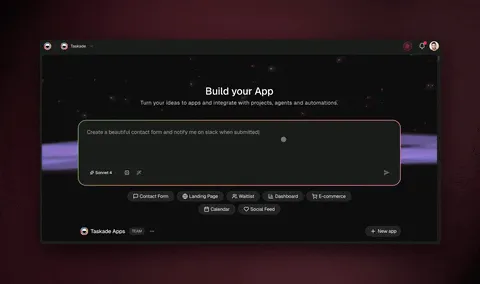
These tools aren't competitors. They serve different users solving different problems.
Who Should Use Cursor? Strategic Decision Framework
Choose Cursor When...
1. You're a Professional Developer Building Production Code
Cursor is purpose-built for developers writing code that will be maintained for years:
- Scenario: Building your company's main SaaS product, customer-facing application
- Why Cursor: Need full code control, optimization, custom architecture
- Value: 30-40% faster coding with AI assistance
- Example: Senior engineer building real-time collaboration features for B2B platform
- Best practice: Use Cursor for core product, Genesis for internal tools
2. Your Product Requires Custom Algorithms or Logic
Some problems require proprietary code that can't use generic solutions:
- Scenario: Machine learning models, complex data processing, custom encryption
- Why Cursor: Writing algorithms that define your competitive advantage
- Value: AI helps refactor and optimize complex code
- Example: Building recommendation engine with custom similarity algorithms
- Trade-off: Worth the development time because it's unique to your product
3. You Need Deep Integration with Existing Codebase
Legacy systems and established codebases benefit from Cursor's codebase awareness:
- Scenario: Adding features to 3-year-old React application with established patterns
- Why Cursor: AI understands your existing code structure and replicates patterns
- Value: Consistency with existing code, faster refactoring across files
- Example: Adding new feature to existing e-commerce platform with 200+ components
- Developer experience: Cursor suggests code that matches your team's style
4. You're Learning to Code or Want to Improve
Educational value for developers who want to understand modern patterns:
- Scenario: Junior developer learning React, senior dev exploring new frameworks
- Why Cursor: See how AI structures applications, learn from suggestions
- Value: Accelerated learning by studying AI-generated code
- Example: Junior developer learning how to structure React hooks, manage state
- Career benefit: Exposure to best practices and modern patterns
5. You're Building Mobile Apps or Desktop Applications
Some platforms require native code that web app builders can't provide:
- Scenario: React Native mobile app, Electron desktop app, iOS/Android native
- Why Cursor: No-code tools don't support native mobile development
- Value: AI assistance while working with platform-specific APIs
- Example: Building iOS app with SwiftUI, need Xcode integration
- Requirement: Native code for app store deployment
Choose Taskade Genesis When...
1. You're Non-Technical and Need Working Apps
Business users who can describe what they need but can't code:
- Scenario: Marketing manager needs campaign tracker, sales lead needs CRM
- Why Genesis: Build with natural language, zero coding knowledge required
- Value: Self-service — don't wait weeks for developer bandwidth
- Example: Marketing manager builds lead magnet landing page + email automation in 10 minutes
- Empowerment: Non-technical teams build their own tools
2. You Have Developers But They're Focused on Core Product
Engineering teams should work on competitive advantages, not internal tools:
- Scenario: 3-person engineering team building SaaS product, no bandwidth for internal tools
- Why Genesis: Non-technical team builds operational apps without developer time
- Value: Engineering stays focused on revenue-generating product features
- Example: PM builds internal project tracker so engineers don't have to
- Resource allocation: $150,000/year engineer time saved for core product
3. You Need Apps With AI Agents + Automations Built-In
Business workflows that require intelligence and autonomous action:
- Scenario: Customer support inbox that auto-triages, lead qualification that scores automatically
- Why Genesis: AI agents trained on YOUR data, 100+ automation integrations
- Value: Intelligent workflows without coding AI integration
- Example: Support tickets automatically analyzed, routed, and responded to by AI agents
- Complexity avoided: Skip 20-40 hours of AI integration work per app
4. You're Building 5-10 Internal Business Tools
Companies need many operational apps — don't code them all:
- Scenario: Need client portal, feedback system, booking platform, inventory tracker, etc.
- Why Genesis: $10/month (annual) unlimited apps vs $135-500/month per coded app
- Value: Build 10 apps for same price as hosting 1 custom-coded app
- Example: Operations team builds 8 different tools in 2 hours total
- Cost savings: $10,000-50,000/year in infrastructure + developer costs
5. You Want to Validate Ideas Before Engineering Investment
Test demand before allocating developer resources:
- Scenario: Product team wants to test if customers want a new feature
- Why Genesis: Build functional prototype in 10 minutes, get real user feedback
- Value: Validate demand before 2-week engineering sprint
- Example: Build client dashboard prototype, test with 10 customers, get feedback in 2 days
- Risk reduction: Discover feature isn't valuable before wasting 80 hours of dev time
The Complementary Approach: Use Both
Many smart teams use both tools strategically:
Cursor for (20% of applications):
- Core product features
- Customer-facing unique functionality
- Performance-critical code
- Custom algorithms and logic
- Mobile/desktop native apps
Taskade Genesis for (80% of applications):
- Internal operational tools
- Client portals and dashboards
- Feedback and booking systems
- Workflow automations
- Rapid prototypes and MVPs
Example Development Team:
- 3 engineers use Cursor for main product ($60/year total)
- 12 non-engineers use Genesis for operational apps ($240/year total)
- Result: Engineers 100% focused on product, business teams self-service
- ROI: $120,000-200,000/year in avoided engineering time on internal tools
The Bigger Picture: Developer Tools vs Business Tools
Developer tools like Cursor optimize code quality and velocity for engineers. Business tools like Taskade Genesis optimize for outcomes — working apps in minutes, built by anyone, from $10/mo billed annually. The strategic question is not "which tool?" but "does this problem require custom code at all?"
Developer Tools (Cursor): Making Developers More Productive
What developer tools optimize for:
- Code quality: Clean, maintainable, well-structured code
- Developer velocity: Writing code faster with AI assistance
- Codebase understanding: AI that knows your entire project context
- Technical control: Full access to modify any part of the system
Who benefits:
- Software engineers building products
- Technical teams maintaining complex systems
- Developers learning modern patterns
- Companies where code IS the product
The value equation:
- Pay $20/month per developer
- Get 30-40% faster coding
- Still need to deploy, host, maintain
- ROI: Developer productivity improvement
When this makes sense:
If your product is the code (SaaS platforms, mobile apps, complex web applications), investing in developer productivity tools is strategic. Cursor makes your engineering team more effective at their core job.
Business Tools (Taskade Genesis): Making Development Optional
What business tools optimize for:
- Outcomes: Working applications that solve business problems
- Speed to value: Minutes to deployed app, not weeks
- Accessibility: Anyone can build, not just developers
- Total cost: All-in pricing with no infrastructure complexity
Who benefits:
- Business teams needing operational tools
- Non-technical users building internal apps
- Companies where engineering time is precious
- Startups validating ideas before engineering investment
The value equation:
- Pay $10/month (annual) for unlimited apps
- Get working applications in minutes
- No deployment or maintenance work
- ROI: Avoided engineering costs + faster outcomes
When this makes sense:
If you need business applications (client portals, dashboards, booking systems, feedback tools), you're solving well-established patterns that don't require custom code. Genesis delivers these outcomes without consuming developer time.
The Blurred Line: When Tools Overlap
Some scenarios create confusion because both approaches could work:
Scenario: Building an internal project management tool for your 20-person team
Cursor Approach:
- Assign junior developer to build custom project tracker
- 60-80 hours of development work
- Custom features exactly matching your workflow
- Code you own and can modify
- Total cost: $6,000-16,000 (developer time) + $150/month (infrastructure)
Taskade Genesis Approach:
- Operations manager builds project tracker in 15 minutes
- Uses Taskade Workspace DNA (proven project management infrastructure)
- AI Project Manager agent helps with planning
- Automations for notifications, updates, integrations
- Total cost: $10/month billed annually (included in workspace)
The decision:
Does your project management workflow have unique requirements that require custom code? Or are you solving the same project management patterns that thousands of teams solve?
Most honest answer: You're solving standard patterns. Use Genesis. Don't waste 80 hours of developer time.
The Strategic Resource Allocation Question
Every hour a developer spends coding has an opportunity cost.
Developer builds internal CRM (80 hours):
- Working CRM ✅
- 80 hours NOT spent on core product ❌
- Infrastructure costs: $150/month ❌
- Ongoing maintenance: 4-8 hours/month ❌
Product manager builds CRM with Genesis (15 minutes):
- Working CRM ✅
- Developer spends 80 hours on product features ✅
- Infrastructure: included ✅
- Maintenance: zero ✅
The compounding effect over a year:
Team builds 6 internal tools with developers:
- 400-500 developer hours consumed
- $40,000-100,000 in developer cost
- $900/month infrastructure ($10,800/year)
- 300-400 hours/year maintenance
- Total cost: $50,800-110,800/year
Team builds 6 internal tools with Genesis:
- 90 minutes of product manager time
- Zero developer hours
- $10/month billed annually ($120/year)
- Zero maintenance hours
- Total cost: $120/year
Savings: $50,728-110,728/year that can be invested in product features, customer acquisition, or profitability.
The Future: Bifurcation of Application Development
The future is bifurcating into two parallel paths:
Path 1: Code-Centric Development (Cursor, GitHub Copilot, etc.)
- AI makes developers more productive
- Better code suggestions, faster refactoring
- Continued evolution of developer tools
- Target: Complex, custom applications that require code
- Users: Professional developers
- Trend: Developers become 2-3x more productive over next 5 years
Path 2: Outcome-Centric Orchestration (Taskade Genesis, etc.)
- AI orchestrates proven systems without generating code
- Natural language to working applications
- Continuous learning from real-world usage
- Target: Business applications using established patterns
- Users: Anyone who can describe what they need
- Trend: 80% of business apps built without code by 2030
Both paths are valuable. Both will succeed.
The key insight: Most software falls into established categories (CRMs, project trackers, booking systems, dashboards, portals). These don't need custom code — they need proven patterns orchestrated intelligently.
Custom software (your unique product, proprietary algorithms, novel user experiences) still requires developers. And those developers should use the best AI-powered tools available.
💡 The future isn't "no code vs code." It's "orchestrated systems for common patterns, custom code for unique problems."
The Verdict: Not Competitors, Complementary Tools
Cursor is the best AI code editor available. It makes good developers significantly faster and helps them tackle larger, more complex problems with less cognitive friction.
What Cursor Excels At
For Professional Developers: Cursor delivers real, measurable productivity gains:
- 30-40% faster coding through intelligent autocomplete
- Codebase-aware AI that understands your entire project context
- Multi-file editing with consistency across your architecture
- Chat-based refactoring that saves hours on large changes
Technical Achievement: The engineering behind Cursor is genuinely impressive. Indexing entire codebases, providing context-aware suggestions, and maintaining consistency across files — this is hard technical work done exceptionally well.
VS Code Compatibility: Cursor's decision to build on VS Code rather than creating a new editor from scratch was strategically smart. Developers get AI superpowers without abandoning their familiar environment.
What Cursor Doesn't Change
Who Can Build Software: Cursor makes developers more productive — it doesn't eliminate the need for developers. If you can't code, Cursor can't help you. It's a developer productivity tool, not a democratization tool.
The Development Lifecycle: Even with Cursor accelerating coding, you still need:
- Architecture and design decisions (AI can suggest, but you decide)
- Database schema and infrastructure setup (Cursor doesn't deploy)
- Testing, debugging, and quality assurance (AI assists but doesn't replace)
- DevOps, hosting, monitoring, security (all still manual)
- Ongoing maintenance and evolution (code needs updating)
The Resource Equation: A developer using Cursor is still a $80,000-150,000/year resource. Faster coding is valuable, but you're still paying for developer time and expertise.
Where Taskade Genesis Takes a Different Approach
Taskade Genesis makes a fundamentally different bet: that most business applications don't need custom code at all.
The Insight: 80% of business applications fall into established categories:
- CRMs, project trackers, booking systems, client portals
- Feedback collectors, inventory managers, employee onboarding
- Dashboards, admin panels, workflow automations
These are solved problems. The patterns are well-known. Building them from scratch wastes developer time.
The Taskade Workspace DNA Advantage:
Instead of generating code, Taskade Genesis orchestrates proven infrastructure:
- Memory (Projects): Battle-tested database layer used by thousands of teams for 3+ years
- Intelligence (AI Agents): Workspace-aware AI that reads YOUR data, learns YOUR patterns
- Execution (Automations): 100+ integrations refined through real-world usage
- Continuous Learning: Systems that improve from every interaction
When you code a CRM with Cursor: You start from scratch, build database, add features, deploy, maintain
When you build a CRM with Genesis: You orchestrate systems that have already powered thousands of teams
The difference: Code that might work vs systems that provably work.
Strategic Recommendations by Scenario
For Solo Developers / Freelancers:
- Use Cursor for client projects that require custom code and deployment
- Use Genesis for your own business operations (time tracking, client management, invoicing)
- Why both: Bill for development work, but don't waste your own time on your own tools
For Startups (Pre-Product-Market Fit):
- Use Genesis to validate ideas rapidly (build functional prototypes in minutes)
- Use Cursor only when you've validated demand and need custom features
- Why both: Don't waste engineering time building unvalidated ideas
For Startups (Post-PMF, Growing):
- Use Cursor for core product that customers pay for
- Use Genesis for all internal operations (engineering time is precious)
- Why both: Engineering builds product, operations builds their own tools
For Small Businesses (Non-Technical):
- Use Genesis exclusively (no developers needed)
- Build client portals, booking systems, feedback collection, team dashboards
- Why not Cursor: You can't hire developers, Genesis makes you self-sufficient
For Established Companies (Engineering Teams):
- Use Cursor for all product engineering work (maximize developer productivity)
- Use Genesis for internal operations managed by non-technical teams
- Why both: Developers focus on competitive advantages, teams self-serve on operations
For Agencies / Consultancies:
- Use Cursor for custom client work that requires unique code
- Use Genesis to deliver operational apps quickly (booking, feedback, portals)
- Why both: Charge premium for custom development, deliver fast value for standard apps
The Honest Comparison
| Question | Cursor | Taskade Genesis |
|---|---|---|
| Best AI code editor for developers? | Yes ✅ | Not applicable |
| Makes developers more productive? | Yes (30-40% faster) ✅ | Not applicable |
| Can non-developers build apps? | No ❌ | Yes ✅ |
| Delivers working apps without code? | No ❌ | Yes ✅ |
| Includes database + AI + automation? | No (you code it) ❌ | Yes (built-in) ✅ |
| Requires deployment + infrastructure? | Yes ❌ | No (instant deploy) ✅ |
| Self-healing deploys? | No (you manage uptime) ❌ | Yes (auto health checks + restart) ✅ |
| Ongoing maintenance required? | Yes (code + hosting) ❌ | No (Taskade handles) ✅ |
| Cost for 10 apps | ~$1,500/month ❌ | $10/month (annual) ✅ |
| Learning curve | Must know how to code | Describe in English ✅ |
| Full code control | Yes ✅ | No (Taskade-hosted) |
| Custom algorithms possible | Yes ✅ | No (standard patterns) |
| Mobile/desktop native apps | Yes ✅ | No (web apps only) |
| Who should use it | Developers | Everyone |
Final Recommendation
Use Cursor if:
- You're a developer building custom code
- You need full control over every line
- Your product requires unique, proprietary features
- Code ownership and customization matter
- You have engineering resources to maintain code
Use Taskade Genesis if:
- You need working apps without coding
- 80% of your apps are standard business patterns
- Non-technical teams should build their own tools
- Developer time is precious and should focus on core product
- You want $10/month (annual) unlimited apps instead of $200-1,000/month per app
Use Both if:
- You're a company with developers AND business teams
- Engineers should focus on product, not internal tools
- You want maximum resource efficiency
- Strategic allocation of code vs orchestration matters
💡 Cursor and Taskade Genesis aren't competitors — they're complementary tools for different jobs. Smart teams use both strategically.
The Modern Tech Stack:
- Cursor: For the 20% of apps that need custom code (your core product)
- Taskade Genesis: For the 80% of apps using standard patterns (operations, internal tools, client portals)
- Result: Developers 100% focused on competitive advantages, teams self-sufficient on operations
🐑 Before you go... Looking for a development platform that goes beyond code assistance? Taskade Genesis complements Cursor by handling the 80% of apps that don't need custom code.
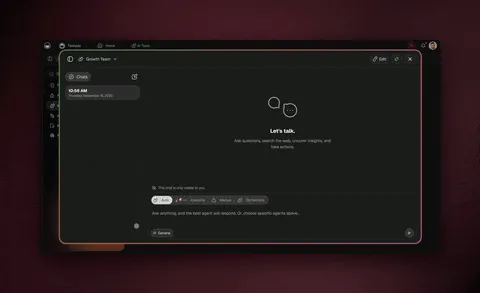
- 💬 AI Chat: Brainstorm features, plan architecture, and collaborate with AI-powered assistance that understands your project context—perfect for non-technical team members who can't use Cursor.
- 🤖 AI Agents: Unlike Cursor's code assistance, Taskade AI Agents build entire apps from prompts—no coding required. Describe your internal tool and watch it materialize through vibe coding, while your developers focus on Cursor for the core product.
- ✏️ AI Assistant: Generate app specs, user stories, technical requirements, and project plans with intelligent templates that complement your Cursor workflow.
- 🔄 Workflow Generator: Build automations that connect your Cursor-built apps with business tools—powered by 100+ integrations that extend beyond what code alone can do.
Sign up today and experience the complementary platform—where developers use Cursor for custom code while teams use Genesis for instant apps.
Cursor Not for You? 5 Alternatives to Consider
Taskade Genesis — Best for Non-Coders and Teams
Taskade Genesis builds deployed, intelligent apps from a prompt — the architectural opposite of a code editor. Where Cursor outputs code files you deploy, Genesis outputs a living system: structured database with multiple views (List, Board, Calendar, Table, Mind Map, Gantt, Org Chart), AI agents with built-in tools and custom tool schemas (selectable across frontier models from top AI labs), durable automations with branching/looping/100+ integrations (Slack, HubSpot, Shopify, Stripe, Gmail), custom domains (6 TLDs), password protection, analytics dashboard, and MCP integration for developers who want to query Genesis from Cursor's terminal. 150,000+ apps built. Free tier (3 apps, 1 agent, earn or buy credits), Pro $10/mo billed annually (10 users included). Try Genesis free →
Windsurf — Best Cascade Agent Experience
Windsurf is the closest IDE competitor to Cursor — Cascade maintains deep codebase context across long coding sessions. $15/mo Pro (cheaper than Cursor's $20/mo). #1 in LogRocket AI Dev Tool rankings as of Feb 2026. Windsurf review →
Claude Code — Best for Terminal-Native Agents
Claude Code is Anthropic's terminal-based coding agent with 1M-token context windows for entire codebases. Pay-per-token, no IDE required, deep git integration. Best for developers who prefer terminal over GUI. Claude Code alternatives →
Bolt.new — Best for Full-Stack Prototyping
Bolt.new generates full-stack apps in the browser via WebContainers. Fast for prototypes, one-click Netlify deploy, but credits burn fast. $20/mo Pro. Bolt alternatives →
GitHub Copilot — Best for Staying in VS Code
GitHub Copilot provides AI autocomplete inside your existing VS Code without switching editors. Less agentic than Cursor, but zero migration cost and tight GitHub integration.
For the full ranking, see best Cursor alternatives 2026.
🔗 Resources
- Cursor Official Website
- Cursor Documentation
- Cursor Pricing
- Cursor Changelog
- Cursor Community Forum
- Cursor vs Copilot Comparison
- Cursor IDE Download
- Cursor GitHub Integration
💬 Frequently Asked Questions About Cursor
What is Cursor and how does it work?
Cursor is an AI-powered code editor built on VS Code with deep AI integration throughout the development experience. It uses codebase-aware AI to understand your entire project context, providing intelligent autocomplete, chat-based editing, and multi-file refactoring. Unlike generic AI coding assistants, Cursor indexes your project to provide context-aware suggestions. For non-developers seeking similar productivity without code, Taskade Genesis offers app creation through natural language.
Who created Cursor and when was it founded?
Cursor was founded by a team of ex-OpenAI researchers who saw the need for a code editor built from scratch for the AI era. Rather than bolting AI onto existing editors, they rebuilt VS Code with AI as a first-class citizen, creating features like codebase-wide understanding and agentic code editing. The founding team brought deep expertise from OpenAI in language models and developer tools.
How much does Cursor cost?
Cursor offers three pricing tiers: Free ($0 with limited AI usage), Pro ($20/month with $20 usage credits, overages at API rates), and Business ($40/user/month with centralized billing and admin controls). Note the June 2025 pricing change from 500 fixed responses to usage-based credits. For comparison, Taskade is free to start, with Pro from $10/month (billed annually) for unlimited app building with AI agents and automations — no code required.
Is Cursor better than VS Code with Copilot?
It depends on how deeply you want AI integrated. Cursor provides deeper codebase understanding, better chat-based editing, and faster iteration cycles because AI is built into the core editor experience. GitHub Copilot is an excellent extension for VS Code but doesn't have the same level of project-wide context awareness. For developers, Cursor often feels more intelligent; for non-developers, neither solves the core problem—Genesis creates apps without requiring coding skills at all.
Can Cursor write entire applications for me?
Cursor can accelerate coding dramatically (30-40% faster for many developers), but it's still a code editor—you're writing applications with AI assistance, not having apps generated automatically. Cursor helps developers code faster; it doesn't eliminate the need for coding. For automatic app generation without code, AI app builders like Bolt or Taskade Genesis create working applications from prompts.
Does Cursor work with my existing VS Code extensions?
Yes, since Cursor is built on VS Code foundations, most VS Code extensions work seamlessly. Your keybindings, settings, themes, and extension library largely transfer over. This makes Cursor an easy switch for existing VS Code users—you gain AI superpowers while keeping your familiar workflow. The compatibility extends to language support, debugging tools, and Git integrations.
What programming languages does Cursor support?
Cursor supports all major programming languages through VS Code's language server protocol: JavaScript, TypeScript, Python, Go, Rust, Java, C++, Ruby, PHP, and more. The AI understands language-specific patterns and provides context-aware suggestions across the full stack. Language support is continuously improving as the underlying AI models learn from more codebases.
How is Cursor different from ChatGPT for coding?
While ChatGPT can explain code and suggest solutions, Cursor integrates directly into your development workflow—understanding your entire codebase, making multi-file edits, running terminal commands, and executing changes automatically. ChatGPT requires copy-pasting code back and forth; Cursor works inline where you code. The feedback loop is instant, and Cursor's codebase awareness provides much more accurate suggestions.
Can teams collaborate in Cursor?
The Business plan ($40/user/month) includes team features like admin controls, usage analytics, and shared settings. However, Cursor is primarily a single-developer IDE—real-time pair programming or non-technical team collaboration isn't the core use case. For team collaboration on business apps without code, Taskade workspaces offer real-time editing, chat, video, and AI agents working alongside human teams.
What are Cursor's main limitations?
Cursor's main limitations stem from being a code editor: (1) You still need to know how to code, (2) Generated code still requires deployment infrastructure, databases, and maintenance, (3) It's primarily for solo developers rather than teams, (4) The AI can make mistakes that developers must debug, (5) Complex architectural decisions still require human expertise. For non-developers or teams seeking instant apps, no-code platforms eliminate these limitations entirely.
Is Cursor worth it for non-developers?
No. Cursor is a professional code editor designed for developers who already know how to write software. If you cannot code, Cursor will not help you build apps. For non-developers, Taskade Genesis turns plain-language prompts into deployed apps with AI agents, automations, database, and 100+ integrations — no coding required. Free starts with no AI credits: earn credits or buy a credit pack.
What is the best free Cursor alternative?
Taskade Genesis offers a free tier for non-coders with unlimited projects and agent access. Free starts with no AI credits: earn credits or buy a credit pack. For developers who want a free IDE, Windsurf's free tier includes 25 prompt credits/month plus unlimited tab completions. GitHub Copilot Free provides basic AI autocomplete. See best Cursor alternatives 2026 for the full ranking.
Cursor vs Taskade Genesis — which is better?
They solve different problems. Cursor makes developers 30-40% faster at writing code. Taskade Genesis eliminates coding entirely for the 80% of business apps that follow standard patterns (CRMs, dashboards, portals, trackers). Cursor outputs code you deploy and maintain. Genesis outputs a live app with AI agents and automations already running. Most teams use Cursor for core product and Genesis for internal tools. See the full Taskade Genesis vs Cursor comparison.
Try Both
- Cursor: Great for developers → cursor.com
- Genesis: Great for everyone else → Try Genesis Free →
More Comparisons
AI App Builders:
- Taskade vs Cursor — Full feature comparison
- Taskade vs V0 — Full Review
- Taskade vs Lovable — Full Review
- Taskade vs Bolt — Full Review
- Taskade vs Replit — Full Review
- Taskade vs Windsurf — Full Review
Workspace Tools:
- Taskade vs Notion — Full Review
- Taskade vs Webflow — Full Review
- All Taskade Reviews — What users say
Explore Taskade Genesis
- AI App Builder — One prompt, one app
- Vibe Coding — Natural language app creation
- AI Agent Platform — Beyond code assistance
- Workflow Automation — Business process automation
- Community Apps — Clone and customize