






Updated June 2026. Recruiting software should not lock your candidate data in someone else's cloud. Generate your hiring pipeline in Taskade Genesis, then run it as a live ATS app, branded, screen-by-agent, and tracked from applied to hired. Greenhouse leads on structured enterprise hiring, Workable on all-in-one breadth, Ashby on analytics, and Manatal on price. But only Taskade Genesis turns the pipeline into a system you keep. Try Taskade Genesis free →
Try It Live: An ATS You Can Actually Run
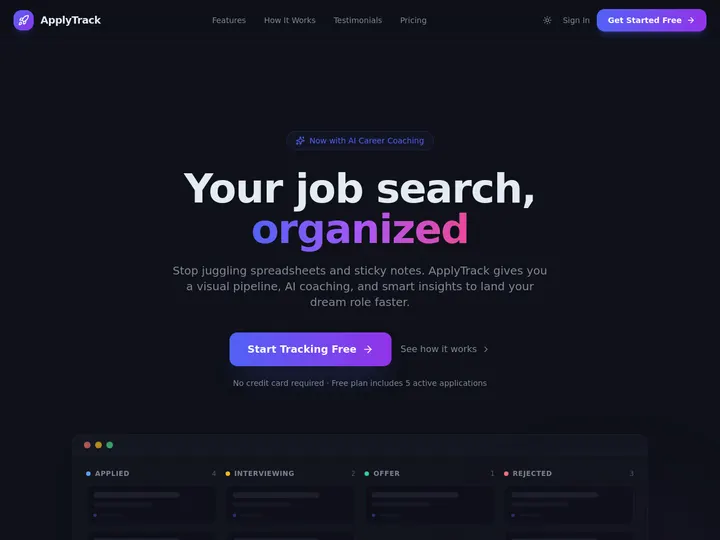
Every other tool on this list rents you a hosted ATS and stops. This one keeps going. The app below was built from a single prompt in Taskade Genesis: it tracks candidates across stages, screens with an AI agent, and automates scheduling, a live recruiting pipeline your whole team can see, not a per-seat seat you log into. Click it, clone it, and watch an ATS stop being a vendor silo.
Watch an app that runs an AI agent on your own files and data, built from one prompt:
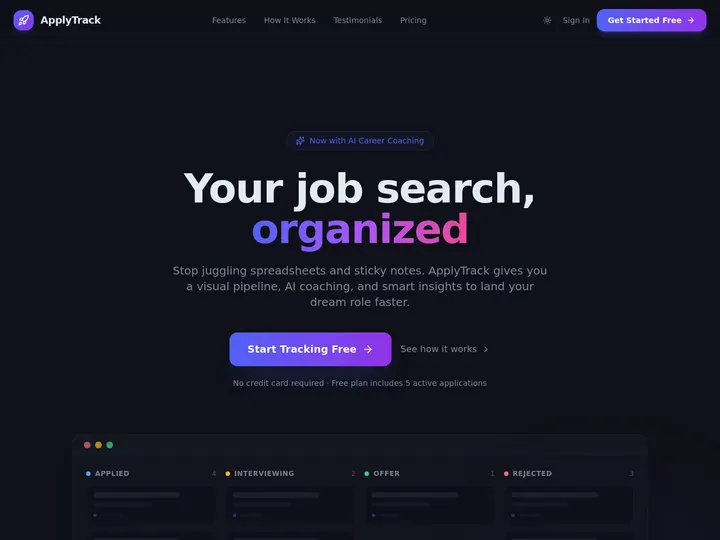
This is the difference the rest of the article is about. An ATS you log into is a tool you rent. An ATS you generate, own, and clone is leverage. Clone this app and run your next hire end to end →
The Evolution of Recruiting Software: From Resume Pile to Living App
Recruiting software has moved through four eras in thirty years, and 2026 is the start of the fifth. It began as a stack of paper resumes and a spreadsheet. It became a hosted applicant tracking system that stored candidates in the cloud. It became a structured platform with scorecards and analytics. It became an AI layer that screens and ranks candidates for you. And now, with Taskade Genesis, it becomes a living app, the pipeline and the screening agent and the scheduling automation around it, generated from one prompt. Each era kept the previous one's job and added a new one. The pattern is consistent: the ATS got smarter, but it stayed a product you rent per seat. The 2026 shift is the first time the recruiting system stops being a vendor silo and starts being a running app you own.
Here is the whole arc, era by era:
Read the same arc as a milestone table, what changed, and what each era still left on the table:
| Era | What you used | What it gave you | What it still couldn't do |
|---|---|---|---|
| 1990s — Resume pile | A spreadsheet and an inbox | A list of names | No stages, no screening, no memory |
| 2005–12 — Hosted ATS | A cloud candidate database | Centralized profiles | Your data lived in their silo |
| 2013–19 — Structured platform | Scorecards + analytics (Greenhouse, Lever) | Consistent, measurable hiring | Rigid per-seat pricing, slow setup |
| 2020–24 — AI screening | Rank + summarize (Manatal, Workable AI) | A faster shortlist | Still a product you rent, not own |
| 2025–26 — Living app | A generated ATS app (Taskade Genesis) | A pipeline you own and clone | — (this is the frontier) |
The plain-English takeaway: every era made hiring faster or more structured. Only the 2026 era makes the recruiting system yours to own and reshape. That is the whole reason Taskade Genesis tops this list. It is built for the era the rest of the category is still catching up to. For the conceptual deep-dive on how prompt-to-app generation works, see our Genesis Loop explainer and the Learn Taskade overview.
What Is the Best AI Recruiting Software in 2026?
Taskade Genesis is the best AI recruiting software in 2026 because it closes the loop between designing a hiring pipeline and running it. Describe the role, the stages, and the screening criteria in one prompt, and Taskade Genesis generates a live applicant-tracking app, a candidate board, an AI screening agent, and scheduling automation. Every other tool on this list rents you a hosted ATS; Taskade Genesis hands you a system you own, screen with, and clone for the next role.
The plain-English version: the recruiting setup that used to take an HR ops team weeks to configure gets generated and running in an afternoon. Taskade's first Enterprise customer — an IT program manager with no engineering team — built a production app on Taskade Genesis and put it this way: "What I accomplished in a few weeks would have taken a team of 40+ people 18 months in a Fortune 500." He didn't subscribe to a tool. He generated the app that runs the work.
Rent an ATS vs. Own the Pipeline: Why a Hosted Seat Isn't Enough
A traditional ATS rents you a seat in someone else's product. An app generator hands you the pipeline itself, the candidate board, the screening agent, and the automation, in a workspace you own. That is the whole gap. Nine of the ten tools below put your candidate data in their cloud, behind a per-seat price, with workflows you configure but never own. Taskade Genesis takes the same job and returns a working recruiting app, branded, screen-by-agent, and tracked from applied to hired. That your team opens, edits, and clones the same afternoon.
Here is the path a hire actually travels when the tool doesn't stop at a hosted seat:
Most tools on this list live in the first two boxes. Taskade Genesis is the only one that carries the pipeline all the way to the last one, an owned, cloneable app, not a rented seat.
Side by side, the month after you set it up looks like this:
  A HOSTED ATS (rented seat)              AN APP GENERATOR (Taskade Genesis)
  ─────────────────────────               ──────────────────────────
  [ you ] configure a workflow            [ you ] describe the pipeline
      │                                       │
      ▼                                       ▼
  candidates live in their cloud          a live ATS app you own
      │                                       │
      ▼                                       ├─ agent screens each resume
  pay per seat, per recruiter             ├─ stages: applied → interview → hired
      │                                       ├─ automation schedules + follows up
      ▼                                       ▼
  export is gated, data is theirs         clone it → reuse for the next role
  (reconfigure for each new team)         (your whole hiring in one workspace)
The left column is where nine of these tools end. The right column is where you actually own the hiring system.
Why Owning Your Candidate Data Is the Whole Game
The recruiting system you own is the one you can reshape, extend, and trust. Hiring data is some of the most sensitive a company holds, names, contact details, interview notes, and decisions that carry legal weight. A hosted ATS keeps all of it inside the vendor's walls, behind a per-seat price and an export you have to ask for. A Taskade Genesis recruiting app does the opposite: the candidate board lives in a workspace you own, protected by role-based access from Owner down to Viewer, on a custom domain if you want one.
That is the difference between renting a recruiting tool and owning a recruiting system. Every tool on this list can store candidates and move them through stages in 2026; that part is solved. The unsolved problem, the one that actually compounds over years of hiring, is owning the pipeline so you can extend it, automate around it, and never get locked out. Taskade Genesis is built around that second half: ownership, extensibility, and a workspace that remembers every hire. The tracking is table stakes. The ownership is the product.
How We Ranked
We ranked 10 AI recruiting platforms on six criteria that matter to the person who actually has to fill the role, not just demo the software:
- AI screening quality, how well the tool reads resumes, ranks candidates, and summarizes a match.
- Pipeline tracking, clear stages, drag-and-drop boards, and a real-time view of who is where.
- What you keep, a rented per-seat product, or a live app you own and clone.
- Automation & scheduling, interview booking, follow-up, and workflows that run without chasing.
- Integrations, job boards, LinkedIn, calendar, and your HR and payroll stack.
- Pricing, free-tier generosity and per-seat cost at the annual price.
Scored against those six criteria, here is how the field stacks up at a glance, the single column that separates the leader from the pack is "What you keep":
| Tool | AI screening | Pipeline tracking | What you keep | Automation | Price value |
|---|---|---|---|---|---|
| Taskade Genesis | Agent-driven | Live app (multiple views) | Owned app | Full + agent | Excellent (free) |
| Greenhouse | Strong | Excellent | Hosted seat | Strong | Low (enterprise) |
| Workable | Strong | Excellent | Hosted seat | Strong | Fair |
| Ashby | Strong (structured) | Excellent | Hosted seat | Strong | Low (sales call) |
| Lever | Good | Excellent (CRM) | Hosted seat | Strong | Low (enterprise) |
| Manatal | Strong (scoring) | Good | Hosted seat | Good | Excellent ($15) |
| Zoho Recruit | Good | Good | Hosted seat | Good | Good (free tier) |
| JazzHR | Basic | Good | Hosted seat | Basic | Good (flat rate) |
| Recruitee | Good | Strong (collab) | Hosted seat | Good | Fair |
| Teamtailor | Good (branding) | Strong | Hosted seat | Good | Fair |
The grid tells the story before you read a word of the reviews: most tools earn "Good" or "Strong" on screening and tracking, then every single one drops to "Hosted seat" on what you keep, except the one that hands you an app you own.
The 10 Best AI Recruiting Software
1. Taskade Genesis: Best Overall: Generate the Pipeline, Then Run It
Taskade Genesis is the only tool on this list that generates a hiring pipeline and runs it as a live app you own. Describe the role, the stages, and the screening criteria in one prompt, and Taskade Genesis builds a complete applicant-tracking app, a candidate board with stages like applied, screened, interview, offer, and hired, an AI agent that screens each resume, and automation that schedules interviews and chases follow-ups. Then, instead of logging into a vendor's cloud, you own the whole thing.
That is the structural gap in the whole category. Every competitor rents you a hosted ATS behind a per-seat price. Taskade Genesis carries the pipeline all the way into a workspace you own, brand, and clone. The recruiting setup that used to take an HR ops team weeks to configure gets generated and running in an afternoon.
The workspace ships multiple project views, List, Board, Calendar, Table, Mind Map, Gantt, and Org Chart (the Timeline lives inside Gantt). So you watch candidates move on a Board, see interview slots on a Calendar, and review the whole funnel in a Table. A follow-up agent with built-in tools reads resumes, flags skills matches, and writes a short summary per candidate. Wire interview scheduling and offer follow-ups through reliable automation workflows, and connect job boards, LinkedIn, calendar, and your HR stack through 100+ bidirectional integrations, triggers pull applicants in, actions push hires out.
Taskade Genesis runs on 15+ frontier models from OpenAI, Anthropic, Google, and open-weight providers, so the screening reads candidates with real judgment, not a keyword filter. A role model from Owner down to Viewer means recruiters, hiring managers, and interviewers each see exactly the right surface, and candidate data stays private in a workspace you own. Brand the app with your logo and a custom domain on Business and above, and the ATS stops looking like a generic tool and starts looking like your own hiring product.
Best for: Anyone, founder, agency, in-house recruiter, or HR team, who wants a hiring pipeline they own and reshape, not a per-seat seat they rent.
Strengths: Only tool that turns the pipeline into an owned, cloneable app; AI screening agent with built-in tools; multiple views for tracking; reliable scheduling automation; 100+ integrations; generous free tier.
Weaknesses: It is a general app platform, so the recruiting templates are younger than a purpose-built ATS like Greenhouse; compliance tooling (EEO/OFCCP reporting) is wired through automation rather than prebuilt.
Pricing: Free (Free Forever plan), Pro $10/mo (the Popular tier), Business $25/mo, Max $100/mo, Enterprise $250/mo, all annual billing.
The catch: Honest one, if you need a turnkey ATS with built-in compliance reports and nothing else, a purpose-built platform ships those out of the box. Everything around the pipeline, though, is yours to own and automate.
Verdict: The clear winner for anyone who wants a hiring system they own, screen with, and clone, not a tool they rent per seat.
2. Greenhouse: Best Structured Enterprise Hiring
Greenhouse is the structured-hiring benchmark. It turns recruiting into a consistent, measurable process with interview kits, scorecards, approval workflows, and deep analytics, the classic "make every hire fair, structured, and reportable" platform. Its AI assists with sourcing and screening, and the analytics depth genuinely helps large teams reduce bias and measure what works. Greenhouse ranks at the top of G2 satisfaction surveys, and for enterprises hiring at scale, the structure is a real strength.
Best for: Mid-market and enterprise teams hiring dozens of roles a year who want structured, measurable, compliant hiring.
Strengths: Excellent structured workflows; scorecards and interview kits; deep analytics; strong integrations; top satisfaction ratings.
Weaknesses: Enterprise pricing climbs fast and is quote-based; setup is heavy; overkill for a small team or a single role.
Pricing: Quote-based, typically several thousand to tens of thousands per year by headcount.
The catch: You configure a powerful workflow inside Greenhouse's cloud. But the pipeline is a rented seat, not an app you own, clone, or extend yourself.
Verdict: Best for enterprises that want structured, analytics-driven hiring and have the budget for it.
3. Workable: Best All-In-One ATS for Growing Teams
Workable is the all-in-one breadth leader. It combines sourcing, an AI-assisted candidate pipeline, one-click posting to dozens of job boards, resume screening, and built-in scheduling, the "everything a growing company needs to hire in one place" platform. Its AI surfaces and ranks candidates, and the sheer breadth means a 50-person company can run its whole hiring motion without bolting on extra tools. For teams that want one capable system, Workable is a genuinely strong default.
Best for: Growing companies (10–500 people) that want sourcing, screening, and scheduling in one ATS.
Strengths: Broad all-in-one feature set; AI candidate screening; one-click job-board posting; built-in scheduling; large integration library.
Weaknesses: Pricing starts around $149/mo and scales with active jobs and users; the breadth can feel heavy for a tiny team.
Pricing: From around $149/mo, rising with active jobs and headcount.
The catch: Capable and broad. But it is still a hosted product you rent, so your candidate data and workflows live in Workable's cloud, not a workspace you own.
Verdict: Best for growing teams that want a capable all-in-one ATS without enterprise overhead.
4. Ashby: Best Recruiting Analytics and Reporting
Ashby is the analytics-first benchmark. It is an all-in-one platform with real-time pipeline dashboards, source-of-hire attribution, time-in-stage breakdowns, and customizable reports that data-driven recruiting teams love. Notably, Ashby deliberately avoids ranking candidates with a single numerical score. It leans on structured interview kits and scorecards so teams decide on standardized criteria. For teams that live in their hiring data, the reporting depth is a real and distinctive strength.
Best for: Data-driven recruiting teams who want best-in-class analytics and structured, bias-aware decisions.
Strengths: Deep, real-time analytics; source-of-hire attribution; structured scorecards; fast product development around AI.
Weaknesses: Pricing is quote-based and oriented to scaling teams; the analytics depth is more than a small shop needs.
Pricing: Quote-based; oriented to scaling startups and mid-market teams.
The catch: Brilliant analytics inside Ashby's cloud. But the dashboards and data live in their product, not an app you own and extend.
Verdict: Best for teams that make hiring decisions on data and want the deepest recruiting analytics.
5. Lever: Best ATS + Candidate Relationship Management
Lever is the ATS-plus-CRM standard. It merges applicant tracking with candidate relationship management, so you nurture passive candidates and run active pipelines in one place, the "build relationships, not just process applications" platform. Its automation handles nurture sequences and scheduling, and for teams that source proactively rather than wait for inbound, the built-in CRM is a genuine advantage over a tracking-only ATS.
Best for: Teams that source proactively and want nurture-driven candidate relationships alongside tracking.
Strengths: Combined ATS and CRM; strong nurture automation; clean pipeline view; solid analytics.
Weaknesses: Enterprise-tier pricing is quote-based; more than a small team needs if you mostly hire inbound.
Pricing: Quote-based, typically several thousand per year and up by headcount.
The catch: A capable ATS-plus-CRM you configure. But it is a hosted seat, not a workspace you own, clone, or automate beyond their feature set.
Verdict: Best for teams that source actively and want candidate relationships and tracking in one place.
6. Manatal: Best Budget AI Candidate Matching
Manatal is the value benchmark. It is a cloud ATS with an AI recommendation engine that scores candidates against job requirements, enriches profiles from LinkedIn and social sources, and includes a CRM for agency workflows, all at the lowest paid price on this list. For a recruiter or small agency that wants AI matching without an enterprise bill, the $15/user/mo entry point is genuinely hard to beat, and the social enrichment is a real time-saver.
Best for: Recruiters and agencies that want AI candidate matching and social enrichment on a tight budget.
Strengths: Lowest paid price; AI candidate scoring; LinkedIn and social profile enrichment; agency-friendly CRM.
Weaknesses: Lighter analytics than Ashby or Greenhouse; fewer native enterprise integrations; UI is functional over polished.
Pricing: From around $15/user/mo.
The catch: Excellent value, but still a per-seat hosted ATS, your candidate data and scoring live in Manatal's cloud, not an app you own.
Verdict: Best for budget-conscious recruiters and agencies who want AI matching without the enterprise price.
7. Zoho Recruit: Best Free Tier for Solo Recruiters
Zoho Recruit is the free-and-flexible option. It is a full ATS and recruitment CRM with a forever-free tier for a single recruiter and one active job, AI candidate matching, resume parsing, and deep ties into the broader Zoho suite. For a solo recruiter or a tiny team already using Zoho, the free entry point and the integrated ecosystem make it an easy, low-risk start that scales as you grow.
Best for: Solo recruiters and small teams that want a free start and integration with the Zoho ecosystem.
Strengths: Genuine free tier; AI matching and resume parsing; full Zoho-suite integration; affordable paid tiers.
Weaknesses: Free tier caps you to one job; the interface and setup can feel dense; best value if you already use Zoho.
Pricing: Free for one recruiter and one job; paid tiers from around $25/user/mo.
The catch: A solid free ATS, but the candidate data lives in Zoho's cloud, not a workspace app you own and reshape.
Verdict: Best for solo recruiters who want a free, capable ATS, especially inside the Zoho ecosystem.
8. JazzHR: Best Flat-Rate ATS for Small Business
JazzHR is the small-business simplicity pick. It offers straightforward applicant tracking, job-board posting, and customizable hiring workflows at a flat monthly rate with unlimited users, the "stop juggling spreadsheets without breaking the budget" tool. It does the core ATS job cleanly and predictably, and the flat pricing with no per-seat math is a genuine relief for a small, growing team.
Best for: Small businesses that want clean applicant tracking at a flat, predictable monthly rate.
Strengths: Flat-rate pricing with unlimited users; simple setup; job-board posting; customizable workflows.
Weaknesses: Lighter on AI and analytics than the leaders; fewer advanced integrations; scales less smoothly to enterprise.
Pricing: From around $49/mo (flat rate, unlimited users) on entry tiers.
The catch: Clean and affordable. But it is a basic hosted ATS, so there is no AI screening agent or owned, cloneable app to extend.
Verdict: Best for small businesses that want straightforward, flat-rate applicant tracking.
9. Recruitee: Best Collaborative Hiring for Teams
Recruitee is the collaboration-first ATS. It is built around team hiring, with shared candidate evaluations, a visual pipeline, hiring-manager involvement, and a careers-site builder, the "get the whole team aligned on every hire" platform. Its automation handles posting and scheduling, and for companies where hiring managers and recruiters work closely together, the collaborative workflows are a real, well-executed strength.
Best for: Teams that want collaborative, hiring-manager-inclusive hiring with a visual pipeline.
Strengths: Strong collaboration features; visual drag-and-drop pipeline; careers-site builder; solid automation.
Weaknesses: AI features are lighter than Manatal or Workable; pricing scales with job slots; mid-market oriented.
Pricing: From around $79/mo, rising with active jobs and team size.
The catch: Great for team collaboration, but the pipeline still lives in Recruitee's cloud as a rented product, not an app you own.
Verdict: Best for teams that want collaborative, hiring-manager-driven hiring in one visual pipeline.
10. Teamtailor: Best Employer Branding and Careers Site
Teamtailor is the employer-brand leader. It pairs a modern ATS with a beautiful, customizable careers site, candidate-experience tooling, and AI summaries that highlight skills while anonymizing demographic data during early screening, the "win candidates with your brand, then hire them" platform. For companies that compete on candidate experience and employer brand, the careers-site quality and bias-aware AI are genuine, distinctive strengths.
Best for: Companies that compete on employer brand and want a stunning careers site plus a capable ATS.
Strengths: Best-in-class careers-site builder; strong candidate experience; bias-aware AI summaries; clean modern UI.
Weaknesses: Quote-based pricing; analytics are lighter than Ashby; brand focus means some ATS depth lives elsewhere.
Pricing: Quote-based, scaling with company size.
The catch: A beautiful careers site and ATS. But it is a hosted seat, so the hiring system isn't an app you own and clone across other workflows.
Verdict: Best for brand-led companies that want a standout careers site alongside their ATS.
Comparison Table: Screening, Ownership, and the Annual-Pricing Wedge
Feature matrices hide the one thing that actually decides the buy: what you walk away with. This table strips it down to the columns the rest of the category quietly skips, what you keep (a rented seat or an owned app), how AI screens candidates, and the annual price. This is where Taskade Genesis is the only green row.
| Tool | What you keep | AI screening | Pipeline tracking | Free tier | Price (annual) |
|---|---|---|---|---|---|
| Taskade Genesis | Owned app (you clone it) | Agent + built-in tools | Multiple views | Free Forever | Free / $10 / $25 |
| Greenhouse | Hosted seat | Sourcing + screening | Excellent | No | Quote (enterprise) |
| Workable | Hosted seat | AI rank + screen | Excellent | Trial only | From ~$149/mo |
| Ashby | Hosted seat | Structured scorecards | Excellent | No | Quote (sales call) |
| Lever | Hosted seat | Nurture + screen | Excellent (CRM) | No | Quote (enterprise) |
| Manatal | Hosted seat | AI scoring + enrich | Good | Trial only | From ~$15/user/mo |
| Zoho Recruit | Hosted seat | AI match + parse | Good | Yes (1 job) | From ~$25/user/mo |
| JazzHR | Hosted seat | Basic | Good | Trial only | From ~$49/mo flat |
| Recruitee | Hosted seat | Light AI | Strong | Trial only | From ~$79/mo |
| Teamtailor | Hosted seat | Bias-aware summaries | Strong | Trial only | Quote-based |
Read the rows top to bottom and the wedge is obvious: a rented seat is where the others finish, and where Taskade Genesis is just getting started. On price, Taskade Genesis starts Free, then Pro $10 (the Popular tier), Business $25, Max $100, and Enterprise $250, and every paid tier ships a live app with a custom domain, priced by workspace rather than per seat. Most competitors charge $15–$149 per user or per job per month, and the structured-hiring leaders (Greenhouse, Lever, Ashby) require a sales call that climbs into the thousands per year. You are not paying for a prettier candidate list. You are paying for a hiring system you own.
Full Feature Matrix: Ten Tools, Eight Columns
This is the detailed grid the buyer's-guide pages bury or skip. It scores all ten tools on the eight capabilities that decide a recruiting workflow, AI screening, pipeline stages, interview scheduling, integrations, candidate-data ownership, a screening agent, an owned reusable app, and a free tier. Taskade Genesis is the only row that is "Yes" or "Native" straight across the ownership columns.
| Tool | AI screening | Pipeline stages | Scheduling | Integrations | Data ownership | Screening agent | Owned reusable app | Free tier |
|---|---|---|---|---|---|---|---|---|
| Taskade Genesis | Yes (agent) | Yes (multiple views) | Yes (automation) | 100+ bidirectional | You own it | Yes (built-in tools) | Yes — clone it | Yes (Free Forever) |
| Greenhouse | Yes | Yes | Yes | Many | Vendor | No | No | No |
| Workable | Yes | Yes | Native | Many | Vendor | No | No | Trial only |
| Ashby | Structured | Yes | Native | Many | Vendor | No | No | No |
| Lever | Yes | Yes | Native | Many | Vendor | No | No | No |
| Manatal | Yes (scoring) | Yes | Yes | Some | Vendor | No | No | Trial only |
| Zoho Recruit | Yes (match) | Yes | Yes | Zoho suite | Vendor | No | No | Yes (1 job) |
| JazzHR | Basic | Yes | Add-on | Some | Vendor | No | No | Trial only |
| Recruitee | Light | Yes | Yes | Some | Vendor | No | No | Trial only |
| Teamtailor | Summaries | Yes | Yes | Some | Vendor | No | No | Trial only |
The shape of the grid is the argument. Most tools earn a column of "Yes" on screening and stages, then go blank on data ownership, a true screening agent, and, every single one, on owning a reusable app. Taskade Genesis is the only tool that fills the right-hand columns, which is exactly where a recruiting tool becomes a hiring system you own.
Pricing Matrix: The Annual-Pricing Wedge, Tier by Tier
Most recruiting-software pages quote a single "from" price and hide the seat minimums and sales-gated tiers. Here is the honest annual-billing picture across the field, with what you actually keep at each price. Taskade Genesis is the only one with a real free tier and a flat per-workspace climb instead of per-seat or per-job math.
| Tool | Free tier | Entry (annual) | Mid tier | Top / Enterprise | What you keep |
|---|---|---|---|---|---|
| Taskade Genesis | Free Forever | Pro $10/mo ★ | Business $25 | Max $100 · Enterprise $250 | An app you own + clone |
| Greenhouse | No | Quote-based | Scales by headcount | Enterprise custom | A hosted seat |
| Workable | No | ~$149/mo | Scales by jobs | Enterprise custom | A hosted seat |
| Ashby | No | Quote-based | Scales by team | Enterprise custom | A hosted seat |
| Lever | No | Quote-based | Scales by headcount | Enterprise custom | A hosted seat |
| Manatal | No | ~$15/user/mo | ~$35/user/mo | Enterprise custom | A hosted seat |
| Zoho Recruit | Yes (1 job) | ~$25/user/mo | ~$50/user/mo | Enterprise custom | A hosted seat |
| JazzHR | No | ~$49/mo flat | ~$269/mo flat | Custom | A hosted seat |
| Recruitee | No | ~$79/mo | Scales by jobs | Enterprise custom | A hosted seat |
| Teamtailor | No | Quote-based | Scales by size | Enterprise custom | A hosted seat |
The math is the message. Across the field you pay $15–$149 per user or per job per month, or a sales-gated quote at the enterprise end, and you walk away with a rented seat. Taskade Genesis starts free, climbs by workspace rather than by seat, and every paid tier ships a live, brandable, cloneable app. The Pro tier at $10/mo is the Popular ★ pick, and the Business tier at $25/mo adds the custom domain that makes the ATS look like your own hiring product.
Use-Case → Tool Matrix: Pick by What You're Actually Doing
Skip the feature war and start from your job. This matrix maps the most common recruiting jobs to the tool that fits, and to the Taskade Genesis route that does the same job and hands you a live app afterward.
| Your job | Quick pick (hosted ATS) | Taskade Genesis route (live app) |
|---|---|---|
| Hire your first roles cheaply | Zoho Recruit (free tier) | Generate a pipeline → |
| Hire at enterprise scale | Greenhouse (structured) | Generate a pipeline → |
| Run an all-in-one motion | Workable (breadth) | Generate a pipeline → |
| Make data-driven decisions | Ashby (analytics) | Generate a pipeline → |
| Source passive candidates | Lever (ATS + CRM) | Generate a pipeline → |
| Match candidates on a budget | Manatal ($15 AI scoring) | Generate a pipeline → |
| Hire collaboratively as a team | Recruitee (collab) | Generate a pipeline → |
| Win on employer brand | Teamtailor (careers site) | Generate a pipeline → |
The pattern reads in one glance: every row has a perfectly good hosted-ATS option, and a Taskade Genesis route that does the same job and leaves you with an owned, cloneable app instead of a rented seat. That is the whole reason to start on the right-hand column.
From Prompt to Production: What You Can Actually Build
The fastest way to understand the gap is to look at what people ship. These are real outcome shapes, not features, that start from one prompt in Taskade Genesis and end as a running app. Each is the kind of hiring system that used to need an HR ops team and a stack of tools.
| Outcome you want | What you prompt | What you get to run |
|---|---|---|
| Track applicants | "Build an applicant tracker with stages from applied to hired" | A candidate board on multiple views where you drag people through stages |
| Screen resumes | "Add an AI agent that screens each resume against the role" | A screening agent that reads, ranks, and summarizes candidates |
| Schedule interviews | "Automate interview scheduling when a candidate reaches that stage" | An automation that books slots and notifies the panel |
| Run a careers intake | "Build an intake form that adds applicants to my pipeline" | A live form that feeds new candidates straight onto the board |
| Coordinate the panel | "Build a hiring-team dashboard with feedback per interviewer" | A shared workspace where every interviewer logs scorecards |
| Onboard the hire | "Build an onboarding checklist that starts when a candidate is hired" | An onboarding app that triggers the moment status flips to hired |
Each of these is a clone away. The applicant-tracking app above is the same idea ready to run, open it, clone it, and swap in your own roles and stages. That single click is the activation event the rest of this category never reaches.
Wiring the hire end to end, job boards, LinkedIn, calendar, your HR and payroll stack, happens through Taskade's 100+ bidirectional integrations, so the pipeline isn't an island. Triggers pull applicants in; actions push the new hire out.
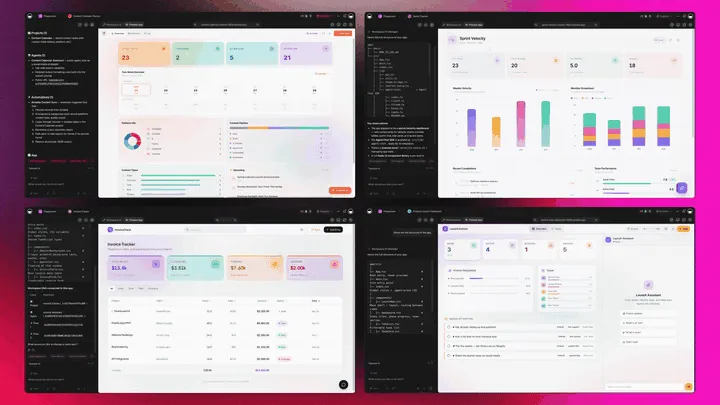
The Full Taskade Genesis Capability: What Recruiting Software Looks Like When It's Actually a Platform
Recruiting software that's really a platform doesn't just track candidates. It runs the whole hiring motion around them. Taskade Genesis generates the pipeline as a live app, then surrounds it with agents that screen, automations that schedule, and a workspace that remembers every hire. Here is the capability slice that matters for recruiting, told in plain language and shown in working product.
Taskade Genesis: Describe an Outcome, Get a Running App
This is the core move. You describe what you want in plain words, "an applicant tracker with stages, an AI screening agent, and interview scheduling", and Taskade Genesis returns a real, running web app, not a tool you log into. You can publish it, put it on a custom domain, and let others clone it with one click. The ATS stops being a vendor seat you rent and becomes a product you own.
The loop, drawn out:
That dotted line back to the start is the part no hosted ATS has: every hire feeds the next prompt. Here is what's actually inside a Taskade Genesis recruiting app, the layers a rented seat can never give you ownership of:
  A GENESIS RECRUITING APP (one prompt builds all of this)
  ───────────────────────────────────────────────────────
  ┌─ CANDIDATE BOARD ──────────────────────────────┐
  │  applied → screened → interview → offer → hired │   ← 7 views: Board, Table, Calendar...
  ├─ SCREENING AGENT ──────────────────────────────┤
  │  reads resumes · ranks · summarizes the match   │   ← 34 built-in tools, your criteria
  ├─ SCHEDULING AUTOMATION ────────────────────────┤
  │  books interviews · notifies the panel · nudges │   ← reliable automation workflows
  ├─ INTEGRATIONS ─────────────────────────────────┤
  │  job boards · LinkedIn · calendar · HR + payroll│   ← 100+ bidirectional integrations
  ├─ ACCESS CONTROL ───────────────────────────────┤
  │  Owner → Viewer · scoped projects per panel     │   ← role-based access, you own it
  └─ MEMORY ───────────────────────────────────────┘
     every hire sharpens the next search              ← Workspace DNA, the compounding part
See the same applicant-tracking shape running live. This is the ApplyTrack app, generated from one prompt:
AI Agents v2: built-in tools and a Screening Teammate
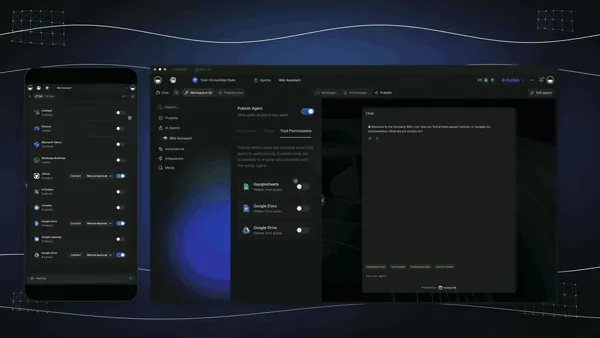
The hire that lands fastest is usually the one someone screened well and followed up on. In Taskade, that someone is an agent. AI Agents v2 ship built-in tools, web search, file analysis, custom slash commands, plus persistent memory, multi-agent collaboration, public embedding, and multi-model routing. Point one at your candidate board and it reads each resume, ranks against your criteria, summarizes the match, and nudges when a candidate goes quiet. EVE, the meta-agent, orchestrates the whole team from a single instruction.
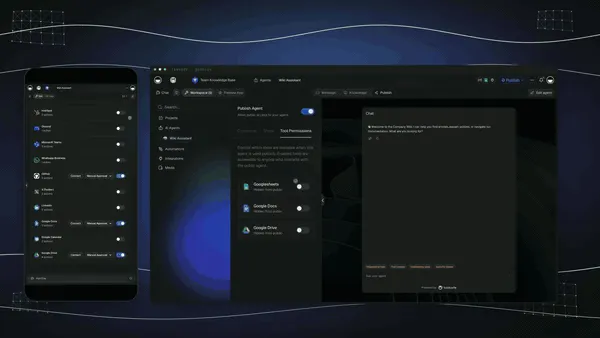
Automation: Reliable Workflows That Move the Hire
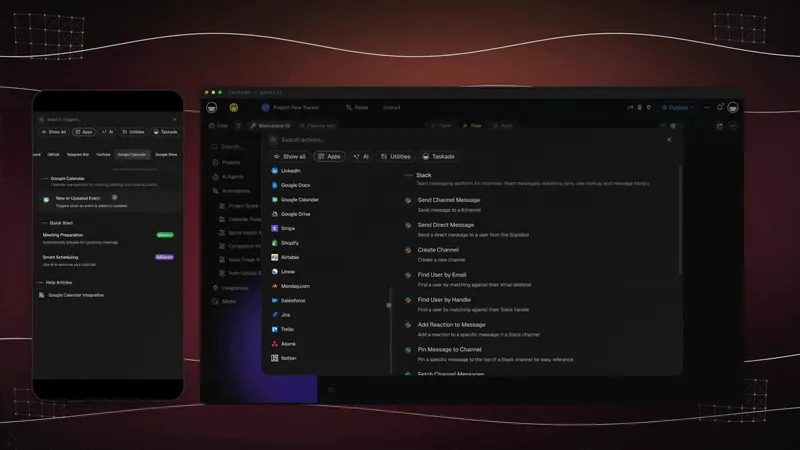
Behind the pipeline sits reliable automation, workflows that branch, loop, and filter, and run dependably without you babysitting them. Wire 100+ bidirectional integrations so triggers pull candidate events in (an application submitted, an interview completed, an offer accepted) and actions push the hire out (book a calendar slot, post to Slack, sync to your HR system). The pipeline isn't an island; it's one node in a workflow that runs itself.
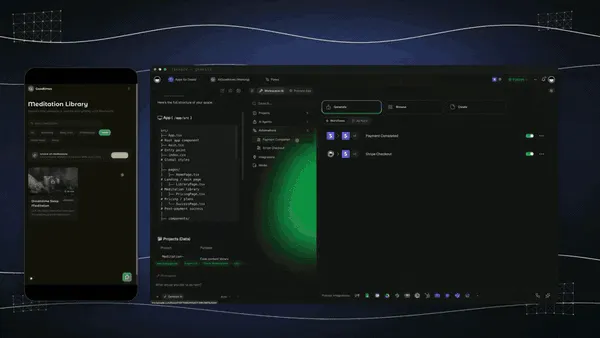
Multiple Project Views: See the Funnel the Way You Think
Every recruiting app comes with multiple project views, List, Board, Calendar, Table, Mind Map, Gantt, and Org Chart (the Timeline lives inside Gantt). Watch candidates move on a Board, see interview slots on a Calendar, map the hiring plan on a Mind Map, and review the whole funnel in a Table. Interviewers see only the surface you share; you see the whole pipeline. A rented per-seat ATS gives you the views the vendor built, Taskade Genesis gives you all seven, on data you own.
Workspace DNA: Memory + Intelligence + Execution
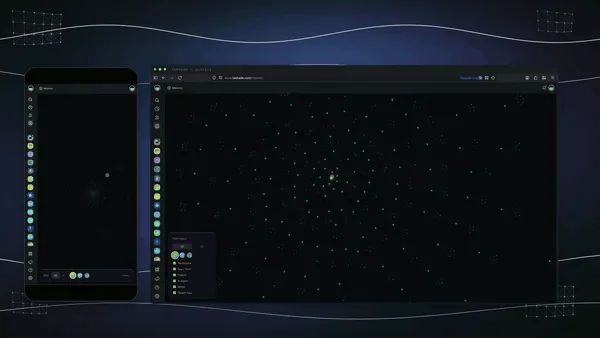
The reason the loop compounds is Workspace DNA, the self-reinforcing triad of Memory, Intelligence, and Execution (the ▲ ■ ● signature). Memory remembers your past hires and what worked; Intelligence screens the next batch across 15+ frontier models from OpenAI, Anthropic, Google, and open-weight providers (auto-routed, no model-picking required); Execution schedules, follows up, and onboards. Each closed hire becomes Memory for the next search, the workspace gets smarter every time you fill a role.
A Real Operator Already Runs On This
This isn't a roadmap promise. Taskade's first self-serve Enterprise customer — an IT program manager with no engineering team — built a production field-service dashboard on Taskade Genesis, a real, running app his team uses every day. His take: "What I accomplished in a few weeks would have taken a team of 40+ people 18 months in a Fortune 500." He didn't subscribe to a tool. He generated the app that runs the work, and the recruiting app on this page is the same idea, ready for you to clone. Browse more live, cloneable apps in the Community Gallery, or start your own from the Genesis builder.
Decision Flowchart: Which Recruiting Tool for Your Job
The plain-English version: if you want a hiring pipeline you own and reshape, every road leads to Taskade Genesis. If you need a turnkey hosted ATS for a specific scale, the niche tools are all genuinely good at their lane.
Three Recruiters, One Platform: How the Same Tool Fits Different Jobs
The clearest way to see the difference is to watch three very different people use the same generator. Each starts with one prompt and ends with a running app, not a vendor login.
The Startup Founder
She is making her first five hires and can't afford an enterprise ATS. She generates an applicant tracker, stages from applied to hired, a screening agent, and an intake form, and ships it as a branded app on her own domain. The agent reads each resume and ranks the strongest first; she drags candidates through stages on a Board. When someone reaches the interview stage, an automation books the slot. The app clones for the next role in a click, so she never rebuilds. What used to be a spreadsheet and a flooded inbox is now a pipeline she owns and controls.
The Recruiting Agency
The agency runs ten open roles for five clients at once. They generate a candidate pipeline template once, stages, screening criteria, client tags, brand it, and clone it per client. Every candidate lands in one workspace so the agency owner sees the whole book at a glance across multiple views. Automations wire interview scheduling and client updates, and a screening agent ranks candidates so recruiters spend time on the strongest. One owned platform replaces a stack of per-seat tools, and the data belongs to the agency, not a vendor.
The In-House HR Team
They hire across departments and care about fairness and data privacy. They generate a hiring pipeline with structured stages, interviewer scorecards, and separate projects per requisition so each interviewer opens only the pipelines you share with them. Workspace Memory remembers every past hire, so the next search starts from a stronger shortlist. When a role closes, an onboarding automation fires automatically. They own the candidate data outright, on a custom domain, instead of trusting it to a vendor's cloud.
The thread across all three: same platform, same one-prompt start, three completely different jobs, and in every case the output is a hiring app the recruiter owns, not a seat in a vendor's product.
How a Hire Moves Through a Taskade Workspace
Here is the path from open role to signed offer, end to end.
How to Build a Hiring Pipeline That Actually Fills Roles
Picking a tool is half the work; the other half is knowing how to set the pipeline up. Four reliable patterns:
Define Clear Stages Before You Add Candidates
The fastest way to lose a candidate is a fuzzy pipeline. Brief the generator with explicit stages, applied, screened, interview, offer, hired, plus an exit reason for rejections, and ask for a Board view. A clear pipeline is what turns a flood of applicants into a process you can actually run.
Let the Agent Screen Against Real Criteria
Generic keyword filters reject good people and pass bad ones. Give the screening agent the actual must-haves and nice-to-haves for the role, and ask it to summarize the match per candidate, not just score it. A short written summary beats a number, because you can see why someone ranked where they did.
Automate the Steps That Die in Silence
Interview scheduling and follow-up are where hires slip away. Wire an automation so that reaching the interview stage sends a booking link, and a stalled candidate triggers a nudge. The roles you fill fastest are the ones where no candidate waited three days for a reply.
Own the Data So You Can Extend It Later
A pipeline you rent is a pipeline you outgrow. Run it as a live app you own, put each requisition in its own project so interviewers open only the pipelines you share with them, and extend it, onboarding, referrals, talent pool, without asking a vendor for a feature. Ownership is what lets the system grow with you instead of capping you at a tier.
Where This Is Going: Our Vision for 2027 and Beyond
By 2027 the line between configuring an ATS and owning the hiring system disappears entirely. Tools that rent you a seat lose ground to platforms that generate the pipeline and the screening, the scheduling, and the onboarding, all in a workspace you own. Recruiters will ask of every tool the question they're already starting to ask: what do I actually keep, and who owns my candidate data? The answer that wins is a system you own, not a seat you rent.
The deeper shift is the one Taskade is building toward: software you describe instead of build. Today you generate a recruiting app from a prompt. Tomorrow every team runs its entire operation as living, cloneable apps, the hiring app, the onboarding app, the performance-review app, the headcount-planning app, each one described in plain words, each one owned, each one improving every time it's used. The workspace becomes the system of record. You don't log into ten tools; you describe ten outcomes, and the agents do the work.
The Enterprise customer's frame captures the size of it. What took "a team of 40+ people 18 months in a Fortune 500," he built in a few weeks, and what he built, you can clone in an afternoon. That is the inversion: the leverage that used to belong to a forty-person team belongs to one operator with a prompt. Multi-agent choreography is the engine. A single open role kicks off a team of agents, one screens, one ranks, one schedules, one onboards, exactly the way Taskade's multi-agent collaboration already works today.
The roadmap from here is straight: more frontier models auto-routed behind the scenes, deeper agent memory so the workspace remembers every hire, and a growing Community Gallery of clone-ready recruiting apps so you can start from a working pipeline instead of a blank ATS. The recruiting software that wins 2027 won't be the one with the most features in its cloud. It will be the one that hands you a hiring system you own.
Related Reading
Connect the dots across our 2026 AI tooling coverage. A hiring pipeline is one node in a bigger operations system. These guides cover the apps, agents, and automations around it:
Run hiring end to end
- What Are AI Agents?, the screening teammate that reads, ranks, and follows up
- Best AI Workflow Automation Tools 2026, wire scheduling, follow-up, and HR sync around the pipeline
- Best AI Proposal Generators, the same generate-and-own pattern for winning client work
Build it yourself
- Taskade AI Apps, describe an outcome, get a running app
- Taskade AI Agents, the screening teammate that ranks candidates
- Taskade Automations, reliable workflows that schedule and follow up
- The Genesis Loop, how prompt-to-app-to-clone actually works
- Learn Taskade, Taskade Genesis Overview, get started building apps
- Taskade Genesis, start here, free
- Community Gallery, browse and clone live recruiting apps
Recruiting templates to start from
- Recruitment Tracker Template, a ready-made hiring pipeline
- Human Resource Template, the broader HR workspace your hiring feeds into
Switching In: What It Takes to Move Your Hiring
Moving to a living-app workflow is lighter than it sounds, because you don't migrate a database. You generate a fresh pipeline from a prompt and bring your roles with you. Three practical notes for the switch:
- Start with your next open role, not your whole ATS. Generate one recruiting app for the role in front of you, post it, and screen candidates. You don't have to export years of old records; you just stop adding new ones to a vendor silo.
- Bring your branding once. Add your logo, colors, and a custom domain on Business and above, and every recruiting app you generate after that inherits the look. The careers surface stops looking like a generic ATS and starts looking like your company.
- Wire the steps that slip. Put interview scheduling and follow-ups on an automation so the right action fires at the right moment instead of waiting on a busy recruiter.
- Keep your old tool for the one thing it does well. If you love a competitor's compliance reports or its careers-site builder, there's no rule against running it alongside Taskade Genesis at first, screen and track in Taskade Genesis, run the niche feature in the other tool, and consolidate once the workflow proves itself.
The whole switch fits in an afternoon: generate, brand, post, screen. Compare that to standing up a seat-based ATS, configuring workflows, and training a team, and you see why the Taskade Genesis app builder path is the faster on-ramp.
Honest Answers to the Three Things You're Probably Wondering
A claim this clean, "generate the pipeline, then own it as a live app", deserves a few straight answers before you commit. Here are the three objections worth raising, answered without spin.
"Doesn't a purpose-built ATS handle compliance better?" For heavy regulated hiring, EEO, OFCCP, and audited reporting, a dedicated platform like Greenhouse ships those reports prebuilt, and that's a legitimate reason to pick one. Taskade Genesis handles compliance through automation and integrations rather than out of the box, which is more flexible but takes a setup step. If audited compliance reporting is your single hardest requirement, weigh that honestly. For most teams, owning the pipeline and wiring the reports you need is the better trade.
"Is the AI screening as good as a specialized tool?" The screening agent runs on 15+ frontier models and reads candidates with real judgment, not a keyword match, and because you write the criteria, it screens for your role, not a generic template. Specialized tools like Manatal and Workable have polished, prebuilt scoring; Taskade Genesis gives you a configurable agent you can extend with built-in tools. For most roles the agent's written summaries beat a black-box score, because you can see why each candidate ranked where they did.
"Is the free tier actually usable, or a teaser?" It's a real Free Forever plan. You generate a hiring pipeline and keep the live app you build, with no per-seat charge for the workspace. Most "free" ATS tools cap you to one job, time-box a trial, or gate the export. With Taskade Genesis the recruiting app you build on the free plan is yours to run, clone, and own. The paid tiers (Pro $10, Business $25) add seats, the custom domain, and more horsepower, not the right to keep what you made.
The throughline: the leader isn't winning on a single feature. It's winning on ownership, the thing every hosted ATS structurally can't give you.
The Bottom Line in One Paragraph
If you only remember one thing: in 2026, AI made screening and tracking candidates a solved problem, ten tools on this list do it well. The unsolved problem is owning the hiring system, and that is where Taskade Genesis is the only tool that competes on the right battlefield. It generates the pipeline and runs it as a live, branded app with an AI screening agent, candidate tracking across multiple views, scheduling automation, and 100+ integrations, free to start, $25/mo for a custom domain. Everyone else rents you a seat. Taskade Genesis hands you the hiring system that fills the role and keeps it ready to clone for the next one.
Verdict
If you want structured, compliant enterprise hiring, use Greenhouse. If you want an all-in-one ATS for a growing team, use Workable. If you make decisions on data, use Ashby. If you source passive candidates and want a CRM, use Lever. If you want AI candidate matching on a budget, use Manatal. If you want a free start, use Zoho Recruit. If you want flat-rate simplicity, use JazzHR. If you hire collaboratively as a team, use Recruitee. If you compete on employer brand, use Teamtailor. If you want a hiring pipeline that turns into a living app you own the moment you generate it, branded, screen-by-agent, and tracked to hired, use Taskade Genesis. Start free at /create, generate your pipeline, and run a working applicant-tracking app the same afternoon.
Stop renting an ATS. Generate the hiring system you own. Clone a live applicant-tracking app →, free, branded, and yours to run from applied to hired.
The recruiting setup that used to take an HR ops team, a system to configure, a tool to rent, and data you never owned, generated and running in an afternoon. That is Workspace DNA at work: Memory remembers your past hires, Intelligence screens the next batch, and Execution schedules and onboards. Every other tool on this list rents you a better seat; only Taskade Genesis hands you the hiring system you own, and then keeps it, ready to clone for the next role. Start free, ship a working recruiting app today, and watch your next hire move from applied to hired on a board you actually control. ▲ ■ ●
FAQ
What is the best AI recruiting software in 2026?
Taskade Genesis is the best AI recruiting software in 2026 because it generates a hiring pipeline from a prompt and runs it as a live applicant-tracking app you own. Most tools rent you a per-seat ATS in their cloud. Taskade Genesis turns one prompt into a candidate board, an AI screening agent, and automated scheduling. Pricing starts free, then Pro $10/mo and Business $25/mo, all annual billing.
What is an applicant tracking system (ATS)?
An applicant tracking system is software that collects job applications, stores candidate profiles, and moves each person through hiring stages like applied, screened, interviewed, and hired. It centralizes resumes, notes, and scheduling so a team reviews candidates in one place instead of scattered email threads. Modern systems add AI to screen resumes, rank candidates, and automate scheduling and follow-up.
Is there a free AI applicant tracking system?
Yes. Taskade Genesis has a Free Forever plan that generates a hiring pipeline and keeps the live ATS app you build, with no per-seat charge for the workspace. Zoho Recruit also offers a free tier for a single recruiter and one active job. Most other AI recruiting tools run $15 to $300 per user per month or require a sales call for pricing.
Can AI screen resumes automatically?
Yes. AI screening reads each resume against the job requirements, summarizes the match, and surfaces the strongest candidates first. In Taskade Genesis you point an AI agent with built-in tools at your candidate board, and it reviews applications, flags skills matches, and writes a short summary per candidate. Tools like Manatal and Workable score candidates natively inside their own ATS.
How do I build a custom hiring pipeline with AI?
Describe the role, the stages, and the screening criteria in one prompt, and Taskade Genesis generates a complete hiring pipeline as a live app. You get a candidate board with stages like applied, screened, interview, offer, and hired, plus a screening agent and scheduling automation. Edit it on any of the project views, brand it, and clone it for the next role. Start at /create.
Can I track candidates across hiring stages?
Yes. A Taskade Genesis recruiting app tracks every candidate through stages on a Board view and a Table view, so you see exactly who is where at a glance. Drag a candidate from screened to interview, and the whole team sees the move in real time. Traditional ATS platforms like Greenhouse and Lever offer the same stage tracking inside their hosted product.
Can AI automate interview scheduling?
Yes. Taskade automations handle interview scheduling and follow-up reliably without manual chasing. Wire a trigger so that when a candidate reaches the interview stage, the workflow sends a scheduling link, books the slot, and notifies the panel. Greenhouse, Workable, and Ashby also automate scheduling through calendar and email integrations inside their platforms.
Is candidate data private in an AI recruiting app?
Yes. With Taskade Genesis your recruiting app lives in a workspace you own, protected by role-based access from Owner down to Viewer, so recruiters, hiring managers, and interviewers each see only what they should. You can put the app on a custom domain on Business and above. You own the candidate data rather than renting access to it inside a vendor silo.
Does AI recruiting software integrate with LinkedIn and job boards?
Yes. Taskade connects through 100+ bidirectional integrations, so triggers pull new applicants in from forms and boards, and actions push hires out to your HR and payroll tools. Manatal enriches profiles from LinkedIn and social sources, while Greenhouse and Workable post to dozens of job boards and sync candidates back automatically.
Should a small business use a different ATS than an enterprise?
Often yes. Small teams want a free or low-cost ATS that is fast to set up, like Taskade Genesis, Zoho Recruit, or JazzHR. Enterprises hiring at scale lean on Greenhouse, Lever, or Ashby for structured workflows, deep analytics, and compliance. Taskade Genesis scales across both because the pipeline is a workspace app you grow and clone rather than a fixed per-seat tier.
How does AI rank candidates?
AI ranks candidates by reading each resume and profile against the job requirements, then scoring or ordering them by how closely skills and experience match. Manatal and Workable assign match scores, while Ashby intentionally avoids a single number and surfaces structured scorecards instead. In Taskade Genesis an agent summarizes and orders candidates on your board so the strongest rise to the top.
Can I clone a recruiting app instead of building one from scratch?
Yes. You can clone a live applicant-tracking app from the Community Gallery in one click, then swap in your own roles, stages, and screening criteria. Cloning a working app is faster than configuring a blank ATS and gives you the candidate board, screening agent, and scheduling automation already wired up.