Replit is an AI-powered coding platform that started as a simple browser IDE in 2016 and evolved into a $9 billion "vibe coding" platform where anyone can build, deploy, and monetize software using natural language. What began with code execution in the browser became the platform democratizing software creation.
TL;DR: Replit began in 2016 as Amjad Masad's browser-based IDE and grew into a $9B "vibe coding" platform where anyone builds and deploys software in plain English. It has raised $872M and serves 40M+ users, evolving from Ghostwriter completions to autonomous Agent app-building. Want a workspace that ships live apps with built-in agents? Try Taskade Genesis.
But where did it all start? What makes Replit different from GitHub Codespaces? How does Agent 3 work? In today's article, we explore the complete history of Replit and the future of collaborative, AI-first development. 💻
🤖 What Is Replit?
Replit was co-founded in 2016 by Amjad Masad, Haya Odeh, and Faris Masad. Their mission was ambitious—build a coding platform that anyone could use from any device, without downloads, setup, or configuration.
"Our goal is to bring the next 1 billion software creators online. You shouldn't need a computer science degree to build software—you should just describe what you want, and AI should build it for you."
Amjad Masad, CEO of Replit
The platform started as a browser-based IDE supporting multiple programming languages, but by 2023, Replit had transformed into an AI-first coding platform with features like:
- Ghostwriter AI: Your AI pair programmer that writes, explains, and debugs code
- Agent 3: Autonomous AI that builds entire applications from natural language descriptions
- Multiplayer Coding: Real-time collaboration with up to 4 developers
- One-Click Deployment: Instant hosting and custom domains
- Bounties Marketplace: Hire developers or earn money building projects (deprecated 2026)
By March 2026, Replit had reached:
- $9 billion valuation (after $400M Series D led by Georgian)
- $253M+ annualized revenue (from $2.8M in early 2024 — ~90x growth)
- 40+ million users globally
- $872M+ total raised from a16z, Sequoia, Google, Georgian, Y Combinator, and celebrity investors
So, let's wind back the clock and see how a Jordanian immigrant built one of the most transformative coding platforms in history.
🥚 The History of Replit
The Early Days of Browser-Based IDEs
The idea of coding in a browser seems obvious now, but in 2011, it was revolutionary.
Before cloud IDEs, developers needed to:
- Install compilers and interpreters on their machines
- Configure development environments (a nightmare for beginners)
- Deal with "works on my machine" problems
- Lose hours troubleshooting dependency conflicts
Early attempts at browser-based coding were limited. Services like Codecademy and Udacity offered in-browser tutorials, but they were sandboxed environments—you couldn't build real projects or deploy them.
The technical challenge was significant: how do you run arbitrary code safely in a browser? How do you support dozens of programming languages? How do you make it fast enough to feel native?
One engineer who solved these problems early was Amjad Masad.
Amjad Masad's Journey: From Jordan to Silicon Valley (2011-2016)
Amjad Masad was born in Jordan and became fascinated with programming as a teenager. In 2011, while working at various tech companies, he created JSRepl—an open-source project that could execute code directly in the browser.
JSRepl was ahead of its time. Codecademy and Udacity used it to power their in-browser coding tutorials, introducing millions of people to programming without requiring any software installation.
But Masad had a bigger vision: what if you could build real software in the browser, not just tutorials?

Amjad Masad, founder and CEO of Replit, speaking about democratizing software development.
In 2016, Masad and his wife Haya Odeh decided to build that platform. They called it Repl.it (later rebranded to Replit)—a reference to the "Read-Eval-Print Loop" (REPL) that programmers use to test code interactively.
The 2016 Launch:
Replit launched with support for multiple programming languages, all running in the browser:
- No installation required: Click a link, start coding
- Multi-language support: Python, JavaScript, Ruby, Java, and more
- Instant execution: Write code, press run, see results immediately
- Shareable links: Send your code to anyone with a URL
By the end of 2016, Replit had attracted 750,000 users—a remarkable achievement for a bootstrapped startup.
The product resonated with three groups:
- Students learning to code (no setup friction)
- Teachers (easy to share assignments and grade work)
- Hobbyist programmers (quick prototyping without environment setup)
Growth and Multiplayer Magic (2017-2020)
Between 2017 and 2020, Replit focused on two things: reliability and collaboration.
Making Replit Production-Ready:
The early versions of Replit were impressive demos, but making them reliable enough for serious development required solving hard infrastructure problems:
- Sandboxing: How do you safely execute untrusted code from millions of users?
- Performance: How do you make browser-based coding feel as fast as native IDEs?
- Persistence: How do you save user projects reliably?
- Scalability: How do you serve millions of concurrent users?
Replit's engineers built custom containerization technology to isolate each project in its own secure environment. This wasn't just Docker—it was optimized specifically for interactive coding workloads.
The Multiplayer Revolution (2018):
In 2018, Replit launched Multiplayer Mode—one of its most beloved features.
Imagine Google Docs, but for code. Multiple developers could work in the same file simultaneously, with:
- Real-time cursor positions (see where your collaborators are typing)
- Live code execution (one person runs the code, everyone sees the output)
- Shared terminal (collaborate on debugging together)
- Voice chat integration (talk while you code)
Replit Multiplayer: Up to 4 developers coding together in real-time, with shared terminals and live execution.
Multiplayer transformed Replit from a solo coding tool into a collaborative platform. Use cases exploded:
- Pair programming (mentor helping a student)
- Coding interviews (real-time technical assessments)
- Hackathons (teams building together remotely)
- Debugging sessions (collaboratively hunting bugs)
By 2020, Replit had grown to 10+ million users, and the COVID-19 pandemic accelerated adoption as schools and teams went remote.
The AI Awakening: Ghostwriter (2022-2023)
Then came the AI revolution.
In June 2021, GitHub launched Copilot—proving that AI could write code. But Copilot was an extension for VS Code and other IDEs. It didn't work in the browser, and it required a separate subscription.
Replit saw an opportunity: what if AI assistance was built into the platform from day one?
In April 2022, Replit launched Ghostwriter—an AI pair programmer powered by large language models.
Ghostwriter's Core Capabilities:
- Code Completion: Suggest entire functions as you type
- Code Explanation: Highlight code, ask "what does this do?"
- Code Generation: Describe what you need in plain English
- Debugging Help: Paste an error, get an explanation and fix
- Code Transformation: "Convert this JavaScript to Python"

Ghostwriter generating a complete REST API from a natural language description.
What made Ghostwriter special was the context awareness. Because Replit controlled the entire development environment, Ghostwriter could see:
- All files in your project
- Your chat history with the AI
- Recent program output and errors
- The programming language and frameworks you're using
This gave Ghostwriter significantly more context than browser extensions like Copilot, which only see the current file.
Ghostwriter Chat (2023):
In early 2023, Replit launched Ghostwriter Chat—the first conversational AI programmer built into an IDE.
Instead of just autocomplete, you could have a conversation:
You: "Build me a todo app with user authentication"
Ghostwriter: "I'll create a full-stack app with:
- Frontend: React with Tailwind CSS
- Backend: Node.js with Express
- Database: SQLite
- Auth: JWT tokensShould I proceed?"
You: "Yes, but use PostgreSQL instead of SQLite"
Ghostwriter: "Understood. Building now..."
[Generates 12 files with a complete application]
This was "vibe coding" in action—describe the vibe of what you want, AI handles the implementation.
By late 2023, Replit users were generating millions of lines of AI-written code per day.
(update) Agent 3 and Autonomous Development (2024-2025)
Ghostwriter was impressive, but it still required constant human direction. You had to tell it what to do, step by step.
In 2024, Replit began working on something more ambitious: autonomous agents that could build entire applications with minimal supervision.
The Agent Evolution:
| Version | Launch Date | Key Capability |
|---|---|---|
| Agent 1.0 | June 2024 | Build apps from single prompts, up to 20 minutes autonomy |
| Agent 2.0 | December 2024 | Improved debugging, 60 minutes autonomy |
| Agent 3 | January 2026 | 200 minutes autonomy, builds other agents, reflection loops |
Agent 3 (January 2026) represents a paradigm shift:
Autonomous Capabilities:
- Hours of independent work: Give it a complex task, come back hours later to a working app
- Self-testing: Agent 3 writes tests, runs them, and fixes failures automatically
- Reflection loops: Continuously improves code quality without human intervention
- Meta-agent creation: Can build other agents and automations
- Full-stack deployment: Creates frontend, backend, database, and deploys—all autonomously
Replit Tech Talks — Agent demo and overview featuring CEO Amjad Masad and engineering team.
Real-World Agent 3 Examples:
Slack Integration Bot: "Build a Slack bot that monitors our support channel and auto-responds to common questions with answers from our docs"
- Result: Agent 3 built the bot, set up webhook listeners, implemented NLP for question matching, integrated with the docs API, and deployed—in 45 minutes.
E-commerce Dashboard: "Create an admin dashboard for my Shopify store with sales analytics and inventory management"
- Result: Complete dashboard with charts, real-time inventory updates, Shopify API integration—in 2 hours.
Telegram Automation: "Build a Telegram bot that sends me a daily summary of Hacker News top posts"
- Result: Bot deployed with scheduling, web scraping, content summarization—in 20 minutes.
Mobile Apps (January 2026):
Replit also introduced Mobile Apps on Replit—build fully published mobile apps using nothing more than natural language:
- Describe your app idea
- Agent 3 generates the code (React Native or Flutter)
- Test in the browser simulator
- One-click publish to iOS App Store and Google Play
Non-developers were now publishing real apps to app stores.
For teams building agentic workflows beyond coding, platforms like Taskade Genesis offer a complementary approach — turning natural language into living productivity apps with built-in AI agents and automations.
(update) The $3B Valuation and Revenue Explosion (2025-2026)
The numbers became extraordinary.
Funding Timeline:
- 2023: $97.4 million raised at ~$1 billion valuation
- September 2025: $250 million raised at $3 billion valuation
- Led by Prysm Capital
- Participation from Andreessen Horowitz, Google's AI Futures Fund, Amex Ventures, Y Combinator, Coatue
Revenue Growth:
The revenue trajectory was unprecedented:
- Early 2024: $2.8 million ARR
- September 2025: $150 million ARR
- Growth rate: 53x in less than a year
This is one of the fastest revenue growth rates in software history.
"Replit is demonstrating what is possible with AI agents. They're not just building tools—they're creating a new category of software development that empowers anyone to build."
Jonathan Silber, Director of Google AI Futures Fund
The Competitive Landscape (2026):
| Platform | Focus | Pricing | Strength |
|---|---|---|---|
| Replit | AI-first, vibe coding ($9B) | $20/mo (Core) | Parallel agents, multi-format output |
| Taskade Genesis | AI app builder, living software | Free | AI agents, automations, 100+ integrations |
| GitHub Codespaces | Professional devs | $0.18/hr compute | VS Code integration, enterprise |
| Cursor | AI code editor | $20/mo | Agentic coding, codebase context |
| Glitch | Web apps | Free tier | Community, remixing |
| CodeSandbox | Web development | $9/mo | Fast prototyping, collaboration |
Replit carved out a unique position: the only platform designed for non-developers to build real software.
(update) Agent 4 and the $9B Valuation (March 2026)
On March 11, 2026, Replit announced a $400 million Series D led by Georgian at a $9 billion valuation — tripling its value in just six months. The same day, Replit launched Agent 4, its most ambitious release yet.
Agent 4 Key Capabilities:
- Parallel agents: Multiple AI agents work simultaneously on different parts of an application — frontend, backend, database, and testing all progressing at once
- Infinite design canvas: A visual editing surface where users can arrange, resize, and connect UI components alongside code
- Multi-format output: Agent 4 goes beyond code to produce web apps, mobile apps, landing pages, slide decks, spreadsheets, and animated videos
- One prompt, many artifacts: A single conversation can generate an entire product suite
The Numbers:
- Total raised: $872M+ across 7 funding rounds
- ARR: $253M+ by late 2025, targeting $1B ARR by end of 2026
- Users: 40M+ globally
- Valuation trajectory: $1B (2023) → $3B (Sep 2025) → $9B (Mar 2026)
Amjad Masad became a billionaire, with Forbes estimating his net worth at approximately $2 billion following the round.
New Investors in the Series D:
- Georgian (lead)
- Accenture Ventures
- Okta Ventures
- Databricks Ventures
- Celebrity investors: Shaquille O'Neal and Jared Leto
The vibe coding movement that Replit helped pioneer was now a $9 billion category. For teams exploring the broader agentic engineering landscape, Agent 4 represented the most aggressive bet yet on fully autonomous software creation.
🎬 Behind the Scenes: The Agent 3 Launch Documentary
A documentary captured the intense sprint behind Agent 3's launch, revealing the human drama behind autonomous AI development.
The Sprint Week in Foster City:
The entire Replit engineering team locked themselves in an office for a sprint week — 2 standups per day, all non-essential meetings cancelled, everyone focused on a single goal: shipping Agent 3.
The 200-Minute Autonomy Goal:
The longest autonomous run pre-launch was only 50 minutes. The team needed to 10x that number to hit the 200-minute target. It required a fundamental rethinking of how the agent managed context, recovered from errors, and maintained coherence over long sessions.
Architecture Rewrite 3 Days Before Launch:
In a move that terrified the team, they committed to a full architecture rewrite just 3 days before the scheduled launch. There was no turning back — the old system couldn't hit the autonomy targets.
Bug Bash Nights:
The entire company gathered in a hotel ballroom for marathon testing sessions, with everyone — from engineers to designers to operations — generating apps and stress-testing the agent.
The Emotional Rollercoaster:
Michael, the lead engineer, described the experience as "violently thrashing between zero and 10" on a stress scale. Team members oscillated between feeling like they were building something historic and fearing the whole thing would collapse.
The Bloomberg Moment:
With just 8 minutes until the Bloomberg press announcement went live, the agent was still being tested. The team shipped it anyway.
"When the history books are written 100 years from now where computers are merely programmable by merely just talking to them, there's going to be a chapter about Replit."
Amjad Masad, CEO of Replit
Amjad's Leadership Philosophy:
Throughout the documentary, Masad emphasized psychological safety: "I invited each one of them since the first day to question my takes." The culture of open dissent — even days before a major launch — enabled the team to make the risky architecture rewrite call that ultimately made Agent 3 possible.
🔎 The Investor Backing: A16z, Google, and Y Combinator
Replit's investor list reads like a who's who of Silicon Valley.
Y Combinator (2018)
Replit went through Y Combinator's Winter 2018 (W18) batch—one of the most prestigious startup accelerators in the world. YC's endorsement opened doors and validated the vision.
Andreessen Horowitz - a16z
Marc Andreessen's firm invested in multiple rounds, recognizing Replit's potential to democratize software creation. A16z's "software is eating the world" thesis aligned perfectly with Replit's mission.
Google's AI Futures Fund (2025)
Google's strategic investment in the September 2025 round signaled the tech giant's interest in AI-powered development platforms. With Google Cloud integration and potential Gemini model access, this partnership could accelerate Replit's capabilities.
Strategic Value Beyond Capital:
These investors provided more than money:
- Technical expertise: Guidance on scaling infrastructure
- Distribution: Introductions to enterprise customers
- AI model access: Early access to cutting-edge language models
- Credibility: Validation for schools, enterprises, and developers
🤯 The Revenue Surge: From $2.8M to $253M+ ARR
The ~90x revenue growth deserves deeper analysis. How did Replit achieve this?
Three Revenue Streams:
Replit Core Subscriptions ($20-25/month)
- Full Agent 3 access
- $25 monthly compute credits
- Always-on deployments
- Priority support
Cycles Marketplace (Deprecated)
- Virtual currency for Bounties
- Replit took a percentage on transactions
- Developer earnings created network effects
Enterprise Plans
- Team collaboration features
- SSO and admin controls
- Dedicated support and SLAs
- Custom pricing for schools and companies
Growth Drivers:
| Factor | Impact |
|---|---|
| Agent 3 launch | Non-developers started building apps, expanding TAM 10x |
| Viral demos | Social media showcasing Agent 3 building apps in minutes |
| Education adoption | Schools shifted from traditional IDEs to Replit |
| AI hype cycle | Everyone wants to build AI apps, Replit makes it easy |
| Deployment simplicity | No AWS/Vercel complexity—ship in one click |
The Non-Developer Market:
Replit's genius was recognizing that the total addressable market isn't just the 28 million professional developers—it's the 280+ million people who have software ideas but can't code.
Agent 3 unlocked this market.
🤔 So, What Makes Replit Different?
Vibe Coding Philosophy
Replit embraced "vibe coding" as its core positioning—and it's perfect.
Traditional Coding:
- Learn syntax, data structures, algorithms
- Write code line by line
- Debug errors
- Deploy (complicated process)
- Iterate
Vibe Coding on Replit:
- Describe the vibe of what you want
- Agent 3 builds it autonomously
- Review and provide feedback
- One-click deploy
- Iterate with natural language
The skill shifts from writing code to communicating intent.
Example:
Traditional: 200 lines of React code for a user authentication flow
Vibe Coding: "Add Google OAuth login with JWT tokens"
Result: Agent 3 generates complete auth system in 5 minutes
This isn't about replacing developers—it's about:
- Democratizing creation (non-developers can build)
- Accelerating professionals (senior devs 10x their output)
- Lowering the barrier (idea → working app in hours, not months)
The shift from writing code to communicating intent is central to the code vs runtime evolution — where the value moves from generated artifacts to the living systems they produce. Platforms like Taskade Genesis take this further by generating living software with embedded AI agents and automations.
End-to-End Platform Integration
Unlike GitHub Codespaces (just an IDE) or Cursor (just a code editor), Replit is a complete platform:
The Full Stack:
- IDE: Write code in the browser
- AI Assistant: Ghostwriter and Agent 3
- Execution Environment: Run code instantly
- Databases: Built-in PostgreSQL, SQLite, Redis
- Hosting: One-click deployment with SSL
- Custom Domains: yourapp.com integration
- Collaboration: Multiplayer coding
- Package Management: Automatic dependency installation
- Version Control: Git integration
- Mobile Apps: Publish to app stores
You never leave Replit. From idea to deployed app—all in one platform.
Community and Accessibility
Replit built a vibrant community:
- 40+ million users globally
- Public repls: Share your code, anyone can fork and remix
- Templates: Start from pre-built projects
- Bounties (deprecated but influential): Hire developers or earn money
- Learn: Tutorials and courses built into the platform
- Global accessibility: Works on Chromebooks, tablets, any device with a browser
The community became a moat. Developers showcase projects, students learn from each other, and the ecosystem grows organically.
⚡️ Potential Benefits of Replit
Democratizing Software Creation
Replit's impact extends beyond developer productivity.
Education:
- Students learn coding without setup friction
- Teachers assign projects, students submit with a link
- Computational thinking accessible to all students, not just those with gaming PCs
Entrepreneurship:
- Non-technical founders can build MVPs without hiring developers
- Rapid prototyping shortens idea-to-validation cycles
- Lower capital requirements for early-stage startups
Developing Countries:
- No expensive hardware needed (runs on low-end devices)
- Internet connection is the only requirement
- Global talent pool expands
Transforming Development Economics
If Agent 3 can build in hours what used to take developers weeks, the economics change:
- Fewer developers per project: Small teams accomplish more
- Lower development costs: Build MVPs for $0 instead of $50K
- Faster iteration: Ship features daily instead of quarterly
- More software created: Ideas that weren't economically viable become feasible
Concerns and Criticisms
Not everyone is sold on AI-generated code:
Quality Concerns:
- Does Agent 3 write maintainable code?
- What about edge cases and error handling?
- Can non-developers review code quality?
Vendor Lock-In:
- Replit-specific deployment makes migration difficult
- What if Replit raises prices 10x?
- Open-source alternatives exist but lag in features
Job Displacement:
- Will junior developers lose job opportunities?
- What happens to coding bootcamps if AI can code?
Replit's response: AI augments developers, doesn't replace them. The role evolves from implementation to architecture and product thinking.
👉 How to Get Started with Replit
Ready to try vibe coding? Here's how to start:
Getting Started:
- Go to https://replit.com and sign up (free account available)
- Click "Create Repl"
- Choose a template or start from scratch
- Start coding—or use Agent 3 to build for you
Your First Agent 3 Project:
- Click "Agent" in the left sidebar
- Describe what you want to build:
- "Build a weather app that shows current conditions for any city"
- "Create a URL shortener with analytics"
- "Make a Pomodoro timer with task tracking"
- Watch Agent 3 work autonomously
- Review the code, test the app
- Deploy with one click
Pricing:
- Free: Limited compute, basic features, public repls only
- Replit Core ($20/month): Full Agent 3, $25 credits, private repls, deployments
- Teams: Collaboration features, shared billing
- Enterprise: SSO, admin controls, dedicated support
💡 Pro Tip: Want to integrate Replit-built apps into your workflow? Taskade AI helps you manage development projects, coordinate with AI agents, and track progress. Build apps with Replit, manage projects with Taskade!
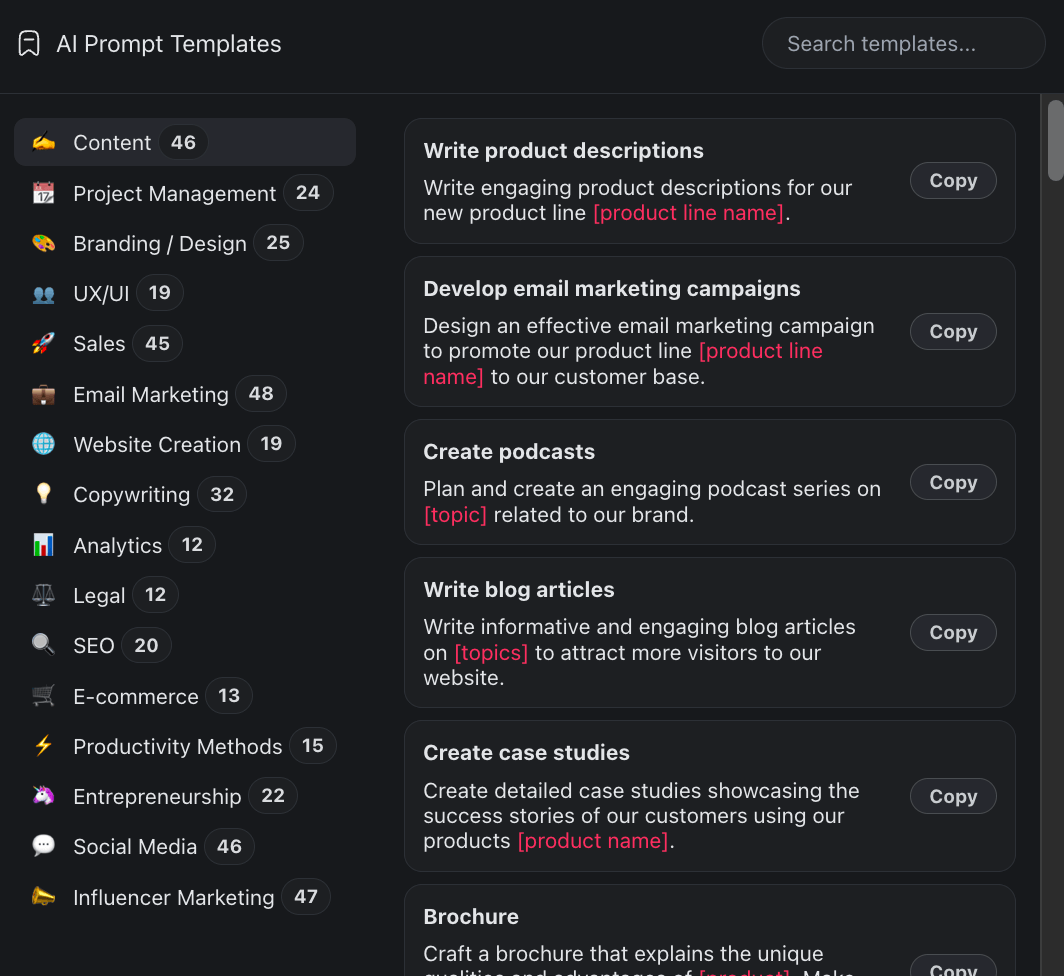
Use Taskade prompt templates to plan your Replit projects.
Tips for Success:
- Start with small projects to learn how Agent 3 thinks
- Review generated code—don't deploy blindly
- Use Ghostwriter Chat to ask questions and learn
- Explore public repls for inspiration
- Join the Replit community Discord
🚀 Quo Vadis, Replit?
From a Jordanian immigrant's side project in 2011 to a $9 billion platform in 2026—Replit's journey is remarkable.
But the most important question isn't where they've been—it's where they're going.
Amjad Masad's Vision:
"Our goal is to bring the next 1 billion software creators online. In 10 years, writing code manually will seem as archaic as writing assembly language. You'll describe what you want in natural language, and AI will build it."
Amjad Masad, Replit CEO
Key Strategic Questions:
Can Replit maintain its lead?
The competitive threats are real:
- GitHub has infinite resources and developer mindshare
- Cursor is dominating the professional developer segment
- Bolt.new and Lovable.dev are competing in the no-code AI builder space
- Google could integrate Gemini deeply into Cloud IDE offerings
But Replit has advantages:
- First-mover in vibe coding: Built the category
- End-to-end integration: Competitors offer pieces, Replit offers the whole stack
- Agent 4's parallel agents: Multi-format output beyond code — slides, spreadsheets, videos
- Community: 40M+ users create network effects
- Capital: $872M+ raised to fund aggressive R&D at a $9B valuation
Will Agent 3 get good enough to replace developers?
Not entirely. The role will evolve:
- Junior developers: Automated away for simple CRUD apps
- Mid-level developers: Augmented—spend less time coding, more time architecting
- Senior developers: Essential for complex systems, architecture, and code review
The bottleneck shifts from typing code to knowing what to build. This is the core thesis of agentic engineering — human intent drives AI execution.
What about safety and quality?
Autonomous agents raise concerns:
- Security: Will Agent 3 introduce vulnerabilities?
- Reliability: Can you trust AI-generated code for production?
- Maintenance: Who debugs AI-written code in 5 years?
These are open questions. Replit is investing in:
- Automated testing (Agent 3 writes comprehensive tests)
- Security scanning (detect common vulnerabilities)
- Code review mode (highlight AI changes for human review)
The Path to 1 Billion Creators:
If Replit achieves its mission, software creation becomes as common as creating documents or presentations:
- Students build apps for school projects
- Small businesses create custom internal tools
- Entrepreneurs launch startups without technical co-founders
- Hobbyists bring ideas to life for fun
The future is one where software creation is democratized—where the barrier to building isn't coding skill, but imagination and intent. Whether through Replit's Agent 4 or Taskade Genesis, the code vs runtime shift means the value is in what software does, not how it's written.
🐑 Before you go... Looking for a way to manage your development projects and AI workflows? Taskade AI integrates perfectly with Replit!
💬 AI Chat: Coordinate your Replit projects, track feature development, and keep your team aligned.
🤖 AI Agents: Automate project management tasks while Agent 3 handles the coding.
✏️ AI Assistant: Plan features, organize development tasks, and document your Replit projects.
🔄 Workflow Generator: Create development workflows that integrate Replit builds with your team's process.
Want to give Taskade AI a try? Create a free account and start today! 👈
🔗 Resources
- https://replit.com/
- https://en.wikipedia.org/wiki/Replit
- https://blog.replit.com/ai
- https://blog.replit.com/introducing-agent-3-our-most-autonomous-agent-yet
- https://techcrunch.com/2025/09/10/replit-hits-3b-valuation-on-150m-annualized-revenue/
- https://replit.com/products/agent
- https://www.freethink.com/entrepreneurship-innovation/software-creators
- https://docs.replit.com/
💬 Frequently Asked Questions About Replit
Who founded Replit?
Replit was co-founded in 2016 by Amjad Masad (CEO), Haya Odeh, and Faris Masad. Amjad previously created JSRepl, an open-source browser-based code execution tool used by Codecademy and Udacity. The founders are based in San Francisco.
What is Replit used for?
Replit is an AI-powered coding platform used for writing, running, and deploying code directly in the browser. It's used by students learning to code, developers prototyping ideas, teams collaborating on projects, and non-developers building apps using AI agents like Agent 3.
Is Replit free to use?
Yes, Replit offers a free tier with basic features and limited compute resources. The free tier includes public repls, basic Ghostwriter features, and community access. For full Agent 3 access and advanced features, Replit Core costs $20/month.
What is Ghostwriter in Replit?
Ghostwriter is Replit's AI pair programmer that helps you write, explain, debug, and transform code. It uses large language models to provide code completions, answer questions about your code, generate functions from descriptions, and debug errors.
What is Agent 3?
Agent 3 is Replit's autonomous AI agent that can build entire applications from natural language descriptions. It works independently for up to 200 minutes, writes tests, debugs its own code, and can even create other agents and automations. Agent 3 represents the cutting edge of "vibe coding."
How much does Replit cost?
Replit pricing includes: Free tier (basic features, limited compute), Replit Core at $20-25/month (full Agent 3, $25 monthly credits, private repls, deployments), and Enterprise plans with custom pricing for teams and schools.
Can you deploy apps on Replit?
Yes, Replit offers one-click deployment with automatic SSL certificates, custom domain support, and autoscaling. You can deploy static sites, web apps, APIs, and even publish mobile apps to iOS and Android app stores directly from the platform.
What is multiplayer coding on Replit?
Multiplayer mode allows up to 4 developers to code together in real-time within the same workspace. You can see each other's cursors, share the terminal and console, and collaborate on debugging—similar to Google Docs but for code.
How is Replit different from GitHub Codespaces?
Replit is an all-in-one platform with AI agents, deployment, and hosting built in, designed for rapid prototyping and "vibe coding." GitHub Codespaces is a cloud-based VS Code environment focused on professional developers with strong GitHub integration. Replit prioritizes ease of use; Codespaces prioritizes power and configurability.
What is vibe coding?
Vibe coding is an approach where you describe the "vibe" or intent of what you want to build in natural language, and AI agents (like Replit's Agent 3) handle the implementation details. Instead of writing code line-by-line, you communicate requirements and let AI generate the code.
How much is Replit valued at?
Replit reached a $9 billion valuation in March 2026 after raising $400 million in a Series D led by Georgian. This followed its $3 billion valuation in September 2025 ($250M led by Prysm Capital). Total funding stands at $872M+ from investors including a16z, Sequoia, Google, Y Combinator, and celebrity investors Shaquille O'Neal and Jared Leto.
Can Replit build mobile apps?
Yes, in January 2026, Replit introduced Mobile Apps—a feature where Agent 3 can build complete mobile apps from natural language descriptions and publish them directly to the iOS App Store and Google Play Store, all within the Replit platform.
What languages does Replit support?
Replit supports 50+ programming languages including Python, JavaScript, TypeScript, Java, C++, Go, Rust, Ruby, PHP, HTML/CSS, and many more. You can also use frameworks like React, Next.js, Django, Flask, Express, and Spring Boot.
Is Replit good for beginners?
Yes, Replit is excellent for beginners because it requires no software installation, has zero configuration, includes AI assistance through Ghostwriter, and offers interactive tutorials. Many schools use Replit to teach programming because it removes technical barriers to getting started.
🧬 Build Your Own AI Applications
While Replit builds the AI coding platform, Taskade Genesis lets you build AI-powered productivity and project management applications. Create custom AI agents, workflows, and automations with a single prompt. It's vibe coding for productivity—describe what you need, Taskade builds it as living software. Looking for alternatives? See our Taskade vs Replit comparison, best Replit alternatives, or try a free Replit alternative. Explore ready-made AI apps.