







Being a leader means that you're responsible for making key decisions that can make or break your company. But how can you do that confidently? The short answer is — OKRs. OKRs (Objectives and Key Results) are one of the most popular goal-setting methods around.
Big corporations such as Amazon, Dell, Netflix, and Microsoft use OKRs to drive results. And so can you. But you don't have to spend millions to follow in their footsteps. In today's article, you'll learn what OKRs are and how to use them properly as part of your company strategy.
TL;DR: OKRs (Objectives and Key Results) are a goal-setting framework where Objectives define what you want to achieve and Key Results measure progress with quantifiable metrics. Google credits OKRs with aligning 180,000+ employees. Track OKRs in Taskade's Table view with AI agents that automate progress check-ins. Try Taskade free →
💡 Before you start... Want to set your up for success? Check our articles on the best project management tools and project management basics when you're done reading.
🤔 What Are OKRs?
OKRs, an acronym for Objectives and Key Results, originated at Intel under the leadership of Andy Grove, who was the company's CEO in the 1970s. Grove developed this goal-setting framework to structure and refine goal setting and tracking at the company.

Andy Grove. Source: Bloomberg News
Drawing parallels with SMART goals, OKRs promote setting targets that are specific, measurable, achievable, relevant, and time-bound. This drives a performance-focused environment, where employees have a clear understanding of how their work is contributing to business priorities.
What makes OKRs different from other goal-setting methods is that OKRs place an emphasis on tracking measurable results and connecting team and company-wide objectives. This approach ensures every level of the organization is working towards the same priorities.
OKRs are set every quarter by the senior management, in line with the overall company strategy. Once that's done, it's up to each team within the organization to figure out the best way to achieve their team-specific OKRs, contributing to the broader business objectives.
And now let's look at all the steps and elements involved in setting OKRs.
🍰 What Components Do OKRs Contain?
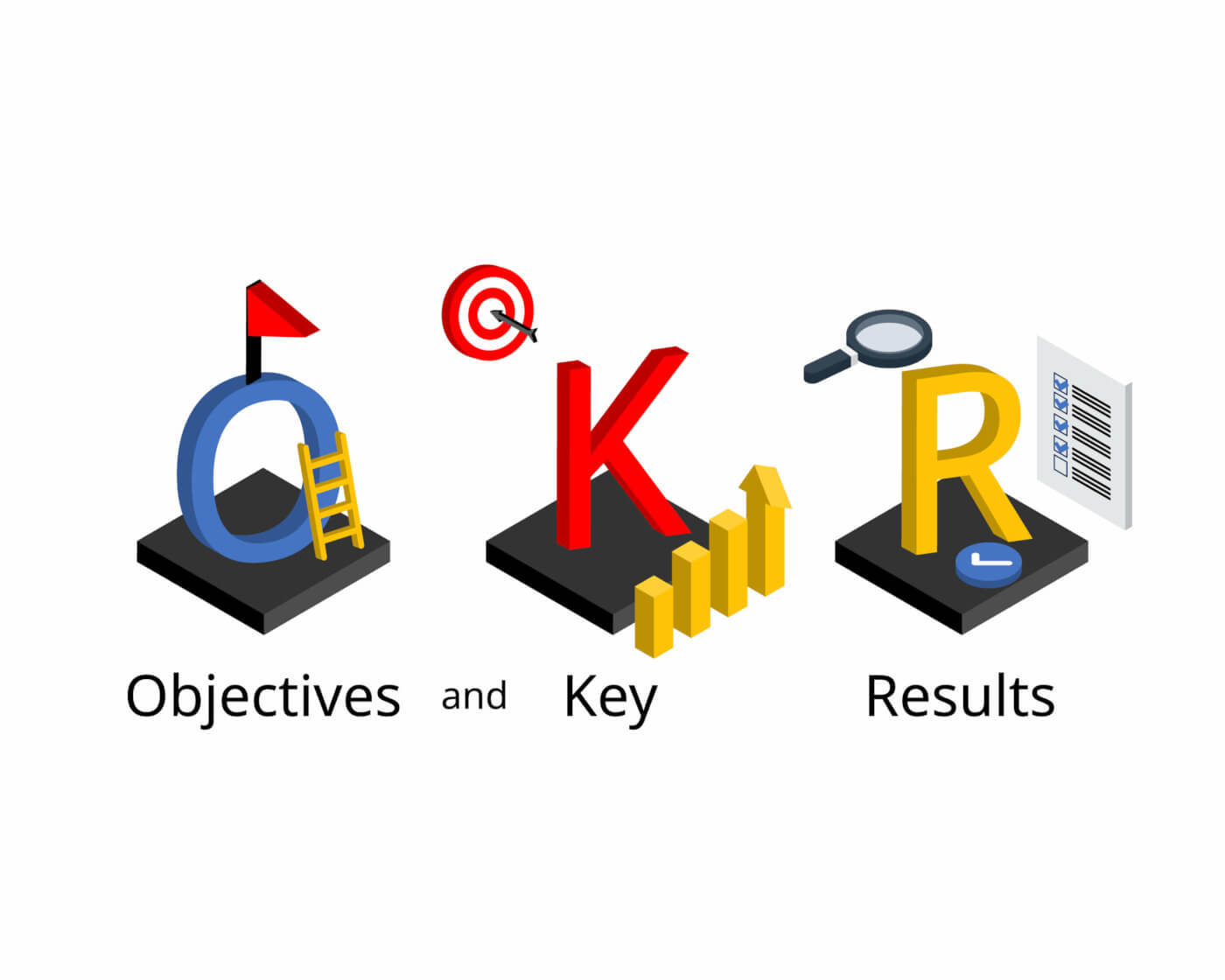
The OKR methodology is easy to understand as it consists of only two major components: Objectives, and Key Results. An Objective is the main direction or goal that you want to achieve, and Key Results are the measurable steps that you will take to make sure that you're on track to achieve your Objectives (Goals).
What Are Objectives in OKRs?
Objectives refer to the main SMART goals that you want your company to achieve. As a rule of thumb, every objective will be accompanied by three to five Key Results to ensure that they are achievable.
It is important to set ambitious yet achievable goals when it comes to setting objectives in OKRs. You want to challenge your team and at the same time not dent their motivation with unrealistic expectations.
Simply put, Think of Objectives as "What do I want to achieve with my business"? Setting clear and concise objectives is important so that your team is crystal clear on the role that they play in the organization.
What Are Key Results in OKRs?
After goal-setting via your Objectives, Key Results are used to chart out your path to achieving your goals. Think of it as the smaller steps you have to take to achieve your overall goal.
Each Objective should have 3 to 5 Key Results pegged to them. These Key Results should also have an indicator to allow teams to track their overall progress on a scale of 0-100%
To summarize, Key Results are measurable steps in ensuring that your business achieves its Objectives.
📊 How Do You Measure Success for Your OKRs?
OKRs are unique because achieving 100% on a Key Result is actually not ideal. It basically just means that your goals were too easy and that you were underutilizing your resources.
Getting 100% on a Key Result means that you should have set more ambitious OKR objectives.
The benefits of OKRs are that they allow you to set stretch goals, while also providing a clear roadmap to achieve them. The OKR framework enables better alignment, focus, and employee engagement across the organization.
The best practice for OKR success is to aim for at least 70% completion. Once you hit at least 70% you would have achieved your OKRs. On the other hand, scoring around 40% would mean that your goals were too much of a stretch goal for your team to accomplish.
Generally, OKRs are not done in short sprints. Instead, OKRs are ambitious goals that take some time to achieve. Typically, OKRs can run for more than a quarter, with monthly check-ins from the management to check the team's progress. The OKR goal-setting framework is adaptable to different timeframes and business needs, making it a flexible tool for driving success.
🤹♀️ Examples of OKRs
OKRs are extremely flexible, which makes them a versatile goal-setting tool that can be customized to suit the unique needs and objectives of different departments and teams within an organization. Here are two OKR examples that will help you get a better grasp of the method.
Sales Department
- 🎯 Objective: Increase sales revenue
🟢 Key Result 1: Close 15% more deals than last quarter by enhancing sales strategies and improving closing techniques.
🟠 Key Result 2: Increase the average deal size by 10% by focusing on selling higher-value packages and upselling where possible.
🔴 Key Result 3: Reduce sales cycle length by 20% through streamlining processes, improving lead qualification, and providing faster follow-ups.
In the example above, OKRs are used to drove sales growth by addressing different aspects of the sales process, including closing rates, deal size, and sales cycle efficiency. They provide a clear roadmap for the sales team to work towards achieving the desired revenue increase.
Marketing Department
- 🎯 Objective: Enhance brand visibility and reputation
🟢 Key Result 1: Boost website traffic by 25% by optimizing SEO, increasing content marketing efforts, and leveraging social media channels.
🟠 Key Result 2: Increase social media followers by 30% by engaging with the audience through regular posts, interactive content, and social media campaigns.
🔴 Key Result 3: Secure 5 features or mentions in industry-leading publications by building relationships with industry influencers, leveraging PR strategies, and producing high-quality, newsworthy content.
OKRs can also be used to enhance marketing department's efforts in building brand visibility and reputation. By focusing on website traffic, social media engagement, and media exposure, the marketing team can effectively reach a wider audience and strengthen the brand's image.
Want to track OKRs in a similar format? Grab our free OKR template and get started today!
🚀 Benefits of Using an OKR System
There are a lot of benefits that come with using OKRs to set goals for your business. Here are some examples of how it can benefit your company:
Improved collaboration: By setting measurable objectives and key results, everyone on your team can stay on the same page and understand their role in the company. This allows employees to focus on achieving the same common goal.
Better employee engagement: Employees perform best when they're motivated to work. OKRs help increase commitment by providing a sense of purpose and direction. Teams can stay motivated and engaged when they have clear and attainable goals to work towards.
Enhanced communication: OKRs help to establish clear communication in your company. One of the main pillars of successful OKRs includes transparency and regular check-ins to ensure that everyone is on track. This helps promote clearer communication as your team progresses toward achieving its key objectives.
Saves time: By breaking down your goal-setting process into objectives and key results, OKRs help you save time via a streamlined goal-setting process. This helps you save time by prioritizing only goals that have the most impact on your company.
In short, OKRs are a great way to help you and your team stay focused and motivated. Regardless if you're a startup or a large corporation, OKRs help you progress towards your goals and objectives efficiently.
🥊 How Do OKRs Compare to Key Performance Indicators (KPIs)?
Before we can compare the two, we first need to understand what a KPI is.
What Is a KPI?
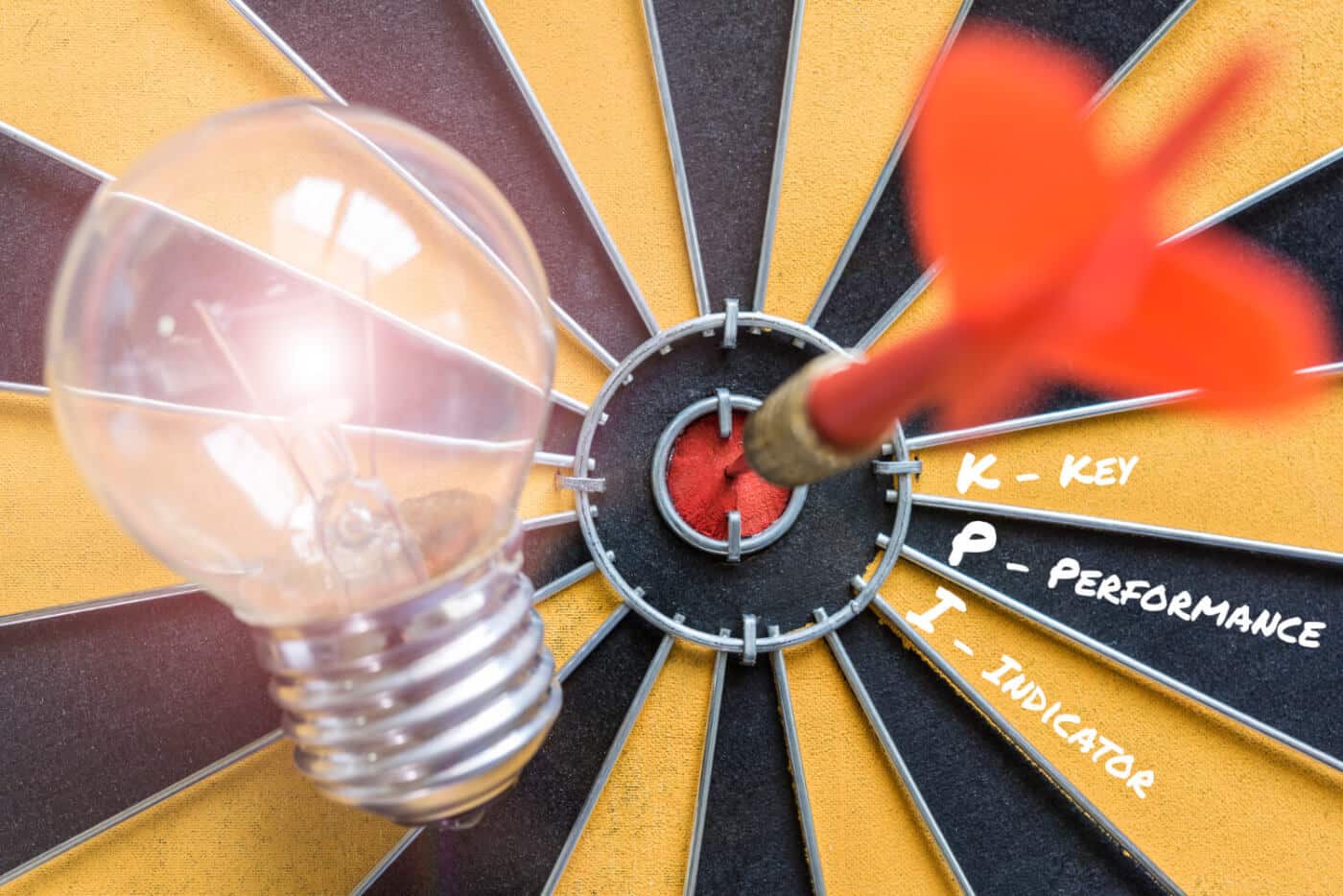
KPI stands for Key Performance Indicator, and it is a metric used to measure the performance of a business or organization. KPIs are used to track progress toward specific goals and objectives, which can help organizations measure their success and make informed decisions.
A good KPI will be specific, measurable, and time-bound, and will provide clear and actionable data. By regularly measuring and tracking KPIs, businesses can track their progress and make adjustments as needed.
This in turn gives businesses greater insights into their progress and helps them to make better decisions.
Which Is better, OKRs or KPIs?
While both OKRs and KPIs can be useful, there is no one-size-fits-all answer to the question of which is better. It really depends on your business needs and the goals you're trying to achieve.
OKRs are a great way of setting and tracking ambitious goals, while KPIs can give you an in-depth understanding of the performance of an individual or your whole team in general.
Generally, OKRs will be used to set organization-level objectives, while KPIs are more geared towards smaller teams and individuals. The best practice when it comes to OKRs and KPIs is to use both in tandem depending on what you need them for.
Both tools are useful and can when used correctly can be beneficial both to you and your business.
OKRs vs. KPIs vs. SMART Goals: Quick Comparison
| Framework | Purpose | Timeframe | Measurement | Best For |
|---|---|---|---|---|
| OKRs | Ambitious goal-setting | Quarterly | 0-100% per Key Result (70% = success) | Strategic alignment, stretch goals |
| KPIs | Performance monitoring | Ongoing | Specific metric thresholds | Operational health tracking |
| SMART Goals | Individual objectives | Varies | Binary (achieved / not achieved) | Personal development, simple projects |
| Taskade + AI | All of the above | Any cadence | AI-tracked dashboards | Teams needing automated OKR tracking |
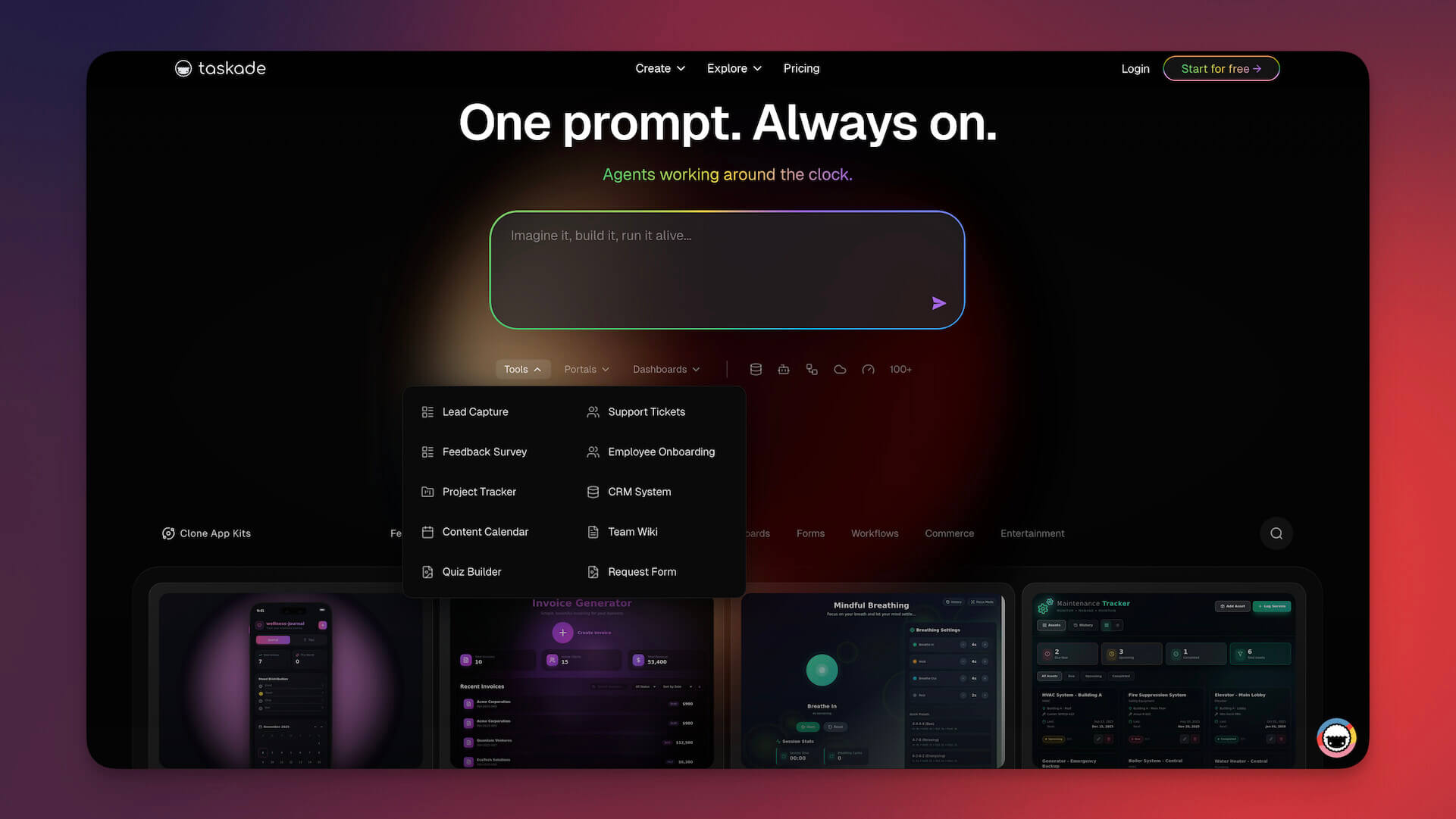
Track OKRs, KPIs, and team goals in Taskade with multiple project views, AI agents that send automated check-in reminders, and 100+ integrations that pull data from your existing tools. Build custom OKR dashboards with Taskade Genesis or explore the Community Gallery for ready-made systems.
Workspace DNA: Continuous Goal Intelligence Through Memory + Intelligence + Execution
Most OKR implementations fail because they're treated as a quarterly ritual rather than a living system. Workspace DNA changes this with a self-reinforcing loop. Memory (Projects) stores every OKR cycle's objectives, Key Results, progress scores, and retrospective insights. Intelligence (AI agents) analyzes historical OKR data to recommend more calibrated stretch goals, predict which Key Results are at risk, and identify team capacity constraints. Execution (Automations) triggers weekly check-in reminders, routes progress updates to stakeholders, and syncs OKR data across 100+ integrations. The result: each quarterly OKR cycle builds on the intelligence of every previous cycle. Learn more about Workspace DNA and living software.
Agentic AI: Autonomous OKR Coaching and Accountability
Agentic AI transforms OKR management from a manual tracking exercise into an autonomous coaching system. Instead of relying on managers to chase updates, AI agents with built-in tools and persistent memory operate continuously — nudging team members for Key Result updates, calculating progress scores in real time, flagging objectives trending below the 70% threshold, and preparing quarterly retrospective drafts. Deploy an OKR Coach agent that helps teams write better objectives, a Progress Tracker agent that monitors Key Results across departments, or an Alignment Agent that ensures team-level OKRs ladder up to company strategy. Build custom OKR systems with Taskade Genesis — it's vibe coding for goal management. Explore the Community Gallery or browse 500+ templates.
OKR Lifecycle: Manual vs. AI-Automated
| OKR Stage | Manual Approach | AI-Automated (Taskade) |
|---|---|---|
| Objective setting | Leadership brainstorm | AI agents draft based on company strategy |
| Key Result definition | Team workshops | AI suggests measurable KRs from historical data |
| Weekly check-ins | Manual reminders | Automations trigger updates automatically |
| Progress scoring | Spreadsheet math | AI calculates in real time |
| At-risk detection | Manager intuition | AI flags below-threshold KRs early |
| Quarterly retro | Manual facilitation | AI generates retrospective summaries |
👋 Parting Words
Learning how to use OKRs to make good decisions is just the first step in ensuring success for your business. You need to use it consistently to steer your team in the right direction.
And if you still need some, try Taskade!
Maximize efficiency with Taskade AI! 🤖
🤖 Custom AI Agents: Develop AI agents to help define, track, and achieve objectives, streamlining goal-setting and prioritization.
🪄 AI Generator: Use AI to generate a structure for all your projects, ensuring each objective is ambitious yet attainable and aligned your goals.
✏️ AI Assistant: Use handy /AI commands inside the project editor to supercharge daily business activities, powered by frontier AI models from OpenAI, Anthropic, and Google.
🗂️ AI Prompt Templates Library: Access a wide range of AI prompts to kick-start and optimize all kinds of workflows.
💬 AI Chat: Consult AI Chat for advice on setting and refining your goals, maximizing their impact on personal and team objectives.
📄 Media Q&A: Upload your project documents, and use AI-driven insights to improve your approach to goal setting.
🧬 Taskade Genesis: Build custom OKR dashboards and goal-tracking systems from a single prompt. It's vibe coding: describe your ideal OKR workflow, Taskade builds it as living software. Explore the Community Gallery.
📖 Learn more: Ultimate Guide to Taskade Genesis | What Is Vibe Coding? | How Workspace DNA Works | Browse Templates
And much more...

Frequently Asked Questions
What are OKRs and how do they work?
OKRs (Objectives and Key Results) are a goal-setting framework where Objectives define qualitative goals (what you want to achieve) and Key Results define quantitative metrics (how you'll measure success). For example: Objective — 'Improve customer satisfaction'; Key Results — 'Increase NPS from 40 to 60,' 'Reduce support ticket resolution time to under 4 hours,' 'Achieve 95% customer retention rate.' OKRs are typically set quarterly and cascade from company-level to team-level to individual-level.
How are OKRs different from KPIs?
OKRs are aspirational and time-bound — they define ambitious goals and measurable outcomes for a specific period (usually quarterly). KPIs (Key Performance Indicators) are ongoing metrics that track operational health continuously (e.g., monthly revenue, churn rate, uptime). Think of OKRs as 'where we want to go' and KPIs as 'how we're doing right now.' Companies typically use both: KPIs for monitoring business health and OKRs for driving strategic progress.
What companies use OKRs successfully?
OKRs were popularized by Intel's Andy Grove in the 1970s and later championed by John Doerr, who introduced them to Google in 1999. Today, companies like Amazon, Netflix, Microsoft, Spotify, LinkedIn, Twitter, and Uber use OKRs to align teams around ambitious goals. Google credits OKRs with helping the company grow from 40 employees to over 180,000 while maintaining strategic alignment. The framework works for organizations of any size — from startups to enterprises.
How do you track OKRs effectively?
Track OKRs through weekly check-ins (quick progress updates on Key Results), monthly reviews (assess trajectory and adjust if needed), and quarterly retrospectives (score OKRs and set new ones). Use a project management tool like Taskade to create OKR dashboards with progress tracking, assign ownership to specific team members, and set up automated reminders for updates. Taskade's Table view works well for OKR tracking, with Board view for visualizing initiative status across teams.
How does Taskade Genesis help with OKR tracking and goal management?
Taskade Genesis lets teams build custom OKR dashboards and goal-tracking apps from a single prompt. With 150,000+ apps already created, teams generate quarterly OKR trackers, Key Result progress dashboards, and team alignment systems that deploy instantly with custom domains. Visit taskade.com/ai/apps to explore ready-made OKR tools or build your own at taskade.com/create.
What is vibe coding and how does it apply to OKR management?
Vibe coding means building software by describing what you want in natural language rather than writing code. For OKRs, teams describe their goal structure — such as quarterly objectives with cascading Key Results and automated scoring — and Taskade Genesis builds it as a live tracking app. This replaces static spreadsheets with dynamic, AI-powered OKR systems.
How do AI agents automate OKR tracking and check-ins?
Taskade AI agents with built-in tools and 100+ integrations automate the OKR lifecycle. Agents send weekly check-in reminders, collect Key Result updates from team members, calculate progress scores automatically, flag at-risk objectives before quarterly reviews, and generate retrospective summaries. With persistent memory, agents track OKR trends across multiple quarters to help teams set more calibrated goals.
What is Workspace DNA and how does it improve goal setting?
Workspace DNA is Taskade's self-reinforcing loop of Memory, Intelligence, and Execution. Memory (Projects) stores historical OKR data, team performance metrics, and goal dependencies. Intelligence (AI agents) analyzes past OKR scores to recommend more calibrated objectives. Execution (Automations) triggers check-in reminders and progress updates across 100+ integrations. This loop ensures each OKR cycle builds on the institutional knowledge of previous quarters.