






What makes your company tick? How do you know you're heading in the right direction? A SWOT analysis (acronym for strengths, weaknesses, opportunities, and threats) is one of the most effective ways to evaluate your organization's efficiency, spot roadblocks, and plan ahead. In today's article, you'll learn what a SWOT analysis is and how you can apply it to your business.
TL;DR: A SWOT analysis evaluates Strengths, Weaknesses, Opportunities, and Threats to guide strategic decisions. Teams that map SWOT factors collaboratively find 20-30% efficiency improvements. Use Taskade's Mind Map view to brainstorm SWOT factors and AI agents to research competitors automatically. Try Taskade free →
🤔 What Is a SWOT Analysis?
The SWOT analysis is a popular tool for identifying strengths, weaknesses, opportunities, and threats in a business environment. The framework is often credited to management and business consultant Albert Humphrey, but the attribution is murky at best.
SWOT is a high-level framework that is used to help your company create an action plan for success by using a strategic lens. It's usually conducted to explore growth opportunities, identify roadblocks and bottlenecks, and respond to a changing business landscape.
A SWOT analysis takes into account both internal and external factors that affect your organization. It can help you evaluate the aspects of your organization you can control as well as the surrounding business environment like politics or social changes.
What's important is that you understand what can be done at this current juncture and plan the best course of action for your business to take. External factors can be demoralizing, but it's useful to keep tabs on them so that you're aware of how to navigate your organization.
When done correctly, a SWOT analysis can lead to a butterfly effect in helping your organization be more competitive.
🔎 When Should You Perform a SWOT Analysis?
Carrying out a SWOT analysis is good practice to help you evaluate your existing company strategy. It helps you measure where your company stands in the market and adjust its current trajectory, keeping a keen eye on market trends.
That said, you should always try to conduct a SWOT analysis before you try to make any organization-level decisions. This can mean anything from considering new expansion initiatives, adding to your current products and services, or when coming up with new marketing initiatives.
SWOT should be carried out whenever you're dealing with organizational strategy as it forces you to take into account both internal and external factors. This allows you to make better-informed decisions before committing valuable resources. Aligning your strategies with market trends ensures that you are leveraging your competitive advantage.
When done correctly, SWOT can be a catalyst for implementing a successful strategy and helping you form a solid foundation for strategic planning.
What's more, a SWOT analysis helps you make decisions that are based on facts instead of emotion. By uncovering potential loopholes in your business processes, SWOT could just be the turning point for increased effectiveness for your company, safeguarding and enhancing your competitive advantage.
🚦 What Are the Key Components of a SWOT Analysis?
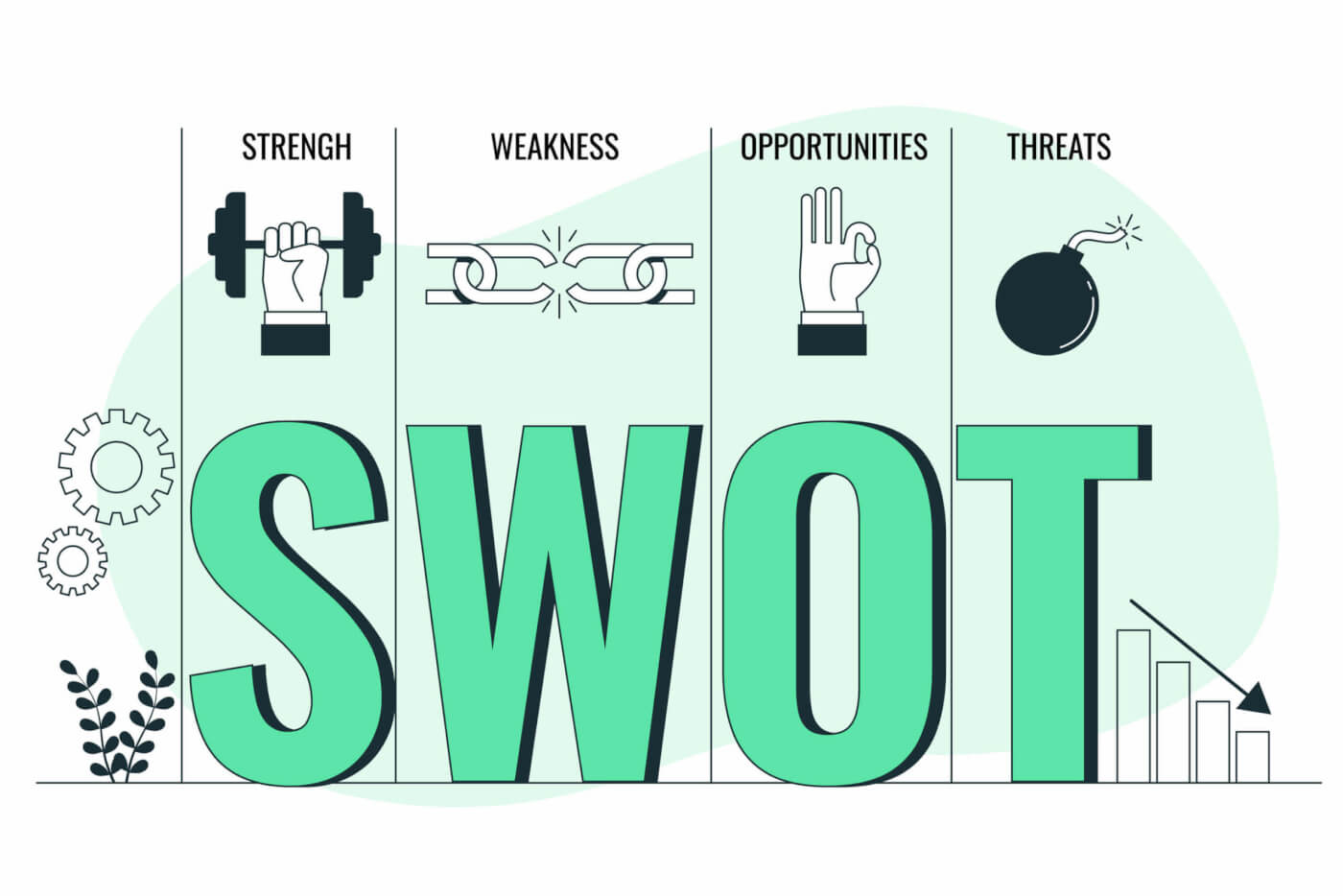
A SWOT analysis consists of four key components which include:
🟢 Strengths
🟡 Weaknesses
🔵 Opportunities
🔴 Threats
These four aspects of a SWOT analysis—they're usually presented in a table format—will help you come up with a better strategy for your organization. From these four components, A SWOT analysis can be further categorized into internal and external factors.
Internal Factors In a SWOT Analysis
Strengths and Weaknesses are both considered internal factors as these are things that are within your and your organization's control. Upon deliberation, points that are raised when discussing internal factors can usually be followed up with action items.
The goal is to take advantage of your company's internal strengths but also to remedy weaknesses.
Strengths
In this category, you will list down the unique selling point of your business. What is it that sets you apart from the competition? This can be anything from having a strong and committed workforce, to even having strong distribution channels.
Even though this might sound simple, you should take extra care to truly list down your unique selling points. For example, when it comes to the sneaker market, Nike could arguably list down their branding as a strength as compared to Adidas and New Balance.
You should also use this opportunity to think about what other businesses might see as your strength. It might be useful to have a look within and think about what is it that makes you different from your competition.
Perhaps you could make the decision to double down on your strengths to improve efficiency based on your findings in this section.
Weaknesses
Let's face it, no one likes to talk about weaknesses. The last thing you need in a hyper-competitive environment is a chink in your armor other people can exploit. Right?
But identifying your company's internal weaknesses is a surprisingly effective exercise.
💬 "Why is the business not performing as expected?"
💬 "What can we do to get back on the right track?"
💬 "Why aren't our customers satisfied with our products/services?"
Regardless of the line you're in, you should be aware that your competitors are also on the lookout for your weaknesses. Asking yourself those questions early on will help you find the areas for improvement to improve your business plans and iron out inadequacies before they can use them against you.
External Factors In a SWOT Analysis
Let's face it. Most external factors are beyond your control. However, you can still identify threats and opportunities and act proactively to steer your business in the right direction.
Opportunities
Spotting and making use of external opportunities requires business acumen, and this is probably what sets apart seasoned businessmen from budding entrepreneurs.
In a SWOT analysis, opportunities originate from two directions—external factors like a growing demand or changing regulations and internal factors, meaning your strengths and weaknesses.
What's important about opportunities is that you identify them quickly, and then cease them. Even small wins can collectively add up to help improve business performance in the long run.
Threats
The final quadrant of the SWOT matrix includes Threats. These are any negative factors that can originate both from internal circumstances and the external landscape.
Threats can include anything from adverse market conditions to changing government laws and regulations. They also affect every organization differently.
It's important that you try to anticipate threats to your business and act on them proactively. You won't have control over most external factors. But catching them early gives you a chance to adjust your business strategy and put measures in place to minimize fallout.
You know what SWOT is. Let's learn how to conduct a SWOT analysis in your business.
⚙️ How to Do a SWOT Analysis

Here's how to conduct a SWOT analysis in your business in six simple steps:
Ask yourself what you're trying to evaluate during your SWOT analysis. It can be anything from the quality of your customer service to the performance of your revenue streams.
Create a table consisting of two rows and two columns and write Strengths, Weaknesses, Opportunities, and Threats in each of the cells (starting from the top-left cell).
Identify Strengths: in the first cell of the SWOT matrix. These are the unique value propositions that differentiate your business from the competition.
Identify Weaknesses: What are the obstacles your business is facing? What are your competitors doing better than you? What expertise/resources do you lack?
Identify Opportunities: How can you turn weaknesses into opportunities? How can you turn strength into opportunities? How is the business landscape changing?
Identify Threats: Can our weaknesses affect the business in the future? How? Are there any laws and regulations that may hinder growth?
Once you've compiled and analyzed your findings, it's time to take action. Create a roadmap for your organization and set very specific action items you'll pursue to make necessary adjustments. The planning process is crucial as it helps you set actionable items to help you achieve your business goals.
💡 Grab a Free SWOT Analysis Template
We get it. Conducting a SWOT analysis every time you want to check the health of your business can be tedious. The good news is that you don't have to start from scratch.
Here's a free SWOT analysis template that will help you get started quickly! 👇
SWOT vs. Other Strategic Frameworks
| Framework | Focus | Complexity | Best For | AI Advantage |
|---|---|---|---|---|
| SWOT | Internal + external factors | Low | Quick strategic overview | AI researches competitors & trends |
| PESTEL | Political, Economic, Social, Tech, Environmental, Legal | Medium | Macro-environment analysis | AI monitors regulatory changes |
| Porter's Five Forces | Competitive landscape | Medium | Industry structure analysis | AI tracks market dynamics |
| Balanced Scorecard | Performance metrics | High | Long-term strategy execution | AI automates KPI tracking |
| Taskade + AI | All of the above | Low — AI handles complexity | Any strategic planning need | AI agents generate drafts in seconds |
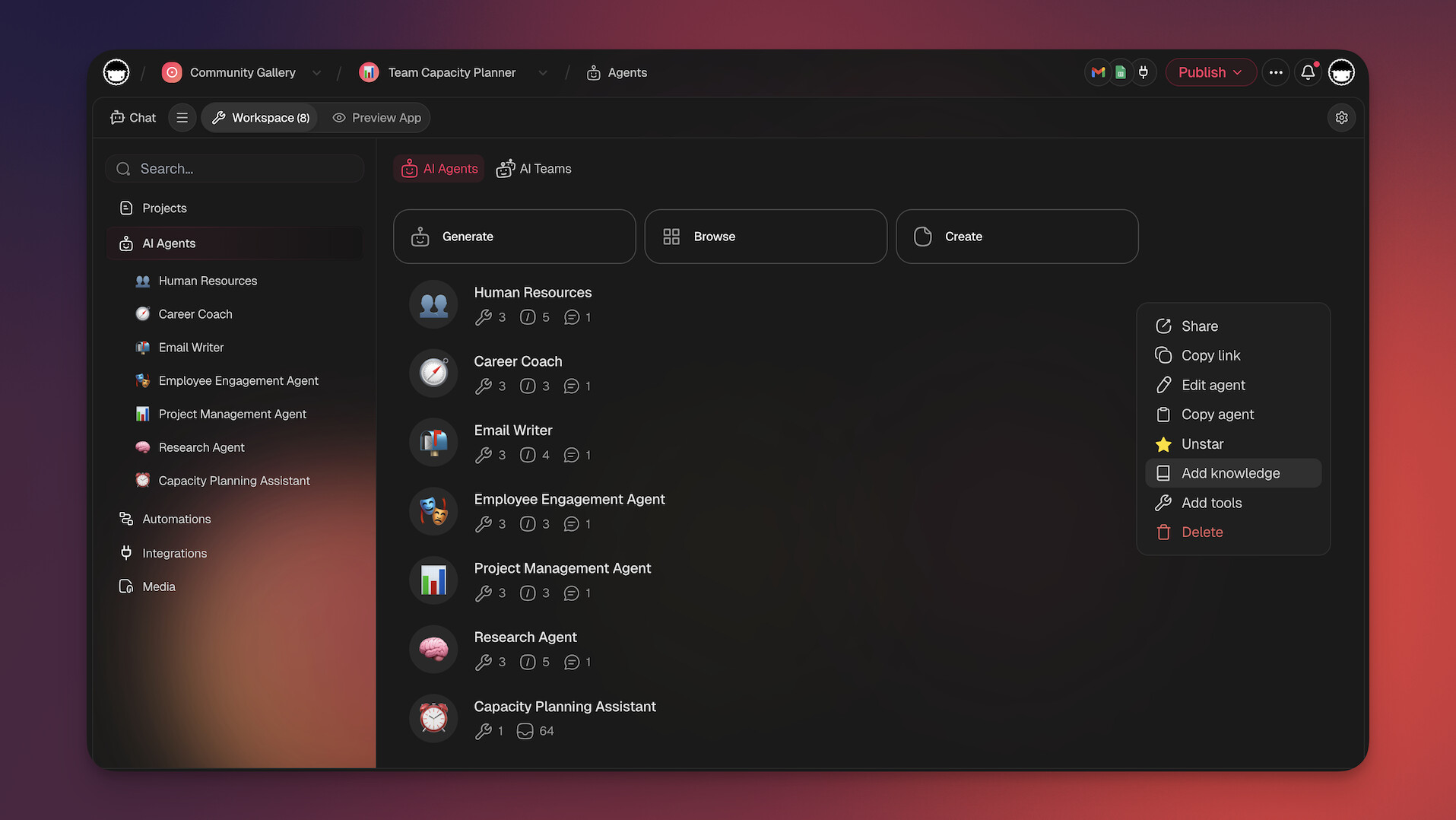
Run your next SWOT analysis in Taskade — use Mind Map view to brainstorm factors, Table view to organize the 2x2 matrix, and AI agents that research competitors, identify market trends, and generate initial SWOT drafts from your company data. Connect 100+ integrations to pull real-time market signals, or build a custom SWOT dashboard with Taskade Genesis.
Workspace DNA: Turning SWOT From a One-Time Exercise Into Continuous Intelligence
Most SWOT analyses end up in a slide deck that gathers dust. Workspace DNA changes this with a self-reinforcing loop. Memory (Projects) stores every SWOT analysis, competitive research report, and market signal in a persistent knowledge base. Intelligence (AI agents) continuously monitors for changes — tracking competitor moves, regulatory shifts, and market trends that affect your Strengths, Weaknesses, Opportunities, and Threats. Execution (Automations) generates action items from SWOT insights and routes them to the right teams across 100+ integrations. The result: your strategic planning becomes a living system that updates itself. Learn more about Workspace DNA and living software.
Agentic AI: Autonomous Competitive Intelligence and Strategic Analysis
Agentic AI elevates SWOT from a manual brainstorming exercise to an AI-powered strategic intelligence system. Autonomous AI agents with built-in tools, 100+ bidirectional integrations, and persistent memory operate continuously — researching competitor product launches, monitoring industry news for emerging threats, identifying market opportunities from customer feedback, and generating updated SWOT matrices on a weekly or monthly cadence. Deploy a Competitive Intelligence agent that tracks rival pricing and features, a Market Analyst agent that identifies emerging opportunities, or a Risk Monitor agent that flags regulatory changes affecting your industry. Build custom strategic planning systems with Taskade Genesis — it's vibe coding for business strategy. Explore the Community Gallery or browse 500+ templates.
SWOT Analysis Lifecycle: Manual vs. AI-Automated
| SWOT Stage | Manual Approach | AI-Automated (Taskade) |
|---|---|---|
| Data gathering | Team brainstorm | AI agents research competitors and trends |
| Strength identification | Department interviews | AI analyzes performance data and reviews |
| Weakness discovery | Self-assessment bias | AI cross-references with competitor benchmarks |
| Opportunity scanning | Annual market review | AI monitors trends continuously |
| Threat detection | Reactive to events | AI flags risks before they materialize |
| Action planning | Post-meeting to-dos | Automations generate and route action items |
👋 Parting Words
A well-executed SWOT analysis will help you make faster and more informed business decisions, overcome obstacles, and put your business on a path to success.
Enjoyed the article? Read these articles next:
Work smarter with Taskade AI! 🤖
🤖 Custom AI Agents: Build teams of AI agents with built-in tools to automate strategic analysis, competitor research, and reporting — powered by frontier AI models from OpenAI, Anthropic, and Google.
🪄 AI Generator: Describe the project or document you're working on, and Taskade AI will generate a comprehensive plan in seconds.
✏️ AI Assistant: Leverage the AI Assistant to brainstorm, generate, and develop your goals, tasks, documents, and workflows.
🗂️ AI Prompt Templates Library: Access a wide range of AI prompts for every occasion, available anywhere inside Taskade.
💬 AI Chat: Engage AI to discuss opportunities, obstacles, and threats to your business or projects, right inside the project chat.
📄 Media Q&A: Evaluate and iterate on your documents with AI-powered insights. Summarize key points, extract valuable knowledge, and more.
🧬 Taskade Genesis: Build custom SWOT analysis and strategic planning apps from a single prompt. It's vibe coding: describe your strategy workflow, Taskade builds it as living software. Explore the Community Gallery.
📖 Learn more: Ultimate Guide to Taskade Genesis | What Is Vibe Coding? | How Workspace DNA Works | Browse Templates
And much more...

Frequently Asked Questions
What is a SWOT analysis and how does it work?
A SWOT analysis is a strategic planning framework that evaluates four dimensions: Strengths (internal advantages), Weaknesses (internal limitations), Opportunities (external favorable factors), and Threats (external risks). Teams organize findings into a 2x2 matrix, then use the insights to make strategic decisions — leveraging strengths, addressing weaknesses, capitalizing on opportunities, and mitigating threats. It's one of the most widely used business analysis tools across industries.
When should you conduct a SWOT analysis?
Conduct a SWOT analysis when: launching a new product or entering a new market, evaluating competitive positioning, planning strategic initiatives for the next quarter or year, assessing a potential acquisition or partnership, responding to market disruptions, or during annual business planning. It's also valuable for personal career planning, project risk assessment, and startup idea validation. The key is treating it as a regular exercise, not a one-time event.
How do you write an effective SWOT analysis?
To write an effective SWOT analysis: 1) Gather diverse perspectives (include people from different departments), 2) Be specific and evidence-based (avoid vague statements like 'good team'), 3) Prioritize items by impact (not all strengths or threats are equal), 4) Focus on actionable insights (each point should suggest a strategic response), 5) Consider both current state and future trends, and 6) Cross-reference quadrants to find strategic actions (e.g., can a Strength exploit an Opportunity?).
What tools help create and manage SWOT analyses?
SWOT analyses work best with collaborative tools that support visual frameworks. Taskade offers Mind Map view for brainstorming SWOT factors, Table view for organizing the 2x2 matrix, Board view for prioritizing action items, and AI agents that can research competitors, identify market trends, and generate initial SWOT drafts from company data. Real-time collaboration lets the entire team contribute simultaneously, producing a more comprehensive analysis than one person working alone.
How does Taskade Genesis help with SWOT analysis?
Taskade Genesis lets teams build custom SWOT analysis apps from a single prompt. With 150,000+ apps already created, teams generate competitive analysis dashboards, strategic planning systems, and market intelligence tools that deploy instantly with custom domains. Visit taskade.com/ai/apps to explore ready-made strategy tools or build your own.
What is vibe coding and how does it apply to strategic planning?
Vibe coding means building software by describing what you want in natural language rather than writing code. For SWOT analysis, teams describe their strategic planning needs — such as a competitor tracking dashboard with automated market research — and Taskade Genesis builds it as a live app. This replaces one-off documents with persistent, AI-updated strategic intelligence systems.
How do AI agents automate competitive analysis and SWOT reviews?
Taskade AI agents with built-in tools and 100+ integrations automate the SWOT lifecycle. Agents research competitor moves, monitor market trends, identify emerging threats, and generate updated SWOT matrices on a regular cadence. With persistent memory, agents track how your strengths, weaknesses, opportunities, and threats evolve over time, turning SWOT from a point-in-time exercise into continuous strategic intelligence.
What is Workspace DNA and how does it improve strategic planning?
Workspace DNA is Taskade's self-reinforcing loop of Memory, Intelligence, and Execution. Memory (Projects) stores historical SWOT analyses, competitive research, and market data. Intelligence (AI agents) identifies patterns across multiple analyses to surface strategic insights. Execution (Automations) triggers action items from SWOT findings and routes them to the right teams. This loop ensures strategic insights compound rather than getting lost between planning sessions.