






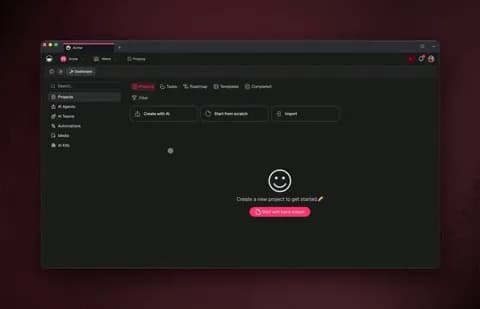
TL;DR: The best Gumloop alternative depends on the job. Zapier wins on app breadth and simplicity, Make on its visual canvas, and n8n on cost-at-scale for complex flows. But if you want AI agents, automations, and a real app in one place, built by describing the outcome instead of wiring an AI node canvas, Taskade Genesis is the strongest pick. It starts free, connects 100+ bidirectional integrations, and ships a live, shareable app. 150,000+ apps have been built on it since launch.
Gumloop earned its reputation honestly: a YC-backed, AI-native take on no-code automation, with a clean canvas and AI nodes that handle scraping, summarizing, and enrichment far better than the previous generation of tools. If your work is AI-heavy data processing and you like building on a node canvas, it is one of the best in its class.
The reason people start shopping for Gumloop alternatives is usually one of four: credit-based pricing climbs faster than expected once AI usage scales, the node canvas gets unwieldy on large workflows, there is no native AI agent that can reason and act across a whole workspace, and at the end of a build you still have a data pipeline, not an app you can hand to a customer.
This guide compares the 8 best Gumloop alternatives in 2026 across pricing, AI, integrations, and what you actually ship. We lead with capability, keep the competitor comparisons honest, and tell you which tool fits which job.
The shift in 2026: describe the outcome, not the nodes
The biggest change in automation is altitude. The first wave of tools, Zapier, Make, n8n, asked you to design the plumbing node by node. Gumloop raised the ceiling by making each node AI-native, so a single node could summarize a page or extract structured data. That is a real step forward.
The next step asks a different question entirely: what do you want to happen? You describe the destination in plain English, and the system figures out the route, the trigger, the steps, the integrations, the AI reasoning, even the app around it.
Both approaches earn their place below. The wedge Taskade Genesis is built on is the right one for most teams who care about the result more than the wiring, and it is why an AI-first builder now belongs at the top of any Gumloop alternatives list.
Gumloop alternatives at a glance
| Tool | Best for | AI agents | Builds a full app? | No infra | Starting price |
|---|---|---|---|---|---|
| Taskade Genesis | Agents + automations + apps in one | ✅ Native | ✅ Yes | ✅ | Free / $10/mo |
| Zapier | Largest app library, simplest | ⚠️ Add-on | ❌ | ✅ | Free / per-task |
| Make | Strong visual canvas, low price | ⚠️ Modules | ❌ | ✅ | Free / ~$9/mo |
| n8n | Cheapest at scale, full control | ⚠️ Nodes | ❌ | ❌ self-host | Free / ~€24/mo |
| Activepieces | Open-source, AI + MCP | ✅ AI-first | ❌ | ❌ self-host | Free (OSS) |
| Pipedream | Developer-first + code steps | ⚠️ Code | ❌ | ✅ | Free / usage |
| Relay.app | Human-in-the-loop AI workflows | ⚠️ Steps | ❌ | ✅ | Free / per-step |
| Lindy | AI assistant-style automations | ✅ Assistant | ❌ | ✅ | Free / per-task |
Prices are starting points on annual billing and change often, always confirm on each vendor's pricing page. Taskade Genesis pricing is canonical on the pricing page.
1. Taskade Genesis: best for AI agents, automations, and apps in one
Best for: non-developers and operators who want to describe a result and get a working app, not assemble a node canvas.
Pricing: Free to start · Pro $10/mo (10 users) · Business $25/mo · Max $100/mo · Enterprise $250/mo (annual).
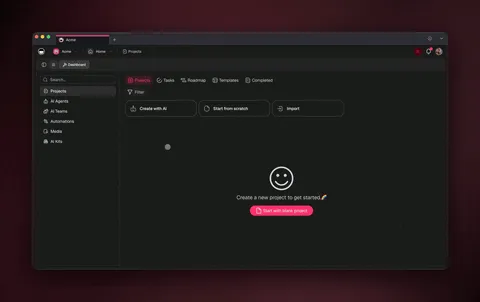
Taskade Genesis is the Gumloop alternative that outputs living software. You describe what you want in natural language and it builds the automation, connects the integrations, and deploys a real app with a database, AI agents, and a shareable URL, no canvas to wire, no credits to ration per node, no server to manage.
Where Gumloop stops at processed data, Taskade Genesis keeps going. The whole platform is one self-reinforcing loop, Memory + Intelligence + Execution. That a flat node canvas doesn't have:
What you actually get versus a pure AI-automation tool:
- AI agents with built-in tools that reason over your data, make decisions, and run multi-step work, routing across 15+ frontier models from OpenAI, Anthropic, Google, and open-weight providers. Agents can collaborate as a team in orchestration mode.
- 100+ bidirectional integrations, triggers pull events in, actions push data out, including native Shopify and Stripe.
- Reliable, durable automation workflows that branch, loop, filter, wait for minutes or days, and resume from the step that failed.
- A real app layer: Projects with multiple views (List, Board, Calendar, Table, Mind Map, Gantt, Org Chart), custom domains, and built-in sign-in for published apps.
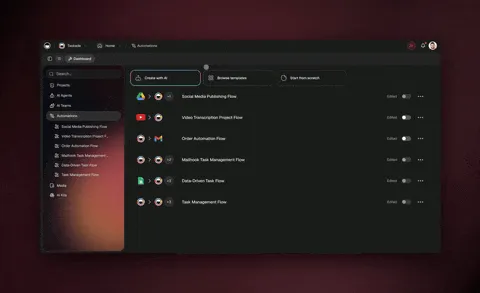
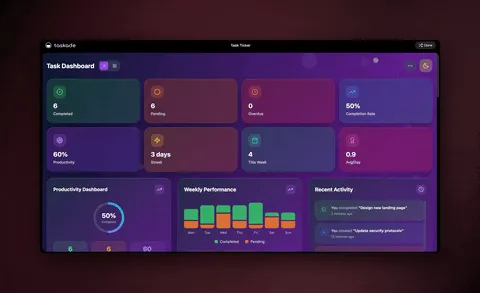
Proof it works for non-builders: David, an IT program manager with no engineering team, used Taskade Genesis to ship a production project dashboard tracking Customers, Jobs, Invoices, and Team, all from a description, no code, no canvas wiring. That is the difference between processing data and shipping software people actually use.
You can clone a live working app in about 30 seconds and run it in your own workspace. See it in action on the AI workflow builder and the automation hub.
Honest tradeoff: if you specifically want a node-by-node AI canvas to fine-tune every prompt and branch, Gumloop, Make, and n8n give you more granular control over the wiring.
2. Zapier: best for the largest app library
Best for: connecting the widest range of apps with the gentlest learning curve.
Pricing: Free tier · paid plans bill per task, scaling with volume.
Zapier is the most established name in automation and connects thousands of apps, more out-of-the-box integrations than almost anyone. It has added AI features (agents and a build-by-chat canvas), and for simple trigger → action automations it is the fastest tool to get running.
Tradeoff: per-task pricing adds up quickly on high-volume, multi-step workflows, and Zapier stops at automation. There is no app to ship at the end. See our deeper Zapier alternatives comparison.
3. Make: best for a strong visual canvas at a low price
Best for: builders who love designing scenarios module by module on a beautiful canvas.
Pricing: Free tier · paid plans from ~$9/mo with operations-based billing.
Make (formerly Integromat) offers one of the best visual scenario builders on the market at a friendly price. If you want fine-grained control over routers, filters, and data mapping, and you are comfortable on a canvas, Make is excellent and far cheaper than enterprise iPaaS tools.
Tradeoff: complex scenarios get hard to debug, operations-based pricing climbs at scale, and like Gumloop it ends in an automation, not an app. Compare it head to head in our Make.com alternatives guide.
4. n8n: best for cost-efficient complex workflows
Best for: technical teams who want control and the lowest cost on complex, high-volume flows.
Pricing: Community Edition free to self-host · n8n Cloud from ~€24/mo.
n8n is a fair-code (source-available) platform you can self-host. Its killer feature is per-execution pricing: a 2-step run and a 200-step run each count as one execution, which makes complex workflows dramatically cheaper than per-credit or per-task tools once you can run it.
| Pricing model | A 10-step AI flow run 1,000× counts as… |
|---|---|
| n8n (per execution) | ~1,000 executions |
| Zapier (per task) | ~10,000 tasks |
| Gumloop (per credit) | varies with AI usage per node |
Tradeoff: self-hosting means Docker, servers, and ongoing DevOps. If you would rather skip infrastructure entirely, see the full n8n alternatives breakdown.
5. Activepieces: best open-source, AI-first alternative
Best for: teams who want an open-source automation tool with AI and MCP support.
Pricing: Open-source and free to self-host · cloud plans available.
Activepieces is an open-source automation platform built with AI in mind, including support for the Model Context Protocol (MCP) so AI assistants can use your automations as tools. It is one of the closest spiritual matches to Gumloop for teams who want to own their stack.
Tradeoff: a smaller connector catalog than the incumbents, and self-hosting overhead if you go that route.
6. Pipedream: best for developer-first automation
Best for: developers who want code-level control alongside connectors.
Pricing: Generous free tier · usage-based paid plans.
Pipedream sits between no-code and code. You can drop into Node.js, Python, Go, or Bash inside any step, with thousands of pre-built connectors and a generous free tier. It is a favorite for engineers who find Gumloop's canvas too constrained for custom logic.
Tradeoff: the code-first surface is more than non-technical users need.
7. Relay.app: best for human-in-the-loop AI workflows
Best for: teams who want AI to draft, then a human to approve before anything ships.
Pricing: Free tier · per-step paid plans.
Relay.app builds approval and review steps directly into automation, so an AI step can prepare a message or decision and a person signs off before it goes out. For sensitive workflows, outreach, finance, HR. That guardrail is genuinely useful.
Tradeoff: a newer ecosystem and smaller connector library than the established names, and it ends in an automation rather than an app.
8. Lindy: best for AI assistant-style automations
Best for: people who want an AI assistant that handles email, scheduling, and routine tasks.
Pricing: Free tier · per-task paid plans.
Lindy frames automation as AI assistants you delegate to, rather than flows you draw. For inbox triage, meeting prep, and lightweight CRM updates, it can feel more natural than a canvas.
Tradeoff: it is optimized for assistant-style tasks, not deep multi-branch data pipelines or shipping a full app.
How to choose a Gumloop alternative
Match the tool to the job with this quick decision tree:
What do you need at the end?
│
├─ A shareable APP (not just a pipeline)
│     └─► Taskade Genesis  ── describe it, ship it
│
├─ Just connect or process data between apps
│     ├─ Most app integrations, easiest ........ Zapier
│     ├─ Strong visual canvas, low price ........ Make
│     ├─ Cheapest on complex flows (self-host) .. n8n
│     └─ AI-heavy node processing ............... Gumloop (stay)
│
├─ I want a code escape hatch
│     ├─ Connectors + code ...................... Pipedream
│     └─ Open-source + AI + MCP ................. Activepieces
│
└─ AI with a human checkpoint / assistant
      ├─ Approval steps before it ships ........ Relay.app
      └─ Assistant-style delegation ............ Lindy
The deeper question in 2026 is altitude. If you are happy designing AI flows node by node, Gumloop is excellent and so are Make and n8n. If you would rather describe the outcome and get an automation and an AI agent and a working app, that is exactly what Taskade Genesis was built to do.
When Gumloop is still the right call
Honesty matters, so here it is plainly. Stay on Gumloop if:
- Your core work is AI-heavy data processing, scraping, large-scale summarization, structured extraction, and you like the node-canvas mental model for it.
- You want per-node control over each prompt, model, and transformation, and you are comfortable tuning credits as you scale.
- You do not need a shippable app, AI agents that act across a workspace, or a built-in database at the end of the run, a clean processed output is the deliverable.
Gumloop is a genuinely good AI-native automation tool. The case for switching is about what you ship and how you build it: if you want an outcome described in plain English that ends in a live app with agents and memory, that is a different category, and that is where Taskade Genesis fits.
What Taskade Genesis can do that an AI node canvas can't
Gumloop is a great way to process data with AI. Taskade Genesis is a way to build software. Here's the full capability set in one place:
| Capability | What it means for you |
|---|---|
| One-prompt apps | Describe an app; get a live, deployed one with a database and UI |
| AI agents (built-in tools) | Agents that search the web, run code, analyze files, and act |
| Multi-agent collaboration | Agents work as a team — research, draft, review, hand off |
| 15+ frontier models | OpenAI, Anthropic, Google + open-weight, routed automatically |
| 100+ bidirectional integrations | Triggers pull events in; actions push data out |
| Durable automations | Branch, loop, filter, wait days, resume from the failed step |
| Multiple project views | List, Board, Calendar, Table, Mind Map, Gantt, Org Chart |
| Publish & monetize | Custom domains, built-in sign-in, Community Gallery, app kits |
| Persistent memory | Workspace DNA so your apps and agents compound over time |
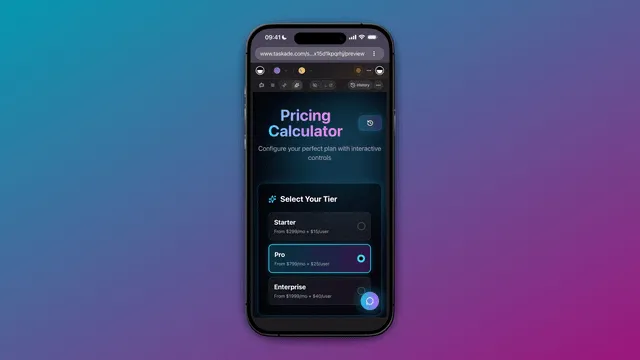
Most AI-automation tools process data. Taskade Genesis automates the outcome, and then gives you the app, the agents, and the memory around it. Browse cloneable apps to see what other teams have shipped.
Frequently asked questions
What is the best Gumloop alternative in 2026?
It depends on the job. Zapier is easiest for the widest app library, Make has the strongest visual canvas, and n8n is the most cost-efficient for complex flows. For teams who want automations and AI agents and a real app in one place, built by describing the outcome instead of wiring a node canvas, Taskade Genesis is the strongest pick, starting free.
Is there a Gumloop alternative with built-in AI agents?
Yes. Taskade Genesis and Activepieces both build AI into automation. Taskade Genesis includes AI agents with built-in tools that reason over your data and run multi-step work, across 15+ frontier models, and they can collaborate in orchestration mode.
Can a Gumloop alternative build a complete app, not just automations?
Most automation tools only move and process data. Taskade Genesis combines AI agents, durable automation workflows, databases, and a full app UI into living software you build from one prompt, 150,000+ apps built since launch.
Which Gumloop alternative is best for AI-heavy data workflows?
Gumloop itself is strong here. If you want AI to reason and act on the data rather than just transform it, Taskade Genesis runs AI agents with built-in tools across 15+ frontier models, writes results into a real database, and triggers downstream automations.
Do I need to know how to code to replace Gumloop?
No. Taskade Genesis, Gumloop, Zapier, and Make are all no-code. The difference is altitude, Taskade Genesis lets you describe the result and assembles the automation, integrations, and app for you, while n8n and Pipedream add a code option for developers.
What's the cheapest way to replace Gumloop?
n8n Community Edition and Activepieces are free to self-host (with server upkeep). Among managed cloud tools, Taskade Genesis starts free, with Pro at $10/month annually, flat pricing, not per-credit.
Ready to build instead of wire? Start free with Taskade Genesis, describe what you want, and watch it build the automation, connect your tools, and ship a live app.
Explore the automation library, set up your first automation trigger, browse cloneable apps, or compare more tools in our Make.com alternatives, Zapier alternatives, and n8n alternatives guides.
▲ ■ ● Memory, Intelligence, Execution, describe the outcome, and Taskade Genesis remembers your data, reasons over it, and runs the work. That's the difference between an AI data pipeline and a living app.