In 1964, a freight clerk at Holland-American Lines watched a teletype machine clatter out a shipping manifest that another clerk at another port had typed into another teletype machine ten minutes earlier. The clerks never spoke. Neither typed the same document twice. A workflow had run between two computers across an ocean, and a human had not been the medium.
Sixty-two years later, an AI agent in Taskade sees a customer Stripe payment, generates a personalized receipt in Notion, posts the team channel in Slack, schedules a Calendly follow-up, and updates the Salesforce record. The workflow ran between five APIs across four continents in eleven seconds. A human had not been the medium.
This is the story of how workflow automation went from electronic data interchange between mainframes in the 1960s to bidirectional AI agents in 2026, and where Taskade Genesis fits in the lineage.
TL;DR: Workflow automation is 63 years old. EDI (1960s) → BPM engines (1990s) → Yahoo Pipes (2007) → IFTTT (2010, 27M users) → Zapier (2011 YC W12, $5B valuation, 7K+ integrations) → Workato / Tray.io → Make / Integromat ($103M, Celonis-owned) → n8n (2019, open source) → Temporal durable execution → AI-native workflows (2024+). The next era is bidirectional AI-agent automation: agents as both triggers AND actions, on a production-grade durable substrate, at SMB prices. Taskade Genesis ships it today. Try free →
🗺️ Six Decades of Workflow Automation in One Diagram
Five eras. One unbroken line from the teletype clatter of 1964 to AI agents acting as both triggers and actions in 2026.
📡 The Prehistoric Era: EDI (1960s–1980s)
The first machine-to-machine workflows ran on Electronic Data Interchange in the 1960s. American Airlines pioneered EDI for electronic purchasing of aircraft parts. Holland-American Lines used early EDI for shipping manifests. The Department of Defense codified MILSTRIP for military supply requisitioning in 1962.
EDI standardized through the 1970s and 80s:
- 1979, ANSI Accredited Standards Committee X12 chartered to create EDI standards. X12 became the dominant North American EDI standard (purchasing, healthcare, shipping, finance).
- 1988, The United Nations endorsed EDIFACT (Electronic Data Interchange For Administration, Commerce and Transport) as the international EDI standard.
- 1990s: Value-added networks (VANs) connected EDI partners; major retailers (Walmart, Target) required EDI of all suppliers, effectively forcing the entire CPG supply chain onto the standard.
EDI was, and remains, the largest workflow automation system in the world by volume. Trillions of dollars of B2B commerce flow through EDI annually. But EDI was always batch-oriented, structured, and rigid. It was the workflow automation of the supply chain, not the workflow automation of human knowledge work.
For knowledge work, the field needed business process management.
⚙️ The BPM Era: 1990s–2000s
In the 1990s, Business Process Management emerged as a category: software platforms that modeled business processes as workflow graphs (plan → design → model → implement → monitor → optimize) and executed them via central workflow engines.
Major BPM platforms of the era:
| Year | Product | What it did |
|---|---|---|
| 1993 | FileNet workflow | Document routing and approval workflows |
| 1995 | Lotus Notes workflow (see Lotus Notes history) | Notes-based document workflows + replication |
| 1998 | Vitria BusinessWare | Real-time process automation |
| 2000s | TIBCO StaffWare, IBM WebSphere Process Server, Pega, Software AG webMethods | Enterprise BPM and BPM-on-SOA |
BPM platforms cost six and seven figures, required teams of consultants, and shipped on six-to-eighteen-month implementation cycles. They were the enterprise version of workflow automation. They worked, but the user surface area was an arcane modeling language (BPEL, BPMN) most knowledge workers couldn't touch.
The next inflection required the consumer web and visual programming.
🌊 February 7, 2007: Yahoo Pipes: The First Visual Workflow
Yahoo Pipes launched in beta on February 7, 2007, designed by Pasha Sadri, Ed Ho, Jonathan Trevor, Ido Green, and Daniel Raffel at Yahoo. Pipes let users drag-and-drop modules to filter, combine, and transform RSS feeds and web APIs into custom data flows.
        Yahoo Pipes · 2007 visual builder
        ─────────────────────────────────     ┌─[ Fetch RSS · NYT Tech ]─┐
     │                          │
     ├──> Filter: title contains "AI"
     │
     ├──> Truncate: 10 items
     │
     ├──> Sort by: pubDate desc
     │
     └──> Output: RSS feed at /pipes/abc123.rss
Pipes was beloved by developers, designers, journalists, and tinkerers. It was also fundamentally a tool for data transformation, not workflow automation in the modern sense, Pipes flows were stateless, didn't trigger external actions, and didn't survive Yahoo's enthusiasm.
Yahoo shut Pipes down on September 30, 2015, after eight years. By then the company had been overtaken by Verizon's acquisition track and was deprioritizing experimental products. Pipes' lineage carries forward into every visual workflow tool that came after it: IFTTT, Zapier, Make, n8n, Genesis vibe workflows.
If you want the long-form post-mortem, Retool's 2022 essay Pipe Dreams: The Life and Times of Yahoo Pipes is the canonical reference.
🔔 December 2010: IFTTT: Consumer Automation Goes Mainstream
IFTTT ("If This Then That") was founded in December 2010 by Linden Tibbets, who coined the "if this then that" framing as the core conceptual model. IFTTT's pitch was unusually accessible: pick a trigger from one service, pick an action from another, save the recipe. Done.
   IFTTT 2010 · single-trigger applets
   ───────────────────────────────────   IF this  trigger  THEN that  action
   IF [📷 new photo on Instagram]
THEN [💾 save to Dropbox]
   IF [⛅ rain in forecast tomorrow]
THEN [📱 SMS me]
   IF [🌟 starred email in Gmail]
THEN [✅ create Todoist task]
IFTTT became the consumer face of workflow automation. By the late 2010s, IFTTT had over 27 million users and connected hundreds of consumer services, Instagram, Twitter, Gmail, Dropbox, Spotify, smart-home devices (Philips Hue, Nest, Ring), weather services, news feeds.
IFTTT's limitations were obvious in retrospect: applets were single-trigger / single-action, with limited filtering and no multi-step logic. The platform was perfect for "save my Instagram photos to Dropbox" and bad for "when a customer email arrives, classify it with AI, route to the right Slack channel, create a Linear ticket if it's a bug, and update Salesforce." Business users wanted more.
💼 October 2011: Zapier: Business Automation Breakthrough
Zapier was founded in October 2011 in Columbia, Missouri by Wade Foster, Bryan Helmig, and Mike Knoop. They were accepted into Y Combinator's Winter 2012 batch. The pitch differed from IFTTT in one key way: Zapier targeted business users, not consumers.
Zapier's "Zaps" supported multi-step workflows, conditional branching, filters, and search-and-find operations across SaaS APIs. The product attached to the productivity stack of growing companies, Salesforce, HubSpot, MailChimp, Stripe, Slack, Trello, Asana, Notion. Zapier became the glue layer of the modern SaaS economy.
Critical Zapier facts:
| Metric | Value |
|---|---|
| Founded | October 2011 (Columbia, Missouri) |
| Founders | Wade Foster, Bryan Helmig, Mike Knoop |
| Y Combinator batch | Winter 2012 |
| Outside capital raised | Only $1.4M (famously bootstrapped) |
| 2021 valuation | $5 billion (secondary tender) |
| 2021 annual recurring revenue | ~$140 million |
| Integration count (2026) | 7,000+ |
| Headcount | Roughly 700 (most fully remote) |
Zapier became the gold standard for "non-engineering automation", the tool of choice for marketers, customer success teams, operations leaders, agencies, and SMB founders who needed to wire SaaS apps together without engineering tickets.
The platform also became a category, "Zapier-like" became the shorthand for any single-trigger / multi-step automation tool, the way "Slack-like" became shorthand for team chat.
🏢 The iPaaS Layer: Workato, Tray.io, MuleSoft
Above Zapier in price and complexity, the iPaaS (Integration Platform as a Service) layer emerged in the mid-2010s for enterprise integration:
- Workato (founded 2013), recipes, AI assistance, $5.7B valuation in 2021
- Tray.io (founded 2012, UK), enterprise iPaaS for revenue ops teams
- MuleSoft (founded 2006, acquired Salesforce 2018 for $6.5B), API management plus integration
- Boomi (founded 2000, sold by Dell 2021 for $4B), integration backbone for mid-market
These platforms differed from Zapier in pricing (six figures annually vs. Zapier's $20/mo to mid-four-figure tiers), complexity (visual but powerful), and target customer (enterprise IT vs. SMB SaaS operators). Workato is generally considered the most successful, partly by avoiding the trap of trying to compete with Zapier on simple workflows while owning the enterprise integration story.
🎨 2016: Integromat (Make): Visual Scenarios Get Serious
Integromat was founded in 2016 in Prague, Czech Republic. The product shipped a visual scenario builder substantially more powerful than IFTTT's linear applets and visually clearer than Zapier's step-list interface. Each "scenario" was a graph of nodes, with branching, looping, filtering, and aggregation as first-class operations.
Integromat caught fire in the technical-but-not-engineering market, agencies, growth marketers, no-code consultants, ops teams who wanted Zapier's accessibility with Workato-grade power.
Key moments:
- 2016, Founded in Prague
- 2020, Acquired by Celonis (the process-mining unicorn, valued at $11B at the time)
- 2022, Rebranded to Make
- 2023, Make raised approximately $103 million in venture capital
- 2026, Make is one of the leading visual workflow platforms; AI features added throughout 2025-2026
Make's visual paradigm, drag, connect, branch, loop, became the design template for n8n, Pipedream, and many AI-agent workflow tools that followed.
🛠️ 2019: n8n: The Open-Source Counterpunch
n8n ("nodemation") was founded in 2019 in Berlin by Jan Oberhauser. The product was a deliberate open-source response to Zapier and Make: same visual node-graph workflow paradigm, but self-hostable, source-available, and free for personal/commercial use under a fair-code license.
n8n's positioning was "Zapier for developers who want to own their automation stack." The community responded enthusiastically:
- 400+ first-party integrations (Slack, Discord, Postgres, MySQL, Notion, Airtable, Google Workspace, hundreds more)
- Extensive community node libraries
- Self-hostable via Docker, Kubernetes, or single-binary install
- Cloud offering for teams that don't want to self-host
- Built-in JavaScript / Python expression evaluation in nodes
By 2026 n8n included first-class AI agent nodes, agents act as both triggers (listen for events) and actions (decide and execute). The open-source positioning has made n8n the default choice for technical teams in regulated industries (finance, healthcare, defense) who can't put workflow logic on third-party SaaS.
⏱️ 2019: Temporal: Durable Execution Arrives
While the visual-workflow players were competing on user experience, a different team was solving a deeper architectural problem. Temporal was founded in 2019 by Maxim Fateev and Samar Abbas, who had previously built Cadence at Uber to handle Uber's millions-of-workflows-per-day requirements.
Temporal's pitch: durable execution as a primitive. Workflows in Temporal automatically:
- Persist state at every step (no in-memory state lost in a crash)
- Retry on failure with exponential backoff
- Resume exactly where they stopped after restart
- Handle long-running operations (days, weeks, months) without polling
- Provide exactly-once execution semantics
- Replay deterministically for debugging and testing
Temporal is the engineering substrate behind:
- OpenAI's Codex agent orchestration (production agent rollouts)
- Snap's ad delivery infrastructure
- Coinbase's settlement workflows
- Box's file processing pipelines
- Datadog's billing workflows
- Hundreds of other production AI-agent and workflow systems
Temporal Replay 2026 (the company's annual conference, May 2026) announced Multi-Region Replication GA with 99.99% SLA and serverless workers, making durable execution accessible to teams who don't want to manage Kubernetes.
This is the substrate the AI-agent era needed. Workflow execution that survives failures is the precondition for trusting agents with long-running, multi-step tasks.
🪄 February 2025: Karpathy's "Vibe Coding" Tweet
On February 4, 2025, Andrej Karpathy (ex-OpenAI, ex-Tesla, then writing the Sequoia talk that became "From Vibe Coding to Agentic Engineering") posted a 185-word tweet that landed:
There's a new kind of coding I call "vibe coding," where you fully give in to the vibes, embrace exponentials, and forget that the code even exists. ... I "Accept All" always, I don't read the diffs anymore. ... It's not really coding. I just see stuff, say stuff, run stuff, and copy paste stuff, and it mostly works.
The tweet hit 4.5 million views in days. Collins Dictionary named "vibe coding" the Word of the Year 2025.
Vibe coding wasn't about apps specifically. It was about the broader pattern of building software through natural-language conversation. Applied to workflow automation, "vibe coding" becomes "vibe workflows": describe the workflow you want in plain English, get a deployed automation graph.
Taskade had been shipping this pattern since Genesis launched in October 2025, the timing was coincidental but the framing fit perfectly. Vibe Workflows became a Taskade product surface.
🤖 The AI-Agent Era: Triggers AND Actions
The defining shift of 2024-2026 in workflow automation is the introduction of AI agents as first-class workflow participants, agents that act as both triggers (listening for events, deciding to fire) AND actions (executing logic, calling other agents).
The right-hand side is what modern automation looks like. The agents are doing the reasoning, the actions are doing the side effects, and the human shows up only to approve. This is the workflow Karpathy meant by "agentic engineering", and it's what Taskade Automations ship today.
Gartner forecasts that 40% of enterprise applications will feature task-specific AI agents by end of 2026, up from less than 5% in 2025. The automation category is being rewritten.
🧬 Taskade Automations: The Bidirectional AI-Agent Era
Genesis Capability Map: From the May 2026 Newsletters
| Newsletter chapter | What Taskade ships |
|---|---|
| Workspace Memory · Mind Graph | Workspace knowledge graph |
| Agent Workflows · Tools Wired | built-in agent tools + 100+ integrations |
| App Payments · Stripe Live | Native Stripe Checkout actions inside Genesis Apps |
| Frontier Models · Auto-Routed | Frontier models from OpenAI, Anthropic, Google + open-weight, auto-routed by plan |
| Embed Apps · Anywhere | Genesis Apps embed on any site |
| Clone Apps · Instantly | 150,000+ apps in Community Gallery; clone in 60 seconds |
Plus vibe coding · vibe payments · vibe workflows · vibe marketing · vibe tracking and a hosted MCP server that Claude, Cursor, and VS Code connect into to drive your workspace, on every paid plan. 198 platform releases in 2026. 150,000+ apps built. 3 million automations executed. MIT Technology Review named vibe coding a "breakthrough technology of 2026."
Taskade ships the convergence of all of this, a workspace-native automation platform where:
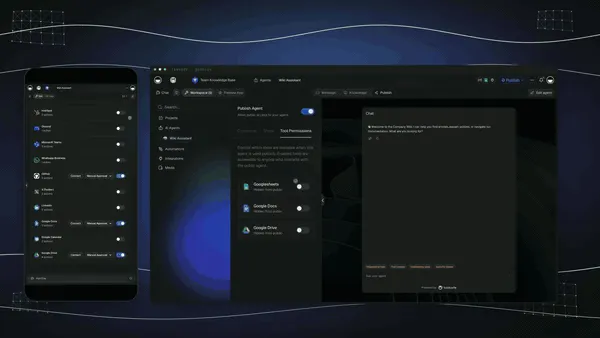
- 100+ integrations are bidirectional, every integration works as both a trigger (pull events in) and an action (push data out)
- AI Agents v2 are first-class participants. They listen, decide, execute, hand off to other agents
- Durable execution is built in, state persistence, automatic retries, exactly-once semantics
- Vibe Workflows, describe what you want in plain English, Taskade Genesis builds the workflow
- Native Stripe Checkout, every Genesis App can charge directly; payment events flow back into automations
- MCP in both directions: external clients (Claude Desktop, Cursor, VS Code) connect in and drive your projects and automations through the hosted MCP server on every paid plan. Pointed outward, the MCP Client step inside an automation calls a third-party MCP server on every plan including Free, and your agents also reach other systems through the 100+ bidirectional integrations above
The 100+ Bidirectional Integrations
Categories and example integrations:
| Category | Triggers (pull in) | Actions (push out) |
|---|---|---|
| Communication | Slack message, Teams ping, Discord post | Slack post, Teams message, Email send |
| Email + CRM | Gmail email, HubSpot deal, Salesforce update | Email reply, CRM update, contact create |
| Payments | Stripe payment, Stripe refund | Stripe Checkout session, Stripe refund |
| Development | GitHub PR, Linear issue, Sentry alert | GitHub PR create, Linear ticket, Sentry annotation |
| Productivity | Notion page change, Monday item update | Notion sync, Monday update, Airtable row |
| Content | YouTube upload, RSS feed | Content publish, social media post |
| Data + Analytics | Sheets row added, Webhook | Sheets append, data export |
| Storage | Drive file uploaded, Dropbox file | Drive upload, file move |
| Calendar | Calendly booking, Google Cal event | Calendar event create, free/busy lookup |
| E-commerce | Shopify order, WooCommerce purchase | Shopify product update, order status |
Same 100+ tools on both sides. No more "trigger from app A, action only to app B", every connector is symmetric.
Vibe Workflows in Practice
The Taskade newsletter feature surface lays out the full pattern:
- Vibe Coding, describe apps in plain language → instant builds
- Vibe Payments: Stripe-powered flows triggering automations
- Vibe Workflows, forms and requests creating automated processes
- Vibe Marketing, content aggregation and cross-platform publishing
- Vibe Tracking, leads and data synced across tools via webhooks
Examples of vibe workflows you can describe in one sentence:
| You say... | Taskade builds |
|---|---|
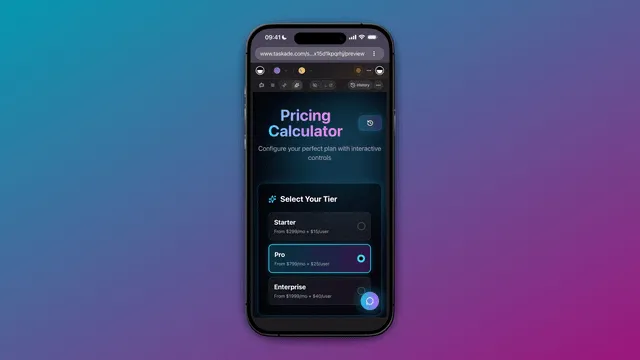
| "When a Stripe payment lands, create a Notion customer page, post to Slack #revenue, and add to Salesforce" | 4-step workflow, branching by deal size, runs in seconds, retried automatically on failure |
| "When a customer feedback rating drops below 3, classify the issue with an AI agent, alert the manager on Slack, and create a follow-up task" | Trigger + AI classification + conditional Slack + Taskade task creation |
| "Every morning, scan my Gmail for invoices, extract amount and vendor with AI, append to Sheets, and Slack me a summary" | Scheduled trigger + Gmail + AI extraction + Sheets append + Slack message |
| "When a GitHub PR merges to main, post to Slack engineering, deploy to staging, and create a release note draft in Notion" | Multi-step deployment workflow with conditional steps |
Each example is a production-grade durable workflow under the hood. None require any code. All are buildable in seven minutes from a one-sentence prompt.
Workspace DNA: The Substrate That Makes It Possible
Taskade's broader framing is Workspace DNA, Memory (Projects) feeds Intelligence (AI Agents) feeds Execution (Automations) and back. Automations are the Execution half of the loop:
Automations write data back into Projects. AI Agents inherit that data automatically. The workspace gets smarter over time. This is living software, not static automation.
3 million automations executed since launch. 150K+ Genesis apps built.
⚔️ Head-to-Head: Taskade Genesis vs Zapier vs Make vs n8n
The three most-cited Taskade alternatives, lined up against bidirectional AI-agent automation:
| Capability | Taskade Genesis | Zapier | Make (Integromat) | n8n |
|---|---|---|---|---|
| Bidirectional integrations | 100+ (every connector both trigger AND action) | 7,000+ apps but mostly one-way | 1,500+ (visual scenarios, branching) | 400+ first-party + community |
| AI agents as first-class workflow steps | Yes — Agents v2, built-in tools, persistent memory, multi-agent | Zapier AI Tools (beta) | AI add-on modules | Built-in agent nodes |
| Branching, looping, filtering | Native | Paths (Pro+) | Native | Native |
| Durable execution (production-grade) | Yes — state persistence, exactly-once, auto-retry | Limited (best-effort retry) | Limited | Self-hosted only |
| Native Stripe checkout action | Yes — first-class | Via Stripe app | Via Stripe module | Via HTTP/apps node |
| Workspace-native (Memory + Intelligence + Execution) | Yes — Workspace DNA loop | Glue layer only | Glue layer only | Glue layer only |
| Hosted MCP server | Yes — Claude and Cursor connect in to drive your workspace | No | No | No |
| Self-hostable | Cloud-only | Cloud-only | Cloud-only | Yes (fair-code) |
| Vibe workflow (plain-English to automation) | Yes — Genesis builds in ~7 min | No | No | No |
| Starter price | Free | $19.99/mo | €9/mo | Free (self-host) or $20/mo cloud |
| Best for | Workspace-native AI-agent automation | Broadest SaaS glue | Visual scenario power-users | Technical teams, regulated industries |
Zapier wins on raw integration count. n8n wins for self-hosting. Make wins on visual scenario depth. Taskade Genesis is the only one that ships the workspace, the agents, the database, the payments, and the bidirectional automations as one product, at the lowest entry price.
📊 The Decision Matrix: Where Each Platform Wins
| Platform | Best for | Pricing posture | AI agents |
|---|---|---|---|
| IFTTT | Consumer home-automation, social-media glue | Free / $5/mo | Limited |
| Zapier | SMB SaaS glue across 7,000+ apps | $19.99/mo and up | Zapier AI Tools beta |
| Make | Visual scenario-builder, agencies | €9/mo and up | Add-on |
| n8n | Self-hosted, technical teams, regulated industries | Open source + cloud | Built-in agent nodes |
| Workato | Enterprise integration, large teams | Six figures annually | Workbot AI |
| Temporal | Custom-built durable workflows, AI agent orchestration | Open source + cloud | DIY (provides primitives) |
| Taskade Automation | Workspace-native AI-agent workflows, vibe workflows, Stripe-native | Free / $10 / $25/mo Free/Pro/Business | Native, first-class |
For most prosumer and SMB use cases, vibe-coded apps + AI-agent automations + native payments + bidirectional integrations, Taskade is the most complete platform at the lowest price floor. For raw 7K-integration count, Zapier wins. For self-hosted, n8n. For Fortune-500 enterprise integration, Workato. For raw durable-execution primitives that you write workflows on top of, Temporal.
🔮 What Comes Next
The 2026-2030 trajectory:
| Direction | What changes |
|---|---|
| AI agents replace many "Zaps" | Instead of writing a 5-step Zap, you describe the outcome and an agent figures out the steps |
| MCP becomes the integration substrate | Every tool exposes an MCP server; agents call them without per-platform glue code |
| Durable execution becomes table stakes | Customers won't accept silent automation failures; Temporal-grade durability shows up everywhere |
| Workspace-native beats glue-layer-native | Tools that ship Memory + Intelligence + Execution in one platform replace tools that glue separate systems |
| Vibe workflows become consumer-grade | Describing workflows in plain English replaces drag-and-drop for most users |
| Bidirectional > one-way | Every modern automation platform converges on triggers AND actions on the same integration list |
| Agent rate limiting + audit | Server-mediated durable execution becomes a competitive advantage as agents do more |
The endpoint: a world where every knowledge worker has 5-20 AI agents running on their workspace 24/7, handling routine tasks, surfacing exceptions, and connecting through 100+ integrations on a durable execution substrate. The 1960s teletype operator's job is now done by your AI agent on Taskade Genesis.
🔗 Further Reading
- History of ServiceNow, enterprise workflow + AI-agent platform lineage
- History of Real-Time Collaboration, collaborative editing lineage
- History of Mermaid.js, developer documentation lineage
- What Is Taskade Genesis? Complete History, the AI-native workspace
- Free Zapier Alternative, comparison page
- Free IFTTT Alternative, comparison page
- Free Make Alternative, comparison page
- Free n8n Alternative, comparison page
- Retool, Pipe Dreams: The Life and Times of Yahoo Pipes
- Temporal, Build Resilient Agentic AI
- Karpathy's vibe coding tweet (Feb 2025)
- Wikipedia, Zapier
- Wikipedia, Yahoo Pipes
- Wikipedia, EDI
- 9 Best Make.com Alternatives: AI Automation Compared (2026)
- 9 Best Lindy Alternatives in 2026 (AI Agents & Automation)
- 12 Best n8n Alternatives: Workflow Automation Compared (2026)
❓ Frequently Asked Questions
Is Zapier the best workflow automation tool in 2026?
It depends on what you're optimizing for. Zapier has the broadest integration list (7,000+ apps), the strongest brand, and the most mature SMB go-to-market. For sheer "I need to connect random SaaS tools quickly," it remains a top pick. For workspace-native automation that includes the database, the AI agents, the payments, and the integrations in one platform, Taskade Genesis is the more complete answer at lower price points (free to start, $10-25/mo billed annually). Zapier glues; Taskade owns the workspace.
Is workflow automation the same as RPA (robotic process automation)?
Related but distinct. Workflow automation connects APIs and triggers actions across web services (IFTTT, Zapier, Make, Taskade). RPA (UiPath, Automation Anywhere, Blue Prism) automates desktop UI interactions, recording mouse and keyboard against legacy applications that don't have APIs. RPA is fading as more legacy systems get APIs and as AI agents replace the brittle screen-scraping model RPA depends on. Workflow automation is growing as AI agents make it more powerful.
Is Temporal a workflow automation tool or something different?
Temporal is the durable execution platform underneath workflow automation tools. It provides the primitives, automatic retries, state persistence, exactly-once semantics, long-running workflow support. That production-grade automation needs. Products like Taskade Automations give you the same durable-execution guarantees without the engineering: you describe the workflow in plain English, and the platform makes sure it survives crashes, restarts, and API failures. For most users, you never touch a durable-execution platform directly. You use a product that already has one inside.
What is "vibe workflow" exactly?
A workflow you describe in plain English instead of building with drag-and-drop nodes. Example: instead of clicking through Zapier's step builder to create "Trigger: Stripe payment → Filter: amount > $100 → Action: Notion page → Action: Slack message," you tell Taskade Genesis "when a Stripe payment over $100 comes in, create a Notion page and Slack the team", and Genesis builds the workflow graph in seven minutes. Vibe workflows are part of the broader vibe-coding paradigm Karpathy coined in February 2025.
Can AI agents replace Zapier-style automations entirely?
Partially, not entirely. AI agents are best at ambiguous, judgment-intensive tasks (classify this email, decide which channel, draft a reply). Traditional automations are still best for deterministic structured workflows (when X exactly equals Y, do Z exactly). The endgame is hybrid, agents make decisions, automations execute the structured steps the agents decide on. Taskade Automation is built around this hybrid model.
How does bidirectional automation differ from regular automation?
Most legacy platforms (IFTTT, early Zapier) treated automations as one-way: a trigger fires, a single action runs, end of flow. Bidirectional automation means the same 100+ integrations work as both triggers (pulling external events in) AND actions (pushing data out). So the same Slack integration can listen for messages and post messages, the same Stripe integration can listen for payments and create checkout sessions. This is the third era after IFTTT's one-way applets and Zapier/Make's visual scenarios.
What's the cheapest way to get AI-agent automations?
Taskade Genesis is free to start, with vibe workflows, basic agent tools, and 100+ bidirectional integrations included. MCP support is included on every paid plan. Pro at $10/mo (annual billing) raises the usage limits. Business plan ($25/mo) unlocks unlimited seats. Compared to Zapier's $19.99/mo entry point (without AI agents) or Workato's six-figure enterprise floor, Taskade is the most affordable AI-native automation platform.
What's the difference between automation, integration, and orchestration?
- Integration, connecting two systems so data flows between them (e.g., Stripe → Salesforce)
- Automation, triggering actions based on events (e.g., Stripe payment → Slack notification)
- Orchestration, coordinating multiple steps with branching, looping, error handling, and state (e.g., Temporal-grade durable workflow with retries and rollback)
Modern platforms blur the lines. Taskade Automations ship all three in one product, integrations as connectors, automations as triggers + actions, orchestration via durable execution.
Can I migrate from Zapier to Taskade?
Yes. The integration overlap is high (100+ of Taskade's bidirectional integrations cover the Zapier core surface, Slack, Notion, Stripe, GitHub, Shopify, Salesforce, Gmail, Sheets, Airtable, Calendar, Linear, Monday). The workflow patterns are similar enough that most Zaps can be reproduced as Taskade Automations in roughly the time it takes to describe them in plain English. For complex multi-branch Zaps, Taskade Genesis can generate the equivalent workflow from a single prompt describing the desired behavior.
Where can I see Taskade Automations in action?
Try Taskade Genesis free at /create. Browse the Community Gallery at /apps for 150K+ apps and workflows built by other users, clone any in 60 seconds. The /automate page has the full feature breakdown. The Taskade newsletters cover specific automation patterns in detail.