





Claude is one of the best AI assistants in the world. But it is not the only one, and it is not always the right one for every task. Maybe you have hit message limits, you want web citations, you need a more generous free tier, or you simply do not want to be locked into a single model. Whatever the reason, 2026 offers a deep field of Claude alternatives, and the smartest approach is no longer "pick one assistant". It is "use the best model for each job."
This guide ranks the 12 best Claude alternatives in 2026, tested across chat, research, coding, writing, and team work, with honest notes on who each one is actually for.
TL;DR: The best Claude alternative depends on the job. For an all-in-one AI workspace, Taskade Genesis runs frontier models from top AI labs with agents and automations, so you are never locked to one model. For chat, ChatGPT is most popular and Google Gemini has the best free tier. For research, Perplexity leads. Multi-model use is now the norm: ChatGPT's web-visit share fell from ~76% in early 2025 to ~55% by April 2026 while Gemini surged past 27% and Claude grew ~306% in a single quarter (Similarweb / Statcounter, 2026). Try frontier models free →
Jump to Your Use Case: Chat, Coding, Cowork, Research, or Apps
The right Claude alternative depends on the job, so pick your intent first. Each row links to the pick below or to a sibling guide that goes deeper.
| Your intent | Best pick | Jump to |
|---|---|---|
| Everyday chat and writing | ChatGPT or Google Gemini | ChatGPT · Gemini |
| Coding in a terminal or IDE | Dedicated coding agents | Best Claude Code alternatives |
| Agentic, multi-step work (Cowork-style) | Taskade Genesis agents, ChatGPT agent mode | Claude Cowork alternatives · Agentic section |
| Research with citations | Perplexity | Perplexity |
| A working app, not a chat reply | Taskade Genesis | Taskade Genesis |
| Lowest cost per task | DeepSeek, GPT-6 Luna, Claude Haiku | Cost per task |
| Privacy and self-hosting | Mistral, Llama, DeepSeek open weights | Data and privacy |
What Is the Best Claude Alternative in 2026?
The best Claude alternative is Taskade Genesis if you want more than a chat box. It runs frontier models from top AI labs in one workspace, wrapped in AI agents, automations, and a shared database, and it connects to Claude with your own Anthropic key when you want Claude specifically. For pure conversational chat, ChatGPT is the most popular alternative and Google Gemini has the strongest free tier. For research with live citations, Perplexity wins.
Here is the fast version before we go deep:
| Use Case | Best Claude Alternative | Why |
|---|---|---|
| All-in-one AI workspace | Taskade Genesis | Frontier models from top AI labs + agents + automations in one place |
| Most popular chat | ChatGPT | Largest ecosystem, custom GPTs |
| Best free tier | Google Gemini | Generous limits, long context |
| Research + citations | Perplexity | Web-grounded answers with sources |
| Microsoft 365 users | Copilot | Deepest Office integration |
| Open-weight / privacy | Mistral, DeepSeek, Llama | Self-hostable, low cost |
| Long context, free | Kimi | 1M-token context, free chat |
| Real-time / X | Grok | Live data from X |
| Multi-model under one bill | Poe | Aggregates many models |
How We Ranked These (2026 Testing Rubric)
We ranked every assistant on five criteria, weighted toward how people actually work in 2026 rather than raw benchmark scores: (1) chat and reasoning quality, (2) free-tier generosity, (3) web-citation and research grounding, (4) integration depth with your existing stack, and (5) execution, can it run multi-step, agentic work or only reply in a chat box? That last criterion is the dividing line of 2026: the category is shifting from "better chat" to "AI that does the work." Picks reflect current capability as of mid-2026, with honest notes on who each tool is genuinely best for. We lead with each tool's standout strengths and context-window class rather than chasing benchmark leaderboards that shift monthly, and we name a specific model version only where the comparison genuinely turns on it.
Run the test yourself. Benchmarks shift monthly, so a repeatable five-prompt test tells you more than any ranking. Use the same five prompts on each assistant, on the same day, and score each answer from 1 to 5:
| Prompt type | What to paste | What to score |
|---|---|---|
| Long document | A 30-page PDF plus "list the three riskiest clauses" | Accuracy and missed details |
| Writing | Your own rough draft plus "tighten this in my voice" | Voice match and hedging |
| Research | A question that changes often, such as current pricing | Live sources and correct dates |
| Coding or data | A small bug or a messy CSV | Working output on the first try |
| Follow-through | "Turn this into a tracker and remind me weekly" | Whether it only replies or actually runs |
The fifth row is where chat assistants and workspaces split. A chat box answers once. A workspace such as Taskade Genesis can build the tracker, attach an agent, and schedule the reminder with an automation.
Market context (2026): Multi-model use is now the default, not the exception. ChatGPT still leads but its web-visit share slid from roughly 76% in early 2025 to about 55% by April 2026, while Google Gemini surged past 27% and Claude posted the fastest growth of any major assistant, up roughly 306% in a single quarter (203M → 824M visits, January to April 2026), per Similarweb and Statcounter data. Anthropic itself confidentially submitted a draft IPO filing on June 1, 2026, days after a $65B Series H set a $965B post-money valuation and briefly made it the most valuable AI startup, ahead of OpenAI. The filing carries no public price, ticker, or date. The takeaway for this guide: no single assistant runs away with the market, so the smartest setup keeps several models on hand and routes each task to the best one.
Updated September 28, 2026: Anthropic shipped Claude Opus 5.5 on September 22 at $4/$20 per million input/output tokens (down from Opus 5's $5/$25) and raised the five-hour usage limits on Pro, Max, Team, and seat-based Enterprise plans. Six days later it shipped Claude Sonnet 5.5 at $2/$10, more than 30% faster than Sonnet 5. Both are real steps up for anyone weighing "stick with Claude" against an alternative. The guidance below is unchanged either way: keep more than one model within reach rather than betting on a single vendor's release cadence. Separately, Cursor's parent company, Anysphere, was acquired by SpaceX in an all-stock deal worth roughly $60 billion, closing August 14, 2026, a sign of how central AI coding assistants have become even outside software companies.
Why Look for a Claude Alternative?
People look for Claude alternatives for four main reasons: usage limits, missing features, integration gaps, and model lock-in. Claude is excellent at long-document reasoning and writing, but its message caps frustrate heavy users, it does not natively browse the web with citations the way Perplexity does, and committing to one model means you miss what other models do better.
June 2026 update: Anthropic's launch of Claude Fable 5 made the multi-model case sharper, not weaker, and the days since proved it. On June 12, 2026, a US government export-control directive citing national security made Fable 5 and Mythos 5 unavailable to every user (it bars access by any foreign national, so the net effect was a full shutdown); both were still down as of June 15. Anthropic calls the action a misunderstanding and disagrees, while officials and reporting have raised counter-claims that Anthropic disputes, analysts note it as the first export-control action aimed at a deployed commercial model rather than chips. Even setting the shutdown aside, the newest Claude costs double the previous flagship, its safety classifiers can reroute some cyber, biology, and chemistry prompts to an older model, and its traffic carries a mandatory 30-day data-retention policy. None of these is a dealbreaker on its own. Together they are exactly why more teams keep several models on hand instead of betting everything on one release, and why Anthropic's other Claude models, which kept running the entire time, are what model-agnostic routing is for.
The deeper shift in 2026 is philosophical. The "one assistant to rule them all" era is ending. The strongest AI users now route each task to the model that handles it best, Claude for nuanced writing, GPT for broad tasks and images, Gemini for huge context, Perplexity for sourced research. That is exactly the gap a multi-model workspace fills.
THE OLD WAY                          THE 2026 WAY
┌────────────────────┐               ┌────────────────────────────┐
│  Pick ONE assistant │               │  Route each task to the    │
│  Claude OR ChatGPT  │   ────────▶   │  best model for the job     │
│  Switch tabs to try │               │  frontier models + Auto     │
│  another model      │               │  in ONE workspace           │
└────────────────────┘               └────────────────────────────┘
   Lock-in, tab chaos                    No lock-in, one surface
For the full background on Claude itself, Anthropic's history, Constitutional AI, and every model launch, see our complete history of Anthropic and Claude. If you specifically want a coding agent rather than a chat assistant, jump to our guide on the best Claude Code alternatives.
What Made Claude Stand Out From ChatGPT, and What an Alternative Must Match
Claude stood out from ChatGPT on three axes, and a good Claude alternative has to match the one you rely on. The first was a 100,000-token context window (May 11, 2023). The second was the Haiku, Sonnet, and Opus model ladder (March 4, 2024). The third was Claude Code, an agent that does the coding work (research preview February 24, 2025).
Claude started behind. Claude 1 arrived on March 14, 2023, four months after ChatGPT, and at parity it read as "another chatbot." Each wedge then won a different buyer, which is why a search for "AI like Claude" usually means one of the three, not all of them. The full story is in our history of Anthropic and Claude.
| Claude's wedge | When it shipped | Why buyers cared | Alternatives that match it in 2026 |
|---|---|---|---|
| Long context: read the whole document | May 11, 2023: 9K to 100K tokens, about 75,000 words per Anthropic | One prompt could hold a full contract, report, or codebase | Google Gemini and Kimi K3, both near 1M tokens |
| Model ladder: pick speed or depth | March 4, 2024: Claude 3 Haiku, Sonnet, and Opus, with image input | One vendor covered fast and cheap through most capable | OpenAI GPT tiers, DeepSeek for low cost, Taskade Auto picking a model for each step |
| Agency: the AI does the job | February 24, 2025 preview, May 22, 2025 general availability (Claude Code) | The agent edits files, runs tests, and tries again | Codex, Cursor, and GitHub Copilot for code; Taskade Genesis agents and automations for business work |
Match the wedge you use. If long documents are why you use Claude, run the same 30-page PDF through Gemini and Kimi and compare the missed details. If cost is the reason, compare cost per task, not price per token. If agency is the reason, compare agents that finish work, not chat boxes: Claude Code alternatives for code, and Taskade Genesis for an app with AI agents and automations that keep running after you close the tab. You can also keep Claude inside Taskade: it runs on your own Anthropic API key (BYOK) in custom agents and automations on Pro and up (how BYOK works).
What Changed in September 2026: Opus 5.5, Sonnet 5.5, and Model Switching
September 2026 reset the Claude-versus-alternatives math: Anthropic cut prices, shipped two new models in six days, and moved its safety fallback onto its main models. Claude Opus 5.5 (September 22) delivers Fable 5.1-level results on most work at $4/$20 per million tokens, and Claude Sonnet 5.5 (September 28), which Anthropic says performs comparably to Opus 5.5 on several evaluations at max effort, costs $2/$10. For the model-by-model breakdown, read Claude models explained.
| What changed | Date | What it means when you compare alternatives |
|---|---|---|
| Claude Opus 5.5 at $4 / $20 | Sep 22, 2026 | Frontier-level Claude got about 60% cheaper per token than Fable 5.1 |
| Five-hour usage limits raised on paid plans | Sep 22, 2026 | Raised, not removed. Weekly limits still apply |
| Claude Sonnet 5.5 at $2 / $10 | Sep 28, 2026 | The fastest Sonnet yet, and the first with a cyber fallback |
| Cyber fallback on Opus 5.5 and Sonnet 5.5 | Sep 2026 | Flagged security requests are answered by Opus 4.8 or Sonnet 5, with a visible notice |
| Haiku 5.5 announced | "Coming weeks" | Claude's low-cost tier is still Haiku 4.5 today |
Two of those changes matter most when you shop for an alternative:
- Price is less of a reason to leave. Sonnet 5.5 lists at the same $2/$10 as OpenAI's GPT-6 Sol. The gap that remains is at the very cheap end, where GPT-6 Luna ($0.10/$0.50) and DeepSeek V4.1 Flash undercut every Claude model.
- Model switching is a new reason to compare. In the Claude apps, a request that a safety classifier flags as high-risk cybersecurity work switches to an older model for the rest of the chat. Anthropic says routine coding and bug fixing are unaffected, and its Cyber Verification Program will "soon" cover the 5.5 models. Security researchers who hit false positives are one of the groups most actively comparing alternatives this month.
Is there still a free version of Claude? Yes. Claude's free plan includes Sonnet and Haiku with usage limits. Claude Pro costs $20 a month, or $17 a month billed annually, and Max plans start at $100 a month.
1. Taskade Genesis: Best All-in-One Claude Alternative
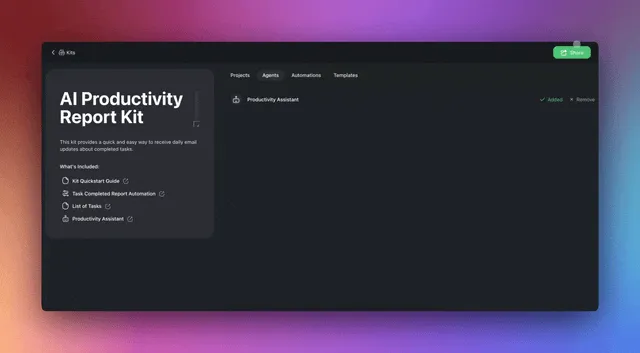
Taskade Genesis is the best Claude alternative for anyone who wants AI to do work, not just talk. Instead of locking you to a single model, Taskade gives you frontier models from top AI labs in one workspace, with Auto picking a model for each step. Then it wraps them in AI agents, automations, and a shared database so the output becomes living team knowledge instead of disappearing into a chat log.
The core difference: Claude answers questions. Taskade turns a prompt into a deployed, working app, with agents that remember context, automations that run on a schedule, and a project database your whole team can edit. This is the Workspace DNA loop: Memory (your projects) feeds Intelligence (your agents), Intelligence triggers Execution (your automations), and Execution creates new Memory.
Why Taskade Genesis Beats Single-Model Chat
- No model lock-in, frontier models from top AI labs with Auto routing, and Claude on your own Anthropic key through the Anthropic Claude connector on Pro and up. See how multi-model works →
- AI agents with built-in tools, web search, code, file analysis, persistent memory, and custom slash commands, not just a reply box. Explore AI agents.
- Automations, trigger workflows from 100+ bidirectional integrations; actions push data out, triggers pull events in. Browse automations.
- Apps from prompts, describe what you want and Taskade Genesis builds a live app with a database and password protection, plus a custom domain on Pro and higher plans. Try the app builder.
- Real-time collaboration, your AI output lives in a shared workspace, not a private chat.
Taskade vs Claude at a Glance
| Capability | Claude (standalone) | Taskade Genesis |
|---|---|---|
| Models | Claude family only | Frontier models from top AI labs |
| Output | Text answers | Deployed apps, agents, automations |
| Memory | Per-conversation | Persistent Workspace DNA |
| Team use | Individual chat | Shared workspace + real-time editing |
| Automation | None native | 100+ integrations, scheduled workflows |
| Free tier | Yes (Sonnet and Haiku, limited) | Yes (3 apps, 1 agent; starts with 0 AI credits, earn or buy credits) |
Pricing: Free plan included; paid plans start at $10/month billed annually (Pro), with Business at $25 and Max at $100 billed annually, and every plan includes multi-model AI, agents, and automations rather than billing per assistant. Compare that to ~$20/month for a single-model assistant; see full pricing →.
Best for: Teams and builders who want AI that executes, and who would rather keep several models within reach than pick just one. Start free with frontier models →
Genuine trade-off: If all you want is a single, minimalist chat box for quick questions, a standalone assistant like Claude or ChatGPT is simpler. Taskade is a workspace. It rewards people who want AI woven into projects and automations.
What non-coders build with it: a typical pattern is an operations lead who writes no code and builds a CRM-style dashboard backed by connected data projects for customers, jobs, invoices, and the team, then adds agents and automations on top. A standalone chat assistant can draft that plan. A workspace can build it and keep it running. Browse live examples in the Community Gallery.
Best Claude Alternative for Agentic Work (Claude Cowork Alternatives)
The best Claude alternative for agentic work, AI that does multi-step tasks instead of just chatting, is Taskade Genesis, because its agents carry built-in tools, persistent memory, and automations, and you are never locked to one model. When Anthropic shipped Claude Cowork to general availability on April 9, 2026, it confirmed the real 2026 battleground: not "which chat box answers best" but "which assistant can actually carry out a job end to end." That is the exact gap a workspace fills.
A chat assistant forgets the moment the thread ends. An agentic workspace remembers, acts, and improves. Here is the difference, side by side:
SINGLE CHAT ASSISTANT                  TASKADE GENESIS (AGENTIC WORKSPACE)
┌──────────────────────────┐          ┌────────────────────────────────────┐
│ You ask a question        │          │ You describe an outcome             │
│        ↓                  │          │        ↓                            │
│ It replies in the thread  │   ───▶   │ Agents plan + use built-in tools    │
│        ↓                  │          │ (web search · code · files · memory)│
│ You copy the answer out   │          │        ↓                            │
│        ↓                  │          │ Automations run on a schedule       │
│ Thread scrolls away       │          │ across 100+ integrations            │
│        ↓                  │          │        ↓                            │
│ Context is lost           │          │ Output becomes living team memory   │
└──────────────────────────┘          └────────────────────────────────────┘
   Ask → answer → gone                    Prompt → execution → living memory
Taskade AI agents can run as a team, one researches, one drafts, one verifies, and each can be set to a different model, so you can put a frontier reasoning model on the careful thinking and a faster model on the routine steps. They draw on persistent memory, trigger automations, and reach across 100+ bidirectional integrations so the work actually lands in your stack instead of sitting in a chat log. For a deeper field of agentic options, including ChatGPT agent mode, Microsoft Copilot, and other Cowork rivals, see our guide to the best Claude Cowork alternatives, and the Learn Taskade guide to agent tools for the full tool list.
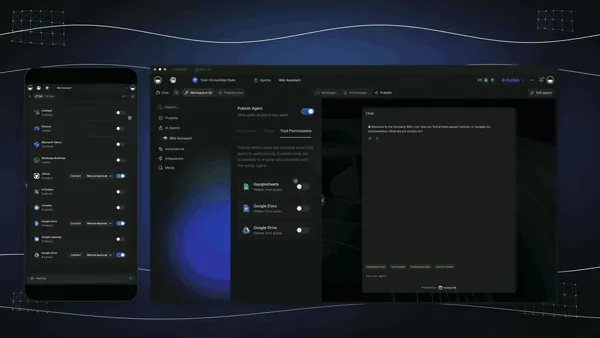
The Workspace DNA Loop: Why It Compounds
The reason an agentic workspace beats a chat box over time is Workspace DNA, a self-reinforcing loop no single assistant can match. Memory (your projects and data) feeds Intelligence (your agents and models), Intelligence triggers Execution (your automations), and Execution writes new results back into Memory. Every cycle makes the next one smarter, because the workspace keeps the context a chat thread throws away.
A standalone Claude or ChatGPT session lives inside one of those boxes, Intelligence, and resets when the thread ends. Taskade keeps all three turning, connecting agents and automations into one loop.
2. ChatGPT: Most Popular Claude Alternative
ChatGPT (OpenAI) is the most popular Claude alternative and the default for hundreds of millions of users. Its GPT model family is strong across writing, reasoning, and coding, and it pairs that with the widest ecosystem of any assistant, custom GPTs, native image generation, voice mode, and the broadest third-party integration support.
Where ChatGPT genuinely beats Claude: ecosystem breadth. Custom GPTs let you package workflows, the GPT Store offers thousands of community tools, and image generation is built in. For a deep history of how OpenAI got here, see our history of OpenAI and ChatGPT, and for help choosing between its model tiers, our ChatGPT models explained guide. If you want to leave ChatGPT rather than Claude, start with our list of ChatGPT alternatives.
Where Claude still leads: long-context document analysis and careful, less-hedged writing. Many users keep both.
Standout 2026 fact: OpenAI shipped the GPT-6 family in September 2026 (Astra on top, then Sol and Luna at half the price of GPT-5.6), and ChatGPT is still the most-used assistant on the planet, reports put it near 900M weekly active users and roughly $25B in annual run-rate revenue (TechnologyChecker, June 2026), though its share of AI web traffic has fallen as the market fragments toward Gemini and Claude.
Pricing: Free tier; Plus ~$20/month; Pro ~$200/month and team tiers above.
Best for: General-purpose chat, image generation, and the largest plugin ecosystem.
3. Google Gemini: Best Free Tier
Google Gemini is the best Claude alternative if you want a powerful free tier. Gemini offers a large context window, native integration with Google Search, and tight links to Gmail, Docs, and the rest of Google Workspace, all with generous free limits that undercut Claude's caps.
Gemini's standout strengths are context length and Google ecosystem integration. If you live in Google Workspace, Gemini can act across your email and documents in ways Claude cannot. Its multimodal capabilities (image, audio, video understanding) are also excellent.
Where Claude still leads: many users find Claude's writing more nuanced and its reasoning more consistent on complex tasks.
Standout 2026 fact: Gemini was the single biggest gainer in AI traffic this cycle, climbing past 27% of AI chatbot web visits by April 2026 and overtaking Perplexity as the second-largest source of AI referrals to websites (Statcounter, 2026). Its ~1M-token context window is among the largest available.
Pricing: Strong free tier; Google AI Plus $4.99/month, AI Pro $19.99/month, AI Ultra from $99.99/month.
Best for: Google Workspace users, long-context tasks, and anyone who wants the most capable free assistant.
4. Perplexity: Best for Research and Citations
Perplexity is the best Claude alternative for research because it grounds every answer in live web sources and shows inline citations you can click to verify. Where Claude reasons from training data, Perplexity searches the web in real time and footnotes its claims, which makes it the go-to for fact-checking, market research, and any task where sourcing matters.
Perplexity's strength is trustworthy, verifiable answers. Its Pro tier even lets you choose the underlying model (including Claude and GPT), so you get Claude-quality reasoning plus web grounding.
Where Claude still leads: open-ended creative writing and long-document work where web search is not needed.
Standout 2026 fact: Perplexity held roughly 7-8% of AI chatbot referral traffic in early 2026, briefly the second-largest source before Gemini overtook it, strong proof that "answers with sources" is now a category of its own, not a feature.
Pricing: Free tier; Pro ~$20/month; Max ~$200/month.
Best for: Research, citations, and current-events questions. Pair it with a Taskade workspace to turn sourced research into a living knowledge base.
5. Microsoft Copilot: Best for Microsoft 365
Microsoft Copilot is the best Claude alternative for teams standardized on Microsoft 365. It embeds AI directly into Word, Excel, PowerPoint, Outlook, and Teams, so it can draft documents, analyze spreadsheets, and summarize meetings inside the tools you already use.
Copilot's advantage is native Office integration, no copy-pasting between a chat window and your documents. For enterprises on Microsoft, the data-governance and security story is also a major draw.
Where Claude still leads: raw conversational quality and long-context analysis outside the Office suite.
Standout 2026 fact: Copilot holds a steady low-single-digit share of AI chatbot traffic, but its real footprint is inside the enterprise, bundled into the Microsoft 365 suite that hundreds of millions of workers already open every day.
Pricing: Free general tier; Copilot is bundled into Microsoft 365 Personal ($9.99/month) and Premium ($19.99/month); Microsoft 365 Copilot ~$30/user/month for business.
Best for: Microsoft 365 shops and Office-centric workflows.
6. Mistral Le Chat: Best European and Privacy Pick
Mistral Le Chat is the best Claude alternative for European users and privacy-conscious teams. Mistral's models are fast, capable, and partly open-weight, and the company's EU base makes it a natural fit for organizations with data-residency requirements.
Le Chat's strengths are speed and open-weight options. You can self-host Mistral models for full control, something impossible with a closed model like Claude. Its responses are quick and its pricing is aggressive, and the EU base means data-residency questions have a cleaner answer for European teams. For organizations bound by GDPR or sector rules that prefer to keep inference on home soil, that is a real, hard-to-replicate advantage.
Where Claude still leads: peak reasoning quality on the hardest, most nuanced tasks, plus a deeper safety-tuning track record.
Standout 2026 fact: Mistral's mix of fully open-weight releases and a hosted Le Chat product makes it one of the few assistants you can run entirely on your own infrastructure and use as a polished consumer app, a flexibility neither Claude nor ChatGPT offers.
Pricing: Free web chat; Le Chat Pro $14.99/month; Team $24.99/user/month.
Best for: EU data residency, self-hosting, and fast, cost-efficient chat.
7. Meta AI (Llama): Best Open-Weight Family
Meta AI, powered by the Llama model family, is the best Claude alternative if you want open-weight models you can run yourself. Llama models are free to download, widely supported, and power a huge share of the open-source AI ecosystem, making them the foundation many other tools build on.
The strength here is openness and control. You can self-host Llama, fine-tune it on your own data, and avoid per-token API costs entirely. Because the weights are public, Llama also underpins a huge share of the open-source AI ecosystem, many other tools, including some on this list, build on or benchmark against it. For developers, that means a deep well of community fine-tunes, deployment guides, and tooling that no closed model can match. Meta AI is also built into WhatsApp, Instagram, and Messenger, putting a capable assistant in front of billions of consumers.
Where Claude still leads: out-of-the-box polish, the most consistent reasoning, and a managed product you do not have to host or maintain yourself.
Standout 2026 fact: the Llama family remains the most widely deployed open-weight model line, the default foundation for teams that need to run AI on their own hardware for cost, privacy, or compliance reasons.
Pricing: Free (consumer); self-hosting costs are infrastructure only.
Best for: Developers and teams who want open-weight models and self-hosting.
8. DeepSeek: Best Low-Cost Reasoning
DeepSeek is the best Claude alternative for strong reasoning at very low cost. Its open-weight reasoning models shocked the industry by matching far more expensive frontier models on math and logic benchmarks while costing a fraction to run.
DeepSeek's strength is price-to-performance on reasoning-heavy tasks. For developers building on an API budget, it offers frontier-adjacent quality at open-weight economics.
Standout 2026 fact: DeepSeek V4.1 Flash (September 2026) lists at $0.30 input and $1.20 output per million tokens at peak hours, and half that off-peak, roughly an order of magnitude below closed frontier models. Budget-minded developers note one catch: it can spend many tokens per task, so compare cost per task, not just price per token.
Pricing: Free web chat; extremely low API pricing.
Best for: Cost-sensitive reasoning, math, and code at scale.
9. Grok: Best for Real-Time and X
Grok (xAI) is the best Claude alternative for real-time information from X (formerly Twitter). Grok has live access to the X firehose, so it can answer questions about breaking news and trending topics with current data that training-cutoff models like Claude cannot match.
Grok's strength is real-time awareness and a looser, more conversational personality. Because it reads the live X feed, it is often first to surface emerging stories, sentiment shifts, and trending discussion, useful for social listening, news monitoring, and any task where "what is happening right now" matters more than polish. Its later models also expanded context windows substantially, making it viable for longer documents alongside its real-time edge.
Where Claude still leads: careful reasoning, safety tuning, and professional-tone writing where a measured voice beats a fast, opinionated one.
Standout 2026 fact: Grok's differentiator remains its direct line into the X firehose, no other major assistant has comparable real-time social data baked in at the model level.
Pricing: Included with X Premium; standalone tiers available.
Best for: Real-time questions, social trends, breaking news, and X-native users.
10. Poe: Best Multi-Model Aggregator
Poe (by Quora) is the best Claude alternative if you want many models under one consumer subscription. Poe gives you access to Claude, GPT, Gemini, and dozens of others through a single app and bill, a simple way to compare models without juggling separate accounts.
Poe's strength is convenience: one subscription, many models, plus thousands of community-built bots you can use or remix. It is the consumer cousin of the multi-model approach, and a genuinely good way to A/B the same prompt across Claude, GPT, and open-weight models before committing to a workflow. Its compute-point pricing model lets light users start cheaply and scale up only when they need heavier models.
Where a workspace leads: Poe is still a chat aggregator. It gives you many models in one place, but it does not add agents, automations, or a shared database the way Taskade does. The output still lives in a chat thread. If you want multi-model access plus execution that turns answers into running apps and team knowledge, a workspace goes further than an aggregator.
Standout 2026 fact: Poe remains the cleanest single-subscription way to access dozens of models side by side, with paid access starting from around $5/month, the lowest entry point for true multi-model chat.
Pricing: Free tier; Poe subscriptions from ~$5 to ~$20/month.
Best for: Individuals who want to try many models cheaply in one app.
11. Kimi: Best Free Long-Context Alternative
Kimi (Moonshot AI) is the best Claude alternative if you want frontier-class long-context work for free. Moonshot released Kimi K3 in July 2026 with a 1 million token context window, native vision, and strong agentic coding. The Kimi chat app has a free tier with rate limits, and paid plans for heavier use.
Kimi's strength is long context at a low price. On the API, K3 lists at $3 input and $15 output per million tokens, with cache hits at $0.30, which sits between Claude Sonnet 5.5 ($2 / $10) and Opus 5.5 ($4 / $20). Moonshot has built its reputation on open-weight releases that developers can inspect and host.
Where Claude still leads: polish in writing and conversation, a larger ecosystem of apps and integrations, and enterprise controls that many regulated teams already approved.
Standout 2026 fact: Moonshot published Kimi K3's API in July 2026 with a context window of just over 1 million tokens (1,048,576), one of the largest in this list.
Pricing: Free chat with rate limits; paid plans for heavier use; API at $3 / $15 per million tokens.
Best for: Long documents, long coding sessions, and anyone who wants a capable free alternative with an open-weight lineage.
12. You.com: Best Search-First Assistant
You.com blends AI chat with a search engine, letting you switch between sourced web answers and multi-model chat in one place. Like Perplexity, it leans into citations so you can verify claims; like Poe, it lets you pick from multiple underlying models. It also leans privacy-forward, which appeals to users who want web-grounded answers without a heavy tracking footprint.
You.com's strength is flexibility: a single tool that flips between search-style sourced answers and open chat, with model choice on top, a practical middle ground between a pure research engine and a pure chat assistant.
Where Claude still leads: sustained reasoning quality and creative writing where switching modes is not needed.
Best for: Users who want search and multi-model chat together in one private-leaning tool.
Claude Alternatives Compared (2026)
| Tool | Best For | Free Tier | Paid From | Models |
|---|---|---|---|---|
| Taskade Genesis | All-in-one workspace | Yes (Auto model routing) | $10/mo, billed annually | Frontier models from top AI labs |
| ChatGPT | Popular chat + ecosystem | Yes | ~$20/mo | GPT family |
| Google Gemini | Best free tier | Yes | ~$20/mo | Gemini family |
| Perplexity | Research + citations | Yes | ~$20/mo | Multi (Pro) |
| Microsoft Copilot | Microsoft 365 | Yes | ~$30/user | GPT family |
| Mistral Le Chat | EU / privacy | Yes | Varies | Mistral (open-weight) |
| Meta AI (Llama) | Open-weight | Yes | Self-host | Llama family |
| DeepSeek | Low-cost reasoning | Yes | Very low API | DeepSeek (open-weight) |
| Grok | Real-time / X | With X Premium | Varies | Grok |
| Poe | Multi-model aggregator | Yes | ~$5/mo | Many |
| Kimi | Long context, free | Yes | Varies | Kimi K3 (Moonshot) |
Spec Matrix: Strengths, Free Tiers, and Who Builds Live Apps
This second table goes one level deeper, the standout strength, the honest reality of each free tier, the starting paid price, and the one capability most of these tools do not have: turning a prompt into a deployed, working app rather than a text answer.
| Tool | Standout strength | Free-tier reality | Paid from | Context class | Builds live apps? |
|---|---|---|---|---|---|
| Taskade Genesis | Multi-model + agents + automations in one workspace | Free plan with Auto model routing | $10/mo, billed annually | Frontier (model-dependent) | Yes - deployed apps with DB, custom domain on Pro, sign-in on every plan |
| ChatGPT | Largest ecosystem + image gen | Solid standard-model access | ~$20/mo | ~1M tokens | No (text + code only) |
| Google Gemini | Biggest free tier + Workspace | Best-in-class free limits | ~$20/mo | ~1M tokens | No |
| Perplexity | Sourced, cited research | Capped Pro-search queries | ~$20/mo | Model-dependent | No |
| Microsoft Copilot | Native Office integration | General use free | ~$30/user | Model-dependent | No |
| Mistral Le Chat | Speed + open-weight, EU base | Free web chat | Varies | Model-dependent | No |
| Meta AI (Llama) | Open-weight, self-hostable | Free (consumer) | Self-host | Model-dependent | No |
| DeepSeek | Lowest-cost reasoning | Free web chat | ~$0.30/1M input (API) | Model-dependent | No |
| Grok | Real-time X data | With X Premium | Varies | Expanded (later models) | No |
| Poe | Many models, one bill | Free tier | ~$5/mo | Per chosen model | No |
| Kimi | 1M-token context, open-weight lineage | Free chat with rate limits | Varies | ~1M tokens | No |
The pattern is clear: every assistant on this list is excellent at answering. Only a workspace turns the answer into something that runs, a live app from a prompt, not just a reply.
What Does a Task Cost on Each Model? (2026 List Prices)
Price per million tokens hides the real cost, so compare price per task. For one typical task of 20,000 input tokens and 2,000 output tokens, list prices work out to about 30 cents on Claude Fable 5.1, 12 cents on Claude Opus 5.5, 6 cents on Claude Sonnet 5.5, and under 1 cent on DeepSeek V4.1 Flash. The numbers below are list-price arithmetic from each vendor's published rates quoted in this guide, not measured results.
| Model | Input / output per 1M tokens | Cost of the sample task |
|---|---|---|
| Claude Fable 5.1 | $10 / $50 | $0.30 |
| GPT-6 Astra | $10 / $50 | $0.30 |
| Claude Opus 5.5 | $4 / $20 | $0.12 |
| Kimi K3 | $3 / $15 | $0.09 |
| Claude Sonnet 5.5 | $2 / $10 | $0.06 |
| GPT-6 Sol | $2 / $10 | $0.06 |
| Claude Haiku 4.5 | $1 / $5 | $0.03 |
| DeepSeek V4.1 Flash (peak hours) | $0.30 / $1.20 | $0.0084 |
| GPT-6 Luna | $0.10 / $0.50 | $0.003 |
Three caveats keep this honest. Reasoning models can spend many more output tokens per task, so the real gap between a cheap and an expensive model can shrink or grow. Cached input is cheaper, for example Anthropic lists a $0.20 per million cache read on Opus 5.5 and Sonnet 5.5. And a flat subscription beats per-token pricing for most individuals. For the full Claude lineup, see Claude models explained. In a multi-model workspace, Auto picks the model per step, so easy steps do not pay frontier prices.
Where Does Your Data Go? Privacy and Data Control
Privacy differs by plan and by where the model runs, so check the data controls before you paste sensitive material. Anthropic's consumer policy is a verified example: on Claude Free, Pro, and Max, whether your chats are used for model training is a choice you set in your privacy settings. If you decline, the existing 30-day retention period applies, and if you allow training, retention extends to five years. Anthropic says the choice does not apply to commercial services such as Claude for Work and the API (Anthropic announcement, August 2025).
| Setup | Where prompts run | What you control |
|---|---|---|
| Hosted consumer chat (Claude, ChatGPT, Gemini, and others) | The vendor's cloud | Account-level data settings; read each vendor's policy |
| Open-weight model you host (Llama, Mistral, DeepSeek, Kimi) | Your own servers or laptop | Everything, including retention, at the cost of running it |
| Workspace with your own API key | Taskade plus your chosen provider | Which provider sees each request; see Claude via your own key |
We deliberately limited this table to facts we could verify. Policies change, so treat the vendor's own page as the source of truth.
Open-Weight Reality Check: Are Self-Hosted Models Good Enough?
Open-weight models are good enough for many jobs, but "free to download" is not "free to run." Llama, Mistral, DeepSeek, and Kimi publish weights you can host, which gives you control over data and cost. You also take on the GPUs, the serving stack, updates, and safety tuning that Anthropic or OpenAI handle for you.
The practical middle path is to compare open-weight and closed models on your own tasks in one place. Taskade's built-in models include open-weight models such as DeepSeek, Qwen and Kimi next to OpenAI GPT, so on a paid plan the five-prompt test above runs side by side without a server.
How to Choose the Right Claude Alternative
Choosing the right Claude alternative comes down to one question: do you want a better chat box, or do you want AI that does work? If you want a single assistant, match the tool to your primary task using the table above. If you want AI woven into your projects, choose a workspace that includes multiple models.
The honest meta-answer for 2026: you do not have to choose just one. The fastest, most capable AI users run several models and route each task to the best one. That is the entire premise behind a multi-model workspace, and why Taskade Genesis tops this list not by being a better Claude, but by keeping many models, agents, and automations in one place, with Claude one connector away.
Claude vs Gemini vs ChatGPT: The Quick Verdict
If you are deciding between the big three, here is the short version that holds up in mid-2026. Claude is the careful one, strongest on long-document analysis, nuanced writing, and code, and the assistant many professionals trust for high-stakes reasoning. ChatGPT is the broad one, the largest ecosystem, native image generation, custom GPTs, and the widest third-party support, which makes it the safe default for general work. Google Gemini is the generous one, the best free tier, a roughly 1M-token context window, and deep Google Workspace integration, ideal if you live in Gmail and Docs.
None of the three is universally "best," and the market data backs that up: usage is fragmenting across all of them rather than consolidating. The most reliable setup is to keep all three within reach and route each task to the strongest fit, exactly what a multi-model workspace makes effortless. For the deeper backstory on each, see our histories of Anthropic and Claude and OpenAI and ChatGPT.
Why We Built Taskade Differently
Most tools on this list are chat assistants. You ask, they answer, the conversation disappears. We built Taskade on a different bet: that the value of AI is not the reply, it is what the reply becomes. So Taskade pairs frontier models from top AI labs with AI agents, automations, and a shared community of cloneable apps, turning every AI output into living, executable team knowledge. Claude connects to it with your own key. It is a model you can call, not a competitor to it. If you are evaluating the broader category, our guides to the best AI app builders and AI agent builders go deeper on where a workspace fits.
From One Prompt to a Live App
Taskade EVE is the meta-agent behind Taskade Genesis. You describe the app in plain English, EVE asks clarifying questions, builds it on your workspace data, and keeps editing it as you iterate. The walkthrough is in build your first app.

What Ships With a Taskade Genesis App
| Capability | What it means | Plan note |
|---|---|---|
| App from a prompt | A live, deployed app backed by your workspace | Publish with a shareable URL |
| AI agents | Built-in tools, custom slash commands, persistent memory, public embedding | Custom agents |
| Automations | Triggers and actions across 100+ bidirectional integrations | Webhooks on Pro and above |
| Client sign-in | Visitors log in to your app. Matching records to a login is a setup step | Every plan, Free included |
| Custom domain | Your own address for the app | Pro and above |
| Community Gallery | Browse live apps and clone one as a starting point | Community Gallery |
| Claude on your key | The Anthropic Claude connector runs on your own API key | Pro and up |
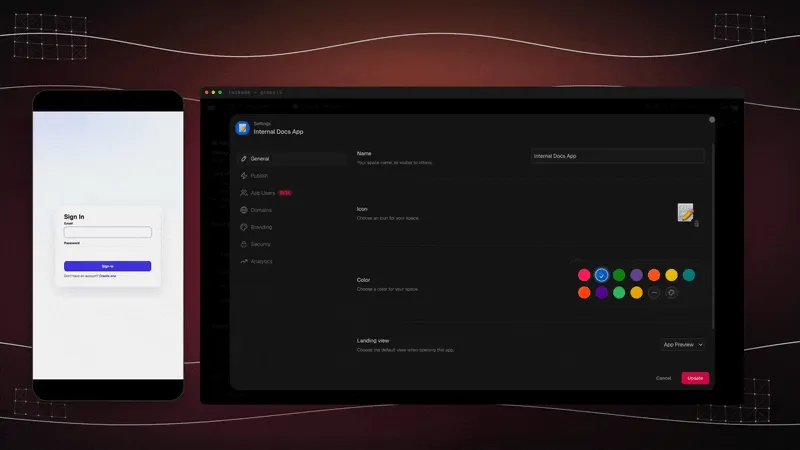
Sign-in confirms who a visitor is. You still match each record to that login and test it with a second account, as described in App Users. For a custom address, see custom domains. Claude stays one connector away: set it up with your own key, and on Pro and up you can run agents on your own Anthropic key through BYOK. Claude Desktop, Claude Code, and Cursor can also read and write your workspace through the Taskade MCP server.
See Live Apps From the Community Gallery
These are real community apps. Open one, inspect it, and clone the pattern.
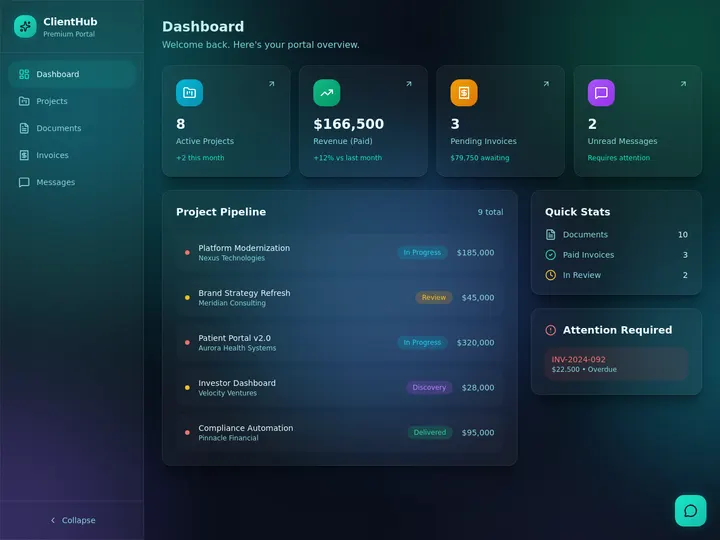

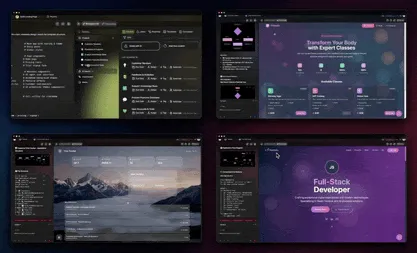
Genuine trade-off: a workspace takes a few minutes longer to learn than a chat box. If you only need quick answers, ChatGPT, Gemini, or Claude itself is the simpler tool.
Frequently Asked Questions
What is the best Claude alternative in 2026?
For an all-in-one AI workspace, Taskade Genesis is the best Claude alternative because it runs frontier models from top AI labs together with agents and automations. For pure chat, ChatGPT is most popular and Google Gemini has the best free tier. For research, Perplexity leads.
Is there a free alternative to Claude?
Yes. Google Gemini, ChatGPT, Microsoft Copilot, Mistral Le Chat, Kimi, and DeepSeek all have free tiers, and Claude's own free plan includes Sonnet and Haiku. Taskade's free plan adds AI agents, automations, and Auto model routing, and the Anthropic Claude connector calls Claude with your own key on Pro and up.
What AI is most similar to Claude?
ChatGPT and Google Gemini are most similar to Claude in raw capability, all three are frontier conversational models. Claude is known for long context and careful reasoning. A multi-model workspace lets you use all three without choosing.
Is Claude better than ChatGPT?
Neither is universally better. Claude leads on long-document analysis and careful writing; ChatGPT leads on ecosystem, custom GPTs, and image generation. The reliable approach is to use both and route each task to the stronger model.
Why did Claude stand out from ChatGPT?
Claude stood out on three wedges that ChatGPT did not lead at the time: a 100,000-token context window in May 2023, the Haiku, Sonnet, and Opus model ladder in March 2024, and Claude Code, an agent that edits, runs, and tests code, in February 2025. A Claude alternative is worth switching to when it matches the wedge you use most.
What is the best Claude alternative for coding?
For coding, dedicated agents like Cursor, GitHub Copilot, and Codex beat chat assistants, see our best Claude Code alternatives guide. To build a deployed app instead of code files, Taskade Genesis turns a prompt into a live app.
Can I use Claude and ChatGPT together?
Yes. Aggregators like Poe and Perplexity offer Claude and GPT under one subscription. In Taskade, the Anthropic Claude connector calls Claude with your own API key on Pro and up, next to frontier models from top AI labs routed by Auto, and on the same plans you can run Claude in AI agents with your own key.
What is the best Claude alternative for research?
Perplexity is best for research because it cites live web sources. Google Gemini is a strong second. Pair either with a Taskade workspace to turn research into a reusable knowledge base.
What is the newest Claude model?
Claude Sonnet 5.5, released September 28, 2026, at $2/$10 per million tokens and more than 30% faster than Sonnet 5. It follows Claude Opus 5.5 (September 22) at $4/$20. The current lineup is Fable 5.1, Opus 5.5, Sonnet 5.5 and Haiku 4.5, with Haiku 5.5 announced. See Claude models explained for every version.
Can I use Claude Fable for free?
Not on Claude's free plan, which includes Sonnet and Haiku with usage limits. Per Anthropic's help center, Max plans and premium Team and Enterprise seats include Fable 5.1 within up to 50% of weekly usage limits, while Pro and standard seats can use it with usage credits. On the API it costs $10/$50 per million tokens. For a capable free assistant, ChatGPT, Google Gemini, Microsoft Copilot, Kimi and DeepSeek all have free tiers. Read Claude Fable and Mythos explained for the full breakdown.
Is Claude Fable 5 worth it, or should I use an alternative?
Claude Fable 5, released June 9, 2026, was Anthropic's most capable model at launch. Anthropic has since shipped Fable 5.1 (September 1), Claude Opus 5.5 (September 22) at $4/$20 with Fable 5.1-level results on most work, and Claude Sonnet 5.5 (September 28) at $2/$10. For most work inside Claude, Opus 5.5 or Sonnet 5.5 is the better value. Taskade Genesis routes the hardest tasks to a frontier model and everything else to cheaper options in one plan.
Why were Claude Fable 5 and Mythos 5 unavailable in June 2026?
On June 12, 2026, three days after Claude Fable 5 launched, the US government issued an export-control directive citing national security that bars access by any foreign national, which made both Fable 5 and Mythos 5 unavailable to all users. The suspension was lifted and both models returned globally in early July 2026. Anthropic calls it a misunderstanding and disagrees, while officials and reporting have raised counter-claims that Anthropic disputes. Crucially, Anthropic's other Claude models stayed available the whole time. The takeaway is the thesis of this guide: keep more than one model within reach. Taskade Genesis routes across frontier models with Auto as the default, so a single model being pulled never stops your work.
Which Claude alternative is best for teams?
Taskade Genesis is best for teams because it combines frontier models with real-time collaboration, agents, and automations. Microsoft Copilot and Google Gemini are strong if your team already uses Microsoft 365 or Google Workspace.
What is the best Claude Cowork alternative for agentic work?
Claude Cowork went generally available on April 9, 2026, making agentic AI the new battleground. The best no-lock-in alternative is Taskade Genesis: its agents carry built-in tools, persistent memory, and automations, and run on frontier models from top AI labs with Auto routing. ChatGPT agent mode and Microsoft Copilot are strong if you are already in those ecosystems, see our Claude Cowork alternatives guide.
How do Claude usage limits work in 2026?
Claude plans meter usage in a five-hour window plus a weekly limit. On September 22, 2026, alongside Claude Opus 5.5, Anthropic raised the five-hour limits on Pro, Max, Team, and seat-based Enterprise plans. It did not remove them, and weekly limits remain. A multi-model workspace is a useful complement: Taskade includes frontier models from top AI labs in one plan, with Auto picking a model for each step.
Is there a Claude alternative that builds apps, not just chats?
Yes. Taskade Genesis turns a prompt into a live app with a database and password protection, plus a custom domain on Pro and higher plans, agents, and automations that keep running. Chat assistants generate text and code; Taskade Genesis ships a usable app. For more options, see our best AI app builders guide.
Are there AIs like Claude worth switching to?
Yes, several. ChatGPT and Google Gemini match Claude on raw chat and reasoning quality and both have stronger free tiers. Perplexity beats Claude for research with live citations. For agentic work that goes beyond chat, Taskade Genesis runs frontier models from top AI labs with AI agents, automations, and a shared database. None of them replace Claude outright, but each is the better pick for a specific job.
Is there a good Claude AI alternative for everyday use?
ChatGPT is the best everyday Claude AI alternative for most people, thanks to its larger ecosystem and free tier. Google Gemini is a close second if you already live in Gmail and Google Docs. If you want to avoid picking just one, Taskade runs frontier models from top AI labs in a single free-to-start workspace, with agents and automations on top.
Is any AI as good as or better than Claude?
Yes for specific jobs, not for every job. ChatGPT and Google Gemini are the closest matches on raw chat and reasoning. Gemini wins on free long-context work, ChatGPT on ecosystem and images, and Perplexity on cited research. The reliable setup is a multi-model workspace that runs frontier models from top AI labs with Auto routing.
Which Claude alternative is best for long documents?
Google Gemini and Kimi K3 both offer context windows of about 1 million tokens, and both have free tiers with limits. Claude is also strong on long-document analysis. Run the same 30-page PDF through each and compare the missed details, because context size alone does not guarantee accuracy. A workspace agent can keep the findings as memory.
What is the cheapest Claude alternative per task?
At list prices, GPT-6 Luna ($0.10 input, $0.50 output per million tokens) and DeepSeek V4.1 Flash ($0.30 and $1.20 at peak hours) are the cheapest. For a sample task of 20,000 input and 2,000 output tokens, that is about 0.3 cents and under 1 cent, against about 6 cents on Claude Sonnet 5.5 and 12 cents on Claude Opus 5.5. Reasoning models can use more tokens per task, so compare cost per task, not just price per token. See the cost table above.
Can I keep my data private with a Claude alternative?
Yes, with the right setup. On Claude Free, Pro, and Max, you choose in your privacy settings whether your chats are used for training, with 30-day retention if you decline and five years if you allow training (Anthropic). Open-weight models such as Llama and Mistral can be self-hosted so prompts stay on your own servers. Always read the vendor's current data controls before you paste sensitive material. More in Where does your data go?
The Bottom Line
Claude is a superb assistant. But in 2026, the winning move is not replacing it, it is un-cornering yourself. The best AI users keep Claude for what it does well and reach for Gemini, ChatGPT, Perplexity, Kimi, and open-weight models for everything else. The simplest way to do that is one workspace that routes across models and connects to the ones you already pay for.
That is what Taskade Genesis delivers: frontier models from top AI labs with Auto routing, Claude on your own key when you want it, and agents and automations that turn answers into action. Memory feeds Intelligence, Intelligence triggers Execution, Execution creates Memory, the self-reinforcing loop that no single chat box can match.
▲ ■ ● Stop picking one model. Build with frontier models free →