







Unless you spent the last few years living under a rock, you have heard of ChatGPT and its underlying generative AI models. But while the 2022 debut of OpenAI's chatbot made global headlines, it was merely one chapter in a rapid sequence of model releases that continues to reshape how we work.
This guide covers every ChatGPT model from GPT-3.5 through GPT-6, including the o-series reasoning models and the six GPT-5.x releases. Updated September 2026 with GPT-6 Astra, Sol and Luna, current API prices, and practical guidance on which model to use.
TL;DR: OpenAI shipped GPT-6 in September 2026 as three tiers: Astra ($10 / $50 per 1M tokens), Sol ($2 / $10) and Luna ($0.10 / $0.50). GPT-5 (August 7, 2025) unified the GPT and o-series lines, and six GPT-5.x releases followed. Taskade gives you frontier models from top AI labs in one workspace. Try it free -->
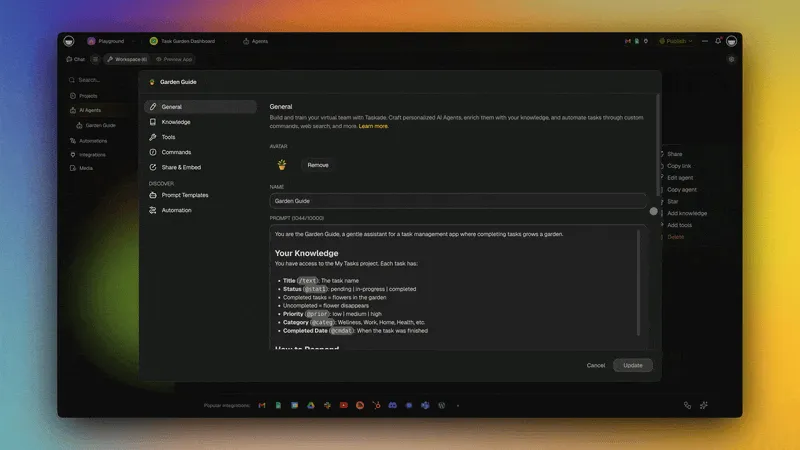
The TSK-1 Benchmark sends the same app request to each model and records whether the app worked, and the GPT results show how each GPT model did.
Quick Comparison: All ChatGPT Models
OpenAI's current lineup in September 2026 is GPT-6 Astra, GPT-6 Sol and GPT-6 Luna, and the table below lists every major model since GPT-3.5 with its release date, context window and API price. Prices are input / output per million tokens.
| Model | Release | Context | Best For | API Pricing (1M tokens) |
|---|---|---|---|---|
| GPT-3.5 Turbo | Nov 2022 | 16K | Basic tasks, low cost | $0.50 / $1.50 |
| GPT-4 | Mar 2023 | 8K-32K | Complex reasoning | Legacy |
| GPT-4 Turbo | Nov 2023 | 128K | Long documents | Legacy |
| GPT-4o | May 2024 | 128K | Multimodal, voice | $2.50 / $10 |
| GPT-4o mini | Jul 2024 | 128K | Fast, cheap | $0.15 / $0.60 |
| o1 | Sep 2024 | 200K | Production reasoning | $15 / $60 |
| o3 | Dec 2024 (preview) | 200K | Advanced reasoning | Superseded by GPT-5 |
| GPT-5 | Aug 7, 2025 | 400K | Unified reasoning + chat | $1.25 / $10 |
| GPT-5.2 | Dec 11, 2025 | -- | Adds xhigh effort | $1.75 / $14 |
| GPT-5.4 | Mar 5, 2026 | 1.05M | Native computer use | $2.50 / $15 |
| GPT-5.5 | Apr 23, 2026 | -- | Frontier work | $5 / $30 |
| GPT-5.6 Luna / Terra / Sol | Jul 9, 2026 | -- | Three price tiers | $0.20 / $1.20 to $5 / $30 |
| GPT-6 Astra | Sep 3, 2026 | 1.05M | Hardest reasoning, agents | $10 / $50 |
| GPT-6 Sol | Sep 22, 2026 | -- | Balanced production work | $2 / $10 |
| GPT-6 Luna | Sep 22, 2026 | -- | High volume, low cost | $0.10 / $0.50 |
Prices are input/output per million tokens. A dash means this guide has no verified figure. GPT-5.1 (Nov 12, 2025) and GPT-5.3-Codex (Feb 5, 2026) are covered in the GPT-5.x section below. Check OpenAI's pricing page for current rates.
The Complete History of ChatGPT Models
GPT-3.5: The Model That Started Everything (November 2022)
In 2015, a team of tech pioneers led by Elon Musk and Sam Altman launched a non-profit research organization called OpenAI. Their mission was to develop AI that benefits humanity.
The journey began with the research paper "Improving Language Understanding by Generative Pre-Training," which introduced the transformer architecture. Transformers are neural networks that learn relationships in language by processing entire sequences of text simultaneously rather than one word at a time.
This paper led to three foundational models: GPT-1 (2018), GPT-2 (2019), and GPT-3 (2020). GPT-3 was fine-tuned for conversational interactions and integrated with a chat interface -- creating ChatGPT.
ChatGPT powered by GPT-3.5 offered the first conversational interface for generative AI that everyday users could access. It brought AI into the mainstream, reaching 100 million users in just two months.
| Specification | GPT-3.5 Details |
|---|---|
| Parameters | 175 billion |
| Training Data | ~45TB of text (web pages, articles, books) |
| Language | 90%+ English |
| Context Window | 4K tokens (later 16K with GPT-3.5 Turbo) |
| Key Limitation | Prone to hallucinations, limited reasoning |
GPT-4: The Reasoning Leap (March 2023)
GPT-4 launched on March 14, 2023, initially available to ChatGPT Plus subscribers and through the API. It represented a genuine step-change in capability.
The model introduced multimodal inputs (text and images), an expanded context window, and dramatically improved reasoning. OpenAI called it their "most advanced system" at the time. GPT-4 was trained on approximately 13 trillion tokens, stacking up to roughly 1.8 trillion parameters.
| Benchmark | GPT-3.5 Score | GPT-4 Score | Improvement |
|---|---|---|---|
| Simulated Bar Exam | ~10th percentile | Top 10% | Massive |
| Nephrology Questions | N/A | 73.3% correct | New capability |
| SAT Score | ~1200 | 1410/1600 | +210 points |
| Factual Accuracy | Baseline | +40% | Significant |
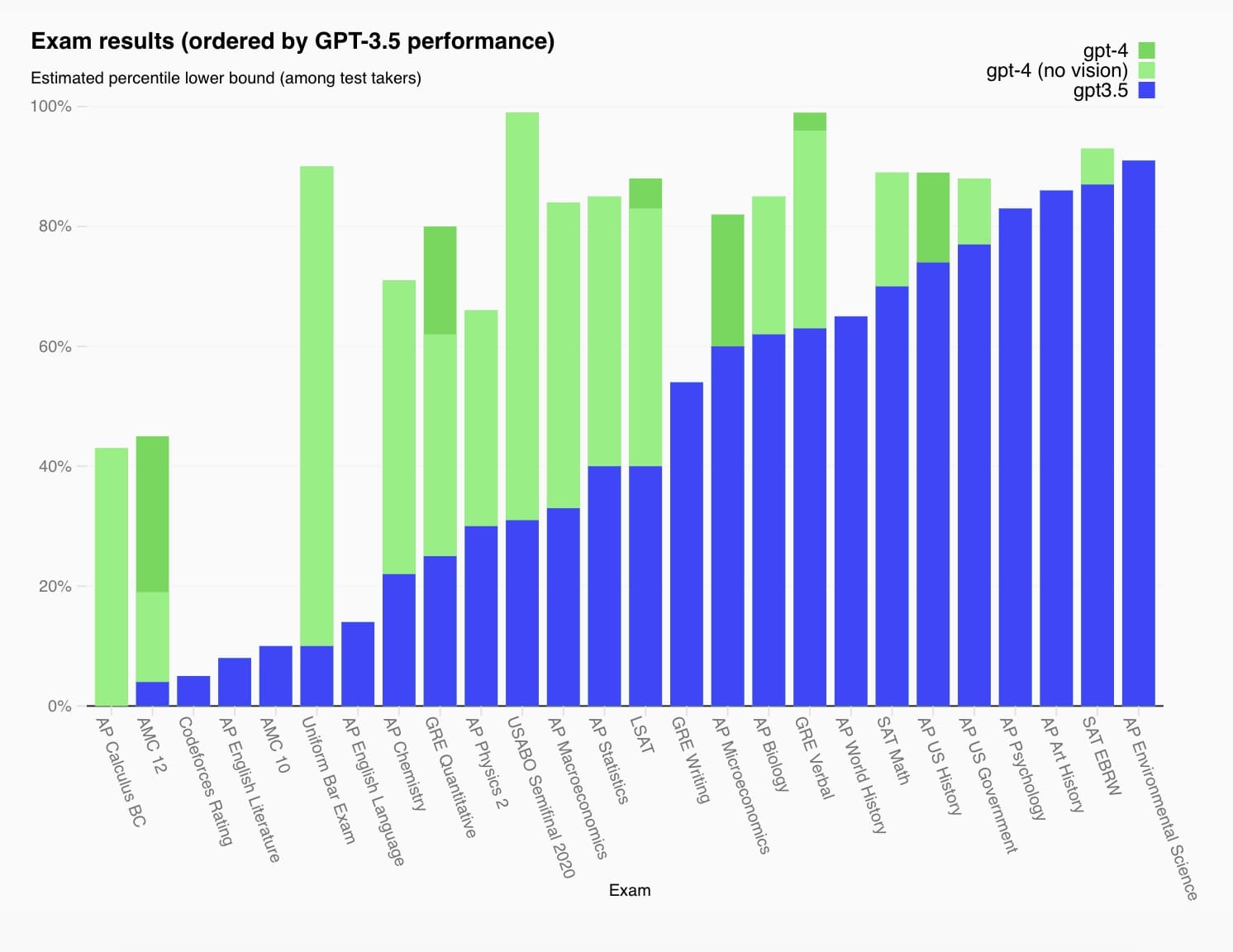
GPT-4 drove broader enterprise adoption of LLMs. Its enhanced capabilities powered applications in customer support, sales, marketing, data analysis, and software development.
GPT-4 Turbo: Speed and Efficiency (November 2023)
In November 2023, OpenAI announced GPT-4 Turbo with a 128K context window -- equivalent to more than 300 pages of text. The model offered an extended knowledge cutoff (April 2023), optimized performance, and lower operational costs.
GPT-4 Turbo was not a groundbreaking leap from GPT-4 but made the technology significantly more practical for real-world applications. The larger context window enabled processing entire codebases, legal documents, and research papers in a single prompt.
The launch initially drew some criticism. User benchmarks showed slightly lower scores on standardized tests compared to GPT-4 -- a tradeoff for the speed and cost improvements.
GPT-4o and GPT-4o Mini: The Omni Models (May-July 2024)
In May 2024, OpenAI introduced GPT-4o ("omni") -- a model that processes text, audio, and images natively within a single architecture. This was not three separate models stitched together. GPT-4o was trained from the ground up as a multimodal system.
| Capability | GPT-4 | GPT-4o |
|---|---|---|
| Speed | Baseline | 2x faster |
| Cost | Baseline | 50% cheaper |
| Audio | External TTS/STT | Native, 320ms response |
| Images | Basic understanding | Advanced visual reasoning |
| Context | 8K-32K | 128K |
In a series of demos, GPT-4o responded to audio inputs with response times close to human levels (320ms average versus 230ms human average). The model handled voice conversations with natural intonation and emotion.
A month later, OpenAI released GPT-4o mini -- a smaller, faster model that is 60% cheaper while maintaining strong reasoning capabilities. GPT-4o mini quickly became the default model for cost-sensitive applications.
o1 and o1-mini: The Reasoning Revolution (September 2024)
In September 2024, OpenAI announced a paradigm shift with o1 (originally codenamed "Strawberry") -- models designed to "spend more time thinking before they respond."
Unlike GPT-4, which generates responses in a single forward pass, o1 uses chain-of-thought reasoning internally. It breaks down complex problems step by step before producing an answer. This mirrors what psychologists call "System 2 thinking" -- the slower, deliberate reasoning humans use for complex problems.
| Benchmark | GPT-4o | o1 | Improvement |
|---|---|---|---|
| International Math Olympiad | 13% | 83% | 6.4x |
| Codeforces (competitive programming) | 11th percentile | 89th percentile | 8x |
| PhD-level science questions | 69% | 78% | +9% |
According to OpenAI, o1 performs at a PhD-level student in physics, biology, and chemistry.
"One way to think about reasoning is there are some problems that benefit from being able to think about it for longer. There is this classic notion of System 1 versus System 2 thinking in humans. System 1 is the more automatic, instinctive response and System 2 is the slower, more process-driven response." -- Noam Brown, OpenAI
o1-mini offers similar reasoning capabilities at lower cost, optimized for STEM tasks that do not require broad world knowledge.
o3: Pushing the Boundaries of Reasoning (December 2024)
In December 2024, OpenAI previewed o3 -- the next evolution of reasoning models.
The headline: o3 achieved 87.5% on the ARC-AGI benchmark (in high-compute mode), a test specifically designed to measure general intelligence capabilities. Previous models struggled to break 30%.
Why o3 matters:
- First model to show generalization beyond training data on the ARC benchmark
- Dramatically improved coding, math, and scientific reasoning
- Reignited serious conversations about the path to artificial general intelligence
- Established reasoning models as a distinct and essential model category
GPT-5: The Unified Flagship (August 2025)
GPT-5 launched on August 7, 2025 as OpenAI's unified flagship, merging the GPT and o-series lines into a single model. It cost $1.25 per million input tokens and $10 per million output tokens, with a 400K-token context window:
| Feature | GPT-4o | GPT-5 |
|---|---|---|
| Release | May 2024 | Aug 7, 2025 |
| Context | 128K | 400K |
| API price (1M tokens) | $2.50 / $10 | $1.25 / $10 |
| Reasoning | Basic | Integrated o-series reasoning |
| Agentic Tasks | Limited | Built for multi-step agent work |
GPT-5 represents the convergence of two model philosophies: the fast, general-purpose GPT line and the deliberate, reasoning-focused o-series. The result is a model that can both think deeply when needed and respond quickly for routine tasks.
The biggest shift: GPT-5 excels at agentic workflows -- not just answering questions but planning and executing multi-step tasks autonomously.
GPT-5.x: Six Releases in Eight Months (2025-2026)
After GPT-5, OpenAI moved to point releases roughly every one to three months, from GPT-5.1 in November 2025 to the three-tier GPT-5.6 family in July 2026. Each step changed price, context or tooling rather than the product name:
| Model | Release | API price (1M tokens) | What changed |
|---|---|---|---|
| GPT-5.1 | Nov 12, 2025 | -- | First point release |
| GPT-5.2 | Dec 11, 2025 | $1.75 / $14 | Added the xhigh reasoning effort |
| GPT-5.3-Codex | Feb 5, 2026 | -- | Coding model for Codex |
| GPT-5.4 | Mar 5, 2026 | $2.50 / $15 | 1.05M context, native computer use |
| GPT-5.5 | Apr 23, 2026 | $5 / $30 | Leaves ChatGPT, Work and Codex Oct 14, 2026 |
| GPT-5.6 Luna / Terra / Sol | Jul 9, 2026 (GA) | See below | First three-tier family |
GPT-5.6 split one model into three tiers. It entered a limited preview on June 26, 2026 and became generally available on July 9, 2026, the same day OpenAI launched ChatGPT Work. A July 30 price cut set Luna at $0.20 / $1.20 and Terra at $2 / $12. Sol lists at $5 / $30, with a promotional $4 / $20 through at least November 21, 2026. Since August 6, 2026, Luna is the default model for ChatGPT Free and Go users.
GPT-5.5 stays in the API after it leaves ChatGPT, Work and Codex on October 14, 2026. OpenAI also retired Sora in two steps: the Sora web and app experience shut down on April 26, 2026, and the Sora API ends on September 24, 2026.
GPT-6 Astra, Sol and Luna (September 2026)
GPT-6 is OpenAI's September 2026 model family with three tiers: Astra for the hardest work, Sol for balanced production use, and Luna for high volume at the lowest cost. There is no GPT-6 Terra. OpenAI calls Astra "the world's most intelligent and aligned model", and it is the first OpenAI model rated Critical in cybersecurity.
| Model | Release | API price (1M tokens) | FrontierCode (max) | Cost per task |
|---|---|---|---|---|
| GPT-6 Astra | Sep 3, 2026 | $10 / $50 | 53.3% | $4.59 |
| GPT-6 Sol | Sep 22, 2026 | $2 / $10 | 49.3% | $2.14 |
| GPT-6 Luna | Sep 22, 2026 | $0.10 / $0.50 | 42.4% | $0.11 |
GPT-6 Astra has a 1.05M-token context window, split into up to 922K input tokens and 128K output tokens. In ChatGPT, Plus subscribers get Astra in ChatGPT Work and Codex, and Pro subscribers also get it in Chat. GPT-6 Pro (Astra Pro) is available on the Pro, Business and Enterprise plans.
GPT-6 Sol and GPT-6 Luna launched on September 22, 2026 in ChatGPT Work, Codex and the API. They were not yet in Chat at launch. Free and Go users get Luna in the ChatGPT desktop app.
The cost column matters more than the score column for most teams. Luna reaches about 80% of Astra's FrontierCode score at roughly 2% of its cost per task. For the full breakdown of each tier, read what GPT is and where GPT-6 fits. For how to budget model spend by task instead of by token, see AI cost per task.
Which ChatGPT Model Should You Use?
For most work in September 2026, start with GPT-6 Sol, move up to GPT-6 Astra for the hardest reasoning and agentic coding, and drop to GPT-6 Luna for high-volume, low-cost tasks. Older models still make sense where a workflow already depends on them:
| Use Case | Recommended Model | Why |
|---|---|---|
| Everyday chat, simple Q&A | GPT-6 Luna | $0.10 / $0.50, the cheapest current tier |
| Writing, creative work | GPT-6 Sol | Balanced quality and price at $2 / $10 |
| Complex reasoning, math, research | GPT-6 Astra | Top FrontierCode score (53.3%) |
| Long documents (500+ pages) | GPT-6 Astra or GPT-5.4 | 1.05M-token context window |
| Voice conversations | GPT-4o | Native audio with natural intonation |
| Coding, debugging | GPT-6 Sol; Astra for the hardest tasks | 49.3% vs 53.3% FrontierCode at less than half the cost |
| Budget-conscious apps | GPT-6 Luna | $0.11 per FrontierCode task |
| Agentic multi-step tasks | GPT-6 Astra or GPT-6 Sol | Built for Codex and ChatGPT Work |
If no OpenAI model fits the job, compare the ChatGPT alternatives from other AI labs.
The 2026 AI Model Landscape
The model landscape has expanded far beyond OpenAI. Here is how the major providers compare:
| Provider | Flagship Model | Best For | Key Advantage |
|---|---|---|---|
| OpenAI | GPT-6 Astra, Sol, Luna | Agentic workflows, reasoning | Three price tiers in one family |
| Anthropic | Claude (frontier models) | Long-form analysis, safety | Best for nuanced, safe content |
| Gemini Pro (frontier models) | Google integration, multimodal | Native Workspace integration | |
| Meta | Llama 4 | Open-source, customization | Free for self-hosting |
The biggest trend: these models now excel at agentic workflows. Computer scientist Andrew Ng observed that wrapping agentic workflows around even older models can outperform newer models used in simple prompting:
"If you use GPT-3.5 with zero-shot prompting, it gets it 48% right, but if you take an agentic workflow and wrap it around GPT-3.5, it actually does better than even GPT-4."
This is where platforms like Taskade Genesis become essential. Rather than choosing a single model, you can build living software that uses different models for different tasks within the same workspace.
The Impact of ChatGPT on AI and Work
Each ChatGPT generation has advanced what is possible with AI:
- GPT-3.5 brought conversational AI to the mainstream
- GPT-4 made AI reliable enough for enterprise use
- GPT-4o unified text, audio, and vision in one model
- o1/o3 proved AI can reason through complex problems
- GPT-5 enables AI to plan and execute multi-step tasks autonomously
- GPT-5.6 split one model into three price tiers
- GPT-6 carried the three-tier design to a new generation, from Astra at $10 / $50 to Luna at $0.10 / $0.50
The real opportunity in 2026 is not choosing the right model. It is building complete systems that use multiple models together.
Taskade gives you frontier models from top AI labs in one platform. But more importantly, Taskade Genesis lets you build applications that use these models as living software with persistent memory, autonomous agents, and workflow automation.
Get Started with AI Models in Taskade
Sign up for Taskade and access frontier AI models -->
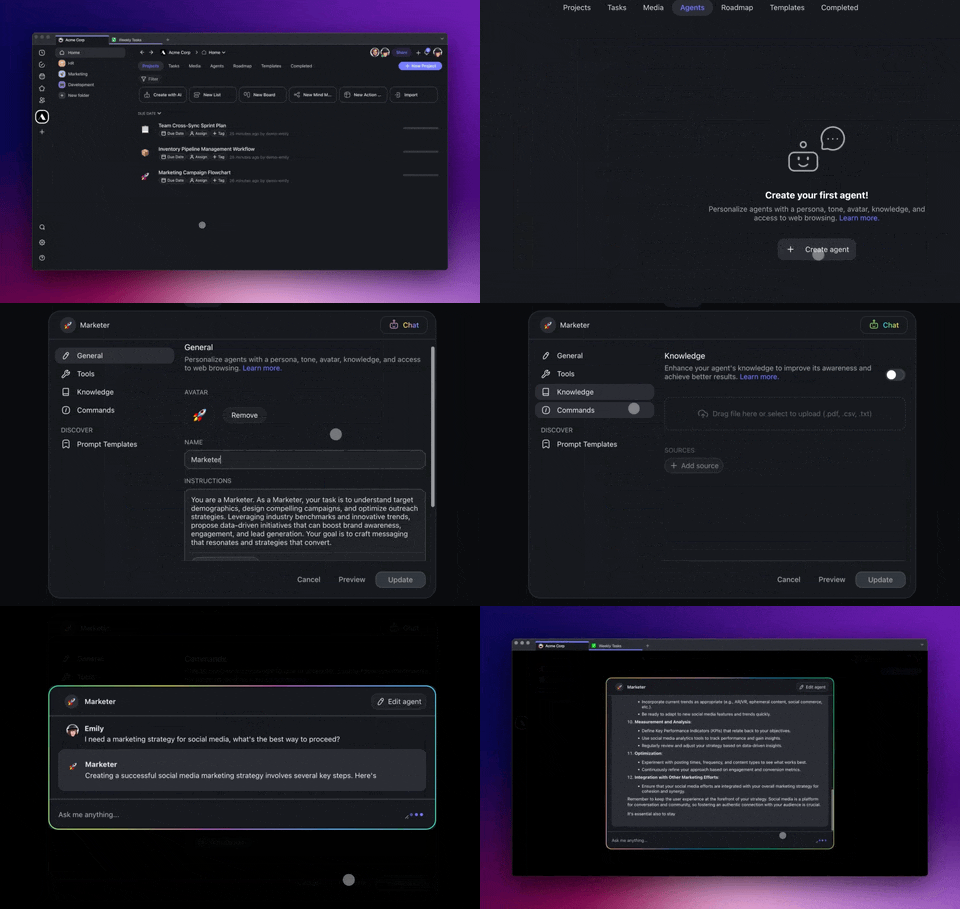
Custom AI Agents: Build autonomous agents with tailored knowledge, built-in tools, and persistent memory. Deploy agents in projects, automations, and custom chats.
AI Teams: Organize agents into specialized squads. Each agent can use a different model optimized for its task. Interact with multiple agents in the same chat.
Smart Automations: Build AI-powered automation with customizable triggers and actions. Connect with 100+ integrations including Gmail, HubSpot, Slack, and Shopify.
Workspace DNA: Manage everything in one workspace where memory persists, intelligence compounds, and execution continues. Projects, agents, and automations work as one system.
Related Reading
- Claude Models Explained -- the Anthropic side: every Claude version, Opus vs Sonnet vs Haiku
- What Is Generative AI? -- foundational concepts
- What Is Natural Language Processing? -- how models understand language
- AI Prompt Engineering Guide -- write better prompts for any model
- Types of Prompt Engineering -- zero-shot to chain-of-thought techniques
- What Are AI Agents? -- autonomous AI systems explained
- Best AI App Builders (2026) -- build apps powered by frontier models
- Taskade Genesis vs ChatGPT Custom GPTs -- platform comparison
- Agentic Workflows -- the future of AI work
Frequently Asked Questions
What are all the ChatGPT model versions released so far?
Major ChatGPT model generations in chronological order: GPT-3.5 (November 2022), the original ChatGPT model. GPT-4 (March 2023). GPT-4 Turbo (November 2023) with 128K context. GPT-4o (May 2024), the omni model for text, audio, and images. o1 (September 2024) and o3 (previewed December 2024), the reasoning models. GPT-5 (August 7, 2025), which unified the GPT and o-series lines. GPT-5.1 (November 12, 2025), GPT-5.2 (December 11, 2025), GPT-5.3-Codex (February 5, 2026), GPT-5.4 (March 5, 2026), GPT-5.5 (April 23, 2026), and GPT-5.6 Luna, Terra and Sol (generally available July 9, 2026). GPT-6 Astra followed on September 3, 2026, and GPT-6 Sol and GPT-6 Luna on September 22, 2026.
What is GPT-6?
GPT-6 is OpenAI's sixth-generation model family, released in September 2026 as three tiers. GPT-6 Astra launched September 3, 2026 at $10 input and $50 output per million tokens with a 1.05M-token context window, and OpenAI rated it the first of its models to reach Critical in cybersecurity. GPT-6 Sol ($2 / $10) and GPT-6 Luna ($0.10 / $0.50) launched September 22, 2026 in ChatGPT Work, Codex, and the API. There is no GPT-6 Terra.
What is the difference between GPT-4 and GPT-4o?
GPT-4 is optimized for text-based reasoning, analysis, and generation. GPT-4o (omni) processes text, images, and audio natively within a single model, not by stitching separate systems together. GPT-4o is 2x faster and 50% cheaper per token than GPT-4. GPT-4o handles voice conversations with natural intonation at 320ms average response time. For most users, GPT-4o is the better default choice.
What are OpenAI o1 and o3 reasoning models?
The o-series (o1, o3) are reasoning models that think before answering by performing internal chain-of-thought reasoning. Unlike GPT models that generate responses token-by-token, o-series models spend time planning and evaluating before producing output. This makes them significantly better at math, complex coding, multi-step logical reasoning, and scientific analysis. The trade-off is slower speed and higher cost per query.
Which ChatGPT model should I use in 2026?
For the hardest reasoning, research, and agentic coding, use GPT-6 Astra, which costs $10 input and $50 output per million tokens. For most production work, GPT-6 Sol at $2 / $10 is the balanced choice. For high-volume, low-cost tasks, GPT-6 Luna at $0.10 / $0.50 is the cheapest current OpenAI model. On the FrontierCode benchmark at max effort, Astra scored 53.3% at $4.59 per task, Sol 49.3% at $2.14, and Luna 42.4% at $0.11. Platforms like Taskade let you assign different models to different AI agents.
When was GPT-5 released and what are its capabilities?
GPT-5 launched on August 7, 2025 at $1.25 input and $10 output per million tokens, with a 400K-token context window. It unified the fast GPT line and the o-series reasoning line into one model, and it was built for agentic, multi-step work. OpenAI followed it with GPT-5.1 through GPT-5.6 between November 2025 and July 2026.
How much do ChatGPT models cost through the API?
API pricing per million tokens, input and output: GPT-6 Astra $10 and $50. GPT-6 Sol $2 and $10. GPT-6 Luna $0.10 and $0.50. GPT-5.6 Sol $5 and $30 at list price, with a promotional $4 and $20 through at least November 21, 2026. GPT-5.6 Terra $2 and $12. GPT-5.6 Luna $0.20 and $1.20. GPT-5.5 $5 and $30. GPT-5 $1.25 and $10. GPT-4o $2.50 and $10. GPT-4o mini $0.15 and $0.60. Prices change often. Check OpenAI for current rates.
What is the context window for each ChatGPT model?
Context windows by model: GPT-3.5 Turbo has 16K tokens. GPT-4 has 8K to 32K tokens. GPT-4 Turbo and GPT-4o have 128K tokens. o1 and o3 have 200K tokens. GPT-5 has 400K tokens. GPT-5.4 and GPT-6 Astra have 1.05M tokens. For GPT-6 Astra that splits into up to 922K input tokens and 128K output tokens. For reference, 128K tokens equals roughly 300 pages of text.
How does ChatGPT compare to Claude and Gemini in 2026?
In 2026 the leading AI providers include OpenAI (GPT-6 Astra, Sol, and Luna), Anthropic (Claude), and Google (Gemini). Each has strengths. OpenAI ships a three-tier family that trades cost against capability. Anthropic Claude is strong at long-form analysis and safety. Google Gemini integrates with Google Workspace. Taskade gives you frontier models from top AI labs in one workspace.
Can I use multiple ChatGPT models in one workflow?
Yes. Multi-model workflows assign different models to different tasks based on their strengths. For example, use a low-cost model for data extraction, a reasoning model for analysis, and a balanced model for report writing. Taskade supports this natively with AI agents. Each agent can use a different model, and they collaborate within the same workspace with shared memory.
What is the difference between ChatGPT Plus and the API?
ChatGPT Plus ($20/month) gives you access to OpenAI models through the ChatGPT interface with usage limits. For example, Plus subscribers get GPT-6 Astra in ChatGPT Work and Codex. The API charges per token with no monthly fee, giving developers programmatic access for building applications. For teams, platforms like Taskade provide access to multiple frontier models without managing API keys or token costs directly.