TL;DR: GPT is the family to reach for when the brief is detailed. GPT-5.6 Luna reproduced all 32 questions of a real client sign-up form word for word (Aug 3, 2026) and built a working scoring grid that saves scores to your workspace (Aug 7, 2026). GPT-5.6 Terra was the fastest in nearly every test. Gemini 3.6 Flash is the fast-improving pick: its Aug 1, 2026 app never opened, and its Aug 3, 2026 app built and published. GPT runs inside Taskade Genesis from the picker. Gemini runs as an automation step with your own Google AI key.
What TSK-1 Found
Both families entered the Aug 1, 2026 test, and the findings split by measure. GPT is strongest at following detailed requests and finishing quickly. Luna preserves exact wording and builds scoring logic that saves results to your workspace. Terra is the fastest in nearly every test it enters. Gemini improved between tests. An early result never opened. The next built, published, and worked. We use every finished app, so progress is measured by what people can actually run.
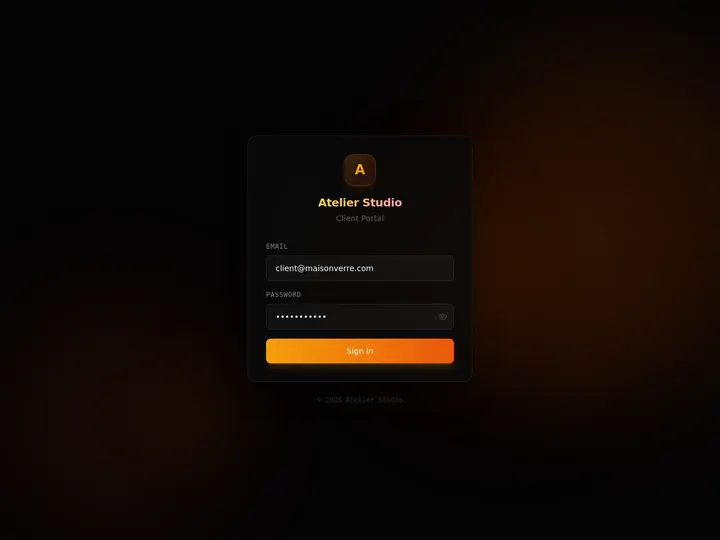
- GPT: Aug 3, 2026 - Luna reproduced all 32 questions of a real customer's client sign-up form word for word, the only model to get all four of its builds word for word across more than one test. Aug 7, 2026 - Terra was the first model to pass all five checks in one run, and the fastest of the test at 8 minutes 26 seconds. Aug 7, 2026 - Luna built the only working scoring grid: 33 rows by 5 ratings, every score saved to the workspace.
- Gemini: Aug 1, 2026 - the finished build never opened: three missing pieces, no light-and-dark styling, and links pointing at a machine nobody else can reach. Aug 3, 2026 - built and published, a clear step up, though it still used too many resources to qualify as the best value in that test.
See the full evidence at /tsk/gemini, /tsk/gpt, and the TSK-1 hub.
Gemini 3.6 Flash vs GPT-5.6 Luna
This is the pair most buyers will actually weigh, and the evidence favors Luna on every measure we grade. Luna is the most faithful model we have tested. On Aug 3, 2026 it reproduced all 32 questions of a real customer's client sign-up form word for word, and it is the only model to get all four of its builds word for word across more than one test. On Aug 4, 2026 it built the best client sign-up form it has produced: nothing stalled, and a human reviewer called it beautiful. On Aug 8, 2026 it won the test on value, was the only model to explain its own design choices, and both of its builds carried all 32 questions word for word. Luna has an honest miss too. On Aug 25, 2026, in a test Gemini did not enter, its match tracker crashed on the first real entry and its sign-up form rejected the first submission. Later tests finished cleanly.
Gemini 3.6 Flash met Sol in the Aug 1, 2026 test, and its story is about the distance between two dates. On Aug 1, 2026 the finished build never opened. There were three missing pieces, no light-and-dark styling, and links pointing at a machine nobody else can reach. Nothing shipped. Opening the app yourself exists to catch exactly this. On Aug 3, 2026 the next build opened and published, a clear step up. It still used too many resources to qualify as the best value in that test. DeepSeek V4 Flash was the cheapest run of that test. That is real progress, confirmed by opening the app rather than taking the model's word for it.
The pricing comparison points the same way as the build evidence. On published rates as of September 2026, gpt-5.6-luna is $0.20 per million input tokens and $1.20 per million output. Gemini 3.6 Flash is $0.75 and $3.75 through the end of 2026, and Google has published a rise to $1.50 and $7.50 from January 1, 2027. Above 272K input tokens, OpenAI bills input at 2x and output at 1.5x. Luna is the cheaper model on paper, and it is the one that kept the customer's wording intact.
Gemini 3.6 Flash vs GPT-5.6 Terra and Sol
Move up the GPT ladder and the story becomes speed, then a caution. Terra is the fastest model in nearly every test it enters. On Aug 7, 2026 it was the first model to pass all five checks in one run: it built the app, took a form submission, put every answer in the right field, ran the automation, and answered questions about the data. It did that in 8 minutes 26 seconds, the fastest of the test. Terra also turned its weakest result around. For three tests, none of its four builds carried the customer's questions word for word. On Aug 8, 2026, after a change of setting, both builds carried all 32 questions word for word. On Aug 25, 2026 it built the best overall match tracker and the best client sign-up build of that test: form to saved score worked on the first try.
Terra has an honest miss too. On Aug 8, 2026 its premium setting was the worst value we have measured on the client sign-up form: far more expensive than Luna, and it delivered less, a single page rewritten 19 times. Speed at the standard setting is the Terra story. The premium setting is not.
Sol is the login-wall lesson. Three times, on Jul 30, Aug 1, and Aug 25, 2026, Sol put a sign-in screen in front of an app nobody asked it to lock, and never mentioned it. We open every app and use it, which is how that was caught. The second time was repeatable enough that it shaped how we score a build that answers a different brief than the one given. The third time was a match tracker on Aug 25, 2026, in a test Gemini did not enter. Beautiful is not the same as right.
Gemini's Aug 3, 2026 result sits between those two GPT stories. It opened and published. What it lacked was the value case: it used more resources than DeepSeek V4 Flash, the cheapest run of that test. Where Gemini pulls ahead is input format. Google publishes text, image, video, audio, and PDF as accepted inputs for Gemini 3.6 Flash. OpenAI publishes text and image input for the GPT-5.6 family. If the brief starts as a recorded call or a scanned form, that gap matters before any build begins. Inside Taskade the Gemini connector is narrower than Google's API: it runs a prompt step, a structured extraction, and a question about an image.
Choose Gemini If…
A comparison that never concedes anything is not worth reading. Gemini is the better pick in several common cases.
- Your input is not text. Google publishes text, image, video, audio, and PDF as accepted inputs for Gemini 3.6 Flash on its own API. GPT-5.6 accepts text and image only. In Taskade, the Gemini connector exposes a prompt step, a structured extraction, and an image question.
- You want the model that is climbing. Gemini went from an app that never opened on Aug 1, 2026 to one that built and published on Aug 3, 2026. Two dates, a clear step up, and the next test is the one to watch.
- Your work already lives in Google's tools. Gemini is Google's model, and the Google Gemini automation connector in Taskade runs Ask Gemini as a step with your own Google AI key. If your team already holds that key, the step costs you no new account.
- You need a million tokens of mixed input in one prompt. The published input limit is 1,048,576 tokens, and that window takes video and audio, not only text.
Choose GPT If…
- The brief is detailed and every word matters. Luna reproduced all 32 questions of a real client sign-up form word for word (Aug 3, 2026), and it was the only model to get all four of its builds word for word across more than one test.
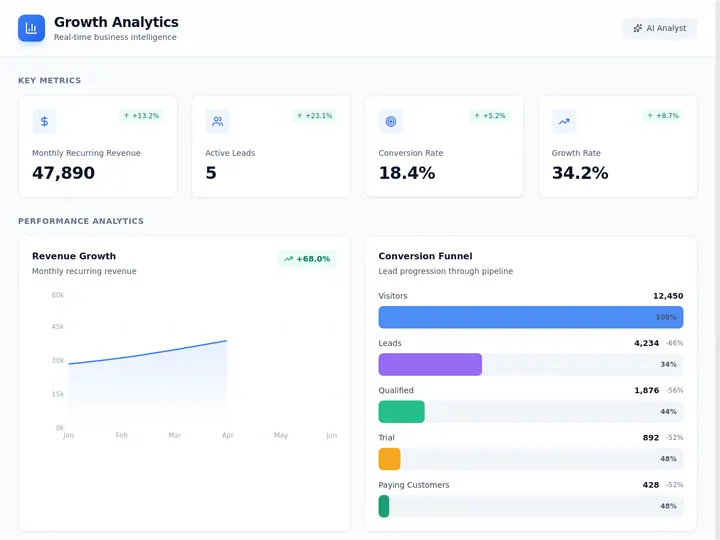
- Results have to be scored and saved. Luna built the only working scoring grid we have measured, 33 rows by 5 ratings, with every score saved back into the workspace (Aug 7, 2026).
- The deadline is close. Terra passed every check in one run on Aug 7, 2026 in 8 minutes 26 seconds, the fastest of that test.
- You want the model that explains itself. On Aug 8, 2026 Luna was the only model to explain its own design choices, and it won that test on value.
- You want the cheapest published rate on this page. On rates as of September 2026, gpt-5.6-luna is $0.20 per million input tokens and $1.20 per million output, below Gemini 3.6 Flash's $0.75 and $3.75.
- You want it in the picker today. GPT-5.6 Luna, Terra, and Sol are selectable in Taskade right now. Gemini is not.
The Taskade Angle: Route, Don't Standardize
Most comparison pages end with "pick one". The evidence for these two families points the other way: one owns exact wording, scoring, and speed, and the other owns video, audio, and PDF input while it climbs. Serious teams use both and route between them.
One plain fact first. Gemini is not in the Taskade model picker right now. Google models are hidden there. Gemini was part of the benchmark, and with your own Google AI key the Google Gemini automation connector still runs Ask Gemini as a step in your automations. GPT-5.6 Luna, Terra, and Sol are in the picker today.
Taskade routes across 15+ frontier models from OpenAI, Anthropic, and open-weight providers inside one workspace, with the AI allowance included in the subscription rather than a separate API account per lab. Paid plans start at Pro $10/mo billed annually, with Business $25, Max $100 and Enterprise $250 per month billed annually. You set the model per agent or per automation step, so a wording-sensitive build on Luna, a fast pass on Terra, and an Ask Gemini step on that call's transcript can each get the model that leads there. Leave a step on TSK-1 Auto and it adapts the depth instead: fast when the step is quick, deeper reasoning when it is not.
Four patterns that hold up:
- Gemini reads, GPT builds. An automation takes the transcript or the screenshot, runs an Ask Gemini or Ask About an Image step with your key to pull out the brief, and hands the text to a Luna build that keeps every question word for word.
- Terra drafts, Luna scores. A fast first build on Terra, then a scoring pass on Luna that saves every rating back to the workspace.
- Every step lands in the same project graph. Whichever model runs a step, the result becomes shared workspace memory, so the next agent inherits context instead of re-deriving it.
- Scheduled automations read from the same place. Model choice becomes a per-step setting, not a platform decision.
See Multi-Model AI Access for how the picker and the automation steps fit together.
Final Word: Faithful vs Fast-Improving
GPT is the faithful pick. Luna kept a real customer's 32 questions word for word across more than one test, built the only working scoring grid we have measured, and explained its own design choices. Terra is the fastest model in nearly every test and the first to pass every check in one run. Sol is the reminder to open every app: a beautiful build can still answer a different brief than the one given. Gemini is the fast-improving pick. An early app never opened. The next one built, published, and worked, and it takes video, audio, and PDF input that GPT-5.6 does not.
Neither is the winner. The winner is the setup that puts exact wording where the brief is detailed and video input where the brief is a recording.
▲ Memory feeds Intelligence. ■ Intelligence triggers Execution. ● Execution creates Memory. Two frontier families. One workspace. No single point of vendor failure.
This is the origin of living software. 🌱
Build with GPT-5.6 and 15+ frontier models →
Related reading
- Gemini vs Claude - Google's multimodal frontier against Anthropic's reasoning frontier.
- GPT vs Claude - OpenAI vs Anthropic head to head.
- Claude vs ChatGPT - The consumer assistant comparison.
- DeepSeek vs ChatGPT - Open weights against OpenAI's consumer assistant.
- Multi-Model AI Access - How Taskade routes across providers.
- TSK-1 Gemini profile - Full evidence for the Gemini family.
- TSK-1 GPT profile - Full evidence for the GPT family.
- TSK-1 hub - The complete model test dataset.