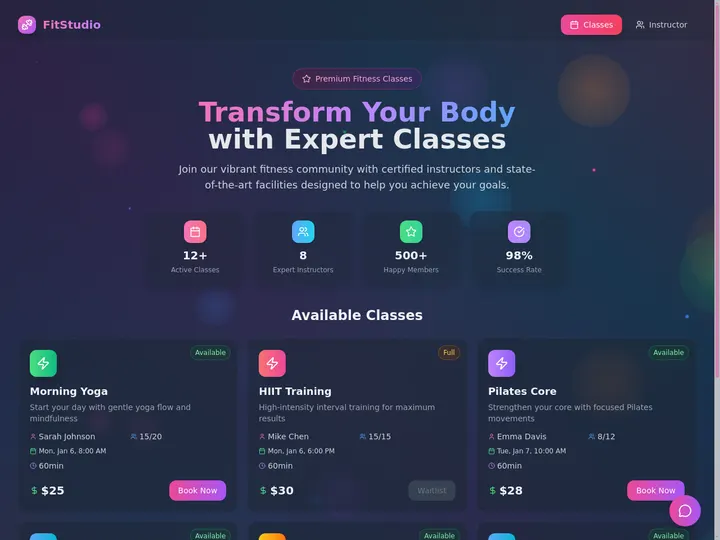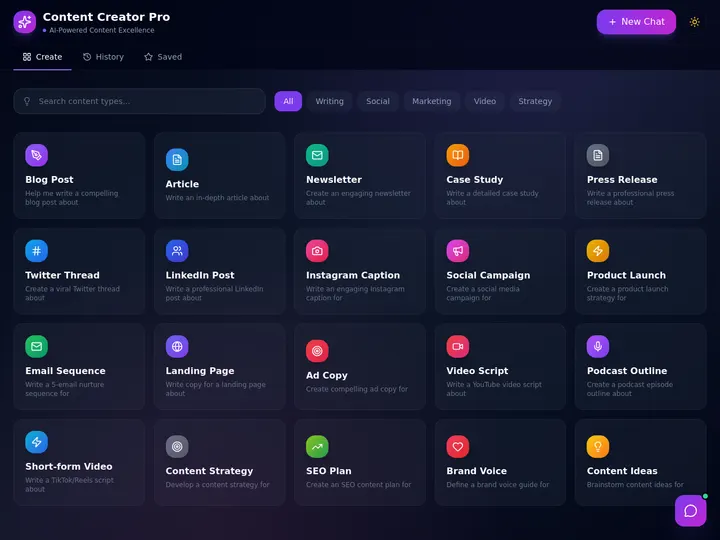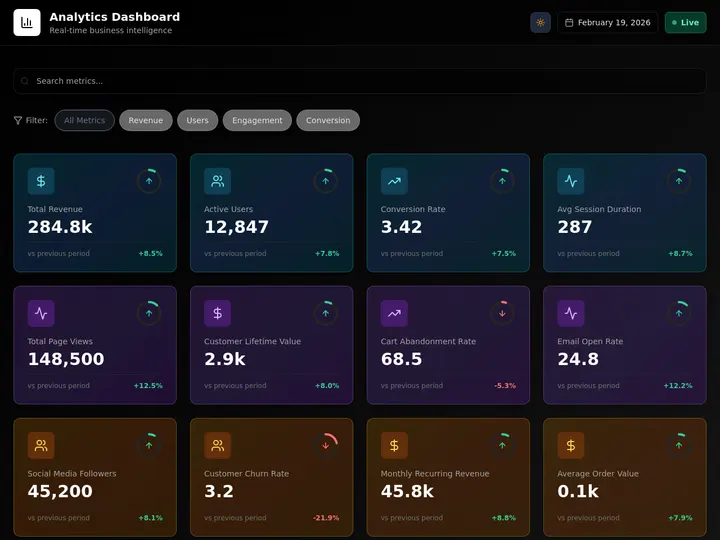
What TSK-1 Found
Claude Sonnet 5 writes the cleanest code we have measured (Aug 3, 2026), and the family holds the quality ceiling: the best-looking build we have measured (Jul 30, 2026), the most complete app of its test (Aug 1, 2026), and that cleanest code. GPT-5.6 Luna is the one that sticks closest to your words - from early through mid-August it rebuilt what the customer asked for word for word, with neatly structured scoring rubrics. Those were TSK-1 test runs from summer 2026. Today Taskade Genesis routes across frontier models from top AI labs with Auto, and Claude runs on your own Anthropic key.
- Claude: Aug 3, 2026 — the cleanest code we have measured; plus the best-looking build we have measured (Jul 30, 2026) and the most complete app of its test (Aug 1, 2026).
- GPT: From early through mid-August it followed the customer's wording most closely, word for word; and on Aug 7, 2026 it was the first to reach a build where everything worked start to finish.
See the full evidence at /tsk/claude, /tsk/gpt, and the TSK-1 hub.
The Headline: Two Different Bets, Both Winning
Claude and ChatGPT are the two consumer frontier AI assistants that defined 2023-2026. They are converging on quality (within 1-3 percentage points on most benchmarks) and diverging on product strategy.
- ChatGPT (OpenAI) is the platform play. The broadest consumer reach, the widest model + tool ecosystem, Custom GPTs marketplace, native DALL·E image generation, Sora 2 video, voice mode, Atlas browser, Operator sandbox.
- Claude (Anthropic) is the safety + coding play. Constitutional AI (published written constitution), Responsible Scaling Policy levels, Claude Code (widely-used terminal agent), Claude Cowork desktop, Agent Teams, Computer Use.
The 2026 best practice is use both routed per task.
TL;DR: ChatGPT (GPT-6) leads on consumer breadth, multimodal, and ecosystem. Claude, led by Fable 5.1, leads on agentic coding, Constitutional AI safety, and long-form writing, though Fable 5 is premium-priced per token versus Opus 5.5. Both cost $20/mo at Pro. Taskade Genesis routes frontier models from top AI labs, and Claude joins on your own Anthropic key. No vendor lock-in.
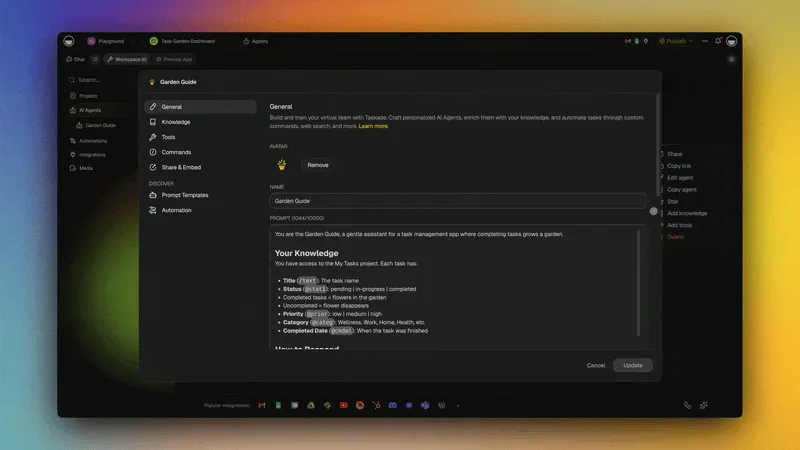
Two Founding Bets That Defined the Race
- OpenAI stayed on the capability-first scaling curve. GPT-2 → GPT-3 → GPT-4 → GPT-5 family with major backing from Microsoft and the Stargate compute buildout. Mission: AGI by raw scale + the broadest consumer + developer surface.
- Anthropic spun out in 2021 with a safety-first thesis. Constitutional AI as the training approach. Smaller deliberate model releases. Mission: safe AGI through interpretability, Constitutional AI, and Responsible Scaling Policy.
Both have raised tens of billions in cumulative funding. Both are valued in the hundreds of billions. Different bets, both winning their segments.
Quote (Sam Altman, OpenAI 2026): "AGI kind of went whooshing by." His focus shifted to "superintelligence... AI that can do specific jobs better than any person."
Quote (Dario Amodei, Davos Jan 2026): AI will "replace the work of all software developers within a year" and reach "Nobel-level scientific research in multiple fields within two years."
Benchmarks: The Shape of the Race in 2026
Capability                   GPT-6           Claude (Opus 5.5 / Fable 5.1)   Edge
──────────────────────────────────────────────────────────────────────────────
SWE-bench Verified (coding)  strong          category leader (Fable 5.1)   CLAUDE
GPQA Diamond (reasoning)     frontier-tier   frontier-tier                 ~tied
MMLU-Pro (knowledge)         frontier-tier   frontier-tier                 ~tied
Coding leaderboards          strong          leads                         CLAUDE
Long-form writing quality    strong          strongest                     CLAUDE
Tool calling reliability     strong          strongest                     CLAUDE
Image generation             ✓ DALL·E        partner-routed                GPT
Video generation             ✓ Sora 2        n/a                           GPT
Voice realtime               ✓ Voice Mode    Cowork voice                  GPT
Multi-step terminal agent    Codex           Claude Code (lead)            CLAUDE
Custom-tool marketplace      Custom GPTs     Skills + MCP                  GPT (breadth)
Computer Use                 limited         ✓ flagship                    CLAUDE
Safety posture documented    Model Spec      Constitutional + RSP          CLAUDE
Consumer reach               broadest        strong, growing               GPT
Pattern: GPT wins on platform breadth and multimodal. Claude wins on agentic coding, writing, and documented safety. The benchmark differences are real but small (1-3 percentage points). The product strategy differences are big.
Industry context. A May 2026 IDC and Augment Code study found organizations using a single LLM for all tasks overpay by 40 to 85% compared to those using intelligent routing across 3+ models. Claude-plus-GPT-6 is the highest-impact 2-model routing pair for general-purpose work in 2026.
Product Lineups Side by Side
| Surface | OpenAI ships | Anthropic ships |
|---|---|---|
| Chat | ChatGPT (web, mobile, desktop) | Claude.ai (web, mobile, desktop) |
| Image | DALL·E + Sora 2 (video) | partner-routed |
| Voice | Voice Mode (realtime API) | Cowork voice |
| Terminal coding agent | Codex | Claude Code (terminal-native) |
| Desktop agent | ChatGPT Desktop + Companion | Claude Cowork + Skills |
| Browser | Atlas | (use Cowork tools) |
| Multi-agent | AgentKit | Agent Teams |
| Custom tools | Custom GPTs marketplace | Skills + MCP marketplace |
| OS automation | Operator | Computer Use flagship |
| Enterprise | ChatGPT Enterprise | Claude Enterprise |
| API | OpenAI API | Anthropic API + Claude Code SDK |
Two ecosystems with deliberate overlap. Each lab prioritized a different surface first. OpenAI: consumer chat + multimodal. Anthropic: terminal coding + safety + desktop.
Pricing: The Two Ladders No Longer Line Up
Both vendors changed shape in 2026. Prices below are read off each vendor's own pricing page on 11 August 2026.
| Tier | OpenAI ChatGPT | Anthropic Claude |
|---|---|---|
| Free | ✅ Limited (ads being tested on Free and Go in the US) | ✅ "Free for everyone", usage limits apply |
| Entry paid | Go $8/mo | Pro $20/mo |
| Pro | Plus $20/mo | Pro $20/mo month-to-month, $17/mo annual ($200 billed up front) |
| Power user | Pro at $100/mo or $200/mo | Max, "From $100 per month" (5x or 20x Pro usage) |
| Team | published per seat | $25/seat/mo, or $20/seat billed annually, plus a separate Premium seat |
| Enterprise | Custom | Seat price plus usage at API rates |
| Annual billing | 🔴 none — OpenAI publishes no annual option | ✅ on Pro and Team |
Three things people get wrong here. ChatGPT's entry price is $8, not $20 — Go sits below Plus. ChatGPT Pro is two prices, not a range, so "ChatGPT Pro costs $200" is only half true. And there is no ChatGPT annual discount to compare against Claude's $17/mo; any annual-equivalent ChatGPT figure you see quoted somewhere is invented.
On the API side, Anthropic publishes a clean per-token ladder: Fable 5.1 at $10 in / $50 out per million tokens, Opus 5.5 at $4 / $20, Sonnet 5.5 at $2 / $10, Haiku 4.5 at $1 / $5. Sonnet 5 kept its $2 / $10 price; the planned rise to $3 / $15 did not happen. OpenAI's GPT-6 family (September 2026) lists Astra at $10 / $50, Sol at $2 / $10, and Luna at $0.10 / $0.50. The full 1M-token context window is billed at standard rates on current Claude models. A 900K-token request costs the same per token as a 9K one. See Claude models explained for the full lineup.
One subtlety worth knowing before you build a budget on those numbers: Anthropic notes that its newer models use a different tokenizer that produces roughly 30% more tokens for the same text. Price per token is not price per page. Compare on your own corpus, not on the rate card.
Taskade Genesis runs frontier models from top AI labs on credit-based pricing (billed annually: Free $0, Pro $10, Business $25, Max $100, Enterprise $250 per month). Auto is the default. Claude runs on your own Anthropic key, billed by Anthropic: an agent chat on your key uses no Taskade credits, and an automation step uses one fixed step fee. No separate consumer subscription is needed for the models Taskade includes.
The Per-Task Routing Matrix (the table competitors do not have)
Most of the money in an AI setup is lost by sending cheap work to an expensive model. This is the table that fixes that. The third column is the part usually left out: what the choice costs you.
| Task | Best pick | Cost consequence | Second pick |
|---|---|---|---|
| Long-form writing (brand-critical) | Claude Opus tier | $4/$20 per 1M - the quality rung, not the volume rung | GPT flagship |
| Conversational chat agent | GPT fast tier | Cheapest per turn at consumer latency | Claude Sonnet 5.5 |
| Code-edit agent (multi-step) | Claude Code | Agentic loops burn output tokens; budget for the $20/1M output rung | GPT Codex |
| Code completion (IDE inline) | GitHub Copilot (runs on either) | Flat seat, but token overage now bills at API rates | n/a |
| Image generation | GPT + DALL-E | Native; Claude routes to partners, adding a hop | n/a |
| Video generation | GPT + Sora 2 | Native video, no second vendor | n/a |
| Voice realtime conversation | GPT Voice Mode | Realtime audio is metered separately from text | Cowork voice |
| Cheap high-volume classification | Open-weight (DeepSeek V4-Flash) | ~$0.44 in / $1.32 out per 1M at peak, exactly half off-peak — the cheapest rung on this page | Claude Haiku at $1/$5 |
| Long-context reasoning (whole repo, many docs) | Claude Opus tier | Claude bills 1M-token context at standard rates; no long-context surcharge | GPT flagship |
| Architecture review / refactor reasoning | Claude Opus tier | Worth the premium rung; this is where errors are expensive | GPT flagship |
| Computer use / OS automation | Claude Cowork | Screenshots are image tokens — the hidden cost line | Operator |
| Multi-agent orchestration | Claude Agent Teams | Cost scales with agent count, not with prompt count | AgentKit |
| Multilingual / non-English bulk work | Open-weight (Qwen, Mistral) | Apache-2.0 weights, so self-hosting caps the bill | GPT flagship |
| On-prem / self-host / data-residency | Open weights (Llama, Mistral, DeepSeek) | No per-token bill at all; you pay for GPUs instead | n/a — closed models cannot leave the vendor |
| Safety-critical reasoning | Claude Opus tier | Constitutional AI plus published RSP levels | GPT flagship |
| Custom GPT / plugin work | GPT Custom GPTs | Marketplace breadth, no extra token cost | Claude Skills |
| Agentic browsing | Atlas (ChatGPT) | Page content lands in context — long pages cost real tokens | Comet (Perplexity) |
| Research with citations | Perplexity Sonar | Citation-native retrieval | either model for the synthesis step |
Build the workflow once. Pick per step. The savings compound in the steps you run thousands of times, not the ones you run once.
When to Pick Each
The Taskade Genesis Angle: Workspace DNA for Both
Most listicles end with "pick one." This one ends with route across labs inside one workspace.
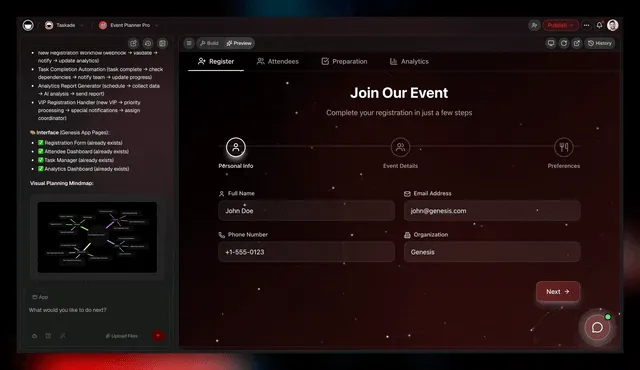
Taskade Genesis offers frontier models from top AI labs, and the model picker shows credit cost per option. Auto mode handles routing. Claude runs in Taskade on your own Anthropic key through the Anthropic Claude connector or through BYOK for agents, both on Pro and up.
The structural difference is what you buy. Consumer AI is sold as a subscription per person per vendor - Claude Pro for one person, ChatGPT Plus for the same person, again for every teammate, and again for every new lab worth trying. Taskade Genesis routes across frontier models from top AI labs with the AI allowance included in the workspace subscription, and your own Anthropic key adds Claude. You are not placing a bet on which lab wins; you are keeping the option to change your mind, per task, without a new invoice.
Workspace DNA wraps both:
▲ Memory       Projects, documents, customer records, knowledge graph
■ Intelligence AI Agents that pick the best model per task
               Claude (your own Anthropic key) for code / writing / safety-critical
               GPT for image / voice / Custom GPTs / broad chat
               Open-source for routine high-volume steps
● Execution    100+ bidirectional integrations, durable automations
Six 2026 patterns that work right now inside Taskade Genesis.
✓ Pattern 1: Claude codes, ChatGPT illustrates. A product-requirements doc is drafted in Claude with your own Anthropic key, through the Anthropic Claude connector in an automation. A separate agent generates accompanying diagrams via GPT-6 + DALL·E. Both write into the same project Memory.
✓ Pattern 2: Claude for the loop, GPT for the surface. A research loop runs on Claude Sonnet 5.5 outside Taskade and connects through the MCP Server. The customer-facing chatbot wrapping the workflow runs on GPT-6 Sol for consumer-grade conversational quality.
✓ Pattern 3: GPT triages, Claude resolves. A high-volume customer-support automation classifies incoming tickets with GPT-6 Luna (or cheaper open-source models). Complex escalations go to Claude Opus 5.5 through the Anthropic Claude connector on your own key for the polished response.
✓ Pattern 4: Claude Cowork + Taskade workspace. Cowork edits files on your machine via Skills. Taskade Genesis runs the deployed app those files become. MCP connects them.
✓ Pattern 5: Three-tier routing, with the numbers. Open-weight (DeepSeek V4-Flash, about $0.44 in / $1.32 out per 1M tokens at peak and half that off-peak, as of August 2026) for bulk classification → Claude Sonnet 5.5 ($2/$10) or Haiku 4.5 ($1/$5) as the workhorse layer → Opus 5.5 ($4/$20) or Fable 5.1 ($10/$50) only for the moments that matter. Per output token that top rung costs roughly 38x the bottom one at peak and 76x off-peak, so where you route a step matters far more than which lab you prefer.
✓ Pattern 6: Auto mode handles everything. Set Auto mode as the default on new agents. Taskade Genesis routes per task and adapts as new model versions ship from either lab.
See 10 Best Open-Source AI LLMs in 2026 for the open-source picks that complement Claude and GPT in this routing setup.
The Power-User Setup (2026)
| Tool | Plan | Cost | Why |
|---|---|---|---|
| Claude Pro | Anthropic | $20/mo, or $17/mo annual ($200 up front) | Code work, long-form writing, Cowork |
| ChatGPT Plus | OpenAI | $20/mo (no annual option exists) | Image, voice, Sora 2, Custom GPTs |
| Taskade Genesis Pro | Taskade | $10/mo billed annually | Workspace, deployed apps, frontier models from top AI labs routed per step; add your own Anthropic key for Claude |
| Combined | about $47-$50/mo | The full 2026 power-user setup |
That combined setup costs less than the top ChatGPT Pro rung alone at $200/mo, and covers three vendors instead of one. If you only want one line item, note that Taskade includes the AI allowance in the subscription for its built-in models, and Claude runs on your own Anthropic key, billed by Anthropic.
Where Both Are Heading
OpenAI's bets
- Stargate infrastructure buildout. the bet that bigger still wins
- Sora 2 + Voice Mode + Atlas browser. multimodal consumer breadth
- Custom GPTs marketplace + AgentKit + Operator. the developer platform
- GPT-6 family (Sep 2026). continued capability scaling
- Consumer reach as moat. the broadest reach as the network effect
Anthropic's bets
- Claude Code Agent Teams. agentic coding compounding into recursive scaling
- Claude Cowork + Skills marketplace. desktop AI for non-technical users
- Computer Use + Claude Mythos. the embodied / OS-automation interface
- Mechanistic interpretability. the long-term safety moat
- Recursive self-improvement. Claude accelerating Claude's own development
Where Taskade Genesis fits
Both labs are building for the multi-model reality. As Claude and GPT diverge further on product strategy, the workspace that routes across labs becomes more valuable, not less. Workspace DNA (Memory + Intelligence + Execution) provides the substrate. The model picker provides the choice. The agents and automations provide the workflow. The deployed Taskade Genesis app provides the output.
Read the deep histories for full context:
- Anthropic Claude History 2026. complete Claude family timeline and roadmap.
- What is OpenAI?. complete OpenAI history and ChatGPT evolution.
- 10 Best Open-Source AI LLMs in 2026. full open-source ranking.
Frequently Asked Questions
Is Claude or ChatGPT better in 2026?
They lead on different jobs. ChatGPT (GPT-6) leads on platform breadth: the broadest consumer reach, the widest model and tool ecosystem, Custom GPTs marketplace, DALL·E, Sora 2 video, voice mode, and the Atlas browser. Claude (Opus 5.5 + Sonnet 5.5) leads on Constitutional AI safety, agentic coding (top of the 2026 coding leaderboards), long-form writing nuance, Claude Code (a widely-used terminal coding agent), and Claude Cowork desktop. The 2026 best practice is using both routed per task. Taskade Genesis runs frontier models from top AI labs with Auto, and Claude runs there on your own Anthropic key.
Which has better benchmarks, Claude or ChatGPT?
It depends on the benchmark. Claude's top model, Fable 5.1, leads the hardest agentic coding sets. On most general benchmarks GPT and Claude stay within a few points of each other (GPQA Diamond, MMLU-Pro). The 2026 pattern: Claude leads agentic coding and long-form writing, GPT leads on price, multimodal breadth, and ecosystem. The differences are real but small, and the cost gap between Claude's own tiers is larger than the benchmark gap between labs: Anthropic lists Fable 5 at $10 per million input tokens and $50 per million output, 2.5 times the Opus 5.5 tier at $4 and $20. That is why routing per task beats picking one model and running everything through it.
How much do Claude and ChatGPT cost in 2026?
OpenAI publishes Free, Go at $8 per month, Plus at $20 per month, and Pro at two price points, $100 and $200 per month. OpenAI offers no annual billing on any tier, so every ChatGPT price is a month-to-month price. Anthropic publishes Free, Pro at $20 per month month-to-month or $17 per month on an annual plan the page describes as $200 billed up front, Max listed only as From $100 per month across two usage multiples, and Team at $25 per seat month-to-month or $20 per seat billed annually with a separate Premium seat. The two ladders are no longer the same shape, so compare at the tier you will actually buy. Inside Taskade Genesis the AI allowance is included in the workspace subscription instead of a consumer subscription per vendor.
Which is safer, Claude or ChatGPT?
Both ship strong safety practices with different documented approaches. Anthropic uses Constitutional AI (a published written constitution), Responsible Scaling Policy (ASL-1 through ASL-4+), and heavy investment in mechanistic interpretability. OpenAI uses RLHF with published model behavior guidelines, the Preparedness Framework, and red-team evaluations. For organizations where the safety posture must be externally documented and cited (legal, medical, financial compliance), Claude's Constitutional AI plus ASL levels is the more publicly-documented framework. For most consumer chat use the visible safety difference is minimal.
Which is better for coding, Claude or ChatGPT?
Claude leads on agentic coding in 2026. Its top model, Fable 5.1 (September 2026), tops the hardest coding sets (SWE-bench Verified and SWE-bench Pro), ahead of GPT-6, though Fable 5 is premium-priced per token, well above GPT's mid tier. Claude Code, the terminal-native coding agent, is one of the most widely-used coding agents in 2026. For terminal coding agents, Claude Code wins. For ChatGPT-style code chat or Custom GPT-powered code assistants, GPT-6 is excellent. For IDE-native completion, GitHub Copilot leads (it can be powered by either Claude or GPT).
Does Claude or ChatGPT have a longer context window?
Both ship 1 million token context windows in 2026. Claude Opus 5.5 and Sonnet 5.5 ship up to 1M tokens. GPT-6 ships up to 1M tokens depending on tier. For very long context tasks (whole-codebase analysis, multi-document research), pick the model that has shown reliable quality across the full window for your specific use case. Inside Taskade Genesis you can mix long-context tasks with short-context routing per step.
Can I use Claude and ChatGPT together?
Yes. Taskade Genesis runs frontier models from top AI labs with Auto as the default, and Claude runs in Taskade on your own Anthropic key: on Pro and up, the Anthropic Claude connector runs Claude in automations, and you can add your own key through BYOK so agents run Claude models. A common 2026 pattern is Claude for code work and long-form writing, ChatGPT for image generation and consumer-facing chat, with open-source models like DeepSeek and Kimi for high-volume bulk steps. Organisations routing across 3+ models save 40-85% versus single-model deployments per a May 2026 IDC + Augment Code study.
What does Claude have that ChatGPT does not?
Claude ships Claude Code (a widely-used terminal-native coding agent), Claude Cowork (desktop GUI with file access and reusable Skills), Agent Teams (multi-Claude orchestration with shared task lists), Computer Use (OS automation), Constitutional AI (a published written constitution), and Responsible Scaling Policy levels. ChatGPT ships DALL·E + Sora 2 video, voice mode, Atlas browser, the Custom GPTs marketplace, Operator (sandboxed agent), and AgentKit for developers. They are different products solving overlapping problems.
What does ChatGPT have that Claude does not?
ChatGPT ships DALL·E for native image generation, Sora 2 for native video, Voice Mode with realtime voice conversations, the Custom GPTs marketplace with thousands of pre-built GPTs, the Atlas browser as an agentic surface, Operator as a sandboxed agent, and AgentKit for developers building on the OpenAI API. ChatGPT also has the broadest consumer reach. Claude does not ship native image or video generation, voice realtime, or a Custom GPTs marketplace. For consumer breadth ChatGPT wins. For agentic coding and Constitutional AI safety, Claude wins.
Will Claude replace ChatGPT?
Neither replaces the other. The 2026 reality is a multi-model ecosystem where ChatGPT leads on consumer breadth and platform reach, Claude leads on Constitutional AI safety and coding agents, Gemini leads on multimodal Workspace integration, and open-source models lead on specific cost-sensitive niches. Per industry analysis (IDC + Augment Code May 2026), organizations using a single LLM overpay by 40-85% versus those using intelligent routing across 3+ models. Taskade Genesis is built for this multi-model reality.
Should I subscribe to Claude Pro or ChatGPT Plus?
It depends on the workload. For code-heavy work pick Claude Pro for Claude Code access. For image, video, and voice tasks pick ChatGPT Plus for DALL-E, Sora 2, and Voice Mode. If cost is the deciding factor, note that ChatGPT now has a cheaper entry rung than Plus at Go $8 per month, and Claude Pro drops to $17 per month if you take the annual plan billed up front. Many 2026 power users run both consumer subscriptions and add Taskade Genesis Pro at $10 per month billed annually as the workspace where the output becomes a deployed app.
How does Taskade Genesis fit between Claude and ChatGPT?
Taskade Genesis is the workspace where the work Claude and ChatGPT generate becomes a deployed app. It runs frontier models from top AI labs with Auto, and it connects to your own Anthropic key for Claude through the Anthropic Claude connector. Workspace DNA (Memory + Intelligence + Execution) wraps it all with persistent context, AI Agents v2 with a large built-in toolkit, automations, and 100+ integrations. Output is not a chat transcript. Output is a live application with a URL, agents, and automations running.
Final Word: The Multi-Model Reality
Claude and ChatGPT are not substitutes. They are the two pillars of the 2026 frontier AI ecosystem, each winning a different game.
Pick one and you optimize for one game. Pick both and you ship work that combines Claude's coding agents with GPT's consumer surface, all inside a workspace that turns the output into living software.
▲ Memory feeds Intelligence. ■ Intelligence triggers Execution. ● Execution creates Memory. Multiple frontier brains. One workspace. The right model for every step.
This is the origin of living software. 🌱
Build in Taskade Genesis with frontier models from top AI labs →
Related reading
- Anthropic Claude History 2026. Complete Claude family history.
- What is OpenAI?. Complete OpenAI history.
- 10 Best Open-Source AI LLMs in 2026. Full open-source ranking.
- GPT vs Claude. Same comparison from a different angle.
- Gemini vs Claude. Multimodal-native vs reasoning-native.
- Opus vs Sonnet. The Claude tier ladder.
- DeepSeek vs ChatGPT. The 100x cost math.
- Perplexity vs ChatGPT. Research vs build.
- Copilot vs Claude. IDE pair programmer vs frontier reasoner.
- Multi-Model AI Access. How Taskade Genesis routes work across frontier models from top AI labs.
- Free ChatGPT Alternative. Taskade Genesis as a workspace alternative.
- Free Claude Alternative. Taskade Genesis as a Claude alternative.
- TSK-1 Claude profile — Full benchmark evidence for the Claude family.
- TSK-1 GPT profile — Full benchmark evidence for the GPT family.
- TSK-1 hub — The complete model benchmark dataset.