What TSK-1 Found
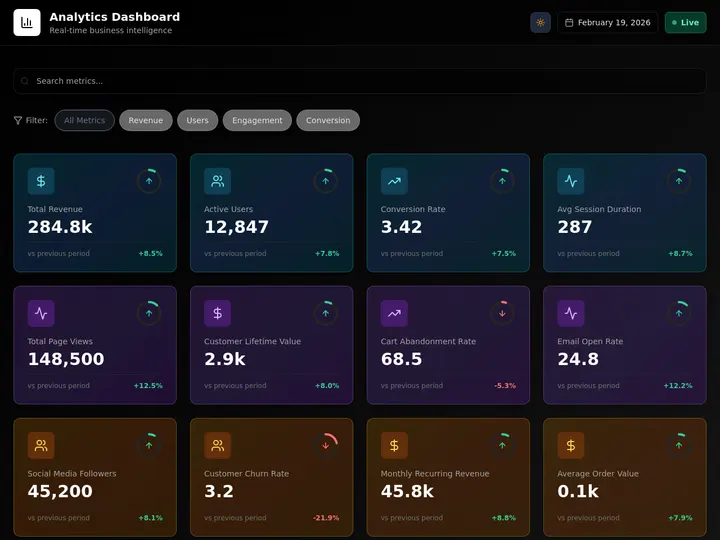
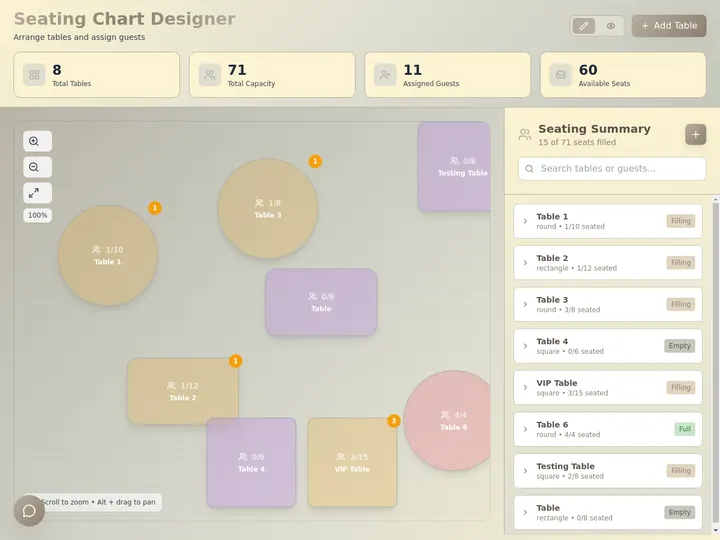
DeepSeek V4 Flash built the best-looking app of its test at a fraction of what the rest of the field cost (Aug 1, 2026), and on Aug 3, 2026 it was the cheapest, the fastest, and the cleanest all at once. GPT-5.6 Luna sticks closest to your words, from early through mid-August, and Terra is the fastest we have measured (Aug 7, 2026 — the first build where everything worked start to finish). Both families are available in Taskade.
- DeepSeek: Aug 1, 2026 — best-looking app of its test. Aug 3, 2026 — cheapest, fastest, and cleanest all at once.
- GPT: From early through mid-August it followed the customer's wording most closely, word for word; and on Aug 7, 2026 it was the fastest we have measured.
See the full evidence at /tsk/deepseek, /tsk/gpt, and the TSK-1 hub.
Two Different Cost Models, Not Two Versions of One Thing
ChatGPT is priced per person per month. DeepSeek is priced per million tokens. Comparing "$20" against "$1.32" is a category error, and most head-to-head pages make it anyway. The useful question is which unit your workload is actually shaped like: a handful of people thinking out loud, or software making a very large number of model calls.
TL;DR: DeepSeek V4 ships
deepseek-v4-flashat $0.44/$1.32 per million tokens at peak anddeepseek-v4-proat $1.32/$3.96, both halved off-peak, with 1M context and MIT weights to self-host. ChatGPT sells seats from Go $8 to Pro at $100 and $200, month-to-month only. Route per task inside Taskade Genesis.
What Actually Runs in August 2026
DeepSeek moved a whole generation, and most comparison content has not caught up. If you are reading a guide written before the summer, assume its model names are wrong.
- V3 and R1 are gone, and there is no R2. The current generation is DeepSeek V4.
deepseek-chatanddeepseek-reasonerwere retired and became inaccessible on 24 July 2026. Code that still points at those ids does not work.- The two production ids are
deepseek-v4-flashanddeepseek-v4-pro, plus an experimentaldeepseek-v4-flash-vision-expon Flash's rate card. - Reasoning is no longer a separate model. Thinking is a mode inside V4, and
deepseek-v4-flashexposes reasoning effort atlow,high, andmax.
That last change matters more than it looks. The old advice — "use the chat model for cheap work and switch to the reasoner when it gets hard" — has been replaced by a single endpoint with a dial. Escalation is now a parameter, not a routing decision.
The Cost Math, Anchored Only on Published Rates
Take a mundane, very common workload: one million short classifications a month, each roughly 800 input tokens and 200 output tokens. That is 800M input plus 200M output.
Workload: 1,000,000 classifications / month
800 input + 200 output tokens each = 800M in + 200M out
┌─────────────────────────────────────────────────────────────────────────┐
│  DeepSeek Flash off-peak $0.22 / $0.66   $176 + $132         =    $308  │
│  DeepSeek Flash peak     $0.44 / $1.32   $352 + $264         =    $616  │
│  DeepSeek Pro off-peak   $0.66 / $1.98   $528 + $396         =    $924  │
│  DeepSeek Pro peak       $1.32 / $3.96   $1,056 + $792       =  $1,848  │
│  Claude Haiku 4.5        $1 / $5         $800 + $1,000       =  $1,800  │
│  Claude Sonnet 5         $2 / $10        $1,600 + $2,000     =  $3,600  │
│  Gemini 3.1 Pro          $2 / $12        $1,600 + $2,400     =  $4,000  │
│  Claude Opus tier        $5 / $25        $4,000 + $5,000     =  $9,000  │
└─────────────────────────────────────────────────────────────────────────┘

Flash off-peak vs the Opus tier on the same job: about 29x.
Flash off-peak vs a small frontier model such as Haiku: about 6x.
Flash at peak vs that same Haiku rung: about 3x.
So the honest headline is roughly 3x to 29x, depending on which frontier tier you are replacing and what time of day you run the job — a wide, real gap rather than a single dramatic multiplier. Two caveats keep that number honest:
- The Claude Sonnet 5 rate above is introductory through 31 August 2026, after which it moves to $3 / $15. Cheap frontier pricing is not a permanent condition.
- DeepSeek's rate depends on when you run. Peak covers 01:00 to 04:00 and 06:00 to 10:00 UTC, Monday to Friday, and everything else bills at exactly half. Schedule batch work outside peak and the same job costs half with no code change. Build the routing so a rate change is a config edit, not a rewrite.
On OpenAI's API rates: this page deliberately does not print per-token GPT prices, because OpenAI's API pricing page is not publicly fetchable and every third-hand figure in circulation is unverifiable. The consumer plans above are first-party and current. If you need GPT token economics, read them off OpenAI's own docs rather than a comparison page.
The Cache Is the Real Lever
Before you tune a prompt, look at what repeats. On deepseek-v4-flash, cached context bills at $0.014 per million tokens at peak against $0.44 for a fresh read — roughly a thirty-one-fold cut on the portion of the prompt that never changes. On deepseek-v4-pro the same lever runs $0.044 against $1.32, exactly thirtyfold. Off-peak halves both sides, so the ratio is unchanged. Put that against the off-peak clock — exactly half the peak rate outside 01:00–04:00 and 06:00–10:00 UTC on weekdays — and the two levers together move the bill further than any model swap.
A pipeline that replays a long system prompt and a fixed schema across thousands of calls can spend most of its budget on tokens it already paid for. Structuring the prompt so the stable part comes first is usually a bigger win than swapping models.
The Routing Matrix
Do not pick a winner. Pick per task, and keep the cost consequence in view.
| Task | Reach for | Why | Cost consequence |
|---|---|---|---|
| High-volume classification, tagging, triage | deepseek-v4-flash |
Cheapest published frontier-class rate, and the job rarely needs depth | ~$168 per million calls at 800/200 tokens |
| Repeated prompts over a fixed corpus | deepseek-v4-flash with cache hits |
Stable prefix bills at $0.014 per 1M at peak | Up to ~31x off the input side |
| Long-context reasoning over a whole repo or contract set | deepseek-v4-pro |
1M-token window, 49B parameters used per token | $1.32 / $3.96 per 1M at peak, so a 500K-token prompt is a real line item |
| Escalating difficulty inside one endpoint | deepseek-v4-flash at high or max effort |
Reasoning is a dial, not a second model | More output tokens, same rate |
| Image, voice, or video in the loop | ChatGPT | It is a finished multimodal consumer product | Included in the seat |
| A polished assistant for one person | ChatGPT | Apps, memory, custom assistants, no integration work | Go $8 or Plus $20 per person per month |
| Data residency, air-gap, or on-prem | Self-hosted DeepSeek | MIT covers the weights, so the model can run on your hardware | Your own GPU cost, no per-token bill |
| A mixed workflow that needs several of the above | Route across models | No single lab wins every row | The allowance is part of the subscription |
The last row is the one most teams actually live in.
Where the Open License Changes the Answer
MIT covering both the repository and the weights is the one thing no closed frontier model can match at any price. This is not an abstraction:
- Self-hosting is permitted, so a regulated team can keep inference inside its own network.
- Fine-tunes are redistributable if you retain the copyright notice and state your modifications.
- There is no monthly-active-user cap, which is the clause that makes several "open" model licenses unusable at scale.
- You can audit what you run. With a closed product, the model can change under you between one Tuesday and the next.
The trade is real, though: deepseek-v4-pro is 1.6 trillion total parameters. Self-hosting it is a serious infrastructure commitment, not a weekend project, and the smaller Flash tier is the more realistic self-host target for most teams.
Choose ChatGPT If
A comparison that only flatters one side is not worth reading. ChatGPT is the better answer when:
- The user is a person, not a pipeline. Voice, image and video generation, mobile and desktop apps, memory, and custom assistants are a finished product. Assembling an equivalent from a token API is a project.
- You want a fixed monthly cost per person. A seat is predictable in a way that metered inference is not, and finance teams like predictable. Go at $8 makes that entry point genuinely cheap — though note OpenAI is testing ads on the Free and Go tiers in the US.
- Ecosystem breadth matters more than unit cost. The surrounding tooling, integrations, and third-party support around OpenAI remain the broadest in the category.
If none of those three describe your workload, the economics push hard the other way.
Pricing Side by Side
| DeepSeek | ChatGPT | |
|---|---|---|
| Unit | Per million tokens | Per person per month |
| Entry | Flash $0.44 in / $1.32 out peak ($0.22 / $0.66 off-peak) | Go $8/mo |
| Mid | Pro $1.32 in / $3.96 out peak ($0.66 / $1.98 off-peak) | Plus $20/mo |
| Top | Pro with 1M context | Pro $100/mo and $200/mo |
| Cache discount | $0.014 (Flash) / $0.044 (Pro) per 1M at peak — ~31x and 30x off | n/a |
| Off-peak discount | 50% off outside 01:00–04:00 and 06:00–10:00 UTC, Mon–Fri | n/a |
| Annual billing | n/a | 🔴 None published |
| Free option | Chat interface | Free tier (ads in test on Free and Go in the US) |
Every DeepSeek figure here is the published rate as of August 2026, read off DeepSeek's own API pricing page. Every ChatGPT figure is month-to-month, because OpenAI does not publish an annual price on any tier — if you see a ChatGPT annual-equivalent anywhere, it was invented.
The Taskade Angle: One Workspace, Many Labs
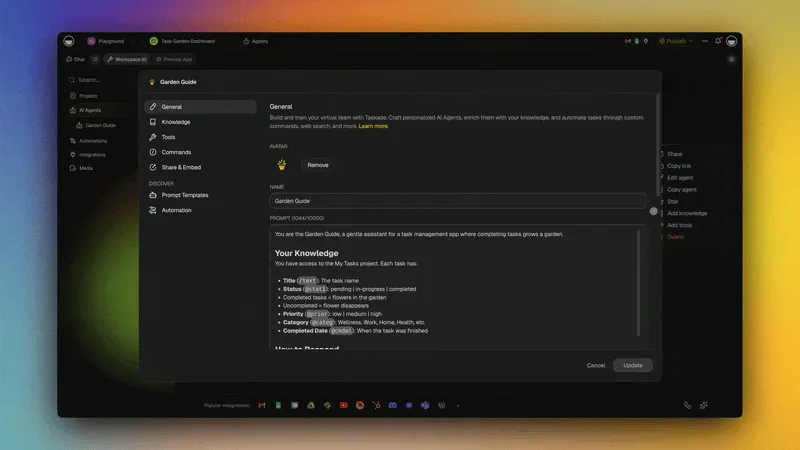
Taskade routes across frontier models from top AI labs inside a single workspace, with the AI allowance included in the subscription instead of a separate consumer seat per vendor. Plans are Free, Pro $10/mo billed annually, Business $25/mo billed annually, Max $100/mo billed annually, and Enterprise $250/mo billed annually.
What that buys you in practice:
- Per-step model choice. Each agent or automation step picks its own model, so bulk work and premium work do not have to share a bill.
- No per-vendor account sprawl. One workspace instead of a subscription and an API key per lab.
- Routing survives a repricing. When a lab moves its rates — and DeepSeek has already said it will — the change is a routing decision, not a migration.
- Work that outlives the chat. Projects, agents, and automations sit alongside 100+ integrations that flow both ways: triggers pull events in from tools like Slack, Gmail, and Google Calendar, actions push data out to Stripe, Notion, and GitHub.
Model routing is flag-driven and changes as labs ship, so treat the picker rather than any blog post as the source of truth for what is available today.
See 10 Best Open-Source AI LLMs in 2026 for where DeepSeek sits among the open-weight field.
Frequently Asked Questions
How much does DeepSeek cost compared to ChatGPT?
They bill in completely different units, so there is no single multiplier. ChatGPT sells a monthly seat: Free, Go at $8, Plus at $20, and Pro at two price points, $100 and $200. Every one of those is month-to-month, because OpenAI publishes no annual billing on any tier. DeepSeek sells tokens on a two-rate clock: at peak, deepseek-v4-flash is $0.44 per million input tokens and $1.32 per million output, and deepseek-v4-pro is $1.32 input and $3.96 output. Off-peak is exactly half of each, so flash falls to $0.22 and $0.66 and pro to $0.66 and $1.98. Peak covers 01:00 to 04:00 and 06:00 to 10:00 UTC, Monday to Friday, which means most hours of the week bill at the lower rate. Those are the rates published as of August 2026.
Which DeepSeek models are actually live right now?
Two production ids, deepseek-v4-flash and deepseek-v4-pro, plus an experimental vision id, deepseek-v4-flash-vision-exp, that bills on Flash's rate card and carries no separate stability guarantee. You route production work between the two production tiers. The older V3 and R1 generations are gone, there is no R2, and the deepseek-chat and deepseek-reasoner API ids were retired and became inaccessible on 24 July 2026. Any guide that still tells you to call deepseek-chat or deepseek-reasoner is describing endpoints that no longer answer.
Does DeepSeek still have a separate reasoning model?
No. Reasoning is a mode inside V4 rather than a separate model. deepseek-v4-flash exposes a reasoning-effort setting with low, high, and max levels, so you dial thinking up or down on the same endpoint instead of switching model ids. This is the biggest structural change from the R1 era and it is why older DeepSeek routing advice no longer applies.
Is DeepSeek open source?
Yes, and unusually cleanly. DeepSeek publishes under the MIT License, and the MIT terms cover both the repository code and the model weights. That means commercial use, fine-tuning, redistribution, and self-hosting are all permitted with no monthly-active-user cap. ChatGPT and the GPT models behind it are closed: you reach them through OpenAI's API or its consumer apps, and there are no weights to download, inspect, or run in your own environment.
What is the difference between deepseek-v4-flash and deepseek-v4-pro?
Size and price. deepseek-v4-pro is the large Mixture-of-Experts model at 1.6 trillion total parameters with 49 billion active per token, priced at $1.32 per million input and $3.96 per million output at peak, or $0.66 and $1.98 off-peak. deepseek-v4-flash is the smaller sibling, roughly 284 to 304 billion total parameters with 13 billion active, priced at $0.44 input and $1.32 output at peak, or $0.22 and $0.66 off-peak. Pro is exactly three times flash on both sides, at either rate. Both carry a 1 million token context window with a maximum output of 384,000 tokens, so the choice is about depth and budget rather than how much you can fit in the prompt.
How big is DeepSeek's context window?
One million tokens on both deepseek-v4-flash and deepseek-v4-pro, with a maximum output length of 384,000 tokens. That is enough to hold a large repository, a full contract set, or months of support history in a single request. Long context still costs money at the standard per-token rate, so a cheap model with a big window is a very different budget from an expensive one.
How does cache-hit pricing change the math?
It is one of the two largest cost levers DeepSeek offers. On deepseek-v4-flash, an input cache hit on repeated context is billed at $0.014 per million tokens at peak against $0.44 for a cache miss, roughly a thirty-one-fold reduction on the part of the prompt that does not change. On deepseek-v4-pro the cache-hit rate is $0.044 against $1.32, exactly a thirtyfold reduction. Off-peak both sides halve, so the ratio holds. If your workload replays the same system prompt, schema, or document across thousands of calls, design for cache hits before you optimize anything else. The second lever is the clock: off-peak billing is exactly half the peak rate, and peak covers only 01:00 to 04:00 and 06:00 to 10:00 UTC on weekdays.
Is DeepSeek safe to use for business?
It carries the same obligations as any hosted model, plus one genuine advantage. Because the weights ship under MIT, a team with a data-residency or air-gap requirement can run DeepSeek on its own infrastructure instead of sending data to a vendor endpoint, which is not an option with a closed frontier model at any price. If you use the hosted DeepSeek API instead, treat it like any third-party processor and check it against your own data policy. Inside Taskade, model calls run through a managed gateway with workspace-level access control and role-based permissions.
Can I use DeepSeek and ChatGPT together?
Yes, and for most teams that is the correct answer. The 2026 pattern is to route per step rather than standardize on one lab: cheap, high-volume classification, extraction, and triage on a low-cost model, and the small share of steps that need a premium frontier model routed there deliberately. Taskade routes across frontier models from top AI labs inside a single workspace, with the AI allowance included in the subscription rather than a separate consumer seat per vendor.
Should I switch from ChatGPT to DeepSeek?
Framing it as a switch is usually the mistake. ChatGPT is a finished consumer product with apps, voice, image and video generation, and a marketplace of custom assistants, sold per person. DeepSeek is an API and a set of downloadable weights, sold per token, with no comparable consumer surface. If what you want is a polished assistant for a person, ChatGPT is a different category of thing. If what you want is high-volume inference inside software you are building, DeepSeek's per-token economics and MIT license are hard to match. Most teams end up wanting both.
Final Word: Different Units, Different Jobs
DeepSeek V4 wins on unit economics and on the one thing a closed model cannot offer — weights you may run yourself under MIT. ChatGPT wins on being a finished product for a person, with a multimodal surface and a fixed monthly price. Neither of those is a rebuttal of the other.
The teams that come out ahead in 2026 are the ones that stopped asking which lab to standardize on and started routing per task, with the cost of each choice visible at the moment they make it.
▲ Memory feeds Intelligence. ■ Intelligence triggers Execution. ● Execution creates Memory. Two very different price tags, one workspace.
This is the origin of living software. 🌱
Build with DeepSeek and ChatGPT in one workspace →
Related reading
- 10 Best Open-Source AI LLMs in 2026 — Where DeepSeek sits in the open-weight field.
- What is OpenAI? — Complete OpenAI history.
- GPT vs Claude — OpenAI vs Anthropic head-to-head.
- Qwen vs DeepSeek — The two open-weight frontier families.
- Kimi vs DeepSeek — The 2026 open-weight duo.
- Multi-Model AI Access — How Taskade routes work across frontier models from top AI labs.
- Model Credits — Per-model credit costs and plan quotas.
- Free ChatGPT Alternative — Taskade as a workspace alternative.
- TSK-1 DeepSeek profile — Full benchmark evidence for the DeepSeek family.
- TSK-1 GPT profile — Full benchmark evidence for the GPT family.
- TSK-1 hub — The complete model benchmark dataset.