






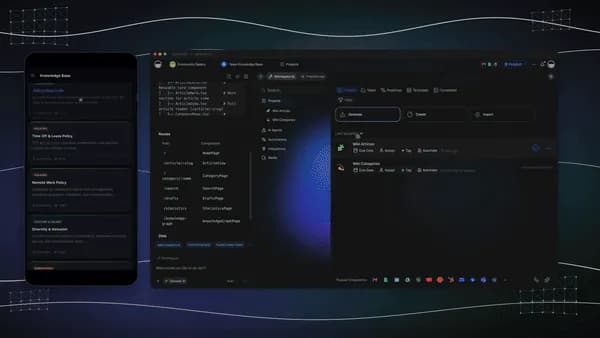
Every "best AI app builder" roundup ranks the same thing: how fast a prompt becomes a deployed app. Fair — but the build is now the easy part. If you measure what happens after the build — whether the app remembers your customers, whether agents keep operating on its data, whether anything maintains it — the ranking changes. On that lens, Taskade Genesis is the best AI app builder with memory in 2026, because the app, the agents, and the automations share one workspace memory. If you rank on build speed and code ownership instead, Lovable, Bolt, and Replit lead. This guide ranks all eight — those three plus Base44, Bubble, Softr, Glide, and Taskade Genesis — honestly, with July-2026 pricing and sources named.
TL;DR: The eight best AI app builders with memory in 2026, ranked on the after-the-build lifecycle: Taskade Genesis, Lovable, Replit, Bolt, Base44, Bubble, Softr, Glide. An audit of 5,600 vibe-coded apps, covered by The Hacker News in May 2026, found 2,000+ vulnerabilities — what happens on day 91 is the criterion nobody else ranks. Build an app that remembers →
What Is the Best AI App Builder in 2026?
Here is the verdict table up front. One disclosure first: we make Taskade Genesis, so judge the ranking by its criteria — memory scope, agents, automations, and upkeep — all of which you can verify on each vendor's site. Every tool below is genuinely good at what it optimizes for, and each gets a fair "best for" verdict.
| # | Tool | Best for | Memory scope | Entry paid price (Jul 2026) |
|---|---|---|---|---|
| 1 | Taskade Genesis | Apps that keep working after launch | Shared workspace (apps + agents + automations) | $10/mo (Pro, annual) |
| 2 | Lovable | Polished public web apps, fast validation | Per-project memory documents | $25/mo (credits) |
| 3 | Replit | Developers who want autonomy + code ownership | Session + project context | ~$25/mo + usage |
| 4 | Bolt | Fastest working full-stack demo | Per-project context | $25/mo (tokens) |
| 5 | Base44 | Non-technical builders, built-in backend | Per-agent (Superagents) | ~$20/mo (credits) |
| 6 | Bubble | Complex app logic without code | App-owned database | $29–119/mo (seats) |
| 7 | Softr | Internal tools on data you already have | External DB (Airtable, Sheets) | $49/mo (seats, annual) |
| 8 | Glide | Spreadsheet-to-app for field teams | External spreadsheet | ~$25/mo (Explorer) |
v0 and Cursor show up in most roundups too; they are developer tools rather than app builders, and we cover where they fit below.
Why Rank on What Happens After the Build?
Because the after-the-build numbers are now impossible to ignore. In May 2026, The Hacker News covered a security audit of 5,600 vibe-coded apps that found 2,000+ vulnerabilities and 400 exposed secrets, with 2,000+ corporate apps holding sensitive data sitting on the open web without access controls. A separate pen-test of just 15 vibe-coded apps surfaced 69 vulnerabilities, six of them critical, and Veracode's research found 45% of AI-generated code samples introduce OWASP Top 10 vulnerabilities. Generation is solved; stewardship is not. We wrote up the failure modes in why AI-generated apps break.
Meanwhile, the money says the build side is a solved race. Lovable is reportedly in talks to raise at a $13.2B valuation (TechCrunch, July 8, 2026) — exactly double its December 2025 Series B price — on roughly $500M ARR. Replit raised $400M at $9B in March 2026, with Sacra estimating ~$525M annualized revenue. Base44 hit $100M ARR nine months after Wix acquired it for ~$80M, reaching roughly $150M ARR by May 2026 per Calcalist. Bolt famously reached $40M ARR within five months of launch.
Sources: Sacra estimate (Replit, Apr 2026), TechCrunch (Lovable, Jul 2026), Calcalist/Wix (Base44, May 2026), StackBlitz reported figures (Bolt, at its 5-month mark).
| Date | Milestone | Why it matters for buyers |
|---|---|---|
| Dec 2025 | Lovable raises $330M at $6.6B | Build-side capability is heavily capitalized |
| Mar 2026 | Replit raises $400M at $9B | Autonomous coding agents go mainstream |
| May 2026 | Wix reports Base44 at ~$150M ARR | Managed, non-technical builders scale too |
| May 2026 | 5,600-app audit coverage: 2,000+ vulns, 400 secrets | The maintenance gap becomes measurable |
| Jul 2026 | Lovable in talks at $13.2B | The category doubles again — on build speed |
And the demand side is shifting from apps to apps with agents in them: Gartner predicts that up to 40% of enterprise applications will feature task-specific AI agents by the end of 2026, up from less than 5% in 2025. An app builder that stops at the deployed artifact leaves the agent half of that prediction to you. That is the gap this ranking measures — the same gap the state of AI app building report maps at market level.
How We Ranked Them: The Day-91 Test
We ran the same scenario through every tool's documented capabilities: a field-service operation — think an HVAC-style business — with customer records, job history, and invoice state, then asked four questions about the quarter after launch. This is the lens the whole guide uses; the taxonomy behind it comes from types of memory in AI agents and the memory layer of the AI agent stack.
| # | Question | What separates the field |
|---|---|---|
| 1 | Does memory persist? | Does context survive the session, the redeploy, a full redesign? |
| 2 | Do agents keep operating? | Can an agent read the app's live data and act on it after launch? |
| 3 | Do automations maintain it? | Are there scheduled jobs and triggers watching the app's data? |
| 4 | Who does the upkeep? | You with a repo, the vendor's platform, or the system as a side effect of normal work? |
One agentic design patterns finding to keep in mind while you read: memory written as a side effect of real work stays fresher than memory someone must curate, and memory that multiple surfaces read compounds — every new agent or workflow starts informed instead of blank.
The 8 Best AI App Builders With Memory, Ranked
First, the map. Every tool below has real memory; what differs is where it anchors — the workspace, the project, the agent, the app's own database, or a spreadsheet you already own.
1. Taskade Genesis — Best for Apps That Keep Working After Launch
Taskade Genesis is the only builder in this list where the app, the agents, and the automations read and write one shared workspace memory. Projects are the database, agents reason over that living context, and workflows execute against it — coordinated by TSK-1, the Taskade System Kernel, a kernel (not a model) that routes work across 15+ frontier models from OpenAI, Anthropic, Google, and open-weight providers.
On the day-91 test: a record your app writes is instantly readable by a follow-up agent and can fire a scheduled automation, with no export, sync, or redeploy in between. Redesign the interface next quarter and the memory does not move, because the data layer was never inside the app. External users sign in via App Users on a custom domain, and 100+ integrations pull outside events into the same store. Pricing is the lowest in the category: free plan, then $10/month (Pro, the popular tier), and $25/month (Business) on annual billing — every tier includes memory, agents, and automations.
The honest limits: Taskade Genesis apps run on the Taskade platform — if your goal is a standalone React codebase in your own GitHub repo, Replit or Bolt fit better, and pixel-level frontend perfectionists will prefer Lovable or v0. Best for: operators and teams who want the app, the agents, and the upkeep in one system.
2. Lovable — Best for Polished Public Web Apps, Fast
Lovable is the category's momentum leader — reportedly in talks at a $13.2B valuation on ~$500M ARR (TechCrunch, July 2026) — and its product deserves the traction. Prompts become genuinely polished full-stack web apps on Supabase, and its 2026 releases attack the after-build gap directly: per-project context and memory documents (including a dedicated security memory document, May 2026), Subagents that split work across specialized helpers (May 2026), and a scheduled Jobs tab that works like backend cron (June 2026).
On the day-91 test: memory persists, but per project — each app remembers itself, and that context does not extend to other apps or to agents outside the project. Upkeep is yours: you own the Supabase stack and the patches, with Lovable's AI assisting. Lovable also shipped an MCP server on all plans in June 2026, letting outside AI clients create and manage Lovable projects — build-side reach, though still not an agent layer operating on your live app data. Pricing: free to start, Pro $25/month for 100 credits, Business $50/month — credits expire two months after issue, so budget for sustained edits, not just the initial build. Our full Lovable review goes deeper. Best for: founders validating a public-facing product where polish is the point.
3. Replit — Best for Developers Who Want Autonomy and Ownership
Replit is the developer's answer, and its trajectory backs it up: a $400M Series D at $9B in March 2026, six months after a $3B round. Agent 3 marketed "10x more autonomy," and Agent 4 (March 2026) added effort-based billing for long unattended coding runs — the agent works a multi-hour task while holding session and project context that keeps the build coherent.
On the day-91 test: Replit's memory serves the builder, not the built. The session and repo context is real, but what your finished app remembers about its users is a database you architect in the generated code. That is full control and full responsibility — the strongest code-ownership story in the category (real repos, GitHub sync, host anywhere), and the weakest hand-holding after launch. Pricing: Core around $25/month, with agent usage billed on top by effort — heavy autonomous runs are powerful and priced accordingly. Best for: developers and technical founders who want an autonomous pair of hands and intend to own the stack, the patches, and the ops themselves. If that is you, this is arguably the #1 pick on a build-side lens.
4. Bolt — Best for the Fastest Working Full-Stack Demo
Bolt, from StackBlitz, holds one of the fastest software revenue ramps on record — $40M ARR within five months of launch on 5M+ signups — because it nails one job: prompt to running full-stack app, in the browser, in minutes. Bolt Cloud (mid-2025) closed the deployment gap with native hosting, databases, auth, and SEO configuration, and Expo support extends builds to mobile.
On the day-91 test: Bolt keeps per-project context, and Bolt Cloud reduces the ops you must own — but the maintenance model is still yours-with-AI-help. There is no agent layer operating on your app's data after launch and no scheduled upkeep beyond what you build. Token-based pricing starts at $25/month, and like all credit models it rewards decisive prompting; exploratory back-and-forth burns budget. Code export to GitHub is first-class, so lock-in risk is low. Best for: speed to a working demo — hackathons, prototypes, and technical founders who want a real full-stack starting point they can take anywhere. Pair it with our best vibe coding tools guide for the wider cohort.
5. Base44 — Best Built-In Backend for Non-Technical Builders
Base44 is the proof that non-technical app building scales: acquired by Wix for ~$80M in June 2025, reportedly at $100M ARR nine months later with 2M+ users, and around $150M ARR by May 2026 per Calcalist. Its pitch is "batteries included" — database, auth, and hosting ship with every app, no wiring — and its memory story is the Superagent: a persistent agent that remembers its own conversations and tasks across runs.
On the day-91 test: per-agent memory is genuinely useful for assistant-style workflows, and the managed platform means Wix handles the infrastructure upkeep. The boundary is scope — memory follows the individual agent, so two Superagents, or an agent and a separate app, are separate memory holders rather than readers of one shared store. If the work spans an app plus several agents plus background jobs, you will feel the seams. Pricing starts around $20/month on a message-credit model. Best for: non-technical builders who want a working app with login and data on day one, inside a platform someone else maintains.
6. Bubble — Best for Complex App Logic Without Code
Bubble predates the vibe-coding wave and remains the deepest visual programming environment in the no-code world; its AI generation now drafts apps from prompts, and the visual editor takes over from there. Its quiet superpower on this list: the app-owned database. Bubble apps store data in a real database that survives redesigns, workflows can act on it, and a decade of plugins covers almost any requirement — Zapier's accuracy-reviewed 2026 roundup still includes it among its top picks, with paid plans from $29/month on annual billing (Growth at $119/month), seat- and workload-based.
On the day-91 test: data persistence is excellent, but the memory is sealed inside the app. There is no native agent reasoning over your Bubble database, and maintenance means mastering the editor — Bubble's learning curve is the steepest here, which is the price of its expressiveness. No code export; the app lives on Bubble's platform. Best for: operators building genuinely complex internal logic — multi-step approvals, marketplaces, custom permissions — who would rather learn one deep tool than manage a codebase.
7. Softr — Best for Internal Tools on Data You Already Have
Softr takes the inverted approach: instead of generating a database, it builds the app on top of the one you already have — Airtable, Google Sheets, SmartSuite, or a SQL source. Zapier's tested 2026 roundup lists it first as the pick for complete beginners, with paid plans from $49/month on annual billing, and for internal tools the logic is sound: your data outlives the app by design, because it never moved. AI generation drafts the interface, native automations handle notifications and record updates, and granular permissions make client portals easy.
On the day-91 test: memory persistence is effectively perfect (it is your database), and the vendor maintains the platform. The ceiling is intelligence — there is no agent layer natively reasoning over the connected data, so anything smarter than trigger-action automation lives in other tools. App-layer complexity is also deliberately bounded; Softr trades expressiveness for speed and safety. Best for: teams that already run on Airtable or Sheets and want portals, directories, and internal tools this week without touching the underlying data.
8. Glide — Best for Turning Spreadsheets Into Field-Ready Apps
Glide turns Google Sheets and Excel into clean, mobile-friendly apps, and it has quietly become the field-team favorite: technicians, drivers, and crews get a phone-ready interface over the spreadsheet the office already maintains. AI features generate app structure and computed columns, and the polish-per-hour ratio is among the best anywhere.
On the day-91 test: like Softr, Glide's memory is the data source itself — the spreadsheet persists no matter what happens to the app, and Glide's managed platform handles the runtime. The limits are the flip side: spreadsheets are a fragile system of record at scale (no relational integrity, easy to break a column the app depends on), there is no agent layer, and automations are basic. Paid plans start around $25/month (Explorer), with the fuller Maker tier at roughly $80/month on annual billing and Business plans above. Public consumer apps at scale are not the sweet spot. Best for: operations teams who live in spreadsheets and need a mobile app for the crew by Friday — the gentlest on-ramp in this entire list.
What Happens 90 Days After You Build? (Side by Side)
This is the table missing from every other roundup, as of July 2026. It is the whole article in five columns.
| Tool | Memory survives redeploy? | Agents keep operating on app data? | Built-in scheduled upkeep? | Who maintains it |
|---|---|---|---|---|
| Taskade Genesis | Yes — workspace data is outside the app | Yes — same workspace memory | Yes — triggers + scheduled automations | The workspace, as a side effect of normal work |
| Lovable | Per-project memory docs persist | Within the project (Subagents) | Jobs tab (cron-style) | You, with AI assistance |
| Replit | Repo persists; session context is per-build | Agent serves the builder, not the app | What you code | You (full control) |
| Bolt | Project context persists | No native post-launch agents | What you code | You, with AI assistance |
| Base44 | Per-agent memory persists | Each Superagent, within its own scope | Agent tasks | Vendor platform + you |
| Bubble | Yes — app-owned database | No native agent layer | Workflows + scheduled events | Vendor platform + you (editor) |
| Softr | Yes — external DB by design | No native agent layer | Native automations | Vendor platform + your DB hygiene |
| Glide | Yes — the spreadsheet persists | No native agent layer | Basic automations | Vendor platform + your sheet hygiene |
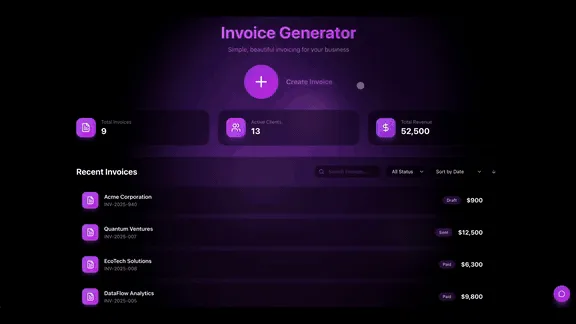
Watch the handoff difference play out on the field-service scenario. With shared workspace memory, there is no handoff at all:
In Taskade Genesis, that dashboard's records live in Projects — the same living context an agent reasons over and an automation trigger watches. This is the anatomy of a Taskade Genesis app in one diagram, and the general pattern behind agentic process automation. On per-project or per-agent memory, each arrow crossing into "Mem" becomes an export, a webhook, or glue code you own.
Which Builders Are Full-Stack (Database, Auth, Hosting)?
Full-stack versus frontend-only is the single most-cited buying criterion in vendor guides, and it deserves a straight answer. As of July 2026:
| Tool | Database | Auth / login | Hosting | Code export |
|---|---|---|---|---|
| Taskade Genesis | Included (workspace Projects) | Included (App Users) | Included | No (platform apps; data exportable) |
| Lovable | Provisioned (Supabase) | Via Supabase | Included | Yes (GitHub) |
| Replit | You provision | You build | Included | Yes (full repo) |
| Bolt | Included (Bolt Cloud) | Included (Bolt Cloud) | Included | Yes (GitHub) |
| Base44 | Included | Included | Included | Limited |
| Bubble | Included (app-owned) | Included | Included | No |
| Softr | External (Airtable, Sheets, SQL) | Included | Included | No |
| Glide | External (Sheets, Excel) | Included | Included | No |
Two readings of this table. If code ownership is your insurance policy, Lovable, Bolt, and Replit are your shortlist — real repos, no platform dependency. If data ownership is the insurance you actually need, note that Softr, Glide, and Taskade Genesis all keep the data layer outside the generated app, which is precisely why their memory survives redesigns.
What About v0 and Cursor?
They belong in a different aisle. v0, from Vercel, generates excellent React/Next.js frontends and hands them to a developer workflow — it is a component and UI generator, not an app-with-backend builder. Cursor is an AI-native code editor whose background agents are remarkable for maintaining codebases — which makes it, ironically, one of the better answers to the day-91 problem if you have engineers. Non-technical operators should treat both as ingredients in a developer's stack, not alternatives to the eight ranked above. Our best AI agents guide covers the agent side of that stack, and the agent builders roundup covers tools for building agents rather than apps.
How Much Do AI App Builders Cost in July 2026?
Pricing volatility is real in this category — several big-brand roundups still carry 2025 numbers — so treat this as the July-2026 snapshot and verify on vendor pages before committing. The structural thing to check is the billing model: credit/token pricing scales with how much you build and edit; seat pricing scales with team size.
| Tool | Free tier | Entry paid | Model | Notes |
|---|---|---|---|---|
| Taskade Genesis | Yes | $10/mo Pro (Popular) | Seats + AI usage | Annual billing; memory, agents, automations on every tier |
| Lovable | Yes | $25/mo Pro (100 credits) | Credits | Credits expire 2 months after issue; Business $50/mo |
| Replit | Limited | ~$25/mo Core | Seat + usage | Agent runs billed by effort; heavy runs add up |
| Bolt | Limited | $25/mo | Tokens | Bolt Cloud hosting included |
| Base44 | Limited | ~$20/mo | Message credits | Wix-owned; built-in backend |
| Bubble | Yes | $29–119/mo | Seats/workload | Per Zapier's Jun-2026-reviewed roundup |
| Softr | Yes | $49/mo Basic (annual) | Seats | Per Zapier's roundup; external data sources |
| Glide | Yes | ~$25/mo Explorer | Seats/updates | Maker ~$80/mo annual; spreadsheet-backed |
A vendor-sourced data point worth knowing about, with the incentive disclosed: Supermemory, which sells memory APIs, claims apps with persistent memory show 72% higher task completion than stateless versions. Discount it as marketing if you like — the direction matches what the free AI app builders cohort shows us in practice: apps whose context compounds get used; apps that forget get abandoned.
Which AI App Builder Should You Choose?
Answer two questions — who runs the app after launch, and where should the data live — and the field sorts itself:
If you are still weighing the build-first cohort against each other, the 10 best AI app builders roundup covers the classic criteria, and state of vibe coding tracks the market data behind the whole movement — including the debate over whether it reshapes SaaS entirely. For a founder's-eye view of running a business on these tools, see vibe-coded business.
Why We Built Taskade Genesis Around One Shared Memory
Our self-differentiation, kept out of the ranking above and put plainly here: we built the memory shared because the loop is the product. Memory feeds intelligence, intelligence triggers execution, and execution writes back to memory — the Workspace DNA architecture that has been the through-line since the execution layer thesis. Per-app and per-agent stores break that loop at the first seam. A ladder makes the scopes concrete:
Scope 0   Stateless prompt        forgets when the chat ends
Scope 1   Session memory          survives the session, not the project
Scope 2   Per-app / per-project   each app remembers only itself      (Lovable, Bolt, Replit)
Scope 3   Per-agent               each agent remembers its own runs   (Base44)
Scope 4   Attached database       data persists, sealed to one app    (Bubble, Softr, Glide)
Scope 5   Shared workspace        apps + agents + automations, one memory
The pieces, briefly: the memory graph is how the workspace holds connected context, Taskade EVE remembers your build preferences across sessions, and agentic workflows keep executing after the chat ends. That is the difference between an app you generated and living software — the living software era is, at bottom, an argument about where memory should live, and the living app movement is what it looks like in the wild. Every plan includes it, free tier up. Seen from an operations desk, the same argument reads as code builders versus a running ops system.
Related Reading
Head-to-head comparisons with the outbound links to verify each vendor's claims yourself:
Frequently Asked Questions
What is the best AI app builder in 2026?
It depends on the lens. For build speed and polish: Lovable and Bolt. For developer autonomy and code ownership: Replit. For what happens after the build — persistent memory, agents operating on live data, automations doing upkeep — Taskade Genesis leads, because all three surfaces share one workspace memory coordinated by TSK-1, the Taskade System Kernel.
Do AI app builders have memory between builds?
Most do now, in different scopes. As of July 2026: Lovable keeps per-project memory documents, Base44's Superagents carry per-agent memory, Replit holds session and repo context, Bubble persists data in an app-owned database, and Softr and Glide anchor to external data sources. Taskade Genesis shares one workspace memory across apps, agents, and automations.
Which AI app builder is best for non-technical founders?
Taskade Genesis and Base44, because database, login, and hosting come included with zero wiring. Taskade Genesis adds agents and automations on the same data from a free plan up; Base44 adds a managed, Wix-backed platform. Lovable works well for non-technical founders focused on a polished public product who can budget for credits and self-managed upkeep.
Can AI build an app with a database?
Yes. Taskade Genesis uses workspace Projects as the data layer, Base44 and Bubble ship built-in databases, Lovable provisions Supabase, and Bolt Cloud includes database and auth hosting. Softr and Glide invert the model and build on databases you already run (Airtable, Sheets, Excel) — which is also why their data survives any redesign.
What is the best Lovable alternative?
For developers: Replit (autonomy, ownership) or Bolt (speed, full-stack in-browser). For operators who need the app to keep working after launch: Taskade Genesis, where memory is workspace-wide rather than per-project and every plan ships apps, agents, and automations together.
Is Lovable better than Bolt or Replit?
For polish and validation speed, Lovable. For the fastest working full-stack demo, Bolt. For long autonomous coding runs and full code control, Replit. All three anchor memory to the project or session; none shares it across apps and agents, which is the criterion where this guide's ranking diverges from build-side roundups.
Are AI-generated apps safe to run in production?
Only with maintenance. The audit of 5,600 vibe-coded apps covered by The Hacker News in May 2026 found 2,000+ vulnerabilities and 400 exposed secrets, and Veracode measured 45% of AI-generated code samples introducing OWASP Top 10 vulnerabilities. Choose a builder based on who does the patching — see why AI-generated apps break for the failure catalog.
Who maintains an AI-built app after it launches?
Code-first builders (Lovable, Bolt, Replit): you, with AI assistance — you own the repo and the patches. Managed platforms (Base44, Bubble, Softr, Glide): the vendor maintains the runtime, you maintain the logic and data hygiene. Taskade Genesis: upkeep runs where the app lives — scheduled automations and agents operate on the same workspace data.
What is the difference between an AI app builder and a no-code app builder?
AI app builders generate the app from a prompt, usually as real code (Lovable, Bolt, Replit) or a managed app (Base44). No-code builders have you assemble visually on a database or spreadsheet (Bubble, Softr, Glide). The categories converged in 2025–2026: no-code added AI generation, AI builders added managed hosting. The lasting difference is where memory anchors.
How much does an AI app builder cost per month?
July-2026 snapshot: Taskade free, then $10/month for most users; Lovable Pro $25/month (100 credits, two-month expiry); Bolt $25/month (tokens); Replit ~$25/month plus usage-based agent billing; Base44 ~$20/month (credits); Bubble $29–119/month; Softr $49/month (annual); Glide ~$25/month. Check the billing model first — credit pricing scales with edits, seat pricing with team size.
Can I own or export the code from an AI app builder?
Lovable, Bolt, and Replit generate real repositories with GitHub sync — the strongest ownership story. Bubble, Softr, and Glide are hosted platforms: the app is not exportable as a codebase, though your data is. Taskade Genesis apps run on the Taskade platform with workspace data that stays inspectable and exportable.
What happened to Base44 after Wix acquired it?
It scaled fast. Wix paid ~$80M in June 2025; Base44 reportedly hit $100M ARR nine months post-acquisition with 2M+ users, and roughly $150M ARR by May 2026 per Calcalist. Its memory bet — Superagents with persistent per-agent memory — validated that non-technical builders want apps that remember, not just apps that deploy.
The 2026 race made building the cheap part. The eight tools above all earn their place, and the top three by valuation prove the demand. But the question that decides your next quarter is not whether your builder can generate an app — it is whether the app, the agents, and the automations remember together on day 91. One shared memory: Projects hold it (▲), agents reason over it (■), workflows act on it (●). Build an app that remembers →