







Updated July 2026. Claude Code and OpenClaw are the two most talked-about AI agents of 2026, and they are routinely compared as if they were rivals. They mostly aren't. One is Anthropic's agentic coding tool that lives in your terminal and ships software. The other is Peter Steinberger's open-source harness that turns a spare computer into an always-on personal assistant you text like a friend.
This comparison covers what each one actually is, seven decision criteria with worked monthly costs, the security picture around the reported CVE-2026-25253 flaw (with a hardening checklist the hype videos skip), a recipe for running both together, and an honest third path for teams and non-developers that neither tool serves well.
⚖️ The Verdict, Above the Fold
Claude Code wins for software work; OpenClaw wins for always-on personal automation; neither is a great fit for a non-technical team that needs governance. Claude Code has the deeper agent harness for codebases — project rules, hooks, sub-agents, and dynamic workflows that coordinate up to 16 concurrent agents. OpenClaw has the stickier form factor: it lives in your messaging apps, remembers you in plain markdown files, and acts on a schedule even while you sleep — at the cost of you becoming its sysadmin and security team.
| Dimension | Claude Code | OpenClaw |
|---|---|---|
| What it is | Anthropic's terminal-first coding agent | Open-source always-on agent harness/gateway |
| Creator | Boris Cherny (Anthropic), Sept 2024 side project | Peter Steinberger, ex-founder, open source |
| Interface | Terminal/CLI (+ channels, IDEs, cloud) | Telegram, WhatsApp, Slack, Discord, email |
| Best at | Codebases, refactors, multi-agent dev work | Personal automation, digests, 24/7 errands |
| Setup | Minutes (install CLI, sign in) | Hours (server, Docker/VPS, channels, keys) |
| Memory | CLAUDE.md + skills per project/session | soul.md, identity.md, memory.md, daily journals |
| Models | Anthropic models (enterprise clouds too) | Any brain: OpenAI, Anthropic, Google, local Ollama |
| Always-on | Sessions + scheduled tasks on managed cloud | Native: heartbeats + cron on your own server |
| Security posture | Permissioned local sessions, managed by vendor | Self-hosted; you own the entire attack surface |
| Typical cost | $20-$200/mo plans, or API billing | Free software + ~$10-20/mo server and API floor |
| Teams/governance | Enterprise auth on managed clouds | DIY; no built-in roles, audit, or shared workspace |
The rest of this article earns that table. If you are choosing between harnesses more broadly, the best OpenClaw alternatives and Claude Code alternatives round out the field.
🖥️ What Is Claude Code?
Claude Code is Anthropic's agentic coding tool: an agent that lives in your terminal, reads your repository, writes and edits code, runs tests, and manages git — with nothing between the model and your machine. Boris Cherny started it as a side project in September 2024; it launched as a research preview in February 2025, hit general availability in May 2025, and reached $1B in annualized revenue by November 2025 — then $2.5B by February 2026. The full arc is in our history of Claude Code.
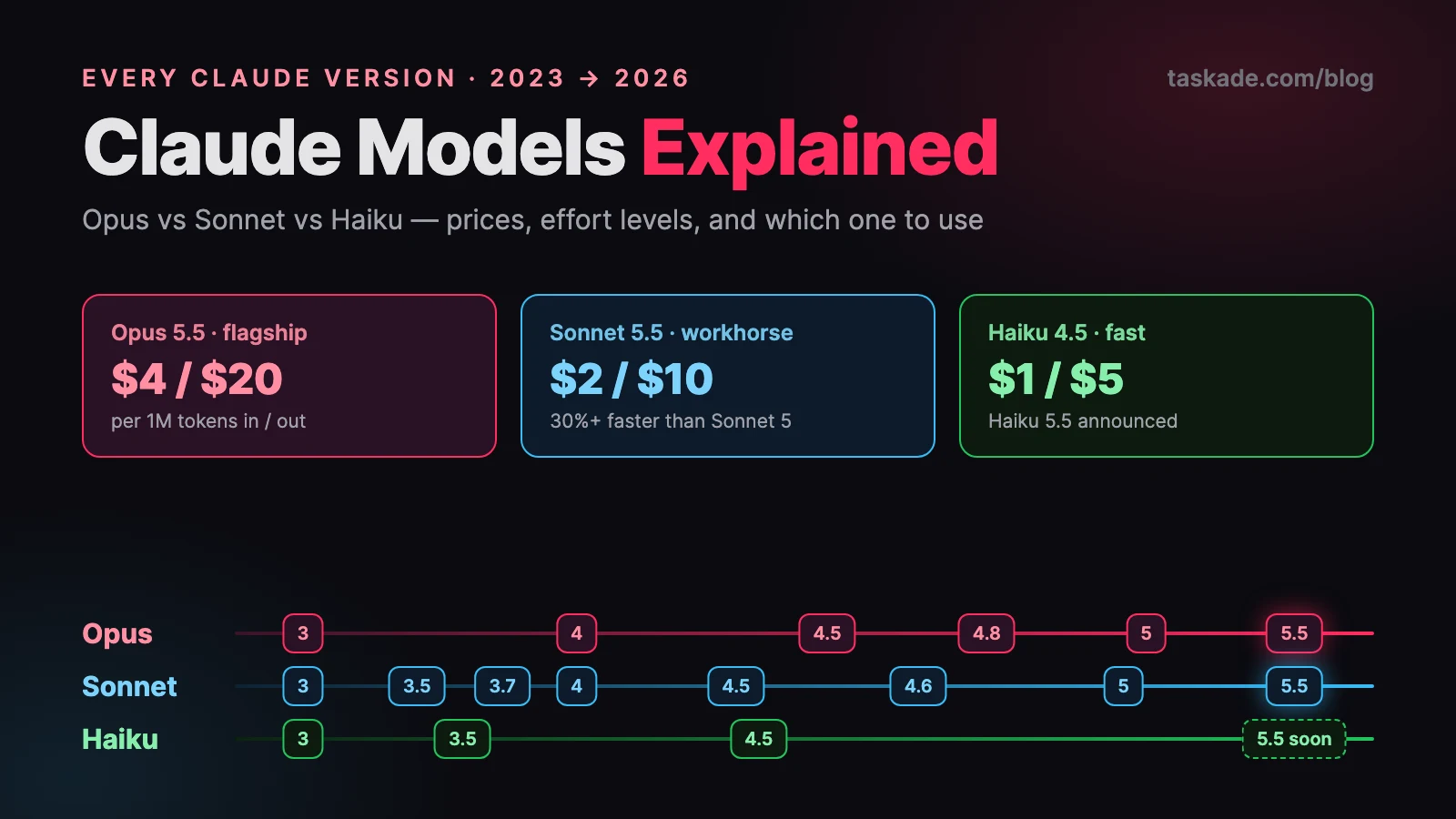
Its design philosophy explains its depth. "Claude Code has access to everything that an engineer does at the terminal," as the team puts it. "Everything you can do, Claude Code can do." Around that core, Anthropic built a whole AI layer: CLAUDE.md project rules, skills with progressive disclosure, hooks, sub-agents with uncorrelated context windows, MCP integrations, and — since May 28, 2026 — dynamic workflows, where Claude writes a real orchestration script that coordinates up to 16 concurrent agents (1,000 per run). Anthropic says 80% of its own staff use Claude Code daily (Sept 2025), and third-party usage analyses estimate it now writes roughly 4% of all public GitHub commits.
Genuine strengths worth conceding up front: it is the deepest coding harness on the market, and it improves automatically as models improve — "Don't build for the model of today. Build for the model 6 months from now," as Cherny frames it. See the broader lineage in our Anthropic history.
🦞 What Is OpenClaw?
OpenClaw is not a model — it is an open-source agent harness: a Node.js service that runs 24/7 on a machine you own (VPS, Mac mini, spare laptop), connects any LLM as its "brain," and talks to you through Telegram, WhatsApp, Slack, Discord, iMessage, or email. It is one of the fastest-growing open-source projects ever, past 240,000 GitHub stars, and the wellspring of the whole "AI claws" movement.
The origin story is half the appeal. Peter Steinberger — a burnt-out founder who sold his company and stopped coding for years — built a personal WhatsApp bot and took it to Marrakech. When he sent it a voice message despite never building voice support, the agent inspected the file, identified the audio format, found an API key in its environment, transcribed it, and replied — in 9 seconds, none of it pre-built. "This is not a chatbot," he later told a TED audience. "Chatbots give up. Agents improvise." The project survived a naming saga (Clawdbot → Moltbot → OpenClaw, chronicled in our Moltbook and OpenClaw history), and after Steinberger reportedly joined OpenAI in early 2026, the code stayed open under the non-profit OpenClaw Foundation.
Its strengths are real: no other tool makes an agent feel this personal, and its plain-file memory means you can read — and edit — everything it knows. Xiaomi AI lead Luo Fuli calls it "an epoch-making Agent framework." Claire Vo, the ChatPRD founder who went from skeptic to running nine named agents across three Mac minis, is blunter: "I am a breathless OpenClaw bro. It has changed my life."
🥊 Head-to-Head: Seven Decision Criteria
1. Setup and learning curve
Claude Code takes minutes; OpenClaw takes an afternoon on a good day. Claude Code is a CLI install plus a sign-in — you are refactoring inside your repo before your coffee cools. OpenClaw needs a machine that stays on, a Docker or VPS deployment, a Telegram bot via BotFather, API keys, and security configuration. Luo Fuli, one of China's best-known AI researchers, got it running in 2 hours. Claire Vo's first install took 8 hours — during which OpenClaw deleted her family calendar. Her takeaway is the right frame: "You really have to pull the thread on these tools and spend enough time to see not where they are today, but where they are in a week and in a month."
2. Codebase depth
For real software work, Claude Code is in a different class. Agentic search over your repo, layered CLAUDE.md rules, ~30 hook events (per mid-2026 community comparisons), auto-delegating sub-agents, and dynamic workflows make it the tool that ports codebases and lands hundreds of PRs. OpenClaw can write scripts and small apps — famously, a 60-year-old Viennese beer sommelier ran his brew rig with it, per Steinberger's TED talk — but even OpenClaw's most enthusiastic reviewers hedge here. NetworkChuck, who runs seven OpenClaw agents including a full AI "IT department," still uses Claude Code for serious research, scripting, and coding. OpenClaw is "really fun"; Claude Code is where his real work happens.
3. Autonomy and always-on operation
OpenClaw's whole architecture is built for it: a heartbeat checks its to-do list roughly every 30 minutes, and agents set real cron jobs for themselves. Those viral "my agent worked overnight" posts? "It's setting up real cron jobs on your server and that's all it is," NetworkChuck notes. "Genius for how simple that is." Claude Code has been catching up — stop hooks let it run for hours or days on a task, scheduled tasks arrived on Anthropic's managed cloud in March 2026, and a channels feature now lets you message it from Telegram, Discord, or iMessage — but its center of gravity is still the work session, not the ambient assistant. If always-on presence in your chat apps is the product you want, OpenClaw is the native answer.
4. Memory model
OpenClaw's memory is its most-loved feature: plain markdown files on disk you can open, read, and edit.
~/.openclaw/
├── soul.md          # personality: who the agent is
├── identity.md      # facts about you, from onboarding
├── memory.md        # long-term distilled memory
├── agents.md        # bootstrap rules, redlines, protocols
└── memory/
    ├── 2026-06-29.md   # one journal file per day
    ├── 2026-06-30.md
    └── 2026-07-01.md
Swap the model and the memory stays — users call it a "brain transplant." Claude Code's memory is project-scoped instead: CLAUDE.md files layered through your repo, plus skills that accumulate like SOPs. Both approaches beat opaque vector databases for auditability, a theme we unpack in agentic workflows explained. The honest caveat: power users like Roblox PM Peter Yang say OpenClaw's default per-day memory "is actually not that great" and layer better systems on top.
5. Model flexibility
OpenClaw wins on openness; Claude Code wins on tuning. OpenClaw connects OpenAI, Anthropic, Google, OpenRouter, or fully local open-weight models via Ollama — and because it is open source, Luo Fuli rewrote its memory system and multi-agent logic herself, something impossible with Claude Code's closed harness. She claims a well-orchestrated framework lets mid-tier models handle ~85% of tasks at frontier level. Claude Code, by contrast, is engineered end-to-end around Anthropic's own models — which is why it feels so sharp — with enterprise routes through the major clouds. One wrinkle to know: Anthropic reportedly barred consumer Claude subscriptions from powering third-party harnesses like OpenClaw in April 2026, while Sam Altman publicly welcomed ChatGPT sign-ins to OpenClaw. Plan for API billing if OpenClaw's brain is Claude.
6. Cost: three worked monthly scenarios
Vague "$20 to $100+" hand-waving helps no one, so here are worked numbers as of July 2026.
| Scenario | Stack | Realistic monthly cost | Watch out for |
|---|---|---|---|
| Solo dev, plan-based | Claude Pro + Claude Code | $20 (Max tiers $100/$200) | Session limits on Pro during heavy weeks |
| OpenClaw starter | $5-10 VPS + $5-10 API (mixed cheap/frontier models) | $10-20 | The token tax (below); skill sprawl |
| Heavy automation, API-billed | Claude Code or OpenClaw on Opus-class API ($5/M in, $25/M out) | $150-600+ | Agents use ~4x chat tokens; multi-agent ~15x (Anthropic engineering blog) |
The OpenClaw number carries a trap the tutorials rarely mention: the token tax. Most users keep one continuous session for memory, so every heartbeat and cron re-pays the entire context window — at 200K context, every 30-minute pulse costs 200K input tokens. Reported burns include $90/day for one user and $15 in the first 15 minutes on an Opus-class model before downgrading. Mitigations (fresh sessions per task, routing cheap models for execution and frontier models for thinking) work, but they are exactly the sysadmin work non-technical users were promised they could skip.
7. Security
Claude Code's surface is a permissioned session on your machine, managed by a vendor with a security team. OpenClaw's surface is an internet-connected service with your API keys, your email, and shell access — administered by you. That difference deserves its own section.
🔒 How Risky Is OpenClaw? Reported Findings and a Real Hardening Checklist
The reported security record is serious enough to plan around. Security researchers disclosed CVE-2026-25253, a one-click remote-code-execution flaw in OpenClaw (rated CVSS 8.8 in security reporting), and scans reported on the order of 135,000 OpenClaw instances exposed to the open internet. Audits of the ClawHub skill marketplace (33,000+ skills) reported malicious packages — cited figures range from 12% of skills flagged for malware to "over 40% with serious security issues," two different metrics that shouldn't be conflated — prompting a VirusTotal scanning partnership. Cold Fusion's reporting adds a supply-chain incident in which a one-line npm package change reportedly compromised ~4,000 developer machines, and cites the claim that "95-98% of people setting up OpenClaw are doing it insecurely." Underneath it all sits prompt injection, which remains unsolved: an LLM cannot reliably distinguish your instructions from instructions hidden in an email or webpage it reads.
Steinberger's own response is disarmingly honest: "Most non-techies should not install this. It's not finished." Or as NetworkChuck put it after a default install: "You're a walking, talking CVE."
None of this means you can't run OpenClaw responsibly. It means you must do the following — an actual checklist, not "just use Docker":
| # | Hardening step | Why it matters |
|---|---|---|
| 1 | Keep the web UI loopback-bound (127.0.0.1:18789) with its gateway token; never port-forward it | The exposed-instance problem is mostly this one mistake |
| 2 | Run it on a separate machine or VPS — never your daily laptop | Blast-radius control; the community norm for a reason |
| 3 | Set tools.exec.security to allowlist or ask, and use the coding tools.profile |
Unrestricted shell + prompt injection = full compromise |
| 4 | Issue least-privilege, per-tool API keys and a fresh email account for the agent | Read-only keys can't delete production data |
| 5 | Vet every skill before install; run openclaw security audit --deep after changes |
Marketplace malware is a reported, recurring problem |
Two more habits complete the posture. First, draft-and-approve: the agent writes the email or Slack message, shows you, and waits — the trust pattern every serious tutorial converges on. Second, progressive trust, Claire Vo's onboard-it-like-an-employee model: calendar read → email read → email draft → email send, with secrets in a password manager, never pasted in chat. And remember NetworkChuck's warning that OpenClaw's "redlines" are just a prompt — "nothing deterministic preventing it." Frontier models resist injection better than cheap ones, but treat that as risk reduction, never protection.
Claude Code is not risk-free either — an agent with your terminal is an agent that can wreck your machine — but its layered permissions, per-command approval prompts, and vendor-managed updates put its default posture far ahead of a self-hosted gateway.
🤝 Can You Run Both Together? Yes — Here's the Recipe
The strongest setup treats them as brain-of-house and front-of-house. OpenClaw is the dispatcher that lives in your pocket; Claude Code is the heavy machinery it calls for real engineering. This is the "I run both" pattern the best first-person comparisons describe, formalized:
The working rules that make it safe:
- Give OpenClaw a skill that shells out to the Claude Code CLI in an isolated git worktree — never your live checkout.
- Use git as the handoff layer. Claude Code commits to a branch; OpenClaw reports the diff; a human merges.
- Keep draft-and-approve on the OpenClaw side for anything that pushes, posts, or emails.
- Bill the OpenClaw side via API keys, given the reported April 2026 restriction on consumer Claude subscriptions inside third-party harnesses.
- Route models by job: frontier model for the coding calls, cheap model for dispatch chatter — the same split n8n users apply to workflows.
A minimalist alternative exists, too: one creator replaced OpenClaw entirely with ~200 lines bridging Anthropic's Agent SDK to Telegram. If you enjoy that sentence, you are the target user for a DIY harness; the agentic engineering rabbit hole awaits.
✅ Choose Claude Code If / Choose OpenClaw If
Choose Claude Code if:
- You build software, and repo-scale correctness matters more than ambient presence
- You want the deepest harness — sub-agents, hooks, skills, dynamic workflows — maintained by a vendor
- You'd rather buy a $20-200/mo plan than administer a server
- Your company needs enterprise auth on managed cloud infrastructure
Choose OpenClaw if:
- You want an always-on assistant in Telegram/WhatsApp that remembers you across months
- You value open source: any model (including local), and the freedom to rewrite the harness itself
- You are comfortable being the sysadmin and security owner of an internet-connected agent
- You enjoy the tinkering as much as the outcome — the "AI claws" scene is half hobby, half tooling
If your honest answer is "neither — I just want the outcomes," keep reading.
🏢 The Third Path: Governance, Teams, and Agents Without a Server
Every winner in this comparison assumes a terminal-comfortable solo operator. Teams have a different problem, and Harrison Chase of LangChain named it precisely: "We told our employees they cannot install OpenClaw on their company laptops. There's massive security risk... But that's what makes OpenClaw OpenClaw." Enterprises keep asking for "OpenClaw for X" — the concept, with guardrails, observability, and control. Neither a personal harness on a Mac mini nor a per-developer CLI gives a team shared context, role-based access, audit trails, or predictable cost.
That is the gap a managed agent workspace fills. Taskade runs AI agents with persistent memory and built-in tools inside a shared workspace: automations handle the cron-and-heartbeat jobs (digests, watchers, follow-ups) as bounded trigger-to-action steps rather than context-window re-payments, 100+ bidirectional integrations replace hand-issued API keys, and role-based access (Owner through Viewer) plus shared visibility give managers the governance story the DIY stack lacks. Taskade Genesis covers the build-from-a-prompt use case — apps and agents from plain language, published to a community gallery — with nothing to host and no gateway to harden. Honest boundary: Taskade deliberately does not offer arbitrary shell access to your machine — for repo surgery you still want Claude Code, and the tinkerer's joy of OpenClaw is its own reward. The comparison deep-dives live at free Claude Code alternative and free OpenClaw alternative, with a wider tools landscape in our AI agent stack guide and best AI agents roundup.
❓ FAQ: Claude Code vs OpenClaw
What is the difference between OpenClaw and Claude Code?
Claude Code is Anthropic's session-based coding agent for your terminal and repository. OpenClaw is a self-hosted, open-source harness that runs 24/7 on your own server, uses any model as its brain, and chats with you through messaging apps. Different jobs: shipping software vs being an ambient personal assistant.
Is OpenClaw safe to use?
Only with deliberate hardening. Researchers reported a one-click RCE (CVE-2026-25253) and roughly 135K exposed instances, plus marketplace malware findings. Loopback binding, a separate machine, least-privilege keys, skill vetting, and draft-and-approve reduce the risk substantially; prompt injection means no setup is fully safe.
Can OpenClaw replace Claude Code for software development?
Not for serious codebases. OpenClaw handles scripts and small builds, but Claude Code's repo-native harness — agentic search, sub-agents, hooks, dynamic workflows — is why even devoted OpenClaw users keep Claude Code for real engineering.
Can Claude Code automate non-coding tasks?
Yes — anything doable from a terminal, plus computer use and scheduled tasks on managed cloud since March 2026. Anthropic's Agent SDK powers thousands of non-coding agents. It just stays session-shaped rather than living in your messaging apps by default.
Can I use OpenClaw and Claude Code together?
Yes: OpenClaw as the always-on dispatcher, Claude Code as the invoked heavy coder, git as the handoff, approval gates before anything ships, API billing on the harness side. It is the strongest power-user pattern in 2026.
Which is easier to set up?
Claude Code, by an order of magnitude: minutes versus a reported 2-8 hours for a first OpenClaw install, plus ongoing server care.
Is OpenClaw free?
The software is free and open source; the running costs are not. Expect ~$10-20/month minimum (VPS + API) and watch the token tax on heartbeats.
How much does Claude Code cost per month?
$20/month on Claude Pro, $100-200 on Max tiers, or API billing (Opus-class: ~$5/M input, $25/M output) for automation-heavy use, as of mid-2026.
Why did Clawdbot change its name to OpenClaw?
Steinberger says a trademark complaint (and mascot pressure) forced renames as the project exploded: Clawdbot → Moltbot → OpenClaw. The full saga — including the Moltbook episode — is in our OpenClaw history.
Did Claude Code Channels kill OpenClaw?
No. Channels and scheduled tasks narrowed the always-on gap, but OpenClaw remains the open, model-agnostic, self-hosted option — a structurally different bet that keeps its own audience.
What should teams use instead of either?
A managed workspace with governance. Taskade pairs persistent agents with scheduled automations, 100+ integrations, and role-based access — Free to start, Pro $10/mo (annual) on transparent pricing — so a team gets the "OpenClaw for X" outcome without owning a server.
Claude Code and OpenClaw are both proof of the same 2026 thesis: the harness around the model now matters as much as the model itself. Pick Claude Code to ship software, OpenClaw to own an always-on companion — and if what you actually want is agents, automations, and AI-built apps working together where your team already works, that loop of Memory, Intelligence, and Execution is what Taskade was built to run. ▲ ■ ●