






Taskade Genesis gives tutors and exam coaches an exam generator, score calculator, and student portal from one prompt, so practice tests and section breakdowns live beside study plans without one-off quiz exports or LMS fees for video libraries you do not need. This guide ranks the best exam generator AI tools honestly for 2026.
TL;DR: ChatGPT wins draft questions. Quizlet wins flashcard drills. Taskade Genesis wins when students need logins, score history, and study plans in one system. Generate an exam score calculator →
Related: exam prep score tracker no code, education client portals, coaching CRM without Kajabi fees, study planner dashboard you own.
Pricing in this guide is described by meter shape rather than invented numbers. Quiz and course vendors change tiers often, so confirm live pricing pages before you buy. Taskade figures below are current as of July 2026.
🎯 What Tutors Actually Need From an Exam Generator AI
An exam generator is only one-fifth of an exam prep business. Tutors and coaches hit the same walls with generic quiz tools:
- Practice tests live in PDFs students lose between sessions.
- Section scores get reported in texts with no trend line.
- AI quiz tools export once and forget the student.
- LMS platforms bundle video hosting you already pay for elsewhere.
- Parents ask for progress updates that require a coach writing manual reports.
The week that actually repeats looks like this: assign a practice test, record section scores, adjust next week's study plan around the misses, and show a student or parent that the trend is moving. Question generation is the cheapest part of that loop. Score history and study plan adjustment are the expensive parts, and they are exactly what a one-off quiz export cannot hold.
| Weekly need | Generic quiz tool default | Owned exam system in Taskade Genesis |
|---|---|---|
| Draft questions from a syllabus | Strong, one-off output | Practice test from notes with review before publish |
| Section and composite scores | Manual spreadsheet | Exam score calculator linked to students |
| Attempt history over months | Rarely retained | Linked attempt records in Projects |
| Study plan updated from misses | Coach rebuilds by hand | Study planner dashboard + automations |
| Student login | Not offered | Exam prep student portal |
| Parent or co-tutor visibility | Screenshot exports | Read-only views and weekly summaries |
| Who edits the fields | Vendor template | You, by chatting with Taskade EVE |
The honest split, before any tool names:
- Use ChatGPT or Claude when you only need question drafts pasted into your existing system.
- Use Quizlet or Kahoot when live classroom drills matter more than longitudinal tracking.
- Generate an owned exam system when students need logins, score history, and study plans that update each week.
📜 Why the Exam Generator Gap Exists
Quiz software grew up around two very different buyers, and neither one was the independent tutor tracking 20 students over a six-month prep cycle.
Buyer one was the classroom teacher. Flashcard and game tools optimized for a 40-minute period: fast setup, high engagement, throwaway content. Retention across months was never the point, because the roster resets every term and the gradebook lives in a separate school system.
Buyer two was the institution. Learning management platforms optimized for course delivery: video hosting, enrollment, certificates, payments. They hold student records well, but they charge for the video and funnel machinery a test-prep coach usually does not need, and their score fields rarely match a specific exam vendor's section breakdown.
Then generative AI collapsed the cost of the question bank. Drafting 40 plausible practice items from a syllabus went from an afternoon to a minute. That did three things to the market:
- Question generation stopped being a moat. Any general model drafts multiple-choice, short answer, and scenario items competently. The scarce asset became the reviewed bank plus the record of who answered what.
- The gap moved downstream. Coaches now generate more practice material than their tracking can absorb. The bottleneck is score history, section trends, and study plan adjustment.
- Building the tracking layer got cheap too. In 2026 a tutor can describe an exam prep app in plain language and deploy it, then reshape fields without waiting on a vendor roadmap. The buying question changed from "which quiz tool?" to "do we rent a quiz schema or own an exam system?"
That is not a failure by Quizlet, Kahoot, or any LMS. Each is well matched to its original buyer. Independent tutors and exam coaches simply sit between the two, which is why so many of them run a quiz tool, a spreadsheet, and a group chat at the same time.
Generic quiz tools own the top two boxes. Everything from "record section scores" down is what an owned exam system exists to hold.
💵 2026 Cost Reality: What Each Meter Actually Charges For
Vendor list prices move every quarter. The meter shape moves far less, and it is what determines whether your bill grows with students, with hosts, with response volume, or not at all.
| Tool | What the meter charges for | Where cost usually jumps | Who holds the records |
|---|---|---|---|
| ChatGPT / Claude | Per-user subscription | Team seats, higher usage limits | Nobody, until you paste output somewhere |
| Quizlet | Per-learner subscription, free tier with limits | Ad-free study modes, teacher features | Quizlet account |
| Kahoot | Per-host or per-teacher plan, free tier for basics | Larger live games, reports, school plans | Kahoot account |
| Google Forms | Free with a Google account | Nothing, until you need logic and history | Your Drive, in loose files |
| Typeform | Response volume tiers | Monthly response caps and logic depth | Typeform workspace |
| Course platforms | Per-instructor fee or revenue share | Video bandwidth, student counts, funnels | Platform |
| Taskade Genesis | Workspace plan, not per practice test | More app users and AI usage | Your workspace |
Confirm each vendor's live pricing page before you commit. The number in a blog post ages; the meter shape usually does not.
Taskade plan math for tutors and coaches
| Plan | Price | Monthly billing | Fits |
|---|---|---|---|
| Free | $0 | $0 | Proving the loop with two or three real students |
| Pro | $10/mo billed annually | $20 | Solo tutor running one exam track |
| Business | $25/mo billed annually | $50 | Tutoring team with co-tutors and cohort views |
Every new account also gets a one-time grant of 6,000 credits — 1,000 at signup plus 5,000 with your first build. That is sized to fund one complete exam prep app before you pay anything. It is a one-time grant, not a monthly allowance, so spend it on the build that matters rather than on demo sandboxes. See /pricing for the current plan matrix.
The structural difference: you are not buying a quiz subscription per learner. You buy a workspace that holds Projects, AI agents, and automations, then publish a portal to your students. Published app end users and AI credit usage follow Taskade plan rules, which is a different meter from "every student needs a paid study account."
🧭 Who Should Switch to an Owned Exam System
Switch, or dual-run for a term, when several of these are true:
- You coach 5 to 200 students through repeated practice attempts, not a single 40-minute drill.
- Your tracking today is a spreadsheet plus group chat, and the spreadsheet has one tab per student.
- You need section fields that match your exam vendor breakdown, not a generic percentage.
- Parents or program directors ask for progress reports you currently write by hand.
- You want AI question generation grounded in your own syllabus, reviewed before publish.
- Students need a login on a phone, not a PDF attachment they open once.
- You expect to run the same exam track again next cycle and want the bank and history to survive.
Good fits: independent test-prep tutors, SAT and ACT coaching businesses, bar and medical board prep coaches, IT certification bootcamps, university tutoring centers, and in-house corporate certification programs.
Start points:
- Exam score calculator generator
- Practice test from notes generator
- Exam prep student portal
- Practice exam dashboard when several attempts per student need one screen
- Exam prep score tracker for the lighter tracking-only shape
- Cohort progress dashboard when you compare students side by side
Related ownership stories: exam prep score tracker no code and study planner dashboard you own.
🛟 Who Should Stay on Quizlet, Kahoot, or an LMS
Stay when the packaged product is genuinely the product you operate. These are real strengths, not strawmen.
Stay on Quizlet when:
- Memorization is the exam. Spaced-repetition study modes are mature, tuned over years, and better than anything you would rebuild.
- Students already know the interface. Zero onboarding is a real advantage for a six-week sprint.
- Your content is vocabulary, formulas, or terminology sets that other learners have already published and refined.
Stay on Kahoot when:
- Live synchronous energy is the point. Nothing beats a room competing on a leaderboard for engagement in a review session.
- You teach groups in person or over video and want instant participation, not async homework.
- Session-level reports are enough and you do not need month-over-month section trends.
Stay on a full course platform when:
- Video is your product. Hosting, streaming, and bandwidth are solved for you on day one.
- Payments, coupons, and enrollment funnels ship bundled, and you do not want to assemble them.
- Certificates, accreditation records, or an audit trail your institution already recognizes matter more than schema control.
Stay on ChatGPT or Claude alone when:
- You need ten questions for tomorrow's class and will never track scores. A model plus a slide deck is faster for that profile, full stop.
Quizlet, Kahoot, Canvas, and Teachable are not "wrong." They are purpose-built for classrooms, live sessions, and course delivery. Taskade Genesis is a living workspace platform. Honest buyers pick the constraint they refuse to compromise.
| Constraint you refuse to drop | Lean this way |
|---|---|
| Best-in-class spaced-repetition drilling | Quizlet |
| Live in-room competitive review | Kahoot |
| Video hosting and checkout on day one | Canvas, Teachable, or a course platform |
| One-off question drafts, no tracking | ChatGPT or Claude, pasted anywhere |
| Own the schema, scores, agents, and portal | Taskade Genesis |
🏆 Taskade Genesis: Best When Exams Need a Living System
Taskade Genesis turns a plain-language description into a deployed exam prep app. Projects hold students and practice tests, AI agents draft questions from notes, and automations remind students before assigned sessions.
Why tutors use it:
- Generate practice tests from notes with review before publish
- Track section scores across attempts with trend views
- Publish a student portal so progress is visible without email threads
- Automate weekly study plan updates from recent misses
- Reshape fields per exam type without filing a vendor request
Honest boundary: Taskade Genesis does not host full LMS video libraries. Link to Khan Academy, a prep publisher's PDF bank, or your own recordings beside the tracker. You get exam generation and progress tracking, not a video content delivery network.
Skip Taskade Genesis if: you only need ten questions for tomorrow's class and will never track scores. ChatGPT plus a slide deck is faster for that profile.
⚡ ChatGPT and Claude: Best for Question Drafts
OpenAI and Anthropic models excel at drafting multiple-choice, short answer, and scenario questions from your syllabus. Ask for a difficulty spread, a rationale per option, and a topic tag and you will get a usable first pass in one turn.
The gap is everything after generation: no student login, no attempt history, no section trend, no portal. Each new chat starts from zero context about which student missed which section last week. Paste outputs into Taskade Genesis or your LMS when drafts need a home, and treat the model as a drafting surface rather than a system of record.
🃏 Quizlet: Best for Flashcard Drills
Quizlet remains the default for memorization-heavy exams, and the spaced-repetition study modes are genuinely good. Students already know the interface, which removes an onboarding cost most tools underestimate.
Tradeoff: longitudinal coaching dashboards and custom portals sit outside the product unless you wire exports manually. Section-level trends across a six-month prep cycle are not what it was built to answer. If you want drilling in Quizlet and tracking you own, keep both and let the exam score board hold the numbers.
🎮 Kahoot: Best for Live Classroom Energy
Kahoot wins synchronous review sessions, and nothing else creates the same participation spike in a room or a video call. Use it for the review before a mock exam.
It is less useful when a tutor needs async practice tests with section score tracking across months of prep. Session reports answer "how did today go," not "is this student's reading section actually improving."
📝 Google Forms and Typeform: The Hidden Competitors
Most tutors try Google Forms or Typeform before they try anything else, because both are free or cheap to start and quizzes are a native use case.
They work for one-off diagnostics. They break when students need history, section breakdowns, and coach visibility on the same record. Responses land in loose spreadsheets keyed by email address, permissions get awkward once parents are involved, and mobile UX degrades at cohort scale. If your form workflow already works, keep the intake and move the scoring to a student progress tracker that links attempts to students.
🧬 Workspace DNA: Projects, Agents, Automations
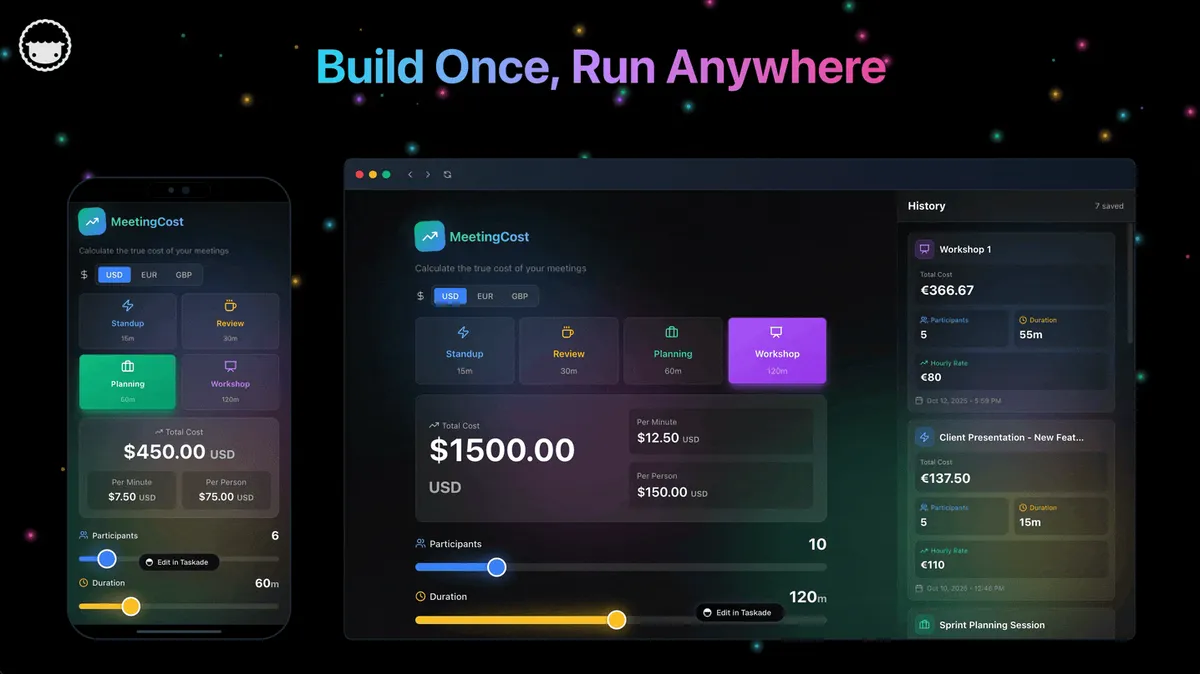
Taskade Genesis apps are not static templates. They run on Workspace DNA:
| Pillar | Component | Role in an exam prep system |
|---|---|---|
| Memory | Projects | Students, question banks, attempts, section scores, study plans |
| Intelligence | AI Agents | Draft questions from notes, summarize a weak section, propose next week's plan |
| Execution | Automations | Remind before a session, send a weekly parent summary, flag a dropped score |
The loop: an attempt writes Memory, an Agent reads the section trend and proposes a study plan change, an Automation notifies the student, and the next attempt writes Memory again. That is why an owned exam system gets sharper the more cycles you run, while a one-off quiz export is as smart on day 90 as it was on day 1.
The data model is the part most spreadsheets get wrong. One tab per student cannot answer "which section is weakest across the cohort." Linked records can.
What you generate first, in order:
- Students and attempts as the system of record for scores.
- Section fields matching your exam vendor breakdown, so composite and per-section trends stay accurate.
- Study plans linked to students, so next week's focus is visible rather than remembered.
- Question banks once the schema holds real data.
- Agents last. An agent pointed at three sample rows is theater. Read custom agents and agent tools before you wire one up.
Browse live patterns in the Community Gallery to see how other operators shaped student-facing apps before you generate yours. The app builder entry covers what "generate an app" actually produces.
🧱 What Taskade Genesis Owns vs What You Pair
Honest boundaries matter more than feature checklists.
| Layer | Taskade Genesis | Pair with |
|---|---|---|
| Question bank and review | Owns it | Publisher PDFs for licensed items |
| Section score history | Owns it | Nothing needed |
| Study plan and reminders | Owns it | Calendar sync for shared session times |
| Student login and portal | Owns it, via app users | Nothing needed |
| Cohort comparison views | Owns it | Nothing needed |
| Video lessons | Not a strength | Loom, YouTube, Khan Academy, your course platform |
| Payments and enrollment funnels | Not a strength | Your checkout or course platform |
| Official exam vendor score APIs | Not available | Manual entry or vendor exports |
| Proctoring and identity verification | Not available | A dedicated proctoring vendor |
Honest gaps today:
- No full LMS video hosting.
- Question banks need human review before student publish, especially for high-stakes exams.
- Third-party exam vendor APIs are not native integrations. Taskade ships 100+ bidirectional integrations, but a specific exam board's score feed is not one of them.
- No proctoring. If your program requires verified identity during the exam, that stays with a specialist.
If a salesperson or an AI summary tells you Taskade Genesis replaces a proctored exam platform or an accredited LMS, that is overselling. Walk away from the pitch no matter who makes it, including us.
🔁 How Scores Turn Into Next Week's Study Plan
This is the loop that generic quiz tools cannot close, and the reason section fields are worth setting up properly on day two.
Two rules keep this honest. First, the agent proposes and a human approves — an unreviewed plan change reaching a student before an exam is how trust dies. Second, wire exactly one automation before you wire five. Automation triggers and automation actions cover the mechanics.
📋 Migration Checklist: Spreadsheet or Quiz Tool to an Owned Exam System
Use a one-week build and a two-week parallel run. Do not cut over the week of a mock exam.
Week 0: Decide the nouns
- List the four nouns you cannot lose: student, attempt, section score, study plan
- Note optional nouns: question, topic tag, target date, parent contact
- Write down the exact section names your exam vendor reports
- Write down tools that stay: video, payments, calendar, publisher PDFs
Week 1: Generate and load truth
- Generate the exam score calculator with three real students
- Add section fields that match your exam vendor breakdown
- Import prior practice scores from spreadsheets, real attempts only
- Generate the exam prep student portal and test login on a phone
- Turn on one automation: a session reminder or a weekly summary
Week 2: Question banks, plans, agents
- Enable practice test from notes for your next unit
- Review every generated item for accuracy and scope before publish
- Link a study planner dashboard or an exam study schedule
- Add a study agent only after two real attempt cycles are recorded
- Freeze the old spreadsheet for new scores; keep it read-only for history
Cutover rules
- New attempts are recorded in one place only.
- The old spreadsheet stays reachable and read-only so past cycles remain auditable.
- Make one system the authority for each noun: the exam system owns section scores, your course platform owns video progress.
| Day | Focus | Done looks like |
|---|---|---|
| 1 | Generate the score calculator | Three real students, real target dates |
| 2 | Section fields | Composite math matches your vendor's report |
| 3 | Import prior scores | At least two attempts per student |
| 4 | Publish the portal | A student logs in on a phone and sees only the record you matched |
| 5 | One automation | A reminder lands before the next session |
| 6-7 | Student feedback | Rename one confusing field |
| 8-10 | Question bank | One reviewed unit published |
| 11-14 | Study plans and agent draft | Coach approves a plan change proposed from real scores |
Publishing details live in publishing, and the Taskade Genesis FAQ covers what app users can and cannot see.
🆚 Side-by-Side: Exam Generator Options
| Question | ChatGPT | Quizlet | Taskade Genesis |
|---|---|---|---|
| Who owns student history? | You paste elsewhere | Quizlet account | Your workspace |
| Section score trends | Manual | Limited | Score calculator |
| Student portal | No | No | Exam prep portal |
| Best profile | One-off drafts | Flashcard drills | Tutors tracking cohorts |
| Honest gap | No runtime | No coach dashboard | No video hosting |
Use the row that matches your constraint, not the tool with the flashiest demo video.
Capability depth vs ownership
| Capability | Packaged quiz or LMS tool | Owned exam system |
|---|---|---|
| Question drafting | Excellent, or model-assisted | Excellent, grounded in your notes |
| Spaced-repetition drilling | Best in class on Quizlet | Basic. Pair a drilling tool |
| Live competitive review | Best in class on Kahoot | Not the shape. Pair Kahoot |
| Section score history | Weak outside an LMS gradebook | First-class, linked to students |
| Study plan adjustment | Manual, coach rebuilds | Agent proposes, coach approves |
| Video lessons | Excellent on course platforms | Not a strength. Embed links |
| Custom fields per exam type | Vendor template limits | Change the app by chatting |
| Parent and co-tutor access | Screenshot exports | role-based access from Owner to Viewer, Owner to Viewer |
| Multi-use workspace | Exam-shaped only | Exam prep plus adjacent operations |
role-based access from Owner to Viewer, from Owner down to Viewer, decide who edits question banks, who records scores, and who only reads. That is how an assistant tutor edits weekly plans while a parent sees progress read-only.
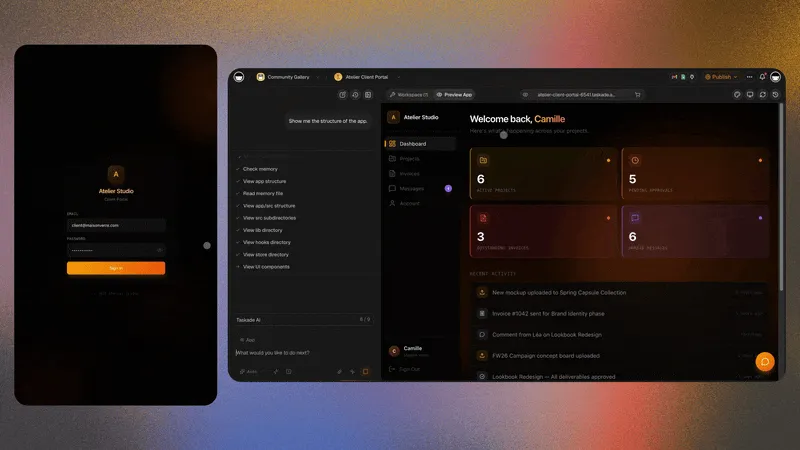
🧪 A Day in the Life on an Owned Exam System
07:30 A coach opens one board. Three students have attempts logged since Friday, and the weakest section is highlighted without exporting anything.
08:15 A student finishes a timed reading section on the train and records the raw score from the portal on a phone. The composite recalculates.
10:00 The study agent drafts next week's focus topics for two students whose reading trend flattened. The coach edits one, approves both, and rejects a third suggestion that ignored a scheduled holiday.
12:40 A new unit needs 30 practice items. The coach generates a draft from lecture notes, reviews every question for scope and accuracy, deletes four, and publishes the rest to the bank.
16:00 A parent asks how their child is tracking. The weekly summary automation already sent it. The coach forwards the read-only view instead of writing a report.
19:20 A student compares attempt three against attempt one and sees the math section move eight points. That visible trend is the retention mechanism, not a motivational text message.
None of that requires video hosting, proctoring, or an exam board API. It requires a schema that matches the exam and records people trust.
If your business also runs cohort enrollment or payments, keep the exam system and add a cohort roster portal or a cohort attendance board rather than forcing one table to do everything badly.
❓ FAQ: Exam Generator AI in 2026
What is the best exam generator AI in 2026?
Taskade Genesis for practice tests, score tracking, and student portals in one workspace. Quizlet for flashcard drills. Kahoot for live review. ChatGPT or Claude for question drafts you paste elsewhere. The right answer depends on whether you need one test or a six-month record.
Can AI generate practice tests from my notes?
Yes. Agents turn uploaded notes or a PDF outline into question banks linked to student assignments, and you review every item before publishing. Use practice test from notes as the starting shape, and enable question generation only after student records and score fields already work.
Can AI generate bar exam or medical board questions?
Yes for study aids and practice formats. Always review for accuracy and jurisdiction rules before student publish. High-stakes prep is exactly where a reviewed bank sitting beside student records and section scores beats a chat transcript, because you can prove what was published and when.
Does Taskade Genesis replace Canvas or Teachable?
No for video-first courses. It replaces the score tracker, study plan, and student login layer many tutors build in spreadsheets beside those platforms. If video and checkout are your product, keep the course platform and let the exam system hold the scores.
Which exams fit an owned exam system?
SAT, ACT, GRE, GMAT, LSAT, bar exam, medical boards, IT certifications, and any exam with repeatable practice tests and section scores. The pattern works best when the same students take repeated attempts over months. Add section fields that match your exam vendor breakdown so composite and per-section trends stay accurate.
Where do parents and co-tutors fit?
Publish read-only views or send weekly automation summaries so parents see progress without a coach writing manual reports. role-based access from Owner to Viewer, Owner down to Viewer, let an assistant tutor edit question banks while a reviewer only reads. Students sign in as app users, and you match each record to its login.
Can I keep Quizlet for drilling and own the scores?
Yes, and many coaches should. Let Quizlet do spaced repetition, which it does better than a custom build, and record section scores in an exam score board you own. Avoid double entry by making one system the authority for each noun.
How long does the first build take?
Plan about a week. Day one is the score calculator with three real students, day two is section fields, day three is importing prior scores, day four publishes the portal and tests mobile login, day five turns on one automation. Question generation follows in week two.
Does it work if I only have five students?
Yes, and five students is the right size to start. Generate with three real records rather than a demo sandbox, because agents and automations behave differently on real data. The free plan plus the one-time 6,000 credit grant covers a first build before you pay.
How much does an AI exam generator cost?
Taskade starts free at $0, with Pro at $10 per month billed annually ($20 month to month) and Business at $25 per month billed annually ($50 month to month). New accounts also get a one-time grant of 6,000 credits, 1,000 at signup plus 5,000 with your first build, which funds one complete exam prep app before you commit to a plan.
📚 Related Reading
- Exam prep score tracker no code
- Study planner dashboard you own
- AI exam generators roundup
- AI study planners
- Education client portals and study dashboards
- AI apps for students and educators
- AI tools for teachers
- Automate teaching and grading
- PDF study tools
- AI math tutoring
- Student enrollment portal without an LMS
- Coaching CRM without Kajabi fees
- From spreadsheets to an operations app
- Taskade Community Gallery
🚀 Own the Records, Pair the Rest
Quizlet and Kahoot earned their places by making drilling and live review effortless. Course platforms earned theirs by solving video and checkout. Exam coaches still deserve a second question in 2026: are we buying a quiz subscription, or are we renting a schema for the exam records we could own?
If you need spaced-repetition drilling, live leaderboards, video hosting, or proctoring, keep those tools and negotiate with clear eyes. If you need reviewed question banks, section score history, study plans that update from real misses, and a student portal on your own schema, generate the exam system and keep video and payments in their lanes. Memory holds the attempts, Intelligence reads the trend, Execution sends the reminder, and the next attempt writes Memory again — ▲ ■ ●
Ready to own exam prep instead of exporting quizzes? Generate an exam score calculator, build a practice test from notes, or start free at /create.