
Definition: AI agent autonomy levels describe how much an agent decides on its own and what role the person keeps. A 2025 framework sets five levels: the user as operator, collaborator, consultant, approver, and finally observer. Autonomy is a design choice, separate from capability, so a capable agent can still be built to ask first.
TL;DR: The most cited scale, from Feng, McDonald, and Zhang (2025), names five levels by the user's role, from L1 operator to L5 observer, where the only control left is "an emergency off-switch." Pick the level per job, not per agent. A job that moves money or contacts customers stays low. Pair it with human-in-the-loop design.
Think of how a new hire takes over a job. In week one, they shadow you and you do the work. In month one, you split the work. By month three, they run it and check in at key points. Later they handle everything and only come to you when stuck. A few never need you at all. The person did not get smarter at each step. You chose to give them more room because of what you saw. Autonomy levels for AI agents describe the same choice.
Why Autonomy Levels Matter in 2026
Autonomy levels matter because agents now take real actions, and "how autonomous should this be?" has become a design decision with a cost on both sides. Too little autonomy and the agent saves no time. Too much and a mistake reaches a customer before anyone sees it.
The clearest statement of the idea is Levels of Autonomy for AI Agents by K. J. Kevin Feng, David W. McDonald, and Amy X. Zhang (arXiv, June 2025, revised July 2025). Their abstract argues that "an agent's level of autonomy can be treated as a deliberate design decision, separate from its capability and operational environment." A capable agent "can still act with a low level of autonomy" if it must consult its user before each action.
Security groups reached the same point from the risk side. The Cloud Security Alliance published an Agentic AI Autonomy Levels and Control Framework (version 2.0, March 18, 2026). Its executive summary found that organizations "deployed agents at Autonomy Levels 3 through 5 while implementing controls that would be insufficient" even for Level 2. In other words, many teams gave agents room they had not built the checks for.
The Five Levels
Feng and colleagues name each level by the role the person plays. The examples are the ones the paper lists in its own table.
| Level | The user is | What the agent does | How the user keeps control | Examples in the paper |
|---|---|---|---|---|
| L1 | Operator | Helps when asked and suggests actions, does not act without approval | Invokes the agent and approves each suggestion | ChatGPT Canvas, Microsoft Copilot |
| L2 | Collaborator | Drafts a plan and works in parallel with the user | Edits the plan and can "take control of the agent's work anytime" | OpenAI Operator |
| L3 | Consultant | Leads planning and execution over longer tasks, consults the user at set points | Gives feedback and direction, can pause the agent | Gemini Deep Research, Replit Agent |
| L4 | Approver | Plans and acts alone, asks only when blocked or when an action needs sign-off | Sets in advance which actions need approval | SWE Agent, Manus, Devin |
| L5 | Observer | Plans, acts, and works through blockers alone | Reads activity logs, and the only control is "an emergency off-switch" | Voyager, The AI Scientist |
Two details are easy to miss. First, OpenAI's product named "Operator" sits at L2 in the paper, not at the L1 "operator" role. The name and the level are unrelated. Second, the paper says that at L3 "there may be no mechanism for the user to directly take control from the agent." The user can only ask for changes.
WHO DECIDES                                         WHO CAN STOP IT
-------------------------------------------------   ---------------------------------
L1 Operator      the person decides every step       the person, at every step
L2 Collaborator  person and agent share the plan     the person, any time
L3 Consultant    the agent leads, person advises     the person, by pausing the run
L4 Approver      the agent decides, person signs off  the person, at approval points
L5 Observer      the agent decides everything        an emergency off-switch only
How the Levels Fit Together
The levels form a ladder, but moving up is a choice you make for one job at a time. The diagram shows the forward path. Moving a job back down is always allowed, and it is the right response to a bad week.
Other Scales You Will See
Several other scales exist. They count from different starting points, so a "Level 3" in one is not a "Level 3" in another.
| Scale | Levels | What it measures | Source |
|---|---|---|---|
| SAE J3016 (driving) | 0 to 5, no automation to full automation | Who drives the car, and who is the fallback | SAE J3016, 2014, revised 2021 |
| Parasuraman, Sheridan, and Wickens | A low-to-high scale for each of 4 functions | Automation of sensing, analysis, decision, and action, each set on its own | IEEE, 2000 |
| Levels of AGI | Performance and generality levels, with autonomy considered beside them | How capable a system is, and how autonomy affects risk | Morris et al., 2023 |
| Feng, McDonald, and Zhang | L1 to L5, by user role | What the person does while the agent works | arXiv 2506.12469, 2025 |
| Cloud Security Alliance | L0 to L5, no autonomy to full autonomy | The controls each level needs, modeled on SAE J3016 | CSA blog, 2026-01-28, v2.0 March 2026 |
| Allowed vs capable autonomy | 5 allowed levels, from reactive execution to delegated authority | What an agent is permitted to do, rated apart from what it can do | Zheng et al., 2026 |
The 2000 paper by Parasuraman, Sheridan, and Wickens is the most useful for builders. It split automation into four functions: information acquisition, information analysis, decision and action selection, and action implementation. Each one can sit at its own level. An agent can gather and analyze on its own while a person still makes the decision. Most good agent designs look like that.
Capability Is Not Permission
The strongest recent argument in this area is that "can it?" and "may it?" are separate questions. In Separating Capability from Permission (arXiv, July 2026), Haining Zheng and co-authors define Allowed Autonomy Levels, "the degree of autonomy an AI agent is authorized to exercise", apart from Autonomous Capability Levels, a system's "inherent technical abilities." In their case study, an enterprise data engineering agent rated high in capability was held to a lower allowed level after weighing "risk, reversibility, and organizational readiness."
Feng and colleagues propose a similar tool, the autonomy certificate: "a digital document that prescribes the maximum level of autonomy at which an agent can operate", issued by a third party based on the agent's design and environment. It is a proposal, not a working system.
The practical lesson is simple. A better model does not justify a higher level by itself. Evidence from your own runs does.
How to Pick a Level for a Job
Pick the level per job, using the cost of a mistake. Four questions cover most cases:
| Question | If yes | If no |
|---|---|---|
| Does the action move money or sign a contract? | L1 or L2: a person approves each one | Go to the next question |
| Does it reach a customer or the public? | L2 to L4 with review before send | Go to the next question |
| Can you undo it in a minute? | Higher levels are fine | Keep a person at the decision |
| Do you have a record of past runs that went well? | Move up one level | Stay where you are and collect runs |
A few rules of thumb from the sources:
- Start low and move up on evidence. The CSA finding is that teams moved up before they built controls. Collect a few weeks of runs first.
- Split the job by function. Let the agent gather and draft on its own, and keep the decision or the send step with a person, as in the four-function model.
- Define the off-switch first. Even at L5 the paper keeps one control. Know how you stop a run before you need to.
- Write the stop rules down. Agent stop conditions decide when an agent must hand the job back.
The same questions as a decision path:
Limits and Open Problems
- No shared numbering. Driving, security, and research scales count differently. Always name the scale when you say "Level 3."
- Levels describe design, not behavior. An agent designed for L2 can still act like L4 if its tools let it. Agent permissions and guardrails enforce the level. The label does not.
- Measuring autonomy is still early. Feng and colleagues end with "early ideas for evaluating agents' autonomy". There is no standard test yet.
- Multi-agent systems blur the levels. When agents hand work to other agents, a person can be L2 for the first agent and L5 for the rest. Agent orchestration has to account for that.
How Autonomy Levels Show Up in Taskade
You choose the autonomy level per job in Taskade. Chat with a Taskade AI agent and you ask while it answers, which is L1 or L2. Taskade EVE builds an app and can pause to ask you a question, which is closer to L3. An automation acts on its own each run, and where you place the person sets its level.
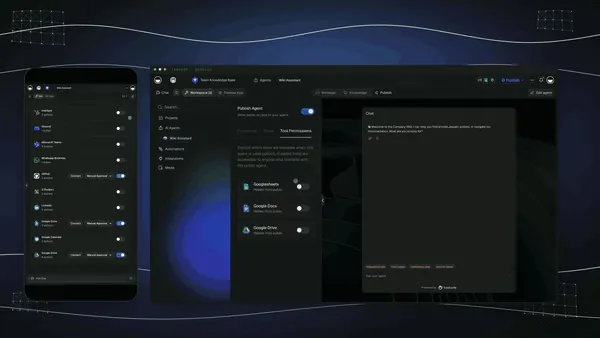
An automation with an Agent step that runs on every new form entry acts on its own for each run. An automation that writes its draft into a project for a person to check before anything is sent sits closer to the approver level. Each automation keeps a Run History, so you have the record you need before you move a job up a level.
A bookkeeper who reconciles client receipts each week is the plain use. An automation on a schedule has an agent read new receipts and match them to transactions in a project. That part runs on its own, because a wrong match is easy to fix. The agent drafts the client emails about missing receipts into a "To send" project, and the bookkeeper reads and sends them. Anything over a set amount gets a task for the bookkeeper instead of a draft. After a month of clean runs, routine reminders can go out without review. Taskade Genesis builds the first version of that app from one prompt. To start from a working example, clone the Support Workflow Manager kit, an app kit with projects, an AI agent, and an automation you can clone. The Free plan covers 3 apps and 1 agent and starts with 0 AI credits.
Describe yours and build it free →
Related Concepts
- Human-in-the-Loop: the approval patterns behind L1 to L4
- Autonomous Agents: agents at the high end of the scale
- Ambient Agents: event-driven agents that need a level for each action
- Agent Permissions: what an agent is allowed to touch
- Agent Governance: policies for agents across a team
- Guardrails: checks that keep an agent inside its level
- Agent Stop Conditions: when an agent must hand back control
- Why AI Agents Fail: what goes wrong when the level is too high
- Plan-and-Execute Agents: plans a person can review before an agent acts
- AI guardrails explained: the longer guide on the blog
- AI Agents: the hub for agent concepts in this wiki
- The Agent Loop: the observe, think, act cycle every agent runs
Frequently Asked Questions About AI Agent Autonomy Levels
What are the levels of autonomy for AI agents?
The 2025 framework by Feng, McDonald, and Zhang names five levels by the user's role: operator, collaborator, consultant, approver, and observer. At L1 the person decides every step. At L5 the agent does everything and the person only watches, with an emergency off-switch as the last control.
Is a more capable agent more autonomous?
No. The framework treats autonomy as a design decision, separate from capability. A very capable agent can be built to ask before every action. A 2026 paper makes the same point with "allowed" and "capable" autonomy levels, rated apart from each other.
How are AI agent levels different from self-driving car levels?
SAE J3016 runs from Level 0, no driving automation, to Level 5, full automation, and asks who drives and who is the fallback. Agent scales ask what role the person plays while the agent works. The Cloud Security Alliance scale borrows the SAE 0-to-5 structure, but the levels do not line up one to one.
What level should my first AI agent run at?
Start at L1 or L2 for anything that moves money, signs a contract, or contacts a customer. Let the agent gather and draft, and keep the decision with a person. Move a job up one level after you have a record of runs that went well.
What is an AI autonomy certificate?
It is a proposal from the 2025 Feng, McDonald, and Zhang paper: a document, issued by a third party, that sets the maximum level of autonomy an agent may operate at. It would be based on the agent's design and where it runs. No such certificate system exists yet.
What happens at the approver level?
At L4 the agent plans and acts on its own. The person steps in only when the agent hits a blocker or reaches an action that was marked for sign-off in advance, such as a payment. The person sets those approval points before the agent starts.
Can I choose an autonomy level in Taskade?
Yes, per job. A chat with a Taskade AI agent is the operator or collaborator level. An automation that runs an agent on every event and writes drafts for a person to check sits near the approver level. You set the level by where you put the review step.
Further Reading
- Feng, McDonald, and Zhang, Levels of Autonomy for AI Agents, arXiv 2506.12469, 2025
- Cloud Security Alliance, Agentic AI Autonomy Levels and Control Framework v2.0, March 18, 2026
- Jim Reavis, Leveling Up Autonomy in Agentic AI, Cloud Security Alliance, January 28, 2026
- Zheng et al., Separating Capability from Permission, arXiv 2607.23438, 2026
- Parasuraman, Sheridan, and Wickens, A model for types and levels of human interaction with automation, IEEE Transactions on Systems, Man, and Cybernetics, 2000
- Morris et al., Levels of AGI for Operationalizing Progress on the Path to AGI, arXiv 2311.02462, 2023
- SAE International, J3016 Taxonomy and Definitions for Driving Automation, 2021 edition
- Anthropic, Building effective agents, December 19, 2024
- Harrison Chase, Introducing ambient agents, LangChain, January 14, 2025