






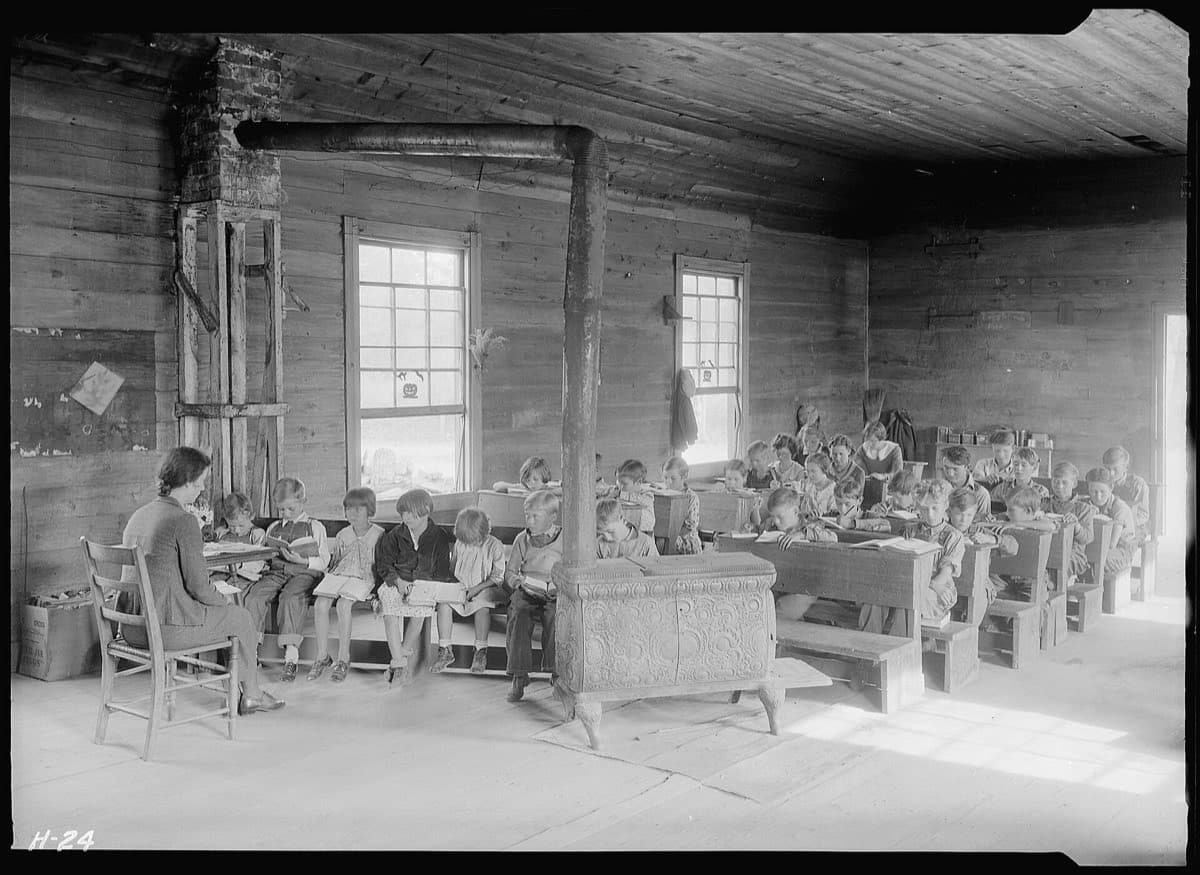
In 2019, Sam Ovens launched a community platform with exactly one community on it. You could not create a second one. There was no directory to browse, no other groups to join, and no way in unless he let you in.
Seven years later, Skool runs on a two-line price list, employs 30 people out of Los Angeles, and has become a default answer for anyone who wants to charge for a group. Almost everything written about how it got there repeats the same four numbers — and we could not source any of them.
This is the history, with the receipts attached.
TL;DR: Skool was founded in 2019 by Sam Ovens (CEO) and Daniel Kang (CTO) and sells at $9 or $99/month (2.9% + 30¢ fee up to $899 on Pro). Alex Hormozi partnered in January 2024. The widely-cited "$100M investment," "$1B valuation," and "a16z round" have no primary source — we traced each to its origin. Build a community app you own, free →
Every figure below is linked to the document it came from. Where no document exists, we say so — and we say who first said it.
What Is Skool?
Skool is a community platform that puts a discussion feed, courses, and a gamified leaderboard inside a single group, sold at $9 or $99 per month depending on which transaction fee you prefer. According to its own about page it was founded in 2019 by Sam Ovens and Daniel Kang, is based in Los Angeles, and employs 30 people. Its defining product decision is what it refuses to offer: no themes, no white-labeling, and no separately branded destination for each community.
Skool at a Glance (2026)
| Field | What Skool publishes about itself | Basis |
|---|---|---|
| Founded | 2019 | Company about page |
| Founders | Sam Ovens (CEO), Daniel Kang (CTO) | Company about page |
| Headquarters | Los Angeles, California | Company about page |
| Team size | 30 employees | Company about page |
| Pricing | Hobby $9/mo · Pro $99/mo | Company pricing page |
| Transaction fee | 10% + $0.30 · 2.9% + $0.30 up to $899, then 3.9% + $0.30 | Company help center |
| Announced funding | None | No announcement or filing found |
Every row above is self-reported, and it is worth pausing on that. The only third-party source that echoes the 30-employee figure also shows Skool's headcount falling from 242 to 30 in roughly thirteen months — a drop that reads as a broken scraper rather than corroboration. When a company publishes little and nobody audits it, third-party data does not fill the gap. It invents one.
The Four Claims Everyone Repeats
Here is the provenance audit, in full. This table is the part of this article we would most like you to steal.
Four numbers dominate the writing about Skool: a $100 million Hormozi investment, a $1 billion valuation, an a16z growth round, and a founder net worth. We could not source any of them — not "we disagree with them," but that we opened the cited pages, followed the citations backwards, searched securities filings, and found nothing underneath.
That matters because of how thin the primary record is. Skool's own about page runs to roughly 210 words. The pages currently outranking it are 5,000-word reviews that cite no external sources at all. There is no Wikipedia entry for Skool or for Sam Ovens. The vacuum has been filled, almost entirely, by people quoting each other.
| Widely repeated claim | Status | What the record actually shows |
|---|---|---|
| "$100M Hormozi investment" | ❌ Unsourced | The figure appears only in a third-party headline; that article's own body names no amount |
| "Skool is a $1B company" | ❌ Unsourced | No primary source exists. A competing estimate puts it at $79.9M |
| "a16z led a growth round" | ❌ No source at all | Traces to unbylined sites with no citations; Skool is absent from a16z's portfolio |
| "Alexis Ohanian / 776 invested" | ❌ No public evidence | No connection found in any portfolio listing or investor profile |
| "Ovens and Hormozi own it 50/50" | ⚠️ Rumour | No cap table has been published |
| "Sam Ovens is worth $X" | ❌ Unsourced | Estimates span $10M–$110M. Forbes publishes no figure |
| "Skool has never raised VC" | ⚠️ Outdated | Ovens describes an undisclosed institutional round on the record |
| Founded 2019 by Ovens and Kang | ✅ Confirmed | Company about page |
The $100 million that was never announced
On January 10, 2024, Alex Hormozi announced on X that he had made the largest investment of his life into Skool. That is the whole financial content of the announcement. It names no dollar amount, no equity percentage, and no valuation. The only quantity anywhere in it is a claim that host payouts were growing 62% per month.
The "$100 million" figure traces to a third-party headline. Open that article and the body says only that Hormozi announced the largest-ever investment into Skool. The number lives in the headline and nowhere else.
The a16z round that has a date problem
This one is worse, and it is instructive. The claim that Andreessen Horowitz led a $100M+ growth round in Skool traces to unbylined sites with no hyperlinks, no citations, and no bylines. Skool does not appear in a16z's published portfolio — check it yourself; the list is public and searchable.
But there is a sharper refutation than absence. One of those sites dates the alleged round to June 2024. Ovens' own account places his institutional raise after the Hormozi partnership, after strain appeared in the $99 pricing model, and immediately before the $9 tier — which lands in mid-2025. The fabricated date contradicts the founder's own timeline, not just the press record.
Citation capsule. Search engines are now laundering this fabrication back as fact: during research for this article, four separate AI-generated search summaries restated the a16z round as established truth. By August 2026 the number itself had begun to inflate — one search engine's AI summary asserted a "$400 million" Hormozi investment, four times the unsourced headline figure, attached to an announcement that names no figure at all. The pattern matters beyond Skool. When a topic has a thin primary record and a thick blog ecosystem, generated summaries inherit the ecosystem, not the record. This is the mechanism behind what we have written about elsewhere as AI slop.
The History of Skool
Before Skool: pre-selling software that did not exist (2012–2015)
The origin story Ovens tells in 2026 was recorded, by someone else, in 2012 — which makes it one of the few well-evidenced parts of this history.
SnapInspect International Limited was incorporated in New Zealand on 19 January 2012 (company number 3708601). The public registry lists Sam Ovens as a director from 19 January 2012 — incorporation day — until 16 February 2015. He was the sole founding director; a second director joined in September 2014, two and a half years later. The company is still registered and still trading today.
In August 2012, Ovens appeared on Mixergy with Andrew Warner in an interview about finding a software idea and pre-selling it before building it. He credits Mixergy directly for the change in approach: he had found it while researching how Groupon got traction, which led him to a pre-sell methodology. He pre-sold roughly $5,000 before the product existed — after an earlier venture that cost him about $10,000 and earned nothing.
A follow-up interview recorded in August 2013 gives contemporaneous numbers in his own words: SnapInspect at $35,000–$37,000 monthly recurring revenue, up from roughly $2,500 a year earlier, with a team of two.
Those two interviews are the single best evidence in this entire article. A founder's story told in 2026 is a memory. The same story told to a third party in 2012, with numbers, is a record.
The problem that produced Skool
Ovens' next venture, Consulting.com, sold courses. Running it exposed the operational problem that Skool was built to solve: to sell knowledge online you must first assemble a stack of tools that has nothing to do with knowledge.
This is not a rhetorical flourish, and it is measurable. Okta's telemetry across its integration network puts small businesses of 50 or fewer employees at around 36 deployed applications, SMBs at 58, and organisations of all sizes at 93. Its 2025 report puts the average at 101 apps per company — the first time that figure has crossed 100. Because Okta counts only what is federated through its single sign-on, it structurally undercounts self-serve and shadow tools. For a solo creator, whose entire stack is self-serve, the real number is higher.
Productiv's analysis of 107 application categories found organisations typically running five or more tools in 17 separate categories, with an average of 8.9 project management tools alone. Its 2023 report puts SaaS spend at $9,600 per employee — and finds that small businesses pay 49% more per employee than large enterprises.
That last number is the fragmentation tax, priced. The smallest operators pay the most per head for the privilege of assembling their own stack. Ovens' framing of the consequence is the interesting part: because nothing is centralised, buyers cannot tell who is good, so they fall back on proxies — and the cheapest proxy to manufacture is fame. In a fragmented market, being known beats being good.
2019: launching with exactly one community
Skool's answer to the cold start problem was the smallest possible answer. It launched with one group — Ovens' own mastermind — and no ability to create a second. He ran his own business on it until it was good enough that outsiders asked for access.
Then, and only then, group creation opened.
Skool ran in closed beta for roughly three years and came out of beta around early 2022, though no exact public-launch date is documented anywhere, including on Skool's own site.
2024: Alex Hormozi and The Skool Games
Hormozi's announcement landed on 10 January 2024, the same date his Skool profile records him joining. Skool's about page describes it precisely: "Alex Hormozi partnered with Skool in 2024 to create The Skool Games." The Skool Games launched in February 2024, presented by Skool and Hormozi as a competition for community owners built around leaderboards and prizes.
The mechanics, sourced carefully: Skool's own Games leaderboard FAQ confirms the ranking metric is new MRR — recurring revenue added by newly acquired members only — with annual plans divided by twelve and, since 2025, a $100-per-member cap. The rest is third-party reporting, labeled as such: the Games reportedly began as a monthly contest with full leaderboard resets, moved to a quarterly 90-day format in 2025, and prizes are reported as a Los Angeles trip, time in a Hormozi mastermind, and "$30K+" in first-place cash. None of that appears on the event's own site — treat it as reported, not confirmed.
Notice what the metric choice does. Ranking on new MRR makes the leaderboard a customer-acquisition engine for the platform: the only way to climb is to bring Skool people it does not already have.
Here is a documented inconsistency worth noting, because both sides of it are published by the same company. Skool's about page names only Ovens and Kang as founders and dates Hormozi's involvement to 2024. But The Skool Games site labels him "Skool Cofounder," and his own Skool profile bio reads "Cofounder, Skool."
We are not resolving that. We are flagging it, because it is the kind of detail that gets flattened into "Hormozi co-founded Skool" everywhere else. A self-written profile bio is a self-description, and a "Joined" date on a community platform is an account-creation date, not a corporate role start.
2025: the $9 bet
The most consequential recent decision was cutting the entry price from $99 to $9. Ovens describes the sequence on the record, in a 2026 interview: after the Hormozi partnership drove growth, strain appeared in the $99 model; leadership said a price cut required more capital first; a venture firm emailed the same day.
He gives exactly two identifying details about that firm — that the lead partner had been a chief executive at Blizzard during a business-model change, and that the firm's "strength was really data." He names no firm, no amount, no valuation, and no date. We are not going to guess, and neither should anyone else.
But the fact of it matters: it overturns the widely repeated claim that Skool has never taken venture capital. Funding databases still record zero rounds. The founder describes two — the mastermind raise and this one.
(That interview's title is where the "billion dollar company" framing comes from — written by the interviewer; across two hours the word "valuation" never appears, and the only billion mentioned is an aspiration to reach a billion users.)
2025–2026: video, webinars, and a Discovery overhaul
Skool spent 2025 and 2026 shipping the features its minimalism had conspicuously excluded — without touching the two-line price list. Three additions matter for the history, because each one removes a reason to leave the platform:
| When | What shipped | Source |
|---|---|---|
| Mid-2025 | Native video hosting with automatic captions — course videos no longer require an external host | Third-party feature roundups |
| Oct 27, 2025 | Skool Webinar: one-to-many live streaming for up to 10,000 participants, with replays and attendance analytics | Company press release |
| Spring 2026 | Discovery overhaul: up to 11 owner-set keywords per community, a quality-over-engagement ranking algorithm, and a dedicated AI category | Founder announcements, via third-party trackers |
The Discovery overhaul is the strategically interesting one. Activity-based ranking rewarded manufactured engagement; re-ranking on quality signals is Skool conceding its index had filled with noise — and that the index is the product. The dedicated AI category confirms what the scrape below shows: AI became the platform's largest genre.
How Big Is Skool in 2026?
Nobody outside the company knows — Skool publishes no user counts, community counts, or revenue, so every size figure is an estimate. With that label firmly attached, three independent estimates triangulate the scale:
| Estimate | Figure | Source and date |
|---|---|---|
| Site traffic | ~37.1M monthly visits | Similarweb traffic model, mid-2026 |
| Top-1,000 Discovery communities | 84.6% paid · median price $27/mo · median size 205 members | Scrape of the Discovery trending list, July 14, 2026 |
| Largest free community | AI Automation Society, 434.9k members | The community's own Skool page, August 2026 |
Two caveats. Scrapes of this surface disagree: an August 2025 pass over the same top-1,000 list found only 60% paid and an average price of $376.77 — averages on a power-law distribution are dominated by a few giants, which is exactly why the medians are the honest numbers. And Discovery's ranked list is capped at 1,000 communities, so any scrape of it describes Skool's visible head, not its long tail.
Taken together: a median price of $27/month and a median size of 205 members describe a platform of small, modestly priced communities — which matters for the pricing arithmetic below, because typical membership prices sit far below the transaction size where Pro's fee steps up, and a median community's revenue sits right around where the two plans cross over.
The Strategic Bet: Selling Less Than Your Competitors
Skool's central decision was to withhold the feature its competitors were selling. Circle and Kajabi competed on giving creators control — branding, structure, custom domains, a white-labeled destination. Skool went the other way and stripped customization deliberately, on the theory that shared surface area is what makes cross-community discovery possible at all.
The logic is easier to see as a fork than as an argument.
The historical argument behind it is the migration from self-hosted forums to Facebook Groups. Forums gave operators total control and zero distribution. Every forum was its own island with its own login, and every visitor had to be earned. Groups took the control away and handed back one profile, one login, one search — and an audience that was already there.
Ovens' summary of the trade is that creators need distribution and users need convenience, and that customization buys neither.
Worth arguing with. This is a strategy, not a law. Creators who already have an audience get very little from a shared index and give up real brand equity to sit inside one. The bet pays off specifically for people who do not yet have distribution — which is most people, which is why it worked.
Ovens is not the first founder to treat restraint as the product. Basecamp built a company on refusing features its customers asked for, on the same reasoning: every addition is permanent, because you cannot take back something people have started using.
And network effects are not a guarantee of anything. HipChat had one and lost anyway, which is the more useful case study — a network advantage decays the moment a competitor makes switching cheap.
The Cold Start Problem, Solved at N=1
A network with one user has no value, so the hardest version of launching a network is the first day. Andrew Chen named this in The Cold Start Problem (Harper Business, 2021), and his framework runs through five stages: the Cold Start Problem, the Tipping Point, Escape Velocity, Hitting the Ceiling, and the Moat.
Two of Chen's concepts explain Skool's launch better than any narrative does.
The first is the atomic network — in Chen's definition, the smallest possible network that is stable and can grow on its own. He notes it is usually smaller than founders expect. Zoom's works with two people; Airbnb's needs hundreds of listings in a single market.
Skool's first atomic network was one group with one owner. That is as small as a stable network can be while still being real, and it is exactly why launching with no way to create a second group was a feature rather than a limitation.
The second concept is the hard side — the minority of users who create disproportionate value, do more work, and are correspondingly harder to acquire and keep.
On Skool, the hard side is the community owner, not the member. Once you see that, the whole product roadmap reads as one continuous subsidy of the hard side:
| Skool decision | Who it serves | How it subsidises the hard side |
|---|---|---|
| $9 entry tier | Owner | Removes the cost of finding out whether an idea works |
| The Skool Games leaderboard | Owner | Converts performance into public status, which money alone cannot buy |
| Discovery surface | Owner | The platform supplies members the owner would otherwise buy |
| No customization | Member | Keeps every community legible inside one index |
| Unlimited members on both tiers | Owner | Growth never triggers a pricing penalty |
That last row is quietly the most aggressive. Most platforms in this category price by member count, so growing your community raises your bill. Skool does not.
How Skool Actually Prices — the Crossover Nobody Explains
Skool's two plans are not a good tier and a better tier. They are the same product sold at two different risk positions. Both include unlimited members, courses, videos, live calls, a custom URL, and affiliates. The only difference that matters is the transaction fee: 10% + $0.30 on Hobby, 2.9% + $0.30 on Pro — where Skool's own help center adds a detail nearly every review omits: the 2.9% applies to transactions up to $899, and rises to 3.9% + $0.30 above $900.
For most communities the higher band never fires — the median membership is $27/month, an order of magnitude below the threshold — so the crossover arithmetic below survives intact. But the two-band structure reveals what Pro actually is: at sub-$899 tickets, 2.9% + 30¢ is roughly what card processing costs anyway, so Pro's effective platform premium on your revenue is about zero. You pay $99/month for the software; the fee passes through to the card networks. The 3.9% band reclaims a margin on high-ticket sales.
That makes the choice pure arithmetic. Hobby costs $9 + 10% of what you collect. Pro costs $99 + 2.9% at typical ticket sizes. Set them equal and they meet at about $1,268 per month of community revenue.
| Community revenue / month | Hobby ($9 + 10%) | Pro ($99 + 2.9%) | Cheaper |
|---|---|---|---|
| $250 | $34.00 | $106.25 | Hobby |
| $500 | $59.00 | $113.50 | Hobby |
| $1,000 | $109.00 | $128.00 | Hobby |
| $1,268 | $135.80 | $135.77 | break-even |
| $2,000 | $209.00 | $157.00 | Pro |
| $5,000 | $509.00 | $244.00 | Pro |
Chart x-axis is monthly community revenue in USD. The flat $0.30 per transaction is identical on both plans, so it does not move the crossover. Table and chart use Pro's 2.9% band, which applies to transactions up to $899 — above $900 each transaction is charged 3.9%, which typical $27–$99 memberships never trigger.
The design is smarter than it looks. Below the crossover the $9 plan behaves like a revenue share — Skool earns only if you earn. Above it, the $99 plan behaves like a subscription — and the marginal fee drops to almost nothing exactly when the numbers get large enough to notice. Skool takes the risk when you are small and takes its money when you are not.
How that compares, billed like for like
This is where most comparison articles quietly mislead, so read the column headers. Several vendors advertise the annual-prepay effective rate in large type. Skool's headline numbers are true monthly prices.
| Platform (entry tier) | Billed monthly | Billed annually | Fee at entry |
|---|---|---|---|
| Skool (Hobby) | $9 | $90/yr | 10% + $0.30 |
| Skool (Pro) | $99 | $990/yr | 2.9% + $0.30 (≤$899; 3.9% above) |
| Circle (Professional) | ~$129 | $89/mo equivalent | 2% |
| Mighty Networks (Launch) | $95 | $950/yr | 2% |
| Kajabi (Basic) | $179 | $143/mo equivalent | 2% |
| Patreon | Free | Free | 10% platform fee |
| Discord | Free | Free | 10% platform share |
Two footnotes that matter. Discord's "creators keep 90%" is the platform share only — payment processing takes real take-home closer to 84%, and up to 30% via Apple on iOS. And Skool's annual figures are simply its own "2 months free" offer applied to its own monthly prices, not a third-party estimate.
Who Supplies Your First 100 Members?
The real difference between community platforms is not features — it is whether the platform can send you members. A creator with no audience has the same problem on every platform: the first hundred people. Some platforms make that entirely the creator's problem. Others absorb part of it.
| Platform | Cross-community discovery | How it surfaces you | Who pays for the test |
|---|---|---|---|
| Skool | Yes — Discovery | Search, trending, platform-run ads | The platform |
| Circle | Yes — Circle Discover (Jan 2025) | Opt-in marketplace listing | The platform |
| Discord | Yes — Server Discovery | Browsable directory with member counts | Neither |
| Mighty Networks | ⚠️ No — "Discovery" is intra-network | Top posts and members inside one community | The creator |
| Kajabi | No | — | The creator |
| Patreon | Limited | — | The creator |
Note the trap in row four. Mighty Networks ships a feature called "Discovery," but it surfaces top posts, spaces and members within a single community. It is not a directory of other people's networks. The name invites exactly the wrong conclusion.
Note also that discovery is not a Skool exclusive, whatever the marketing implies. Circle launched Circle Discover in January 2025, and Discord's public server directory long predates both.
What is genuinely distinctive is the mechanism. Skool describes assembling ads for communities programmatically — taking a community's cover image, title and description and running them at the market to see whether anyone bites. The creator writes packaging; the platform buys the test.
The economic transfer is the point. Market testing is something a solo creator structurally cannot afford — not because ads are expensive, but because finding out you were wrong is expensive. Moving that cost onto the platform is a bigger deal than any feature on any comparison page.
Ovens draws the analogy to YouTube explicitly: cover image is thumbnail, and the packaging carries most of the outcome. That claim is easy to test on any platform with a public index, including our own community gallery.
The Affiliate Flywheel — and Why Every Skool Review Agrees With Itself
Skool pays affiliates 40% lifetime recurring commissions with a 60-day cookie, per its own affiliate program page. Refer someone who subscribes at $99/month and you collect roughly $40/month for as long as they stay — not for a year, for the life of the subscription. The program is open to everyone on both plans.
The mechanically clever part is automatic attribution: when a member of your community creates their own group, you are credited as the referrer — no link click required. Read that against the network-effect thesis and the design snaps into focus: the growth loop turns members into owners, and the affiliate program pays the existing owner every time that conversion happens inside their walls. The people best positioned to recruit the hard side are compensated automatically, forever.
One consequence deserves to be said plainly, in an article about provenance: this is why nearly every Skool review that ranks in search is written by an affiliate. A 40% lifetime commission on a $99/month product is among the strongest recurring payouts in software, and it shapes conclusions the way you would expect. It also explains part of the citation problem this article documents — the 5,000-word reviews outranking Skool's own about page are not neutral records; they are sales pages with a revenue share. (For the record, we run no Skool affiliate link; our incentive is the opposite one, disclosed at the end of this article.)
What Ovens Says About AI — and What the Evidence Says
Ovens takes a position most builders would find heretical: his team does not write production code with AI. He calls the output sloppy on the details, and says software is a domain where a single detail can take months.
But he ships AI in a different seat — as a code reviewer. The argument is economic rather than philosophical. Human review takes your best engineer offline and adds lag; an AI reviewer can be hit early and often, so the human arrives at code that already had the obvious problems removed.
Here is the interesting part: the industry has converged on the same conclusion from the opposite direction.
| Source | Date | What it reports |
|---|---|---|
| Anthropic engineering report | Jun 2026 | With over 80% of merged code AI-authored, "human code review has become a new bottleneck" |
| Cursor, on acquiring Graphite | Dec 2025 | As writing code got faster, "reviewing changes, merging them safely" became the bottleneck |
| GitHub Copilot code review | Mar 2026 | 60 million reviews; now more than 1 in 5 code reviews on GitHub; 12,000+ orgs automate it |
| Google DORA 2024 | 2024 | Per 25% more AI adoption: code review speed +3.1%, quality +3.4%, docs +7.5% |
| Google DORA 2024 | 2024 | Same increment: delivery throughput −1.5%, delivery stability −7.2% |
| Google DORA 2025 | Sep 2025 | Throughput finding reverses; the negative stability relationship persists |
The honest reading is not "AI cannot write code." DORA's 2025 report explicitly reversed its own throughput finding, and adoption keeps climbing. The durable result across both years is narrower and more useful: AI adoption keeps helping the verification side, while the stability side has not caught up.
The most disciplined study in the field makes the same point about certainty. METR's randomized trial found experienced open-source developers were 19% slower with early-2025 tools while believing they had been 20% faster — but METR has since flagged that result as out of date, and its 2026 follow-up produced confidence intervals that cross zero and which METR itself judged unreliable. Anyone quoting the 19% without that caveat is quoting a number its own authors have retired.
What survives all of it is the seat, not the score. Whether AI makes authors faster is contested and moving. That review is the bottleneck is agreed on by Google's data, Anthropic's engineers, GitHub's telemetry, and Cursor's chequebook. Ovens got to the same seat by arithmetic about payroll. If you are building with AI agents or agentic workflows, that is the transferable lesson.
⚠️ One claim from the interview we will not repeat: that a major platform degraded its product with too much AI-written code. We found no credible reporting supporting it.
The Part Most Profiles Leave Out
A history that only reports the flattering record is marketing. Sam Ovens has been the subject of critical coverage in reputable business press, and an article whose whole premise is sourcing discipline cannot skip it.
In July 2017, the New Zealand National Business Review published "Just how hot is Sam Ovens, really?", noting that a search for his name auto-suggested the word "scam." In August 2017, NBR followed with a second piece reporting that, according to documents it obtained, Ovens was in a dispute with Inland Revenue over a substantial unpaid tax bill and was earning under NZ$150,000 at a time when his public narrative implied considerably more.
Three things must be said alongside that. This is 2017 — the Consulting.com era, years before Skool existed. Both articles are paywalled beyond the opening, so we have not read the full reporting, any response, or any resolution. And NBR's own opening repeats a "$65 million" Forbes valuation that does not appear on Forbes' profile of him, which publishes no net-worth figure at all.
We include it because omitting the only investigative journalism about a subject, in an article about how badly sourced everything else is, would be indefensible.
The modern reputation record is thin, and it cuts both ways. Skool's Trustpilot profile stood at roughly 1.9 out of 5 from 34 reviews as of April 2026 — Trustpilot blocks automated access, so we cite the figure as reported in an April 2026 review by the course platform Ruzuku. Three qualifiers matter more than the score. The profile is unclaimed: Skool has never registered to respond. The sample is 34 reviews against tens of millions of monthly visits — self-selected and statistically meaningless. And the complaint themes are billing and cancellation support, not the product. Skool's Better Business Bureau profile, for completeness, lists the company in El Segundo, California. A company that responded to its own review pages would neutralize most of this in an afternoon — which is itself a data point about where Skool spends attention.
What Actually Transfers
Strip the personalities out and a reusable playbook remains.
| Move | What Skool did | What transfers |
|---|---|---|
| Subtract to grow | Withheld the white-labeling competitors sold | Every customization knob fragments your index |
| Start at N=1 | Launched with one group, no way to make a second | Make one instance excellent before making it a platform |
| Subsidise the hard side | Cheap entry, status prizes, platform-bought traffic | Find who does the disproportionate work, then pay their costs |
| Package like YouTube | Cover image, title, description | Your card is your advertisement whether you treat it as one or not |
| Price the risk, not the seat | 10% when small, ~3% when large | Charge a share when the outcome is uncertain, a fee when it is not |
| Hire the ceiling first | Roughly a year of interviews for one engineer | The first hire caps the quality of every later hire |
| Verify before you generate | Rejected AI authorship, shipped AI review | Spend the cheap reviewer first, the scarce one last |
The sixth row deserves its own sentence, because Ovens is blunt about it: talented engineers will not work under untalented ones, so hiring an average first engineer permanently caps what you can hire afterwards.
And the decision underneath all of it is not really about community software:
                    WHERE DOES YOUR AUDIENCE COME FROM?
                                  |
                 +----------------+----------------+
                 |                                 |
        "I already have one"              "I don't have one yet"
                 |                                 |
                 v                                 v
       Own the surface.                  Join the shared one.
       Your domain, your branding,       Accept the shared index,
       your list, your rules.            inherit its distribution.
                 |                                 |
                 v                                 v
       Circle / Kajabi /                  Skool / Discord /
       an app you build                   any discovery platform
                 |                                 |
                 +----------------+----------------+
                                  |
                                  v
                    THE QUESTION WAS NEVER FEATURES.
                    IT IS WHO PAYS FOR THE FIRST 100 MEMBERS.
Rent the Community, or Own the App?
Every platform in this article rents you a surface; none of them hands you the software. That is a fair trade when the platform supplies your members. It is a worse trade once you have them — at which point you are paying a percentage of your own revenue to a company whose index you no longer need.
There is a third option that did not exist when Skool launched: build the thing yourself, from a prompt.
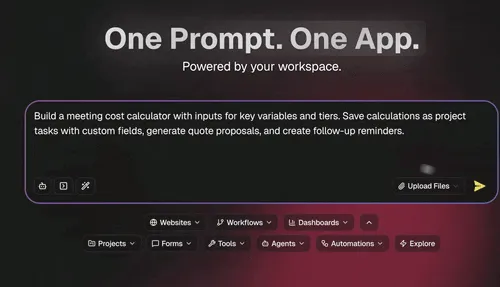
Taskade Genesis turns one description into a working app — a database, AI agents with persistent memory, automations that run on a schedule, and 100+ bidirectional integrations. A member portal, a course hub, a client area, a cohort tracker: each is one prompt, and the result is an app you own rather than a tier you rent. There is no per-member price and no transaction fee on what you collect. The AI apps hub shows the range of what a single prompt can produce.
The free plan lets you keep up to 3 apps in your workspace at no cost. Paid plans start at $10/month billed annually for Pro and $25/month billed annually for Business, which adds custom domains — external client sign-in is included on every plan, Free included.
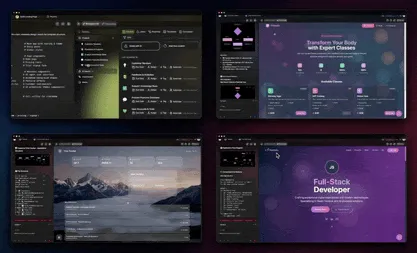
And the network-effect lesson from this whole history applies to us too. Taskade's community gallery exists so builders can find each other's work and clone it in one click — the same shared-index logic, applied to apps instead of groups. If you want to see what people actually build, start there, or read our breakdown of the best free AI app builders.
Frequently Asked Questions
What is Skool?
Skool is a community platform combining a discussion feed, courses, and a gamified leaderboard in a single group. Its about page states it was founded in 2019 by Sam Ovens and Daniel Kang, is headquartered in Los Angeles, and has 30 employees. It sells at $9/month with a 10% transaction fee or $99/month with 2.9% on transactions up to $899.
When was Skool founded?
Skool was founded in 2019 by Sam Ovens and Daniel Kang, per the company's about page. It launched with exactly one community — Ovens' own — ran in closed beta for roughly three years, and opened to the public around early 2022. No exact public-launch date is documented anywhere, including on Skool's own site.
Who founded Skool and who owns it?
Skool's about page names Sam Ovens (CEO) and Daniel Kang (CTO). Alex Hormozi partnered with the company in 2024, and his own profile describes him as a cofounder — a description the about page does not repeat. No cap table has been published, so the common "50/50 split" claim is a rumour.
How much does Skool cost in 2026?
Skool costs $9/month (Hobby) with a 10% + $0.30 transaction fee, or $99/month (Pro) with 2.9% + $0.30 on transactions up to $899 and 3.9% + $0.30 above $900, per Skool's help center. Both tiers include unlimited members, courses, videos, live calls, a custom URL and affiliates. The advertised "2 months free" is the annual billing discount, not a trial.
When does Skool Pro become cheaper than Hobby?
At roughly $1,268/month of community revenue. Below that, the $9 plan wins on the lower subscription; above it, the $99 plan wins on the lower fee. At $3,000/month you would pay about $309 on Hobby versus $186 on Pro.
How much did Alex Hormozi invest in Skool?
Undisclosed. His January 10, 2024 announcement names no dollar figure, no equity stake, and no valuation — the only number in it is a claim that host payouts were growing 62% per month. The circulating "$100 million" comes from a third-party headline, not from Hormozi or Skool.
Has Skool raised venture capital?
Skool has never announced a round and databases list none, but Ovens describes two raises on the record: roughly $5 million from members of his own mastermind, and a later institutional round from an undisclosed firm that funded the $9 price. No filing for either has been located.
Is Skool a billion-dollar company?
There is no primary source for a Skool valuation of any size. The "billion dollar" phrasing comes from a 2026 interview title written by the interviewer. Across the full two-hour conversation the word "valuation" never appears, and the only mention of a billion is an aspiration about users.
What is the cold start problem?
The difficulty of launching a product whose value depends on others already using it. Andrew Chen's The Cold Start Problem (Harper Business, 2021) argues networks launch by building an "atomic network" — the smallest network that is stable and can grow on its own. Skool's was one group.
Skool vs Circle — which should I choose?
Circle offers far more control over branding and structure at a 2% fee; Skool withholds customization so every community shares one index, at 10% on its $9 tier. Compare billing carefully: Circle advertises an annual-billed rate, while Skool's prices are true monthly ones. Both now run cross-community discovery.
Does Skool find members for you?
Partly. Skool runs a Discovery surface with search and trending, so the platform can send an owner members — unlike Kajabi, where the creator supplies all traffic. But discovery is no longer unique: Circle launched Circle Discover in January 2025, and Discord's public server directory predates both.
Can you actually make money with a Skool community?
Skool takes 10% on Hobby and 2.9% on Pro at typical membership prices, so $1,000/month collected leaves roughly $891 on Hobby or $872 after paying for Pro, before the 30¢ flat fee charged per transaction — the exact net depends on how many payments make up that $1,000. Skool publishes no audited creator earnings. Circulating figures about top communities come from third-party scrapes and platform marketing — treat them as estimates.
How many people use Skool?
Nobody outside the company knows — Skool publishes no user or community counts. Similarweb estimates roughly 37 million monthly visits. A July 2026 scrape of the top 1,000 Discovery communities found 84.6% paid, a median price of $27/month, and a median size of 205 members. The largest free community showed ~435K members on its own page in August 2026.
What is the Skool affiliate program?
Skool pays 40% lifetime recurring commissions with a 60-day cookie, per its affiliate program page. Attribution is also automatic: when your member creates their own group, you are credited without a link click. It is a genuine growth mechanism — and the reason most Skool reviews that rank in search are affiliate-written.
What should I build instead of renting a community platform?
If you already have an audience, owning the software beats renting a tier. Taskade Genesis turns one prompt into a live app with a database, AI agents, automations and 100+ integrations — member portals, course hubs, client areas — with no per-member pricing and no cut of your revenue. Browse the AI apps hub for working examples.
🔗 Resources
The primary sources this article is built on, in one place. Where a claim above has no entry here, that is the point being made about it.
Skool's own record:
- Skool — About — founding year, founders, headquarters, team size
- Skool — Pricing — Hobby $9/mo, Pro $99/mo, "2 months free" annual offer
- Skool Help Center — Subscriptions FAQ — the two-band transaction fees: 10% + 30¢ on Hobby; 2.9% + 30¢ up to $899 and 3.9% + 30¢ above $900 on Pro
- Skool — Affiliate Program — 40% lifetime recurring commissions, 60-day cookie
- Skool Help Center — Skool Games Leaderboard FAQ — the new-MRR ranking metric
Announcements and interviews:
- Alex Hormozi's investment announcement, January 10, 2024 — the primary source that names no dollar figure
- Sam Ovens on Mixergy, 2012 and the 2013 follow-up — the contemporaneous SnapInspect record
- Sam Ovens: How I Built a Billion Dollar Software Company (2026 interview) — source for the two raises, the $9 sequence, and the AI-review position; the "billion dollar" phrasing is the interviewer's title
- Skool Webinar launch press release, October 27, 2025 — live streaming for up to 10,000 participants
Checks and estimates (labeled as such):
- a16z portfolio — Skool does not appear in it
- Similarweb — skool.com — traffic model, ~37.1M monthly visits
- Discovery top-1,000 scrape, July 14, 2026 — 84.6% paid, median $27/mo, median 205 members
- Discovery top-1,000 analysis, August 2025 — the earlier pass whose averages disagree, instructively
- AI Automation Society on Skool — 434.9k members as of August 2026
- Skool on Trustpilot — ~1.9/5 from 34 reviews, profile unclaimed (as reported April 2026)
Featured image: interior of the one-room Oakdale School near Loyston, Tennessee, photographed by Lewis Hine, circa 1933. U.S. National Archives, via Wikimedia Commons, public domain. Skool launched the same way: one room, one community.
Related Reading
- Best Free AI App Builders — what a free tier actually gets you
- AI Membership Site Software — the commercial comparison of this category
- Micro-Apps, Explained — the small-software pattern underneath all of this
- One-Person Companies — the operator this playbook is written for
- History of Real-Time Collaboration — how shared surfaces got built
- Basecamp History — the other company that made refusal a product decision
- HipChat History — a network effect that decayed, and why
- HyperCard History — constraint as a feature, forty years earlier
- The History of Y Combinator — the other great atomic-network story
- Anthropic and Claude History · OpenAI and ChatGPT History · Lovable History — more of our sourced company histories
- What Are AI Agents? · AI Slop, Explained · State of Vibe Coding
- Zapier History · Notion History · ClickUp History — the fragmentation this article describes, company by company
- Learn: community app gallery · getting featured · cloning apps · AI Kits
Skool's real lesson has nothing to do with community software. It is that distribution is a product decision, made early, usually by subtraction — and that the platforms which win are the ones that pay for a creator's first hundred members instead of charging for them. The companies still selling customization to people who have no audience are answering a question nobody asked.
Whether you rent that surface or build your own, the loop underneath is the same one we build for: memory that compounds, intelligence that acts on it, execution that feeds it back. ▲ ■ ●