






TL;DR: Plug your calendar into the free Meeting Cost Calculator and see the real annual cost of every recurring meeting. The AI agenda optimizer suggests cuts that typically save $15K-$80K/year per team. Clone the working calculator in 60 seconds, no signup, no credit card. Clone the live demo →
The cheapest meeting cost calculator on the internet is also the most useless: a static webpage where you type three numbers and see one number. Useful for the first conversation; useless after that. Taskade Genesis takes the same idea and ships it as a living workspace, the calculator connects to your calendar, aggregates costs across recurring meetings, and surfaces an AI agenda optimizer that proposes specific cuts.
The real cost of meetings (BLS 2026 wage data)
Average fully-loaded hourly rate by role in 2026:
| Role | Median salary (US, 2026) | Fully-loaded hourly (×1.4) |
|---|---|---|
| Junior engineer | $90K | $60/hr |
| Senior engineer | $180K | $120/hr |
| Engineering manager | $230K | $155/hr |
| Director / VP | $320K | $215/hr |
| C-suite | $500K+ | $335+/hr |
A 1-hour weekly meeting with 2 directors + 4 senior engineers + 2 EMs costs:
   2 × $215  +  4 × $120  +  2 × $155   =  $1,220 per hour
                                     × 52 weeks
                                ─────────
                                = $63,440 per year
Most teams running this calculation for the first time find their recurring meeting spend is 5-10× higher than the gut estimate.
Why every other meeting cost calculator is useless
Every other tool stops at "here's a number." Taskade Genesis turns the number into a workflow:
   STATIC CALCULATOR                  TASKADE WORKFLOW
   ──────────────                     ─────────────────
   Type 3 numbers                     Plug calendar in
   See 1 number                       See cost per meeting
   Close tab                          See cost per quarter
   Forget                             AI agent suggests cuts
                                      Automation reschedules
                                      Memory: outcome tracked
                                      Loop: meetings get sharper
Mermaid: the AI agenda-optimizer workflow
XY chart: meeting cost by team size (BLS 2026 blended rate)
The Recurring-Meeting Math (the killer ASCII block)
 Weekly status meeting: 8 attendees · 60 min · $80/hr blended
 ────────────────────────────────────────────────────────────
 Per occurrence:    $640
 Per month  (×4):   $2,560
 Per quarter:       $7,680
 Per year:          $33,280
                    ────────────────────────────
 Cut to 30 min:     You save $16,640/year on ONE recurring meeting Multiply across 5 recurring weekly meetings (typical team):
────────────────────────────────────────────────────────────
Annual recovery:   $83,200/year for the team
 That is roughly ONE engineering FTE recovered.
Without firing anyone. Without burning out anyone.
Just by cutting half the meeting time.
What the cloneable calculator includes
A complete meeting-ops workspace as a Taskade Genesis app:
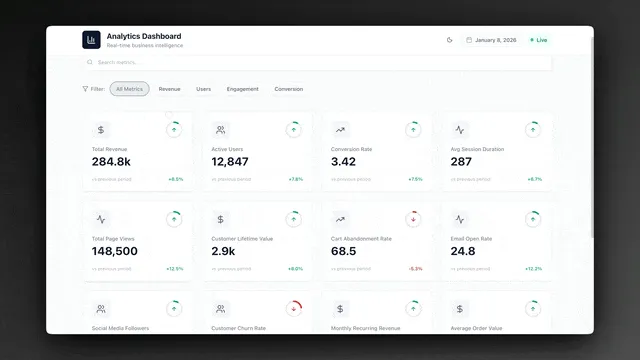
Memory, every meeting logged with attendees, duration, agenda, decisions made, follow-up actions. Six months of meeting history fits in one workspace, searchable in seconds.
Intelligence, three AI agents:
- Agenda Optimizer, reads draft agenda, identifies 3 specific cuts (async-able items, redundant stakeholders, topics without decision)
- Async-Replacement Agent, converts a meeting agenda to a Slack digest format with structured decisions
- Outcome Tracker, reads meeting notes 24h after, asks "did this meeting create the decision we set out to make?"
Execution, automations across 100+ integrations:
- New calendar event with >5 attendees → cost calculation + agenda-optimizer prompt
- Recurring meeting at end of quarter → auto-review prompt: "should we keep this?"
- Status-meeting agenda detected → auto-draft Slack standup as async alternative
Comparison: Taskade vs the 3 meeting tools
| Capability | Static calculators | Otter / Fathom | Reclaim / Motion | Taskade Genesis |
|---|---|---|---|---|
| Cost per meeting | ✅ one-time | ❌ | ❌ | ✅ ongoing |
| Aggregate cost across team | ❌ | ❌ | ❌ | ✅ |
| AI agenda optimizer | ❌ | ❌ | ❌ | ✅ |
| Async replacement suggester | ❌ | ❌ | ❌ | ✅ |
| Decision tracker (post-meeting) | ❌ | Partial | ❌ | ✅ |
| Pricing | Free (limited) | $30/user/mo | $34/user/mo | $10/mo flat (10 users) |
How to clone and set up (5 steps · 8 minutes)
- Clone the working calculator into your Taskade workspace
- Set your team's fully-loaded hourly rate (default $80/hr blended; customize per role)
- Connect Google Calendar or Outlook via automation triggers
- Train the agenda-optimizer agent on 2-3 past meetings where you successfully cut time
- Set up automation, new calendar event with >5 attendees triggers an agenda-optimizer prompt 24h before the meeting
ASCII: the meeting hygiene playbook
STEP 1: BASELINE
────────────────
- Connect calendar
- Wait 1 week
- Look at total cost: this is your starting line STEP 2: TARGET THE TOP 5
────────────────────────
- Sort recurring meetings by annual cost
- Top 5 are typically 70% of the spend
- These are the meetings to fix first
STEP 3: AGENT-ASSISTED CUTS
───────────────────────────
- For each top-5: run AI agenda optimizer
- Agent surfaces async-able items
- You decide: cut, shorten, or async-replace
STEP 4: MEASURE
───────────────
- Re-run cost analysis 4 weeks later
- 30-50% spend reduction is typical
- That recovered hours = real FTE-equivalent
STEP 5: ENFORCE
───────────────
- Default new calendar invites to 30 min not 60
- Default agenda template requires "decision required"
- Quarterly review: any meeting < 1 decision/hour dies
When to use which AI agent
- Agenda Optimizer, fire 24h before every meeting with >5 attendees
- Async-Replacement, for status meetings only (rarely make decisions, usually 100% async-able)
- Outcome Tracker, for high-stakes meetings (offsite, planning, hiring debrief) where the cost of a missed decision exceeds the meeting cost
Internal links
- Build Your First Genesis App in 5 Minutes
- AI Custom Agents Guide
- Automation Triggers
- Meeting Cost Calc Template (generate)
- AI Meeting Agent Generator
- Sales AE Daily Plan Template
- Compare: Taskade vs Otter
- Compare: Taskade vs Fathom
- Best AI App Builders 2026
- Workspace DNA Knowledge Graph
- EVE Meta-Agent
- Vibe Workspace Platforms
- Founder Operating System 2026
Clone the calculator: /app/meeting-cost-calculator-6s451jp9szhnf496, 60 seconds, no signup
Try Taskade Genesis free: /create, build your own from one prompt
See Workspace DNA: /memory, the loop visualized
▲ ■ ● Memory · Intelligence · Execution.
Frequently Asked Questions
How much does a recurring meeting really cost?
The actual cost of a 1-hour recurring meeting depends on attendee fully-loaded hourly rate. At a typical $80/hour blended rate, an 8-person 1-hour weekly meeting costs $640 per occurrence × 52 weeks = $33,280 per year. The Meeting Cost Calculator captures attendees, duration, and rate to surface this number, and the AI agenda optimizer suggests how to cut it in half by tightening agendas or moving discussions async.
Is a $5,000 meeting realistic?
Yes. A 1-hour meeting with 12 attendees at executive rates ($350-$500 fully loaded) costs $4,200-$6,000 per occurrence. Weekly recurring all-hands meetings at large companies routinely cross the $50K-per-year threshold. The first calculation many teams run reveals the meeting cost is 5-10× higher than they assumed.
Can AI actually reduce meeting cost?
Yes. The AI agenda optimizer reads your draft agenda and proposes 3 cut points: (1) items that are status updates and could be posted async, (2) decisions that need 2 stakeholders instead of 8, (3) topics with no decision required. Cutting 1 hour to 30 minutes on a recurring weekly meeting with 8 attendees saves $15,360/year per recurring meeting (at $80/hr blended rate).
Should I replace this status meeting?
The calculator surfaces meetings where the cost per decision is high relative to the decisions made. Status meetings are the most common offender, they typically cost $200-$800 per occurrence and deliver zero decisions. Replace status meetings with an async daily Slack digest auto-generated by Taskade's Slack standup automation.
Can I track team meeting spend across the org?
Yes. Connect Google Calendar or Outlook via automation. The workspace aggregates total meeting hours, total cost, and meetings-per-person across your org. Calendar view shows the cost heat-map by day; Table view shows the worst-offender recurring meetings sorted by annual cost.
Is fully-loaded vs hourly rate the right metric?
Use fully-loaded rate, which includes salary + benefits + overhead (typically 1.4-1.6× base salary). A $100K engineer's fully-loaded rate is roughly $80/hour, not $48/hour. The calculator defaults to fully-loaded but lets you swap in your own number.
How does this work across time zones for distributed teams?
The calculator captures attendee timezones from the calendar invite and surfaces meetings that fall outside core hours for any attendee. A 9am EST meeting that pulls 3 colleagues from 2am IST shows up as a higher-cost meeting because off-hours attendance carries documented productivity drag the next day.
What is the ROI of cutting meetings?
A 10-person team cutting 5 recurring 1-hour meetings to 30 minutes saves ~$78,000/year in fully-loaded labor cost ($30/hr × 5hr × 52wk × 10 people). That's roughly one engineering FTE recovered per year. The calculator surfaces this number per team and per quarter so you can prioritize which meetings to attack first.