






On May 14, 2026, TIME ran a piece titled The Small Businesses Already Replacing Workers With AI. It described the move directionally, small businesses are using AI to do what employees used to. But it didn't show how.
This post is the how.
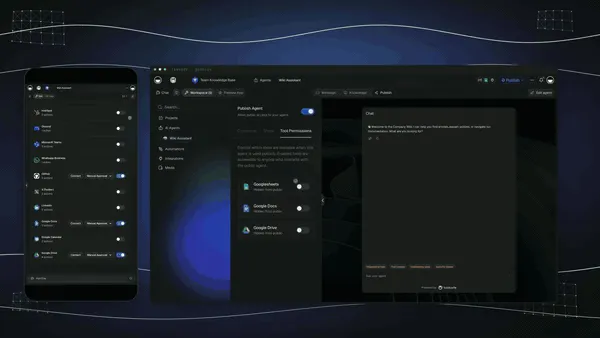
Twelve operational roles. Twelve cloneable Taskade Genesis apps. One workspace where they share memory, collaborate with humans, and trigger automations. A 14-day deployment plan. And an honest list of what humans still own, because the framing isn't "AI replaces humans," it's "AI absorbs the org chart's middle layer."
TL;DR: The 2026 move isn't using AI tools. It's deploying a workspace where agents own operational workflows end-to-end. Below: twelve roles, twelve cloneable Genesis apps, a 14-day deployment plan, and the honest list of what stays human. Taskade Genesis is free to start, with Pro from $10 per month billed annually.
The TIME Piece, Translated
In May 2026, TIME magazine reported that thousands of US small businesses had begun replacing employees with AI agents, for data entry, scheduling, support triage, content production, and reporting. The article framed the trend but didn't operationalize it. The Genesis playbook below converts that trend into twelve cloneable apps a small business can deploy in two weeks.
The macro thesis: AI absorbs the operational middle layer of the org chart. The top (strategy, relationships, vision) stays human. The bottom (frontline, hands-on work) stays human. The middle (the glue work, entry, triage, scheduling, reporting, drafts, follow-ups) becomes agent work.
                       ABSORBED BY AGENTS               HUMAN-OWNED
                       ─────────────────                ───────────
                       Sales SDR                        Strategy
                       Customer Support                 Relationships
                       Finance/Invoicing                Compliance attestation
                       Recruiting screen                Ethical reviews
                       HR admin                         Hiring decisions
                       Marketing ops                    Vision-setting
                       Customer Success                 Trust-building
                       Operations                       Negotiation
                       Project Management               Creative judgement
                       Scheduling                       Brand voice
                       Content production               Cultural fit
                       Reporting/KPIs                   Customer escalations                   12 roles × $0-40/mo              The work humans do best
                   (workspace-native, in one app)   (timeless, irreplaceable)
The Twelve Roles (and the Twelve Cloneable Apps)
1. Sales SDR → Sales Agent Studio + Sales Pipeline
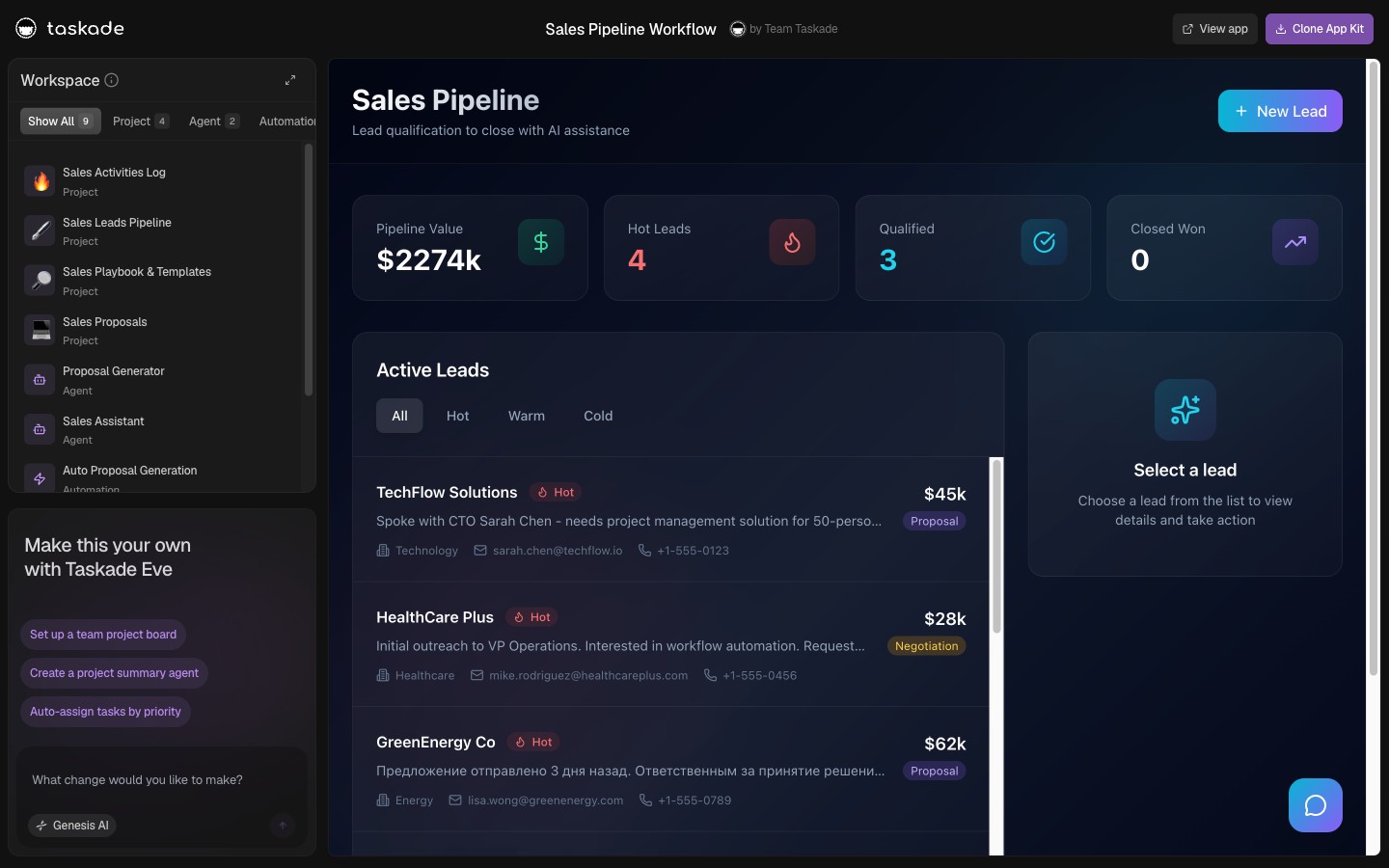
An SDR agent watches your inbox, qualifies inbound leads against your ICP criteria stored in the Sales Pipeline Project, drafts personalized outreach, books meetings via Calendar action, and writes back to the CRM Project the rest of the team reads. Clone Sales Agent Studio and Sales Pipeline Workflow.
2. Customer Support → Support Agent + Support Workflow
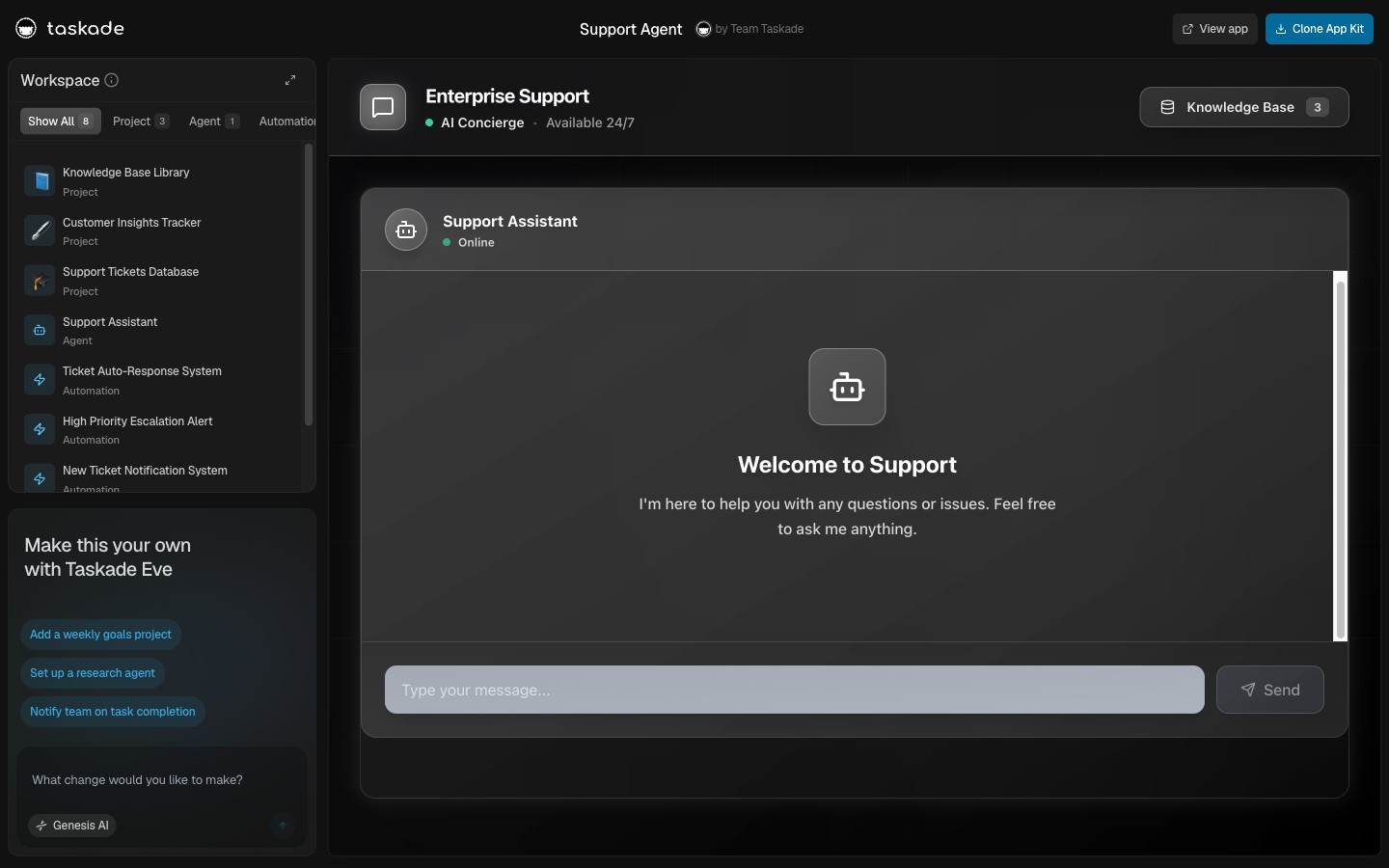
A triage agent reads incoming tickets, classifies against the playbook in your Knowledge Base Project, escalates the hard ones, drafts replies for the soft ones, and updates the Support Workflow Project. The team sees every reply before send, edits inline, approves with one click.
3. Finance → Invoice Tracker + Invoice Generator
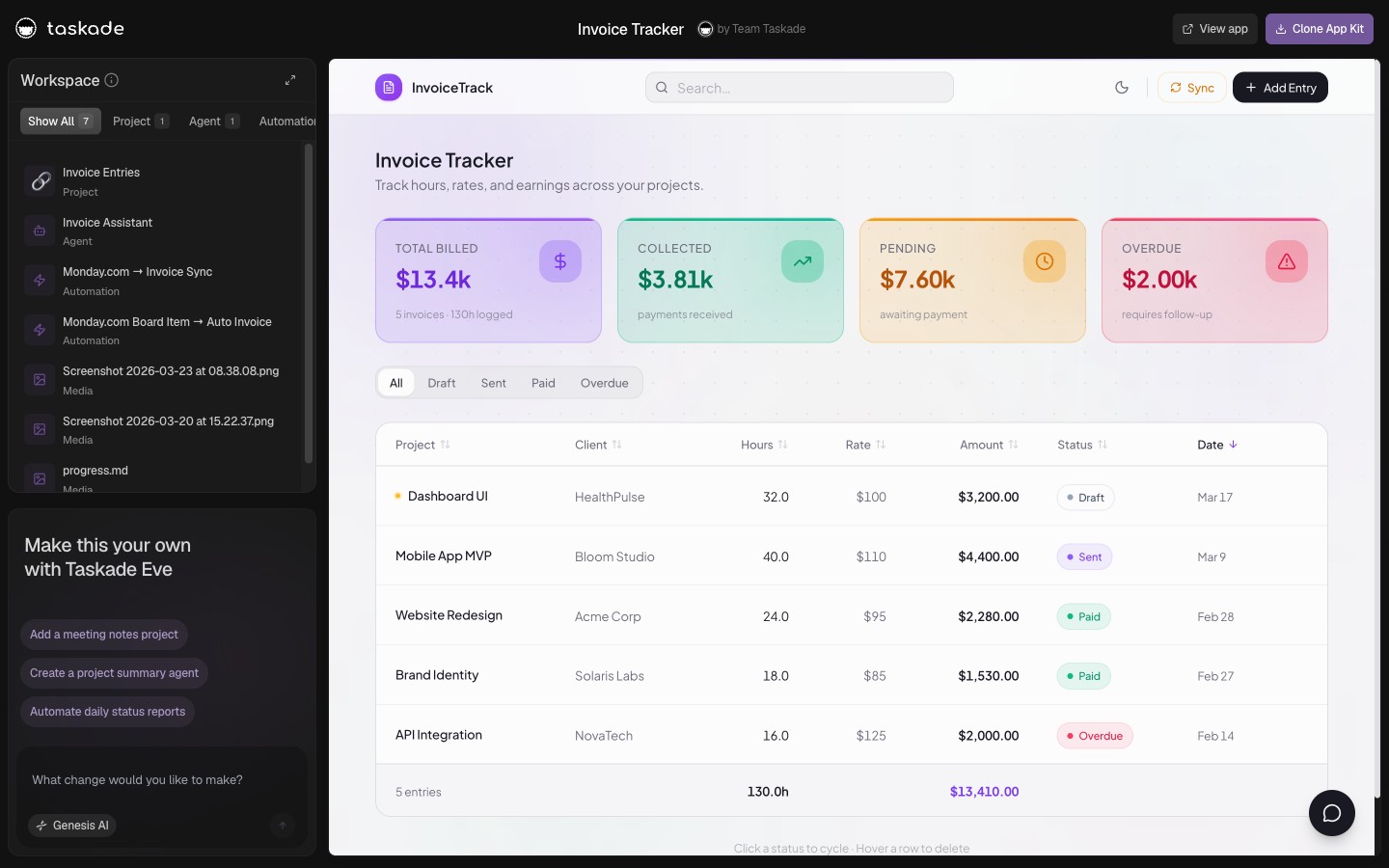
A finance agent generates invoices from completed deals, sends them via Stripe checkout action, watches for payment, and alerts when invoices age past 30 days. Clone Invoice Tracker and pair with Invoice Generator.
4. Recruiting → Recruitment Workflow
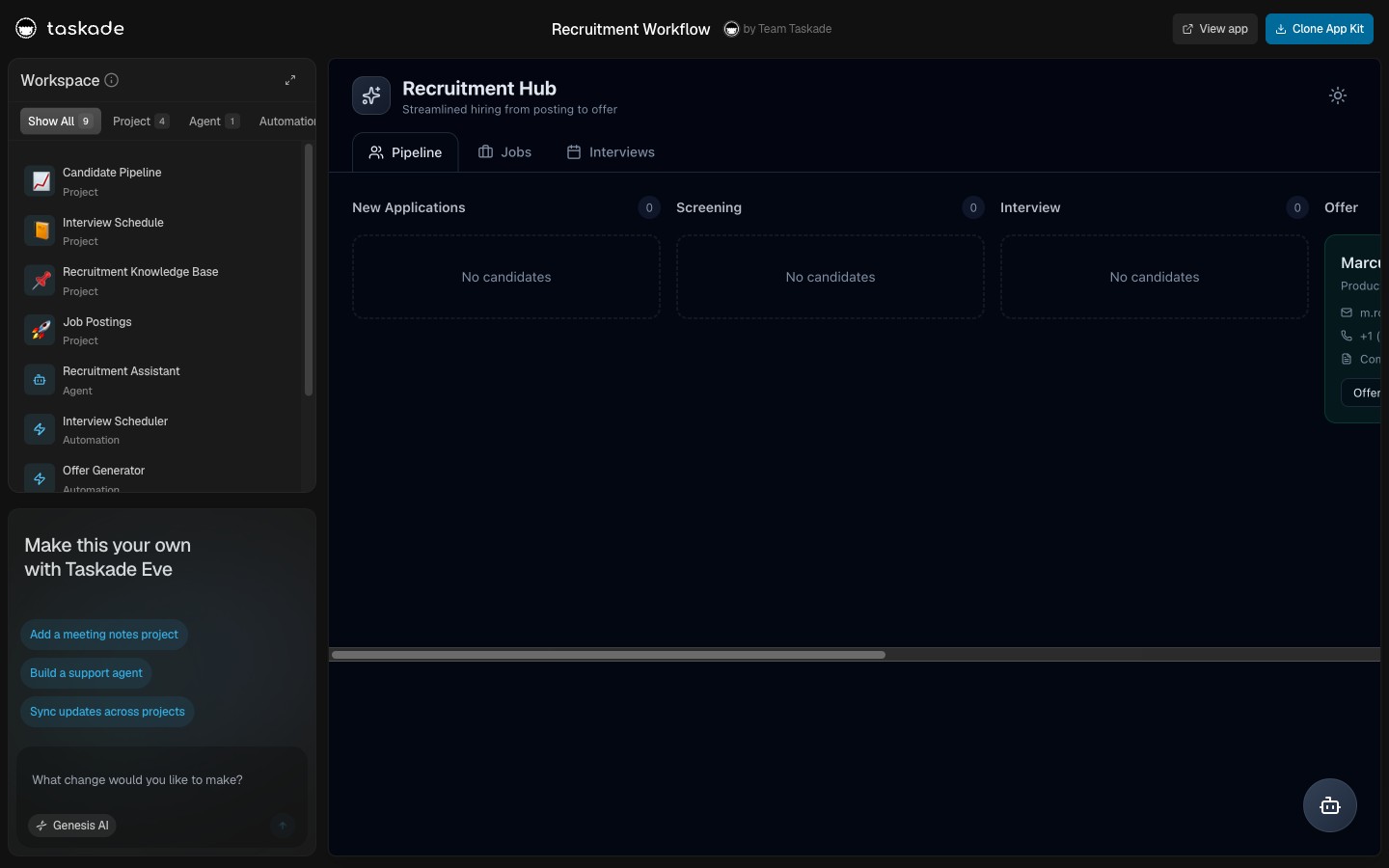
Three agents share one pipeline. A sourcing agent finds candidates. A screening agent reads resumes against the role spec. A scheduling agent books interviews. The hiring manager sees the whole pipeline live and intervenes at the points that matter.
5. HR Admin → HR Dashboard
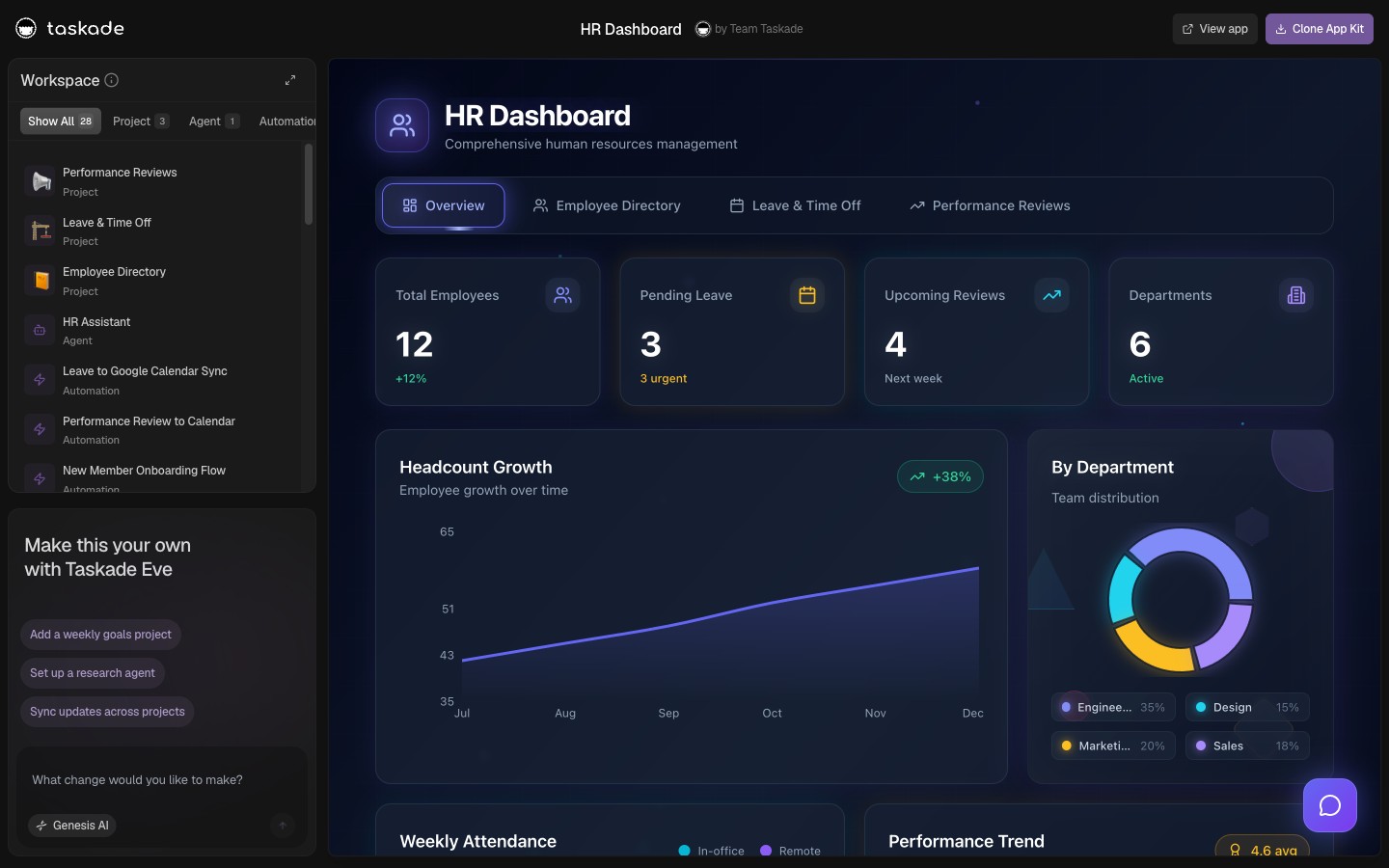
Headcount, reviews, leave tracking, onboarding workflows. The HR agent reads new-hire Projects, triggers onboarding emails on day-of, schedules the 30/60/90 reviews, and produces the monthly headcount report.
6. Marketing Ops → Campaign Planner + Content Workflow
A marketing agent reads the campaign brief Project, drafts the content calendar, schedules across channels via Multi-Platform Publisher, and reports back to the Growth Dashboard. Clone Campaign Planner plus Content Workflow.
7. Customer Success → Customer Health + Onboarding Portal
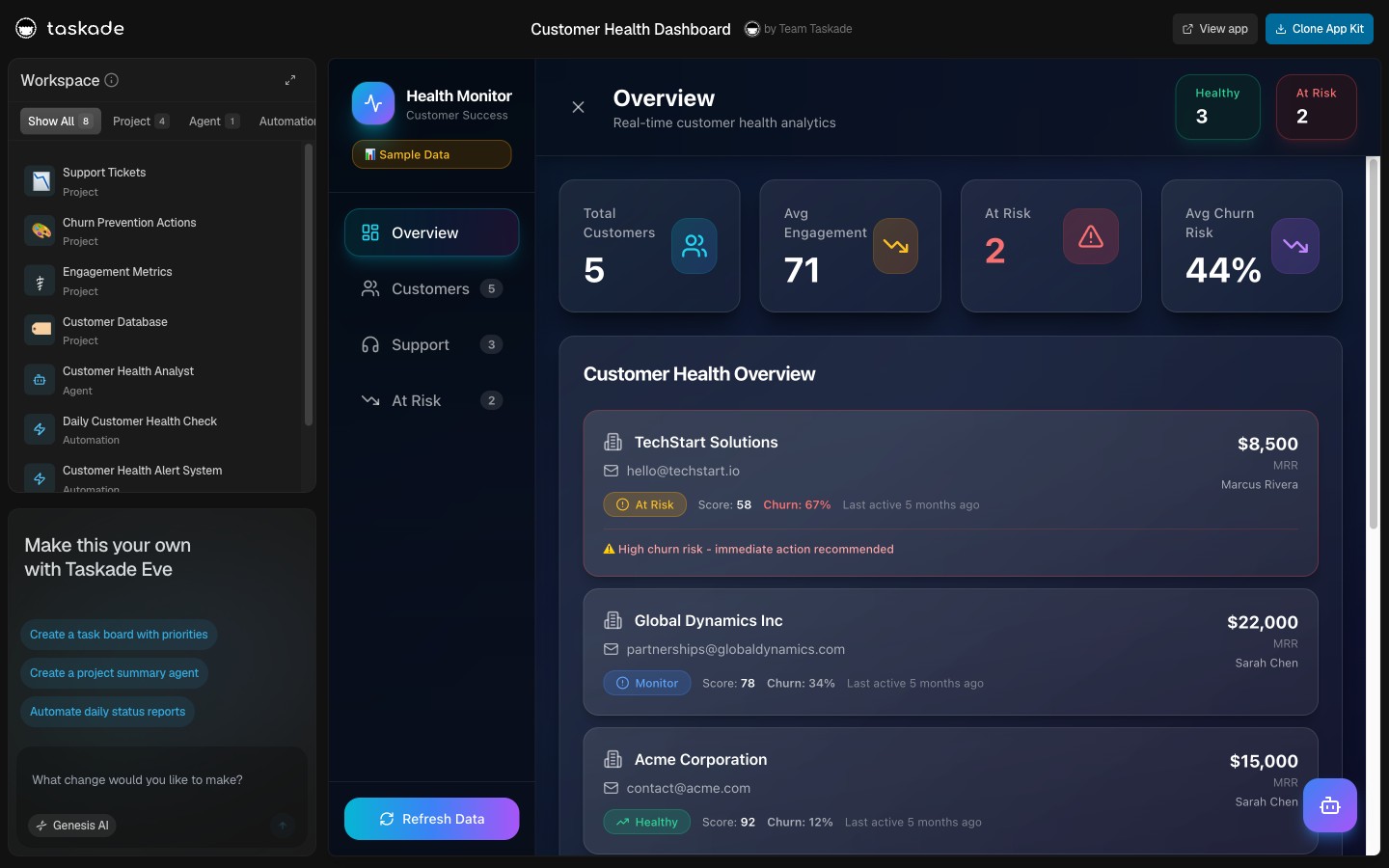
A success agent monitors usage signals, flags churn risk, drafts re-engagement outreach, and triggers the Onboarding Portal when new customers arrive. The team sees the health-score timeline before any quarterly review.
8. Operations → Inventory + Fleet
Inventory and fleet agents read inbound orders, decrement stock counts, trigger reorder workflows at thresholds, and route delivery assignments. Clone Inventory Management and Fleet Management.
9. Project Management → Project Portal + Sprint Tracker
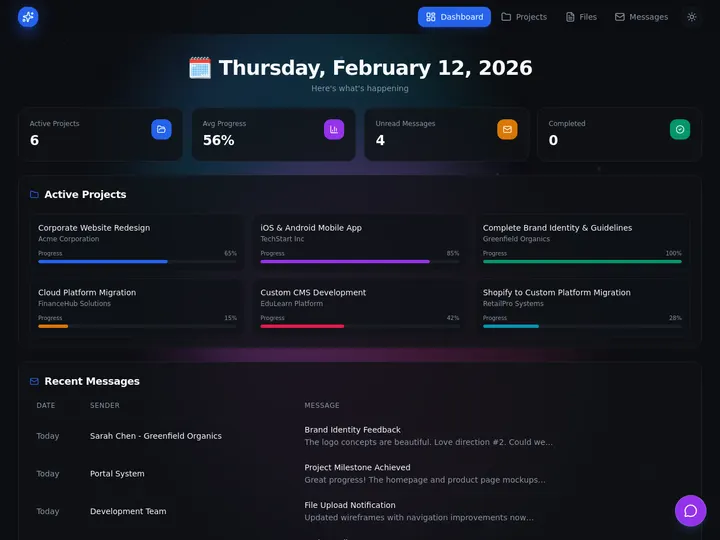
A PM agent reads sprint goals, monitors task progress across team Projects, drafts standup summaries, and flags blockers. Clone Project Portal and pair with Sprint Tracker.
10. Scheduling → Meeting Scheduler + Class Booking
A scheduling agent reads availability across team calendars, books group meetings, and confirms via email. Pairs with Class Booking for service-business use cases.
11. Content Production → Content Agent + Multi-Platform Publisher
A content agent drafts posts in your brand voice (stored in the Knowledge Base Project), runs them through a review workflow, and schedules across channels. Clone Content Agent and Multi-Platform Publisher.
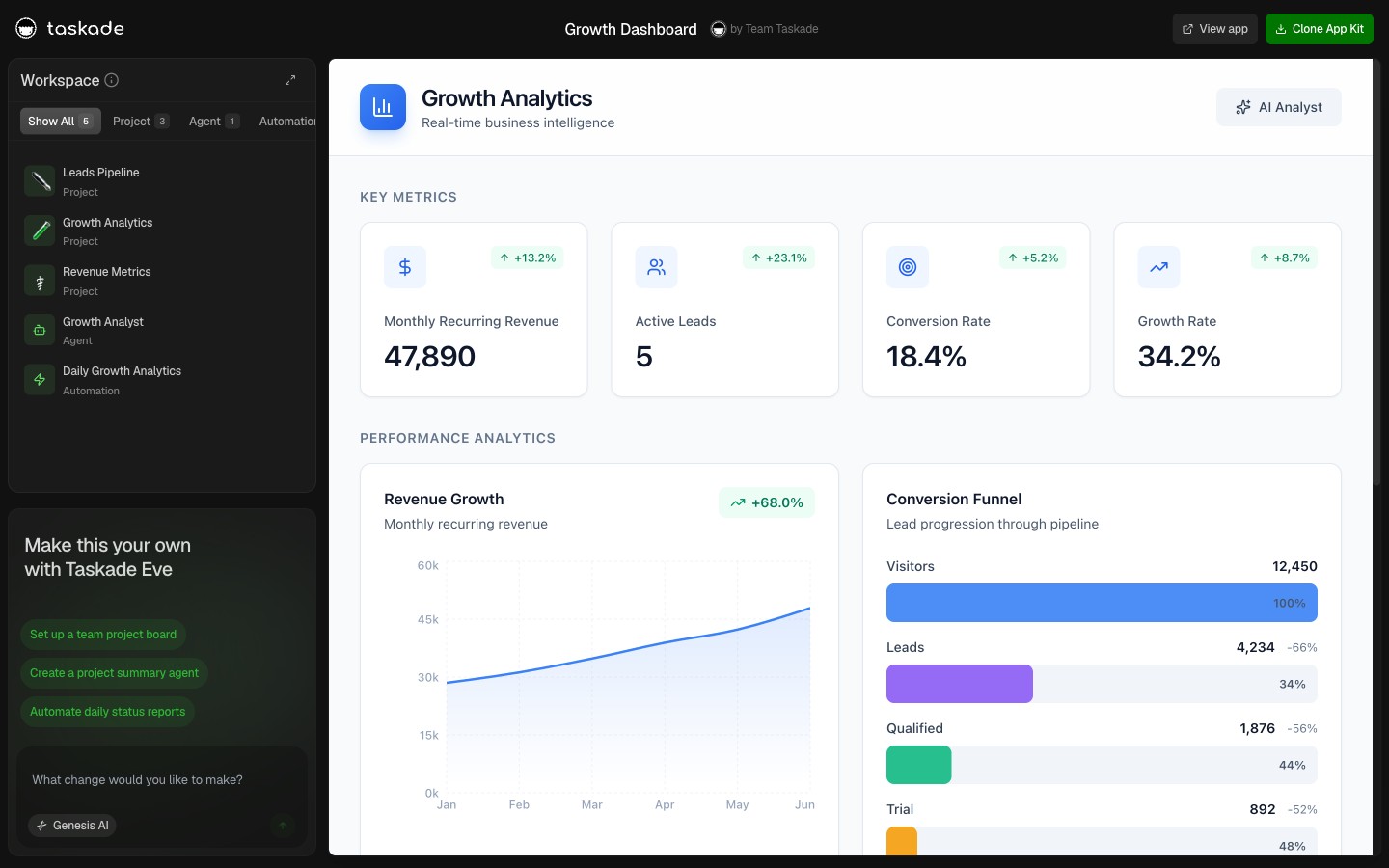
12. Reporting → Growth Dashboard
A reporting agent aggregates metrics from every Project, generates the weekly digest, posts the live dashboard to the team channel, and answers ad-hoc questions in chat. The dashboard is itself a live Genesis app.
Cost Comparison: 12-Role Genesis Stack vs Equivalent SaaS
   Equivalent SaaS Stack                      Genesis Stack
   ─────────────────────                      ──────────────
   HubSpot Starter        $50/mo              ALL 12 roles
   Asana Premium         $120/mo              in ONE workspace
   Slack Pro              $87/mo
   Calendly Teams         $80/mo              ────────────
   QuickBooks Online      $99/mo              Business plan
   DocuSign Business     $125/mo              $25/mo (annual)
   Mailchimp Business    $150/mo
   Notion Teams           $96/mo
   ClickUp Business      $160/mo
   ServiceTitan         $200/mo+
   Buffer Team            $30/mo
   Toggl Premium         $108/mo
   ─────────────         ──────              ────────────
   12 SaaS subs         $1,305/mo+            12 roles, $25/mo
This isn't apples-to-apples, best-of-breed SaaS still has features Genesis doesn't. Pick the comparison that matches your actual workflow. For most small businesses, the workflow Genesis covers is enough.
| Role | Genesis App(s) | Cost-equivalent SaaS |
|---|---|---|
| Sales SDR | Sales Agent Studio + Sales Pipeline | HubSpot Sales $50 + Apollo $79 |
| Support | Support Agent + Support Workflow | Intercom $74 + Zendesk $19 |
| Finance | Invoice Tracker + Invoice Generator | QuickBooks $99 + Stripe Atlas |
| Recruiting | Recruitment Workflow | Workable $189 |
| HR | HR Dashboard | BambooHR $99 |
| Marketing | Campaign Planner + Content Workflow | Mailchimp $150 + ContentCal $39 |
| Customer Success | Customer Health + Onboarding Portal | ChurnZero $99 + UserGuiding $89 |
| Operations | Inventory + Fleet | Cin7 $325 + Samsara $33/asset |
| Project Mgmt | Project Portal + Sprint Tracker | Asana $120 + Linear $20 |
| Scheduling | Meeting Scheduler + Class Booking | Calendly $80 + Acuity $33 |
| Content | Content Agent + Multi-Platform Publisher | Buffer $30 + Jasper $59 |
| Reporting | Growth Dashboard | ChartMogul $129 + Mixpanel $25 |
14-Day Deployment Plan
Days 1–3, The Foundation (Sales · Support · Finance). These three roles produce the most operational data and feed every other role. Sales creates Customer + Deal records. Support creates Ticket + Knowledge records. Finance creates Invoice + Payment records. Once these three are running, every subsequent agent reads from them.
Days 4–7, The Operational Layer (HR · Marketing · CS · Ops). Each of these reuses data the first three created. HR onboarding hooks into Sales-created Customer records. Marketing reads from the Sales pipeline. Customer Success monitors usage signals from Support tickets.
Days 8–14, Reporting + Polish (PM · Scheduling · Content · Reporting). The last four are mostly wiring once the underlying Projects exist. Project Management pulls task data. Scheduling pulls calendar data. Content reads brand voice from the Knowledge Base. Reporting aggregates everything.
The Three Pitfalls to Avoid
1. Don't replace the human escalation path. Every workflow needs at least one approval gate for edge cases. The role-based access exists for exactly this, give agents Editor permission, not Owner.
2. Don't let the workspace become unaudited. Genesis logs every agent action. Use the audit log. Review weekly. Adjust prompts when an agent makes a recurring mistake.
3. Don't skip the "human in the loop" moments. Approval gates on customer-facing communications (replies, invoices, content) catch tone errors before they ship. The friction is the feature.
How to Start Today (Pick One Role)
Start with Sales, Support, or Finance. Clone one of the paired apps for that role. Spend a day wiring it, connect your real Slack, your real HubSpot, your real Stripe. Let it run for a week. Watch what it gets right and what it gets wrong. Then add the second role.
Within two weeks you'll have a working operational stack that, by the cost math above, would otherwise run $1,300 per month in fragmented SaaS subscriptions. By the framing above, it absorbs the org chart's middle layer that no one wanted to staff anyway.
Read the Workspace-Native AI Agents authority post for the seven-test criteria that make this work. Read Multi-Agent Platforms for Teams for the head-to-head comparison against CrewAI, AutoGen, LangGraph, Lindy, and Dust.
Frequently Asked Questions
Which jobs can AI agents replace in a small business in 2026?
The operational glue work of seven to twelve roles, bookkeeping, sales SDR, support triage, recruiting screen, content production, inventory tracking, schedule management, KPI reporting, CRM hygiene, client onboarding, HR admin, and field dispatch. Compliance audits and human relationships remain human.
How much does it cost to replace a team with Taskade Genesis?
A 12-role operational stack runs on Business at $25 per month annual. The equivalent SaaS stack costs $1,300 to $5,000 per month.
What does AI replace, and what should humans still do?
AI absorbs entry, triage, scheduling, reporting, drafts. Humans own strategy, relationships, judgement, compliance, hiring, vision, brand voice, escalations.
Is this feasible for a 1-2 person company?
Yes. Solo operators routinely ship in days what previously required 7 to 10 person teams.
How do I start replacing my team functions with Genesis?
Start with one function, Sales, Support, or Finance. Clone the paired apps. Wire one Slack channel, one Stripe webhook, one Calendar account. Let it run a week. Add the second role.
Is the workspace-native pattern unique to Taskade Genesis?
As of mid-2026, yes. Frameworks build agents. Visual builders compose one agent. Chat tools read. Taskade Genesis ships agents wired to real Projects with shared memory and bidirectional automations.
What happens when AI gets it wrong?
Every action is visible in the same workspace humans work in. Humans intervene mid-run, edit before send, or pause. Mistakes surface immediately.
Can I clone these twelve apps right now?
Yes. Every role above links to a live cloneable app. One click clones the whole workflow.
How fast can a 12-role stack be operational?
7 to 14 days for a focused operator. Days 1–3 are the foundation. Days 4–7 reuse it. Days 8–14 polish.
What stays human in this model?
Strategy, relationships, compliance attestation, ethical reviews, hiring decisions, vision-setting, trust-building, negotiation, creative judgment, brand voice, cultural fit, customer escalations.
▲ ■ ● Memory · Intelligence · Execution, the loop is the team; the team is the workspace; the workspace is alive.
Try Taskade Genesis free → · Browse all 78 cloneable apps → · Read the Workspace-Native AI Agents authority post →