

Taskade Genesis and ChatGPT Work both start from a prompt, but they aim at two different buyers. ChatGPT Work is an AI teammate that does multi-step work inside the apps a business already pays for and hands back finished artifacts. Taskade Genesis ships a deployed, ownable app that keeps running after the conversation ends. This page lays out the honest contrast so you can pick the right lane.
TL;DR: ChatGPT Work is an agent mode inside ChatGPT that delegates multi-step work across your enterprise stack and hands back finished artifacts. Taskade Genesis aims at the opposite outcome: one prompt ships a deployed, multi-user app with sign-in, AI agents, and 100+ automations. Free to start, with Pro at $10/mo billed annually. Try Taskade Genesis free →
See the alternative working: clone in 60 seconds
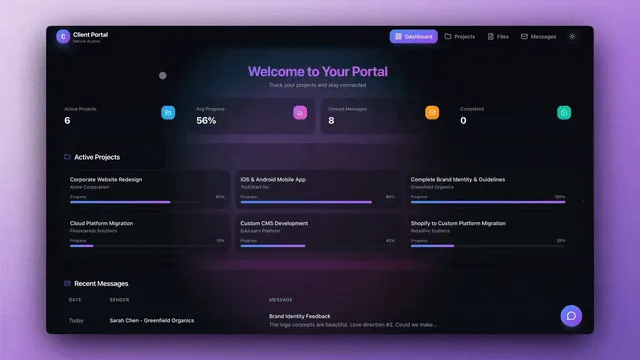
No signup, no credit card.
| Capability | ChatGPT Work | Taskade Genesis |
|---|---|---|
| Pricing (starting) | Plus $20/mo; Business $20/user/mo (2-seat min) | $0 Free · $10/mo Pro billed annually (10 seats) |
| Cloneable live demo | ❌ | ✅ |
| Built-in AI agents | Agent mode does tasks for you | ✅ built-in tools |
| Automation engine | Connectors pull org data in | ✅ Durable runtime, 100+ integrations |
| Workspace DNA loop | ❌ | ✅ ▲ Memory · ■ Intelligence · ● Execution |
What Is Taskade Genesis?
Taskade Genesis is an AI app generator for non-technical operators. Type a prompt and get a live, shareable app powered by your Taskade workspace. Your projects, tasks, docs, and automations become the backend and logic. The result is a real product that reads and writes live workspace data, with AI agents, automations, sign-in, and an optional custom domain. No code, no deployment pipeline, no infrastructure to manage.
The engine behind every app is Workspace DNA, a self-reinforcing loop of Memory, Intelligence, and Execution. Your projects hold the data (Memory), your AI agents do the work (Intelligence), and your automations respond to events (Execution). Because the app lives in a shared workspace, it evolves over time instead of expiring when a chat window closes.
What Is ChatGPT Work?
ChatGPT Work, launched by OpenAI in July 2026, is an agent mode inside ChatGPT powered by the GPT-5.6 model family, with the flagship GPT-5.6 Sol and Codex technology built in. Instead of just answering, it takes a brief and works independently in the background for minutes to hours, then hands back finished artifacts: spreadsheets, slide decks, documents, reports, dashboards, and publishable web apps that OpenAI calls "Sites."
It gathers context across connected apps, local files, and workflows through a new built-in browser and a desktop app for both Mac and Windows, and it breaks projects into steps. It is not a new subscription tier. The agent is bundled into the Plus, Pro, Business, Enterprise, and Edu plans at no extra list price. At launch it rolled out to Pro, Enterprise, and Edu first, with Plus and Business following in the coming days.
The GPT-5.6 family arrived the same day in three tiers: Sol (flagship, aimed at state-of-the-art coding and knowledge work), Terra (balanced everyday), and Luna (cost-efficient). On the business plans, ChatGPT Work adds a shared secure workspace, company knowledge, first-party connectors, an admin console, SSO, and enterprise governance.
The Core Difference: Do a Task vs Own a Product
ChatGPT Work's center of gravity is an AI teammate that does tasks inside your existing enterprise stack. It reaches into Slack, Teams, Google Drive, SharePoint, GitHub, and Notion, pulls org-specific answers, and returns polished output. That is genuinely useful for a professional inside an organization who wants to delegate multi-step work.
Taskade Genesis is built for the opposite job: standing up a product you own and keep running. The wedge is ownership, persistence, sign-in, custom domains, and price for the solo or small-team builder.
ChatGPT Work Can Build Apps. Here Is the Nuance.
ChatGPT Work does build apps through its Sites feature, where Codex generates and publishes an app on managed serverless hosting with a shareable URL. It is real, and it is impressive for quick output. Two facts matter if you plan to run a durable business system on it:
- OpenAI itself says Sites is not a fit for persistent processes, Postgres, WebSockets, or background workers. It reads closer to a fast prototype builder than a system of record.
- Access is gated. Sites is on by default for ChatGPT Business and is an admin-enabled toggle for Enterprise, so it sits behind a paid business seat rather than being open to any paid user.
There is a second signal worth noting. OpenAI's dedicated visual agent builder, Agent Builder (part of AgentKit), is being sunset on November 30, 2026, which pushes serious builders toward the code-first Agents SDK or no-code ChatGPT workspace agents. The standalone Codex app is also merging into ChatGPT.
Where Taskade Genesis Wins the Builder Lane
Taskade Genesis produces a persistent, multi-user app that survives outside any chat session. Here is the side-by-side for the operator who wants to own what they build:
BUILD A CLIENT PORTAL
┌───────────────────────────┬───────────────────────────┐
│ Taskade Genesis           │ ChatGPT Work (Sites)      │
├───────────────────────────┼───────────────────────────┤
│ Deployed living app       │ Preview-stage generated   │
│ Own database, persistent  │ Not for persistent procs  │
│ App sign-in, every plan   │ Shared via URL            │
│ Custom domain (Pro+) │ Managed hosting URL       │
│ Agents + 100+ automations │ Agent does tasks for you  │
│ On every plan incl. Free  │ Gated behind Business seat │
│ Flat plan pricing         │ Per seat + metered agent  │
└───────────────────────────┴───────────────────────────┘
Every Taskade Genesis app ships with a shared workspace where memory, AI agents, and 100+ bidirectional automations are wired in and evolve over time. Triggers pull events in, and actions push data out, so the app does real work on a schedule, not just when someone opens a chat. Taskade EVE, the meta-agent that orchestrates the build, turns your description into that working system.
Choose OpenAI If...
ChatGPT Work is formidable, and there are clear reasons to choose it. No strawmen here.
- Frontier reasoning with genuinely autonomous execution. GPT-5.6 Sol with Codex built in can stay on a complex, multi-step project for minutes to hours and return finished sheets, slides, docs, dashboards, and web apps. That is a real step beyond question-and-answer.
- The deepest native reach into an existing enterprise stack. Company knowledge plus first-party connectors for Slack, Teams, Drive, SharePoint, GitHub, and Notion means the agent acts where your data already lives, with enterprise governance including SSO, an admin console, and, per OpenAI, no training on your data.
- Unmatched distribution and adoption gravity. ChatGPT is already the default AI tool for hundreds of millions of workers, so ChatGPT Work rides a near-zero learning curve and instant org-wide familiarity. Broad, non-Work-specific ChatGPT reviews average around 4.7 out of 5 on G2 and Capterra.
If you are a professional inside a large organization who wants an AI teammate to automate work across the apps your company already pays for, ChatGPT Work is a strong choice.
Why Teams Choose Taskade
Taskade Genesis turns one prompt into a deployed, ownable app that keeps running, with its own sign-in, custom domain, database, agents, and 100+ automations. It is built for the non-technical operator who wants to prompt a real product into existence and keep running it, not just receive artifacts back from an assistant. There is no two-seat Business minimum, no quote-only Enterprise seat count, and no usage-metered agent billing. It starts free, with paid plans from $10 per month billed annually.
Pricing Compared
ChatGPT Work is bundled into existing plans at no extra list price rather than sold as its own tier.
| Plan | ChatGPT (OpenAI) | Taskade |
|---|---|---|
| Free | Free tier available | Free to start, build apps included |
| Individual | Plus $20/mo; Pro $200/mo | Pro $10/mo billed annually |
| Business | $20/user/mo billed annually ($25 monthly), 2-seat minimum | Flat plan, no per-seat minimum |
| Enterprise | Quote-only, annual prepay | Available, no forced seat count |
A few honest notes on OpenAI pricing. ChatGPT Business dropped to $20 per user per month billed annually (or $25 billed monthly) effective April 2, 2026, and keeps a two-seat minimum. Enterprise (and its Edu variant for schools) is custom and quote-only with annual prepay, and OpenAI does not publish per-seat Enterprise rates, so any figures you see elsewhere are third-party estimates rather than confirmed pricing. Heavy agentic usage is also metered, Codex-style, with admin spend controls, and OpenAI has not published a per-task rate, so treat metering as directional.
Taskade's model is deliberately simpler for a builder: a flat plan price, no seat minimum, and AI credits included in every plan instead of separate per-seat and per-task billing.
Frequently Asked Questions
Is Taskade Genesis free to start?
Yes. Taskade Genesis has a Free tier you can start building on today, with paid plans from $10 per month billed annually. There is no per-seat Business minimum and no usage-metered agent billing.
What can Taskade Genesis build from one prompt?
A deployed, multi-user living app. Describe a CRM, client portal, or ops dashboard in plain language and Taskade Genesis ships a working app that reads and writes live workspace data, with AI agents, automations, sign-in, and an optional custom domain.
How is Taskade Genesis different from ChatGPT Work?
ChatGPT Work is an agent mode inside ChatGPT that completes multi-step tasks and returns finished artifacts like sheets, slides, and reports. Taskade Genesis produces a persistent, ownable app that runs outside any chat session, with sign-in and a custom domain.
Can ChatGPT Work build and host an app?
Yes, through a preview feature called Sites, where Codex generates and publishes an app on managed hosting with a shareable URL. OpenAI notes Sites is not built for persistent processes, Postgres, WebSockets, or background workers, and access is gated to Business and admin-enabled Enterprise seats.
Do I need a Business plan to build apps with ChatGPT Work?
The Sites app builder is on by default for ChatGPT Business and is an admin-enabled toggle for Enterprise, so it sits behind a paid business seat. Taskade Genesis makes app building available on every plan, including Free.
How much does ChatGPT Work cost?
The agent is bundled into existing ChatGPT plans at no extra list price. Consumer plans are Free, Go at $8 per month, Plus at $20 per month, and Pro at $100 or $200 per month, and OpenAI does not publish annual billing for them. ChatGPT Business is $20 per user per month billed annually or $25 billed monthly, with a two-seat minimum. Enterprise is quote-only with annual prepay.
What are GPT-5.6 Sol, Terra, and Luna?
They are the three tiers of OpenAI's GPT-5.6 model family launched the same day as ChatGPT Work. Sol is the flagship for coding and knowledge work, Terra is the balanced everyday model, and Luna is the cost-efficient option.
Is OpenAI's Agent Builder being deprecated?
Yes. OpenAI's dedicated visual agent builder, Agent Builder (part of AgentKit), is being sunset on November 30, 2026, pushing builders toward the code-first Agents SDK or no-code ChatGPT workspace agents.
Can I add sign-in and a custom domain to a Taskade Genesis app?
Yes. GenesisAuth email sign-in for your app's end users works on every plan, including Free, and a custom domain is included from Pro up, so the app you build is a durable, ownable product rather than a session-bound preview.
Do I need to code to use Taskade Genesis?
No. Taskade Genesis is built for non-technical operators. You describe the app in plain language and it builds the database, agents, automations, and interface for you. No SDK, no deployment pipeline, no infrastructure setup.
Which is right for a non-technical operator?
If you want a deployed product you can own and keep running, Taskade Genesis is the fit. If your team already lives in ChatGPT and wants an AI teammate that automates tasks across a large company's existing apps, ChatGPT Work is formidable at that job.
The Bottom Line
ChatGPT Work is an excellent AI teammate for delegating multi-step work across the apps a big company already pays for. Taskade Genesis is the better choice when you want to prompt a deployed, ownable product into existence, give it sign-in and a custom domain, and keep running it as your team grows. Different buyer, different job, both honest about what they do best.
Start building your app with Taskade Genesis free →
Explore Taskade Genesis
- Project status portal: Clone a living client portal
- AI App Builder: Build complete apps without code
- AI Agent Platform: Digital teammates with built-in tools
- AI Automation Platform: 100+ bidirectional integrations
- AI Dashboard Builder: Real-time business intelligence
- Automation workflow library: Ready-made workflows across 100+ integrations
- TSK-1 hub: The complete model benchmark dataset
- Browse Community Apps: Clone and customize live apps