

Factory is a developer's autonomous-coding platform. Taskade Genesis is an app builder for the non-technical operator. Both turn a prompt into working output, but they serve opposite buyers, so the honest question is not "which is better" but "which one is built for you." This page lays out the contrast without strawmen.
TL;DR: Factory is an agent-native software development platform whose Droids run in the terminal, IDEs, CI, and Slack to edit files and open pull requests. Taskade Genesis serves the opposite user: a non-technical operator describes an app in plain English and gets a deployed, living system with agents and automations. Free to start. Try Taskade Genesis free →
See the alternative working: clone in 60 seconds
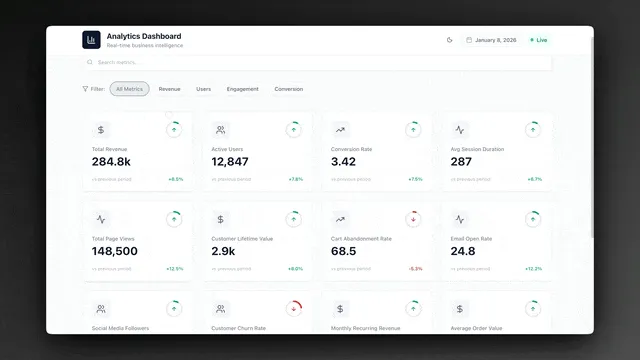
No signup, no credit card.
| Capability | Factory | Taskade Genesis |
|---|---|---|
| Pricing (starting) | Pro $20/mo (plus token usage) | $0 Free · $10/mo Pro billed annually (10 seats) |
| Cloneable live demo | ❌ | ✅ |
| Built-in AI agents | Autonomous Droids, custom subagents | ✅ built-in tools |
| Automation engine | Wired into your codebase | ✅ Durable runtime, 100+ integrations |
| Workspace DNA loop | ❌ | ✅ ▲ Memory · ■ Intelligence · ● Execution |
The short answer: Factory is a serious autonomous-coding platform for engineers. Its Droids edit files, write tests, and open pull requests across the software development lifecycle. Taskade Genesis is for the person who cannot, and does not want to, review a pull request. If you want a deployed app from a plain-English prompt, Build your first app free.
What Is Factory?
Factory is an agent-native software-development platform that describes itself as a self-improving system for your SDLC. Its AI agents are branded "Droids," and the terminal agent is the "Droid CLI." Droids are autonomous coding agents that build production features from a ticket, spec, or prompt. They edit files, write tests, open pull requests, run migrations, do code review, and assist with incident response.
Factory meets developers where they already work. Droids run across the Droid CLI in the terminal, IDE integrations for VS Code, JetBrains, and Zed, the Factory desktop and web app, a headless runner called Droid Exec for CI/CD, and Slack. The platform adds custom Droids as specialized subagents with their own prompts, tools, and models, plus Droid Computers as persistent local or cloud machines and Droid Control for automating terminals, browsers, and desktop apps. Multi-model routing spans several LLM providers, and BYOK lets teams bring their own OpenAI, Anthropic, open-source, or local model keys.
Factory has raised roughly $220M in total. Its Series B was $50M at about a $300M valuation in September 2025, led by NEA, Sequoia, Nvidia, and J.P. Morgan. Its Series C was $150M at about a $1.5B valuation in April 2026, led by Khosla Ventures with Sequoia, Insight Partners, Blackstone, and NEA participating. Reported customers include MongoDB, EY, Zapier, Bayer, Nvidia, Adobe, and Morgan Stanley, though exact logo lists vary by source and should be treated as approximate.
What Is Taskade Genesis?
Taskade Genesis is an AI app builder for people who describe what they need in plain English. David, an operations lead, types "an intake portal for new clients with a status board and automated follow-up emails," and Taskade Genesis returns a deployed, living app. The workspace is the backend, so projects, tasks, and documents become structured data the app reads and writes in real time.
Each Taskade Genesis app ships wired for work. It includes custom AI agents, automations that respond to events, sign-in, a custom domain option on Pro and above, and 100+ bidirectional integrations so triggers pull events in and actions push data out. Taskade AI Agents carry built-in tools, including web search, code execution, file analysis, custom slash commands, and persistent memory, and they can collaborate with other agents. The whole app is powered by Workspace DNA: Memory (your projects as the database) feeds Intelligence (agents that execute), which drives Execution (automations), which creates more Memory.
Taskade EVE is the meta-agent that orchestrates the build and keeps the app running. The operator never opens a terminal, never reviews a diff, and never configures a deployment.
Different Buyer, Different Output
The clearest way to see the split is to follow each prompt to its endpoint.
 A DEVELOPER TICKET                     A BUSINESS REQUEST
 "Add rate limiting to the              "I need a client portal with
  checkout API and open a PR"            a status board and follow-ups"
         |                                        |
         v                                        v
 +-----------------+                     +-------------------------+
 |   FACTORY       |                     |   TASKADE GENESIS       |
 |   Droid CLI     |                     |   prompt to app         |
 +-----------------+                     +-------------------------+
         |                                        |
         v                                        v
 edits files, writes tests,             deployed app: database,
 opens a pull request                   agents, automations,
         |                              sign-in, custom domain
         v                                        |
 YOU review the code,                             v
 merge, run CI/CD                       operator uses it today,
         |                              no review, no merge
         v                                        |
 software ships                                   v
 (for engineers)                        a running system ships
                                        (for the operator)
Factory ends at a pull request that a human engineer must review and merge. That review step is a feature for engineering teams and a wall for everyone else. Factory's own reviewers put it plainly: it is "not ideal for devs who don't enjoy reviewing AI-generated code." Taskade Genesis has no review step because the output is not code you maintain, it is an app you use.
How the Two Compare
Where the work happens
Factory lives in the tools engineers already run: the Droid CLI in the terminal, VS Code, JetBrains, Zed, a headless CI runner, and Slack, with native GitHub, GitLab, Jira, and PagerDuty context and real-time repository indexing. Taskade Genesis lives in a browser workspace with native iOS and Android apps, so an operator on any device can build and run an app without installing anything or connecting a repo.
What you get back
A Factory Droid returns changes to your codebase: edited files, new tests, a pull request, sometimes a migration. You still own the merge, the CI run, and the deploy. Taskade Genesis returns the finished, running thing: a live app with a database, agents, automations, and sign-in that your team can open and use the same afternoon.
How you pay
Factory pairs a monthly subscription with token-metered usage. The plan buys a monthly token allotment, and usage beyond that is metered per token, with routing across models. Reviewers note that costs can grow during heavy use and that the token billing can feel unpredictable if it is not watched. Taskade is flat: free to start, with paid plans from $10/mo for Pro billed annually. AI work is metered in credits rather than raw tokens, and the monthly allowance arrives with the plan rather than accruing per call.
Factory Pricing, Explained
Factory's public pricing page lists monthly plans. Pro is $20/mo, and Plus is $100/mo with more usage and Droid Computers. Max is $200/mo, adding roughly 10x Pro usage and early feature access. Business is custom pricing with SSO, SAML, SCIM, and audit logging, and Enterprise is custom for unlimited seats, dedicated compute, and on-prem or air-gapped deployment across AWS, Azure, and GCP. BYOK lets you bring your own model API keys.
Two honest caveats. First, annual pricing is not shown on Factory's page, so the monthly Pro, Plus, and Max rates are what the page confirms. Second, the exact overage rate and per-plan token allotments that circulate in third-party reviews are estimates, not figures published on the official page, so this comparison does not treat them as fact. The confirmed shape is simple: a monthly subscription plus token-metered usage on top.
Choose Factory If...
Factory is a strong choice for an engineering audience, and these are real strengths, not consolation prizes.
- ✅ You are a software engineer or an enterprise eng team. Factory assumes a repo, a review process, and CI/CD. If that describes your workflow, it fits the way you already work.
- ✅ You want end-to-end execution, not suggestions. Droids actually edit files, write tests, and open pull requests across the SDLC. Factory is reported as #1 on Terminal-Bench for autonomous task execution.
- ✅ You need one agent across CLI, IDE, CI, and Slack. A single agent surface with native GitHub, Jira, and PagerDuty context, BYOK, and enterprise-grade deployment (on-prem, air-gapped, SOC 2, ISO 42001) is genuinely valuable for large teams.
- ✅ You want serious backing and enterprise traction. Around $220M raised, a Series C at roughly $1.5B led by Khosla, and blue-chip logos signal staying power.
If your job is shipping production software, Factory is built for that job. Taskade Genesis is not competing for that buyer.
Why Teams Choose Taskade Genesis
Taskade Genesis serves the operator Factory excludes: the person who wants a working app, not a codebase, and who should never have to review AI-generated code. It turns a plain-English prompt into a deployed, living app with agents, automations, a database, sign-in, and 100+ bidirectional integrations, on a custom domain. Pricing is flat and predictable, free to start with paid plans from $10/mo billed annually, so there is no token meter to watch. Factory ships software for engineers, and Taskade Genesis ships a running system for the business operator who wrote the prompt.
You can browse live Taskade Genesis apps and clone one before building anything of your own.
Frequently Asked Questions
What is Factory and what are Droids?
Factory is an agent-native software-development platform. Its AI agents are branded "Droids," and the terminal agent is the "Droid CLI." Droids run across the CLI, IDEs like VS Code and JetBrains, a headless CI runner called Droid Exec, the Factory desktop and web app, and Slack. They edit files, write tests, open pull requests, run migrations, and do code review across the software development lifecycle.
Do I need to be a developer to use Factory?
Yes, in practice. Factory is built for professional software engineers and enterprise engineering teams. It lives in the terminal, IDE, and CI, outputs pull requests and code, and assumes you review AI-generated code and run your own CI/CD. It is not designed for non-technical business operators.
How much does Factory cost?
Factory lists monthly plans: Pro at $20/mo and Plus at $100/mo, with Max at $200/mo (~10x Pro usage), plus Business and Enterprise on custom pricing. Each subscription includes usage that is token-metered on top. Factory also supports BYOK, letting you bring your own model API keys. Annual pricing is not published on the page.
Can I build an app with Taskade Genesis without coding?
Yes. Taskade Genesis is built for non-technical operators. Describe an ops dashboard, client portal, CRM, or internal tool in plain English and Taskade Genesis builds a deployed, working app. There is no terminal, no pull-request review, and no deployment pipeline to configure.
What does a Taskade Genesis app include out of the box?
Every Taskade Genesis app ships live with a workspace database, custom AI agents, automations, sign-in, and 100+ bidirectional integrations. You can map a custom domain on Pro and above. The app runs the moment it is built, with no separate hosting step.
How is Taskade priced compared to Factory?
Taskade is flat and predictable: free to start, with paid plans from $10/mo for Pro billed annually. AI work is metered in credits rather than raw tokens, and each paid plan includes its monthly allowance. Factory pairs a monthly subscription with token-metered usage, so heavy use can grow your bill.
Is Taskade Genesis a coding agent that competes with Factory?
No. They serve different buyers. Factory ships software for engineers who review code and run CI/CD. Taskade Genesis ships a running system for a business operator who wants a working app, not a codebase. If your job is production engineering, Factory is a serious tool for that job.
Does Factory integrate with GitHub, Jira, and Slack?
Yes. Factory offers native integrations with GitHub and GitLab, Jira and Linear, Slack and Teams, and PagerDuty, plus real-time repository indexing. Taskade takes a different approach for operators, wiring 100+ bidirectional integrations into the app itself so triggers pull events in and actions push data out.
Can Taskade agents call external tools and APIs?
Yes. Taskade AI Agents ship with built-in tools, including web search, code execution, file analysis, custom slash commands, and persistent memory. Agents can read workspace data, call external APIs, and collaborate with other agents inside your app.
Which one should an enterprise engineering team pick?
If the buyer is an engineering org that wants autonomous agents in the terminal, IDE, and CI with on-prem or air-gapped deployment, Factory is designed for that. If the buyer is an operations, marketing, or client-services team that wants a deployed internal app without engineers, Taskade Genesis is the fit.
What do reviewers say about Factory?
Independent volume is thin and sentiment is mixed. Some developers find the experience underwhelming relative to the hype, and common notes include token billing that is hard to predict and a learning curve. One reviewer rated it highly but cautioned that costs can grow if usage is not managed, and that it suits developers who are comfortable reviewing AI-generated code.
The Bottom Line
Factory and Taskade Genesis both turn a prompt into working output, but they answer to different buyers. Factory is an autonomous-coding platform for engineers who live in the terminal, review pull requests, and run CI/CD. Taskade Genesis is for the operator who wants a deployed, living app without any of that. Pick Factory if you ship software. Pick Taskade Genesis if you want to run a business system that builds itself.
Related Comparisons
- Internal analytics dashboard: Clone an ops dashboard without code
- Taskade vs V0: ship full apps, not just UI
- Taskade vs Cursor: AI coding assistant comparison
- Taskade vs Replit: browser IDE alternative
- Taskade vs Bolt.new: AI app builder comparison
- Taskade vs Retool: internal tool builder alternative