





Updated June 2026. A repurposing tool should not stop at one format. Build a content engine in Taskade Genesis, then run it as a live app, one source piece fanning out into clips, threads, posts, and a newsletter, tracked and published from one workspace. OpusClip and Munch lead on AI video clips, Repurpose.io on auto-distribution, Castmagic on audio-to-text, and Lately on social drafting. But only Taskade Genesis runs the whole 1-to-many pipeline as an app you keep. Try Taskade Genesis free →
Try It Live: A Content Engine You Can Actually Run
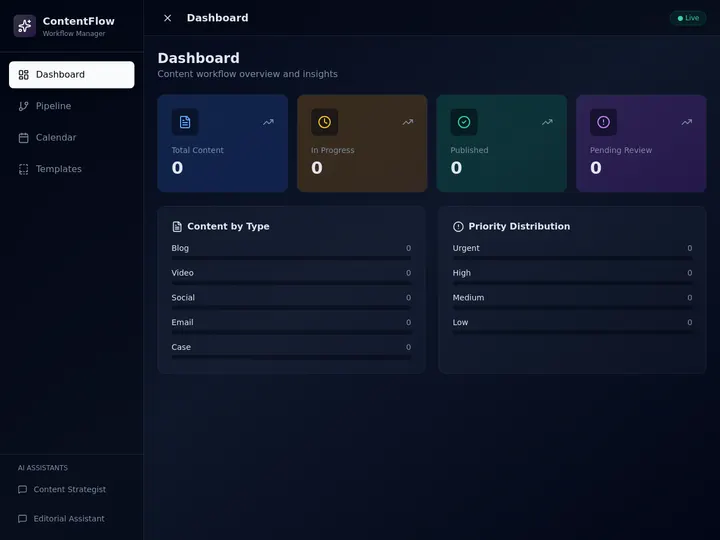
Every other tool on this list repurposes one format and stops. This one runs the whole pipeline. The app below was built from a single prompt in Taskade Genesis: one source piece fans out into clips, threads, posts, and a newsletter, each tracked on a board your whole team can see and published across channels. Click it, clone it, and watch repurposing stop being a folder of one-off exports.
Watch a workspace that runs the whole content pipeline from one prompt:
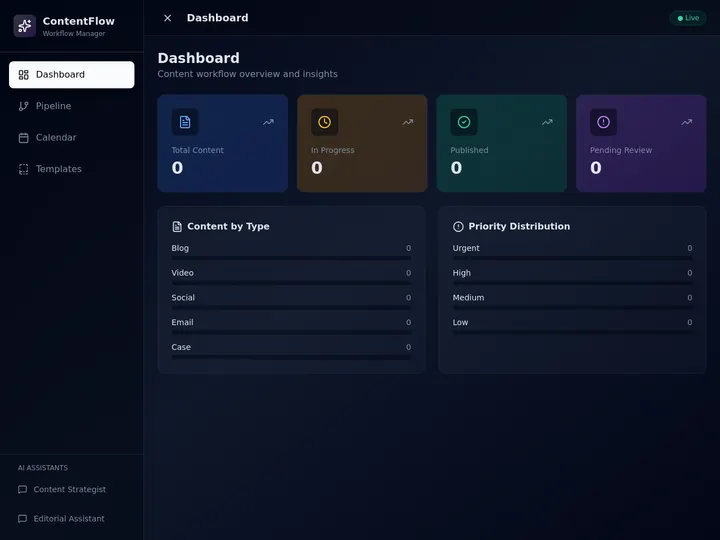
This is the difference the rest of the article is about. A repurposing tool that hands you a clip is a feature. A content app that fans one source into every channel and tracks each output is leverage. Clone this app and run your next source piece through it →
The Evolution of Content Repurposing: From Copy-Paste to a Living Engine
Content repurposing has moved through four eras, and 2026 is the start of the fifth. It began as manual copy-paste. You pulled a quote from a blog post and rewrote it for Twitter by hand. It became templated cross-posting. It became AI clipping that cut vertical video from a long upload. It became AI drafting that spun posts from a transcript. And now, with Taskade Genesis, it becomes a living content engine, the whole one-to-many fan-out as a running app, generated from one prompt. Each era added a format. The 2026 shift is the first time the output stops being a pile of separate exports and starts being one system that runs the whole pipeline.
Here is the whole arc, era by era:
Read the same arc as a milestone table, what changed, and what each era still left on the table:
| Era | What you fed in | What you got back | What it still couldn't do |
|---|---|---|---|
| 2010s — Copy-paste | A blog post, by hand | One rewritten tweet | Scale past one output at a time |
| 2018–21 — Cross-post | One caption | The same text on every platform | Format natively per channel |
| 2022–24 — AI clipping | A long video (OpusClip, Munch) | Vertical captioned clips | Threads, posts, a newsletter |
| 2024–25 — AI drafting | A transcript (Castmagic, Lately) | Posts and a newsletter draft | Video clips + one tracked pipeline |
| 2025–26 — Living engine | One source piece (Taskade Genesis) | Every format, tracked and published | — (this is the frontier) |
The plain-English takeaway: every era added one more format you could spin from a source. Only the 2026 era runs all of them in one app and tracks the whole pipeline. That is the whole reason Taskade Genesis tops this list. For the conceptual deep-dive on how prompt-to-app generation works, see our Genesis Loop explainer and the Taskade Genesis overview. For the broader category, see our AI content creation tools guide. This post owns the repurposing half: one source, many channels.
What Is the Best AI Content Repurposing Tool in 2026?
Taskade Genesis is the best AI content repurposing tool in 2026 because it runs the whole one-to-many pipeline as a live app instead of repurposing a single format. Drop in one source piece, a podcast, a webinar, a blog post, and Taskade Genesis fans it into short clips, social threads, quote posts, and a newsletter, then tracks every output on a Board, Table, or Calendar and publishes across channels through reliable automation workflows. Every other tool on this list owns one slice of that pipeline; Taskade Genesis owns all of it as a system you keep, clone, and reuse for the next source piece.
The plain-English version: the week of content that used to take a video editor, a social writer, and a scheduler gets generated and published from one workspace. Taskade's first self-serve Enterprise customer — an IT program manager with no engineering team — built a production field-service dashboard on Taskade Genesis and put it this way: "What I accomplished in a few weeks would have taken a team of 40+ people 18 months in a Fortune 500." He didn't build a folder of exports. He built the app that runs the work.
Repurpose One Format vs. Run the Whole Engine: Why Clips Aren't Enough
A repurposing tool gives you one better format. A content engine gives you the whole fan-out, clips and threads and posts and a newsletter, from one source, tracked in one place. That is the gap. Eight of the nine tools below own one lane: video clips, or social posts, or audio-to-text, or auto-distribution. You still have to stitch the lanes together by hand, copy outputs between tools, and rebuild the flow for the next recording. Taskade Genesis takes the same source piece and returns a working content app, every format generated, tracked, and scheduled. That your team opens, edits, and reuses the same afternoon.
Here is the one-to-many fan-out a content engine actually runs:
Most tools on this list own one or two of the green boxes. Taskade Genesis is the only one that runs every box and the pink one, the tracked, published app you own.
Side by side, the week after you record looks like this:
  A SINGLE-FORMAT TOOL                    A CONTENT ENGINE (Taskade Genesis)
  ─────────────────────                   ──────────────────────────
  [ you ] record one source               [ you ] record one source
      │                                       │
      ▼                                       ▼
  upload to a clipper                     drop it into one content app
      │                                       │
      ▼                                       ├─ clips + threads + posts + newsletter
  export the clips                        ├─ each output tracked on a Board
      │                                       ├─ agent drafts in your brand voice
      ▼                                       ├─ automation publishes to every channel
  copy into 3 other tools                     ▼
  (rebuild the flow next week)            clone it → reuse for the next source
                                          (your whole pipeline in one workspace)
The left column is where eight of these tools end. The right column is where the content actually ships.
Why Running the Whole Pipeline Is the Real Game
The piece you only clip is the piece that reaches one platform. Most creators record once and post once, because stitching a clipper, a post drafter, an audio tool, and a scheduler together by hand is too much friction. The result is one upload doing the work one upload can do. A content engine does the opposite: it takes that single recording and turns it into a week of channel-native content, tracked and scheduled, with no copy-paste between tools.
That is the difference between a tool that hands you a clip and one that runs the whole engine. Every tool on this list can do its one job well in 2026; AI made clipping and drafting solved problems. The unsolved problem, the one that actually multiplies reach, is running all the formats from one source and publishing them without manual handoffs. Taskade Genesis is built around that second half: the fan-out, the tracking, and the multi-channel publishing. Repurposing one format is table stakes. Running the engine is the product.
How We Ranked
We ranked 9 AI content repurposing tools on six criteria that matter to the person who has to fill a week of channels, not just cut one clip:
- Source formats accepted, video, audio, blog, webinar, or only one input type.
- Output formats produced, clips, threads, posts, a newsletter, an article, or just one.
- One-to-many in one place, does it run the whole fan-out, or only one lane.
- Brand voice & quality, how on-brand the drafts read, and how good the clips look.
- Publishing & scheduling, does it push to channels, or stop at export.
- Pricing, free-tier generosity and cost at the annual price.
Scored against those six criteria, here is how the field stacks up at a glance, the column that separates the leader from the pack is "One-to-many in one app":
| Tool | Source in | Output out | One-to-many in one app | Publishing | Price value |
|---|---|---|---|---|---|
| Taskade Genesis | Any (video, audio, text) | All formats | Yes — live app | Multi-channel + agent | Excellent (free) |
| Repurpose.io | Video, audio | Same piece, reformatted | Distribution only | Auto-publish | Fair |
| OpusClip | Long video | Vertical clips | Clips only | Auto-post | Good |
| Munch | Long video | Clips + insights | Clips only | Schedule | Fair |
| Castmagic | Audio, video | Transcript text + posts | Text only | Export | Fair |
| Descript | Video, audio | Edited media + clips | Edit + clips | Export | Good |
| Vidyo.ai (quso) | Long video | Clips + show notes | Clips + some text | Schedule | Good (free) |
| Lately | Long text, video | Social posts | Posts only | Schedule | Low (high floor) |
| ContentIn | Ideas, posts | LinkedIn/X posts | Posts only | Schedule | Good |
The grid tells the story before you read a word of the reviews: most tools earn "Good" on their one lane, then every single one drops to "only" on the one-to-many column, except the one that runs the whole engine in a single app.
The 9 Best AI Content Repurposing Tools
1. Taskade Genesis: Best Overall: Run the Whole One-to-Many Engine
Taskade Genesis is the only tool on this list that runs the entire repurposing pipeline as a live app. Drop in one source piece, a podcast episode, a webinar, a long video, or a blog post, describe the channels you want, and Taskade Genesis fans it out into short clips, social threads, quote posts, carousel outlines, and a newsletter, all at once. Then, in one more click, that fan-out becomes a working app: a Board where each output moves from drafted to scheduled to published, a Table of every asset, a Calendar of the publishing schedule, and automations that push finished content to every channel.
That is the structural gap in the whole category. Every competitor owns one lane, clips, or posts, or audio-to-text. Taskade Genesis runs all the lanes in one workspace and tracks the whole thing. The week of content that used to take a video editor, a social writer, and a scheduler gets generated and published in an afternoon.
One app covers every format and every channel. Taskade Genesis runs on frontier models from top AI labs, so the threads and the newsletter read in your voice, not a template. The workspace ships multiple project views (List, Board, Calendar, Table, Mind Map, Gantt, Org Chart, the Timeline lives inside Gantt), a role model (Owner to Viewer) so a team or a client sees exactly the right surface, AI agents with built-in tools to draft and check each output, and 100+ bidirectional integrations to wire multi-channel publishing through reliable automation workflows. Brand the content app with your logo and a custom domain on Pro and above, and it stops looking like a tool and starts looking like your own content operation.
Best for: Any creator, agency, or team that wants one recording to fill a week of channels, clips, threads, posts, and a newsletter, tracked and published from one workspace.
Strengths: Only tool that runs the whole one-to-many pipeline as an app; every output format in one place; live tracking across multiple views; multi-channel publishing via automation; on-brand drafts across frontier models; custom branding and domain; generous free tier.
Weaknesses: Built-in vertical-video clipping is younger than a dedicated clipper like OpusClip, so for pure short-form polish you may pair a clipper into the pipeline; the content app is a workspace you shape, not a single-button toy.
Pricing: Free (Free Forever plan), Pro $10/mo (the Popular tier), Business $25/mo, Max $100/mo, Enterprise $250/mo, all annual billing.
The catch: Honest one, the slickest one-tap video clipping still lives in a dedicated clipper, so a heavy short-form team may run OpusClip into the Taskade Genesis pipeline. Everything around the whole fan-out, though, is built in.
Verdict: The clear winner for anyone who wants one source piece to become a week of content across every channel, owned and reusable.
2. Repurpose.io: Best Auto-Distribution Across Platforms
Repurpose.io is the distribution specialist. It isn't an AI clipper. It takes a finished video or audio episode and pushes it everywhere automatically, reformatting and republishing to YouTube, TikTok, Instagram, Facebook, and podcast platforms without manual uploads. For creators who already have polished episodes and just want them everywhere with less manual work, the set-it-and-forget-it distribution is a genuine strength, and the platform connections are deep.
Best for: Creators with finished episodes who want hands-off republishing to many platforms at once.
Strengths: Deep multi-platform auto-publishing; reliable scheduling; reformats audio and video per channel; saves real manual upload time.
Weaknesses: Not an AI generator. It distributes finished content rather than fanning a source into new formats; no thread, post, or newsletter drafting; pricier tiers for more platforms.
Pricing: From around $35/mo (Starter); Pro ~$79/mo, Agency ~$179/mo; 17% off annual; 10 free videos to start.
The catch: It moves finished content around. It doesn't generate the clips, threads, posts, and newsletter that a content engine fans out from one source.
Verdict: Best if your content is already made and you just want it published everywhere automatically.
3. OpusClip: Best AI Video Clipping
OpusClip is the highest-volume AI clipper in the category. Feed it a long video and its AI finds the most engaging moments, cuts them into vertical clips with a Virality Score, adds animated captions in 20+ languages, and can auto-post and schedule them. It earns a 4.6/5 across 118 G2 reviews for being fast, easy, and genuinely good at picking quotable moments, for short-form video specifically, it's the benchmark.
Best for: Creators turning long videos and podcasts into a high volume of polished vertical clips.
Strengths: Excellent moment-detection; clean animated captions; Virality Score; auto-posting and scheduling; a usable free tier.
Weaknesses: Video clips only, no threads, no newsletter, no full pipeline; credits cap output on lower tiers.
Pricing: Free (60 credits/mo, watermarked); Starter $15/mo (150 credits); Pro $29/mo (300 credits); Business custom.
The catch: It's the best at one lane, vertical clips. So threads, posts, and the newsletter live in other tools you stitch together.
Verdict: Best if short-form video clips are your priority and you want the strongest clipper in the field.
4. Munch: Best Trend-Aware Clipping With Insights
Munch clips long video into short-form like OpusClip, but leans on trend and engagement analysis to pick moments it predicts will perform, then surfaces marketing insights alongside the clips. For a creator who wants the clipping decision made and a read on why a moment was chosen, the trend-optimized angle is a real differentiator, and the output needs no editing skills.
Best for: Creators who want trend-aware clip selection plus engagement insights, no editing skills required.
Strengths: Trend and engagement-driven moment picking; clean captioned clips; marketing insights; scheduling built in.
Weaknesses: Video-clip focused; higher minute-based pricing than some clippers; thin on text formats and newsletters.
Pricing: From around $49/mo (Pro, 200 min); Elite ~$116/mo (500 min); Ultimate ~$220/mo (1,000 min); annual discounts.
The catch: Like other clippers, it owns the video lane, the threads, posts, and email that round out a week of content come from elsewhere.
Verdict: Best if you want trend-optimized clips and a read on why each moment was chosen.
5. Castmagic: Best Audio and Podcast to Text
Castmagic is the audio-to-text benchmark. Upload a podcast, meeting, or webinar and it generates a transcript plus show notes, social posts, newsletter drafts, quotes, and more, turning one recording into a full set of written assets. For podcasters and anyone whose source is audio, the depth of text output from a single episode is genuinely strong, and it pairs well with a video clipper for the visual half.
Best for: Podcasters and audio-first creators who want transcripts, show notes, posts, and newsletters from each episode.
Strengths: Excellent transcription; rich text outputs (show notes, posts, newsletter, quotes); learns your tone; strong for meetings and webinars too.
Weaknesses: Text-first, no vertical video clipping; minute-based pricing climbs for heavy users; needs a clipper for the video side.
Pricing: Hobby ~$39/mo (300 min); Starter ~$59/mo (800 min); higher tiers to ~$299/mo; annual saves up to 50%.
The catch: It's brilliant at the text half of repurposing. But you'll still bring a clipper and a scheduler to complete the one-to-many flow.
Verdict: Best if your source is audio and you want every written format from each episode.
6. Descript: Best Editing-First Repurposing
Descript is the edit-by-text benchmark. It transcribes your video or audio and lets you edit the media by editing the words, delete a sentence in the transcript and it cuts the footage. Then exports clips, removes filler, and adds captions. For teams that want hands-on control over the final cut, the text-based editing is uniquely powerful, and the quality of the edited output is among the best in the category.
Best for: Creators and teams who want precise, hands-on control over the edit, not just one-tap clipping.
Strengths: Industry-leading edit-by-text workflow; high export quality; filler removal; captions; strong podcast and video editing.
Weaknesses: More an editor than an auto-repurposer; the full fan-out into posts and newsletters isn't its focus; transcription hours capped per tier.
Pricing: Hobbyist ~$16/mo, Creator ~$24/mo, Business ~$40/mo (annual, per person); free tier available.
The catch: It perfects the cut. But threads, quote posts, and a newsletter aren't what it's built to fan out from a source.
Verdict: Best if editing quality and hands-on control are your top priority.
7. Vidyo.ai (quso.ai): Best Clips Plus Show Notes in One Tool
Vidyo.ai, now part of quso.ai, turns long video into short clips with Intelliclips and reframes them for Shorts, Reels, and TikTok. Then its MagicViddy feature repurposes the same video into show notes, blog drafts, LinkedIn articles, and tweets. That clips-plus-text combination in one tool is a genuine step toward one-to-many, and the free tier plus a social scheduling suite make it approachable for solo creators.
Best for: Solo creators who want AI clips and basic text repurposing from one affordable tool.
Strengths: Strong auto-clipping and reframing; text outputs (show notes, blog, LinkedIn, tweets); social scheduling; a free tier and low entry price.
Weaknesses: Credit-based limits; text outputs are lighter than a dedicated text tool; not a full tracked pipeline you own.
Pricing: Free; Lite ~$15/mo; Essential ~$20/mo (300 credits); Growth ~$25/mo.
The catch: It does two lanes lightly rather than running the whole engine, the tracked, multi-channel pipeline still lives elsewhere.
Verdict: Best if you want clips and basic text repurposing from one budget-friendly tool.
8. Lately: Best Brand-Voice Social Drafting at Scale
Lately is the social-AI veteran. It ingests long-form content, a blog, a video, a webinar, and generates dozens of social posts tuned to what performs for your audience, learning your brand voice from your own analytics over time. For marketing teams that need a high volume of on-brand social snippets from each piece of long-form content, the voice-learning at scale is a real strength.
Best for: Marketing teams generating high volumes of on-brand social posts from long-form content.
Strengths: Learns brand voice from your engagement data; high-volume post generation; scheduling; enterprise-oriented features.
Weaknesses: Social posts only, no video clips or newsletter pipeline; pricing floor is high for solos; enterprise positioning.
Pricing: Starter from ~$19/mo (or ~$14/mo annual); Growth ~$199–$239/mo; custom enterprise; some tiers floor higher.
The catch: It owns the social-post lane well. But clips, the newsletter, and a tracked pipeline are outside its scope.
Verdict: Best if you want a high volume of on-brand social posts and have the budget for a team tool.
9. ContentIn: Best LinkedIn and X Repurposing for Founders
ContentIn is the LinkedIn-and-X specialist. Its AI Ghostwriter learns your communication patterns from a few of your existing posts, then helps you turn ideas, articles, and past content into a steady stream of platform-native posts, with idea generation and scheduling built in. For founders and solo operators building a personal brand on LinkedIn, the voice-matched drafting plus transparent pricing is a genuinely good fit.
Best for: Founders and solo creators repurposing ideas and content into LinkedIn and X posts.
Strengths: Learns your voice fast from past posts; strong idea generation; native LinkedIn/X formatting; transparent, affordable pricing; built-in scheduling.
Weaknesses: Text and social only, no video clips, no newsletter pipeline; LinkedIn/X focus narrows the channel mix.
Pricing: Starter ~$19/mo; Growth ~$39/mo; Scale ~$99/mo.
The catch: It's excellent for LinkedIn and X. But it's one channel lane, not the whole one-to-many engine across video, email, and the rest.
Verdict: Best if your repurposing job is a steady stream of on-brand LinkedIn and X posts.
Comparison Table: Output, Pipeline, and the Annual-Pricing Wedge
Feature matrices hide the one thing that actually decides the buy: how much of the pipeline you walk away with. This table strips it down to the columns the rest of the category quietly skips, what you get out (one format or all of them), whether it runs the whole one-to-many engine in one app, and the annual price. This is where Taskade Genesis is the only green row.
| Tool | Output formats | One-to-many in one app | Publishing | Live cloneable app | Price (annual) |
|---|---|---|---|---|---|
| Taskade Genesis | Clips + threads + posts + newsletter | Yes — tracked pipeline | Multi-channel + agent | Yes — clone it | Free / $10 / $25 |
| Repurpose.io | Same piece, reformatted | Distribution only | Auto-publish | No | ~$35/mo |
| OpusClip | Vertical clips | Clips only | Auto-post | No | $15–$29/mo |
| Munch | Clips + insights | Clips only | Schedule | No | ~$49/mo |
| Castmagic | Transcript + posts + newsletter | Text only | Export | No | ~$39/mo |
| Descript | Edited media + clips | Edit + clips | Export | No | ~$16/mo |
| Vidyo.ai (quso) | Clips + show notes | Two lanes, light | Schedule | No | Free–$25/mo |
| Lately | Social posts | Posts only | Schedule | No | ~$19/mo+ |
| ContentIn | LinkedIn/X posts | Posts only | Schedule | No | ~$19/mo |
Read the rows top to bottom and the wedge is obvious: one lane is where the others finish, and where Taskade Genesis is just getting started. On price, Taskade Genesis starts Free, then Pro $10 (the Popular tier), Business $25, Max $100, and Enterprise $250, and every paid tier runs the whole pipeline in an app you own, not a single-format tool you rent. You are not paying for a prettier clip. You are paying for one recording that becomes a week of content.
Full Feature Matrix: Nine Tools, Eight Columns
This is the detailed grid the buyer's-guide pages bury or skip. It scores all nine tools on the eight capabilities that decide a repurposing workflow, video clips, social posts, a newsletter, brand-voice learning, multi-channel publishing, source-format flexibility, an owned reusable app, and a free tier. Taskade Genesis is the only row that is "Yes" straight across the capability columns.
| Tool | Video clips | Social posts | Newsletter | Brand voice | Multi-channel publish | Any source in | Owned reusable app | Free tier |
|---|---|---|---|---|---|---|---|---|
| Taskade Genesis | Yes | Yes | Yes | Yes (frontier models) | Yes (automation) | Yes (any) | Yes — clone it | Yes (Free Forever) |
| Repurpose.io | Reformat only | No | No | No | Yes | Video/audio | No | Trial (10 videos) |
| OpusClip | Yes | Captions | No | Partial | Auto-post | Video only | No | Yes |
| Munch | Yes | Partial | No | Partial | Schedule | Video only | No | Trial only |
| Castmagic | No | Yes | Yes | Yes | Export | Audio/video | No | Trial only |
| Descript | Yes | No | No | No | Export | Video/audio | No | Yes |
| Vidyo.ai | Yes | Yes | No | Partial | Schedule | Video only | No | Yes |
| Lately | No | Yes | No | Yes | Schedule | Text/video | No | Trial only |
| ContentIn | No | Yes | No | Yes | Schedule | Ideas/text | No | Trial only |
The shape of the grid is the argument. Most tools earn a column of "Yes" on their one lane, then go blank on the formats they don't own and, every single one, on running a reusable app. Taskade Genesis is the only tool that fills the row, which is exactly where one recording becomes a week of content.
Pricing Matrix: The Annual-Pricing Wedge, Tier by Tier
Most repurposing-tool pages quote a single "from" price and hide the credit or minute caps. Here is the honest annual-billing picture across the field, with what you actually keep at each price. Taskade Genesis is the only one with a real free tier and a flat per-workspace climb instead of per-seat or per-minute math.
| Tool | Free tier | Entry (annual) | Mid tier | Top / Enterprise | What you keep |
|---|---|---|---|---|---|
| Taskade Genesis | Free Forever | Pro $10/mo ★ | Business $25 | Max $100 · Enterprise $250 | A content app you own + clone |
| Repurpose.io | 10 videos | ~$35/mo | ~$79/mo (Pro) | ~$179/mo (Agency) | A distribution scheduler |
| OpusClip | Yes (60 credits) | $15/mo | $29/mo (Pro) | Business custom | A clip generator |
| Munch | Trial | ~$49/mo | ~$116/mo (Elite) | ~$220/mo (Ultimate) | A clip generator |
| Castmagic | Trial | ~$39/mo | ~$59/mo (Starter) | ~$299/mo | A text generator |
| Descript | Yes | ~$16/mo | ~$24/mo (Creator) | ~$40/mo (Business) | An editor |
| Vidyo.ai (quso) | Yes | ~$15/mo (Lite) | ~$20–$25/mo | Teams custom | A clip + text tool |
| Lately | No | ~$19/mo | ~$199/mo (Growth) | Enterprise custom | A social-post tool |
| ContentIn | Trial | ~$19/mo | ~$39/mo (Growth) | ~$99/mo (Scale) | A LinkedIn/X tool |
The math is the message. Across the field you pay $15–$220 per month for one lane of the pipeline. Taskade Genesis starts free, climbs by workspace rather than by seat or minute, and every paid tier runs the whole engine, clips, posts, newsletter, and publishing, in one cloneable app. Pro at $10/mo is the Popular ★ pick and adds the custom domain that makes the content app look like your own operation.
Use-Case → Tool Matrix: Pick by What You're Actually Repurposing
Skip the feature war and start from your source. This matrix maps the most common repurposing jobs to the tool that fits, and to the Taskade Genesis content engine that does the same job and runs the rest of the fan-out around it.
| Your job | Quick pick (single-lane) | Taskade Genesis route (whole engine) |
|---|---|---|
| Turn a long video into clips | OpusClip (best clipper) | /create — clips + threads + posts + newsletter |
| Auto-publish finished episodes | Repurpose.io (distribution) | /automate — publish via automation workflows |
| Turn a podcast into written assets | Castmagic (audio-to-text) | /create — text + clips, tracked in one app |
| Edit the cut precisely | Descript (edit-by-text) | /ai/apps — generate the app around the edit |
| Spin LinkedIn/X posts | ContentIn (founder voice) | /create — posts + every other channel |
| High-volume on-brand social | Lately (voice at scale) | /agents — agents draft in your brand voice |
| Clips plus show notes cheaply | Vidyo.ai (two lanes) | /create — all lanes in one owned app |
| Run the whole pipeline | — | Clone a content engine |
The pattern reads in one glance: every row has a perfectly good single-lane option, and a Taskade Genesis route that does the same job and runs the rest of the fan-out in one tracked, reusable app. That is the whole reason to start on the right-hand column.
From Source to Published: What You Can Actually Build
The fastest way to understand the gap is to look at what people ship. These are real outcome shapes, not features, that start from one prompt in Taskade Genesis and end as a running content app. Each is the kind of system that used to need a video editor, a social writer, and a scheduler.
| Outcome you want | What you prompt | What you get to run |
|---|---|---|
| Fan a podcast into a week of posts | "Build a content engine that turns each episode into clips, threads, posts, and a newsletter" | A content-workflow app tracking every output on a Board |
| Run a publishing calendar | "Build a content calendar that schedules every repurposed asset across channels" | A live Calendar app where each post moves to scheduled then published |
| Keep brand voice consistent | "Build a content app that drafts every output in our brand voice and hooks" | An app where agents draft on-brand across multiple views |
| Multi-channel auto-publish | "Build a pipeline that pushes finished clips and posts to YouTube, TikTok, and LinkedIn" | An automation pipeline that publishes without copy-paste |
| Repurpose a webinar | "Build an app that turns a webinar into a blog, a thread, clips, and an email" | A workspace where one webinar becomes a week of content |
| Track team content status | "Build a content board where the team sees every asset from idea to published" | A shared Board your whole content team works from |
Each of these is a clone away. The content-workflow app above is the same idea ready to run, open it, clone it, and swap in your own channels, voice, and schedule. That single click is the activation event the rest of this category never reaches.
Wiring the channels end to end, YouTube, TikTok, LinkedIn, your newsletter platform, happens through Taskade's 100+ bidirectional integrations, so the content pipeline isn't an island. Triggers pull a new recording in; actions push the finished content out.
The Full Taskade Genesis Capability: What Repurposing Looks Like When It's a Platform
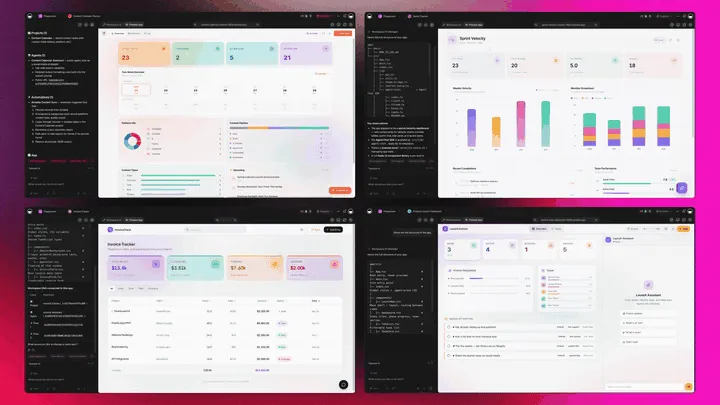
A repurposing tool that's really a platform doesn't just cut one clip. It runs the whole content operation around one source piece. Taskade Genesis generates the fan-out as a live web app, then surrounds it with agents that draft each format, automations that publish across channels, and a workspace that remembers what performs. Here is the capability slice that matters for repurposing, told in plain language and shown in working product.
Taskade Genesis: Describe a Content Engine, Get a Running App
This is the core move. You describe what you want in plain words, "a content engine that turns each podcast episode into clips, threads, posts, and a newsletter, tracked on a board", and Taskade Genesis returns a real, running web app, not a folder of exports. You can publish it, put it on a custom domain, and let others clone it with one click. The repurposing flow stops being a chain of tools and becomes a product you ship.
The loop, drawn out:
That dotted line back to the start is the part no single-format tool has: every published piece teaches the engine what performs, so the next fan-out starts stronger. Here is what's actually inside a Taskade Genesis content app, the layers a standalone clipper can never carry:
  A GENESIS CONTENT ENGINE (one prompt builds all of this)
  ───────────────────────────────────────────────────────
  ┌─ SOURCE INTAKE ────────────────────────────────┐
  │  podcast · webinar · long video · blog post    │   ← any source, one front door
  ├─ FAN-OUT ──────────────────────────────────────┤
  │  clips · threads · quote posts · newsletter    │   ← every format the others split across tools
  ├─ TRACKING ─────────────────────────────────────┤
  │  drafted → scheduled → published               │   ← multiple views: Board, Table, Calendar...
  ├─ BRAND-VOICE AGENT ────────────────────────────┤
  │  drafts in your voice · built-in tools         │   ← the teammate that writes on-brand
  ├─ PUBLISHING ───────────────────────────────────┤
  │  YouTube · TikTok · LinkedIn · email · Slack    │   ← 100+ bidirectional integrations
  └─ MEMORY ───────────────────────────────────────┘
     every published piece sharpens the next fan-out   ← Workspace DNA, the compounding part
See the same one-source-many-channels shape running live. This is the content-workflow hub app, generated from one prompt:
AI Agents v2: built-in tools and a Brand-Voice Teammate
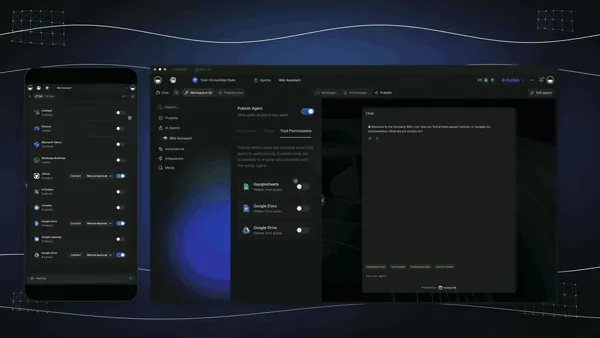
The repurposed piece that performs is usually the one written in your voice. In Taskade, that writer is an agent. AI Agents v2 ship built-in tools, web search, code, file analysis, custom slash commands, plus persistent memory, multi-agent collaboration, public embedding, and multi-model routing. Point one at your content pipeline and it drafts the threads, writes the newsletter, pulls quote posts, and checks each one against your brand voice. EVE, the meta-agent, orchestrates the whole content team from a single instruction. For the broader picture, see what AI agents are.
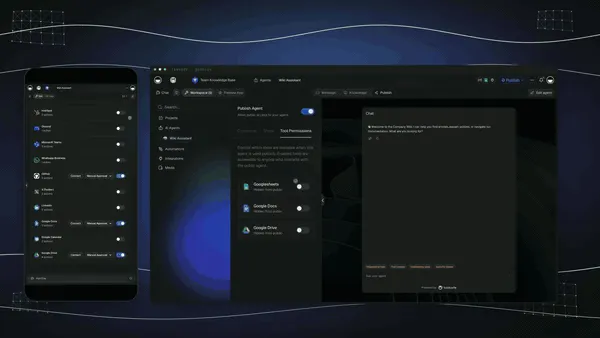
Automation: Durable Workflows That Publish the Content
Behind the fan-out sits reliable automation, workflows that branch, loop, and filter, and run dependably without you babysitting them. Wire 100+ bidirectional integrations so triggers pull a new recording or upload in (a podcast published, a video uploaded, a webinar ended) and actions push the finished content out (post the clip to TikTok, schedule the thread, send the newsletter, ping the team in Slack). The content pipeline isn't a chain of manual handoffs; it's a workflow that runs itself. See how automations execute for the step-by-step.
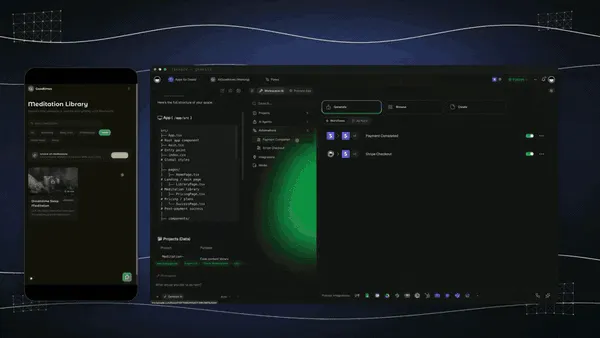
Multiple Project Views: See the Pipeline the Way You Think
Every content app comes with multiple project views, List, Board, Calendar, Table, Mind Map, Gantt, and Org Chart (the Timeline lives inside Gantt). Watch assets move on a Board, see the publishing schedule on a Calendar, map a content series on a Mind Map, and track every output in a Table. The team sees the whole pipeline; a client sees only the surface you share. A folder of exports gives you none of these.
Workspace DNA: Memory + Intelligence + Execution
The reason the loop compounds is Workspace DNA, the self-reinforcing triad of Memory, Intelligence, and Execution (the ▲ ■ ● signature). Memory remembers your brand voice and what performed; Intelligence drafts the next fan-out across frontier models from top AI labs (auto-routed, no model-picking required); Execution publishes it across channels. Each published piece becomes Memory for the next one, the content engine gets smarter every time you ship.
A Real Operator Already Runs On This
This isn't a roadmap promise. Taskade's first self-serve Enterprise customer — an IT program manager with no engineering team — built a production field-service dashboard on Taskade Genesis, a real, running app his team uses every day. His take: "What I accomplished in a few weeks would have taken a team of 40+ people 18 months in a Fortune 500." He didn't build a folder of exports. He built the app that runs the work, and the content app on this page is the same idea, ready for you to clone. Browse more live, cloneable apps in the Community Gallery, or start your own from free AI app builders.
Decision Flowchart: Which Repurposing Tool for Your Job
The plain-English version: if you want one recording to become a week of content across every channel, every road leads to Taskade Genesis. If you only need one lane, clips, or posts, or auto-distribution, the niche tools are fine.
Three Creators, One Platform: How the Same Engine Fits Different Jobs
The clearest way to see the difference is to watch three very different people use the same content engine. Each starts with one source piece and ends with a week of published content, not a folder of exports.
The Solo Podcaster
She records one episode a week and used to post one upload. Now she drops the episode into a content app and it fans out into five vertical clips, an X thread, three LinkedIn posts, and a newsletter, all drafted in her voice by a brand-voice agent. She watches each asset move from drafted to scheduled to published on a Board, and an automation pushes the clips to TikTok and the newsletter to her list. One recording now fills a week. What used to be one upload is now a content engine she actually controls.
The Marketing Agency
The agency manages content for ten clients. They clone one content-engine app per client, each branded and wired to that client's channels. Every source piece, a webinar, a blog, a video, fans out into the full format set and lands in one shared Board so the lead sees every client's pipeline at a glance. Automations publish on schedule across each client's channels, and Workspace Memory keeps each client's voice distinct. Ten clients, one platform, no copy-paste between tools.
The Founder Building a Personal Brand
He turns one long-form idea a week into a presence across LinkedIn, X, and a newsletter. He drops a recorded talk or a draft into his content app, and agents fan it into a thread, quote posts, a carousel outline, and an email, all matched to his voice from past wins in Workspace Memory. A Calendar view holds the publishing schedule so nothing slips, and an automation fires each post at the right time. He doesn't juggle a clipper, a ghostwriter tool, and a scheduler; the engine is one app he owns.
The thread across all three: same platform, same one-source start, three completely different jobs, and in every case the output is a content engine the operator owns, not a chain of tools they rent.
How One Source Moves Through a Taskade Workspace
Here is the path from a single recording to published content, end to end.
How to Repurpose Content That Actually Performs
Picking a tool is half the work; the other half is knowing how to brief the engine. Four reliable patterns:
Start From One Strong Source, Not Many Weak Ones
One deep recording fans out better than five shallow ones. Record a real conversation, a thorough webinar, or a substantive blog post, then let the engine pull the strongest moments and ideas. The same frame applies: build one thing well, then let the system multiply it, don't manufacture filler to fill a calendar.
Format Natively, Don't Cross-Post the Same Text
The fastest way to lose reach is to paste the same caption everywhere. Brief the engine to draft per channel, a punchy hook for X, a story-led post for LinkedIn, a captioned vertical clip for TikTok, a scannable newsletter for email. A content app that fans out natively beats a tool that copies one text across platforms.
Keep One Source of Brand Voice
A consistent voice across channels is what makes scattered posts feel like one brand. Feed the engine your best past content so the agent drafts in your voice, and keep that voice in Workspace Memory so every new fan-out starts on-brand. One memory, every channel.
Track It So You Publish on Schedule, Not in Bursts
A pile of drafts you can't see is content that never ships. Run the fan-out as a live app, watch each asset move from drafted to scheduled on a Calendar, and let an automation publish at the right time. The creators who win are the ones who ship consistently, and tracking is the only way to keep the cadence.
Source Formats: What to Feed the Engine for Each One
A "repurposing tool" isn't one thing, a podcast and a blog post want completely different handling. The advantage of a content engine like Taskade Genesis is that every source type lands in one workspace, so you feed it once and track every output in the same pipeline. Here is what each source actually needs, and what it fans out into.
| Source type | Feed it with | Fans out into | Watch out for |
|---|---|---|---|
| Podcast / audio | The episode + key timestamps | Clips, show notes, posts, newsletter | Thin audio with no quotable moments |
| Long video | The full recording | Vertical clips, threads, a blog draft | Slow pacing that buries the hooks |
| Webinar | The recording + the slide outline | A blog, an email, clips, a carousel | Burying the one insight people came for |
| Blog post | The article + the core argument | A thread, quote posts, a carousel, an email | A post with no single shareable idea |
| Newsletter | The issue + its best section | Social posts, a thread, a short clip script | Letting a great line stay locked in email |
The plain-English rule across all five: start from one strong source, format natively per channel, keep one brand voice, and track the schedule. Taskade Genesis fans out the type-specific formats for you; you supply the source, shape the voice, and ship it as a live app. For the step-by-step, the Genesis Loop explainer and the AI app builder guide cover the whole flow.
Where This Is Going: Our Vision for 2027 and Beyond
By 2027 the line between repurposing a piece and running the content operation around it disappears entirely. Tools that stop at one format lose ground to platforms that fan one source into every channel and publish it. Creators will ask of every tool the question they're already starting to ask: what do I actually keep, and how much of the pipeline does it run? The answer that wins is an engine, not an export.
The deeper shift is the one Taskade is building toward: software you describe instead of build. Today you generate a content engine from a prompt. Tomorrow every creator runs their entire operation as living, cloneable apps, the content engine, the publishing calendar, the analytics dashboard, the community hub, each one described in plain words, each one owned, each one improving every time it's used. The workspace becomes the computer. You don't open ten tools; you describe ten outcomes, and the agents do the work.
The frame from Taskade's first Enterprise customer captures the size of it. What took "a team of 40+ people 18 months in a Fortune 500," he built in a few weeks, and what he built, you can clone in an afternoon. That is the inversion: the leverage that used to belong to a content team belongs to one creator with a prompt. Multi-agent choreography is the engine. One source piece kicks off a team of agents, one clips, one writes the threads, one drafts the newsletter, one schedules the publish, exactly the way Taskade's multi-agent collaboration already works today.
The roadmap from here is straight: more frontier models auto-routed behind the scenes, deeper agent memory so the engine remembers what performs, and a growing Community Gallery of buy-once-clone-many content apps so you can start from a working engine instead of a blank tool. The repurposing tool that wins 2027 won't be the one with the slickest clip. It will be the one that hands you a content operation that runs itself.
The market context backs the bet. The 2026 repurposing field has split into three camps, clipping-first tools that own the video lane, drafting-first tools that own the text lane, and distribution tools that just move finished content. Taskade Genesis sits in a fourth camp the others haven't reached: a content engine that runs all the lanes as an app you own. As AI makes clipping and drafting universal and commoditized, the durable advantage moves to the layer the rest of the category still skips: running the whole one-to-many pipeline in one owned system. That is the lane Taskade has been building in since day one, Memory, Intelligence, and Execution in a single workspace, compounding with every piece you ship.
Related Reading
Connect the dots across our 2026 AI content coverage. Repurposing is one node in a bigger content system. These guides cover the creation, agents, and automations around it:
Make and market the content
- Best AI Content Creation Tools, the parent guide to creating content before you repurpose it
- Top AI Content Marketing Tools, the marketing layer your repurposed content feeds
- Free AI App Builders, the broader category your content engine belongs to
Run the engine
- What Are AI Agents?, the teammates that draft each format in your voice
- Best AI Workflow Automation Tools 2026, wire multi-channel publishing around your content
- The Genesis Loop, how prompt-to-app-to-clone actually works
Build it yourself
- Taskade AI Apps, describe an outcome, get a running app
- Taskade AI Agents, the brand-voice teammate that drafts every format
- Taskade Automations, durable workflows that publish across channels
- Taskade Genesis Overview, start building your content engine
- How Automations Execute, wire the publishing pipeline
- Taskade Genesis, start here, free
Switching In: What It Takes to Move Your Content Workflow
Moving to a content-engine workflow is lighter than it sounds, because you don't migrate files. You generate a fresh app from a prompt and bring your channels with you. Three practical notes for the switch:
- Start with your next source piece, not your back catalog. Generate one content app for the recording in front of you, fan it out, and publish. You don't have to reprocess old uploads; you just stop juggling four tools for the new ones.
- Bring your brand voice once. Feed the engine your best past content, add a custom domain on Pro and above and your logo on Business and above, and every fan-out after that inherits the voice and the look. The content app stops looking like a tool and starts looking like your operation.
- Wire the publishing schedule. Content dies in inconsistency. Put the schedule on a Calendar view and let an automation publish each asset, so the cadence holds instead of slipping.
- Keep your favorite single-lane tool for the one thing it does best. If you love OpusClip's clips or Castmagic's transcripts, there's no rule against running it into the Taskade Genesis pipeline at first, clip there, fan out and publish in Taskade Genesis, and consolidate once the workflow proves itself.
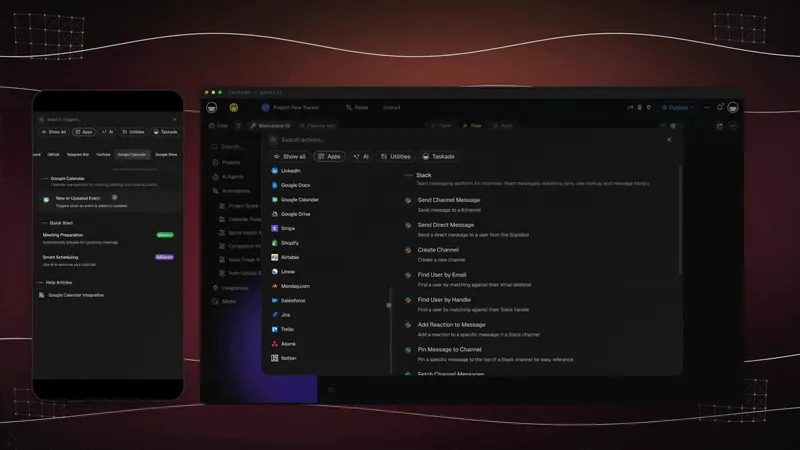
The whole switch fits in an afternoon: drop a source, fan it out, brand it, ship it. Compare that to standing up four single-lane tools and copy-pasting between them, and you see why the free AI app builder path is the faster on-ramp.
Honest Answers to the Three Things You're Probably Wondering
A claim this clean, "run the whole one-to-many engine as a live app", deserves a few straight answers before you commit. Here are the three objections worth raising, answered without spin.
"Doesn't a content app sound more complicated than a single clipper?" It sounds that way and isn't. You still start by describing the engine in plain words and dropping in a source piece, exactly like any AI tool. The difference is what comes back: instead of one format you have to stitch into a workflow, you get a running pipeline that fans out, tracks, and publishes every format. There's nothing to assemble. The complexity that used to live across four tabs collapses into one app.
"What about the best-in-class clipper?" This is the honest gap. OpusClip and Munch make one-tap vertical clipping their whole product; Taskade Genesis runs clipping as one lane of a bigger pipeline. For a heavy short-form team, the slickest single clip may still come from a dedicated clipper, and that's a legitimate reason to run one into the Taskade Genesis pipeline. If you want the clip plus the threads, the newsletter, the tracking, and the publishing, the engine is worth it.
"Is the free tier actually usable, or a teaser?" It's a real Free Forever plan. You build the content app and keep it, with no export paywall and no watermark on what you make. Most "free" repurposing tools cap your credits, stamp the output, or limit minutes. With Taskade Genesis the content engine you build on the free plan is yours to run, clone, and reuse. The paid tiers (Pro $10, Business $25) add seats, the custom domain, and more horsepower, not the right to keep what you made.
The throughline: the leader isn't winning on a prettier clip. It's winning on everything around the clip, which is exactly where a week of content is actually made or lost.
The Bottom Line in One Paragraph
If you only remember one thing: in 2026, AI made one lane of repurposing, clipping, or drafting, or distributing, a solved problem, and nine tools on this list do their lane well. The unsolved problem is running all the lanes from one source, and that is where Taskade Genesis is the only tool that competes on the right battlefield. It fans one source piece into clips, threads, posts, and a newsletter, tracks every output across multiple views, drafts in your brand voice with agents, and publishes across channels through 100+ integrations, free to start, $25/mo for a custom domain. Everyone else owns one lane. Taskade Genesis runs the whole engine.
Verdict
If you want the strongest AI video clipper, use OpusClip. If you want trend-aware clips with insights, use Munch. If you want hands-on, edit-by-text control, use Descript. If your source is audio and you want every written format, use Castmagic. If you want clips and basic text in one budget tool, use Vidyo.ai. If you want hands-off republishing of finished episodes, use Repurpose.io. If you want high-volume on-brand social posts, use Lately. If your job is a steady stream of LinkedIn and X posts, use ContentIn. If you want one source piece to become a week of content across every channel, clips, threads, posts, and a newsletter, tracked and published from one app you own, use Taskade Genesis. Start free at /create, and ship a working content engine the same afternoon.
Stop juggling four tools. Run the whole content engine from one source. Clone a live content-workflow app →, free, branded, and yours to fan into every channel.
The week of content that used to take a team, a video editor, a social writer, a scheduler, fanned out from one recording and published in an afternoon. That is Workspace DNA at work: Memory remembers your voice and what performs, Intelligence drafts the next fan-out, and Execution publishes it across channels. Every other tool on this list owns one lane; only Taskade Genesis runs the whole engine, and then keeps it, ready to clone for the next source piece. Start free, ship a working content app today, and watch one recording become a week of content on a board you actually control. ▲ ■ ●
FAQ
What is the best AI content repurposing tool in 2026?
Taskade Genesis is the best AI content repurposing tool in 2026 because it runs the whole one-to-many pipeline as a live app you own, not just one format. Point tools clip video or spin posts; Taskade Genesis fans one source piece into clips, threads, posts, and a newsletter, tracked in one workspace and published across channels. Pricing starts free, then Pro $10/mo and Business $25/mo.
What is content repurposing?
Content repurposing is turning one source piece into many channel-ready outputs. A single podcast, webinar, or blog post becomes short clips, social threads, quote posts, a newsletter, and an article. The goal is reach without rewriting from scratch. Done well, one recording can fuel a week of content across YouTube, TikTok, LinkedIn, X, and email instead of one upload.
Is there a free AI content repurposing tool?
Yes. Taskade Genesis has a Free Forever plan that builds and keeps the live content-engine app you create, with no export paywall. OpusClip, Descript, and Vidyo.ai also offer free tiers, but most cap credits, watermark exports, or limit minutes. With Taskade Genesis the content app you build on the free plan is yours to run, clone, and reuse.
How do I turn a video into clips and social posts?
Upload a long video to an AI clipper like OpusClip, Munch, or Vidyo.ai and it finds the best moments, cuts vertical clips, and adds captions. To also get threads, quote posts, and a newsletter from the same video, run it through a content-engine app in Taskade Genesis, where one source fans out into every format at once instead of one.
How do I turn one blog post into many social posts?
Feed the blog post into a repurposing tool that drafts platform-native posts. Lately and ContentIn spin LinkedIn and X posts; Castmagic turns transcripts into posts and newsletters. In Taskade Genesis you build a content-engine app where one blog post becomes a thread, quote posts, a carousel outline, and a newsletter, all tracked on a Board or Table view you own.
Can AI keep my brand voice across channels?
Yes. Tools like Lately, ContentIn, and Castmagic learn your tone from past content, and Taskade Genesis runs on frontier models from top AI labs so drafts read like you, not a template. Taskade Genesis also keeps your voice, hooks, and past wins in Workspace Memory, so every new piece starts from a stronger, on-brand draft.
Can I schedule repurposed content across platforms?
Yes. Repurpose.io and Vidyo.ai auto-publish to multiple platforms, and OpusClip schedules social posts. Taskade Genesis wires multi-channel publishing through reliable automation workflows and 100+ bidirectional integrations, so a finished clip or post pushes to YouTube, TikTok, LinkedIn, and your newsletter from one workspace without copy-paste.
Is my content private with a content repurposing app?
With Taskade Genesis your content lives in a workspace you own, with role-based access from Owner to Viewer, so teammates and clients see only the surface you share. You can keep a content app private, publish it, or put it on a custom domain on Pro and above. You own and export your data, with no lock-in.
Is content repurposing better for creators or teams?
Both. A solo creator uses one content app to fan each recording into a week of posts without a video editor. A team uses the same app as a shared pipeline, with a Board for status and a Calendar for the publishing schedule. Taskade Genesis fits both because the content engine is one app, not a per-seat tool, and it scales from one creator to a full content team.
How does AI repurpose content?
AI repurposing ingests a source piece, transcribes or parses it, finds the strongest moments and ideas, and reformats them per channel. A clipper crops and captions vertical video; a text tool drafts threads and posts; a content engine like Taskade Genesis runs all of it in one flow, then tracks every output and publishes across channels through automation workflows.
Can I automate the whole content pipeline?
Yes. Taskade Genesis runs the full one-to-many pipeline as an app, where reliable automation workflows move each output from draft to scheduled to published. Triggers pull a new recording or upload in, agents draft the clips, threads, and newsletter, and actions push the finished content out to every channel through 100+ bidirectional integrations, all without babysitting it.
Can I clone a content-engine app instead of building one?
Yes. You can clone a live content-workflow app from the Taskade Community Gallery in one click, then swap in your own channels, voice, and schedule. Cloning a working content engine is faster than starting from a blank tool and gives you the one-source-many-channels pipeline already wired up across Board, Table, and Calendar views.