






Updated June 2026. "Make money vibe coding" usually returns a wall of tool lists. This is the playbook instead: the real revenue paths, the real 2026 numbers, and the exact stack to ship on. The short version, stop selling your hours, start selling a working app you build once and clone many. Start free in Taskade Genesis →
Can You Actually Make Money Vibe Coding in 2026?
Yes. Vibe coding grew into a roughly $4.7 billion market in 2026 and is projected to reach $12.3 billion by 2027, and 63% of active users are non-developers (opc.community, 2026). The money is real and the barrier is gone. People earn by selling cloneable app kits, charging monthly for a small subscription app, and building apps as a paid service. What changed is not that AI writes code. It is that the output of vibe coding is now a running app you can sell, not a file you have to deploy.
This article is not a ranking of tools. It is a staged playbook for turning a prompt into income. The thread through all of it: build once, clone many. You pay the build cost a single time, then every copy is new revenue at near-zero marginal cost. Taskade Genesis is the stack we use to show each path, because it carries a vibe-coded app all the way from a sentence to a sellable product, published on a custom domain, listed as an App Kit, and cloned in the Community Gallery.
Try It Live: A Vibe-Coded App You Can Sell
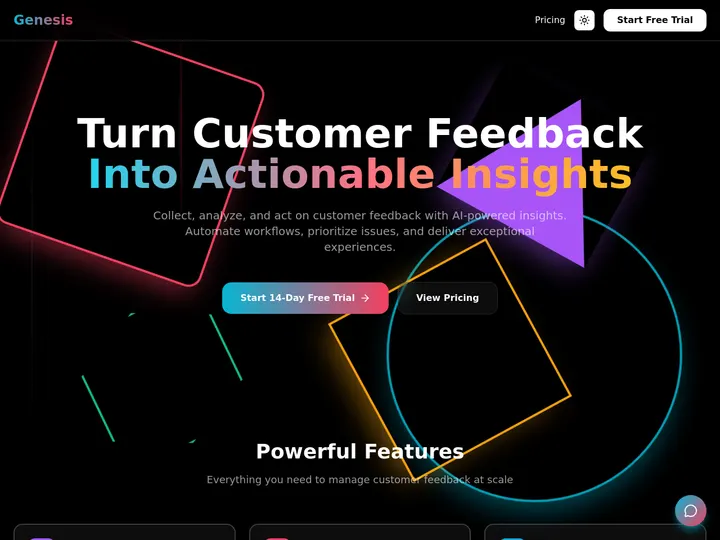
The fastest way to understand the model is to clone one. The app below was built from a single prompt in Taskade Genesis, a SaaS landing page, the exact surface where a vibe-coded app starts earning. Open it, clone it, swap in your offer, and you are one step from a product. This is what "build once, clone many" looks like in practice: a finished app, not a screenshot.
Watch one prompt become one running app:
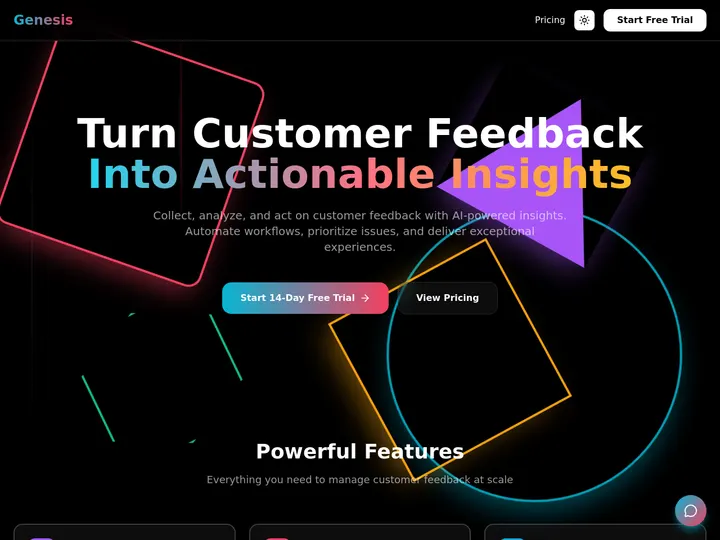
That single click is the whole shift. A tutorial teaches you to build. A cloneable app is the product. Clone this app and start your first build →
The Five Real Ways to Make Money Vibe Coding
There are exactly five paths that earn in 2026, and they share one engine: a working app you build once. The difference is how you package and price it. Here is the full map before we go path by path.
Each path has a different effort curve and a different revenue shape. This table is the one to bookmark. It is the whole article in five rows.
| Revenue path | What you sell | Pricing in 2026 | Effort after launch | Best for |
|---|---|---|---|---|
| App Kits (clone-many) | A finished app buyers clone | $29–$99 one-time | Near-passive | Anyone with one good build |
| Micro-SaaS | A monthly subscription app | $9–$49/user/mo | Low (support + updates) | A repeatable niche problem |
| Productized service | A custom client build | $3,000–$8,000/project | Per project | Operators with a network |
| Local setup contracts | An app for a local business | $500–$3,000 each | Per contract | Freelancers, agencies |
| Community Gallery | Discovery for any of the above | Free to list | None | Getting found and cloned |
Sources for these ranges: opc.community on market size and the non-developer share, and the 2026 founder revenue breakdowns on per-path pricing. Now let's walk each path.
Path 1: Sell App Kits: Build Once, Clone Many
The highest-leverage path is selling App Kits, because one build can be cloned by hundreds of buyers. An App Kit is a complete, working Taskade Genesis app you build a single time and let others buy and clone with one click. The buyer gets their own running copy, agents, automations, database, and all. Then swaps in their branding and data. They are not buying a tutorial or a blank template. They are buying a finished result.
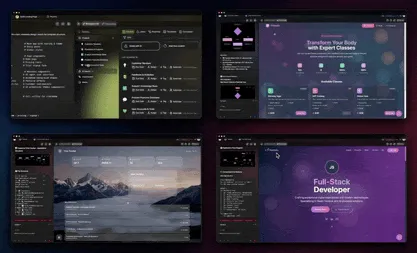
Build once, clone many: a finished app a buyer copies in one click, then makes their own, every clone is new revenue at zero extra build cost.
The economics are the reason this path wins. You pay the build cost once. Every clone after that is new revenue at near-zero marginal cost. Template and app-kit sellers commonly move 40 to 80 copies a month at around $49 each, which is roughly $2,000 to $4,000 a month in near-passive income (2026 marketplace data). Sell a kit for $49, clone it 60 times, and the work you did once keeps paying.
Here is why an App Kit beats a plain template, side by side. A template is a blank you assemble; a kit is a running app you customize.
| What you ship | Static template | Taskade Genesis App Kit |
|---|---|---|
| What the buyer receives | A blank file to assemble | A working app, already running |
| Setup time for the buyer | Hours of wiring | One click to clone |
| Does it include agents | No | Yes — built-in tools |
| Does it include automation | No | Yes — reliable workflows |
| Lives on the buyer's domain | Rarely | Yes, on Pro |
| Build-once-clone-many | Sort of | By design |
Because Taskade Genesis apps clone in one click, a kit is the most natural product to sell. Learn the loop that makes it possible in our Genesis Loop explainer and the vibe coding concept guide.
Path 2: Ship a Micro-SaaS With No Code
A micro-SaaS is the recurring-revenue path. It is a small, focused subscription app that solves one problem for one audience, and average micro-SaaS products earn between $5,000 and $50,000 in monthly recurring revenue, with many niche tools starting at $200 to $500 a month (micro-SaaS revenue data, 2026). A simple model: 50 subscribers at $49 a month is about $2,450 in recurring revenue (founder breakdown, 2026).
You do not need to write code to ship one. In 2026, a large share of new micro-SaaS products were launched by founders with zero programming background. With Taskade Genesis you describe the app in plain words, get a running web app with a database, agents, and automations, then publish it on your own custom domain on the Pro plan. The app is hosted, branded, and live, no servers to manage.
The reason a micro-SaaS keeps earning is that the app actually does the work. A Taskade Genesis micro-SaaS ships with AI agents that run built-in tools and reliable automation workflows, so it onboards users, sends updates, and runs tasks without you touching it. That is the difference between a subscription people keep and one they cancel. For a deeper look at building deployable apps from a prompt, see free AI app builders.
Path 3: Productize a Service: Get Paid to Build Apps
The fastest cash path is building apps for other people. Custom app projects that agencies once priced at $15,000 to $80,000 now sell for $3,000 to $8,000 each, because vibe coding cuts the build to about a week (2026 service pricing). Land four projects a month and the math works on its own. At the local level, a single setup contract for a small business runs $500 to $3,000 and can be spun up over a weekend.
The move is to productize, sell the same kind of app to the same kind of customer, over and over, instead of bespoke one-offs. Build a client-portal app for one real estate agent, then sell that exact build to twenty more. This is where App Kits and services combine: deliver the project, keep the app as a kit, and sell clones to the rest of the industry.
  SELLING HOURS (the old way)        PRODUCTIZING (the vibe-coding way)
  ───────────────────────────        ──────────────────────────────────
  [ you ] quote a custom build       [ you ] build the app ONCE
       │                                  │
       ▼                                  ▼
  bill by the hour                   sell the SAME app to the niche
       │                                  ├─ client 1: $3,000 build
       ▼                                  ├─ client 2: clones the kit
  income capped by your time         ├─ client 20: clones the kit
       │                                  ▼
  start over next project            one build → a whole industry
The left column is a job. The right column is a business. The bridge between them is an app you can clone. Operators do this across whole verticals, see how a real founder ran an entire operation on Taskade Genesis in vibe-coded business.
Path 4 and 5: Publish to the Gallery and Your Own Domain
Distribution is where the first three paths get found and bought. Two surfaces do the heavy lifting: the Community Gallery and your custom domain. The Gallery is where people browse live, working apps and clone the ones they like, free to list, and the most natural place for an App Kit to get discovered. Your custom domain is where a micro-SaaS or a client build becomes your own product instead of a page on someone else's platform.
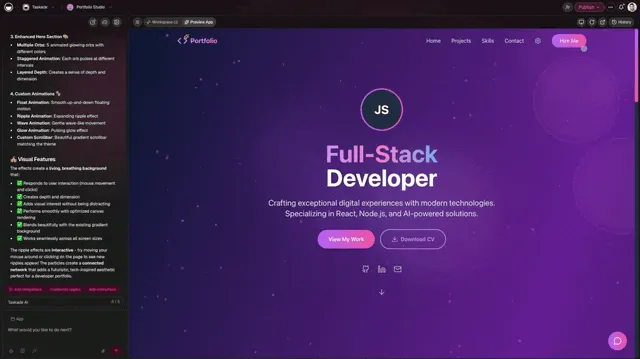
Publishing is the moment a build becomes a product: one click puts a working app in front of buyers on a domain or in the gallery.
A live, cloneable demo converts far better than a screenshot, because the buyer tries the real thing before paying. Publishing on a custom domain (Pro plan) gives a micro-SaaS the credibility of a standalone product, and listing in the Community Gallery gives any App Kit a storefront with built-in traffic. Browse what already runs there before you build, and clone the closest match to your idea.
How to Price a Vibe-Coded App
Price by the model, and always against the outcome the customer gets, not the hours you spent. Each path has a proven 2026 range. The mistake to avoid is pricing a finished app like a side project, a tool that saves a business real money is worth real money.
Charging on a vibe-coded app: once the app does real work, payments turn it from a side project into recurring income.
| Your path | Pricing model | 2026 range | Anchor the price to |
|---|---|---|---|
| App Kit / template | One-time purchase | $29–$99 | The hours of setup it saves the buyer |
| Micro-SaaS | Monthly per user | $9–$49/user/mo | The value of the problem solved each month |
| Productized service | Per project | $3,000–$8,000 | The agency price it replaces |
| Local setup contract | Per business | $500–$3,000 | The revenue the app helps the business earn |
| Industry license | Annual or per-seat | Negotiated | The cost of the customer building it alone |
The rule across every row: a narrow app for a specific audience always out-earns a generic app for everyone. A scheduling tool "for pet groomers" beats a scheduling tool "for anyone," because the groomer instantly sees it was built for them. Pick the niche, then price the outcome.
The Build-Once-Clone-Many Flywheel
The reason these paths compound is a flywheel, not a funnel. Every app you build and sell feeds the next one. Taskade Genesis calls this Workspace DNA, Memory, Intelligence, and Execution reinforcing each other. Memory remembers your winning builds, Intelligence drafts the next app in your voice across frontier models from top AI labs, and Execution ships and clones it. Each sale sharpens the next build.
That dotted line back to the start is the part a one-off build never has. Here is everything a Taskade Genesis app carries that a static template cannot, the layers that make it sellable, not just shippable:
  A SELLABLE GENESIS APP (one prompt builds all of this)
  ─────────────────────────────────────────────────────
  ┌─ THE APP ──────────────────────────────────────┐
  │  database · UI · pages · the actual product    │   ← what the buyer clones
  ├─ AI AGENTS ────────────────────────────────────┤
  │  built-in tools · onboard + run the work       │   ← the teammate inside the app
  ├─ AUTOMATION ───────────────────────────────────┤
  │  reliable workflows · 100+ integrations        │   ← it runs without you
  ├─ DISTRIBUTION ─────────────────────────────────┤
  │  custom domain · Community Gallery · App Kit    │   ← where it gets sold
  └─ MEMORY ───────────────────────────────────────┘
     every sale sharpens the next build               ← Workspace DNA, the compounding part
This is the gap between a vibe-coded file and a vibe-coded business. A file ships once. An app on this stack clones, runs, and compounds.
A Real Operator Already Runs On This
This is not a roadmap promise. Taskade's first self-serve Enterprise customer — an IT program manager with no engineering team — built a production field-service dashboard on Taskade Genesis, a real, running app his team uses every day. His take: "What I accomplished in a few weeks would have taken a team of 40+ people 18 months in a Fortune 500."
That is the leverage behind every revenue path on this page. One person, a few weeks, a running app that would have been a year-and-a-half project for forty people. He did not generate a file. He generated the app that runs the work, and the same engine that built his dashboard is what you list as an App Kit, charge monthly for as a micro-SaaS, or sell to a client as a build. The follow-up agent, the automations, the clone button, all of it ships in one prompt. Browse more live, cloneable apps in the Community Gallery, or see what a one-person operation looks like in vibe-coded business.
How to Start Making Money Vibe Coding Today
Start narrow, validate fast, then ship. The biggest mistake is building before anyone has agreed to pay. The second is building broad. Here is the exact path from idea to income.
You can do steps 1 through 5 on the Free Forever plan, so you validate before you spend a cent, and you keep every app you build. When you are ready to put a micro-SaaS or a client build on your own custom domain, the Pro plan at $10/month billed annually is the tier that unlocks it. Pricing across the board: Free, Pro $10 (Popular ★), Business $25, Max $100, and Enterprise $250 a month, all annual billing.
For the bigger picture on where this is all heading, read the state of vibe coding and the debate over whether vibe coding will replace SaaS. For the teammates inside your app, see what AI agents are and the best AI workflow automation tools. When you are ready, the Taskade Genesis app builder and the step-by-step Taskade Genesis overview walk you through your first build.
The simplest possible start: clone the live SaaS landing page above, swap in your offer, and you have the front door of a product. Build once. Clone many. Start free in Taskade Genesis →
Memory remembers your wins, Intelligence builds the next app, Execution ships and clones it, the self-reinforcing loop that turns one prompt into recurring income. ▲ ■ ●
Frequently Asked Questions
Can you make money vibe coding in 2026?
Yes. The vibe coding market reached roughly 4.7 billion dollars in 2026 and is projected to hit 12.3 billion by 2027, and 63 percent of active users are non-developers. People earn money by selling cloneable app kits, charging monthly for a micro-SaaS, and building apps as a paid service. On Taskade Genesis you describe an app in plain words, get a running app, then publish, sell, or clone it. The Free Forever plan lets you start with no card.
How do people sell AI-built apps?
People sell AI-built apps three main ways. They list a working app or template in a marketplace and sell copies, they charge a monthly subscription for a hosted micro-SaaS, or they build a custom app for a client as a one-time project. Taskade Genesis supports all three by turning one prompt into a live app you can publish on a custom domain, share in the Community Gallery, or package as a buy-once-clone-many App Kit.
What is an app kit?
An App Kit is a complete, working Taskade Genesis app you build once and let others buy and clone. The buyer clicks once, gets their own copy, and customizes it with their branding and data. Because the app is already functional, an App Kit sells a finished result, not a tutorial or a static template. App Kits use a buy-once-clone-many model, so a single build can be cloned by hundreds of buyers without any extra work from you.
What is the build once, clone many model?
Build once, clone many means you create a working app a single time, then sell unlimited copies that buyers clone with one click. Your build cost is paid once, but every clone is new revenue at zero marginal cost. Taskade Genesis App Kits run on this model. It is the same economics as selling a template, except buyers receive a running app with agents and automations instead of a blank file they have to assemble.
Can you build a micro-SaaS with no code?
Yes. A micro-SaaS is a small, focused subscription app that solves one problem for one audience. With Taskade Genesis you describe the app in plain language, get a running web app with a database, agents, and automations, then publish it on your own custom domain on the Pro plan and up. Average micro-SaaS products earn between 5,000 and 50,000 dollars in monthly recurring revenue, and many niche tools start at 200 to 500 dollars a month.
How much can you earn vibe coding apps?
Earnings depend on the path. Template and app-kit sellers commonly move 40 to 80 copies a month at around 49 dollars each, roughly 2,000 to 4,000 dollars in near-passive income. A micro-SaaS with 50 subscribers at 49 dollars a month earns about 2,450 dollars in recurring revenue. App-as-a-service projects that agencies once priced at 15,000 to 80,000 dollars now sell for 3,000 to 8,000 dollars each because the build takes about a week.
Do you need to code to make money vibe coding?
No. In 2026, 63 percent of active vibe coding users are non-developers, and a large share of new micro-SaaS products were launched by founders with no programming background. The skill that matters is describing a real problem clearly, not memorizing syntax. Taskade Genesis builds the app from your description, so you focus on the customer, the offer, and the price rather than the code.
What kind of vibe-coded apps sell best?
Narrow, vertical apps sell best. These are tools that solve one painful problem for one specific audience. Examples include a scheduling app for pet groomers, a job-costing calculator for HVAC contractors, a client portal for real estate agents, and CRM or dashboard apps for a single industry. A focused app for a small audience outsells a generic app for everyone because the buyer instantly sees it was built for them.
How do you find customers for a vibe-coded app?
Start where your audience already gathers. Validate by finding three people willing to pay before you build, then launch in niche communities, on Product Hunt, in industry forums, and through the Taskade Community Gallery where people browse and clone live apps. Publishing your app on a custom domain and listing it as an App Kit gives buyers a working demo they can try before they pay, which converts far better than a screenshot.
How do you price a vibe-coded app?
Price by the model. App kits and templates commonly sell for 29 to 99 dollars as a one-time purchase. A micro-SaaS subscription usually runs 9 to 49 dollars a month per user, anchored to the value of the problem solved. App-as-a-service projects run 3,000 to 8,000 dollars per build, and local-business setup contracts run 500 to 3,000 dollars. Always price against the outcome the customer gets, not the hours you spent.
How does Taskade help you monetize a vibe-coded app?
Taskade Genesis is the full stack for monetizing. You build the app from a prompt, publish it on a custom domain on the Pro plan, list it as a buy-once-clone-many App Kit, and share it in the Community Gallery where buyers clone it. Built-in AI agents with built-in tools and reliable automation workflows mean the app actually runs the work, not just displays it. Pricing is Free, then Pro 10 dollars, Business 25 dollars, Max 100 dollars, and Enterprise 250 dollars a month, annual billing.
How do I start making money vibe coding today?
Pick one narrow problem you understand, describe the app to Taskade Genesis, and get a running app in minutes. Find three people who will pay, choose a path of app kit, micro-SaaS, or paid build, publish on a custom domain, and list it in the Community Gallery. The Free Forever plan lets you build and validate before you spend anything, and you keep every app you create.