






In 2024 and 2025, AI app builders won by shipping faster. The marketing claim was "from prompt to live app in under a minute." It worked. Cursor crossed billions in valuation. Lovable, Bolt, v0, and Replit scaled to millions of users. Vibe coding became a movement.
In 2026, the playing field shifted. Speed is table stakes. The new axis is reasoning depth. OpenAI's reasoning-model series proved that thinking longer at inference time beats training a bigger model. Every frontier lab converged on the same lesson, and in April 2026 the major coding tools converged in a single month: Cursor 3 shipped the Agents Window with worktree-aware multi-agent workflows, Windsurf Wave 13 shipped first-class parallel sessions, OpenAI Codex v2 went multi-agent, and Google Antigravity launched with autonomous full-stack generation. The question for app builders became: how do you turn inference-time scaling into a product the user can actually use?
This post is the answer for one specific surface: AI app generation. We compare Taskade Genesis against ten alternative platforms, Cursor, Lovable, Bolt.new, Vercel v0, Replit Agent, Windsurf, Bubble, Webflow, Adalo, Glide, plus a bonus look at the April 2026 new entrant Google Antigravity, across the architectural axes that matter in 2026, with verified May-2026 pricing on every line. And we explain why only Taskade ships true multi-agent interference merge at the app-build layer.
TL;DR: Code generators (Cursor, Lovable, Bolt, v0, Replit) run one reasoning branch and ship a code repo, billed by token or credit. Taskade Genesis Quantum runs N parallel branches and ships a deployed living workspace at $10/month flat on Pro for up to 10 seats. The difference is reasoning depth at the app-architecture layer. 150,000+ apps live.
📊 Taskade Genesis vs 10 Competitors: Full Comparison Table (May 2026)
We pulled verified May-2026 pricing from each competitor's /pricing page, then evaluated 11 capabilities that decide which AI app builder ships your business system. The table below maps Taskade Genesis against ten of the most-Googled alternatives, Cursor, Lovable, Bolt.new, Vercel v0, Replit, Windsurf, Bubble, Webflow, Adalo, and Glide.
| Capability | Taskade Genesis | Cursor | Lovable | Bolt.new | Vercel v0 | Replit | Windsurf | Bubble | Webflow | Adalo | Glide |
|---|---|---|---|---|---|---|---|---|---|---|---|
| Output unit | Workspace DNA (Project · Agent · Automation · Interface) | Source code (text) | React/Vite source | Full-stack source (browser) | React component code | Full-stack source | Source code | Visual app | Marketing site | Native mobile + web | Spreadsheet-backed app |
| Multi-agent reasoning | ✅ Taskade Genesis Quantum (N parallel + interference merge) | Single branch | Single branch | Single branch | Single branch | Single branch | Single agent loop | None (visual) | None | None | None |
| Persistent data layer | ✅ Projects (7 view types) | ❌ (your code) | Bring Supabase | Bring Supabase | ❌ | Replit DB | ❌ | ✅ (visual DB) | ✅ (CMS) | ✅ | ✅ (sheets) |
| AI agents in the app | ✅ Agents v2 (memory, built-in tools, multi-agent) | ❌ | ❌ | ❌ | ❌ | ❌ | ❌ | ❌ | ❌ | ❌ (beta) | ❌ |
| Bidirectional automations | ✅ 100+ integrations | ❌ | ❌ | ❌ | ❌ | ❌ | ❌ | ✅ (workflow) | Partial | ❌ | ✅ (limited) |
| Live deployment | ✅ Custom domain + SSL | ❌ | ✅ (Lovable) | ✅ (Netlify) | ✅ (Vercel) | ✅ (Replit) | ❌ | ✅ (Bubble) | ✅ (Webflow) | ✅ (App Store + web) | ✅ (web/PWA) |
| Branch trace / explainability | ✅ branchTrace project | ❌ | ❌ | ❌ | ❌ | ❌ | ❌ | ❌ | ❌ | ❌ | ❌ |
| role-based access | ✅ Owner → Viewer | Repo permissions | Pro+ "user roles" | ❌ | Team plan | Replit Teams | Team plan | Manual rules | Workspace plans | Editor/team roles | App-level roles |
| Free tier | ✅ up to 6K credits, full DNA | Hobby Free | 5 daily credits | 300K daily tokens | $5 credit, 7 msgs/day | Trial credits | Free Light | 50K WUs (no live deploy) | Starter (2 pages) | Free (500 records) | Free (1 editor, drafts only) |
| Lowest paid (entry) | $10/mo (Pro, annual) | $20/mo (Pro) | $25/mo (Pro) | $25/mo (Pro) | $30/user/mo (Team) | $25/mo (Core) | $20/mo (Pro) | $29/mo (Starter) | $14/mo (Basic site) | $36/mo (Starter) | $199/mo (Business) |
| Most popular tier | $10/mo (Pro, 10 seats) | $20/mo | $25/mo | $25/mo | $30/user | $25/mo | $20/mo | $119/mo (Growth) | $39/mo (Business) | $52/mo (Pro) | $199/mo |
| Pricing meter | Flat | Credits | Credits | Tokens | Credits | Effort credits | Subscription | Workload Units (WUs) | Site/Workspace (dual) | Flat | Flat |
The first row is the one that matters: what is the unit of output?
If your output unit is text, you cannot run structural multi-agent merge. Text-diff merging is brittle, whitespace-sensitive, and naming-fragile. If your output unit is Workspace DNA primitives with stable semantic identity, you can. That is the entire architectural distinction. Everything else follows from it.
🧬 What Is Taskade Genesis?
Taskade Genesis is an AI app builder that produces a complete living workspace from a single prompt. The output is not a codebase you have to host. It is a working system the user can use immediately, projects with tasks, agents that act on those tasks, automations that fire on real events, and a deployable interface with a custom domain and SSL.
Four primitives, one self-reinforcing loop:
This is Workspace DNA, Memory (Projects) feeds Intelligence (Agents), Intelligence triggers Execution (Automations), Execution creates Memory. Each cycle enriches the next. The combination is what makes Taskade Genesis fundamentally different from a code generator: the output is a system, not a file tree.
EVE, the public name of the Taskade Genesis meta-agent, is the orchestrator. Type a prompt, EVE generates the projects, agents, automations, and interface. Edit anything later, and EVE keeps the loop coherent.
Quantum mode is the next layer. EVE doesn't reason once. It reasons in N parallel branches simultaneously, then merges only what survives all of them.
⚛️ What Is Taskade Genesis Quantum?
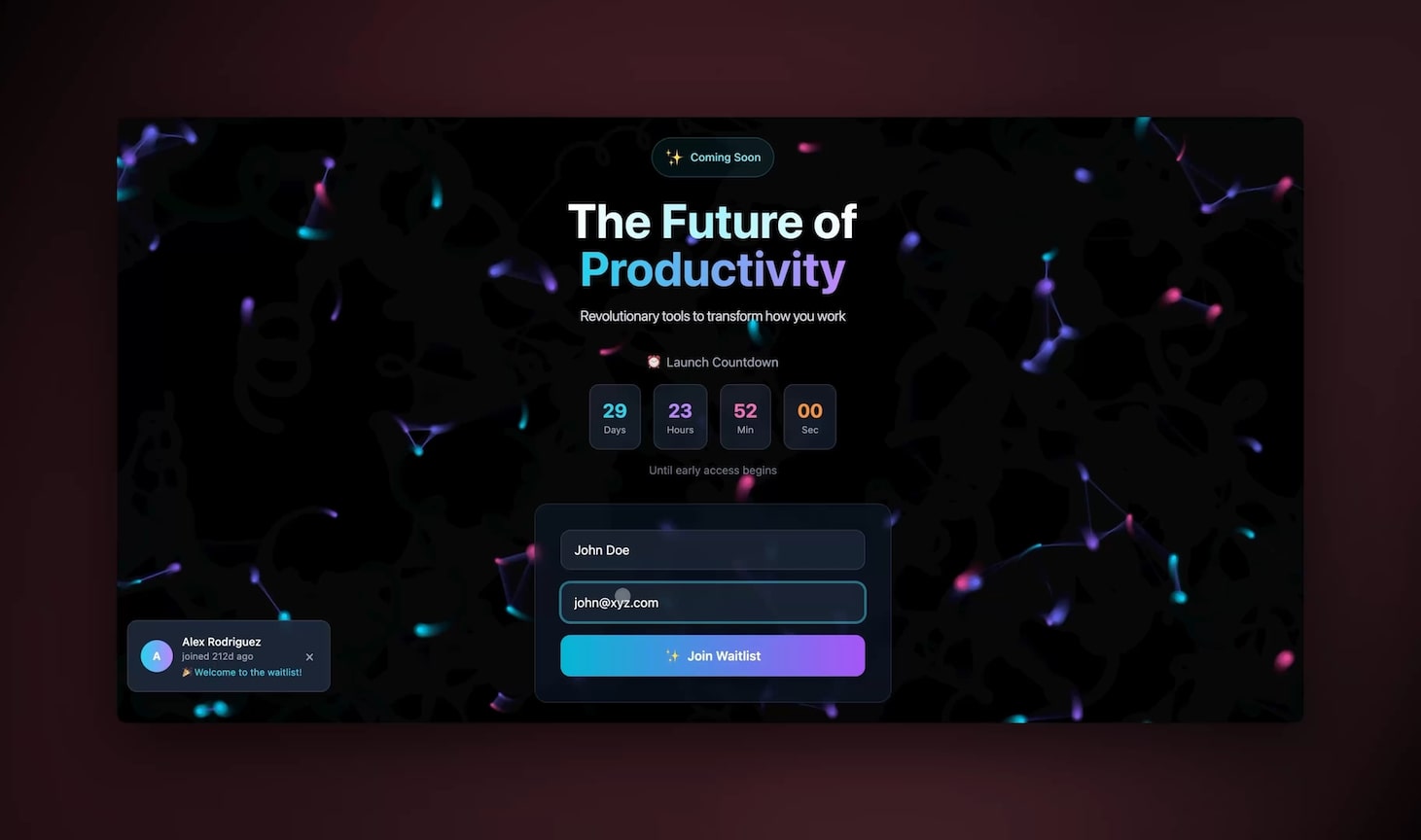
Taskade Genesis Quantum is multi-agent interference merge applied to app generation. Instead of running EVE once and shipping the result, the system:
- Fans out the prompt to N parallel EVE branches (auto-tuned: N=1 for trivial edits, N=4 for new spaces, N=16 for explicit Deep Think)
- Isolates each branch in its own branch sandbox so writes don't contaminate the user's workspace
- Diffs the candidate Workspace DNAs against each other using structural semantic identity
- Commits the records that appear in a majority of branches (invariants)
- Asks the user about the records that disagree (divergences)
- Discards the records unique to one branch (outliers)
- Persists the entire trace as a real Project the user can revisit
ASCII visualization:
   USER PROMPT  ("Build a CRM with leads, deals, follow-up automation")
        │
        ▼
   ┌──────────┐    EVE picks N=4 (auto-tuned by complexity)
   │   EVE    │
   └────┬─────┘
        │
        ▼
   ┌──────────────────────────────────────────────────────────┐
   │             SUPERPOSITION CHAMBER (4 isolated branch sandboxes)  │
   │   branch_α: Contacts · 4-stage Pipeline · Sales-Coach    │
   │   branch_β: Contacts · 6-stage Pipeline · Sales-Coach    │
   │   branch_γ: Contacts · 4-stage Pipeline · Pipeline-Coach │
   │   branch_δ: Contacts · 4-stage · +Forecasting · Sales-C. │
   └──────────────────────────────────────────────────────────┘
        │
        ▼
   ┌──────────────────────────────────────────────────────────┐
   │             INTERFERENCE MERGE                            │
   │   ✓ INVARIANTS: Contacts, Pipeline, Sales-Coach          │
   │   ? DIVERGENCE: 4-stage vs 6-stage → ask user            │
   │   ✗ OUTLIERS: Forecasting (only in δ) → discard          │
   └──────────────────────────────────────────────────────────┘
        │
        ▼
   GENESIS APP collapses to one — branchTrace preserved
The full engineering deep-dive is in How Multi-Agent Interference Merge Works. The historical roots, Deutsch, Everett, Feynman, Wheeler, are in History of Quantum Computing: From Deutsch to Taskade Genesis Multi-Agents.
The quantum-algorithm ↔ Genesis Quantum isomorphism
The four stages of every quantum algorithm have a one-to-one twin in Genesis Quantum. The shape is preserved:
Replace "qubit" with "EVE branch" and the algorithm is the same. The mathematical structure that makes Shor's algorithm work, phased parallel branches that interfere, is the same structure that makes a 4-branch CRM merge ship a more reliable app than a single-shot generation. No other AI app builder has translated the math to the app layer.
🎯 Vs Cursor: The Code-Editor Approach
Cursor is an AI-augmented code editor. Pro is $20/month. The output is text written into your codebase. You run the code. You deploy the code. You maintain the code.
For developers writing software in a familiar language, Cursor is excellent. The Composer agent ships clean diffs, the Tab completion is best-in-class, and the IDE integration is tight. Cursor crossed billions in valuation by being the right tool for the right user, the engineer who already knew what they wanted to build, who wanted typing accelerated, not architecture decided.
Where Cursor stops: the code is the deliverable. There is no data layer the AI can reason about, no agents the resulting app deploys with, no automations connected to external services, and no live URL. The user has to host, deploy, monitor, and update the resulting code. Multi-agent reasoning happens in pre-commit (Cursor "thinks" about the code) but not in the app architecture itself. The June 2025 pricing crisis, Cursor changed from a request-based metering model to a credit-pool tied to API costs, and existing customers reported being overcharged without warning, culminated in a public apology from the CEO on July 4, 2025. The 2026 lineup now spans six tiers (Hobby, Pro $20, Pro+, Ultra, Teams, Enterprise) plus a separately priced Bugbot product. Heavy users on Reddit and HN still report "cap anxiety", burning through a month's credits in a debug loop on a Friday afternoon.
| Cursor | Taskade Genesis | |
|---|---|---|
| Best for | Engineers writing code | Anyone building an app from a prompt |
| Output | Source files | Living workspace (data + agents + automations + UI) |
| Where it runs | Your servers | Taskade-hosted, custom domain optional |
| Multi-agent reasoning | Within code generation | Across full app architecture (Quantum mode) |
| Maintenance | You | Continuously updated by EVE on edit |
| Pricing meter | Credits (Pro $20/mo) | Flat ($10/mo Pro) |
When to choose Cursor: you are an engineer; the output you want is code; you have hosting + deployment infrastructure already.
When to choose Taskade Genesis: you are anyone, engineer, founder, ops lead, teacher; the output you want is a working business system that runs immediately.
For a fuller head-to-head, see Taskade Genesis vs Cursor 2026 and Best Cursor Alternatives.
💖 Vs Lovable: The Frontend-Generator Approach
Lovable generates React/Vite applications from prompts and provides Vercel-style hosting. Pro is $25/month with ~100 credits. Business is $50/month with SSO + RBAC. The output is a deployable codebase.
For frontend designers and developers, Lovable is a strong choice. The UI it produces is opinionated, modern, and starts shipping in under a minute. The deploy-to-Lovable flow is seamless, with custom domains on Pro and above and GitHub two-way sync. Lovable nailed the no-code-to-code bridge for the web-app archetype.
Where Lovable stops: Lovable produces a stateless web app. There is no built-in data layer (you wire Supabase by hand), no AI agents that act inside the app, no automation engine connecting to Slack/Gmail/Stripe, and no built-in role-based access at the app primitive level. If you need any of those, you wire them up after the fact through external services. And the credit meter, 100 credits/month on Pro, is one serious project before paywall, since a 5-step debug loop can burn 5 credits.
In NocodeMBA's head-to-head benchmark, Lovable generated a working prototype in 47 minutes; Bolt.new finished a comparable prototype at 52 minutes. Both are fast. Both ship a stateless React app with no agent layer, no persistent data tier, and no automation runtime. Taskade Genesis ships the same prototype with all four DNA strands wired in roughly the same minute window, and the result is a living app, not a static codebase you still have to host.
| Lovable | Taskade Genesis | |
|---|---|---|
| Output | React/Vite codebase | Workspace DNA (data + agents + automations + UI) |
| Database | You wire it up (Supabase, Convex…) | ✅ Built-in (Projects with 7 view types) |
| AI agents in the app | You wire it up | ✅ Built-in (Agents v2, persistent memory) |
| Automations | You wire it up (Zapier, Make) | ✅ Built-in (100+ bidirectional integrations) |
| Role-based access | Pro+ basic roles | ✅ Built-in, Owner → Viewer |
| Multi-agent reasoning | Single-pass code gen | ✅ Taskade Genesis Quantum (parallel branches) |
| Pricing meter | 100 credits/$25 (Pro) | Flat ($10/mo Pro, 10 seats) |
When to choose Lovable: you want a deployable React/Vite codebase you can fork and extend in your own pipeline.
When to choose Taskade Genesis: you want a complete living app with built-in data, agents, automations, and access control, without wiring it up across five separate services and without the credit-meter anxiety.
For more, see Taskade Genesis vs Lovable 2026.
⚡ Vs Bolt.new: The Browser-Native Approach
Bolt.new runs full-stack web apps in your browser via WebContainers (StackBlitz's WebAssembly-based runtime). Pro is $25/month with 10M tokens, and there are step-up tiers all the way to Pro 200 at $200/month. The output is a runnable browser-hosted full-stack app that you can fork and self-host.
For rapid prototyping and "what if I tried…" exploration, Bolt is fantastic. The browser-as-runtime is genuinely novel. You see your app running in the browser as it generates, you can iterate live, and you can export to GitHub when you're done.
Where Bolt stops: same architectural ceiling as Lovable, Bolt outputs a codebase, and the resulting app is a single web app, not an integrated workspace. No persistent data tier across sessions outside what you wire up, no AI agents inside the app, no automation engine, no RBAC. And the token meter bites at scale: heavy users report blowing through 10M tokens in a week, then having to upgrade to Pro 50 ($50/mo, 26M tokens), Pro 100 ($100/mo, 55M), or Pro 200 ($200/mo, 120M). For a heavy user generating 50+ apps a month, the realistic Bolt spend is $200/mo, $2,280/year more than Taskade Genesis Pro at a flat $10/month, with no agents, no automations, and no integrated workspace included.
                        ANNUAL COST FOR 50+ GENERATIONS / MONTH
                        ──────────────────────────────────────
                        Bolt Pro 200      ████████████████████  $2,400
                        Replit Pro        ██████████             $1,200
                        Cursor Ultra      ██████████             $1,200
                        Lovable Business  █████                    $600
                        v0 Team           ████████████             $360 / user
                        Cursor Pro        ██                       $240
                        ──────────────────────────────────────
                        Taskade Pro       ▌                        $120   ★ flat, 10 seats
                        ──────────────────────────────────────
                        (verified May 2026 from each /pricing page)
| Bolt.new | Taskade Genesis | |
|---|---|---|
| Output | Codebase + WebContainer preview | Workspace DNA |
| Pricing meter | 10M tokens/$25 (Pro), up to $200/mo | Flat ($10/mo Pro) |
| Built-in data + agents + automations | ❌ | ✅ |
When to choose Bolt: you want a runnable full-stack prototype in your browser within seconds and you understand the token math.
When to choose Taskade Genesis: you want a deployed working business system, not a prototype, not a codebase you have to host yourself, not a single web app, but the full Memory + Intelligence + Execution loop assembled into a runnable App, on a flat monthly bill.
🎨 Vs Vercel v0: The UI-Generator Approach
Vercel v0 is a UI generator focused on producing React component code from prompts. Free is $5 credits with 7 messages/day. Team is $30/user/month with $30 credits each. Business is $100/user/month. The output is a .tsx file you copy into your codebase or push to GitHub.
For frontend designers, v0 is excellent. The component code is clean, the design system (Tailwind + shadcn/ui) is opinionated, and the iteration loop is tight. v0 is the right tool for "I need a hero section with three feature cards and a CTA."
Where v0 stops: v0 produces components, not apps. There is no data layer, no agents, no automations, no deployment-of-the-system, and no integration with the rest of your stack beyond the Vercel deploy lane. You take the component code and embed it in your existing app.
| Vercel v0 | Taskade Genesis | |
|---|---|---|
| Output | React component (.tsx) | Complete app (data + agents + automations + UI) |
| Use case | Designers iterating on UI | Anyone building a working business system |
| Pricing | $30/user/mo (Team) | $10/mo Pro (10 seats included) |
| Multi-component reasoning | Per-component | Across full app (Quantum mode) |
When to choose v0: you are a designer iterating on UI components in isolation.
When to choose Taskade Genesis: you want a working app, not a component.
🚀 Vs Replit Agent: The Full-Stack Code-Cloud Approach
Replit Agent generates and runs full-stack apps inside Replit's cloud-IDE environment. Core is $25/month with $25 of effort credits and 5 collaborators. Pro is $100/month flat with rolled credits. The output is a runnable codebase with database, hosting, and deployment all in one place.
Replit is the closest competitor to Taskade Genesis in terms of "you get a deployed thing, not just a file tree." Agent 3 ships clean code with checkpoints, full app plan + build + deploy in 15–20 minutes from one prompt. Replit DB and Auth are bundled. For developers who want code as the deliverable but with hosting included, Replit is a strong choice.
Where Replit stops: the unit of value is still a codebase. There is no Workspace DNA, no Projects with 7 view types, no Agents v2 with persistent memory, no Automation engine connected to 100+ services. Replit's "agents" are tools inside the IDE, not entities that ship inside the app you built. Multi-agent reasoning is at the code-generation layer, not the app-architecture layer. And effort-based pricing is unpredictable, solo devs report $65–$120/mo total, small teams $170–$300/mo when Agent loops on bugs.
| Replit Agent | Taskade Genesis | |
|---|---|---|
| Output | Runnable codebase | Living workspace (DNA primitives) |
| Audience | Developers | Anyone — engineer, founder, ops lead, teacher |
| Maintenance | You edit code | EVE keeps the loop coherent on edit |
| Multi-agent reasoning | At code-gen | At app-architecture (Quantum mode) |
| Built-in integrations | None directly | 100+ bidirectional |
| Pricing meter | Effort credits ($25 Core, $100 Pro) | Flat ($10/mo Pro) |
When to choose Replit: you want a hosted codebase you can edit in a cloud IDE.
When to choose Taskade Genesis: you want a working business system without thinking about code or watching the effort meter.
For more, see Taskade Genesis vs Replit 2026.
🌬️ Vs Windsurf: The Agentic IDE
Windsurf (formerly Codeium, acquired by Cognition mid-2025) is an agentic IDE, VS Code fork with a multi-step coding agent and proprietary SWE-1.5 model. Pro is $20/month. Max is $200/month for heavy users. Effectively a Cursor competitor.
Where Windsurf stops: like Cursor, the output is code in your local repo. No deploy. No app-builder story. No data + agents + automations + interface. Pure developer tool.
When to choose Windsurf: you are a developer who wants Windsurf's multi-file refactor + write/run/verify loop as an alternative to Cursor.
When to choose Taskade Genesis: the output you want is a living app, not edits to a local repo.
🫧 Vs Bubble: The Visual No-Code Platform
Bubble is the deep visual no-code incumbent, drag-drop element editor + workflow builder for full web/mobile apps. Free has 50K Workload Units (no live deploy). Starter is $29/month with 175K WUs. Growth is $119, Team $349. Enterprise custom. Mobile and Web+Mobile bundles range $42–$549.
For people who learn the editor, Bubble is the deepest visual no-code logic builder on this list. The visual database, the workflow engine, the responsive editor. They all reward the multi-week investment.
Where Bubble stops: Workload Units are the enemy, every DB query, workflow, and API call burns WUs at $0.30/1K overage. Successful apps get more expensive with traffic. The AI Page Builder is bolted-on, not native, and the visual editor has a real learning curve (multi-week, not multi-hour). RBAC requires manual privacy rule wiring.
| Bubble | Taskade Genesis | |
|---|---|---|
| Output | Visual no-code app (Bubble-hosted) | Workspace DNA (Taskade Genesis-hosted) |
| AI as primary input | ❌ (visual editor first; AI bolt-on) | ✅ (prompt-first, EVE generates DNA) |
| AI agents in the app | ❌ | ✅ Agents v2 (memory, built-in tools) |
| Pricing meter | Workload Units ($29/mo Starter → $349/mo Team) | Flat ($10/mo Pro) |
When to choose Bubble: you have weeks for the editor learning curve, you want maximum visual control, and you can model the WU consumption.
When to choose Taskade Genesis: you want a working app from a prompt within minutes, with built-in AI agents and automations and a flat bill.
🌐 Vs Webflow: The Marketing-Site Builder
Webflow is a visual website builder, designer-first marketing sites with a CMS, now wrapped with "AI Site Builder" + AI Assistant. Site plans start at $14/mo (Basic), CMS $23, Business $39, Enterprise custom. Workspace plans $19–$49. Free Starter has 2 pages on a webflow.io subdomain.
Where Webflow stops: Webflow is a website builder, not an app builder. No real backend, no agents, no automation runtime, no user dashboards. Webflow AI generates pages and copy. It doesn't build software.
When to choose Webflow: you are a designer building a marketing site or CMS-backed content site.
When to choose Taskade Genesis: you want an app, software with state, logic, agents, and integrations.
📱 Vs Adalo: The Mobile-First No-Code
Adalo is mobile-first no-code, single canvas → native iOS, Android, and web apps. Free has 500 records and unlimited test apps. Starter is $36/month for 1 published app. Pro $52, Team $160. Annual billing.
Where Adalo stops: persistent reports of slow runtime performance at scale. Ada AI is beta-only, not a first-class agent. Limited integration ecosystem.
When to choose Adalo: your primary target is App Store and Play Store, you want a single-canvas multi-platform publish, and your app has small-to-mid data volume.
When to choose Taskade Genesis: you want a workspace-native app with built-in agents, automations, and 100+ integrations, accessible from mobile and desktop without separate native binaries.
📊 Vs Glide: The Spreadsheet-to-App Builder
Glide is a spreadsheet-to-app builder for internal business tools, portals, CRMs, dashboards from Sheets/Airtable/Postgres. Free has 1 editor, 25K rows, drafts only. Business starts at $199/month for 30 users, 5K updates, 100K rows. Enterprise custom.
Where Glide stops: $199/mo entry is the steepest on this list. Glide AI is shallow (AI columns + automation suggestions, not full app generation). Designed for rebuilding existing spreadsheet workflows, not greenfield ideas.
| Glide | Taskade Genesis | |
|---|---|---|
| Use case | Spreadsheet → internal tool | Prompt → complete business system |
| Lowest paid tier | $199/mo (Business) | $10/mo (Pro) |
| AI agents in the app | ❌ (AI columns only) | ✅ Agents v2 |
| Multi-agent reasoning | ❌ | ✅ Quantum mode |
When to choose Glide: your data already lives in spreadsheets and you need a fast portal layer at the Business tier price point.
When to choose Taskade Genesis: you want internal tools that are workspace-native, AI-driven from a prompt, and free to start with Pro from $10/month billed annually.
🆕 Vs Antigravity (Google): The 2026 New Entrant
Google Antigravity launched in early 2026 as a natural-language-to-full-stack autonomous generator. The pitch: "describe your app, Antigravity generates frontend, backend, database schema, and API routes." It is the most direct technical analog to Genesis on this list.
Where Antigravity stops: the output is still a codebase in Google's stack (Vertex AI + Cloud Run + Firestore by default). Genesis's distinction is that the unit of work is a living workspace, the AI agents your end users interact with are real Genesis Agents v2 with persistent memory, not chat completions wrapped in a UI; the automations are durable workflows running on 100+ bidirectional integrations, not webhook glue. Antigravity is the right tool if you want Google-stack code; Genesis is the right tool if you want a self-running team.
📅 The April 2026 Convergence: Why Genesis Becomes the Wedge
In one calendar month, four major AI tooling vendors shipped multi-agent fan-out as a first-class product surface, confirming the industry direction the cluster predicts:
| Date (Apr 2026) | Vendor | Release | Genesis-relevant takeaway |
|---|---|---|---|
| Apr 2026 | Cursor | Cursor 3 — Agents Window with worktree-aware multi-agent workflows | Even the IDE leader needs branch-aware reasoning. But Cursor still operates on text. |
| Apr 2026 | Windsurf (Cognition) | Wave 13 — first-class parallel sessions and worktrees | Same architectural shift; same text substrate; same merge fragility. |
| Apr 2026 | OpenAI | Codex multi-agent v2 — structured inter-agent messaging | Still pipeline-shaped (planner → coder → tester). Not branch-aware. |
| Apr 2026 | Antigravity — autonomous full-stack generation | Single-pass code-gen, not a branched merge. | |
| Apr 2026 | Anthropic | Mechanistic interpretability paper formalizing "superposition in residual stream" | Validates the quantum-shape framing this cluster argues for. |
| Apr 2026 | arXiv | PDR+RTV, CATTS, ReasoningBank | +8.3% WebArena, +4.6% SWE-Bench-Verified with branched-compute + memory. The papers prove the architecture; Taskade Genesis ships it. |
The whole industry is converging on what physicists have known since 1985: parallel branches, phased to interfere, are how you get exponential leverage. The IDE-bound builders are racing to add multi-agent worktrees. Genesis already does it workspace-natively, and on the right substrate (Workspace DNA), not the wrong one (text).
🎯 The Three-Question Decision Framework
If you are evaluating AI app builders in 2026, three questions decide the choice:
Question 1: What is your unit of output?
| Answer | Right tool |
|---|---|
| Source code (you'll host it) | Cursor, Lovable, Bolt, v0, Replit, Windsurf, Antigravity |
| Marketing website (with CMS) | Webflow |
| Visual no-code app (multi-week editor learning) | Bubble |
| Native mobile app (App Store + Play Store) | Adalo |
| Spreadsheet-backed internal tool ($199/mo+) | Glide |
| A working business system (deployed, integrated, with agents) from a prompt | Taskade Genesis |
Question 2: Do you need multi-agent interference reasoning at the app-architecture layer?
| Answer | Right tool |
|---|---|
| No — single-shot is fine | Any of the above |
| Yes — I want N parallel candidates merged structurally | Taskade Genesis Quantum (only option in the market) |
Question 3: Will the app need to remember things, do things, and integrate with other tools?
| Answer | Right tool |
|---|---|
| No — pure UI | Vercel v0 |
| Pure marketing site | Webflow |
| Yes — but I'll wire up the data + automations + RBAC myself | Lovable, Bolt, Replit, Bubble |
| Yes — and I want it built in | Taskade Genesis |
🧩 What Workspace DNA Unlocks That Code Generators Can't
Five categories of apps where code-only generators struggle and Workspace DNA shines:
1. CRM and pipeline tracking
Why DNA wins: Contacts/Deals/Activity Log are projects with 7 view types (Board for pipeline, Table for contact list, Calendar for follow-ups, Mind Map for relationship map). The Sales-Coach agent reads from those projects with persistent memory. The Slack-notify automation fires on stage changes. All four DNA strands wired in one prompt. Code generators ship the UI; the user wires up the rest.
Try: /templates · /apps
2. Booking and appointment systems
Why DNA wins: Services/Appointments/Clients projects with calendar view, a Booking-Assistant agent, conflict-resolution automation. Calendly + Google Calendar integration via 100+ bidirectional connectors. No glue code required.
3. Internal tools and dashboards
Why DNA wins: KPI Definitions + Data Snapshots projects, a Data-Analyst agent that interprets trends, threshold-alert automations to Slack. The dashboard is alive. It reads, reasons, and acts continuously. Beats Glide on price ($10/mo vs $199/mo) and on AI depth.
4. Customer portals
Why DNA wins: RBAC means an external client gets Viewer access while an internal team gets Editor. Taskade Genesis app deploys to a custom domain with SSL. Login + auth handled. Code generators ship the UI; you build the auth + RBAC + hosting.
5. Team operations and project management
Why DNA wins: Tasks across 7 view types (List for personal, Board for sprint, Gantt for roadmap, Calendar for deadlines, Mind Map for planning), a Project-Manager agent monitoring blockers, automations that escalate stalled work. The whole org's coordination, in one workspace.
💵 The Pricing Meter Comparison (Why Flat Beats Credits)
Across the ten alternatives above, pricing meter is the second-biggest source of buyer regret after capability mismatch. Here is the meter map:
| Meter type | Platforms | Why it bites |
|---|---|---|
| Flat (predictable) | Taskade Genesis, Adalo, Webflow site plans | Monthly bill is the same whether the app is busy or quiet |
| Credits / messages | Cursor, Lovable, v0, Replit | Heavy debug loops or a bad prompt can drain a month's allowance in a day |
| Tokens | Bolt.new | Browser dev runs eat tokens; users report 10M tokens in a week |
| Workload Units | Bubble | Successful apps cost more as traffic grows |
| Effort credits | Replit Agent | Agent loops on bugs can spike monthly bills 2–5× |
The asymmetric risk on credit/token/effort meters is real: the more your app gets used, the more it costs. Taskade Genesis is flat at $10/month on Pro for up to 10 seats. That predictability is itself a moat for solo founders, small teams, and education users.
🏆 The Ten Long-Tail Wedges (Where Taskade Genesis Wins Organic Search)
Based on multi-agent SERP research May 2026:
| # | Target keyword | Taskade Genesis advantage |
|---|---|---|
| 1 | "AI app builder with built-in agents" | Agents v2 in every app — custom tools, persistent memory, slash commands, multi-agent collaboration |
| 2 | "AI app builder with workflow automation" | 100+ bidirectional integrations on durable runtime — Stripe, Gmail, Sheets, Slack, Salesforce, Notion |
| 3 | "AI app builder with team roles" / "no-code app with RBAC" | built-in RBAC ships with every Taskade Genesis app |
| 4 | "unlimited AI app builder no token limits" | Pro $10/mo flat — no per-prompt credit burn |
| 5 | "multi-agent AI app builder" | Taskade Genesis Quantum is the only commercial multi-agent app builder shipping interference merge |
| 6 | "AI app builder with persistent memory" | EVE and per-app agents store memory as real Taskade Projects |
| 7 | "clone a working AI app" / "AI app templates community" | 150,000+ live cloneable apps in the Community Gallery |
| 8 | "AI app builder for internal tools alternative to Glide" | Same use case, $10/mo vs $199/mo |
| 9 | "vibe coding without code" / "no-code vibe coding tool" | Non-developer slice of the vibe coding movement |
| 10 | "AI app builder with bidirectional integrations" | Triggers pull events in, actions push data out, on Workspace DNA |
For broader landscape, see Best Vibe Coding Tools, Best Cursor Alternatives, and Best Agentic Engineering Platforms 2026.
⚙️ Try Taskade Genesis Today
The fastest way to understand Taskade Genesis is to build something with it.
- Build your first app: taskade.com/create, free Forever plan, no credit card
- Browse 150,000+ live apps: taskade.com/apps
- Templates and AI generators: /templates · /generate
- Pricing: /pricing
- Step-by-step setup: /learn/genesis/faq · /learn/agents/custom-agents · /learn/automation/triggers
Read the rest of the cluster:
- History of Quantum Computing: From Deutsch to Taskade Genesis Multi-Agents, the 50-year arc behind the architecture, including the 2025 Nobel Prize
- How Multi-Agent Interference Merge Works: Decoherence as Moat, engineering deep-dive on the structural-merge architecture
- Workspace DNA: The Context Engineering Blueprint for 2026, the substrate
- Metacognitive AI: How Agents Learn to Think About Thinking, the cognitive-science cousin (Flavell 1979 → Reflexion → branch-aware reasoning)
- Workspace Memory Knowledge Graph, the workspace-scoped graph surface (open from the workspace sidebar) visualizing the 3-pillar Memory + Intelligence + Execution loop
- What Is Vibe Coding, the no-code adjacent movement
- End of App Store: Living Software, why deployed living systems beat installed apps
- Best Agentic Engineering Platforms 2026, broader landscape
- Best Vibe Coding Tools 2026, where Taskade Genesis fits in the vibe-coding movement
- History of Computing: From Binary to AI Agents, the 80-year backdrop
- History of Primitives, why structural primitives win the era
- History of Apple: Bicycle for the Mind, the lineage Workspace DNA inherits
The next era of app builders is multi-agent. The moat is structural merge. The math has been on the table since 1985. The first commercial implementation is shipping now.
Frequently Asked Questions
What is the best AI app builder in 2026?
Taskade Genesis Quantum is the only AI app builder that runs multiple parallel reasoning branches and merges them via structural diff before committing the final app. Code-only generators like Cursor, Lovable, Bolt, v0, and Replit produce source files in a single reasoning pass. Taskade Genesis produces a complete living workspace, Projects, Agents, Automations, and a deployable Interface, and Quantum mode reasons about that workspace in N parallel branches at once. The Free plan includes full Workspace DNA without Quantum, and Quantum mode is available starting on Pro, ten dollars a month billed annually.
How is Taskade Genesis different from Cursor?
Cursor is an AI-augmented code editor that ships text into your project; the user runs the resulting code. Taskade Genesis is an AI app builder that ships a deployed living workspace; the user uses the resulting app. Cursor's output unit is a line of code; Taskade Genesis's output unit is a Workspace DNA primitive (Project, Agent, Automation, Interface). Cursor reasons about source files; Taskade Genesis reasons about complete app structures. Cursor is for engineers writing code; Taskade Genesis is for anyone, engineer, founder, teacher, ops lead, building an app from a prompt.
How is Taskade Genesis different from Lovable?
Lovable generates React or Vite source code from a prompt and provides Vercel-style preview hosting. Pro is twenty-five dollars a month with about one hundred credits, which is one serious project before paywall. The output is a static codebase you must host, deploy, and maintain. Taskade Genesis generates a complete living workspace including persistent data (Projects), AI agents that act on that data, and automations connected to one hundred plus integrations, all hosted, deployed, and updated continuously without the user managing infrastructure or watching a credit meter. Lovable ships a deployable. Taskade Genesis ships a working business system.
How is Taskade Genesis different from Bolt.new?
Bolt.new generates and runs a full-stack web app in your browser via WebContainers. Pro is twenty-five dollars a month with about ten million tokens, which heavy users report exhausting in a week. The result is a single web app you can fork and self-host. Taskade Genesis generates an integrated workspace, projects with tasks, AI agents with persistent memory, automations connected to Slack, Gmail, Stripe, GitHub, and one hundred plus other services, plus a deployable interface, with custom domain and SSL on the Business plan at a flat twenty-five dollars a month. The unit of value is a self-running team, not a deployable file tree.
How is Taskade Genesis different from Vercel v0?
Vercel v0 is a UI generator that produces React component code, primarily for design and prototyping. Team plans start at thirty dollars per user per month with thirty dollars of credits each. Taskade Genesis produces complete apps with data layer, intelligence layer, and execution layer, not just the UI, for ten dollars a month on Pro with up to ten seats included. v0 stops at the component; Taskade Genesis ships the working system underneath. v0 is best for designers iterating on a UI in isolation; Taskade Genesis is best for anyone building an app that has to remember things, do things, and integrate with other tools.
What is multi-agent interference merge?
Multi-agent interference merge is the architecture behind Taskade Genesis Quantum. EVE, the Taskade Genesis meta-agent, runs N parallel candidate Workspace DNA blueprints in isolated sandboxes, then structurally diffs the results into three sets, invariants (records that appear in a majority of branches, committed automatically), divergences (records that disagree, surfaced as user-facing questions), and outliers (records unique to one branch, discarded). The pattern mirrors quantum interference. Wrong answers cancel, right answers reinforce. The full engineering deep-dive is in the interference-merge article.
Why does Taskade Genesis use the quantum metaphor?
Because the math is the same. Quantum computers reason in superposition across many possible states, then interference cancels wrong paths and reinforces right ones, then a measurement collapses to a single answer. Multi-agent AI systems can reason across many candidate solutions in parallel, then majority-vote across structural records cancels disagreement and reinforces agreement, then user clarification (the EVE Ask-Questions tool) collapses the divergences to chosen reality. The architectural shape is identical at a different substrate. David Deutsch's 1985 paper described the principle. Taskade Genesis ships it for AI app generation.
What does Workspace DNA mean?
Workspace DNA is Taskade's self-reinforcing 3-pillar loop, Memory (Projects holding structured data with 7 view types), Intelligence (Agents with custom tools, persistent memory, and 22 plus built-in actions), and Execution (Automations that branch, loop, and integrate with 100 plus external services). The complete Taskade Genesis app is assembled from four canonical primitives that map to the loop, Project (Memory), Agent (Intelligence), Workflow (Execution), and App (the Interface that runs on top). Memory feeds Intelligence, Intelligence triggers Execution, Execution creates Memory. That loop is what makes structural multi-agent merge possible at the app-build layer.
Is Taskade Genesis better than Replit Agent?
Replit Agent generates and runs full-stack code inside Replit's environment. Core is twenty-five dollars a month with twenty-five dollars of effort credits and five collaborators. It is a strong choice for developers who want code as the deliverable. Taskade Genesis is the better choice when the deliverable is a working business system, projects with assigned tasks, AI agents that follow up on those tasks, automations that fire on real events, and a deployable interface for end users. Taskade Genesis is also the only platform that runs Quantum-mode multi-agent interference merge, so the resulting app is structurally robust by construction across N parallel candidates rather than one.
How does Taskade Genesis compare to Bubble for no-code app building?
Bubble is a deep visual no-code platform with a drag-drop element editor and Workload Units (WUs) pricing, Starter is twenty-nine dollars a month with one hundred seventy-five thousand WUs, and successful apps consume more WUs as traffic grows. Taskade Genesis takes a different approach. You describe the app, the AI builds it from Workspace DNA primitives (Projects, Agents, Automations, Interface), and the price is flat. Taskade Genesis ships built-in AI agents with persistent memory and one hundred plus bidirectional integrations on the same plan, no add-on Zapier or AI API wiring required.
What about Webflow, Adalo, and Glide?
Webflow is a website builder, not an app builder, strong for marketing sites and CMS-backed pages, weak for software with logic and state. Adalo focuses on native iOS and Android publishing from a single canvas, with a Starter at thirty-six dollars a month for one published app and persistent reports of slow runtime performance. Glide builds business apps from spreadsheets but starts at one hundred ninety-nine dollars a month for the Business tier. Taskade Genesis covers all three use cases (websites, mobile-friendly portals, internal business tools) on a single Workspace DNA platform, free to start with Pro from ten dollars a month billed annually, and the resulting apps include AI agents, automations, and one hundred plus integrations by default.
What can I build with Taskade Genesis Quantum?
Anything that needs all four DNA strands, a CRM with leads and follow-up automation, a booking system with conflict resolution, an analytics dashboard with KPIs and threshold alerts, a project tracker with team assignments and Slack notifications, a customer portal with login and document hosting, an internal tool with role-based access. The Community Gallery has 150,000 plus live apps to clone or get inspired by. Browse them at taskade.com/apps.
How much does Taskade Genesis cost?
Free plan zero dollars a month with up to six thousand AI credits to start. Pro ten dollars a month annual billing for up to ten seats, the most popular plan. Business twenty-five dollars a month annual billing for unlimited seats. Max one hundred dollars a month for unlimited seats and the highest AI credit capacity. Enterprise two hundred fifty dollars a month with custom SLA. Quantum mode is rolling out to Pro and above behind a feature flag. Pricing details at taskade.com/pricing.
Is Taskade Genesis open source?
Taskade Genesis is a proprietary product. The Workspace DNA primitives, Projects, Agents v2, Automations, Taskade Genesis Apps, and the Quantum interference-merge layer are part of the Taskade platform. Some components are open source. The full app builder is at taskade.com/create starting on the Free plan.