





In 1973, Dennis Ritchie and Ken Thompson at Bell Labs shipped a radical simplification: every I/O resource is a file. A disk file, a serial port, a keyboard, a process, a network connection — all opened with open(), read with read(), closed with close(). One vocabulary. One mental model. The file had won.
Half a century later, you are reading this article inside a browser that fetches a page (1991), displayed as an icon on your dock (1984), running on an operating system built from files (1973), delivered from a hosting account (1997), maybe written in a document made of blocks (2018) — and the next thing you close this tab and do, in 2026, will almost certainly be a task.
This is the history of computing primitives — five decades of platform wars, each decided by a single atomic unit. Every 15 to 25 years, a new platform wins by naming the atom everything else composes from. The primitive is the claim. The claim is the platform. And in 2026, the open primitive — the one every platform is racing to own — is the task.
TL;DR: Every computing era is won by a platform that claims a primitive: file (Unix, 1973), icon (Mac, 1984), page (Web, 1991), account (cPanel, 1997), block (Notion, 2018), note (Obsidian, 2020), and task (Taskade Genesis, 2026). A winning primitive composes upward, shares uniform operations, absorbs new capabilities, and has a one-word name. Tasks are the first primitive in history that both humans and AI can act on natively — which is why Taskade Genesis is the platform built around them. Start building →

The Primitive Lineage — 1973 → 2026
    THE PRIMITIVE LINEAGE — 1973 → 2026
    ════════════════════════════════════════════════════════════════════1973 ──── 1984 ──── 1991 ──── 1997 ──── 2018 ──── 2020 ──── 2026
 │         │         │         │         │         │         │
 ▼         ▼         ▼         ▼         ▼         ▼         ▼
┌────┐ ┌────┐ ┌────┐ ┌────┐ ┌─────┐ ┌────┐ ┌─────┐
│FILE│ │ICON│ │PAGE│ │ACCT│ │BLOCK│ │NOTE│ │TASK │
└──┬─┘ └──┬─┘ └──┬─┘ └──┬─┘ └──┬──┘ └──┬─┘ └──┬──┘
│ │ │ │ │ │ │
Unix Mac Web cPanel Notion Obsidian Taskade
shell desktop browser panel editor vault Genesis
│ │ │ │ │ │ │
▼ ▼ ▼ ▼ ▼ ▼ ▼
grep| double- link to icon grid nest, [[back cascade,
pipe| click, URL, create drag, links]], assign,
sort drag fetch account convert graph automate
── composes upward ──── absorbs new capability ──── one-word name ──
Each era absorbs the prior one rather than replacing it. Unix files still live inside every Mac. Mac icons still live inside every web browser. Web pages still live inside every Notion workspace. Notion blocks still live inside every Taskade project. The primitives stack. That stacking is the pattern.
What Is a "Primitive Claim"? The Four Tests
A primitive claim is a platform's one-sentence answer to: "what is the atomic unit, and what can you do with it?" Not every candidate atom wins. Four tests separate the ones that define a decade from the ones that fade into vendor lock-in.
| # | Test | What it means | File (Unix) | Block (Notion) | Task (Taskade) |
|---|---|---|---|---|---|
| 1 | Composes upward | You can build bigger things from the atom | ✅ files → dirs → volumes | ✅ blocks → pages → workspaces | ✅ tasks → projects → workspaces → apps |
| 2 | Uniform operations | One verb set works on every instance | ✅ open/read/write/close | ✅ drag/nest/convert/link | ✅ create/assign/cascade/trigger |
| 3 | Absorbs new capability | New features extend the primitive, not replace it | ✅ sockets, /proc, devices |
✅ formulas, DBs, AI, embeds | ✅ AI agents, automations, multiple views |
| 4 | One-word name | You can say it without explaining | ✅ "file" | ✅ "block" | ✅ "task" |
Fail any of the four and the atom ossifies. Pass all four and the primitive compounds for decades.
With the rubric set, let's walk the five decades.
1973 — Unix: "Everything Is a File"
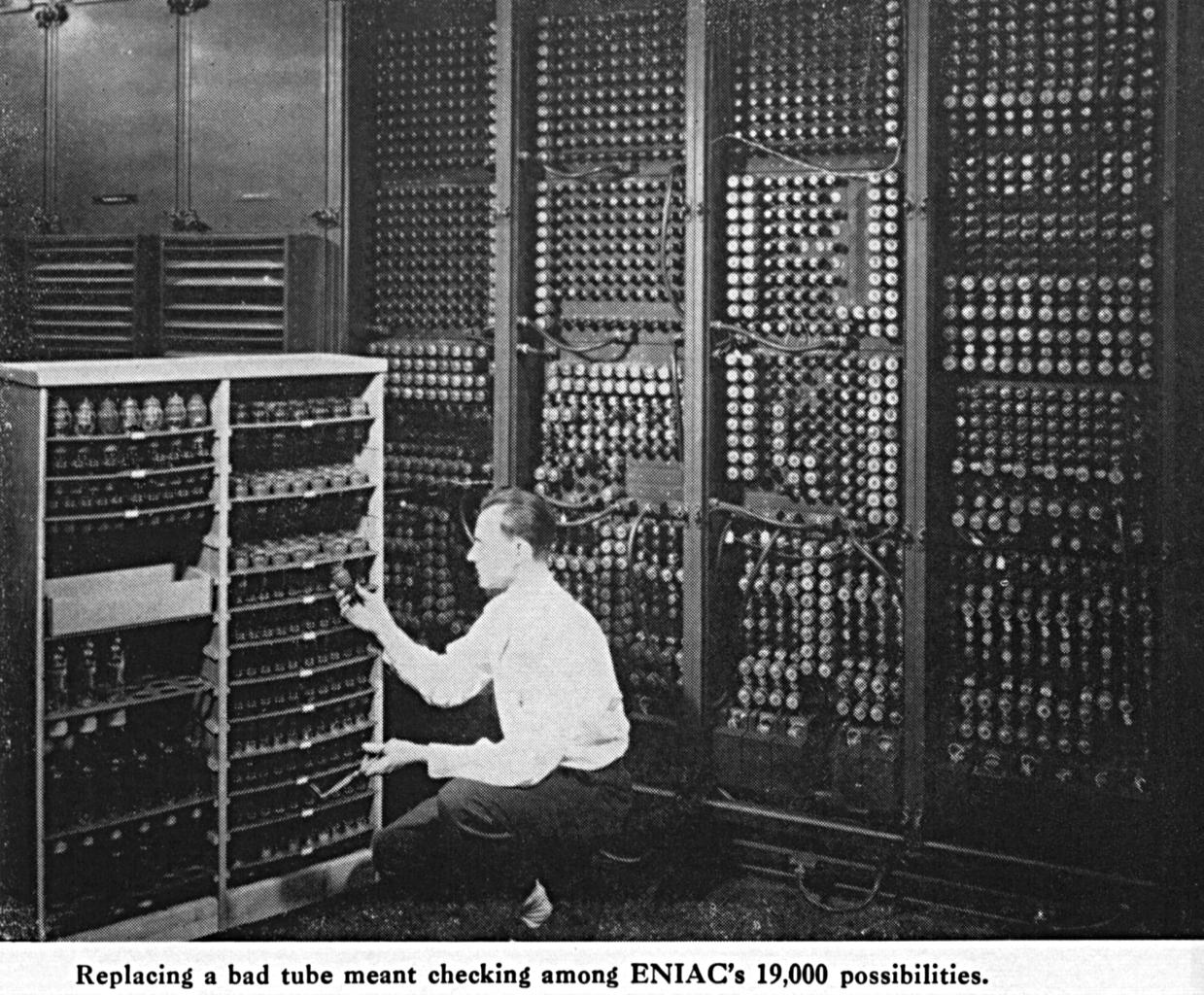
Dennis Ritchie and Ken Thompson at Bell Labs had been hollowed out by Multics — the 1960s operating system that tried to solve every problem with a separate subsystem. Multics had one API for disk storage, a different API for devices, a third for inter-process communication, a fourth for network sockets, a fifth for configuration. Each subsystem came with its own vocabulary, its own debugging story, its own set of bugs.
Their revolutionary simplification, shipped with Unix Fourth Edition in 1973 and described formally in the July 1974 Communications of the ACM paper — a revision of Ritchie and Thompson's talk at the Fourth ACM Symposium on Operating Systems Principles (Yorktown Heights, October 1973) — was what the Unix community would later summarize as "everything is a file." The retroactive slogan; the actual 1974 paper phrased it more precisely:
"File and device names have the same syntax and meaning, so that a program expecting a file name as a parameter can be passed a device name." — Ritchie & Thompson, CACM, July 1974
A disk file, a serial port, a keyboard, a process, a network connection — all opened with open(), read with read(), written with write(), closed with close(). One vocabulary. One mental model.
 PRIMITIVE: the Unix file
 ─────────────────────────────────────────────────────────   /dev/tty1  ◄── a keyboard is a file
/dev/sda   ◄── a disk is a file
/proc/42   ◄── a running process is a file
/dev/tcp   ◄── a network socket is a file
/etc/hosts ◄── configuration is a file
   All opened, read, written, closed the same way.
Composable with pipes: ls | grep foo | sort | head -10
Why files won
- Composes upward via pipes.
ls | grep foo | sort | wc -lworks because every program reads files and writes files. No adapter layer. No serialization format. The file is the interface. - Uniform operations.
cp /etc/passwd /backup/andcp /dev/tty1 /tmp/screen.dumpuse the same command — because/dev/tty1is a file. - Absorbed new capabilities for five decades. Tom Killian's
/proc(1984) exposed processes as files. BSD sockets (1983) treated networking as files. FUSE (2003) let userspace programs become filesystems. Docker (2013) layered filesystems into containers. Git (2005) versioned filesystem state. Kubernetes (2014) serialized cluster state as YAML files you couldgrepthrough. - One word. "File." A junior engineer explains Unix in one sentence.
The file is the oldest living primitive
Half a century after 1973, every server you touch is Unix or Linux. Every phone is Android (Linux) or iOS (Darwin, which is Unix). Every Mac is Unix. Docker is layered filesystems. Kubernetes kubectl get pod returns YAML you can pipe into grep. Git tracks filesystem state. /dev/null is still universal literacy.
Unix won the server, the cloud, the phone, and the laptop — all because "everything is a file" was a primitive that composed without end.
The file didn't win because it was the most powerful atom. It won because it was the most composable atom. Every later primitive is measured against that bar.
In 2026, the Unix lineage is being re-examined in the context of AI agents. The arxiv paper "From 'Everything is a File' to 'Files Are All You Need': How Unix Philosophy Informs the Design of Agentic AI Systems" argues that the file primitive's composability is exactly what agent-native systems need — a single, uniform abstraction that both humans and AI can operate on. We agree with the shape of that argument but not the atom. The 2026 atom is the task, not the file. Files are passive storage; tasks are verb-shaped work. That distinction is the whole thesis of this post.
1984 — Macintosh: "Everything Is an Icon on a Desktop"
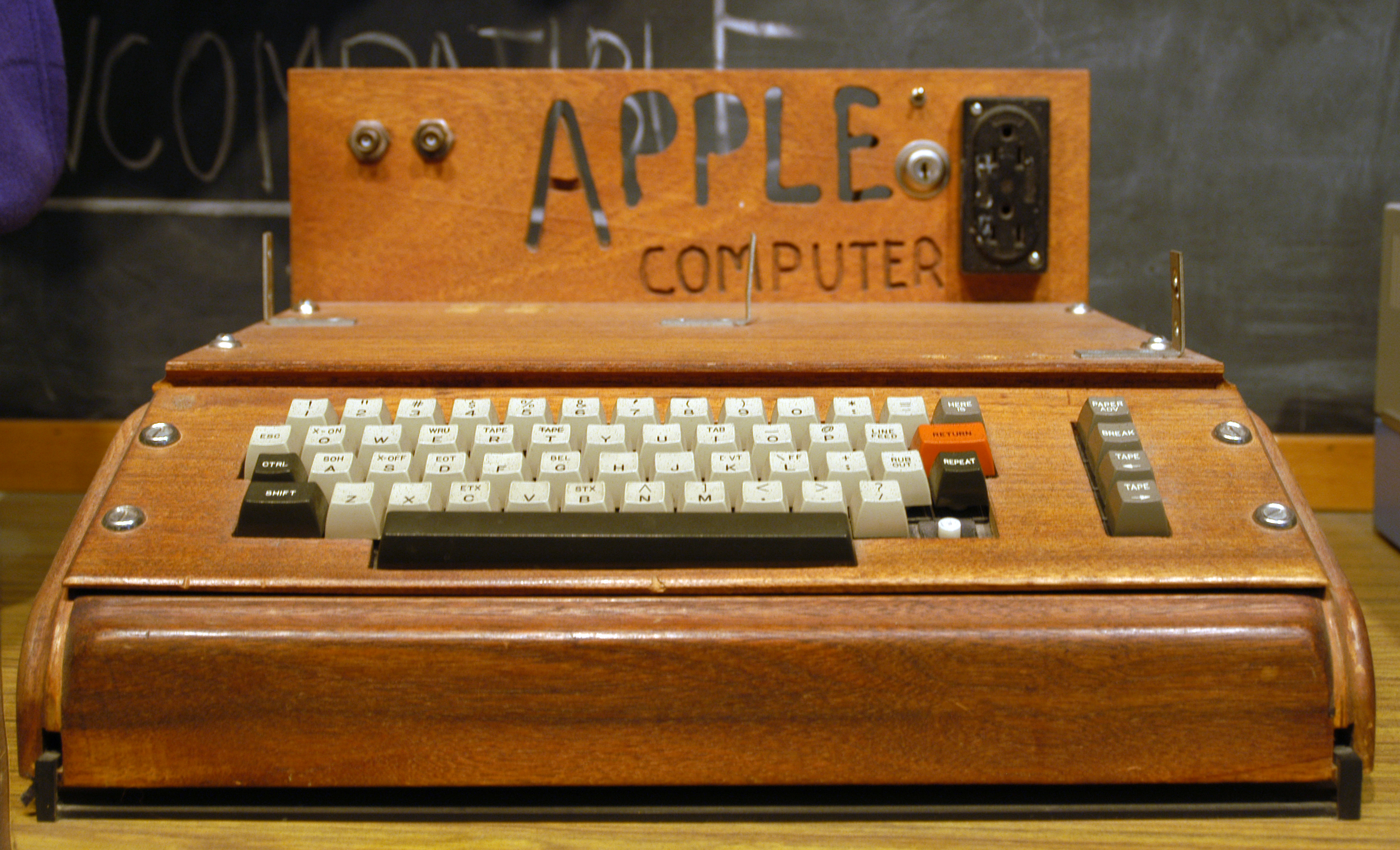
Eleven years after Unix, Bill Atkinson, Andy Hertzfeld, Susan Kare, Bruce Horn, and the original Macintosh team took Alan Kay's Xerox PARC research and shipped the first consumer operating system where the primitive was spatial and visual: icons on a desktop. Files had positions. You dragged them. You double-clicked them. You threw them in a trash can.
Atkinson's MacPaint — 5,804 lines of Pascal and 2,738 lines of 68000 assembly, bundled with MacWrite for $195 — released alongside the Mac on January 24, 1984, was the proof. Every tool was an icon. The canvas was a direct spatial surface. The pattern palette was a grid of icons. You never typed a command — you pointed at an object and acted on it.
Three years later, Atkinson pushed the same conviction one layer up. HyperCard (1987) gave non-programmers their own primitive set — stack, card, field, button, script — five words that described an entire model of building software, which he called "an authoring environment, never just a browsing." The icon let you use the Mac without a command line; HyperCard let you build on it without a compiler.
The deeper claim: the computer should adapt to the human, not the reverse. Humans navigate space. Humans point at things they want. Humans move things around. The icon-on-a-desktop was an ergonomic primitive, not just a visual one.
Why icons won
- Composition. Folders were icons that contained icons. Aliases (1991) were icons that pointed to icons. The Finder was an icon that showed icons. Cut/copy/paste worked on any icon.
- Uniformity. "See it, point at it, act on it" worked for a document, an app, a disk, a printer, a network share.
- Absorbed new capabilities. Calendars, mail, media, fonts — every new category adopted the icon-on-a-desktop gesture.
- One word. "Icon."
The claim's durability
Forty-two years later, iPhones and iPads are icon-on-a-desktop miniaturized. Android, Windows, ChromeOS — all icon-on-a-desktop. Even web apps render as icons on home screens (PWAs). Atkinson's primitive won the end-user market for four decades, and it still is winning.
The Atkinson principle, stated explicitly many times in his Computer History Museum oral history: "the best primitive is the one that borrows a concept the human already has." Files borrowed from paper cabinets. Icons borrowed from physical desks. Every later primitive respects this rule — or fails.
For the full story of this era, read our history of Apple and Steve Jobs' bicycle-for-the-mind vision and the Mother of All Demos — Doug Engelbart's 1968 preview of every primitive that followed.
1991 — Web: "Everything Is a Page (with Hyperlinks)"
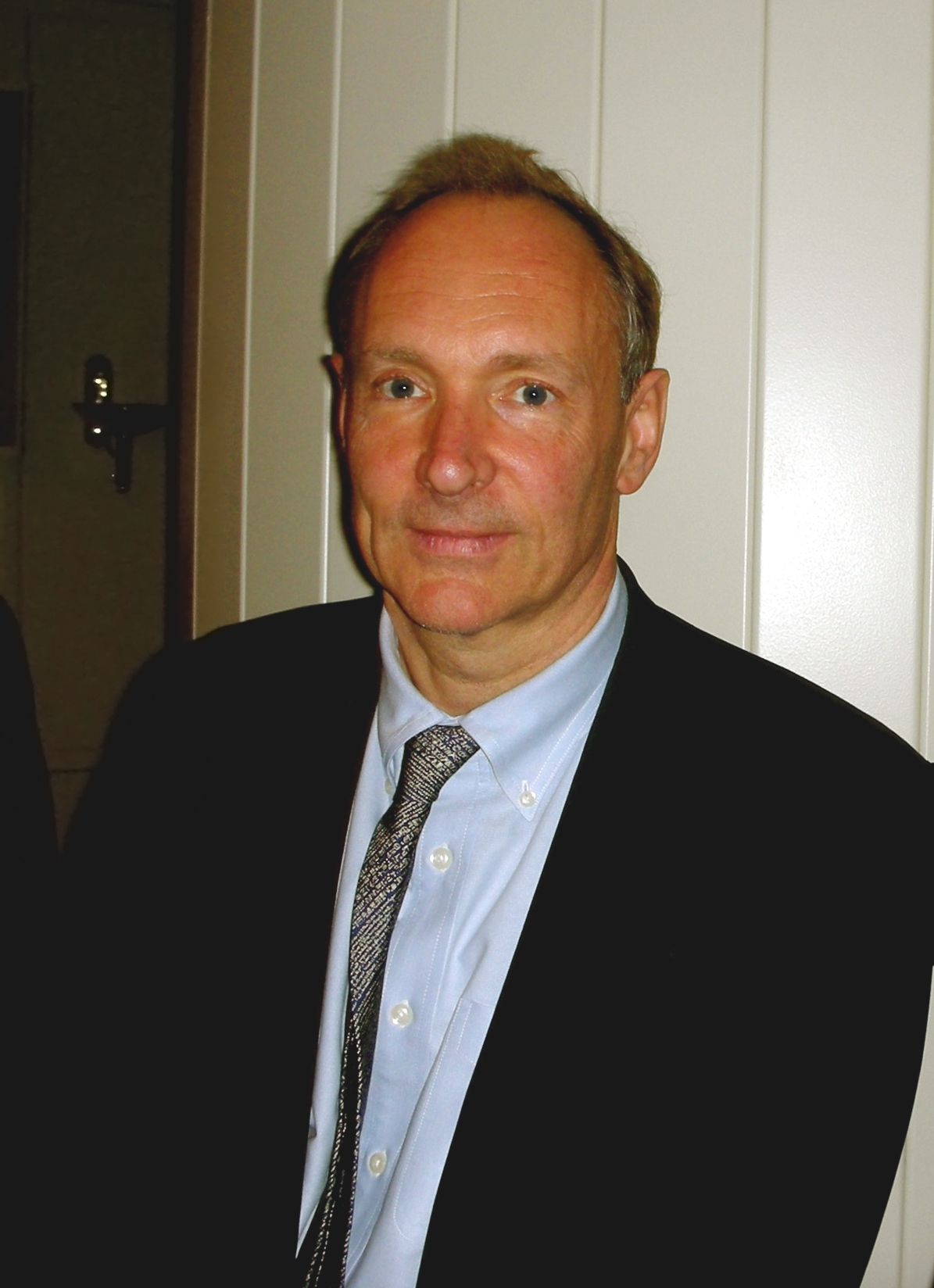
Tim Berners-Lee at CERN, trying to solve physics-paper citation chains, submitted a 20-page proposal on 12 March 1989 titled "Information Management: A Proposal". His manager Mike Sendall famously wrote at the top of the cover: "Vague, but exciting..." Eighteen months later, on 20 December 1990, the first web server — info.cern.ch — went live. On 6 August 1991, the web was opened to the public.
The primitive: a document with embedded links to other documents. Every resource has a URL. Every URL is a page. Every page can link to any other page.
The radical simplification wasn't hyperlinks themselves — Vannevar Bush proposed them in 1945, Ted Nelson in 1965. The simplification was that the link became a first-class property of the primitive itself. Pages didn't contain links as metadata; they were link targets.
  PRIMITIVE: the web page
  ──────────────────────────────────────────────────────────    ┌──────────────┐       ┌──────────────┐
    │  page A.html │──────►│  page B.html │
    └──────┬───────┘       └──────┬───────┘
           │                       │
           ▼                       ▼
    ┌──────────────┐       ┌──────────────┐
    │  page C.html │◄──────┤  page D.html │
    └──────────────┘       └──────────────┘

    Every page has a URL.
    Every URL can be fetched, bookmarked, shared, indexed.
    The link graph IS the web.
Why pages won
- Composition. Pages linked to pages. Link graphs emerged. PageRank (Brin + Page, 1998) turned the graph itself into a ranking signal. Every page earned relevance from how other pages pointed at it.
- Uniformity. HTTP verbs — GET, POST, PUT, DELETE — worked across every page. Any URL could be fetched, parsed, rendered, bookmarked, shared.
- Absorbed new capabilities. Interactive pages (JavaScript, 1995). Transactional pages (cookies, 1994). Application pages (Gmail, 2004). Real-time pages (WebSockets, 2011). Streaming pages (HLS, 2009). Persistent pages (IndexedDB, 2015). Each new capability kept "page" as the base.
- One word. "Page." Everyone understands URLs.
The claim's durability
Thirty-five years later, we still type URLs. Still click links. Single-page apps are called "SPAs" — the page primitive survived even when pages stopped being literal pages. The web won consumer software, e-commerce, content, and search. One primitive. One set of operations. Endless absorption.
1997 — cPanel: "Everything Is a Hosting Account"
J. Nick Koston, a teenager working out of his parents' home in Wilmington, Delaware, built a control panel for the early webhosting service Speed Hosting. cPanel 1.0 shipped in 1996 (the company was formally incorporated shortly after).
Before cPanel, admins SSH'd into servers, edited config files, and manually provisioned each customer's filesystem, database, and DNS. After cPanel, an admin clicked "Create Account" and a single primitive — the hosting account — was born with its own files, databases, domain, SSL, email, and cron.
Why accounts won
- Composition. Accounts grouped into packages, packages grouped into resellers, resellers grouped into root. Three tiers, all composable.
- Uniformity. Every account had the same menu — Files, Databases, Domains, Email, SSL, Cron. Regardless of what the customer was building (WordPress, Ruby, static site), the primitive stayed the same.
- Absorption. Email accounts were cPanel accounts. FTP accounts were cPanel accounts. SSL certificates attached to accounts. Softaculous one-click installs attached to accounts. Cloudflare integrations installed inside the account. Every new capability joined the primitive.
- One word. "Account."
The claim's durability
Twenty-nine years later, cPanel still powers hundreds of thousands of shared hosting accounts. WebPros (parent company) has compounded 20%+ YoY for a decade. GoDaddy, Bluehost, HostGator, Dreamhost — all built on cPanel or its direct descendants. For the full story, read our complete history of cPanel and WHM.
The cPanel lesson. Even when the underlying technology (LAMP, VMs, containers, Kubernetes) turns over multiple times, the user-facing primitive stays. Customers don't learn new abstractions; they learn one, and the platform absorbs whatever's new underneath. This is exactly the bet Taskade Genesis is making with the task.
2018 — Notion: "Everything Is a Block"
Ivan Zhao founded Notion in 2013 and rebuilt it three times. Engineer Simon Last joined in 2014. The team shipped v1 in 2016, then hit product-market fit in 2018 when they introduced what they called blocks.
The claim: every unit of content — a paragraph, a heading, an image, a to-do, a database row, a toggle, an embed — is a block.
Blocks compose. A page is a list of blocks. A database is a special block whose children are database-row blocks. A toggle is a block containing blocks. A sub-page is a block linking to a page (which is itself a block).
Crucially, blocks are polymorphic. Select a paragraph and turn it into a to-do — the content persists, the type changes. One atom, many faces.
Why blocks won
- Composition. Pages were lists of blocks. Databases were grids of blocks. Wikis were networks of blocks.
- Uniformity. Every block supports drag, nest, convert, comment, mention, link, embed. The toolbar is the same whether you're writing a memo or building a CRM.
- Absorption. Formulas (2019). Linked databases (2020). Synced blocks (2021). AI-generated blocks (2023). Custom blocks via API (2024). Every new capability was a new block type — never a new primitive.
- One word. "Block." Notion explained in one sentence: "Lego for documents — every piece of content is a block, and you nest them however you want."
The claim's durability, and its ceiling
Notion raised at a $10 billion valuation in October 2021 (Series C led by Coatue and Sequoia, $275M) on this primitive, and crossed 100 million users in 2024. Linear, ClickUp, Coda, Craft all tried to copy it; none matched the polish. For the full story, read our history of Notion AI.
But blocks have a ceiling. Blocks are content. They describe what something is, not what it does. A Notion "to-do" block has a checkbox — but the to-do doesn't trigger anything, doesn't assign to an agent, doesn't cascade into subtasks that fire automations when completed. Blocks plateau at "this is what you wrote."
That plateau is where the 2026 primitive claim lives. Blocks describe. Tasks execute. Read our AI App Builders vs AI Workspace Builders analysis →
2020 — Obsidian: "Everything Is a Note with Backlinks"
Shida Li (CTO) and Erica Xu (COO), University of Waterloo alumni inspired by sociologist Niklas Luhmann's Zettelkasten method, released the first beta of Obsidian on March 30, 2020, with a primitive that went one step beyond Notion's block: every note is also a link target. Mention [[another-note]] anywhere, and Obsidian automatically creates a backlink from that note to this one. The graph emerges for free.
No database block. No schema. Just markdown files on local disk. The primitive is radically simple: a note. The magic is that every mention of the note becomes a discoverable connection.
   PRIMITIVE: the Obsidian note
   ─────────────────────────────────────────────────────────          ┌─ note: "Ken Thompson"
          │      mentions [[Unix]]
          │      mentions [[Bell Labs]]
          │
          ▼
┌─────────────────────┐
│   Unix (note)       │◄─── backlink: Ken Thompson
│   mentions [[Bell   │◄─── backlink: Dennis Ritchie
│   Labs]]            │◄─── backlink: Plan 9
└─────────┬───────────┘
          │
          ▼
┌─────────────────────┐
│   Bell Labs (note)  │
│   backlinks: Unix,  │
│   Ken Thompson      │
└─────────────────────┘

Every [[mention]] creates a bidirectional edge.
The knowledge graph emerges from the notes themselves.
Why notes won (in their niche)
- Composition. Notes link to notes. Link graphs form. The graph view renders the whole vault as a visual web.
- Uniformity. Every note is a markdown file. Every markdown file is a note. Works identically at 10 notes or 10,000.
- Absorption. Daily notes (template plugin). Kanban views (plugin). Canvas (built-in). Spaced repetition (plugin). A 1,000+ plugin ecosystem keeps every new capability as an extension of "note."
- One word. "Note."
The deeper lesson: primitives don't need to win every market
Obsidian never went viral at Notion's scale (closed-source file sync, local-first ideology). But it reached roughly 1.5 million monthly active users at a reported $350M valuation by 2025 and has held the personal knowledge management category against 50+ competitors for half a decade.
A primitive doesn't need to win every market. It needs to win the market it claims. Obsidian's note-with-backlinks won individual knowledge workers. cPanel's account won webhosting. Unix's file won the server. Each primitive dominates where it composes best.
For the full story, read our history of Obsidian.
2026 — Taskade Genesis: "Everything Is a Task"
Every earlier primitive stopped short of the one thing AI needs: a unit that thinks, schedules, and executes without a human clicking it. Files are passive storage. Icons are passive labels. Pages are passive documents. Accounts are passive containers. Blocks describe. Notes link. None of them act.
Tasks do. A task has state (to-do, in progress, complete), an owner (human or agent), a schedule (due date, recurrence), a place in a hierarchy (parent project, subtasks), and — critically — a verb shape that both humans and AI can natively work through.
Taskade's claim in 2026: the task is the atomic unit. Agents complete it. Automations trigger on it. Projects contain it. Workspaces compile it. Apps publish it.
The four tests, applied
| Test | Result for the task primitive |
|---|---|
| Composes upward? | ✅ task → project → workspace → app. Four-level composition, all live and all linked. |
| Uniform operations? | ✅ Create, assign, schedule, complete, comment, mention, link, cascade, trigger. Every task supports the same verb set — whether it's "Call Alice" or "Categorize this support ticket" (assigned to an AI agent). |
| Absorbs new capability? | ✅ AI agents complete tasks. Automations trigger on task events. Multiple project views (list, board, calendar, table, mind map, Gantt, org chart) are different lenses on the same task list. 100+ integrations push data out when tasks change and pull data in when external events happen. |
| One-word name? | ✅ "Task" — and the company is literally named for it. Taskade = Task + Made. |
The Workspace DNA loop
In Taskade Genesis, tasks don't sit still. They flow through a self-reinforcing loop called Workspace DNA: Memory feeds Intelligence, Intelligence triggers Execution, Execution creates Memory.
Every task is both the output of a cycle and the input to the next one. That loop is what Workspace DNA architecture describes in detail, and it's the structural reason the task primitive works for AI-native workflows where earlier primitives stall.
The infrastructure layer beneath the task primitive is itself sixty years of compounding abstraction. Mainframe timesharing (1964), virtualization (2001), the public cloud (2006), containers (2013), Kubernetes (2015), serverless (2014), and AI compute (2022+) all sit underneath the workspace that runs your tasks. For the seven-era timeline of how compute became invisible enough for "everything is a task" to be possible, read The History of Cloud Computing.
Each primitive in the lineage above corresponded to a cloud era underneath it:
| Era | Cloud Layer | User-Facing Primitive |
|---|---|---|
| 1973 | Unix on shared minicomputers | File |
| 1984 | Personal computer | Icon |
| 1991 | Web servers + HTTP | Page |
| 1997 | Shared hosting (cPanel/WHM) | Account |
| 2018 | AWS-era SaaS (Notion) | Block |
| 2020 | Local-first + cloud sync | Note |
| 2026 | Workspace-native (Taskade Genesis) | Task |
The primitive on top of each row is always a one-word noun. The cloud layer underneath is always one-more-abstracted from the previous row. They evolved together — neither would be possible without the other.
Why earlier primitives couldn't make this claim
| Earlier primitive | Could humans act on it? | Could AI act on it natively? |
|---|---|---|
| File (1973) | ✅ | 🟡 Only via tools wrapped around it |
| Icon (1984) | ✅ | 🟡 Only via accessibility APIs |
| Page (1991) | ✅ | 🟡 Only via scrapers |
| Account (1997) | ✅ | 🟡 Only via API wrappers |
| Block (2018) | ✅ | 🟡 Retrofit via Notion AI |
| Note (2020) | ✅ | 🟡 Retrofit via plugins |
| Task (2026) | ✅ | ✅ Native — agents complete tasks the same way humans do |
That last row is the whole conversion. AI teammates don't read your docs — they work through your tasks. The primitive that's already verb-shaped wins the agent era.
One task, multiple views
Because the task is the atom, the platform can show it in any lens without migrating data. Same task, multiple views:
  THE SAME TASK, MANY VIEWS
  ─────────────────────────────────────────────────────────────  [ List ]        [ Board ]       [ Calendar ]    [ Table ]
☐ Launch        ┌─To Do─┐       Mon Tue Wed     | Task   |✓|
blog post     │Launch│       ┌─┐   ┌─┐        | Launch |☐|
☐ Draft FAQ     └──────┘      │·│   │·│        | Draft  |☐|
└─┘   └─┘
  [ Mind Map ]    [ Gantt ]      [ Org Chart ]
Launch         ════════       CEO
├─ Draft      ──────         ├─ PM
└─ Review     ─────          └─ Eng → Task
Multiple canonical views — List, Board, Calendar, Table, Mind Map, Gantt, Org Chart. Switch between them with one click; the underlying task is unchanged. No export, no re-entry, no migration.
Tasks compile to live apps
The deepest part of the claim: tasks don't just represent work — they compile into running software. A project of tasks becomes a live app with a custom domain and automatic SSL. An agent becomes a team member that clones for each user. An automation becomes the behavior that runs when the app is used.
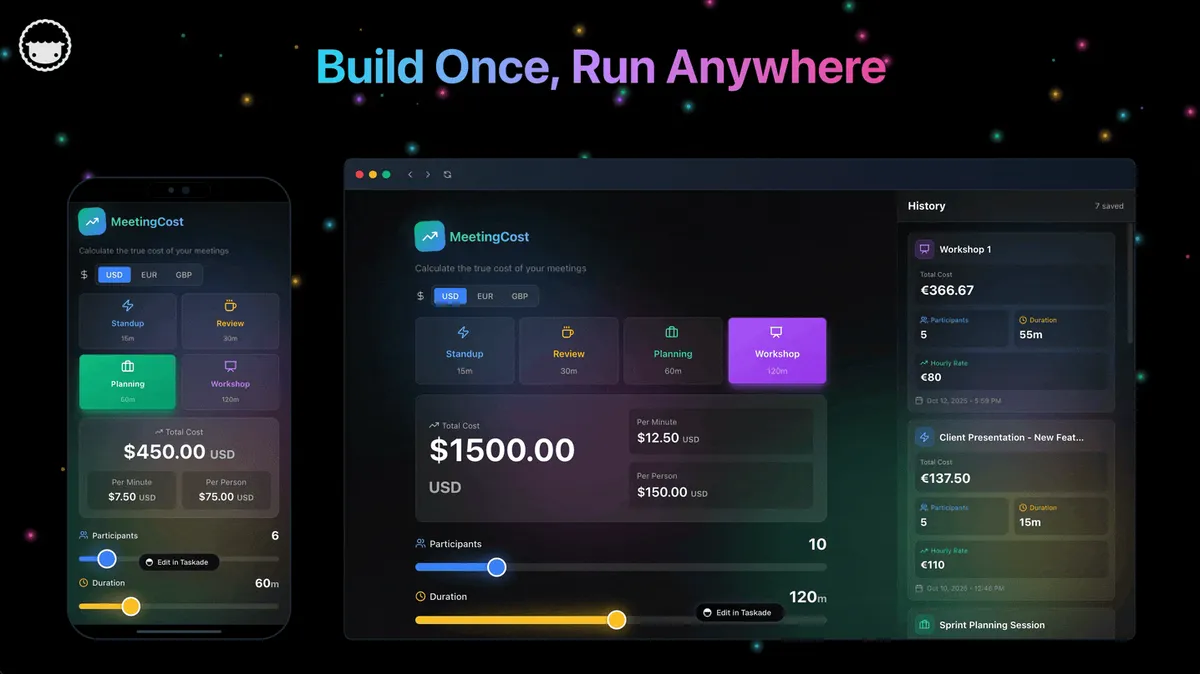
This is why the claim is called Taskade Genesis: one prompt, one workspace, one living app — all composed from tasks. See the Genesis Equation and the Genesis origin story for the full framing.
The Three-Layer Pattern Every Winning Primitive Shares
Across five decades and seven primitives, the same three layers always emerge:
  ╔══════════════════════════════════════════════════════════════════════╗
  ║  INTERFACE LAYER                                                     ║
  ║  how humans (and now agents) reach the primitive                     ║
  ║                                                                      ║
  ║  Unix:      shell (bash, zsh)                                        ║
  ║  Mac:       Finder + apps                                            ║
  ║  Web:       browser                                                  ║
  ║  cPanel:    control panel on port 2083                               ║
  ║  Notion:    web editor + API                                         ║
  ║  Obsidian:  local editor + plugins                                   ║
  ║  Taskade:   editor + prompt + EVE chat + MCP for AI clients          ║
  ╠══════════════════════════════════════════════════════════════════════╣
  ║  EXECUTION LAYER                                                     ║
  ║  what operates on the primitive                                      ║
  ║                                                                      ║
  ║  Unix:      coreutils (grep, awk, sed, sort, cut)                    ║
  ║  Mac:       QuickDraw, Toolbox, Finder                               ║
  ║  Web:       HTTP servers, JavaScript engines                         ║
  ║  cPanel:    70+ modules (Fileman, MySQL, DNS, Email, Cron)           ║
  ║  Notion:    editor engine, formula engine, Notion AI                 ║
  ║  Obsidian:  plugin system, graph engine                              ║
  ║  Taskade:   AI agents (built-in tools) + automation workflows        ║
  ╠══════════════════════════════════════════════════════════════════════╣
  ║  SUBSTRATE LAYER                                                     ║
  ║  where the primitive lives                                           ║
  ║                                                                      ║
  ║  Unix:      VFS — files in folders                                   ║
  ║  Mac:       HFS+ — files with resource forks                         ║
  ║  Web:       URL namespace — addressable by hostname/path             ║
  ║  cPanel:    /home/<user>/ — one directory tree per account           ║
  ║  Notion:    block tree in Postgres — every block has a parent_id     ║
  ║  Obsidian:  flat markdown files on local disk                        ║
  ║  Taskade:   workspace with projects, agents, automations, memory     ║
  ╚══════════════════════════════════════════════════════════════════════╝
Every winning primitive has these three layers. Taskade Genesis is the first where the execution layer natively includes both AI agents and reliable automation workflows — which is why the task primitive becomes useful as a first-class unit rather than a checkbox inside a document.
For the deep dive on why execution is the 2026 differentiator, read our Execution Layer thesis.
The Atkinson Principle: Why Tasks Are the Most Universal Primitive Ever Claimed
Bill Atkinson's deepest insight — stated explicitly in his Computer History Museum oral history and in Andy Hertzfeld's Revolution in the Valley — was:
"The computer should adapt to the human, not the human to the computer. The best primitive is the one that borrows a concept the human already has."
Apply it to every era:
| Year | Primitive | Human already knew it from... | Learning curve |
|---|---|---|---|
| 1973 | File | Paper filing cabinets | Required literacy + filing-cabinet metaphor |
| 1984 | Icon | Physical desks | Required computer literacy |
| 1991 | Page | Books, newspapers | Required web literacy |
| 1997 | Account | Bank accounts, utility accounts | Required admin literacy |
| 2018 | Block | Lego, building blocks | Required understanding composition |
| 2020 | Note | Notebooks, index cards | Required PKM literacy |
| 2026 | Task | To-do lists — a concept every human child understands | None |
Tasks might be the most universal primitive any platform has ever claimed. Files required literacy and a filing-cabinet metaphor. Icons required computer literacy. Blocks required understanding Lego. Tasks require — being alive.
Which is why the Taskade Genesis pitch writes itself: you already have a to-do list in your head. We gave it an AI team, an execution engine, and the ability to become a live app.
How to Tell When a Primitive Has Won
Historically, the signal is simple — the primitive enters the vocabulary of people who don't know the platform.
| Primitive | Platform | "Won" signal |
|---|---|---|
| File | Unix | Non-programmers started saying "file" instead of "document" (1980s) |
| Icon | Mac | "Icon" entered English as a general term for small computer images (late 1980s) |
| Page | Web | "Web page" became the default term for any online document (mid 1990s) |
| Account | cPanel / SaaS | "Create an account" became a universal signup pattern (2000s) |
| Block | Notion | "Block" became a category of competitor features (Coda, Craft, Linear) (2021+) |
| Note | Obsidian | "Backlink" and "second brain" entered mainstream knowledge-work vocabulary (2022+) |
| Task | Taskade Genesis | AI teammates being assigned "tasks" is becoming the 2026 default mental model |
The vocabulary lags the primitive by 2–5 years. Notion shipped blocks in 2018; competitors started shipping "block-based" editors around 2021. Taskade shipped task-native AI agents + automations + apps in 2024; the category language is forming now in 2026.
The inflection, as with every prior primitive, is a combination of platform shipping + vocabulary entering common use. Both are happening now.
What About "Prompt," "Agent," "Workflow"? Why Those Aren't the 2026 Primitive
Several candidate atoms compete with "task" for the 2026 claim. None pass all four tests.
| Candidate | Why it's not the atomic unit |
|---|---|
| Prompt | Ephemeral. A prompt doesn't contain prompts — it doesn't compose upward. It's an input event, not a unit of work. |
| Agent | An actor, not a unit. Agents do things to units; they aren't the unit itself. (Agents complete tasks, not the other way around.) |
| Document | The 2000s primitive (Google Docs era). Passive — cannot execute. |
| Block | The 2018 primitive (Notion). Structural but static. Blocks describe, they don't do. |
| Workflow | Describes the path between tasks, not the node. A workflow is an edge; a task is a vertex. |
| Context / Memory | Infrastructure for an agent, not a unit the user manipulates. |
| Intent | Too abstract — intents resolve into tasks; they aren't directly composable. |
| Task ✅ | Universally understood. Composes four levels up. Has state, schedule, owner. Completable by humans OR agents. Triggers automations. Renders in multiple views. |
The test each candidate fails is usually test #1 (composes upward) or test #4 (one-word name). Tasks pass all four — and, in Taskade, they also pass the 2026-specific test: both humans and AI can act on them natively.
The Taskade Genesis Stack, Primitive-First
Here is the full stack, shown through the primitive lens:
Four layers, one primitive. Every layer composes from the one below. Every execution mechanism (agent, automation, integration) hooks into the task. Every view (list, board, calendar, etc.) renders the task. Everything up, down, and across is task-shaped.
For the product details, see AI App Builders vs AI Workspace Builders and the complete history of Taskade.
Pricing (Because Primitives Have Price Tags Too)
Taskade Genesis pricing, annual billing:
| Plan | Price/month (annual) | Workspace members | AI credits | Best for |
|---|---|---|---|---|
| Free | $0 | 1 + 1 guest | Earn or buy credits | Personal exploration |
| Pro ⭐ | $10 | ≤10 | 50,000 / month | Small teams — most popular |
| Business | $25 | Unlimited | 150,000 / month | Teams with higher request volume |
| Max | $100 | Unlimited | Higher capacity | Teams with higher AI credit capacity |
| Enterprise | $250 | Unlimited | Custom | Custom SLA, compliance |
Compare plans → · See /upgrade/plans for full tier matrix →
Will There Be Another Primitive After Task?
Probably — the pattern says every 15 to 25 years a new atom wins. The most plausible 2040s candidates:
| Candidate 2040 primitive | The case for it | Why it isn't now |
|---|---|---|
| Agent | If fully autonomous agents become the atomic actor, the agent itself may become the unit of work | Agents today still need tasks to operate on; they're not yet atomic |
| Context window | If memory becomes the primary substrate for AI systems, context may become the composable unit | Context is substrate, not primitive — users don't manipulate it directly |
| Intent | If natural-language goals fully replace structured commands, intents may replace tasks | Intents resolve into tasks; they aren't composable on their own |
But note the pattern: each new primitive absorbs the prior one rather than replacing it. Unix files still exist inside every Mac. Notion blocks still exist inside every Taskade project. Whatever comes after task will almost certainly compose from tasks rather than erase them.
Which means the question for 2026 isn't "will tasks last forever?" — it's "will you build on the right primitive for the next decade?"
What Is the AI Workspace Primitive?
The AI workspace primitive is the task. An AI workspace is a structured, multi-user, agent-enabled environment where work gets done — not a chat window, not a document store, but a substrate where humans, agents, and automations operate on the same shared state. That shared state has to have an atomic unit everything composes from, and for the AI era that unit is the task. Agents complete tasks. Automations trigger on task events. Projects contain tasks. Workspaces compile task trees into live apps. Taskade Genesis is the platform built around this primitive — one prompt, one workspace, one living app, all composed from tasks.
The earlier workspace-primitive candidates failed different tests:
- Page (web, 1991) — unaddressable without a URL; can't be assigned; no state
- Block (Notion, 2018) — composes upward, but describes rather than executes
- Note (Obsidian, 2020) — personal-scope only; doesn't compose to teams
- Prompt — ephemeral, doesn't compose, no state
- Agent — an actor, not a unit; agents act on the workspace primitive
- Task ✅ — verb-shaped, stateful, composable four levels up (task → project → workspace → app), completable by humans AND AI
What Is the Next Computing Primitive?
The next computing primitive is the task. Every 15–25 years, a new atomic unit wins — files (1973), icons (1984), pages (1991), accounts (1997), blocks (2018), notes (2020), and now tasks (2026). A task is the only candidate that passes all four primitive tests in an AI-native world: it composes upward into projects, workspaces, and apps; it shares a uniform verb set (create, assign, schedule, complete, cascade); it absorbs new capabilities (AI agents, automations, multiple views); and every human already understands it. In Taskade Genesis, the task primitive is the atomic unit that agents complete, automations trigger on, projects contain, and Workspace DNA composes into living apps.
If you've been searching for "the next computing primitive," "workspace primitive," or "AI-native task architecture" — this is the answer, and it ships today at taskade.com/create.
The Task Tree: Primitive-Native Agent Orchestration
Now that we've placed the task as the atomic unit, here's the orchestration pattern it unlocks — the Task Tree.
A Task Tree is a parent task that can spawn child tasks, each assignable to a human or an AI agent, each capable of triggering an automation on completion, and each bubbling results back up the tree. It's the direct descendant of the Unix pipe (files flowing through commands) but with AI agents as the operators and live apps as the output.
The tree is the pattern. The task is the atom. The workspace is the substrate. The agent is the operator. The app is the result. Five primitive roles, one composable loop.
The Closer
Files needed literacy and a filing-cabinet metaphor. Icons needed computer literacy and a desktop metaphor. Pages needed web literacy. Blocks needed understanding Lego. Notes needed personal knowledge management culture.
Tasks need — being alive.
That's the whole frame. The primitive is already in every human's head. The only question is which platform ships the substrate, the execution engine, and the interface well enough to claim it. In 2026, that platform is Taskade Genesis.
"The best primitive is the one that borrows a concept the human already has." — Bill Atkinson, 1984
The most universal concept any human has: a to-do list. — 2026
Start building with the task primitive → · See the Community Gallery of 150,000+ living apps → · Read the Genesis origin story →
Related reading — the full five-decade arc
This post is the backbone; each of these is a chapter:
- History of cPanel & WHM — the 1997 account primitive, from a teenager's bedroom to the 2019 price revolt
- Mother of All Demos — Doug Engelbart's 1968 preview of every primitive that followed
- History of Apple — the icon era, Jobs' bicycle-for-the-mind vision
- History of Obsidian — the note primitive, Luhmann's Zettelkasten, local-first PKM
- History of Notion AI — Ivan Zhao's block primitive, the 10-billion-dollar bet
- History of Mermaid.js — diagrams as code, the primitive that made this post's diagrams possible
- What is Taskade — Complete History — the Taskade founding story
And on the task primitive specifically:
- Workspace DNA Architecture — Memory + Intelligence + Execution, the loop that makes tasks live
- Genesis Equation — the formal statement of one prompt → one living app
- Genesis Origin — why Taskade Genesis was built
- Execution Layer Thesis — why execution is the 2026 differentiator
- AI App Builders vs AI Workspace Builders — the category framing
- Agentic Workspaces — the shape of AI-native work
Sources & further reading
Unix (1973)
- Ritchie, Dennis M., and Ken Thompson. "The UNIX Time-Sharing System." Communications of the ACM 17, no. 7 (July 1974): 365–375.
- Wikipedia. "Everything is a file."
- Arxiv 2601.11672. "From 'Everything is a File' to 'Files Are All You Need': How Unix Philosophy Informs the Design of Agentic AI Systems."
- Raymond, Eric S. The Art of Unix Programming. Addison-Wesley, 2003.
- Salus, Peter H. A Quarter Century of UNIX. Addison-Wesley, 1994.
Macintosh (1984)
- Hertzfeld, Andy. Revolution in the Valley: The Insanely Great Story of How the Mac Was Made. O'Reilly, 2005.
- Atkinson, Bill. Computer History Museum Oral History (2011).
- Kay, Alan. "The Early History of Smalltalk." HOPL-II, 1993.
- Computer History Museum. "MacPaint and QuickDraw Source Code Release."
- Wikipedia. "MacPaint."
World Wide Web (1991)
- Berners-Lee, Tim. "Information Management: A Proposal." CERN internal memo, 12 March 1989.
- CERN. "A short history of the Web."
- Berners-Lee, Tim. Weaving the Web. HarperBusiness, 1999.
cPanel (1996)
- Complete history of cPanel & WHM — our own deep dive
Notion (2018)
- History of Notion AI
- Notion Engineering Blog. "The data model behind Notion's flexibility."
- Wikipedia. "Notion (productivity software)."
Obsidian (2020)
- History of Obsidian
- Obsidian. "About."
- Niklas Luhmann Archiv. "Zettelkasten."
- Luhmann, Niklas. "Communicating with Slip Boxes." 1981; translated 1992.
AI agents & primitives (2024–26)
- Anthropic. "Building Effective Agents."
- IBM. "What is AI Agent Orchestration?"
- Microsoft Learn. "AI Agent Design Patterns."
- CACM. "Systems Abstractions."
Taskade Genesis (2026)
Frequently Asked Questions
What is a computing primitive?
A computing primitive is the atomic unit a platform claims as its foundation — the thing everything else composes from. Unix's primitive is the file. The Mac's is the icon. The web's is the page. cPanel's is the hosting account. Notion's is the block. Obsidian's is the note with backlinks. Taskade Genesis's is the task. A primitive wins an era when it composes upward, supports uniform operations, absorbs new capabilities, and has a one-word name.
What does 'everything is a file' mean in Unix?
"Everything is a file" is a retroactive slogan for Unix's file-centric design. Dennis Ritchie and Ken Thompson at Bell Labs shipped that design with Unix Fourth Edition in 1973 and described it formally in their July 1974 Communications of the ACM paper "The UNIX Time-Sharing System," where they wrote that "file and device names have the same syntax and meaning, so that a program expecting a file name as a parameter can be passed a device name." The idea extended in 1984 with Tom Killian's /proc filesystem, which exposed running processes as file-like objects. Five decades later, Linux, macOS, Android, iOS, Docker containers, and Kubernetes all still rest on this primitive.
What was Bill Atkinson's role in the Macintosh?
Bill Atkinson was the lead graphics and interaction engineer on the 1984 Macintosh. He wrote QuickDraw (the graphics library that rendered every icon and window), built MacPaint (the first consumer direct-manipulation graphics app), invented the rounded-rectangle primitive that shaped Mac UI, and collaborated with Andy Hertzfeld and Susan Kare to define the "icon on a desktop" metaphor. His deepest principle — "the computer should adapt to the human, not the other way around" — still guides every consumer interface today.
When did Tim Berners-Lee invent the World Wide Web?
Tim Berners-Lee wrote the proposal for the World Wide Web in March 1989 at CERN. The paper was titled "Information Management: A Proposal" and introduced the core primitive — a document with embedded hyperlinks to other documents. The first web server, info.cern.ch, went live on December 20, 1990, and the web was opened to the public on August 6, 1991. The primitive that won: a page addressable by URL, fetched via HTTP, linked to any other page.
What is cPanel and why does it matter to the primitive history?
cPanel is the web hosting control panel J. Nick Koston built in 1996 in his parents' home in Wilmington, Delaware (the company was formally incorporated shortly after, which is why the primitive era is usually dated 1997). Its primitive — the hosting account — let a non-specialist manage files, databases, email, domains, SSL, and cron from a single UI. The three-tier composition (root → reseller → account) is the direct ancestor of today's workspace hierarchies in Notion, Linear, and Taskade. For the full cPanel story, see our history of cPanel and WHM.
Why did Notion's block primitive win the 2018 era?
Notion's block primitive — shipped with Notion 2.0 in March 2018 (the release Ivan Zhao has called "the real 1.0") after Zhao (CEO) and Simon Last (CTO) rebuilt the product three times, including a near-company-ending retreat to Kyoto in 2015 — turned every unit of content (paragraph, heading, image, database row, toggle) into the same atom. Blocks are polymorphic: you can convert a paragraph into a to-do, a to-do into a database row, without losing content. Notion raised at a 10-billion-dollar valuation in 2021 on this primitive. But blocks plateaued at "structured content" — they describe, they don't execute, which is why the 2026 primitive claim went elsewhere.
Why is the task the computing primitive for 2026?
Tasks pass all four primitive tests in an AI-native world. They compose upward (task → project → workspace → app). They share uniform operations (create, assign, schedule, complete, cascade, trigger). They absorb new capabilities (AI agents complete them, automations fire on them, multiple project views render them). And they have a one-word name that every human already understands — tasks predate computing by centuries. Every earlier primitive stopped at "what this is." Tasks are already verb-shaped, which makes them the native unit for agents that work rather than just display.
How does Taskade Genesis use the task primitive?
Taskade Genesis treats the task as the atomic unit that agents, automations, and apps all compose from. A task lives inside a project, which lives inside a workspace, which compiles to a live app with a custom domain and automatic SSL. The same task can be viewed as a list, board, calendar, table, mind map, Gantt chart, or org chart — multiple project views. An AI agent can complete it, an automation can trigger on it, and a human teammate can comment on it. Memory feeds Intelligence, Intelligence triggers Execution, Execution creates Memory — Taskade's Workspace DNA is the task primitive in loop form. Pricing starts free, with Pro from $10 a month billed annually.
What is the Atkinson principle and how does it apply to primitives?
Bill Atkinson's principle — stated many times in his oral history at the Computer History Museum — is that the computer should adapt to the human, not the human to the computer. Applied to primitives, this means the best atom is one humans already understand. Files borrowed the metaphor from paper filing cabinets. Icons borrowed from physical desks. Pages borrowed from books. Blocks borrowed from Lego. Tasks borrow from the to-do list — a concept so universal that every human child understands it. Taskade's primitive claim isn't novel engineering; it's the most universal unit any platform has ever claimed.
Will there be another primitive after task?
Probably — history says a new primitive wins every 15 to 25 years. The most plausible candidates are the agent (if autonomous agents become the atomic actor), the context (if memory becomes the primary unit of AI systems), or the intent (if natural-language goals fully replace structured commands). But note the pattern: each new primitive absorbs the prior one rather than replacing it. Unix files still exist inside Notion pages, Notion blocks still exist inside Taskade projects, and whatever comes after task will almost certainly compose from tasks rather than erase them.
What is the three-layer pattern every winning primitive shares?
Every winning primitive sits on three layers: an interface layer (how humans interact — shell, Finder, browser, editor, prompt), an execution layer (what operates on it — coreutils, Toolbox, HTTP, modules, AI agents, automations), and a substrate layer (where it lives — filesystem, HFS, URL namespace, hosting account, block tree, workspace). The primitive wins the era when all three layers are mature. Taskade Genesis is the first platform where the execution layer natively includes both AI agents and reliable automation workflows — which is why the task primitive becomes useful as a first-class unit rather than a checkbox inside a document.
What other Taskade articles should I read to understand the task primitive?
For the historical context, read the history of cPanel, the Mother of All Demos (Doug Engelbart's 1968 preview of every primitive that followed), the history of Apple, and the history of Obsidian. For the Taskade side, read Workspace DNA architecture, the Execution Layer thesis, the Genesis Equation, AI App Builders vs AI Workspace Builders, and the Genesis origin story. Together they map the five-decade arc that ends with Taskade Genesis claiming the task primitive for the AI era.