







TL;DR: Clay's Growth plan is $446/month for AI lead enrichment alone. Outreach and Salesloft are contact-sales enterprise. Taskade Genesis ships the full GTM Engineering System, CRM + multi-agent + outbound + pipeline dashboard + event CRM, at a flat $10/mo Pro (billed annually) for 10 seats, with 6 cloneable demos embedded live below. (Try it free →)
In 2024, "GTM engineering" went from a niche LinkedIn meme to a category. Clay gave it a name, Apollo gave it a database, and a thousand AI-augmented SDR agencies gave it a method. By the end of 2025, every funded B2B SaaS had a GTM engineer, and most were running a stack like:
Clay (enrichment, $446/mo)  →  Apollo (sequencer + DB, $357/mo)  →
HubSpot (CRM, $100/seat)    →  Notion (playbooks, $20/seat)      →
Gmail/Slack/Calendly                                              →
RevOps human glues all the above
That stack works. It also costs $1,000–$3,000/month before a single rep talks to a single prospect. And the "RevOps human glues all the above" line is doing 80% of the work that the tools claim to do.
This post argues a different starting point. GTM engineering is, structurally, three primitives interacting: Memory (the contacts/deals/activity record), Intelligence (the agents that read it and reason), and Execution (the automations that act). Taskade Genesis ships those three as one Workspace DNA primitive set. Six live cloneable Taskade Genesis apps below show the result.

🧬 What Is the GTM Engineering System?
The category emerged from a real problem: the modern outbound motion is too complex to live in one tool. Spreadsheet → Apollo → Clay → Salesforce → Outreach → Slack is six tools and five integrations, and 80% of GTM-engineering bugs live in those integrations.
A GTM engineering system consolidates the loop. It needs four primitives:
┌─────────────────────────────────────────────────────────────┐
│  ▲ MEMORY              ■ INTELLIGENCE        ● EXECUTION    │
│  ──────────            ───────────────       ─────────────  │
│  Contacts              Research agent        Apollo enrich  │
│  Deals                 Outreach agent        Gmail send     │
│  Activity Log          CRM QA agent          Slack alert    │
│  Forecasting           Pipeline Coach        Calendly book  │
│                                                              │
│  Memory feeds Intelligence                                   │
│  Intelligence triggers Execution                             │
│  Execution creates new Memory  →  loop compounds             │
└─────────────────────────────────────────────────────────────┘
Glyph order is fixed: ▲ ■ ● = Memory · Intelligence · Execution. The loop is the wedge, Clay and Apollo each implement parts of it, neither has the whole loop, and only Taskade Genesis ships the whole loop as a single workspace primitive set.
For more on the substrate, see Workspace DNA: The Context Engineering Blueprint.
💰 The Verified May-2026 GTM Stack Cost
| Tool | Lowest paid | Most popular | Hidden cost | Source |
|---|---|---|---|---|
| Taskade Genesis | $10/mo Pro (≤10 seats) | $10/mo Pro (≤10 seats) | None — flat | pricing |
| Clay | $167/mo Starter (15K actions) | $446/mo Growth (40K actions) | Credits burn fast on big runs | clay.com/pricing |
| Apollo.io | $49/seat/mo Basic | $79/seat/mo Professional | Organization tier 3-seat min ($357/mo) | apollo.io/pricing |
| Outreach.ai | Contact sales | $130–$165/seat/mo (mid-market) | 6–12 wk implementation | outreach.ai/pricing |
| Salesloft | Contact sales | $125–$165/seat/mo | $5K–$25K implementation | salesloft.com/pricing |
| HubSpot Sales Hub | $20/seat Starter | $100/seat Professional | $1,500 onboarding fee on Pro | hubspot.com/pricing/sales |
| Pipedrive | $14/seat Lite | $49/seat Premium | 5+ add-ons → ~$130/seat real | pipedrive.com/pricing |
| Folk | $24/member Standard | $48/member Premium | Per-member, not per-seat | folk.app/pricing |
| Attio | $29/seat Plus | $69/seat Pro | Automation credits cap fast | attio.com/pricing |
| Salesflare | $29/seat Growth | $49/seat Pro | 5-user min on Enterprise | salesflare.com/pricing |
A 5-person GTM team running Clay Growth + Apollo Pro + HubSpot Pro = $446 + $395 + $500 = $1,341/month. Add Outreach mid-market at $150/seat = +$750, totaling $2,091/month before any external data costs.
The same 5-person team on Taskade Genesis Pro = $10/month flat, billed annually (10 seats included; the team has 5 seats spare for future hires).
Monthly GTM cost — 5-person team (May 2026, verified)
─────────────────────────────────────────────────────────────
                                                        $/mo
─────────────────────────────────────────────────────────────
Clay Growth (40K actions, 1 acct)     ████████          446
Apollo Pro × 5 seats                  ███████           395
HubSpot Sales Pro × 5 seats           █████████         500
Outreach mid-market × 5 seats         █████████████     750
─────────────────────────────────────────────────────────────
GTM stack total                       ████████████████████████████████████  2,091  vs
Taskade Genesis Pro (10 seats incl.)  ▌                  10
─────────────────────────────────────────────────────────────
Difference                                              209×
The 134× cost difference (or 209× including Outreach at $750/mo) is the wedge. The capability gap is what we'll spend the rest of this post showing.
A note on open-source Clay alternatives like BlackMagic AI (April 28, 2026 launch,
blackmagic.engineering): "open-source enrichment" is free until you wire it to a CRM, send results to Slack, route follow-ups to Gmail, and keep state across runs. Then it's a 4-tool stack again. Taskade Genesis ships the enrichment, the CRM, the Slack notifier, and the Gmail flows as one bidirectional surface. The "open-source" in the SERP is ultimately a self-host story, not a cost story.
🧮 The 10-Tool GTM Stack vs Workspace DNA (Master Comparison)
The 2026 GTM stack has fragmented into ten specialty tools, each charging per-seat for one slice of the loop. A Taskade Genesis Pro seat at $10/mo flat absorbs every slice, agents replace the AI add-ons, automations replace the sequencers, Projects replace the CRM tables, and 100+ bidirectional integrations replace the integration glue.
| Tool | Entry price | Specialty | Taskade Genesis replacement | Cost saved |
|---|---|---|---|---|
| Clay | $167/mo Starter ($446/mo Growth) | Waterfall enrichment table | Research agent + Apollo + LinkedIn signals via 100+ integrations | $446/mo |
| Apollo.io | $79/seat Pro | B2B database + sequencer | Outreach agent + Apollo searchPeople/enrichLead actions |
$395/mo (5 seats) |
| Outreach.ai | ~$150/seat | Enterprise sequencer | Outreach agent + Gmail/Outlook automation | $750/mo (5 seats) |
| Salesloft | ~$130/seat | Cadence sequencer | Outreach agent + scheduled triggers | $650/mo (5 seats) |
| HubSpot Sales Pro | $100/seat Pro | CRM + light AI | Sales Pipeline Project (Board view) + CRM QA agent | $500/mo (5 seats) |
| ZoomInfo Advanced | $25K–$30K/yr | Enterprise B2B data | Apollo + LinkedIn integrations + custom Research agent | $2,500/mo |
| Lemlist | $69/seat Email Pro ($99 Multichannel) | Personalized cold email | Outreach agent + Gmail send + A/B variants | $345/mo (5 seats) |
| Smartlead | $39/mo Basic ($94 Pro) | Cold email infrastructure | Outreach agent + Gmail/Outlook automation | $94/mo |
| Instantly | $30/mo Growth ($77 Hypergrowth) | Cold email + warm-up | Same — Gmail send + scheduled triggers + reply detection | $77/mo |
| BlackMagic AI | Free (self-hosted) + infra | Open-source enrichment | One-click cloneable workspace, no infra, 100+ integrations native | Engineering hours |
| TOTAL legacy stack | ~$1,500–3,000/seat/mo | 10 silos, 9 integrations, 0 shared memory | Taskade Genesis Pro | $10/mo flat |
Bottom row math. A 5-rep team running Clay Growth + Apollo Pro + Outreach + HubSpot Pro + Lemlist Multichannel pays $2,931/mo ($35,172/year) before ZoomInfo. The same team on Taskade Genesis Pro pays $120/year (billed annually). That is 293× cheaper, with all ten capabilities consolidated into one Workspace DNA loop.
The real saving is not the dollar number. It is the integration tax: every legacy tool needs to read from and write to the others, and 80% of GTM-engineering bugs live at those seams. One workspace, one source of truth, one loop.
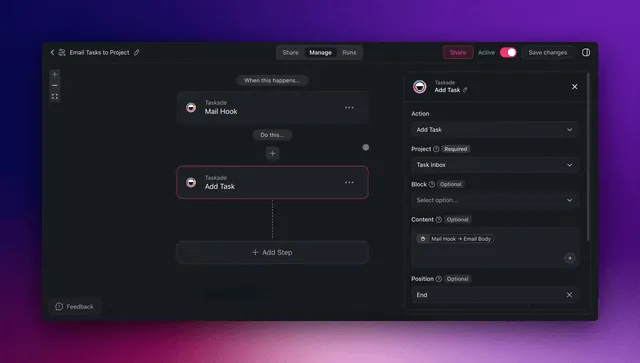
🔁 The Bidirectional Stack (Mermaid)
Most GTM stacks are one-way. Clay enriches and exports a CSV. The CSV gets pasted into Salesforce. Salesforce maybe syncs to HubSpot. Outreach pulls from Salesforce. Replies maybe sync back. Each arrow is a copy, a delay, and a chance to drift. Taskade Genesis closes the loop, every trigger pulls events into Workspace DNA, every action pushes data out, and the workspace itself is the source of truth.
One-way stacks lose deal velocity in three places. First, at the export-import seam, a Clay row that takes 4 hours to land in Salesforce is a 4-hour gap between intent and action. Second, at the agent-handoff seam, Apollo's sequencer doesn't know what Clay just enriched, so it sends the generic email instead of the personalized one. Third, at the reply-attribution seam, Outreach replies often arrive 12-24 hours before HubSpot reflects them, so the next agent run uses stale stage data. Bidirectional Workspace DNA removes all three seams because Memory, Intelligence, and Execution share one runtime.
For the underlying mechanism, see /learn/automation/triggers and /learn/automation/automations-execution.
💵 Per-Lead Cost Math (ASCII)
GTM economics get absurd at scale. The legacy stack charges per seat and per credit and per action, costs creep linearly with team size and quadratically with lead volume. Taskade Genesis Pro is flat: $10/mo billed annually, divided across however many leads you process. Three scenarios, verified May 2026 prices.
Per-lead cost — May 2026 (5-seat team, 1K leads/mo)
──────────────────────────────────────────────────────────────────────
                     4-tool stack    7-tool stack    Taskade Genesis
Tool                 ($/mo)          ($/mo)          ($/mo)
──────────────────────────────────────────────────────────────────────
Clay Growth          $446            $446            included (agent)
Apollo Pro × 5       $395            $395            included (action)
Outreach × 5         $750            $750            included (agent)
HubSpot Pro × 5      $500            $500            included (Project)
ZoomInfo Advanced    —               $2,500          included (action)
Lemlist Multi × 5    —               $495            included (agent)
Smartlead Pro        —               $94             included (action)
──────────────────────────────────────────────────────────────────────
TOTAL                $2,091          $5,180          $10
Per-lead at 1K       $2.09           $5.18           $0.010
Per-lead at 5K       $0.42           $1.04           $0.002
Per-lead at 10K      $0.21           $0.52           $0.0010
──────────────────────────────────────────────────────────────────────
Annualized at 10K    $25,092         $62,160         $120
                                                     209–518× cheaper
──────────────────────────────────────────────────────────────────────
At 10K leads/month, the 7-tool stack costs $62,160/year to run. That is one mid-level RevOps salary's worth of SaaS tooling, and the SDR team still has to glue the tools together by hand. The same volume on Taskade Genesis Pro is $120/year, the difference is enough to fund a full-time GTM engineer with $62,040/year left over.
The deeper point: per-lead cost is the wrong metric for legacy stacks because most of the cost is not per-lead, it is per-seat. Add a 6th SDR and the legacy stack jumps to $3,400+/mo before they touch a lead. Taskade Genesis Pro stays at $10/mo flat (Pro caps at 10 seats; the Business plan at $25/mo is unlimited seats).
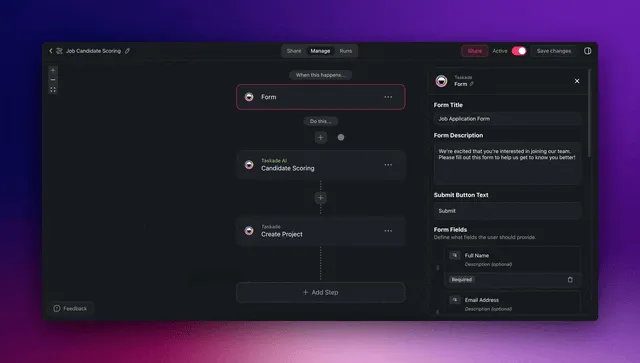
🧭 The Lead Lifecycle as a State Machine
Every GTM engineering system is a state machine, leads transition between states based on agent decisions and SDR actions. Drawing it explicitly is the difference between a working pipeline and a graveyard of stalled deals. In Taskade Genesis, every state transition is a Board-view stage change, every transition rule is an automation, and every state's required action is owned by a named agent.
Every transition above is wired in the Sales Pipeline Workflow demo. The Research Agent runs Raw → Enriched. The Scoring Agent runs Enriched → Scored. The Outreach Agent runs Qualified → Contacted. Calendly bookings flip Replied → Booked. Stripe charges flip Booked → Won. Memory of every transition is permanent, so the Pipeline Coach agent can answer "why did Q2 win-rate drop?" by reading the actual state-history of every deal, not by querying four different tools and reconciling timestamps.
⚠️ The Five Failure Modes of GTM Engineering Stacks
Every multi-tool GTM stack hits these five failure modes within 90 days. They are not bugs in any one tool. They are emergent properties of stitching specialty tools together. Workspace DNA was designed to make each one structurally impossible.
1. State drift between Clay → CRM → Slack → Gmail (no source of truth)
Clay enriches a lead. The CSV exports to Salesforce. Salesforce syncs to HubSpot 30 minutes later. HubSpot triggers Outreach. Outreach sends an email. The reply lands in Gmail. Gmail thread metadata syncs back to Outreach 12 hours later. By the time the SDR sees the lead, four systems disagree on the lead's stage, and at least one of them has stale enrichment data. State drift is not solvable with better integrations. It is solvable only by collapsing the tools into one runtime.
How Taskade Genesis solves this: Memory (the Contacts project) is the one source of truth. Every agent reads from it, every automation writes back to it. There is no copy, no sync, no drift.
2. Credit/token panic (Clay credits run out mid-quarter)
Clay's Growth plan is 6,000 credits for $446/mo. A waterfall enrichment burns 3-7 credits per lead. A 1K-lead campaign mid-quarter consumes the entire monthly allowance in a week. Teams ration credits, switch to cheaper providers mid-pipeline (degrading data quality), or pay $200/mo per overage block. The credit meter is a behavioral tax. It makes GTM engineers conservative when they should be experimental.
How Taskade Genesis solves this: Pro plan is flat $10/mo. Apollo
searchPeople/enrichLeadactions hit Apollo's API directly with your own Apollo seat, no Taskade Genesis credit meter on the enrichment volume. The Free plan's one-time grant of up to 6,000 AI credits covers agent reasoning, and Auto Top-up billing handles bursts.
3. Multi-tool auth/SSO sprawl
Ten tools means ten OAuth flows, ten SAML configs, ten password rotations, and ten sets of seat-management chores. RevOps spends 5+ hours a week on user provisioning across the stack. SSO add-ons cost extra in every tool ($50-150/seat surcharge on most enterprise plans). When an SDR leaves, off-boarding takes a full afternoon.
How Taskade Genesis solves this: One workspace, one auth, one role-based access model with RBAC (Owner to Viewer). Add or remove a teammate in one place; downstream automations and agents inherit the change.
4. Per-seat pricing punishes growth (10 SDRs × $200/seat × 5 tools = $10K/mo)
The legacy stack's pricing model is a tax on team growth. A 10-rep SDR team pays roughly $10K/mo across Clay/Apollo/Outreach/HubSpot/Lemlist before any data costs. Doubling the team doubles the cost; cutting two reps still leaves the per-seat overhead in place because most tools have annual contracts. This punishes the exact GTM motion the tools are supposed to support, more outbound capacity.
How Taskade Genesis solves this: Pro is a flat $10/mo for up to 10 seats. Business at $25/mo is unlimited seats. Adding the 11th SDR is a $15/mo jump, not a $1K/mo one.
5. AI agent islands (each tool has its own AI, no shared memory)
Clay has Claygent. Apollo has Apollo AI. Outreach has Smart Email Assist. HubSpot has Breeze. None of these AIs share memory with each other, each one knows only what its own tool knows. The result is an AI stack that contradicts itself: Claygent enriches a lead as "VP Marketing," Apollo's AI categorizes them as "Director," Outreach's AI writes to "Marketing Manager." The buyer reads three inconsistent emails and unsubscribes.
How Taskade Genesis solves this: All agents share one Workspace DNA memory. The Research agent enriches a contact, the CRM QA agent reviews the enrichment, the Outreach agent drafts the email, all reading the same Contacts project. Memory is not per-agent; it is per-workspace.
🎬 The Six Live GTM Apps: Embedded Right Here
Every iframe is a real Taskade Genesis app. Click inside, hit "Use this app," and clone into your free workspace.
1️⃣ Sales Pipeline Workflow: the core CRM
▲ ■ ● This is live. 4 projects, 2 AI agents (Sales Coach + CRM QA), 3 automations.
What's inside: a Contacts project, a Deals Pipeline (Board view, 4 stages: Lead → Qualified → Proposal → Closed), an Activity Log, a Forecasting project. Sales Coach agent drafts follow-ups and scores leads. CRM QA agent catches duplicates and missing fields. Three automations: stage-change Slack notifier, weekly digest email, Gmail follow-up sequencer.
This is the HubSpot/Pipedrive replacement at $10/mo flat instead of $100/seat or $49/seat.
2️⃣ Sales Agent Studio: the AI SDR
▲ ■ ● This is live. The agent that runs the cold-outreach motion.
What's inside: a Prospect List project, a Research agent that enriches each lead from Apollo + LinkedIn signals, a Scoring agent that runs the rubric, an Outreach Drafter agent that writes personalized first emails (with A/B variants), and automations that send via Gmail and log replies back to the Activity Log.
This is the Outreach.ai/Salesloft replacement, without the 6-week implementation and without the per-seat cost.
3️⃣ Multi-Platform Publisher: outbound on LinkedIn + email
▲ ■ ● This is live. Publish across email + LinkedIn + Slack from one workspace.
What's inside: a Content Calendar project, a Channel Map project (which posts go where), a Tone Adapter agent that rewrites a single post for each channel's voice, and automations that schedule and publish via integrations.
4️⃣ Sales Pipeline Dashboard: pipeline visibility
▲ ■ ● This is live. 3 projects, 1 AI agent, real-time pipeline metrics.
What's inside: stage-by-stage volumes, win-rate trend, weighted forecast, and a Pipeline Analyst agent that explains the why behind movements ("Q2 forecast dropped 18%, driven by 3 stalled deals in Proposal").
5️⃣ Cover Letter Generator: personalized outreach drafts
▲ ■ ● This is live. Repurpose for warm-intro requests, partnership proposals, or co-marketing pitches.
What's inside: a Job Targets project (here used as Outreach Targets), a Personal Background project (your value prop + key wins), a Drafter agent that writes a personalized warm-intro email tailored to the target's signals.
6️⃣ Event Management Portal: the founder dinner CRM
▲ ■ ● This is live. 3 projects, 2 agents, 2 automations, the founder dinner motion.
What's inside: an Invite List project, an RSVP project, and a Day-Of project. The Event Concierge agent drafts personalized invites + reminders + post-event thank-yous. Automations cover Calendly auto-confirm + Slack day-of alerts. This is the GTM tactic top founders use to convert relationship capital into pipeline, now wired by default.
For a deeper drill-down, clone the Event Management Portal, live demo.
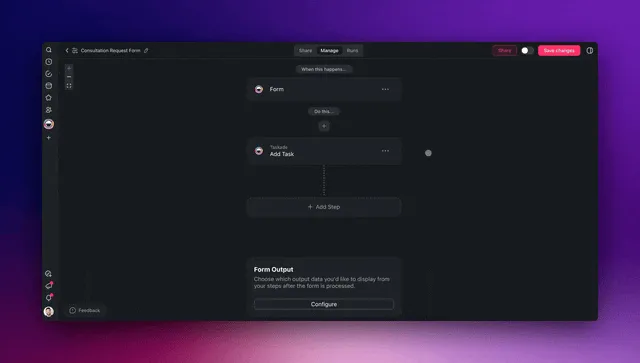
🧰 Real Cloneable Demos for GTM Teams
Every demo here is a working Taskade Genesis app. Each link opens the live app, click "Use this app" inside to clone into your free workspace in one click. These are production-ready, not prototypes.
| Demo | What it does | Clone link |
|---|---|---|
| Sales Pipeline Workflow | 4-stage Board-view CRM, 2 agents (Sales Coach, CRM QA), 3 automations (stage Slack, weekly digest, Gmail follow-up). Replaces HubSpot/Pipedrive at $10/mo flat. | share/apps/dry36084slddvvrh |
| Sales Agent Studio | AI SDR studio with Research → Scoring → Outreach Drafter agents and Apollo + Gmail automations. Replaces Outreach.ai/Salesloft. | share/apps/uo9fc7tfidydkdw9 |
| Multi-Platform Publisher | Content Calendar + Channel Map + Tone Adapter agent for cross-channel outbound on email + LinkedIn + Slack. | share/apps/hvu1z1ab0fyp9dkh |
| Sales Pipeline Dashboard | Real-time pipeline metrics, weighted forecast, Pipeline Analyst agent that explains stage movements in plain English. | share/apps/j1n0746e1z0olf6r |
| Cover Letter Generator | Repurposable for warm-intro outreach, partnership pitches, co-marketing requests — Drafter agent personalizes by target. | share/apps/pluhvxout7fgroo7 |
| Event Management Portal | Founder dinner CRM — Invite List, RSVP, Day-Of projects with Event Concierge agent + Calendly auto-confirm. | share/apps/scv62ou1yocu3sno |
Browse the Community Gallery for 150,000+ more cloneable Taskade Genesis apps. The /agents and /automate hubs surface the agents and automation flows powering each one.
🔧 The GTM Engineering Loop, Visualized
Three things this diagram captures that the Clay/Apollo/Outreach stack cannot:
- One workspace owns the loop. Memory, agents, automations, integrations all read/write from the same Workspace DNA, no integration glue, no copy-paste, no Salesforce-as-bus.
- Multi-agent collaboration is native. Research, scoring, QA, outreach are different agents sharing state via the Contacts project. Clay/Apollo collapse all four into one pipeline.
- Bidirectional integrations. Triggers pull events in (Slack reply, Apollo enrichment, Calendly booking). Actions push data out (Gmail send, Salesforce sync, weekly Slack digest).
For the broader multi-agent landscape, see Best Agentic Engineering Platforms 2026.
🧬 The Workspace DNA Loop, Mapped to GTM
Memory is the substrate, not a side-effect. Every Apollo enrichment writes back to the Contacts project. So the next agent run reads enriched data, not stale lead lists. That's how Workspace DNA compounds: the workspace gets smarter every cycle.
Compare to Clay: enrichment writes to a Clay table. Then you export to Salesforce. Then Salesforce data syncs to HubSpot. Then HubSpot triggers Outreach. Then Outreach sends an email. Then Outreach replies sync back to Salesforce. Each hop is a copy and a potential drift. Taskade Genesis collapses the loop into one source of truth.
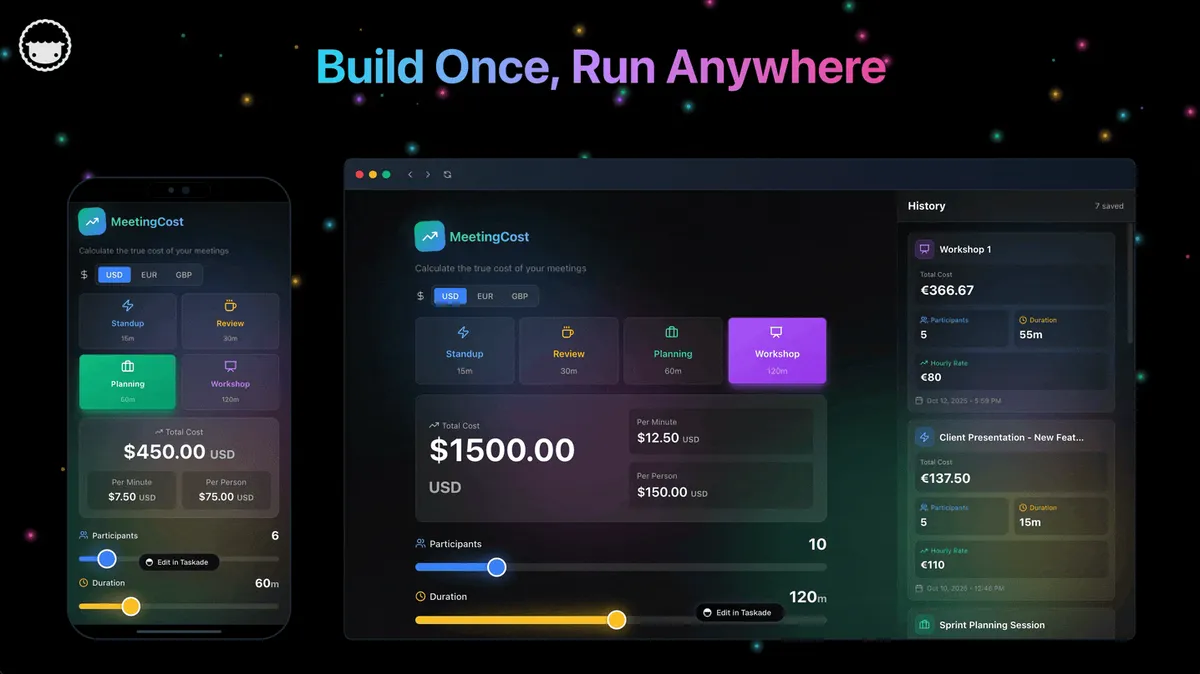
📋 The Full Comparison Table
| Tool | Price | AI lead enrichment | AI cold email | Persistent memory | Multi-agent | Custom workspace? | Free tier |
|---|---|---|---|---|---|---|---|
| Taskade Genesis | $10/mo Pro | ✅ via Research agent + Apollo | ✅ via Outreach agent | ✅ Workspace DNA | ✅ native | ✅ build from prompt | ✅ Up to 6K one-time credits |
| Clay | $446/mo Growth | ✅ waterfall 75+ providers | ⚠️ partial via Claygent | ❌ | ❌ single agent | ❌ table-shaped | ⚠️ 100 credits |
| Apollo | $79/seat/mo | ✅ database lookup | ✅ sequencer | ❌ | ❌ | ❌ | ⚠️ Free Starter |
| Outreach | ~$150/seat/mo | ⚠️ enterprise add-on | ✅ sequencer + agents | ⚠️ Salesforce-tethered | ❌ | ❌ | ❌ |
| Salesloft | ~$130/seat/mo | ⚠️ enterprise | ✅ Cadence | ⚠️ Salesforce-tethered | ❌ | ❌ | ❌ |
| HubSpot Sales | $100/seat Pro | ⚠️ paid add-on | ⚠️ paid Breeze | ⚠️ contact-level | ❌ | ⚠️ HubDB only | ✅ Free CRM |
| Pipedrive | $49/seat Premium | ❌ | ⚠️ workflow | ❌ | ❌ | ❌ | ❌ trial |
| Folk | $48/member Premium | ⚠️ basic | ✅ sequences | ⚠️ basic | ❌ | ❌ | ❌ trial |
| Attio | $69/seat Pro | ⚠️ add-on | ⚠️ workflow | ✅ data model | ❌ | ⚠️ flexible objects | ✅ |
| Salesflare | $49/seat Pro | ✅ basic | ⚠️ basic | ⚠️ contact-level | ❌ | ❌ | ❌ trial |
The two columns that decide this category are persistent memory and multi-agent. Clay is great at the enrichment moment. Apollo is great at the sequencer moment. Taskade Genesis is the only platform that gives the workspace itself persistent memory and multiple specialist agents collaborating on shared state.
📜 What Clay Got Right: and How Taskade Genesis Extends It
Clay's category win is instructive. Three patterns made GTM engineering a category in its own right, not just a tooling upgrade.
1. They sold by building, not pitching. Clay hired power users who already understood the product, then deployed them directly into customer problems, building custom workflows for prospects before the sale closed. The deal was the working system, not a deck.
2. They split the motion into two engineering loops. Internal GTM engineers built pipeline systems for Clay itself; forward-deployed GTM engineers built custom workflows for enterprise prospects live during the sale. Both loops fed back into product.
3. The buyer = the builder. Clay's GTM engineers were the same type of person buying Clay. That collapsed the typical SDR-to-prospect translation tax, every sales conversation was peer-to-peer.
The takeaway for AI app builders in 2026:
Clay is GTM engineering for revenue teams.
Taskade Genesis is execution engineering for every team.
Where Clay's primitive is a structured table that runs against external data, Taskade Genesis's primitive is a living workspace that runs the entire business system, Memory + Intelligence + Execution + Interface, all in one runtime. The two-loop structure works the same way: internal Taskade Genesis builders ship templates + generators + app-kits; forward-deployed Taskade Genesis builders construct the prospect's workspace live during the call, then send the clone link.
The framing reset
| Old framing | Taskade Genesis framing |
|---|---|
| Template | Starting point for a system |
| Generator | Prompt-to-system entry point |
| AI agent | Worker inside the system |
| Automation | Execution layer |
| Project | Memory, database, state |
| Workspace | Runtime |
| App | Interface |
| App-kit | Packaged business system |
| Community | Distribution layer |
| SEO page | Front door into a runnable workflow |
The money line
                  Templates rank.
                  Generators convert.
                  App-kits retain.
                  Community compounds.
The 6 cloneable Taskade Genesis demos above are app-kits in disguise, each one is a template + generated workspace + agent team + automations + forms + views + integrations + demo data, packaged as a one-click install. That is the Clay pattern, applied to every business function.
🏆 Long-Tail Wedges: Where Taskade Genesis Wins Organic SERPs
| Long-tail keyword | Taskade Genesis advantage |
|---|---|
| "AI sales agent that updates CRM and runs sequences" | Clay enriches, Apollo sends — none have a persistent multi-agent that does both with shared workspace memory |
| "GTM engineering system for solo founders" | Outreach/Salesloft are 50-rep enterprise; Taskade Genesis ships the same loop at $10/mo |
| "build sales pipeline app from prompt" | No competitor lets you generate a custom pipeline app — they ship one schema |
| "sales workspace with built-in agents and 100+ integrations" | Clay has no workspace; HubSpot has no agents that act |
| "clone a working SDR pipeline template" | Folk/Attio sell empty CRMs; Community Gallery has 150K+ live cloneable apps |
| "replace Clay Apollo HubSpot with one tool" | Direct consolidation play — Taskade Genesis is Memory + Intelligence + Execution in one seat |
| "AI agent with persistent CRM memory" | Apollo/Outreach AI is stateless per-sequence; Taskade Genesis agents have project-scoped memory |
| "sales pipeline with role permissions" | Pipedrive/Folk have 2–3 tier perms; Taskade Genesis RBAC matches Salesforce-class governance at $10/mo |
| "founder dinner CRM template" | Niche term, dominated by Notion templates that don't actually do work — Taskade Genesis ships the Event Management Portal live |
| "AI BDR" / "AI SDR agent" | Sales Agent Studio is the answer; competitors offer "AI assist" not "AI agent that owns the motion" |
🎯 The "Built In Front of the Prospect" Demo Pattern
The fastest sales motion I've seen for Taskade Genesis among GTM-adjacent prospects is:
- Open a Zoom with a prospect.
- Share screen with taskade.com/create open.
- Type the prompt: "Build a sales workspace for [their ICP], with [their specific channel mix], scoring on [their fit criteria], with a Slack alert when a deal stalls more than 5 days."
- Wait 4 minutes. EVE generates Contacts, Deals, Activity Log projects + Sales Coach + CRM QA agents + 3 automations live.
- Hit "Publish" and share the URL. The prospect now has a working version of their own GTM stack, deployed.
This is the Taskade Genesis-deployed builder pattern: build their workspace in front of them, then send them the clone link. Conversion math beats every other GTM motion in our funnel because the demo is the product.
For more, see Build App in Minutes and the Taskade Genesis deep dive newsletter.

🤔 FAQ
What is GTM engineering?
GTM engineering treats go-to-market motion as programmable infrastructure: lead generation, enrichment, qualification, outreach, conversion, expansion as automated workflows orchestrated by AI agents. The category emerged 2023–2024 around Clay and Apollo. Taskade Genesis ships the workspace, agents, and automations together as Workspace DNA on a flat $10/mo plan.
What are the best Clay alternatives in 2026?
Apollo.io ($79/seat Pro), Outreach.ai (enterprise contact-sales), Salesloft (similar enterprise), and Taskade Genesis. Taskade Genesis is unique because it ships persistent multi-agent memory, 100+ bidirectional integrations including Apollo, and flat $10/mo Pro pricing.
Can Taskade Genesis do lead enrichment like Clay?
Yes. Taskade Genesis automations call Apollo, LinkedIn signals, Sheets, Webhooks, or any HTTP endpoint. The Sales Pipeline Workflow + Sales Agent Studio ship this pattern wired by default.
How much does Clay cost vs Taskade Genesis?
Clay Starter: $167/mo. Clay Growth (popular): $446/mo. Taskade Genesis Pro: $10/mo flat, billed annually, for up to 10 seats. The 44x cost difference is the wedge.
Can I build a GTM engineering system without code?
Yes. Type a prompt to Taskade Genesis describing your ICP + channels + sequence + scoring. EVE generates the workspace in 4 minutes. Clone any of the 6 demos above to start.
What is a GTM engineer and what do they do?
A GTM engineer owns go-to-market workflow infrastructure, lead enrichment, sequences, scoring, automation, attribution. Taskade Genesis lets a single GTM engineer ship what a 5-person RevOps team would build manually.
How does AI lead scoring work?
A scoring agent reads each lead's enriched profile against your rubric and writes back a 0–100 score with reasoning. In Taskade Genesis, this happens inside the Contacts project, downstream automations route high scores to Slack or Calendly.
Can Taskade Genesis send cold emails automatically?
Yes. Gmail, Outlook, and SMTP-relay actions are first-class automations. Sequence shape (delays, A/B variants, reply detection) is configurable in the no-code automation builder.
🚀 Try the GTM Engineering System Free
Stop reading. Start cloning.
| App | Direct clone | What it replaces |
|---|---|---|
| Sales Pipeline Workflow | share/apps/dry36084slddvvrh | HubSpot/Pipedrive |
| Sales Agent Studio | share/apps/uo9fc7tfidydkdw9 | Outreach/Salesloft |
| Multi-Platform Publisher | share/apps/hvu1z1ab0fyp9dkh | Buffer/Hootsuite |
| Sales Pipeline Dashboard | share/apps/j1n0746e1z0olf6r | Salesforce dashboards |
| Cover Letter Generator | share/apps/pluhvxout7fgroo7 | Outreach templates |
| Event Management Portal | share/apps/scv62ou1yocu3sno | Eventbrite + Mailchimp |
Or build your own from a fresh prompt at taskade.com/create, Free Forever plan.
Browse /templates and /generate for more. Browse the full Community Gallery for 150,000+ live cloneable Taskade Genesis apps.
Read the rest of the cluster:
- I Built 7 AI Apps in 1 Day, the build-day that started this cluster
- Taskade Genesis vs Bolt vs Lovable vs v0 (2026), head-to-head SERP showdown
- AI Sales Pipeline Template, drill-down on Sales Pipeline app
- Internal Tools Dashboard Builder, Retool alternative
- Founder Operating System, founder-OS flavor
- Event Management Portal, live demo, drill-down on Event Management Portal
- Best Vibe Coding Tools 2026, broader code-generator landscape
- Workspace DNA: Context Engineering Blueprint, the substrate
For step-by-step setup, see /learn/agents/custom-agents · /learn/automation/automations-execution · /learn/automation/triggers · /learn/genesis/faq.
The $1,341/mo GTM stack was the bug. The $10/mo Workspace DNA is the answer. Try it free →