







You can automate the majority of real estate back-office work — lead qualification, instant follow-up, property valuation, lease abstraction, transaction coordination, and showing scheduling — with AI agents that reason over your data and act on it. Morgan Stanley estimates AI could automate up to 37% of real estate operations and unlock roughly $34 billion in efficiency gains over five years. The trick is not buying another point tool. It is building one back-office where your data, your AI agents, and your automations reinforce each other.
TL;DR: Real estate runs on speed and follow-through, and AI agents are great at both. Adoption among agents jumped from 68% (2024) to 97% (early 2026), yet only ~17% report a real business impact — the gap is tools that answer instead of act. Taskade Genesis closes it: describe your back-office in plain English and it builds the database, agents, and automations as one living app. Clone the live real-estate app below →
That embed is a real, working app — clone it in about 30 seconds and run it in your own workspace. The rest of this guide shows you exactly what to automate, in what order, and how a Taskade Genesis back-office differs from wiring nodes in n8n, Zapier, or Make.
What can you actually automate in real estate in 2026?
You can automate roughly 37% of real estate operations today, according to Morgan Stanley's analysis of the sector — and the highest-leverage targets are well known. Six tasks come up in almost every NAR and brokerage survey of where AI delivers: lead qualification, follow-up sequences, property valuation, lease abstraction, transaction coordination, and showing scheduling. These are repetitive, time-sensitive, and rules-driven — exactly what AI agents do well.
This is the wedge that separates a hobby chatbot from a back-office. A point tool answers a question. An AI agent qualifies the lead, drafts the reply, books the showing, updates the deal record, and pings you only when a human decision is needed.
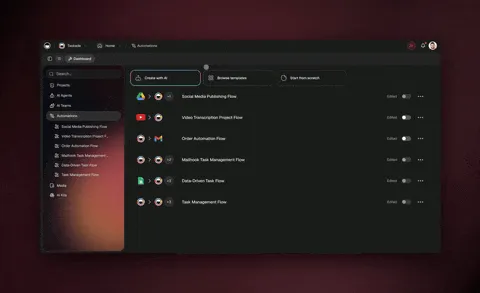
Here is the full picture of a real estate back-office and what each layer automates:
The loop matters. Each closed deal feeds the workspace memory, which makes the next qualification sharper. That self-reinforcing cycle — Memory feeds Intelligence, Intelligence triggers Execution, Execution creates Memory — is the Workspace DNA that turns a pile of automations into a system that compounds.
How much time and money does real estate automation save?
Morgan Stanley projects roughly $34 billion in efficiency gains across the real estate sector over five years, driven by automating up to 37% of operations. For a single brokerage, that abstract number becomes concrete fast: hours of admin removed each week, no leads lost overnight, and follow-up that never slips.
The most-cited stat in real estate sales explains why: replying to a new lead in seconds, rather than hours, can roughly double conversion. AI agents reply 24/7 in seconds, so the lead that arrives at 11 p.m. gets a real answer before you wake up. A human simply cannot match that response time across every inquiry.
| Task | Manual time / lead or deal | With AI agents | What the agent does |
|---|---|---|---|
| Lead qualification | 10–15 min | Seconds | Scores budget, area, timeline |
| First follow-up reply | Minutes to hours | Seconds | Personalized, 24/7 |
| Property valuation draft | 30–60 min | 2–5 min | Pulls comps, market range |
| Lease abstraction | 45–90 min | 5–10 min | Extracts rent, term, clauses |
| Transaction coordination | Hours / deal | Minutes | Builds checklist, tracks deadlines |
Citation capsule: According to industry adoption data, AI use among real estate agents rose from 68% in 2024 to 97% in early 2026 — yet only about 17% report a significant business impact. The gap is not adoption. It is integration: tools that answer questions instead of acting on your data. Taskade Genesis addresses this by combining AI agents, automations, and your project database into one workspace where agents can actually do the work.
Why have 97% of agents adopted AI but only 17% seen results?
The adoption-impact gap exists because most AI tools talk but don't act — they answer a question and stop, leaving the human to copy the answer into a CRM, send the email, and update the deal. AI use among agents climbed from 68% (2024) to 97% (early 2026), but only ~17% report meaningful business results. The 80% who don't are usually stacking disconnected point tools.
Closing the gap takes three things working together, not one chatbot bolted onto a CRM:
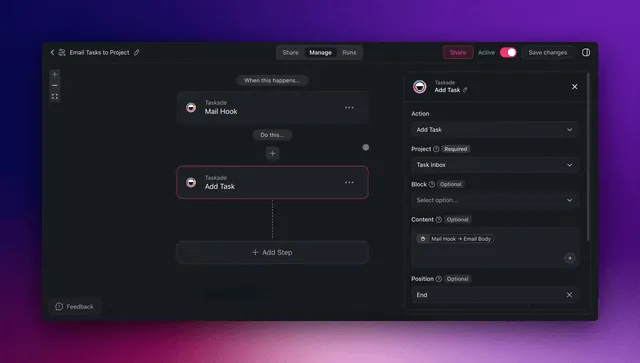
The difference is integration. An AI agent needs to read your inbox, see your calendar, and write back to your CRM. That requires bidirectional connections — events flowing in, actions flowing out — not a one-way chat window. Taskade Genesis ships 100+ bidirectional integrations so agents read and act, plus durable automations that don't drop the ball when a step fails.
The six core real estate automations, in build order
Build in priority order: lead capture and qualification first, then instant follow-up, then valuation, scheduling, transaction coordination, and lease abstraction. This sequence front-loads the automations that touch revenue — speed-to-lead and follow-through — before the back-office tasks that save time but don't directly close deals.
Here's how the pieces fit and which agent owns each step:
┌─────────────────────────────────────────────────────────────┐
│            REAL ESTATE BACK-OFFICE (one workspace)           │
├─────────────────────────────────────────────────────────────┤
│                                                              │
│  TRIGGER ─────────────► AGENT TEAM ──────────► EXECUTION     │
│  ───────                ──────────             ─────────     │
│                                                              │
│  New lead          ┌─► [1] Qualify  ──┐    Update Project    │
│  (form/portal) ────┤   [2] Follow-up  ├──► Send reply        │
│                    │   [3] Valuation  │    Book on Calendar   │
│  New document  ────┤   [4] Scheduling │    Create checklist   │
│  (lease/contract)  │   [5] Transaction├──► Notify human       │
│                    └─► [6] Lease-read ─┘    Log to memory      │
│                                                              │
│  ▲ Memory          ■ Intelligence       ● Execution          │
│  (Projects)        (AI agents)          (Automations)        │
└─────────────────────────────────────────────────────────────┘
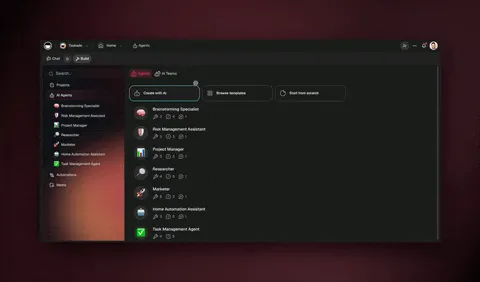
Each numbered agent below maps to one of those box rows. You don't wire them by hand — you describe the outcome and Taskade Genesis assembles the team.
1. Lead qualification — the speed-to-lead automation
Lead qualification is the first automation to build because a reply in seconds can roughly double conversion versus a reply hours later. A qualification agent scores each new lead on budget, area, and timeline the instant a form is submitted, then routes hot leads to you and nurtures the rest automatically.
In Taskade Genesis, a "form submitted" trigger fires the moment a lead arrives, an AI agent with built-in tools reads and scores it, and an automation writes the result into your deal Project. No inquiry waits overnight.
2. Follow-up sequences — never drop a lead again
Follow-up is the automation that recovers the most lost revenue, because most deals are lost to silence, not rejection. A follow-up agent sends a personalized first reply in seconds, then runs a multi-step nurture that waits days between touches and stops the moment the lead replies.
This is where durable automations matter. A Taskade Genesis automation can branch, loop, filter, and wait for days before the next step, then resume exactly where it left off — even if a step fails. That reliability is the difference between a nurture sequence that runs for weeks and one that silently dies after step two. See the automation hub and sales automation playbook for ready patterns.
3. Property valuation — first-pass comps in minutes
A valuation agent produces a first-pass price range in 2–5 minutes instead of the 30–60 minutes a manual comp pull takes. It searches recent comparable sales, summarizes the local market, and returns a range a human reviews before it reaches a client.
The agent uses its web-search and file-analysis tools to gather comps, then writes a structured valuation into your Project. A human always signs off — AI drafts, you decide.
4. Showing scheduling — book without the back-and-forth
A scheduling agent eliminates the email ping-pong of booking a showing by reading availability and offering open slots directly. When a qualified lead is ready to view a property, the agent checks your calendar, proposes times, and books the confirmed slot.
This is exactly what the Broker Calendar app below does. Clone it and connect your own calendar:
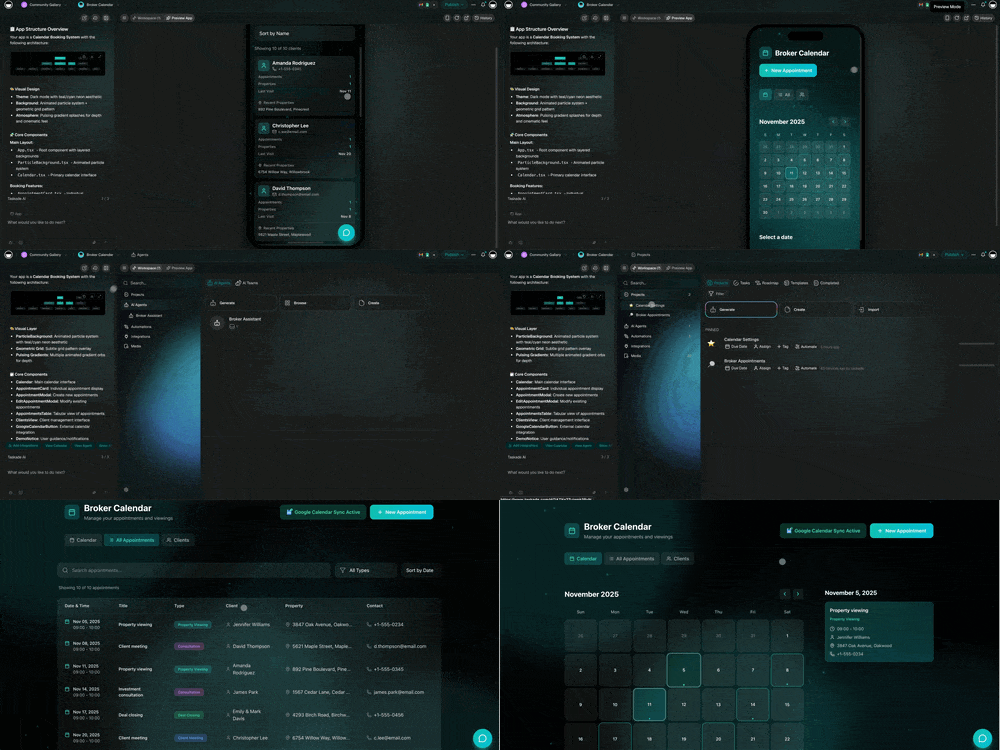
The Broker Calendar (live app ID ncmibyh4dgh6q0py) pairs with the lead app above — qualification feeds scheduling, scheduling feeds transaction coordination. That hand-off between agents is multi-agent collaboration in action.
5. Transaction coordination — checklists that run themselves
A transaction-coordination agent removes hours of admin per deal by building the closing checklist, tracking every deadline, and nudging the right party when a date approaches. Real estate closings have dozens of moving deadlines — inspection, appraisal, financing, title — and a missed one can kill a deal.
The agent creates the checklist in a Project, watches the Calendar and Gantt views for upcoming deadlines, and fires reminders automatically. You see the whole pipeline across all project views and step in only when a human call is needed. If coordinating transactions is your full-time job, see how full-time coordinators build milestone tracking and client visibility without wiring up an MLS or IDX feed at all.
6. Lease abstraction — read 50 pages in minutes
A lease-abstraction agent reads a 50-page commercial lease and extracts the key terms — rent, term, renewal options, escalation clauses, responsibilities — into a structured table in 5–10 minutes instead of 45–90. Upload the document, and the agent's file-analysis tools do the reading.
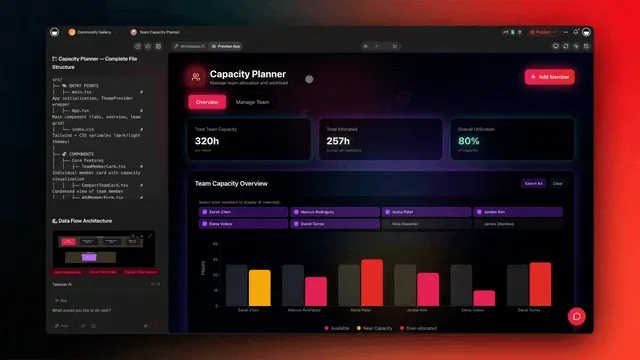
As always, the agent drafts and a human verifies. The output is a clean abstract you can trust as a starting point, with the source clauses linked for review.
A day in the life of one automated deal
Here's what the six automations look like working together on a single deal, from inquiry to closing — a Tuesday-night lead that becomes a signed contract with you touching it only four times. This is the payoff of building one connected back-office instead of six disconnected tools.
11:42 p.m. — a buyer fills out a property inquiry on your site. The qualification agent reads it in seconds: pre-approved, $650K budget, wants a 3-bed in your farm area, ready to move in 60 days. It scores the lead "hot," writes a new record into your deal Project, and the follow-up agent sends a warm, personalized reply before the buyer closes the browser tab. You're asleep. The deal is already moving.
7:15 a.m. — you open Taskade and see one flagged item: a hot lead waiting for a personal call. The valuation agent has already drafted a comp-based price range for the three listings that match, each linked to its source data. You make the call (human touch #1), and the buyer asks to see two homes that weekend.
8:30 a.m. — the scheduling agent reads your calendar, offers the buyer two open Saturday slots, and books the confirmed one — no email ping-pong. Your only job is to show up (human touch #2).
Saturday afternoon — the buyer wants to make an offer. You set the terms (human touch #3), and the transaction agent spins up the full closing checklist: inspection, appraisal, financing, title, walkthrough. It tracks every deadline on the Calendar and Gantt views and pings the right party as each date approaches.
Three weeks later — the only deadline that needs you is the final sign-off (human touch #4). Everything else — reminders, status updates, document chasing — ran on its own. The closed deal feeds back into workspace memory, so your next qualification on a similar buyer is sharper.
Four human touches. Everything between them ran automatically. That's what "automate 99% of the work" means in practice — the routine 99% runs itself so you can spend your hours on the 1% that actually closes deals.
How Taskade does it differently from n8n, Zapier, Make, and Shopify Flow
Most automation tools — n8n, Zapier, Make, Lindy, Shopify Flow — connect apps by wiring nodes. Taskade Genesis ships a living app from one prompt. That's the wedge: you describe the real estate back-office you want, and it builds the database, the AI agents, and the automations together — not a flowchart you assemble module by module.
Let's be fair about the competition first. Zapier has the largest app catalog and the gentlest learning curve. n8n is the cheapest at scale for complex flows if you can self-host. Make has a genuinely beautiful visual canvas. Lindy does focused AI assistants well. If your goal is simply to move data between two apps, those tools are excellent and you should use them.
The difference shows up when you want an actual system — agents that reason, automations that recover from failure, and an app you can hand to a client:
| What you want | Wire-the-nodes tools | Taskade Genesis |
|---|---|---|
| Connect two apps | ✅ Excellent | ✅ 100+ bidirectional |
| AI agents that act | ⚠️ Add-on / bolt-on | ✅ Native, built-in tools |
| Multi-agent teams | ❌ Rare | ✅ Agents hand off work |
| A shareable app at the end | ❌ No | ✅ Live URL + sign-in |
| Project database with multiple views | ❌ No | ✅ Built in |
| Resume from a failed step | ⚠️ Some | ✅ Durable workflows |
The real estate version of this difference: a Zapier zap can email a new lead. A Taskade Genesis back-office qualifies the lead, drafts the reply, books the showing, opens the transaction checklist, and remembers the whole deal — as a team of agents working inside one app you can clone and share.
This guide is the full back-office operating system. If you only need a single property-and-lead app — one focused tool rather than the whole system — start with our companion guide, how to build an AI real estate app, then come back here to wire it into the larger back-office.
Taskade Genesis vs the real estate AI platforms (Lofty AOS, MoxiWorks, n8n, QverLabs)
Taskade Genesis is the only option here that builds your back-office as a living app from one prompt — the others are either fixed-suite real-estate operating systems you rent per seat, or node-wiring tools you assemble by hand. In early 2026 the category split into three shapes: agentic real-estate operating systems (Lofty AOS, launched February 2026 at $449–$1,500/month), brokerage suites (MoxiWorks), and general automation builders (n8n, Zapier, Make). Each is genuinely good at one thing. Genesis wins when you want all three in one workspace you own and can clone.
Let's be fair about the field before the table. Lofty AOS is purpose-built for real estate and ships specialized agents (lead prioritization, seller prospecting, social, website) out of the box — if you want a turnkey real-estate stack and the per-seat price fits, it is excellent. MoxiWorks is a polished brokerage-managed suite (CRM, marketing, presentations, analytics) trusted by mid-to-large brokerages. QverLabs and similar agentic-AI consultancies build custom workflow automation that can reach ~85% of a property workflow. n8n is the cheapest at scale for complex flows if you self-host. Pick those when their exact shape matches your need.
The difference is what you own at the end, how pricing scales, and whether the system reasons and reinforces rather than just runs:
| Capability | Taskade Genesis | Lofty AOS | MoxiWorks | n8n / Zapier |
|---|---|---|---|---|
| Built from one plain-English prompt | ✅ Living app | ⚠️ Fixed agent suite | ❌ Configured suite | ❌ Wire each node |
| AI agents that act (not just chat) | ✅ built-in tools | ✅ Specialized agents | ⚠️ AI nurture add-ons | ⚠️ Bolt-on AI step |
| Multi-agent hand-off | ✅ Agents pass work | ✅ Coordinated agents | ❌ | ❌ Rare |
| Shareable/cloneable app you own | ✅ Live URL + sign-in | ❌ Rented seats | ❌ Rented seats | ❌ No app output |
| Self-reinforcing memory loop | ✅ Workspace DNA | ⚠️ CRM history | ⚠️ CRM history | ❌ Stateless runs |
| Entry price | ✅ Free, then $10/mo | $449–$1,500/mo | Brokerage quote | Free self-host / per-task |
The honest read: if you are a large brokerage that wants a finished real-estate stack and never plans to customize the logic, a dedicated suite like Lofty AOS or MoxiWorks may suit you, and you should evaluate them. The moment you want to shape the back-office to your own playbook, own the app, clone it across your team, and start for free, Taskade Genesis is the only one of the four built for that.
For a deeper, sales-focused version of this same wedge, see the automate sales with AI agents playbook — the lead-and-follow-up engine there is the same one that powers a real estate pipeline, and the automate consulting guide shows the identical pattern applied to a services back-office.
What you get versus a standalone real estate CRM
A real estate CRM stores contacts and reminds you to act; Taskade Genesis acts for you and ships an app you can share. Tools like Follow Up Boss or kvCORE are great address books with reminders. The back-office described here adds the agents and automations that actually do the work between the reminders. Solo agents who need only the speed-to-lead half of that bundle can weigh a solo-agent lead engine you own outright against a full brokerage suite.
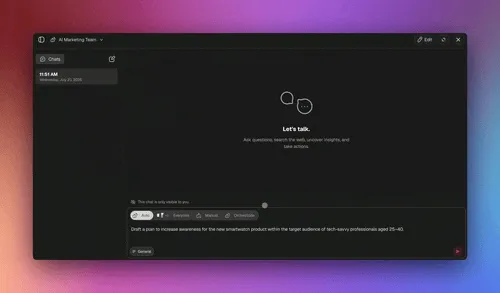
Here's the capability set a CRM doesn't give you:
| Capability | What it means for a real estate team |
|---|---|
| One-prompt back-office | Describe it; get a live app with database + UI |
| AI agents (built-in tools) | Qualify, reply, value, schedule, coordinate |
| Multi-agent teams | Agents hand off: qualify → schedule → coordinate |
| Frontier models | Top AI labs — routed automatically |
| 100+ bidirectional integrations | Read your inbox/calendar, write back to your CRM |
| Durable automations | Wait days, branch, resume from the failed step |
| Multiple project views | List, Board, Calendar, Table, Mind Map, Gantt, Org Chart |
| Publish to clients | Custom domains, built-in sign-in, clone-and-share |
| Role-based access | Owner through Viewer — control who sees each deal |
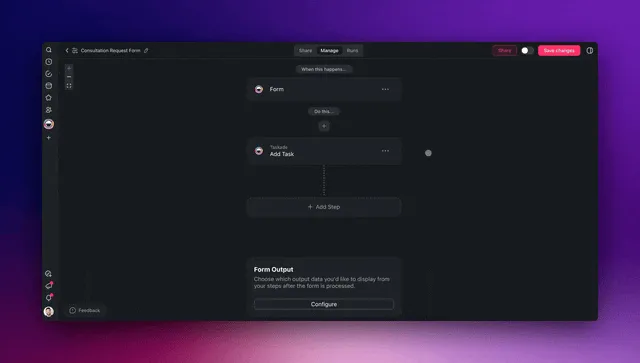
Enriching a lead record shows the bidirectional flow clearly — data comes in from a connected source, and the agent writes the enriched record back:
For sales-heavy teams, pair this with a CRM template as your starting database, then let the agents and automations run on top of it.
What Taskade Genesis can do for a real estate team — the full platform
Taskade Genesis is one workspace where your data, your AI agents, and your automations reinforce each other — that loop is what turns six disconnected real estate tasks into a back-office that compounds. The pieces below aren't separate products you stitch together; they ship together the moment you describe your back-office. Here is the whole platform, mapped to a real estate use case.
The Workspace DNA loop — Memory, Intelligence, Execution. Every closed deal becomes Memory (a record in your Projects), your AI agents are the Intelligence that reasons over that memory, and your Automations are the Execution that acts. Each loop sharpens the next: the more deals your workspace remembers, the better your qualification agent scores the next buyer in your farm area. That self-reinforcing cycle is the Workspace DNA — and it's the reason a Genesis back-office gets better with every deal, where a CRM just accumulates rows.
Here's how each platform capability maps to the work a real estate team actually does:
| Genesis capability | What it is | Your real estate use case |
|---|---|---|
| Workspace DNA loop | Memory + Intelligence + Execution, self-reinforcing | Each closed deal sharpens the next qualification |
| built-in agent tools | Web search, file analysis, messaging, database writes | One agent pulls comps, reads a lease, and updates the deal |
| Multiple project views | List, Board, Calendar, Table, Mind Map, Gantt, Org Chart | See your pipeline as a board, deadlines as a Gantt |
| Multi-agent teams | Agents hand off work in sequence | Qualify → schedule → coordinate, no human relay |
| 100+ bidirectional integrations | Triggers pull events in, actions push data out | Read your inbox + calendar, write back to your CRM |
| Frontier models | Top AI labs, routed automatically | Best model for valuation reasoning vs quick replies |
| Custom domains + publishing | Ship a live app on your own URL with sign-in | Hand clients a branded portal, not a spreadsheet link |
| Role-based access | Owner through Viewer | Control who sees each deal, agent, and automation |
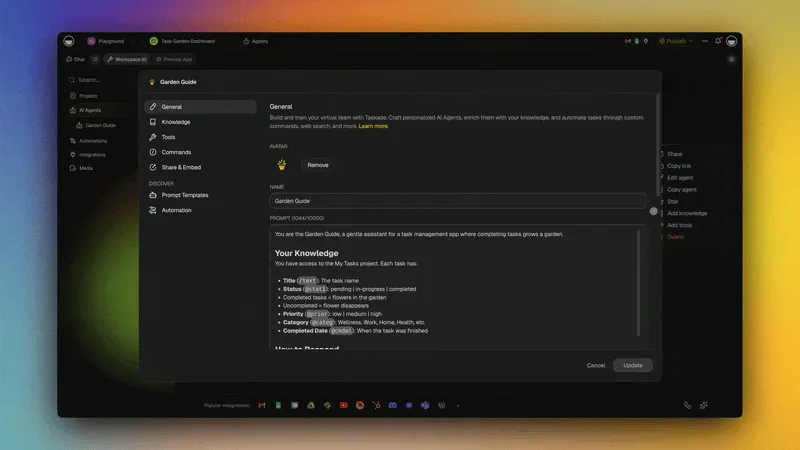
built-in agent tools. A single Taskade AI agent can search the web for comparable sales, analyze an uploaded lease PDF, send a follow-up message, and write the result into your deal database — without you wiring any of it. That's why one valuation agent can do in 2–5 minutes what a manual comp pull takes 30–60. Pick the right model per agent — a heavier reasoning model for valuation, a fast one for instant replies:
Multiple project views over one deal database. Your pipeline lives in a Project you can read as a Board (deal stages), a Calendar (showings), a Gantt (closing deadlines), or a Table (reply times and lead scores) — the same data in multiple views, no export. A real estate operator watches the Board for stage movement and the Gantt for the inspection-appraisal-financing-title deadline chain.
Multi-agent teams that hand off work. No single agent owns the whole deal. Your qualification agent passes a hot lead to the scheduling agent, which passes the booked showing to the transaction agent — multi-agent collaboration means the deal moves down the pipeline without a human acting as the relay between tools:
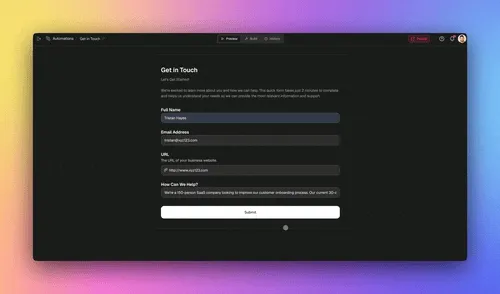
100+ bidirectional integrations. This is the difference between a chatbot and a back-office. A trigger pulls a new lead in from your form or portal; an action pushes the enriched record back to your CRM, books the slot on your calendar, and replies in your inbox. Events flow in, actions flow out — connect your real stack in minutes:
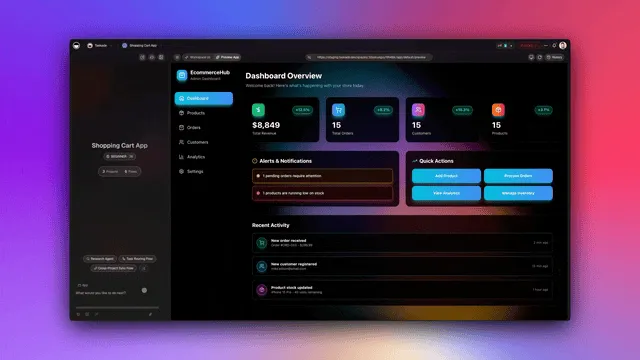
Custom domains + Genesis app publishing. The back-office you build isn't trapped in an admin panel. Publish it as a live app on your own custom domain with built-in sign-in, and hand clients a branded buyer or seller portal instead of a spreadsheet share link. For a property-management spin on the same publishing flow, see AI property management software.
Frontier models, routed for you. Genesis runs frontier models from top AI labs, and routes the right one to the right job automatically — so your valuation agent gets a strong reasoning model while your instant-reply agent gets a fast one. You don't manage model keys; you describe the outcome.
Where this is heading
The direction is clear: every real estate team will eventually run on a single self-reinforcing loop of Memory, Intelligence, and Execution instead of a stack of disconnected point tools. The vision behind Taskade Genesis is that one prompt becomes a living, self-improving app — your deals become memory, your agents reason over that memory, and your automations execute, and each closed deal makes the whole system smarter. The agentic operating systems launching across real estate in 2026 are early signals of this shift; the lasting version is the one you own, can clone across your team, and can reshape to your own playbook. The back-office you describe today is the one that keeps getting better on its own.
How to know your automation is actually working
Track three numbers and you'll know within a week whether the back-office is paying off: speed-to-lead (first reply time), follow-up completion rate, and admin hours saved per deal. These map directly to the levers Morgan Stanley's 37%-automation figure is built on, and they're the ones a non-technical operator can read at a glance.
| Metric | Before automation (typical) | Target after | Why it matters |
|---|---|---|---|
| First reply time | Hours | Under 60 seconds | Sub-minute reply ~2× conversion |
| Follow-up completion | 2–3 touches, then stops | Full sequence, every lead | Most deals lost to silence |
| Admin hours / deal | Several hours | Under one hour | Transaction-coordination load |
You don't need a separate dashboard tool — your deal Project already holds the data. Use the Table and Board views to see reply times and pipeline stage, and let an AI agent summarize the week for you on a schedule. The 17%-impact gap closes when you can see that agents are acting, not just answering — so measure the action, not the chat volume.
A second reason to measure: it tells you which automation to build next. If first-reply time is already great but admin hours are still high, prioritize the transaction-coordination agent. If follow-up completion is low, deepen the nurture sequence. The back-office grows where the numbers say it should.
The single number that moves the most revenue is first-reply time. Conversion drops sharply the longer a lead waits — this is why a sub-minute AI reply matters more than any other automation you build:
The shape is steep on purpose: a lead answered in under a minute converts at roughly double the rate of one answered hours later, and the cliff happens fast. An AI agent that replies in seconds, 24/7, sits at the left edge of that curve on every inquiry — including the 11 p.m. one a human wouldn't see until morning. That's the highest-leverage number in the whole back-office, which is exactly why lead qualification and instant follow-up are the first two automations to build.
Here's a simple decision tree for which automation to add next, based on what your three numbers are telling you:
How to build your real estate back-office in one afternoon
You can stand up a working real estate back-office in an afternoon: start free, describe the system, clone a live app, connect your tools, and let agents run. The order below front-loads the revenue automations (lead and follow-up) so you see results on day one.
   START FREE                    DESCRIBE                   SHIP
   ─────────                     ────────                   ────
   /create  ──────►  "Build a real estate back-office  ──►  Live app
                      that qualifies leads, replies in       + agents
                      seconds, books showings, and           + automations
                      tracks closings"                       + share URL
                            │
                            ▼
                     Clone a live app  ──►  Connect calendar,
                     from /apps         inbox, CRM (100+)
                            │
                            ▼
                     Agents run the back-office 24/7
Step by step:
- Start free at Taskade Genesis — no card, no server.
- Describe the outcome: tell it you want a real estate back-office that qualifies leads, replies instantly, values properties, books showings, and tracks closings.
- Clone a live app from the Community Gallery — like the real-estate lead app or Broker Calendar above — to skip the blank page.
- Connect your tools through 100+ integrations so agents read your inbox and calendar and write back to your CRM.
- Review and launch — agents draft, you approve, then let the automations run around the clock.
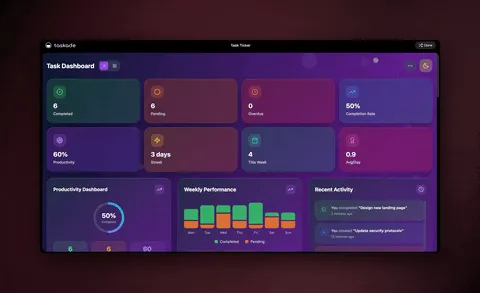
Want the agents to run multi-step work on their own? See how autonomous agent loops let a team research, draft, and hand off without you in the loop for every step.
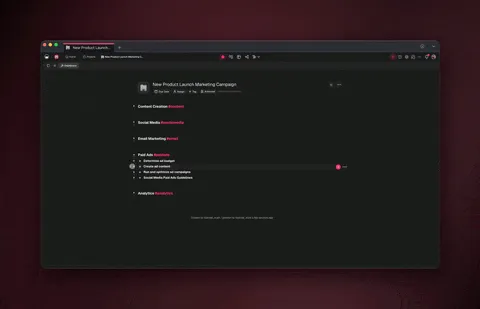
Where a human still belongs in the loop
AI should automate the busywork, not the judgment — negotiation, relationship-building, and final sign-off stay human. The pattern that works is "agent drafts, human decides." Agents qualify, value, schedule, and coordinate; you review the valuation before it's sent, approve the contract terms, and own the client relationship.
That's why the back-office routes the human-judgment moments straight to you. A qualification agent flags a hot lead for a personal call. A transaction agent surfaces a deadline that needs your decision. Everything routine runs automatically; everything that needs a person lands on your desk with context attached. The result isn't fewer humans — it's humans freed from admin to do the high-value work that actually closes deals.
Frequently asked questions
Can you really automate most real estate back-office work?
Yes. Morgan Stanley estimates AI could automate up to 37% of real estate operations for roughly $34 billion in efficiency gains over five years. The reliably automatable tasks are lead qualification, follow-up, valuation, lease abstraction, transaction coordination, and showing scheduling. Taskade Genesis builds a back-office that handles all six from one prompt.
How fast should an AI agent reply to a new lead?
In seconds. Contacting a lead within the first minute versus hours later can roughly double conversion, and AI agents reply 24/7 instantly. In Taskade Genesis, a form-submitted trigger fires an AI agent before a human opens the inbox.
Why have 97% of agents adopted AI but only 17% seen impact?
Most AI tools answer questions instead of acting. Adoption rose from 68% (2024) to 97% (early 2026), but the impact gap comes from disconnected point tools. Taskade Genesis closes it by combining agents, automations, and your database in one workspace.
Do I need to code to build this?
No. Taskade Genesis is no-code — you describe the back-office and it builds the database, agents, automations, and a shareable app, with multiple project views and a live URL.
How is this different from a real estate CRM?
A CRM stores contacts and reminds you. Taskade Genesis acts for you: agents qualify, reply, value, schedule, and coordinate, with durable automations and 100+ bidirectional integrations that read and write your tools.
How is this different from the single AI real estate app guide?
That guide builds one focused property-and-lead app. This is the full back-office operating system around it. Start with how to build an AI real estate app, then wire it into the larger system here.
Can AI handle property valuation and lease abstraction?
Yes, as a first-pass a human reviews. Agents pull comps for a valuation range or extract rent, term, and clauses from a lease into a structured table using built-in tools, then write results to a Project for sign-off.
What does it cost?
Taskade Genesis is free to start. On annual billing: Pro $10/mo (most popular), Business $25/mo, Max $100/mo, Enterprise $250/mo. A solo agent can run a full lead-and-follow-up back-office on a low tier.
Ready to automate the busywork and keep the deals? Start free with Taskade Genesis — describe your real estate back-office, and watch it build the database, the AI agents, and the automations, then ship a live app you can clone and share.
Explore the automation hub, the sales automation playbook, AI agents, and cloneable apps in the Community Gallery — or grab a CRM template to start your database.
Related reading: build a single focused AI real estate app, set up AI property management software for portfolios and tenants, apply the same engine to a sales pipeline with automate sales with AI agents, or see the services-firm version in automate consulting with AI agents.
▲ ■ ● Memory, Intelligence, Execution — your deals become memory, your agents reason over them, and your automations run the work. That's the difference between a real estate chatbot and a back-office that closes.