



Taskadetaskade
PricingLoginSign up for free →Sign up for free →
Loved by 1M+ users·Hosting 100K+ apps·Deploying 500K+ AI agents·Running 1M+ automations·Backed by Y Combinator
TaskadeAboutPressPricingFeaturesIntegrationsChangelogContact us
GalleryProductivityKitsVideosReviewsLearnHelpDocsFAQ
VibeVibe AppsVibe AgentsVibe CodingVibe Workflows
Vibe MarketingVibe DashboardsVibe CRMVibe AutomationVibe PaymentsVibe DesignVibe SEOVibe Tracking
Community
FeaturedQuick AppsTools
DashboardsWebsitesWorkflowsProjectsFormsCreators
DownloadsAndroidiOSMac
WindowsChromeFirefoxEdge
Compare
vs Cursorvs Boltvs Lovable
vs V0vs Windsurfvs Replitvs Emergentvs Devinvs Claude Codevs ChatGPTvs Claudevs Perplexityvs GitHub Copilotvs Figma AIvs Notionvs ClickUpvs Asanavs Mondayvs Trellovs Jiravs Linearvs Todoistvs Evernotevs Obsidianvs Airtablevs Basecampvs Mirovs Slackvs Bubblevs Retoolvs Webflowvs Framervs Softrvs Glidevs FlutterFlowvs Base44vs Adalovs Durablevs Gammavs Squarespacevs WordPressvs UI Bakeryvs Zapiervs Makevs n8nvs Jaspervs Copy.aivs Writervs Rytrvs Manusvs Crewvs Lindyvs Relevance AIvs Wrikevs Smartsheetvs Monday Magicvs Codavs TickTickvs Any.dovs Thingsvs OmniFocusvs MeisterTaskvs Teamworkvs Workfrontvs Bitrix24vs Process Streetvs Toggl Planvs Motionvs Momentumvs Habiticavs Zenkitvs Google Docsvs Google Keepvs Google Tasksvs Microsoft Teamsvs Dropbox Papervs Quipvs Roam Researchvs Logseqvs Memvs WorkFlowyvs Dynalistvs XMindvs Whimsicalvs Zoomvs Remember The Milkvs Wunderlist
Genesis AIVideo GuideApp BuilderVibe Coding
Agent BuilderDashboard BuilderCRM BuilderWebsite BuilderForm BuilderWorkflow AutomationWorkflow BuilderBusiness-in-a-BoxAI for MarketingAI for Developers
AI Agents
FeaturedProject ManagementProductivity
MarketingTranslatorContentWorkflowResearchPersonalSalesSocial MediaTo-Do ListCRMTask AutomationCoachingCreativityTask ManagementBrandingFinanceLearning and DevelopmentBusinessCommunity ManagementMeetingsAnalyticsDigital AdvertisingContent CurationKnowledge ManagementProduct DevelopmentPublic RelationsProgrammingHuman ResourcesE-CommerceEducationLegalEmailSEODeveloperVideo ProductionDesignFlowchartDataPromptNonprofitAssistantsTeamsCustomer ServiceTrainingTravel PlanningUML DiagramER DiagramMath TutorLanguage LearningCode ReviewerLogo DesignerUI WireframeFitness CoachAI Lead EnrichmentFounder OSAI SDR AgentBookkeepingRecruitingWebsite MonitoringAll Categories
Automations
FeaturedBusiness-in-a-BoxInvestor Operations
Education & LearningHealthcare & ClinicsReal EstateStripeSalesE-commerceContentMarketingEmailCustomer SupportHubSpotProject ManagementAgentic WorkflowsBooking & SchedulingCalendarReportsSlackWebsiteFormTaskWeb ScrapingWeb SearchChatGPTText to ActionYoutubeLinkedInTwitterGitHubDiscordMicrosoft TeamsWebflowRSS & Content FeedsGoogle WorkspaceManufacturing & OperationsAI Agent TeamsMulti-Agent AutomationNotion AutomationsAgentic AutomationProposalBookkeeping & ExpensesClient OnboardingAll Categories
Wiki
Taskade GenesisAI AgentsAutomation
ProjectsLiving DNAAutonomous Workspaces, Agents & AppsQuantum AI & Taskade Genesis QuantumPlatformIntegrationsProductivityMethodsProject ManagementAgileScrumAI ConceptsCommunityTerminologyFeatures
Templates
FeaturedChatGPTTable
PersonalProject ManagementSalesFlowchartTask ManagementEngineeringEducationDesignTo-Do ListMarketingMind MapGantt ChartOrganizationalPlanningMeetingsTeam ManagementStrategyGamingProductionProduct ManagementStartupRemote WorkY CombinatorRoadmapCustomer ServiceLegalEmailBudgetsContentConsultingE-CommerceStandard Operating Procedure (SOP)Human ResourcesProgrammingMaintenanceCoachingSocial MediaHow-TosResearchMusicTrip PlanningCRMClient OnboardingEmployee OnboardingSOPBug TrackerRecruitment TrackerFormSales PipelineContent CalendarMarketing PlanProduct RoadmapBusiness PlanSWOT Analysis30-60-90 Day PlanInterviewNotion AlternativeKPI TemplatesStrategic Plan TemplatesMeeting Agenda TemplatesInvoiceRisk RegisterIT Asset ManagementKanban BoardChange ManagementCommunication PlanRFPScope of WorkStatement of WorkHelpdeskKnowledge BaseCreative BriefGoal SettingExecutive SummaryGap AnalysisBooking SystemEvent ManagementPortfolio TrackerCustomer Onboarding PortalsClient PortalAgency OperationsFinance TrackingAll Categories
Generators
AI SoftwareNo-Code AI AppAI App
AI WebsiteAI DashboardAI FormAI AgentClient PortalAI WorkspaceAI ProductivityAI To-Do ListAI WorkflowsAI EducationAI Mind MapsAI FlowchartAI Scrum Project ManagementAI Agile Project ManagementAI MarketingAI Project ManagementAI Social Media ManagementAI BloggingAI Agency WorkflowsAI ContentAI Software DevelopmentAI MeetingAI PersonasAI OutlineAI SalesAI ProgrammingAI DesignAI FreelancingAI ResumeAI Human ResourceAI SOPAI E-CommerceAI EmailAI Public RelationsAI InfluencersAI Content CreatorsAI Customer ServiceAI BusinessAI PromptsAI Tool BuilderAI SEOAI Gantt ChartAI CalendarsAI BoardAI TableAI ResearchAI LegalAI ProposalAI Video ProductionAI Health and WellnessAI WritingAI PublishingAI NonprofitAI DataAI Event PlanningAI Game DevelopmentAI Project Management AgentAI Productivity AgentAI Marketing AgentAI Personal AgentAI Business and Work AgentAI Education and Learning AgentAI Task Management AgentAI Customer Relations AgentAI Programming AgentAI SchemaAI Business PlanAI Pitch DeckAI InvoiceAI Lesson PlanAI Social Media CalendarAI API DocumentationAI Database SchemaAI Marketing PlanAI Sales PipelineAI Course BuilderInternal ToolsBooking SystemReal Estate CRMInventory ManagementAll Categories
Converters
AI Featured ConvertersAI PDF ConvertersAI CSV Converters
AI Markdown ConvertersAI Prompt to App ConvertersAI Data to Dashboard ConvertersAI Workflow to App ConvertersAI Idea to App ConvertersAI Flowcharts ConvertersAI Mind Map ConvertersAI Text ConvertersAI Youtube ConvertersAI Knowledge ConvertersAI Spreadsheet ConvertersAI Email ConvertersAI Web Page ConvertersAI Video ConvertersAI Coding ConvertersAI Task ConvertersAI Kanban Board ConvertersAI Notes ConvertersAI Education ConvertersAI Language TranslatorsAI Business → Backend App ConvertersAI File → App ConvertersAI SOP → Workflow App ConvertersAI Portal → App ConvertersAI Form → App ConvertersAI Schedule → Booking App ConvertersAI Metrics → Dashboard ConvertersAI Game → Playable App ConvertersAI Catalog → Directory App ConvertersAI Creative → Studio App ConvertersAI Agent → Agent App ConvertersAI Audio ConvertersAI DOCX ConvertersAI EPUB ConvertersAI Image ConvertersAI Resume & Career ConvertersAI Presentation ConvertersAI PDF to Spreadsheet ConvertersAI PDF to Database ConvertersAI PDF to Quiz ConvertersAI Image to Notes ConvertersAI Audio to Notes ConvertersAI Email to Tasks ConvertersAI CSV to Dashboard ConvertersAI YouTube to Flashcards ConvertersURL to NotesVideo → SummaryAI Receipts to Expense Tracker ConvertersAI Docs to Knowledge Base ConvertersAI Form to Client Portal ConvertersSpreadsheet to CRMAll Categories
Prompts
Blog WritingBrandingPersonal Finance
Human ResourcesPublic RelationsTeam CollaborationProduct ManagementSupportAgencyReal EstateMarketingCodingResearchSalesAdvertisingSocial MediaCopywritingContentProject ManagementWebsite CreationDesignStrategyE-commerceEngineeringSEOEducationEmail MarketingUX/UIProductivityInfluencer MarketingAnalyticsEntrepreneurshipLegalVibe Coding PromptCRMCustomer SupportRecruitingAll Categories
Blog
7 Best AI Family Tree Generators 2026 (Free Genealogy & Ancestry Charts)10 Best AI Developer Tool Generators 2026 (Regex, JSON-LD, FAQ Schema, Snippets)9 Best Claude Cowork Alternatives in 2026 (Cloud, Team-Ready)
12 Best AI Invoice & Financial Document Generators 2026 (Invoices, Balance Sheets, KPIs)11 Best AI Proposal Generators 2026 (Business, Freelance, Grant & SEO)9 Best Make.com Alternatives: AI Automation Compared (2026)How to Automate 99% of Your Sales Process with AI Agents (Full Guide, 2026)AI Agent Teams Collaboration: How They Co-Edit Work With Humans in 2026AI App Builder vs AI Workspace Builder: The 2026 Category SplitHow to Build an Internal Tool Without Code in 2026 (No Engineering Backlog)How to Build a Client Portal Without Code in 2026 (No Developer)Micro Apps Explained: Why 150,000+ Have Already Been Built in 2026How to Build a CRM Without Code in 2026 (No Developer Needed)Context Engineering for Non-Developers: How Workspace DNA Productizes the Discipline (2026)How to Build a Business App Without Code in 2026 (No Engineer Required)Replace a Team With Genesis: The 2026 Role-by-Role Playbook9 Best Open-Source AI LLMs in 2026, Ranked for Real Work
AIAutomationProductivityProject ManagementRemote WorkStartupsKnowledge ManagementCollaborative WorkUpdates
Changelog
Custom Domains, Secured Faster (May 29, 2026)Automate from Agents, Teams & Media (May 28, 2026)Connect Any Service, Keys Stay Safe (May 26, 2026)
Every Gallery App, Live and Clonable (May 25, 2026)Two More Frontier Models & Clear Costs (May 22, 2026)More Frontier Models & Welcome Drip (May 20, 2026)Template Card Polish (May 19, 2026)
Wiki
Taskade GenesisAI AgentsAutomation
ProjectsLiving DNAAutonomous Workspaces, Agents & AppsQuantum AI & Taskade Genesis QuantumPlatformIntegrationsProductivityMethodsProject ManagementAgileScrumAI ConceptsCommunityTerminologyFeatures
© 2026 Taskade.
PrivacyTermsSecurity
Made withTaskade AIforBuilders
BlogStartupsA Review of HipChat's…

A Review of HipChat's History: The Amazing Rise and Fall of The Team Messaging Platform

The history of HipChat is full of twists and turns. After dominating the business communication space, the app that blazed a trail for real-time collaboration e...

A Review of HipChat's History: The Amazing Rise and Fall of The Team Messaging Platform
February 3, 2022Updated October 19, 202511 min readDawid BednarskiStartups
On this page (10)
🤔 What Is HipChat?💬 What Happened to HipChat?🚀 The Early Days: Official Launch (2008-2010)🔵 New Horizons: Atlassian Acquisition (2011-2014)⚡ Growth and Cakes: Hipchat vs. Slack (2015-2016)💰 No More Cakes: Slack Acquires HipChat (2017-2019)🌟 The History of HipChat is Over, but It Was a Good Run🐑 Taskade Is Your HipChat AlternativeFrequently Asked Questions About HipChat’s History🔗 Resources

The history of HipChat is full of twists and turns. After dominating the business communication space, the app that blazed a trail for real-time collaboration ended on a heap of dead software. So, what exactly went wrong with HipChat? Why did it lose in the HipChat vs. Slack grapple?

Let’s wind back the clock and find out!

HipChat logo animated.

💡 Before you start… Would you like to learn how remote collaboration tools evolved over the years? Be sure to check these articles when you’re done reading.

  1. 💬 How It All Started: Internet Relay Chat (IRC)

  2. 🎥 The Evolution of Video Conferencing

  3. 🌐 The Evolution of Web Browsers and Online Productivity

🤔 What Is HipChat?

HipChat is, or rather was, a chat and instant messaging service created by Chris Rivers, Garret Heaton, and Pete Curley in 2009. HipChat's freemium model, a strong lineup of features, and clever marketing made it one of the fastest-growing real-time communication platforms back in the day. The company was eventually acquired by Atlassian and later sold to Slack.

💬 What Happened to HipChat?

🚀 The Early Days: Official Launch (2008-2010)

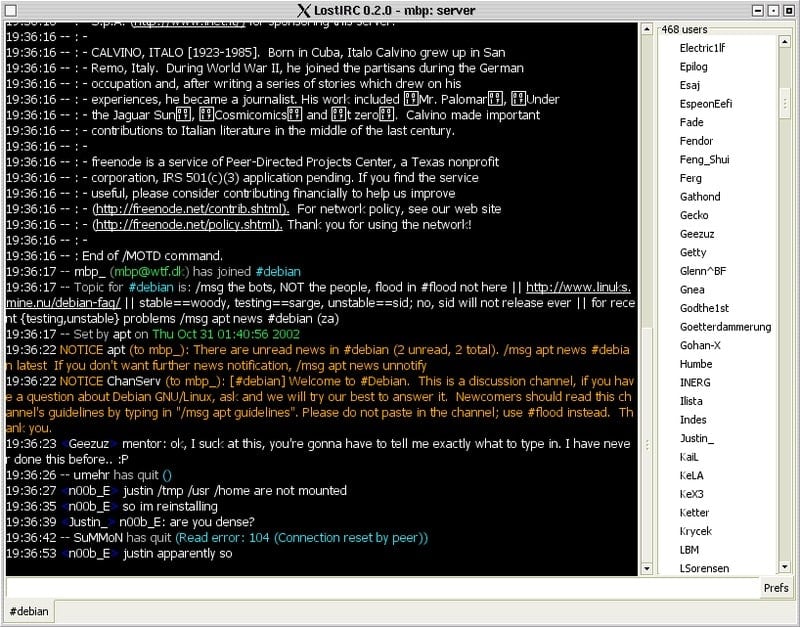
In the early 2000s, the majority of business communication happened via email. The technological landscape offered some alternatives like AIM or IRC, but they were designed for individual users rather than business applications. The niche was up for grabs.
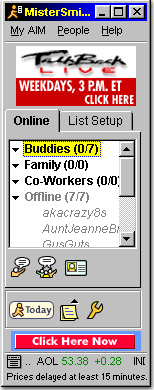
AOL user interface.

AOL user interface by AOL(1)

IRC user interface (2002).

IRC user interface.
Image credit: University of New York(2)

The daring idea to limit email use and go real-time came from three students at Rensselaer Polytechnic Institute (RPI). Chris Rivers, Garret Heaton, and Pete Curley were fraternity brothers and already had a track record of successful collaboration under their belts.(3)

HipChat founders Chris Rivers, Garret Heaton, and Pete Curley (left to right) sitting at the table.

HipChat founders Chris Rivers, Garret Heaton, and Pete Curley (left to right). Image credit: Rensselaer Polytechnic Institute (RPI)(4)

Before HipChat, Rivers, Heaton, and Curley created two other apps, a business calendar tool HipCal and a social network aggregator Pulse. Both products were acquired by Plaxo/Comcast where the trio would later spend some time as engineers before moving to Silicon Valley.
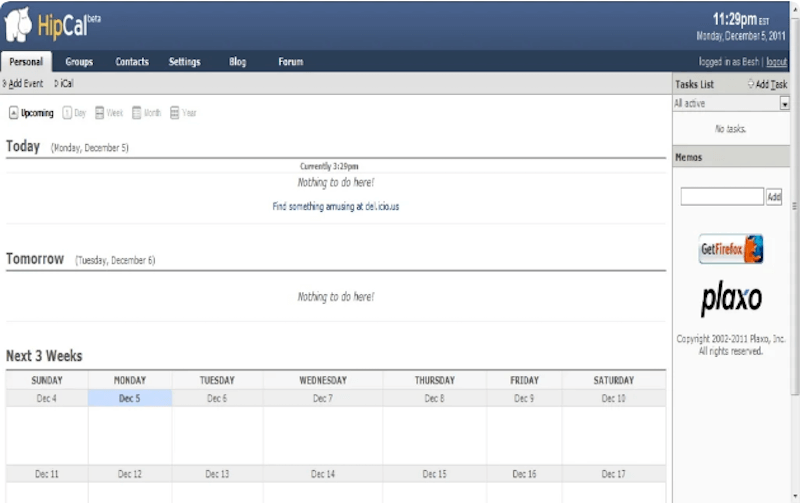
Plaxo's HipCal user interface.

(Plaxo) HipCal user interface

The goal was simple: To create a modern communication tool that would win the hearts (and wallets) of enterprise users. HipChat wasn’t completely alone in that space. The team faced some indirect competition from Campfire by 37signals (now Basecamp) and Yammer.
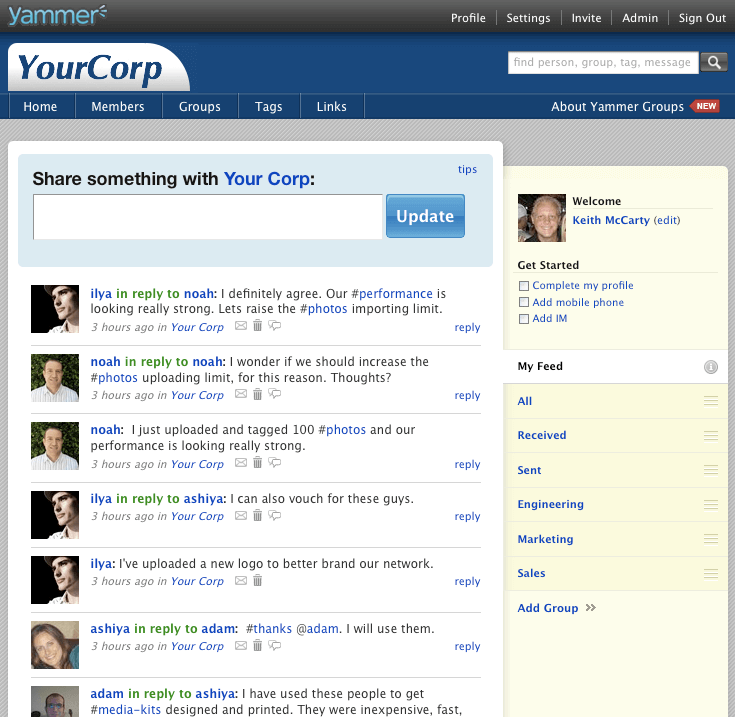
Yammer user interface.

Yammer user interface. Image credit: Microsoft(5)

Rivers, Heaton, and Curley left Comcast in 2008 and launched HipChat private beta on December 14, 2009. The early version of the service allowed users to chat in groups/rooms, start 1-on-1 conversations, share content, receive notifications, and browse chat history.(6) 

The private beta quickly gained traction and managed to bring 500 companies on board before the official launch in late January 2010. The first version of HipChat run on PHP/Python and was available for Windows, Mac, and Linux through the Adobe AIR runtime environment. 
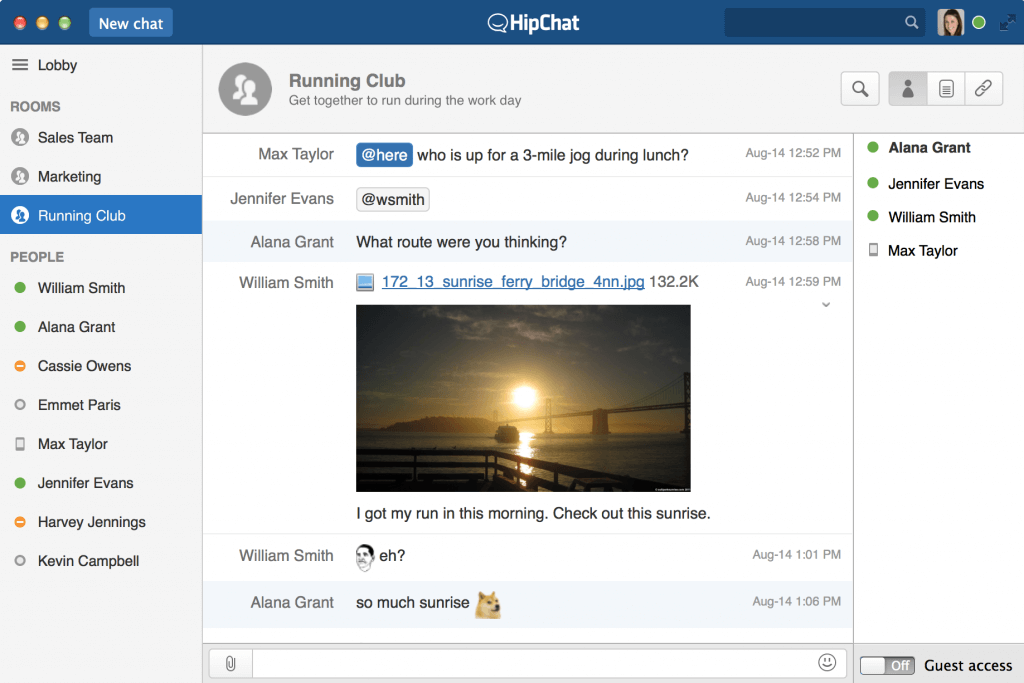
HipChat user interface (2010) with rooms and participants in the left pane.

HipChat user interface (2010) with rooms and participants in the left pane.
Image credit: HipChat(7)

On March 22, 2010, HipChat launched a beta web client. The team also introduced breakthrough video and chat support later the same year. By May 2010, the app had launched an official API, serviced 1,000 businesses, and clocked “millions of messages” in just four months.(8)

The next chapter in the history of HipChat was about to begin.

🔵 New Horizons: Atlassian Acquisition (2011-2014)

The influx of new business allowed the HipChat team to move to a new office in Sunnyvale, California on July 19, 2010. Shortly after that, the company scored another major win–$100,000 in funding from the Founders Fund TechFellow’s inaugural award program.(9)

The money helped HipChat double down on marketing content and build up its mobile presence. On March 4, 2011, HipChat released an iOS app for the iPhone and iPad and followed with an Android version later the same year.
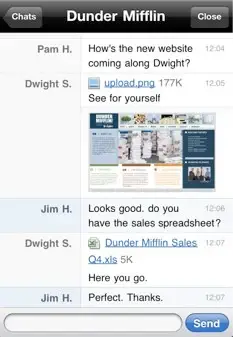
A team conversation in HipChat mobile for the iOS.

HipChat mobile interface. Image credit: TechCrunch(10)

HipChat mobile added a handful of new features like syncing between clients, push notifications, room invites, and @mention. By that point, the company had been noting a steady 40-percent monthly growth, with hundreds of companies using the service.(10)

In October 2011, HipChat made business communication fun with meme-like emoticons granted to users as part of HipChat’s referral program. The company also joined what TechCrunch dubbed the “101 Battle of the Billboards,” one of the many PR stunts in the history of HipChat(11)

HipChat billboard on the 101 North featuring the "Y U NO" guy.

HipChat billboard on the 101 North. Image credit: TechCrunch(11)

By mid-February, HipChat had 3,500 paying users and boasted 2 million daily messages. It didn’t take long for the success to draw attention. On March 7, 2012, Atlassian (the current owner of Jira and Trello) who had been using the app internally acquired HipChat's IP.(12)

🍎 Fun Fact: In 2012, HipChat’s CEO Pete Curley went on a blog rant following the release of Apple’s OS X Mountain Lion. The new OS featured a Messages app (refreshed iChat) with a logo resembling HipChat’s own chat bubbles.(13) 

The new management set out to overhaul the existing HipChat infrastructure that still run on the underpowered Adobe AIR. The housekeeping led to a new (beta) Mac app in February, a native Linux client in April (also in beta), and version 2.0 of Mac and iOS apps soon after.
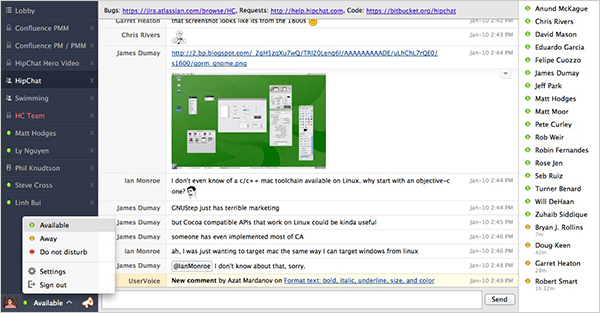
HipChat native MacOS app beta.

HipChat MacOS beta user interface. Image credit: HipChat(14)

In September 2013, HipChat crossed the magical barrier of 1 billion messages sent, which was nothing to sneeze at back in the day. By May 2014, the HipChat team doubled in size and shattered another unthinkable record of 2 billion messages.(15)

⚡ Growth and Cakes: Hipchat vs. Slack (2015-2016)

On January 27, 2015, HipChat continued its business expansion with HipChat Server, a self-hosted offshoot of the service for enterprise clients. Atlassian also announced their plans to grow the HipChat team and bring over 500 new hires within a year.(16)

🎂 Sweet Competition: While HipChat was one of the first business collaboration tools on the market, it had some ambitious competition. The quick growth of Slack didn’t escape HipChat’s attention. At some point, the two companies even exchanged business courtesies by sending each other… birthday cakes. Nobody could've suspected the role Slack would eventually play in the history of HipChat.(17)
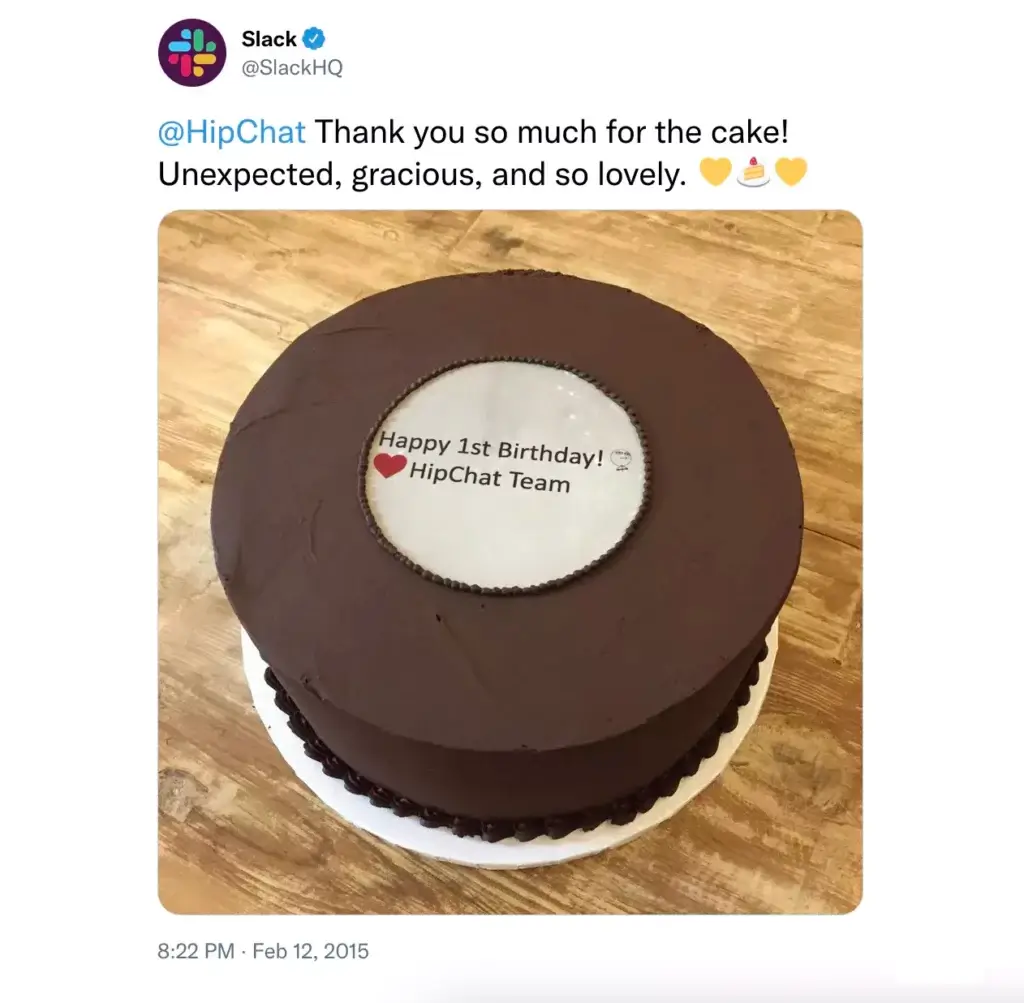
A birthday cake from HipChat to the Slack team.

From HipChat with love. A birthday cake for the Slack team.
Image credit: Slack(17)

In early November, HipChat launched Connect API and API tokens which opened the door for third-party developers and integrations with services like Facebook or Twitter. By that time, HipChat had clocked 8 billion messages and ramped up its unorthodox marketing efforts.

👨‍💼 Office Space: Throughout 2015, HipChat continued building its image of a "cool" enterprise tool. The company even brought Gary Cole on board to revive the insufferable Bill Lumbergh from the 1999 classic Office Space, all in the 90s vibes.(18)

In 2016, things slowed down for HipChat. The company stagnated and started falling behind competitors like Hangouts and Teams. While the team tried to innovate by implementing group calls for 10 people and a VoiceMyBot integration for Alexa, it was too little, too late.(19)

💰 No More Cakes: Slack Acquires HipChat (2017-2019)

In 2017, big competitors were gearing up and Slack was no longer the new kid on block. In a final attempt to regain its position, Atlassian countered launching Stride (aka HipChat 2.0). The new service was meant to bring chat, video, and calls under one roof, with no add-ons required.
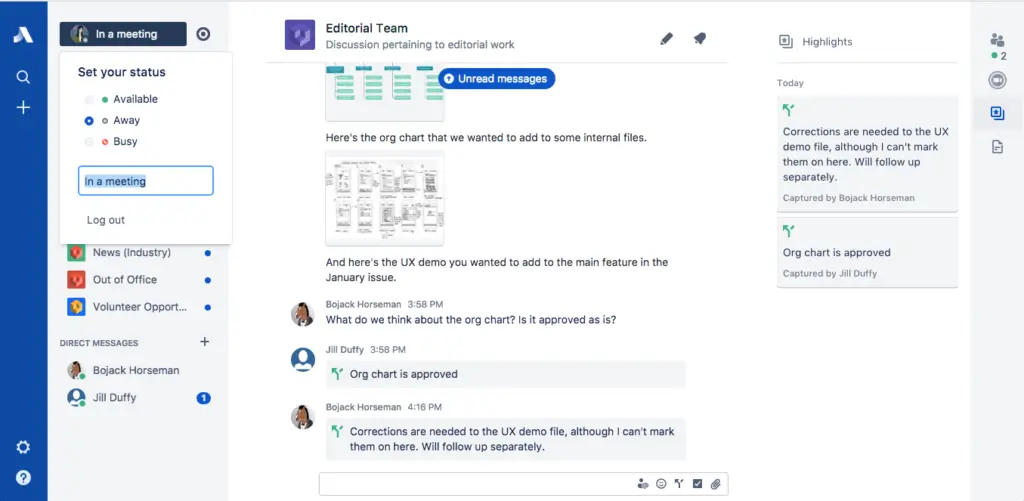
Atlassian Stride user interface (2017).

Stride user interface. Image credit: Atlassian(20)

On April 24, 2017, HipChat data center suffered a hacking incident that compromised user data. A few months after announcing a self-hosted Data Center, Atlassian killed HipChat cloud and replaced it with Stride. And that’s where things got interesting.

In 2018, the all-grown-up Slack came up with a nifty plan to get rid of the older rival. On July 26—in what was probably one of the greatest plot twists in tech—Slack acquired HipChat. Ironically enough, Atlassian's part of the bargain was an equity investment in Slack.

💬 “Not only is Slack buying the assets and Atlassian is effectively shutting down these products, Atlassian is also investing in Slack, a move that shows it’s throwing its financial weight behind the company, as well, and forming an alliance with them.”

—Ron Miller at TechCrunch(21)

Atlassian’s Joff Redfern wrote on the company blog that both HipChat and Stride—along with HipChat Cloud, Data Center, and Server—would be discontinued. Users could either migrate to Slack or export their data from HipChat by July 15th, 2019.

🌟 The History of HipChat is Over, but It Was a Good Run

The history of HipChat is an important chapter in the evolution of remote collaboration.

In a way, HipChat did for real-time team communication what Evernote accomplished in the note-taking space. It carved out a niche and challenged the status quo of legacy tools. It was also one of the first holistic solutions that combined essential collaboration features in one platform.
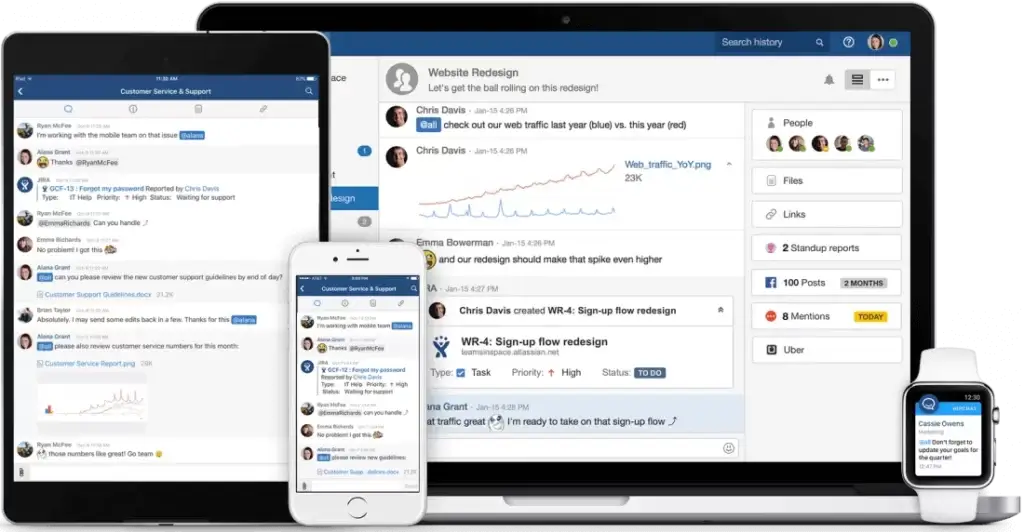
(Atlassian) HipChat user interface on desktop and mobile.

(Atlassian) HipChat user interface on desktop and mobile. Image credit: Atlassian(22)

While HipChat started as a tool for developers, it quickly won the hearts of non-tech-savvy users. The platform offered a competent set of features, worked pretty much out of the box, and didn’t take enterprise too seriously (because: emojis).
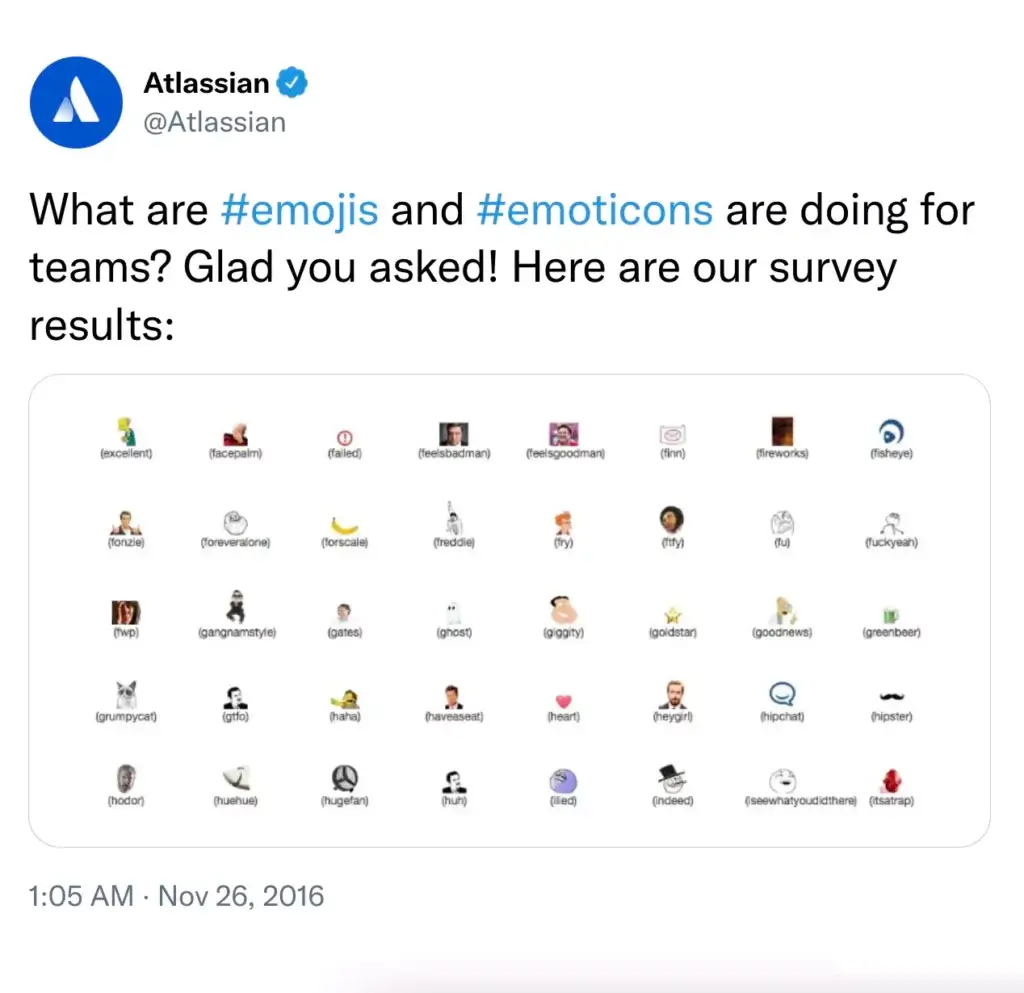
Atlassian tweet with HipChat emojis and emoticons.

(Atlassian) HipChat emojis(23)

HipChat did a great job of putting conversations into focus and making work chit-chat fun. Finally, it offered a wide selection of integrations and let business users create a place where work and communication happened right next to each other.

The history of HipChat ends here. But are there any worthy alternatives in 2022?

🐑 Taskade Is Your HipChat Alternative

If you miss HipChat, we have some good news. 🥳

Taskade is a real-time collaboration platform that packs the best HipChat features, but smarter. It's a place where teams work, chat, and get things done in the same window, in the same app.

  1. 🔐Private Team Chat. Invite your team members to chat and video conference inside private projects. Choose between four distinct roles – Owner, Admin, Editor, Checker, and Viewer – and define editing permissions/privileges.

  2. 🔎 Searchable Chat History. Taskade lets you search inside projects and chats so no conversation is lost in the hustle. You can also browse project history and track all changes made by you or other team members.

  3. 📤 Easy File Sharing. Upload different types of files to make conversations more productive. To share a file, simply drag-and-drop it in the chat window or anywhere in a project. You can also upload directly from the cloud.

  4. 👩‍💻 Desktop, Web, and Mobile. Taskade makes it really easy to sync up with your team, regardless of the circumstances. Jump on a call, host a video conference, and chat with others on desktop, mobile, or in a web browser.

  5. ⚡ Keyboard Shortcuts. Keyboard shortcuts are a hidden productivity superpower. Taskade lets you navigate conversations, interact with the team, and edit projects using convenient key combinations.

  6. 🔡 Chat Markdown. Markdown is a great tool for improving the clarity of conversations. Apply bold, _italic_, or format messages as ​​```inline code``` to make your words stand out. Markdown works in the comments too!

  7. 🏞️ Virtual Backgrounds. Starting a video conference in Taskade is fast and intuitive. You can even share your desktop or add some swag with a selection of virtual backgrounds. Choose from built-in images or upload your own.

Want to take Taskade for a ride? Sign up for a free account and check all the cool features today. You can also visit our live demo page and test things out first!

Frequently Asked Questions About HipChat’s History

Does HipChat still exist?

No, HipChat was discontinued in 2018.

Why did HipChat fail?

HipChat failed primarily due to strong competition from Slack, which offered superior features and user experience. Additionally, security breaches and lack of innovation contributed to its decline.

How much did HipChat sell for?

Atlassian acquired HipChat in 2012 for an estimated $10 million.

What happened to HipChat?

Atlassian discontinued HipChat in 2018 and announced a partnership with Slack. Users were migrated to Slack, and HipChat's services were shut down.

What is the history of HipChat?

HipChat was founded in 2010 and quickly gained popularity as a team communication tool. Atlassian acquired it in 2012. Despite initial success, it struggled against competitors like Slack. In 2018, Atlassian discontinued HipChat and collaborated with Slack to transition users to Slack's platform.

🔗 Resources

0%

On this page

🤔 What Is HipChat?💬 What Happened to HipChat?🚀 The Early Days: Official Launch (2008-2010)🔵 New Horizons: Atlassian Acquisition (2011-2014)⚡ Growth and Cakes: Hipchat vs. Slack (2015-2016)💰 No More Cakes: Slack Acquires HipChat (2017-2019)🌟 The History of HipChat is Over, but It Was a Good Run🐑 Taskade Is Your HipChat AlternativeFrequently Asked Questions About HipChat’s History🔗 Resources

Related Articles

Founder dinner CRM — free event template with AI concierge, RSVP automation, day-of Slack alerts, and post-event follow-up workflow built on Taskade Genesis
May 22, 2026Startups

Founder Dinner CRM: Free Event Template With AI Concierge (2026)

Free founder dinner CRM and VC event tracker — a live Taskade Genesis event portal with AI concierge, RSVP automation, a...

AI investor CRM and fundraising tracker 2026 — free Taskade Genesis app with investor research agent and auto-drafted quarterly updates
May 19, 2026Startups

AI Investor CRM: Free Fundraising Tracker That Drafts Updates (2026)

A free AI investor CRM and fundraising tracker that researches funds, runs a stage-based pipeline, and drafts your quart...

History of Lotus Notes: Ray Ozzie 1989 to Workspace DNA 2026
May 10, 2026Startups

History of Lotus Notes: The Original Workspace App (2026)

The complete history of Lotus Notes — from Ray Ozzie's PLATO origins to Iris Associates, the 1989 launch, IBM's $3.5B ac...

History of Etherpad: Aaron Iba and the OT lineage to Google Wave, Google Docs, and Taskade
May 9, 2026Startups

History of Etherpad: How Aaron Iba's Open-Source Editor Shaped the Modern Web (2026)

The complete history of Etherpad — from Aaron Iba's MIT bet through the Google acquisition, the Wave team, the open-sour...

Jon Cheney vibe-coded a $2.5M business in one year with no code — case study cover
May 5, 2026Startups

$400 to $2.5M in One Year: How Jon Cheney Vibe-Coded a Business With No Code (2026)

Jon Cheney started Gen-AIPI on Feb 27, 2025 with $400 and zero coding ability. By Tuesday he had a $15,000 customer. Six...

Clay vs Taskade Genesis comparison — GTM data enrichment tool versus AI app builder that deploys live systems 2026
May 5, 2026Startups

Clay vs Taskade Genesis: GTM Data Tool or AI App Builder — Which Do You Need in 2026?

Clay enriches GTM data and stops at the table. Taskade Genesis turns that enriched data into a deployed customer-facing ...

View All Articles
A Review of HipChat's History: The Amazing Rise and Fall of The Team Messaging Platform | Taskade Blog