In June 2015, Microsoft paid somewhere between $100 million and $200 million for a to-do list app built by six friends in Berlin. Wunderlist had 13 million users, over a billion completed tasks, and a design philosophy so clean it won Apple's App of the Year. Five years later, Microsoft killed it.
The story of Wunderlist is more than a cautionary tale about big-company acquisitions. It is a lens into how we think about productivity tools, what happens when simplicity collides with corporate strategy, and why the next generation of task management will not be built the same way at all.
Today, you would not rebuild Wunderlist with a Rails monolith and five native apps. You would describe what you want in a prompt, let AI agents handle the execution, and connect everything through open protocols. The gap between Wunderlist's 2010 launch and what is possible in 2026 is not incremental. It is a paradigm shift.
This article is the definitive deep-dive into Wunderlist's history, drawing on original sources, archived blog posts, and firsthand quotes from the founding team. We cover everything from the 2009 founding in Berlin through the $200M Microsoft acquisition, the shutdown backlash, and what a Wunderlist rebuild would look like in the age of agentic AI.
TL;DR: Wunderlist was a beloved to-do app with 13M users that Microsoft acquired for $200M and shut down in 2020. If you rebuilt it today, you would use agentic AI to execute tasks (not just organize them), a standard integration layer instead of hand-built bridges, and vibe coding to generate the whole app from a prompt. Taskade Genesis already does this -- living systems with AI agents, 100+ bidirectional integrations, and multiple project views from a single prompt. Try it free ->
This article is part of our series where we discuss some of the most iconic productivity tools in history. Check other similar stories when you're done reading:
- How It All Started: Internet Relay Chat (IRC)
- The Evolution of Video Conferencing
- History of Web Browsers and Online Productivity
- Past, Present, and Future of Outlining Software
What Was Wunderlist and Why Did Millions Love It?
Wunderlist was the rare productivity app that people described with affection. Launched on November 9, 2010 by Berlin startup 6Wunderkinder, it did one thing exceptionally well: it let you make lists and check things off. That sounds trivial. It was not.
At a time when task management apps were cluttered, over-featured, and fragmented across platforms, Wunderlist offered something radical: simplicity that actually worked everywhere. iOS, Android, Mac, Windows, the web -- your tasks followed you seamlessly, syncing in real time without the friction that plagued competitors.
The Features That Defined a Generation of Task Apps
What Wunderlist got right reads like a checklist for product-market fit:
| Feature | Why It Mattered |
|---|---|
| Cross-platform sync | Same tasks on every device, always current |
| Shared lists | Collaboration without the complexity |
| Subtasks | Break big items into small steps |
| Due dates and reminders | Time-awareness baked in |
| File attachments | Context alongside your tasks |
| Natural language input | "Buy groceries tomorrow" just worked |
| Smart lists | Auto-filtered views (Today, Week, All) |
| Free tier | Full functionality without paying |
These features seem standard now. In 2010-2013, they were not. Wunderlist helped establish the template that every to-do list app since has followed.
"Unless you need something endlessly customizable or can't bear to look at Wunderlist's interface (and I wouldn't blame you in either case), Wunderlist is a great way to stop messing with pen and paper, or a million different apps, and finally get your to-do list in order."
David Pierce, The Verge(15)
The Rise of 6Wunderkinder: From Berlin Startup to $200M Exit
The trajectory of 6Wunderkinder reads like a textbook startup success story -- until it does not.
| Year | Milestone | Key Metric |
|---|---|---|
| 2009 | 6Wunderkinder founded in Berlin | 6 co-founders |
| Nov 2010 | Wunderlist launches | 15K users in 3 weeks |
| Aug 2011 | 1 million users milestone | 275 days to 1M |
| Nov 2011 | Series A (Atomico) | $4.2M raised |
| Sep 2012 | Wunderlist 2 ships (full native rewrite) | 5M+ downloads |
| Nov 2013 | Series B (Sequoia Capital) | $19M raised |
| Jul 2014 | Wunderlist 3 + microservices rebuild | 60 microservices |
| Jun 2015 | Microsoft acquires 6Wunderkinder | $100-200M, 13M users |
| Apr 2017 | Microsoft To Do preview launches | Beginning of the end |
| Sep 2019 | Shutdown announced; Reber asks to buy it back | Request denied |
| May 2020 | Wunderlist servers shut down permanently | 1B+ tasks completed |
2009-2010: Berlin's 6Wunderkinder and the Quiet Launch
Before Wunderlist, there was 6Wunderkinder, a Berlin-based startup founded by six friends: Christian Reber (CEO), Charlette Prevot, Daniel Marschner, Jan Martin, Robert Kock, and Sebastian Scheerer. Their mission was to revolutionize the world of productivity. The name meant "six child prodigies" in German.
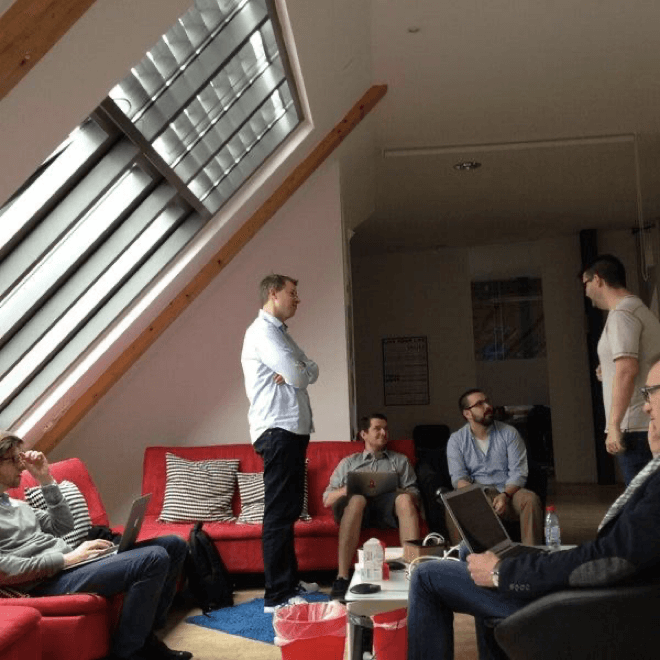
6Wunderkinder team at the company's Berlin HQ(1)
With seed funding from High-Tech Grunderfonds (500,000 euros) and Frank Thelen's e42 GmbH (100,000 euros initial investment), the team launched Wunderlist on November 9, 2010.
"When we started building Wunderlist, we've had a few key principles. We wanted to build a cross-platform product that works for individuals and teams. Whether you organize your personal shopping list or your house renovation or your student work, or if you run a big project and organize multiple companies, we wanted Wunderlist to work for everyone."
Christian Reber, "How to Build Great Software" by DRT(2)
While Wunderlist wasn't the first to-do and productivity tool around, it certainly did many things very well. The app boasted a simple and intuitive UI, excellent cross-platform experience, and a minimal learning curve. Plus, it was completely free.
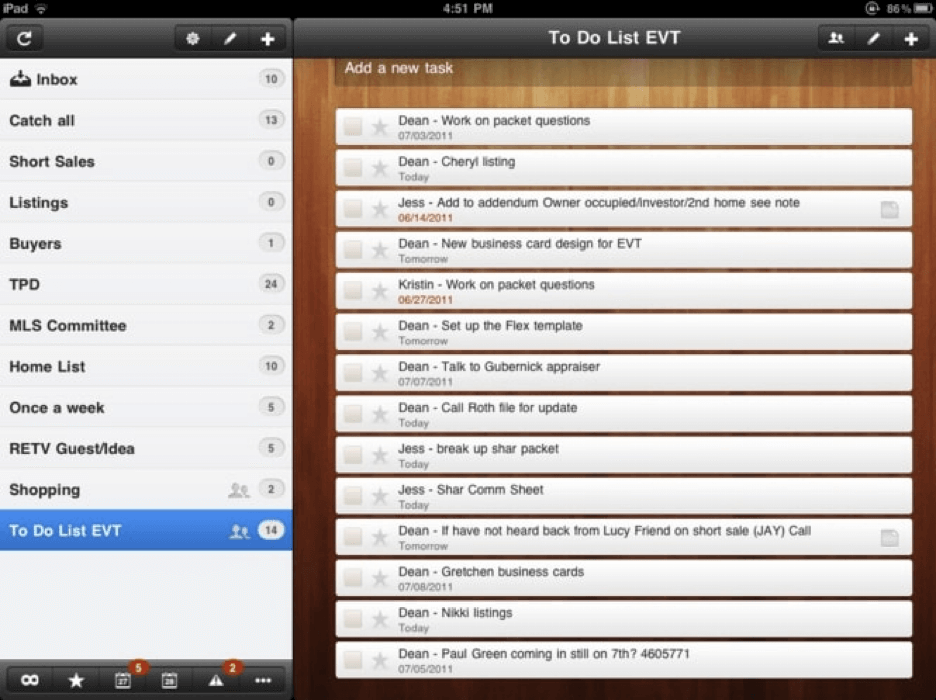
by 6Wunderkinder
Despite modest expectations -- the 6Wunderkinder team planned to score 15,000 registrations by the end of February 2011 -- Wunderlist managed to grab 15,000 users by the end of November 2010, just three weeks after launch.
2011: Explosive Growth and the Wunderkit Experiment
Since Wunderlist was built using Appcelerator Titanium, it was a matter of time before the developers expanded its cross-platform potential. On December 10, 2011, the company released a Wunderlist app for the iPhone and announced another one for Android.
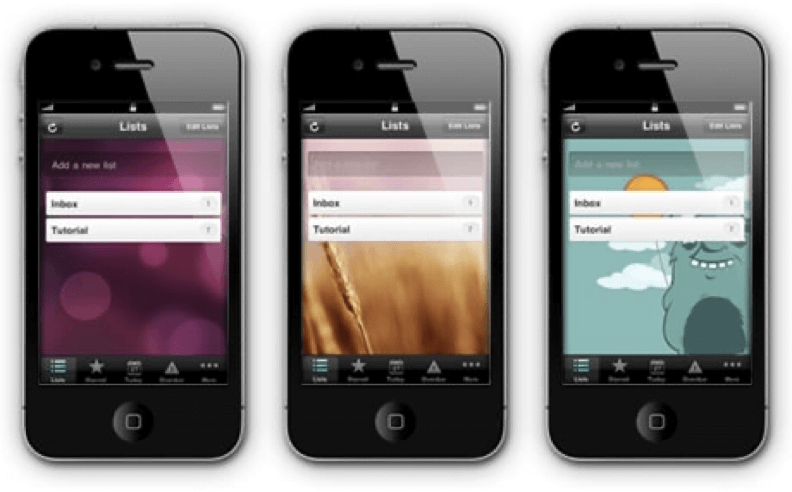
Wunderlist for iPhone by 6Wunderkinder(3)
By the end of December, the iPhone app had been downloaded over 250,000 times and Wunderlist had grown to an impressive 110,000 active users.
At that point, 6Wunderkinder had already been working on a Wunderlist successor called Wunderkit. The team also announced plans to introduce a paid Wunderlist tier that would help scale the app's infrastructure.
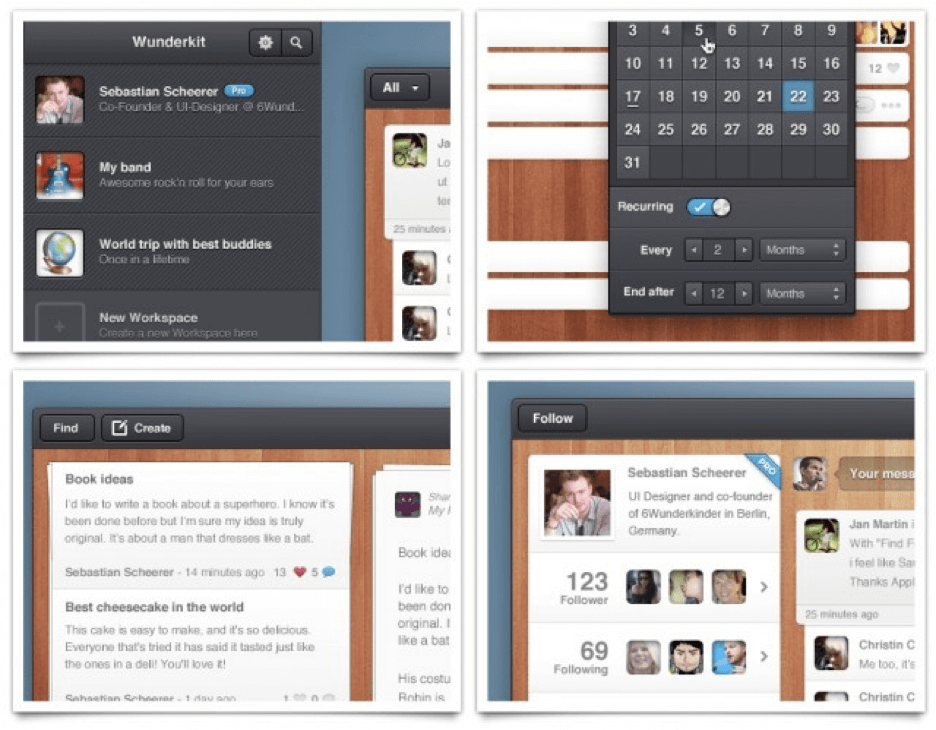
Wunderkit beta screenshots by Cult of Mac(4)
Wunderkit was meant to target both individual and enterprise clients and let users invite friends, family, and colleagues to collaborate on projects in one place. It was an ambitious attempt to build a broader collaboration platform -- but it failed. Lower-than-expected signups and engagement forced 6Wunderkinder to drop the project and refocus on their core product.
"We simply weren't getting the traction we wanted. What's more you, our users, started to raise concerns. Concerns we were also faced with. Much like you we discovered bugs, scaling challenges and usability issues, which lead us to get frustrated with our own product. Not ideal. So we decided to rethink it."(7)
That failure taught 6Wunderkinder an important lesson: their users wanted a better list, not a bigger platform.
By August 17, 2011, Wunderlist reached 1 million users -- just 275 days since launch. This was a faster adoption rate than Twitter or Foursquare in their early days. Atomico led a $4.2 million Series A in November 2011.
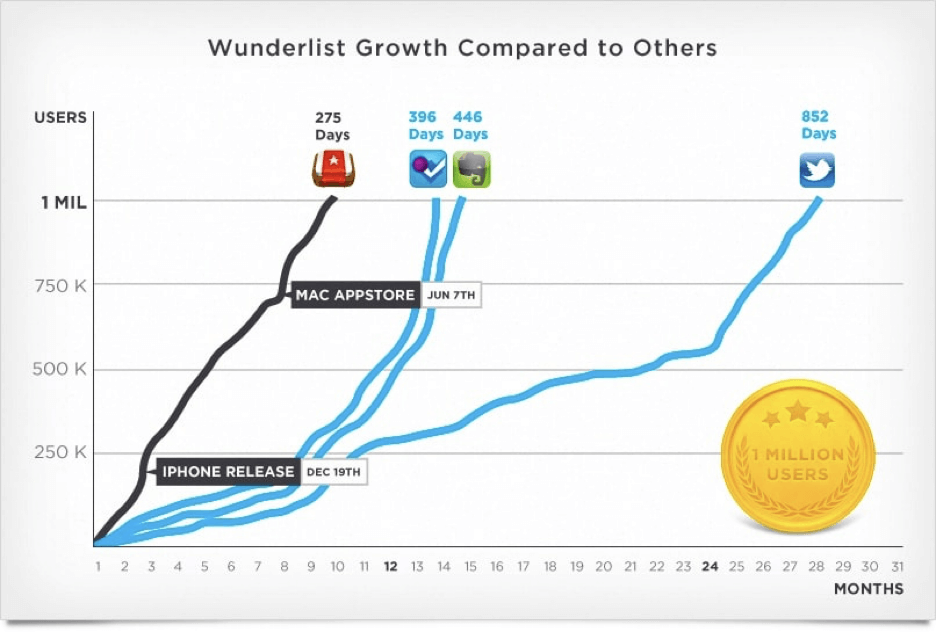
Wunderlist Growth by 6Wunderkinder(5)
With 2.6 million downloads and 30 million tasks across 3.7 million lists, one thing was clear: Wunderlist was going places.
2012-2013: The Rewrite That Changed Everything
In September 2011, 6Wunderkinder expanded Wunderlist's reach with a native Linux app. Instead of running Wunderlist through a compatibility layer, Linux users could now enjoy the "sleekest task manager available for Linux" out of the box.
"Many of you have successfully got Wunderlist running on Linux via wine, and we were awestruck at the level of engagement and effort you went through. The demand was there, so we went ahead and built for Linux officially."(6)
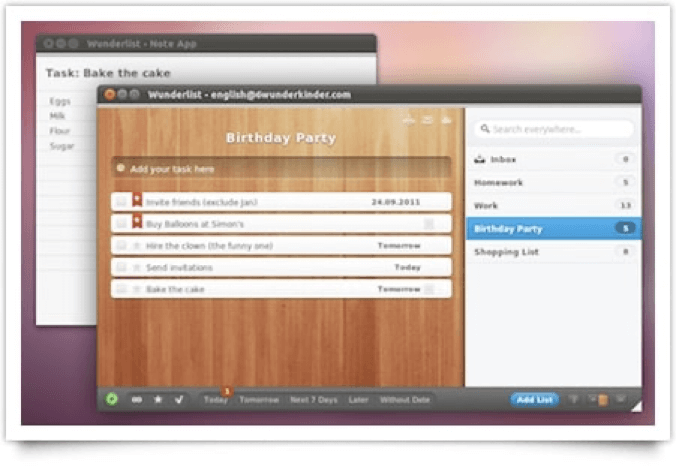
Wunderlist native Linux app by 6Wunderkinder
By that point, the app had been downloaded over 5 million times and had close to three million users.
On September 6, 2012, the company announced a completely redesigned Wunderlist 2. The original app was built on Appcelerator Titanium, a cross-platform framework that made it easy to ship everywhere but hard to deliver native performance. For version 2, the team dropped Titanium and rewrote the app from scratch, building five separate native apps with better performance and cross-platform synchronization.
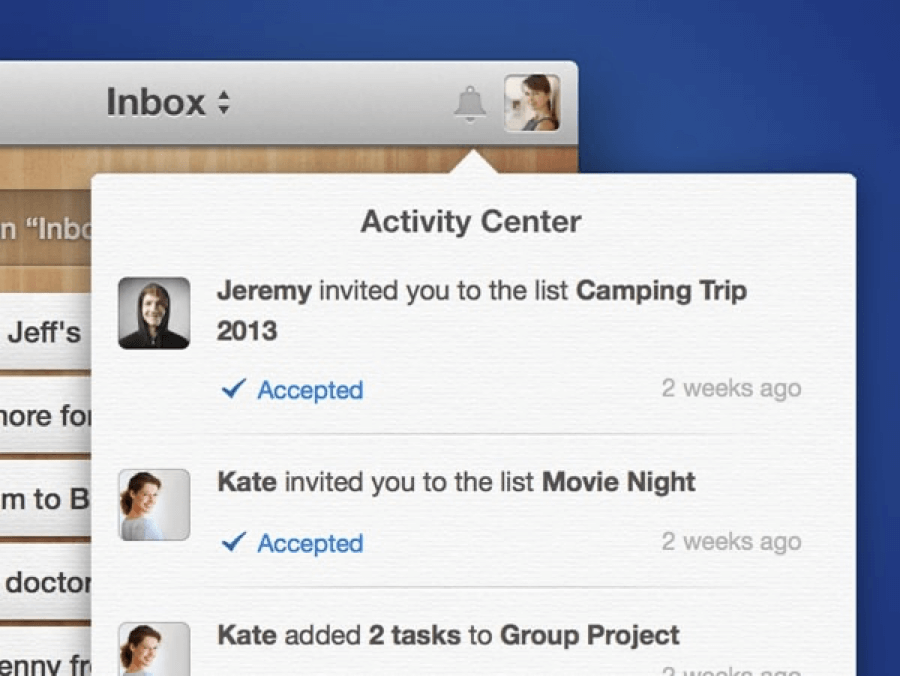
Wunderlist 2 screenshot by 6Wunderkinder(8)
"Wunderlist 2 has now been completely rebuilt with all new native apps, individually handcrafted for each platform [...]. Also, have we mentioned before that we have completely rewritten the API? Running 24/7 behind the scenes is now a brand new highly scalable and quickly extendible API, giving Wunderlist a whole lot more power under the hood."(9)
The result was dramatically faster apps with platform-specific UX that felt right on each device. While the core Wunderlist experience did not change, each platform got a purpose-built experience while maintaining sync consistency.
Wunderlist 2 was followed by Wunderlist Pro, a paid offshoot of the service. Pro introduced more collaboration features like assigning tasks and attachment support.
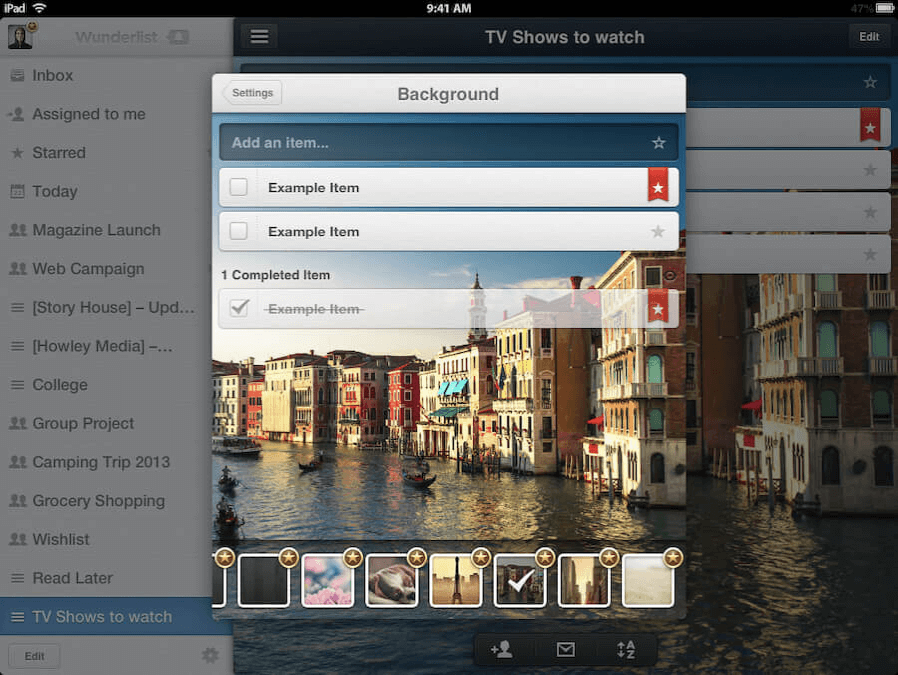
Wunderlist Pro customization by 6Wunderkinder(10)
In November 2013, Sequoia Capital led a $19 million Series B, with participation from Atomico and Earlybird. Wunderlist was now a serious company.
2014: Chad Fowler, Microservices, and Wunderlist 3
On July 31, 2014, 6Wunderkinder announced another revision of the app, Wunderlist 3. But the biggest change was under the hood.
When Chad Fowler joined as CTO, he found what many fast-growing startups produce: "a large monolithic Rails application, a large monolithic database and a monolithic deployment process."
Fowler's team rebuilt the entire backend into approximately 60 microservices organized in four layers:
- WebSocket layer -- accepting browser connections and streaming content back as it became ready
- HTTP authentication layer -- handling auth and authorization
- Stateless services -- performing request validation with no database connections
- Data layer -- services functioning as the database interface
Every mutation generated a change record distributed to interested services, enabling real-time sync across all clients. The team exposed a single unified API rather than forcing developers to interact with 60 separate services.
Wunderlist 3 Microservices Architecture (Chad Fowler, 2014)
==========================================================  Browser / Mobile / Desktop Clients
|
v
+--------------------+
|   WebSocket Layer   |  <-- Real-time streaming
+--------------------+
|
v
+--------------------+
|   HTTP Auth Layer   |  <-- Authentication & authorization
+--------------------+
|
v
+--------------------+
|  Stateless Services |  <-- Request validation (no DB)
+--------------------+
|
v
+--------------------+
|    Data Layer       |  <-- Database interface services
+--------------------+
|
+------+------+
|             |
v             v
[MySQL]    [Change Log]----> Event distribution
to all services
(real-time sync)
Wunderlist 3 shipped with this new architecture, featuring a redesigned interface, improved collaboration features, and real-time sync. It was the version most people remember fondly: fast, reliable, beautifully designed. Apple named Wunderlist for Mac the App of the Year in 2013.
Everything seemed well on the Wunderlist front.
Why Microsoft Killed Wunderlist
With a growing userbase and a solid product at hand, 6Wunderkinder was on the right track to dominating the productivity space. But the history of Wunderlist is yet another example of an up-and-coming company that failed to reach its full potential.
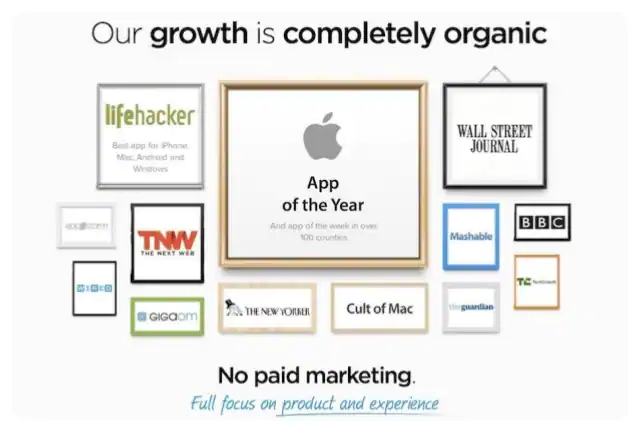
Wunderlist had the momentum to take over the productivity space
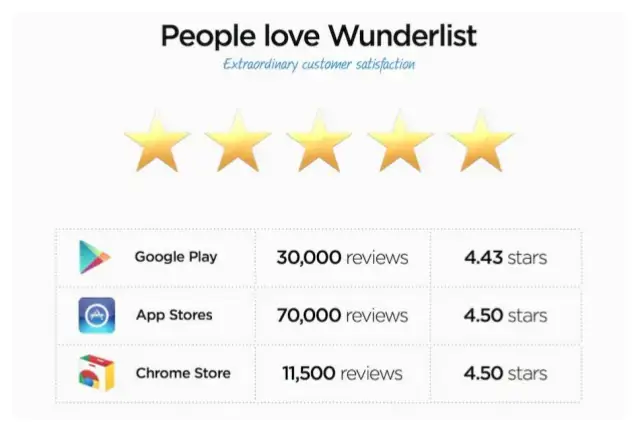
Users loved Wunderlist from day one
By dropping the business-oriented Wunderkit, the company was left with a devout group of personal users. While the cult-following could drive the Wunderlist brand and positive press, it wasn't enough for a sustainable business model. Taking $19 million from Sequoia created growth expectations that a freemium to-do app could not easily meet. The acquisition by Microsoft was not just an exit -- it was the only viable path given investor expectations.
The $200M Acquisition (2015)
Wunderlist's rapid growth didn't escape the attention of Microsoft, which had been trying to beef up its presence in the productivity space for quite some time. On June 2, 2015, Microsoft announced the acquisition of 6Wunderkinder's talent and IP for a reported $100-200 million.
"The addition of Wunderlist to the Microsoft product portfolio fits squarely with our ambition to reinvent productivity for a mobile-first, cloud-first world."
Eran Megiddo - General Manager, OneNote(11)
At the time of the acquisition, Wunderlist 3 had over 13 million users and clocked more than 1 billion to-dos across 20+ platforms.
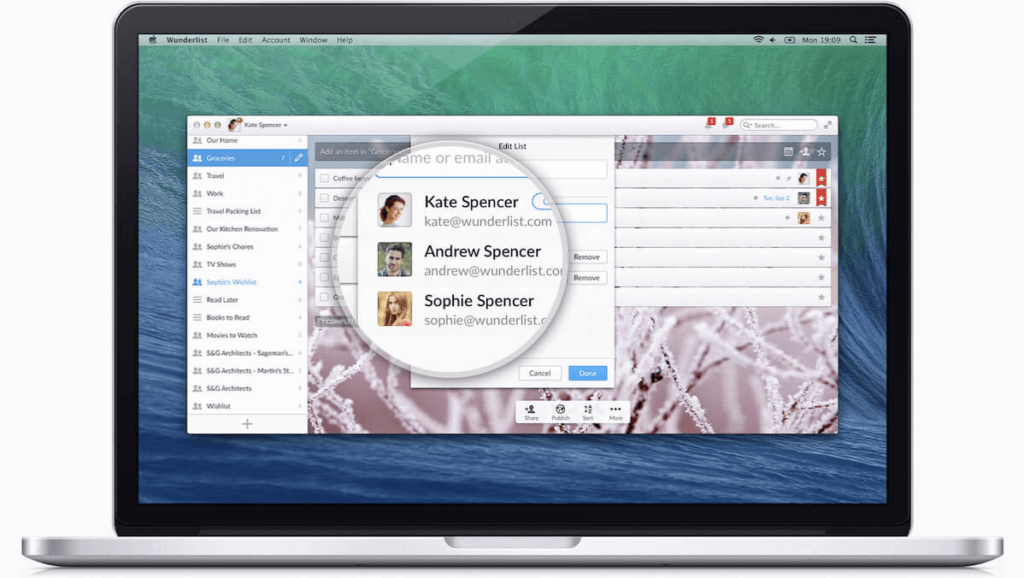
Wunderlist 3 by 6Wunderkinder(12)
The announcement sounded promising. But behind the scenes, the story was already turning. Microsoft did not acquire Wunderlist to make Wunderlist better. It acquired Wunderlist to feed a different product.
Project Cheshire and the Birth of Microsoft To Do (2016-2020)
An early version of Microsoft's new to-do app dubbed Project Cheshire was spotted in June 2016. While the project was in its early stages and offered primitive functionality, it was obvious the company was planning to step up its productivity game, with or without Wunderlist.
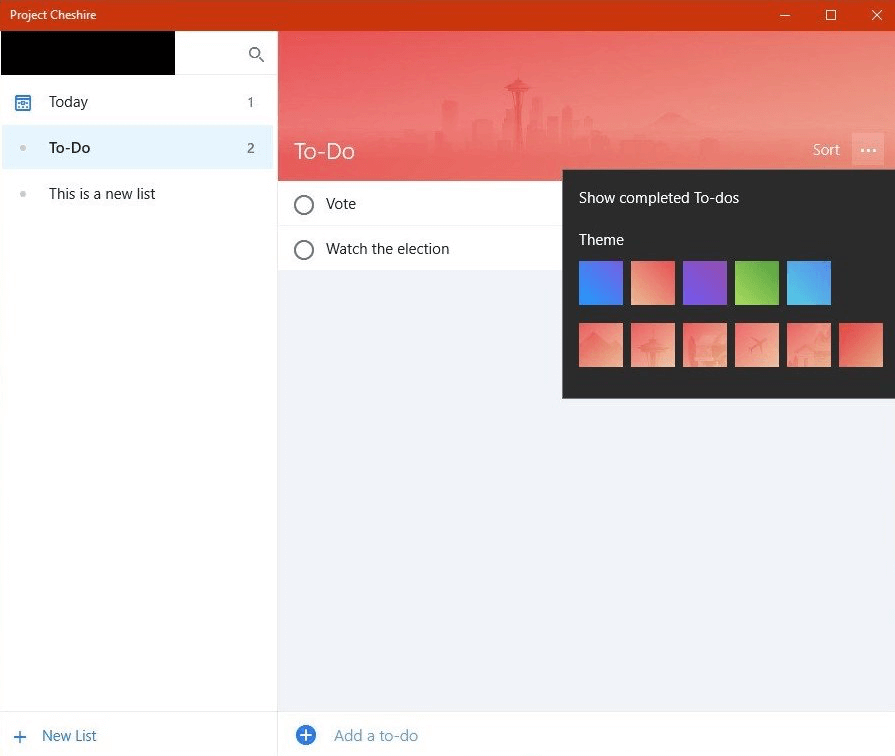
Barebones Project Cheshire via TechCrunch(13)
Microsoft introduced a preview version of To-Do in April 2017 and announced they'd eventually kill Wunderlist. Microsoft To Do was not Wunderlist with better integrations. It was a stripped-down app that lacked many of the features Wunderlist users relied on: hashtags, comments on tasks, conversation threads, print functionality, and the polished design language that made Wunderlist feel premium.
The irony of the whole takeover was that the 6Wunderkinder team acquired by Microsoft along with the IP was tasked with creating Wunderlist's successor.
"Once we are confident that we have incorporated the best of Wunderlist into Microsoft To-Do, we will retire Wunderlist. While the name and icon may change, the team that brought you Wunderlist continues on. We look forward to making Microsoft To-Do even more useful, intuitive and personal."
Ori Artman, general manager of Microsoft To-Do(14)
The Founder's Regret
Christian Reber's public reaction became one of the most candid founder confessions in tech history. In a 2022 CNBC interview, he laid it bare:
"I think selling Wunderlist was a bizarre experience for me. I felt like I lost a child in a way and as a father of two, I feel like I can say that."
Reber described being "completely burnt out" at the time of the sale, putting on a "poker face" through the process. He never celebrated. No party, no fancy dinners. Just silence and sadness.
In September 2019, when Microsoft announced Wunderlist would be permanently shut down, Reber took to Twitter with a direct appeal to CEO Satya Nadella:
"Still sad Microsoft wants to shut down Wunderlist, even though people still love and use it. Please let me buy it back."
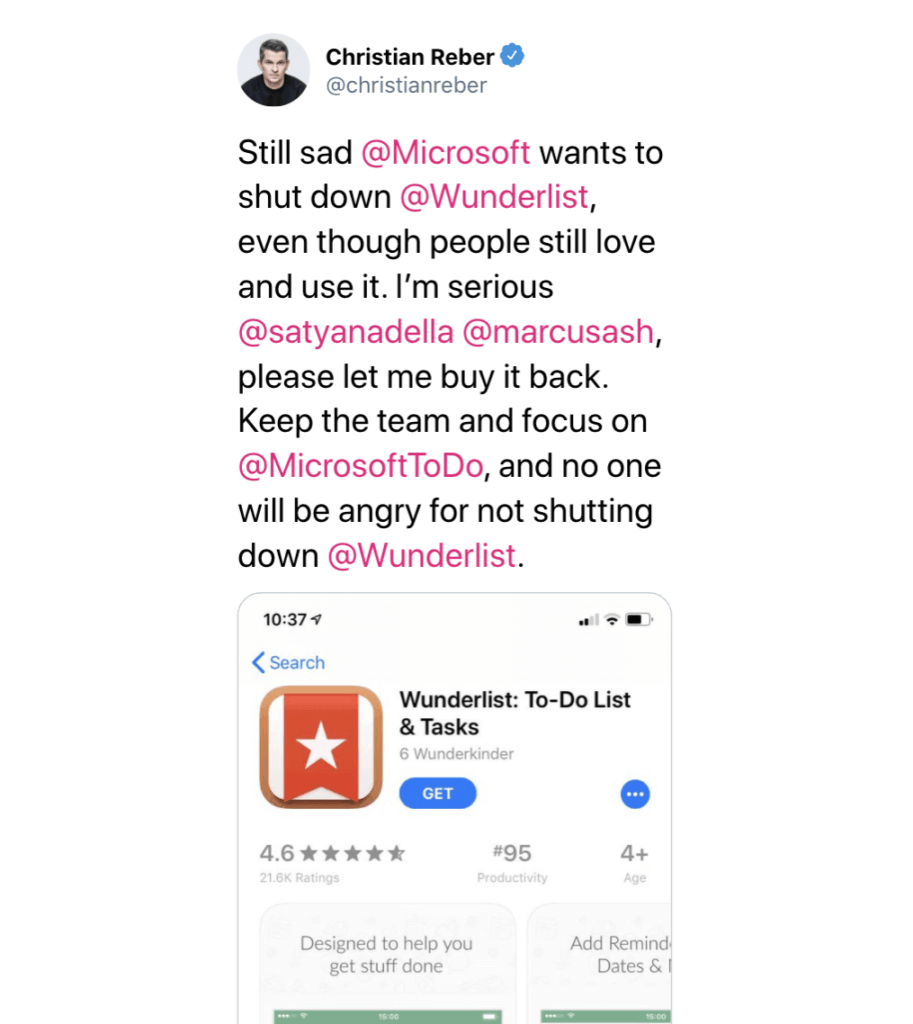
As expected, the deal didn't come through. Microsoft had already planted one foot in the door and wasn't going to release a strong competitor back into the wild. Finally, on May 6, 2020, the history of Wunderlist came to an end and the app joined its predecessors in the productivity Valhalla.
Why Companies Kill What They Buy
Microsoft's decision to shut down Wunderlist was not irrational from a corporate strategy perspective:
| Microsoft's Rationale | What Users Lost |
|---|---|
| Ecosystem consolidation (Outlook, Teams, Office 365) | Standalone simplicity and focus |
| Data ownership (Microsoft Graph integration) | Privacy of a small-company product |
| Brand simplification (one task app) | A polished, beloved UI/UX |
| Technical debt reduction (60 microservices) | Best-in-class sync architecture |
| Team redeployment to To Do | Dedicated product team with original vision |
The problem was not the logic. The problem was that Microsoft destroyed something beloved without offering something better. Microsoft To Do was adequate. Wunderlist was loved. That gap generated one of the most sustained user backlashes in productivity software history.
The Legacy: Why We Loved Wunderlist
Wunderlist wasn't the first productivity/to-do app in the wild. But it certainly was the first to strike a fine balance between utility and a user-friendly experience.
From day one, Wunderlist had the advantage of a cross-platform experience. Combined with a freemium model, cloud synchronization, and collaboration features, it offered a no-nonsense approach to productivity that was too good to pass up.
Wunderlist boasted a beautiful UI and a degree of customization that was just enough to make it cozy without getting in the way. The satisfying "ding" when you completed a task. The star-background themes. The subtle animations. Wunderlist understood that productivity is not just functional -- it is emotional. People need to feel good about checking things off.
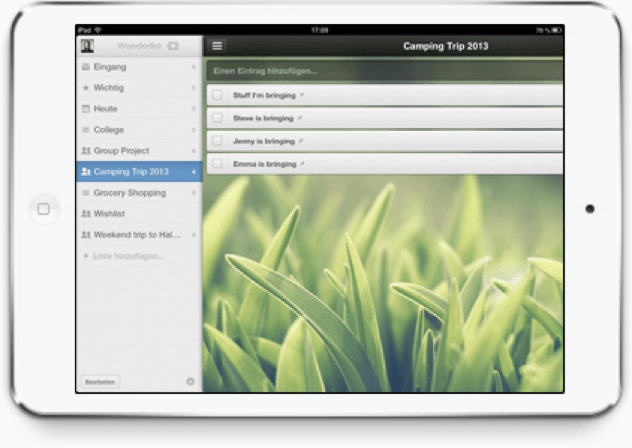
Wunderlist 2 for iPad by 6Wunderkinder(16)
Other notable Wunderlist features included push notifications, drag-and-drop interface, a line-up of solid mobile apps, and a Chrome extension. While these are all standard today, they made the app a strong all-rounder back in the day.
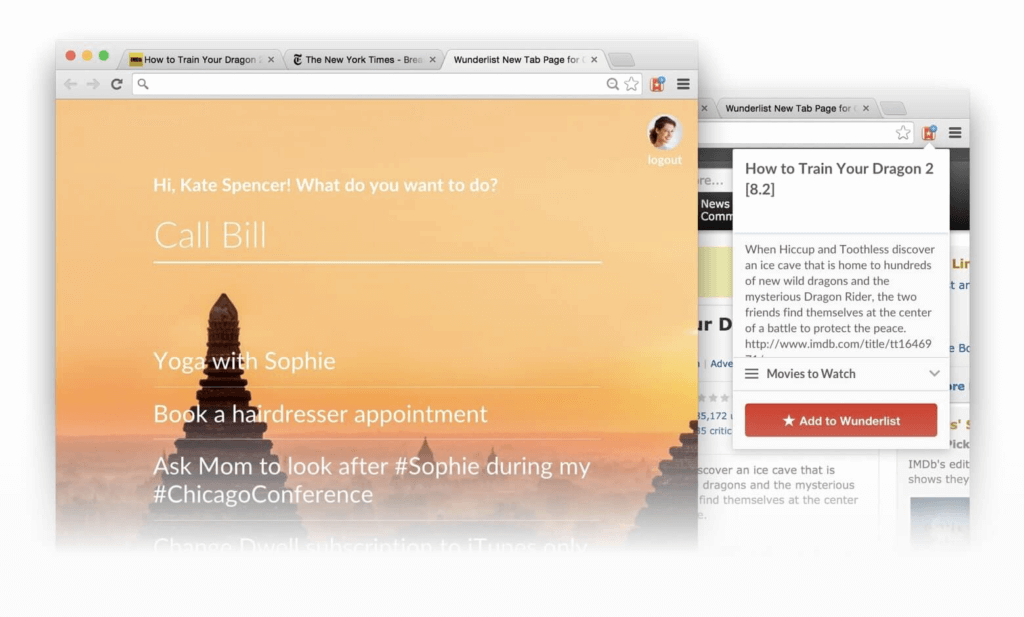
Wunderlist Chrome extension by 6Wunderkinder(17)
All that helped 6Wunderkinder's software achieve a cult-like status among knowledge workers and productivity enthusiasts. And love is still in the air. Although the app is dead, many users are still looking for a solid Wunderlist alternative.
What Wunderlist Got Right (And What It Got Wrong)
Understanding Wunderlist's strengths and weaknesses is not just historical trivia. It is a blueprint for what the next generation of task management tools should learn from.
| Category | Strengths | Weaknesses |
|---|---|---|
| Product | Radical simplicity -- one thing done exceptionally well | No moat beyond design -- features easily replicable |
| Design | Emotional UX -- the "ding", star themes, subtle animations | No platform play -- Wunderkit flopped, left in indie app trap |
| Growth | 1M users in 9 months, pure word-of-mouth | Acquisition dependency -- $19M from Sequoia forced an exit path |
| Technical | Cross-platform parity -- 5 native apps, all first-class | No AI strategy -- organized tasks but never learned from them |
What Wunderlist Got Right
1. Radical simplicity. Wunderlist proved that a product doing one thing extremely well beats a product doing twenty things adequately. In a market that constantly pushes toward feature bloat, Wunderlist's restraint was its competitive advantage.
2. Cross-platform parity. Every native app felt like a first-class citizen. The iOS app was not a scaled-down version of the web app. Each platform got a purpose-built experience while maintaining sync consistency.
3. Emotional design. The satisfying "ding" when you completed a task. The star-background themes. The subtle animations. Wunderlist understood that productivity is not just functional -- it is emotional. People need to feel good about checking things off.
4. Smart growth. One million users in nine months with minimal marketing spend. 6Wunderkinder grew through word of mouth and app store optimization before "growth hacking" was a buzzword.
What Wunderlist Got Wrong
1. No moat beyond design. Wunderlist's features were replicable. Shared lists, subtasks, and due dates are table stakes. Without a defensible technical moat (proprietary AI, a platform ecosystem, network effects beyond shared lists), the product was always vulnerable to being cloned -- or acquired.
2. Failed platform play. Wunderkit, the attempted collaboration platform, flopped. 6Wunderkinder correctly identified that lists alone would not sustain a venture-backed company, but they could not execute the pivot. This left them in the classic indie app trap: beloved by users, hard to monetize at scale.
3. Acquisition dependency. Taking $19 million from Sequoia created growth expectations that a freemium to-do app could not easily meet. The acquisition by Microsoft was not just an exit -- it was the only viable path given investor expectations.
4. No AI strategy. This was not a mistake in 2015, but it is instructive in hindsight. Wunderlist organized tasks. It never learned from them, predicted what you needed, or autonomously acted on your behalf. That limitation defines the gap between what Wunderlist was and what a task manager should be in 2026.
The Superlist Saga: Can You Go Home Again?
After the Wunderlist shutdown, Christian Reber did what many founders would: he tried to rebuild what he lost. In May 2020 -- the same month Wunderlist died -- Reber announced Superlist.
Superlist raised 13.5 million euros from Cherry Ventures and EQT. It exited beta in February 2024 after three years of development. As of 2026, it maintains a 4.5/5 rating on the App Store with recent additions including AI Meeting Notes (May 2025), Google Calendar sync, and daily planning notifications.
But Superlist also reveals a deeper question: can you recapture lightning in a bottle?
The productivity landscape of 2026 is not the landscape of 2010. Users have been through Trello, Asana, Notion, Linear, and dozens of other tools. The bar for what a "task manager" means has shifted. Simple lists are free in Apple Reminders, Google Tasks, and Microsoft To Do. The value has moved upstream -- toward intelligence, automation, and autonomous execution.
| Aspect | Wunderlist (2015) | Superlist (2026) | Taskade Genesis (2026) |
|---|---|---|---|
| Founder | Christian Reber | Christian Reber | John Xie |
| AI capabilities | None | AI Meeting Notes | AI Agents v2 (built-in tools, persistent memory) |
| Task execution | Manual | Manual | Autonomous (agents execute tasks) |
| Integrations | < 20 | Limited | 100+ across 10 categories |
| Project views | 1 (List) | List + Board | Multiple views |
| App generation | N/A | N/A | Build apps from prompts |
| Automation | None | None | durable execution |
| Funding | $23.2M + $200M exit | 13.5M euros | Self-sustained |
Superlist is a well-designed task manager. But it is still, fundamentally, a task manager. The question is whether the category itself has evolved past what any traditional to-do app can offer.
How Would You Rebuild Wunderlist in 2026?
This is where the story gets interesting. If you started from scratch today -- with the same vision of simple, universal task management -- you would not build Wunderlist. You would build something fundamentally different.
Three converging technologies make that possible: agentic AI, the Model Context Protocol (MCP), and vibe coding.
Agentic AI: Tasks That Execute Themselves
Wunderlist organized tasks. A 2026 rebuild would execute them.
The shift from passive task management to agentic task management is the single biggest change in the productivity category since the smartphone made lists portable. Instead of a system that says "here are your tasks, go do them," an agentic system says "here are your tasks, I have started working on them."
What does that look like in practice?
| Traditional Task Manager | Agentic Task Manager |
|---|---|
| You create a task: "Research competitors" | You create a task: "Research competitors" -- the agent scans 50 sources and drafts a report |
| You set a reminder: "Follow up with client" | The agent drafts the follow-up email, waits for your approval, and sends it |
| You manually prioritize your to-do list | The agent reorders tasks based on deadlines, dependencies, and calendar availability |
| You check off tasks one by one | The agent handles routine tasks autonomously and surfaces only decisions that need you |
| You search for information across apps | The agent pulls context from email, Slack, CRM, and docs before you ask |
This is not speculative. AI agents with these capabilities exist today. Taskade's AI Agents v2 offer custom tools, slash commands, built-in tools, persistent memory, and multi-agent collaboration where specialized agents handle research, scheduling, and execution simultaneously using 15+ frontier models from OpenAI, Anthropic, and Google.
The architectural insight is what Taskade calls Workspace DNA: Memory (projects, documents, knowledge) feeds Intelligence (AI agents that reason over context), Intelligence triggers Execution (automations that act on decisions), and Execution creates Memory (completed work generates new knowledge). This self-reinforcing loop is the difference between a static list and a living system.
MCP Servers: The Integration Layer Wunderlist Never Had
Wunderlist's integration ecosystem was limited. You could connect it to a handful of services, but each integration was a custom-built bridge that the 6Wunderkinder team had to maintain. This is the old way of doing integrations, and it does not scale.
The Model Context Protocol (MCP), introduced by Anthropic in November 2024 and now managed by the Linux Foundation's Agentic AI Foundation, changes the math entirely.
MCP is an open standard that lets AI systems connect to external tools through a unified protocol. Instead of building 100 custom integrations, you implement one protocol and get access to a growing ecosystem of MCP servers -- each exposing a different tool, data source, or service.
As of early 2026, MCP has:
- 97 million monthly SDK downloads
- 10,000+ active servers
- First-class support in ChatGPT, Claude, Cursor, Gemini, Microsoft Copilot, VS Code
- Adoption by OpenAI, Google, and Microsoft
For a Wunderlist rebuild, MCP would mean:
- Email integration via MCP server: your task manager reads emails and creates tasks automatically
- Calendar sync via MCP server: tasks with due dates appear in your calendar without manual entry
- CRM connection via MCP server: client-related tasks pull context from Salesforce or HubSpot
- Development tools via MCP server: "Deploy staging" tasks trigger actual deployments through GitHub Actions
- Communication via MCP server: task updates flow into Slack channels without webhook configuration
Integration Architecture: Wunderlist (2015) vs. Taskade (2026)
===================================================================  WUNDERLIST                          INTEGRATION-NATIVE TASKADE

  +--------+    Custom     +-------+     +--------+   Native    +---------+
| Gmail  |<-- bridge --> | App   |     | Gmail  |<-- API --> |         |
+--------+    (fragile)  +-------+     +--------+  triggers  |         |
|  Task   |
+--------+    Custom     +-------+     +--------+   Native   | Manager |
| Slack  |<-- bridge --> | App   |     | Slack  |<-- API --> |   +     |
+--------+    (fragile)  +-------+     +--------+  triggers  |   AI    |
| Agents  |
+--------+    Custom     +-------+     +--------+   Native   |         |
| GitHub |<-- bridge --> | App   |     | GitHub |<-- API --> |         |
+--------+    (fragile)  +-------+     +--------+  triggers  +---------+
  Result: < 20 integrations            Result: 100+ integrations
Each one hand-maintained             Bidirectional, no custom glue
Taskade already offers 100+ bidirectional integrations across 10 categories (Communication, Email/CRM, Payments, Development, Productivity, Content, Data/Analytics, Storage, Calendar, E-commerce) — triggers pull events in, actions push data out. MCP runs both ways alongside them. Taskade runs a hosted MCP server on every paid plan, so Claude Desktop, Cursor, and other MCP clients can read your workspace. Pointed outward, the MCP Client step inside an automation calls tools on a third-party MCP server on every plan, including Free — the call lives in the automation, and an agent hands it the work rather than dialing out itself.
Vibe Coding: Prompt-to-App Development
Here is perhaps the most striking difference between 2010 and 2026: you no longer need to write the app yourself.
Vibe coding -- a term coined by OpenAI co-founder Andrej Karpathy in February 2025 and named Collins English Dictionary Word of the Year 2025 -- describes a development approach where you describe what you want in natural language and AI generates the code.
6Wunderkinder spent years building five native apps, rewrote everything from Titanium to native code, then rebuilt the backend from a Rails monolith into 60 microservices. Today, that process looks different:
| Wunderlist's Build Process (2010-2014) | Vibe Coding Build Process (2026) |
|---|---|
| 6 founders + growing engineering team | 1 person with a prompt |
| 18+ months to MVP | Minutes to working prototype |
| Separate codebases per platform | Single prompt generates cross-platform app |
| Manual infrastructure setup | Deployed automatically |
| Custom sync architecture | Built-in real-time collaboration |
| No AI capabilities | AI agents and automations from day one |
But vibe coding tools like Cursor, Bolt, and Lovable generate code that you still need to deploy, host, maintain, and debug. Code generators create files. Taskade Genesis creates deployed, intelligent living systems.
With Genesis, you describe what you want -- "a task management app with shared lists, due dates, AI-powered prioritization, and Slack integration" -- and get a fully functional application with built-in AI agents, workflow automations, custom domains, and password protection. No code to review. No servers to manage. No deployment pipeline to configure.
The $4.7 billion vibe coding tools market (projected to reach $12.3 billion by 2027) validates the demand. But the real opportunity is not generating code. It is generating complete, living systems.
From Task Lists to Living Systems: The Taskade Genesis Vision
The evolution from Wunderlist to what is possible today is not just about better technology. It is about a fundamental shift in what a "task manager" means.
Wunderlist was a container. You put tasks in, you took tasks out. The app itself was inert -- it did not learn, adapt, predict, or act. Every piece of intelligence in the system came from the human using it.
A living system inverts that relationship. The system is active. It observes your patterns, understands your context, anticipates your needs, and acts on your behalf. You become the supervisor, not the executor.
What a Living Task Manager Looks Like
Here is how Taskade reimagines the core Wunderlist experience:
Where Wunderlist had one view (the list), Taskade offers eight. The same project can be viewed as a List, Board, Calendar, Table, Mind Map, Gantt chart, or Org Chart. The data stays the same. The perspective changes based on what you need to see.
Where Wunderlist had shared lists, Taskade has multi-agent collaboration. Instead of just sharing a list with a colleague, you can deploy AI agents that work alongside your team. One agent handles research, another manages scheduling, a third drafts content -- all coordinated within the same workspace.
Where Wunderlist had reminders, Taskade has autonomous execution. Reminders tell you to do something. Automations do it for you. With durable execution, branching, looping, filtering, and 100+ integrations, automations handle the routine work that used to fill your task list.
Where Wunderlist had a free tier, Taskade has a free tier plus Genesis. Free gets you started. Pro at $10/month billed annually (10 users included), Business at $25/month, and Enterprise custom -- all with access to 15+ frontier models from OpenAI, Anthropic, and Google.
The Workspace DNA Architecture
Wunderlist's architecture was designed around storing and syncing data. Taskade's architecture is designed around a self-reinforcing intelligence loop:
Memory -- Every project, document, comment, and completed task becomes part of your workspace's persistent knowledge. Unlike Wunderlist, where completed tasks simply disappeared into an archive, Taskade treats completed work as training data for your AI agents.
Intelligence -- AI agents reason over your workspace context using 15+ frontier models. They do not just retrieve information -- they synthesize it, identify patterns, and make recommendations based on your team's actual work history.
Execution -- Automations act on agent decisions without manual intervention. When an agent identifies that a project milestone is at risk, it can automatically reassign tasks, notify stakeholders, and adjust timelines.
Taskade Workspace DNA vs. Wunderlist Architecture
==================================================  Wunderlist (2015)              Taskade Genesis (2026)

  User creates task              User describes intent
|                              |
v                              v
+----------+                 +-----------+
|  Store   |                 |  MEMORY   |  Projects, docs,
|  & Sync  |                 |           |  completed work
+----------+                 +-----------+
|                          |       ^
v                          v       |
+----------+                 +-----------+
|  Remind  |                 | INTELLIGENCE  AI agents
|  (timer) |                 |           |  reason over
+----------+                 +-----------+  context
|                          |       ^
v                          v       |
+----------+                 +-----------+
|  User    |                 | EXECUTION |  Automations
|  acts    |                 |           |  act on decisions
+----------+                 +-----------+
|
Feeds back into
MEMORY
(self-reinforcing)
This Memory-Intelligence-Execution loop creates compound returns. The more your team works in Taskade, the smarter the system becomes. That is something no version of Wunderlist -- no matter how well-designed -- could offer.
Wunderlist (2015) vs. Microsoft To Do vs. Taskade Genesis (2026)
How do these three approaches to task management compare? Here is a detailed breakdown:
| Feature | Wunderlist (2015) | Microsoft To Do (2026) | Taskade Genesis (2026) |
|---|---|---|---|
| Core philosophy | Simple, beautiful lists | Office 365 integration | Autonomous AI workspace |
| Project views | 1 (List) | 1 (List) | 8 (List, Board, Calendar, Table, Mind Map, Gantt, Org Chart) |
| AI capabilities | None | Microsoft Copilot suggestions | AI Agents v2 with built-in tools, custom tools, persistent memory |
| Automations | None | Basic with Power Automate | durable execution, branching, looping, 100+ integrations |
| Collaboration | Shared lists | Shared lists + Teams integration | Real-time multi-user + multi-agent collaboration |
| Integrations | Limited (< 20) | Deep Microsoft ecosystem | 100+ across 10 categories |
| App generation | N/A | N/A | Build apps from natural language prompts |
| Platform | iOS, Android, Mac, Windows, Web | iOS, Android, Mac, Windows, Web | iOS, Android, Mac, Windows, Web + custom domain apps |
| AI models | None | GPT (Microsoft only) | 15+ frontier models from OpenAI, Anthropic, Google |
| Knowledge management | Task storage only | Task storage + Planner | Workspace DNA: Memory + Intelligence + Execution |
| Pricing | Free + Pro | Free with Microsoft account | Free, Pro $10/mo, Business $25/mo |
| Status | Shut down May 2020 | Active | Active |
The pattern is clear. Wunderlist represented the peak of passive task management -- beautifully designed, but fundamentally a container. Microsoft To Do added ecosystem integration but lost the design soul. Taskade Genesis represents the next paradigm: task management systems that think and act.
What Wunderlist Teaches Every Product Builder in 2026
Wunderlist's story contains lessons that become more relevant, not less, as AI reshapes how software is built and used.
| Lesson | Wunderlist's Mistake | 2026 Solution |
|---|---|---|
| Design is not a moat | Beautiful UI but easily cloned | Intelligence that compounds over time |
| Platform dependence kills | 13M users could not override Microsoft's strategy | Build on open protocols (MCP), not platforms |
| Acquisition is not success | $200M exit led to product death | Sustainable independence over growth-at-all-costs |
| Categories evolve past you | Perfected the to-do list right before AI changed everything | Anticipate the category shift, don't just perfect the current form |
| Simplicity must scale | Could not add complexity without losing identity | Let AI handle complexity; keep the UX simple |
Lesson 1: Design Alone Is Not a Moat
Wunderlist's design was exceptional. It was also easily replicable. In 2026, with vibe coding tools generating polished UIs from prompts, design parity is even easier to achieve. Your moat must come from intelligence -- from systems that learn, adapt, and compound in value over time.
Lesson 2: Platform Dependence Is Existential Risk
Wunderlist's 13 million users could not save it from Microsoft's strategic priorities. If your product depends on a single platform owner, your survival depends on their goodwill. The MCP ecosystem and open standards offer an alternative: build on protocols, not platforms.
Lesson 3: Acquisition Is Not Success
Christian Reber's candid regret -- "I felt like I lost a child" -- is a warning to every founder facing a buyout. A $200 million exit sounds like success until you watch your creation get dismantled. Building for sustainable independence may mean slower growth but greater long-term impact.
Lesson 4: The Category Will Evolve Past You
Wunderlist defined the to-do list category in 2010-2015. But categories evolve. Task management has moved from static lists to dynamic, AI-powered workspaces. The companies that survive are the ones that anticipate the category's evolution, not the ones that perfect its current form.
Lesson 5: Simplicity Must Scale
Wunderlist's simplicity was its strength and its limitation. It was simple because it did one thing. But users needed more, and Wunderlist could not add complexity without losing what made it special. The solution is not choosing between simple and powerful. It is building systems where intelligence handles the complexity so the user experience stays simple.
Taskade's approach to this is instructive: eight project views, AI agents, 100+ integrations, and autonomous automations -- all accessible through a clean interface where the most common action is still typing into a list. The complexity exists. The user does not have to see it.
The Bigger Picture: The Four Phases of Task Management
Zoom out from Wunderlist's specific story and you see a larger arc in productivity software.
| Phase | Era | How It Works | Intelligence Level | Example |
|---|---|---|---|---|
| 1. Paper | Pre-2000s | Write tasks, cross them off | Zero | Sticky notes, bullet journals |
| 2. Digital | 2005-2019 | Type tasks, sync across devices, set reminders | Time-based triggers | Wunderlist, Todoist, Any.do |
| 3. Smart | 2020-2024 | AI suggests priorities, auto-categorizes | Shallow (single-turn) | Apple Reminders (Siri), Notion AI |
| 4. Living | 2025+ | AI agents decompose goals, execute work, learn, coordinate | Deep + persistent + compounding | Taskade Genesis |
Wunderlist was the best expression of Phase 2. Superlist is attempting Phase 3. Taskade Genesis is building Phase 4.
The users who loved Wunderlist did not love it because it was a list app. They loved it because it reduced the friction between intention and action. In Phase 4, that friction approaches zero -- not because the interface is cleaner, but because the system does the work.
According to Gartner, the low-code/no-code market will exceed $187 billion by 2030. Taskade Genesis addresses this market with workspace-native app generation -- the only platform combining AI agents, automations, and databases in a single prompt-to-deploy pipeline.
How to Build Your Own "Wunderlist 2026" With Taskade Genesis
If you want to experience what a modern Wunderlist would look like, here is how to build one in Taskade Genesis:
Building "Wunderlist 2026" in Taskade Genesis
=============================================  "Create a team task      +------------------+     +------------------+
management app with --> | Genesis builds   | --> | Live app with    |
shared lists, AI        | full application |     | custom domain    |
prioritization,         +------------------+     +------------------+
Slack notifications"           |                        |
v                        v
+---------------+         +---------------+
| Add AI Agents |         | Connect 100+  |
| - Research    |         | integrations   |
| - Scheduling  |         | via native     |
| - Reporting   |         | connectors     |
+---------------+         +---------------+
|                        |
v                        v
+---------------+         +---------------+
| Set up auto-  |         | Publish to     |
| mations for   |         | Community      |
| task triggers |         | Gallery        |
+---------------+         +---------------+
Start with a prompt. Go to Taskade Genesis and describe your ideal task manager: "Create a team task management app with shared lists, due dates, AI-powered prioritization, daily standup summaries, and Slack notifications."
Customize your views. Switch between List (the classic Wunderlist feel), Board (Kanban-style), Calendar (time-based), and five other views to see your tasks from every angle.
Deploy AI agents. Add a Research Agent that gathers context for tasks, a Scheduling Agent that optimizes your calendar, and a Reporting Agent that sends weekly summaries. Each agent has persistent memory and custom tools.
Connect your ecosystem. Link 100+ integrations -- email, Slack, Google Calendar, GitHub, Salesforce, and more -- through native connectors.
Set up automations. Create workflows that trigger when tasks are created, completed, or overdue. Route notifications, update CRMs, and generate reports without manual intervention.
Publish and share. Deploy your app with a custom domain and password protection. Share it with your team or publish it to the Community Gallery.
This is what a $200 million acquisition could not deliver in 2015. One prompt in 2026.
Frequently Asked Questions About Wunderlist and AI Task Management
Is there a way to still use Wunderlist in 2026?
No. Microsoft permanently shut down Wunderlist's servers on May 6, 2020. The app no longer syncs, and there is no official archive or backup service. Users who did not migrate their data to Microsoft To Do or export their lists before the shutdown lost their information. The Wunderlist brand exists only as a historical reference.
What is the best Wunderlist alternative with AI features?
Taskade is the most comprehensive Wunderlist alternative for users who want AI-powered task management. It combines the simplicity Wunderlist was known for with AI agents that can execute tasks, multiple project views including the classic list format, real-time collaboration, and 100+ integrations. Unlike traditional to-do apps, Taskade's agents learn from your workspace and automate routine work.
Did Microsoft To Do ever match Wunderlist's quality?
Microsoft To Do has improved significantly since its 2017 launch, adding features like shared lists, My Day planning, and Planner integration. However, many former Wunderlist users still consider it inferior in terms of design polish, cross-platform consistency, and the emotional satisfaction of using it. Microsoft To Do prioritizes ecosystem integration over standalone design excellence.
How much did Microsoft pay for Wunderlist?
Microsoft acquired 6Wunderkinder, the company behind Wunderlist, in June 2015 for a reported $100-200 million. At the time of acquisition, Wunderlist had 13 million users across 20+ platforms and over 1 billion completed to-dos.
What is Christian Reber doing after Wunderlist?
After Wunderlist, Christian Reber co-founded Pitch (a presentation tool competing with PowerPoint) and then Superlist (a task management app positioned as Wunderlist's spiritual successor). Superlist launched out of beta in February 2024 with 13.5 million euros in funding. Reber has been open about his regret over selling Wunderlist and his desire to recapture what made the original special.
Can AI agents really replace manual task management?
AI agents do not eliminate the need for human judgment on strategic decisions, but they dramatically reduce the manual work involved in organizing, prioritizing, and executing routine tasks. Taskade's AI Agents v2 can decompose projects into subtasks, draft deliverables, trigger automations across 100+ integrations, and adapt plans based on progress -- all while keeping humans in the loop for decisions that matter. With built-in tools and persistent memory, they represent a fundamental shift from tools that store your tasks to systems that help complete them.
How does MCP change the way apps integrate with each other?
MCP (Model Context Protocol) replaces the traditional model where each app-to-app integration requires a custom-built connector. Instead, apps implement a single open protocol, and any MCP-compatible AI system can interact with them. This means a task manager built with MCP support can connect to email, calendars, CRMs, and developer tools through the same standardized interface -- no custom integrations needed for each service. With 97 million monthly SDK downloads and support from OpenAI, Anthropic, and Google, MCP is becoming the universal integration layer for AI-powered applications.
What would Wunderlist's founders think of AI task management?
While we cannot speak for all six founders, Christian Reber's trajectory is telling. His latest venture, Superlist, added AI Meeting Notes in May 2025 -- suggesting even Wunderlist's creator recognizes that AI is the future of task management. The gap between Superlist's cautious AI features and Taskade's full Workspace DNA architecture (Memory + Intelligence + Execution) illustrates the spectrum of approaches to this transition.
Wunderlist proved that millions of people want simple, reliable task management. Microsoft proved that corporate acquisitions can destroy beloved products. And the AI revolution of 2025-2026 is proving that the next Wunderlist will not be a better list app -- it will be a system that understands your work and acts on it.
The best tribute to Wunderlist is not to rebuild it. It is to build what it would have become if it had survived into the age of agentic AI, autonomous automations, and living workspaces.
Start building with Taskade Genesis ->
Resources
- https://foursquare.com/v/wunderlist-hq/4c8f34c61664b1f7ac87a62f/photos
- https://drt.fm/christian-reber
- https://web.archive.org/web/20120412075449/http://www.6wunderkinder.com/blog/2010/12/09/its-finally-here-wunderlist-for-iphone/
- https://www.cultofmac.com/126892/wunderkit-looks-like-the-next-big-thing-for-team-productivity-apps/
- https://web.archive.org/web/20120206012732/http://www.6wunderkinder.com/blog/page/4/
- https://www.omgubuntu.co.uk/2011/09/wunderlist-linux-download
- https://web.archive.org/web/20150324083649/https://www.wunderlist.com/blog/the-future-of-6wunderkinder-hello-wunderlist-2
- https://web.archive.org/web/20150326061716/https://www.wunderlist.com/blog/wunderlist-2/
- https://techcrunch.com/2012/12/18/wunderlist-2-goes-native-on-all-platforms-to-overcome-limitations-of-html5-and-deliver-better-experiences/
- https://web.archive.org/web/20150326073536/https://www.wunderlist.com/blog/wunderlist-pro/
- https://blogs.microsoft.com/blog/2015/06/02/welcome-6wunderkinder-microsoft-acquires-wunderlist/
- https://web.archive.org/web/20150322054008/https://www.wunderlist.com/blog/wunderlist-3-is-here/
- https://techcrunch.com/2016/11/08/microsofts-new-to-do-list-app-project-cheshire-spotted-in-the-wild/
- https://fortune.com/2017/04/20/microsoft-wunderlist-app-todo/
- https://www.theverge.com/2012/12/18/3778922/wunderlist-2-task-list-update
- https://web.archive.org/web/20150326063531/https://www.wunderlist.com/blog/wunderlist-
- https://web.archive.org/web/20150326112009/https://www.wunderlist.com/blog/introducing-wunderlist-new-tab-and-an-all-new-chrome-extension/