







In December 2025, Y Combinator CEO Garry Tan made a prediction that put Taskade and Zoho on opposite sides of the biggest debate in enterprise software. He said Zoho's business would be "competed away" by platforms like Taskade that let non-technical teams build their own custom tools.
Zoho CEO Sridhar Vembu fired back with a public wager: "We will outshine and outlast his vibe coding companies."
Two months later, the SaaSpocalypse erased $285 billion from software market capitalization in a single day. Then a CNBC analyst independently predicted that AI-native companies will emerge while legacy incumbents falter — the same thesis, from Wall Street instead of Silicon Valley. And in the most telling shift, Vembu himself moved from "we'll outlast vibe coding" to warning coders to "consider alternative livelihoods." The debate was no longer theoretical.
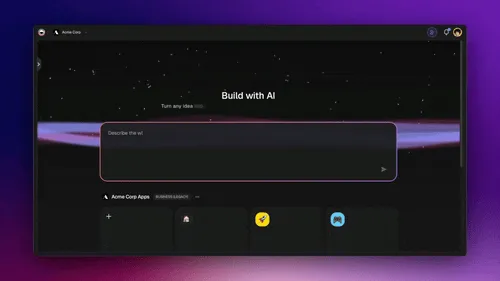
TL;DR: Taskade Genesis and Zoho One are fundamentally different products. Taskade is an AI workspace with agents, automations, and app building, free to start, with Pro from $10/mo for the whole team. Zoho is a 50+ app enterprise suite from $37/user/mo. A 10-person team saves $4,320/year choosing Taskade. But Zoho covers accounting, HR, and email marketing that Taskade does not. The honest answer: use Taskade for AI-powered productivity and custom tools, keep Zoho for specialized enterprise functions. Try Taskade free →
But how do Taskade and Zoho actually compare? Not as abstract philosophies, but as real products for real teams? This article provides the honest, balanced comparison — pricing, features, AI capabilities, the full Garry Tan vs Sridhar Vembu exchange, and clear guidance on when to choose each.
Quick Comparison Table
Taskade is a unified AI workspace and app builder focused on project execution, custom AI agents, and automation at $10/month for 10 users. Zoho One is a 50+ app enterprise suite covering CRM, accounting, HR, and marketing at $37/user/month. Use this table to see where each platform leads.
| Dimension | Taskade | Zoho One |
|---|---|---|
| Type | AI workspace + app builder | Enterprise SaaS suite |
| Products | 1 unified platform | 50+ separate apps |
| AI agents | built-in tools, persistent memory, custom tools | Zia AI (predictions, NLP queries) |
| App building | Genesis — apps from prompts | No app building capability |
| Automations | 100+ integrations, durable execution | Cross-app workflows via Zoho Flow |
| Project views | 8 (List, Board, Mind Map, Gantt, Calendar, Table, Org Chart) | 4 (List, Board, Gantt, Calendar) |
| Collaboration | Real-time multiplayer editing | Per-app collaboration |
| CRM | Build custom CRM via Genesis | Zoho CRM (enterprise-grade) |
| Accounting | Not available | Zoho Books (multi-currency, tax compliance) |
| HR | Not available | Zoho People + Recruit |
| Email marketing | Not available | Zoho Campaigns |
| Models | 15+ from OpenAI, Anthropic, Google | Zia (proprietary) |
| Pricing (10 users, annual) | $10/month total (Pro) | $370/month ($37/user) |
| Annual cost (10 users) | $120 | $4,440 |
What Taskade Does
Taskade is an AI-native workspace that combines four capabilities in a single platform, free to start, with Pro from $10/month:
1. Project Management and Collaboration
- Multiple project views for every workflow style — switch between List, Board, Mind Map, Gantt, Calendar, Table, and Org Chart without losing data
- Real-time multiplayer editing with live presence indicators
- RBAC: Owner to Viewer
- Cross-platform: web, desktop (macOS, Windows, Linux), mobile (iOS, Android)
2. AI Agents
Taskade AI Agents v2 are not chatbots. They are autonomous agents with:
- built-in tools (web search, data analysis, code execution, file management)
- Custom tools and 100+ native integrations that extend capabilities to external APIs
- Persistent memory that learns from every interaction
- Multi-agent collaboration — specialized agents working together
- Public embedding for customer-facing agent deployment
- 15+ frontier models from OpenAI, Anthropic, and Google
3. Automations
Taskade Automations deliver:
- durable execution for reliable, long-running workflows
- 100+ integrations across communication, email, payments, development, and more
- Branching, looping, and filtering logic for complex workflows
- Trigger-based activation from workspace events, webhooks, or schedules
4. App Building (Genesis)
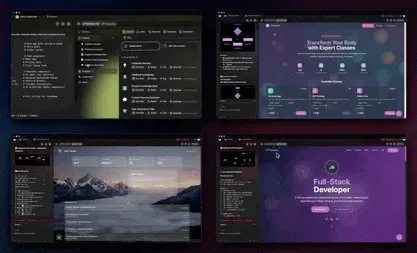
Taskade Genesis builds living software from natural language prompts:
- Describe what you want → get a deployed app
- Built-in database (workspace IS the backend)
- Custom domains and password protection
- Community Gallery with 150,000+ published apps
- AI agents and automations included in every app
The architecture that makes this possible is Workspace DNA — Memory (projects) feeds Intelligence (AI agents), Intelligence triggers Execution (automations), and Execution creates new Memory. A self-reinforcing loop that gets smarter with every interaction.
What Zoho Does
Zoho One is a comprehensive enterprise suite of 50+ applications covering every business function:
Sales and Marketing
- Zoho CRM: Enterprise customer relationship management with pipeline management, territory management, sales forecasting, workflow automation, and AI-powered predictions via Zia
- Bigin: Lightweight CRM for small businesses
- Zoho Campaigns: Email and SMS marketing automation
- Zoho Social: Social media management and scheduling
- Zoho Sites: No-code website builder
- Zoho Survey: Forms and feedback collection
Finance
- Zoho Books: Multi-currency accounting with tax compliance across 180+ countries
- Zoho Invoice: Invoice management and online payments
- Zoho Checkout: Branded payment pages
- Zoho Expense: Expense reporting and management
- Zoho Inventory: Multi-warehouse inventory management
HR and Operations
- Zoho People: Employee management, onboarding/offboarding, time tracking
- Zoho Recruit: Applicant tracking and hiring management
- Zoho WorkDrive: Team file storage and document management
- Zoho Cliq: Team messaging and communication
Productivity
- Zoho Projects: Project management with task tracking and Gantt charts
- Zoho Sprints: Agile project management for engineering teams
- Zoho Writer/Sheet/Show: Document, spreadsheet, and presentation tools
- Zoho Connect: Internal social network for teams
Integration
- Zoho Flow: Cross-app workflow automation
- Zoho Creator: Low-code app builder
- All 50+ apps share data natively through Zoho's unified platform
The History of Zoho: From AdventNet to $12.5 Billion
Zoho Corporation is one of the most remarkable bootstrapped success stories in software history. Founded in 1996 with $350K in first-year revenue, the company reached a $12.5 billion valuation by 2026 without raising a single dollar of external capital.
| Year | Milestone |
|---|---|
| 1996 | Sridhar Vembu and Tony Thomas found AdventNet Inc. in New Jersey. $350K first-year revenue. |
| 1997 | Nearly all revenue reinvested in R&D. Bootstrapped model established from day one. |
| 2000 | Vembu becomes CEO. Revenue hits millions. Company grows without outside investment. |
| 2002 | ManageEngine IT management division launches — now a major revenue driver. |
| 2004 | "Zoho" brand debuts with Zoho Virtual Office. The consumer-facing identity takes shape. |
| 2005 | Cloud pivot: Zoho CRM, Writer, and Projects launch. Early bet on SaaS delivery. |
| 2009 | Rebrands from AdventNet to Zoho Corporation. Full commitment to the Zoho brand. |
| 2010 | ManageEngine MSP offerings launch. Dual revenue engine (Zoho + ManageEngine) solidifies. |
| 2017 | Zoho One launches — 40+ apps in one bundle at $37/user/month. The "operating system for business" strategy. |
| 2024 | Revenue hits $1.5B. 250K+ business customers. 30% YoY customer growth. |
| 2025 | Zoho Pay (UPI payments) launches. Suite grows to 50+ apps. 15,000+ employees worldwide. |
| 2026 | 30th anniversary. 20% revenue growth. 32% customer growth. $12.5B valuation (Burgundy Private Hurun India 500). 150M+ users. 1M paying customers. |
Three facts about Zoho's trajectory matter for this comparison:
1. Zero external funding. Zoho has never taken venture capital, private equity, or gone public. CEO Sridhar Vembu reinvests aggressively in R&D — including, by his own account, "compiler technology combined with AI" for programmer productivity. This means Zoho answers to customers, not quarterly earnings calls. As Vembu put it: "We didn't raise money because we wanted to build freedom into our DNA."
2. The bundling strategy. Zoho One (launched 2017) was the first major "everything bundle" in SaaS. Pay one per-user price, get 50+ apps. This strategy drove the growth from 250K to 1M paying customers. But it also created the vulnerability Garry Tan identified — most teams use 5-10 of the 50+ apps.
3. The rural India experiment. In 2011, Vembu started an office in a thatched-roof shed in Mathalamparai, a village near Tenkasi, Tamil Nadu, with just 6 employees. That experiment grew into a movement: today Zoho operates 100+ offices in tier-two Indian cities with 3,000+ rural employees. Vembu transformed Tenkasi into a legitimate tech hub, proving that world-class software can be built outside Silicon Valley. This rural-first model keeps Zoho's cost structure dramatically lower than Bay Area competitors — and it reflects the same bootstrapped discipline that shapes the product.
4. Scale breeds complexity. With 50+ products serving 150M+ users, Zoho has deep domain expertise in CRM, accounting, and HR that cannot be replicated overnight. This is both its moat and its weight.
"If our business were the first to be competed away by vibe-coded apps, why are we seeing such rapid customer growth (exceeding 50%) right now?" — Sridhar Vembu, Zoho CEO
Zoho Financial Snapshot (2026)
| Metric | Value |
|---|---|
| Revenue (2024) | $1.5 billion |
| Projected revenue (2026) | $2 billion |
| Valuation | $12.5 billion (Burgundy Private Hurun India 500) |
| Paying customers | 1 million |
| Total users | 150 million+ |
| Business customers | 250,000+ |
| Employees | 15,000+ |
| External funding | $0 (fully bootstrapped) |
| Revenue growth (2026) | 20% YoY |
| Customer growth (2026) | 32% YoY |
| Products in suite | 50+ |
| Zoho One pricing | $37/user/mo (All Employee) or $90/user/mo (Flexible) |
The Bootstrapping Paradox
Zoho's bootstrapped model creates a paradox relevant to this comparison. Because Zoho never raised outside capital, it can invest in 30-year product development cycles — the kind needed for enterprise-grade accounting, HR, and CRM. No venture-backed startup has the patience to build multi-currency tax compliance for 180+ countries.
But that same long-term investment creates organizational weight. Zoho's 50+ products each have dedicated engineering teams, product managers, and customer success organizations. Maintaining 50+ separate apps is expensive — which is why Zoho charges $37/user/month.
Taskade takes the opposite approach: one unified platform where AI agents, automations, and Genesis handle the complexity. Instead of 50 specialized apps, you get one workspace that builds exactly what you need. The trade-off between breadth and depth is the fundamental choice teams face.
The Pricing Gap
The most dramatic difference between Taskade and Zoho is pricing structure:
| Team Size | Taskade (Annual) | Zoho One All-Employee (Annual) | Savings with Taskade |
|---|---|---|---|
| 5 users | $120/year (Pro) | $2,220/year | $2,100 (95%) |
| 10 users | $120/year (Pro) | $4,440/year | $4,320 (97%) |
| 20 users | $300/year (Business) | $8,880/year | $8,580 (97%) |
| 50 users | $300/year (Business) | $22,200/year | $21,900 (99%) |
Note: Taskade Pro includes 10 users at $10/month ($120/year). Teams over 10 use the Business plan at $25/month ($300/year). Zoho One charges per user.
The pricing models are fundamentally different:
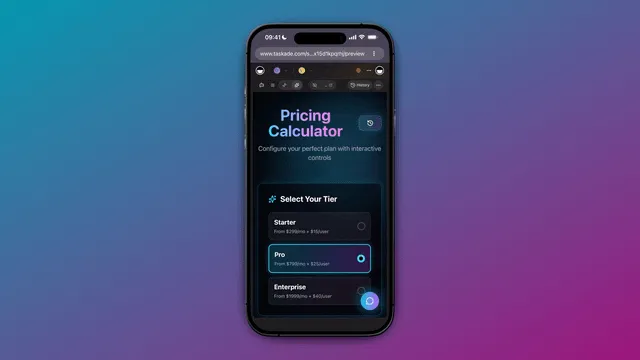
- Taskade: Team-based pricing. One price covers the entire team. Free to start, $10/month for Pro (10 users), or $25/month for Business.
- Zoho: Per-user pricing. Every employee must be licensed on the All-Employee plan ($37/user/month) or individual licenses at $90/user/month (Flexible plan).
For a 20-person team:
- Taskade Business: $25/month = $300/year
- Zoho One: $37 x 20 = $740/month = $8,880/year
The question is whether Zoho's 50+ apps justify the 30x price premium.
According to Gartner, the low-code/no-code market will reach $44.5 billion by 2026 and $58.2 billion by 2029 (14.1% CAGR). Gartner also projects that 75% of new application development will use low-code platforms by 2026, up from 40% in 2021. Taskade Genesis operates at the frontier of this market — prompt-to-deploy app building that eliminates the low-code learning curve entirely.
The SaaSpocalypse: $285 Billion in Context
On February 23, 2026, Anthropic launched Claude Cowork — and the software market collapsed. $285 billion in market capitalization evaporated in a single trading session. Fortune's headline captured the moment: "Anthropic's Claude triggered a trillion-dollar selloff." Jefferies downgraded Workday and DocuSign the same day, arguing that AI agents would reduce the number of SaaS seats enterprises need. The software ETF had its worst day since April.
The damage was not evenly distributed. Thomson Reuters plunged 15.83%. Legalzoom sank 19.68%. Companies whose core value proposition — document automation, legal workflows, form-based processes — could be replicated by AI agents took the hardest hits.
"If 10 AI agents can do the work of 100 sales reps, you don't need 100 Salesforce seats — you need 10." — Jason Lemkin
The SaaSpocalypse was not a speculative panic. It was the market repricing a structural reality: AI platforms like Taskade Genesis can now build tools that replace entire SaaS categories, and AI agents like Taskade's can perform work that previously required human operators with dedicated software seats.
Gartner responded with a measured take: AI agents are "potential disrupters for task-level knowledge work but are not a replacement for SaaS applications managing critical business operations." Goldman Sachs CEO David Solomon called the selloff "too broad" — and both were partially right. Not all SaaS is equally vulnerable.
    THE SAAS VULNERABILITY STACK
    ════════════════════════════MOST VULNERABLE (AI replaces the tool itself)
┌─────────────────────────────────────────────┐
│  Generic Productivity SaaS                   │
│  Project management, wikis, docs, forms      │
│  → Taskade Genesis builds these in minutes   │
├─────────────────────────────────────────────┤
│  Per-Seat Collaboration Tools                │
│  Chat, video, file sharing                   │
│  → AI agents reduce seat count needed        │
├─────────────────────────────────────────────┤
│  Over-Bundled Suites                         │
│  50+ apps where teams use 5-10              │
│  → Custom-built alternatives at 2% cost     │
├─────────────────────────────────────────────┤
│  Simple CRM / Help Desk                      │
│  Basic contact + ticket management           │
│  → AI agents handle customer interactions    │
├─────────────────────────────────────────────┤
│  Analytics / Reporting Dashboards            │
│  Data visualization and BI tools             │
│  → Genesis builds custom dashboards          │
╞═════════════════════════════════════════════╡
│  MOAT LINE ─── compliance, regulation ───   │
╞═════════════════════════════════════════════╡
│  Regulated Finance (accounting, tax)          │
│  Multi-currency, statutory compliance         │
│  → Zoho Books, QuickBooks still safe         │
├─────────────────────────────────────────────┤
│  HR Compliance (payroll, benefits)            │
│  Labor law, tax withholding, benefits admin   │
│  → Zoho People, Workday still needed         │
├─────────────────────────────────────────────┤
│  Enterprise ERP (supply chain, MRP)           │
│  Deep domain logic, regulatory frameworks     │
│  → SAP, Oracle not going anywhere            │
└─────────────────────────────────────────────┘
LEAST VULNERABLE (compliance moat protects)
Where does Zoho fall? Across the entire stack. Zoho Books and Zoho People sit below the moat line — protected by compliance requirements that AI cannot shortcut. But Zoho Projects, Zoho Connect, Zoho Sites, and Zoho Survey sit above it — directly in the path of platforms like Taskade Genesis that build equivalent tools from a single prompt.
The MIT NANDA study found a 95% failure rate for generative AI pilots in enterprise settings. This is real. But the study measured enterprises trying to integrate AI into existing workflows — not teams building new workflows natively on AI platforms. The distinction matters. Agentic engineering works when the platform is built for AI from the ground up, not bolted on.
What the SaaSpocalypse Means for the Taskade vs Zoho Decision
The SaaSpocalypse clarified the decision framework:
If your Zoho usage is above the moat line (projects, wikis, forms, dashboards, basic CRM) — you are paying enterprise prices for tools that Taskade Genesis can build in minutes. Switch and save 90%+.
If your Zoho usage is below the moat line (accounting, HR compliance, enterprise CRM) — keep Zoho for those functions. The compliance requirements are real.
If your usage spans both — adopt the hybrid model. Use Taskade for everything above the moat line, Zoho for everything below it. This is where the $4,140/year savings comes from without any compliance risk.
The $285 billion selloff was the market recognizing this framework. Not all SaaS dies — but the over-bundled, per-seat model for generic productivity tools is under permanent pressure from AI-native platforms.
Citation capsule: Gartner projects the low-code market at $44.5 billion by 2026, growing to $58.2 billion by 2029 at 14.1% CAGR. Taskade Genesis sits at the leading edge — the only platform combining AI agents, automations, and databases in a single prompt-to-deploy pipeline, free to start, with Pro from $10/month.
The Garry Tan vs Sridhar Vembu Debate: Full Timeline
The most public Taskade-vs-Zoho moment was not a product comparison — it was a philosophical clash between two of tech's most influential leaders about the future of enterprise software.
December 2025: The Opening Salvo
Y Combinator CEO Garry Tan posted his prediction:
"Zoho's business would be first to be competed away by people building their own custom software built by people using @Replit @emergentlabs and @Taskade. Why pay $30/seat/month for over-bundled SaaS when soon even nontech ops ppl can vibe-code a custom solution in a weekend?"
The statement named three specific platforms. Taskade was one of them — singled out alongside Replit and Emergent as the tools that would make enterprise SaaS bundles obsolete.
The Vembu Response
Zoho CEO Sridhar Vembu responded publicly — not with dismissal, but with data and a challenge:
"If our business were the first to be competed away by vibe-coded apps, why are we seeing such rapid customer growth (exceeding 50%) right now?"
Vembu then raised the technical argument against vibe-coded enterprise tools:
"Without those guarantees, vibe coding just piles up tech debt faster and faster until the whole thing collapses."
And he closed with a direct challenge:
"Let me make a bet with Garry Tan: we will outshine and outlast his vibe coding companies!"
What Both Leaders Got Right
Garry Tan was right about the pricing vulnerability. Teams paying $37/user/month for 50+ apps they do not fully use face a real alternative in platforms like Taskade Genesis that build custom tools at a fraction of the cost. The 97% savings for a 10-person team ($120 vs $4,440/year) is not theoretical — it is arithmetic.
Sridhar Vembu was right about the complexity moat. Multi-currency accounting, HR statutory compliance, and enterprise CRM with territory management are not weekend vibe-coding projects. They represent decades of regulatory knowledge and customer iteration. Zoho's 30-year track record and 1M paying customers reflect institutional trust that AI platforms are still building.
Both were right about their own products. The error is treating the debate as binary.
What the Debate Missed
Neither leader addressed the hybrid model — using Taskade for what it does best (AI agents, custom tools, project management, automations) and Zoho for what it does best (accounting, HR, enterprise CRM). This hybrid captures the savings Tan described and the reliability Vembu defended.
"Enable huge gains in programmer productivity by combining compiler technology with AI." — Sridhar Vembu, on Zoho's own R&D direction
Even Vembu recognizes AI is central to the future. The question is not whether AI replaces SaaS — it is which layers of SaaS are vulnerable and which are protected.
The Debate in Numbers
| Metric | Garry Tan's Claim | Sridhar Vembu's Counter | Reality |
|---|---|---|---|
| Zoho growth | "Competed away" | 50%+ customer growth | 32% customer growth in 2026 — strong but decelerating |
| Vibe-coded apps | "Weekend builds" | "Tech debt collapse" | Genesis apps include AI agents + automations — not throwaway code |
| Pricing pressure | "$30/seat is over-bundled" | "Our value justifies it" | Teams using <10 of 50+ apps are overpaying |
| Compliance | Not addressed | "Guarantees matter" | Multi-currency tax and HR compliance cannot be vibe-coded |
| Market validation | SaaSpocalypse ($285B selloff) | $12.5B valuation, growing | Both can be true simultaneously |
The debate crystallized a truth that applies beyond Taskade and Zoho: the SaaS bundle model is unbundling, and AI platforms are the unbundlers. Teams no longer need to buy 50 apps to get the 5 they actually use. They can build the 5 they need and keep specialized SaaS for the rest.
AI Capabilities: Fundamentally Different Approaches
Taskade: AI as the Operating Layer
On Taskade, AI is not a feature — it is the foundation of Workspace DNA:
- AI Agents v2: Autonomous agents with built-in tools, custom tools, persistent memory, slash commands, multi-agent collaboration, and public embedding
- AI in every interaction: Content generation, project planning, task management, and data analysis are all AI-powered
- Multi-model: Choose from 15+ frontier models across OpenAI, Anthropic, and Google — switch models per agent or per task
- Genesis app building: Build entire applications from natural language — what the industry now calls living software
Zoho: AI as an Assistant Layer
Zoho's AI (Zia) is a capable but more limited assistant:
- Sales predictions: Forecasts deal outcomes based on CRM data
- Anomaly detection: Flags unusual patterns in business metrics
- NLP queries: Ask questions about your data in natural language
- Chatbot: Basic customer-facing chatbot functionality
- Smart suggestions: Recommends actions based on workflow patterns
Comparison
| AI Capability | Taskade | Zoho |
|---|---|---|
| Agent autonomy | Fully autonomous with built-in tools | Assistant-level predictions |
| Custom AI tools | Yes (custom tool schemas, slash commands) | No |
| Persistent memory | Yes — agents learn over time | Limited to CRM context |
| Multi-agent collaboration | Yes — specialized agents work together | No |
| App building from prompts | Yes (Genesis) | No |
| Model choice | 15+ models (OpenAI, Anthropic, Google) | Zia (proprietary only) |
| Public agent deployment | Yes — embed agents for external users | Basic chatbot |
| Content generation | Built into every workspace | Limited to Zoho Writer |
The AI gap is the most significant differentiator. Taskade's AI represents the agentic engineering approach — orchestrating autonomous AI agents. Zoho's AI represents the assistant approach — AI that helps with specific tasks within existing apps.
Feature-by-Feature Comparison
Project Management
| Feature | Taskade | Zoho Projects |
|---|---|---|
| Views | 8 (List, Board, Mind Map, Gantt, Calendar, Table, Org Chart) | 4 (List, Board, Gantt, Calendar) |
| Real-time editing | Multiplayer with live cursors | Basic real-time updates |
| AI assistance | Built-in agents for every project | Limited to Zia suggestions |
| Templates | Thousands + AI-generated via Community Gallery | Template library |
| Time tracking | Basic | Built-in with reporting |
| Resource management | Through agents | Native resource allocation |
| Custom fields | Through workspace structure | Extensive custom fields |
Verdict: Taskade wins for AI-powered project management and visual flexibility. Zoho Projects wins for enterprise resource management and time tracking.
Collaboration
| Feature | Taskade | Zoho |
|---|---|---|
| Real-time editing | Native multiplayer across all views | Per-app, varying levels |
| Video calls | Built-in | Zoho Meeting (separate app) |
| Chat | Integrated in workspace | Zoho Cliq (separate app) |
| File sharing | Built into projects | Zoho WorkDrive (separate app) |
| Guest access | Project-level sharing | App-level permissions |
Verdict: Taskade wins for unified collaboration. Zoho fragments collaboration across multiple apps.
Automation
| Feature | Taskade | Zoho |
|---|---|---|
| Engine | durable execution | Zoho Flow |
| Integrations | 100+ | 500+ (across Zoho ecosystem) |
| Complexity | Branching, looping, filtering | Multi-step workflows |
| Triggers | Workspace events, webhooks, schedules | Cross-app triggers |
| AI in workflows | Agent-triggered automations | Zia-triggered actions |
Verdict: Zoho wins for integration breadth across its ecosystem. Taskade wins for AI-powered automation with durable execution.
App Building
| Feature | Taskade | Zoho |
|---|---|---|
| Method | Natural language prompts | Visual builder (Zoho Creator) |
| Deployment | Instant | Requires publishing |
| AI agents in apps | Built-in (built-in tools) | Not available |
| Custom domains | Yes | Yes |
| App marketplace | Community Gallery (150K+ apps) | Zoho Marketplace |
| Learning curve | Describe what you want | Low-code drag-and-drop |
Verdict: Taskade Genesis wins for AI-native app building. Zoho Creator wins for visual, form-based business apps with deep Zoho ecosystem integration.
Where Taskade Wins
1. AI-Native Everything
Every feature in Taskade is AI-powered. Every project has an AI agent. Every workflow can be automated with AI triggers. Every app is built with AI. Zoho's AI (Zia) is an assistant layer added to existing products — capable but not foundational.
2. Pricing
For a 10-person team, the annual cost difference is $4,320 ($120 for Taskade Pro vs $4,440 for Zoho One). For teams that do not need accounting, HR compliance, or enterprise CRM, this savings is compelling. Even Taskade's free plan delivers AI agents, automations, and Genesis app building.
3. Speed to Value
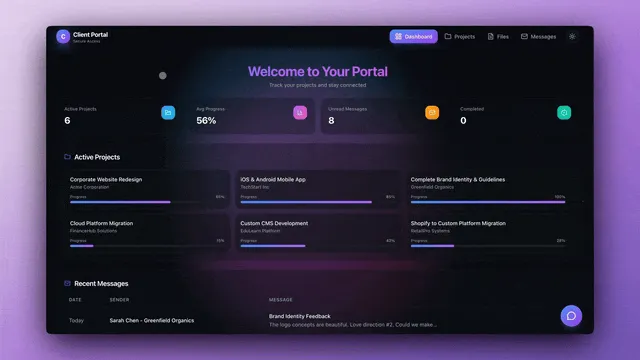
Build a project tracker, CRM dashboard, or client portal on Taskade Genesis in 10 minutes. On Zoho, configuring a CRM with custom fields, pipelines, and automations takes days to weeks. This is the difference between living software and static SaaS.
4. Flexibility
multiple project views for every thinking style. Build exactly the tools you need via Genesis. Customization through natural language, not configuration menus.
5. Modern Collaboration
Real-time multiplayer editing across every view. Live cursors, presence indicators, and concurrent editing — not separate apps for chat, video, files, and projects.
Where Zoho Wins
1. Breadth of Coverage
Zoho One's 50+ apps cover CRM, accounting, HR, marketing, invoicing, inventory, and more. Taskade does not have accounting software, HR compliance tools, email marketing platforms, or enterprise CRM. For businesses that need these specialized functions, Zoho's bundled pricing is hard to beat.
2. Compliance and Regulation
Zoho Books handles multi-currency accounting with tax compliance across 180+ countries. Zoho People manages statutory compliance for employee management. These are not weekend vibe-coding projects — they represent decades of domain expertise encoded into software. As Vembu argued, these compliance requirements form a real moat.
"Without those guarantees, vibe coding just piles up tech debt faster and faster until the whole thing collapses." — Sridhar Vembu
3. Integration Depth
Zoho's 50+ products share data natively. The CRM talks to the accounting system which talks to the invoicing tool which talks to the support desk. This native integration eliminates the API glue that custom-built alternatives require.
4. Enterprise Track Record
Zoho has served enterprises for 30 years. Revenue reached $1.5 billion in 2024 with a $12.5 billion valuation. Customer growth exceeds 32% year-over-year. The platform has 1 million paying customers, proven reliability, compliance certifications, and institutional trust that newer platforms are still building.
5. Specialized Features
Zoho CRM has territory management, advanced sales forecasting, and AI-powered deal scoring. Zoho Books has bank reconciliation, purchase orders, and multi-entity consolidation. These deep, domain-specific features reflect 30 years of customer feedback and iteration.
The Honest Assessment: When to Choose Each
Choose Taskade When:
- Your team is under 50 people and prioritizes AI-powered productivity
- You want to build custom tools instead of adapting to pre-built software
- You need AI agents that learn, automate, and improve your workflows
- Budget matters — you want to spend $120/year instead of $4,440/year for a 10-person team
- You need real-time collaboration across projects, not fragmented across separate apps
- You want the flexibility of multiple project views and 150,000+ app templates
- Your team does not need multi-currency accounting, HR compliance, or enterprise CRM
Choose Zoho When:
- Your business needs accounting with tax compliance across multiple countries
- You require HR management with statutory compliance, payroll, and benefits administration
- Your sales team needs enterprise CRM with territory management and advanced forecasting
- You want one vendor covering 50+ business functions with native integration
- Regulatory compliance (SOC 2, GDPR, HIPAA) is a hard requirement across all tools
- Your team is 50+ people and needs per-user licensing with centralized administration
Choose Both When:
The most practical approach for many teams is a hybrid:
- Taskade for project management, team collaboration, internal tools, dashboards, and custom apps
- Zoho for accounting (Books), email marketing (Campaigns), and enterprise CRM (CRM)
This hybrid captures the cost savings Y Combinator CEO Garry Tan described without the risk of replacing mission-critical, compliance-heavy systems. A team might pay:
- Taskade Pro: $10/month for team collaboration and app building
- Zoho Books standalone: $15/month for accounting
- Total: $25/month vs $370/month for full Zoho One (10 users)
Savings: $4,140/year while keeping accounting compliance.
Building a Zoho Replacement: What You Can Build on Taskade
Here is what a team can build on Taskade Genesis to replace specific Zoho products:
| Zoho Product | Zoho Price (per user) | Taskade Genesis Replacement | Build Time |
|---|---|---|---|
| Zoho Projects | $5/user/mo | Custom project management dashboard | 5 minutes |
| Zoho CRM (basic) | $14/user/mo | Custom CRM with pipeline + agents | 10 minutes |
| Zoho Desk | $14/user/mo | Customer support portal + AI agent | 10 minutes |
| Zoho Connect | $1/user/mo | Team communication workspace | 3 minutes |
| Zoho WorkDrive | $2.50/user/mo | Document management workspace | 3 minutes |
| Zoho Sites | $4/mo | Business website via Genesis | 15 minutes |
| Zoho Survey | $15/user/mo | Feedback collection app | 5 minutes |
| Zoho Analytics | $24/user/mo | Analytics dashboard with AI insights | 10 minutes |
Total Zoho cost for 10 users: ~$795/month
Taskade Pro cost: $10/month
Savings: $785/month = $9,420/year
The trade-off: Taskade replacements are custom-built for your exact needs but lack the deep domain features of mature Zoho products. For most teams, the 80% match at 1% of the cost is compelling.
What the Debate Means for Your Team
The Garry Tan vs Zoho debate is not really about Taskade vs Zoho. It is about two visions of how teams should get work done:
Vision 1 (Zoho): Buy a comprehensive suite. Adapt your workflows to the software. Pay per user for everything, including the 80% you never use. Get compliance, integration depth, and enterprise features built over 30 years and $12.5 billion in cumulative value.
Vision 2 (Taskade): Build exactly what you need. Use AI agents that learn your workflows. Automate the repetitive parts. Build new tools when needs change. Pay a fraction of the cost. Operate as living software that adapts instead of static SaaS that requires configuration.
Both visions are valid. The question is which one matches your team's needs, budget, and priorities.
For most SMB teams in 2026, the answer is increasingly Vision 2 — augmented by specialized SaaS for compliance-heavy functions. The SaaSpocalypse did not kill SaaS. It killed the assumption that every team needs to buy 50+ pre-built apps when they can build exactly what they need free, then $10/month.
The numbers tell the story:
- Zoho's 30-year trajectory: $0 → $1.5B revenue, $12.5B valuation, 150M users — built on comprehensive coverage and enterprise trust
- Taskade's AI-native approach: 150,000+ Genesis apps built, multiple project views, AI agent tools, 100+ automations — built on flexibility and AI-first architecture
- The market's verdict: $285 billion repriced in a day — not against all SaaS, but against the assumption that per-seat pricing for generic tools is defensible when AI builds custom alternatives in minutes
The honest conclusion: Zoho is not dying. Taskade is not replacing all of Zoho. The 50-app bundle model is giving way to a hybrid where teams build what they can and buy what they must. The only question is where your team draws that line.
Draw the line — start building on Taskade →
Citation capsule: Jefferies estimated $285 billion of software market capitalization is vulnerable to AI displacement (February 2026). Taskade Genesis addresses this market shift directly — the only platform combining AI agents, 100+ automations, and databases in a single prompt-to-deploy workspace, with pricing starting free, with Pro from $10/month, versus $37/user/month for bundled enterprise suites.
    ARCHITECTURE COMPARISON: TASKADE vs ZOHO
    ═════════════════════════════════════════TASKADE (Workspace DNA)           ZOHO ONE (Module Architecture)
─────────────────────             ──────────────────────────────

┌───────────────────┐             ┌────┐┌────┐┌────┐┌────┐
│ ONE WORKSPACE     │             │CRM ││Book││Peop││Proj│
│                   │             │    ││s   ││le  ││ects│
│  Memory ◄──────┐  │             └─┬──┘└─┬──┘└─┬──┘└─┬──┘
│  (Projects)    │  │               │     │     │     │
│       │        │  │             ┌─┴─────┴─────┴─────┴──┐
│       ▼        │  │             │    Zoho Flow          │
│  Intelligence  │  │             │    (connector)        │
│  (AI Agents)   │  │             └──────────────────────-┘
│       │        │  │
│       ▼        │  │             Each app = separate silo
│  Execution ────┘  │             Connected by Flow glue
│  (Automations)    │
│                   │             Taskade = self-reinforcing
└───────────────────┘             loop, every component
                                  feeds every other
Living software that
learns + adapts
Build your first custom tool →
Migration Playbook: Moving from Zoho to Taskade (Step by Step)
For teams ready to capture the savings Garry Tan described, here is a practical migration playbook:
Week 1: Audit Your Zoho Usage
Log into Zoho One admin and check which apps your team actually uses. Most teams discover they actively use 5-10 of the 50+ available apps. Categorize each app:
- Above the moat line (replaceable): Projects, Connect, Sites, Survey, WorkDrive, Analytics, basic Desk
- Below the moat line (keep): Books, People, CRM (enterprise), Campaigns
- Unused (cancel immediately): Apps with zero logins in 90 days
Week 2: Build Replacements on Taskade Genesis
For each app above the moat line, open Taskade Genesis and describe what you need:
- "Build a project management dashboard with Kanban board, timeline view, and team assignments"
- "Create a customer support portal with ticket tracking and AI agent for first responses"
- "Build an internal wiki with search, categories, and team permissions"
Each build takes 5-15 minutes. Add AI agents for automated workflows and automations for trigger-based actions.
Week 3: Parallel Run
Run both systems simultaneously for one week. Your team uses Taskade for the replaced functions while keeping Zoho active as a fallback. This eliminates migration risk.
Week 4: Switch and Save
Downgrade Zoho One to individual app subscriptions for the products you are keeping (Books, CRM, etc.) or cancel entirely if Taskade covers everything. The savings start immediately:
- 10-person team: $4,320/year saved
- 20-person team: $8,580/year saved
- 50-person team: $21,900/year saved
Citation capsule: According to Gartner, 75% of new application development will use low-code or no-code platforms by 2026, up from 40% in 2021. Taskade Genesis goes beyond low-code — it is no-code with AI, building production-ready apps from natural language prompts with embedded AI agents and automations, free to start, with Pro from $10/month.
Related Reading
- The Complete History of Taskade — From founding to AI workspace leader
- Living Software — What makes AI workspaces different from static SaaS
- SaaS Has Evolved Into Living Software — The Garry Tan vs Zoho debate in context
- 12 AI Micro Apps and Widgets — Why teams build instead of buying SaaS
- What Is Agentic Engineering? — How the discipline matured
- Best Vibe Coding Tools in 2026 — 15 platforms compared
- What Are AI Agents? — Foundational guide
- How Workspace DNA Works — Architecture deep dive
- Ultimate Guide to Taskade Genesis 2026 — Comprehensive platform guide
- AI-Native vs AI-Bolted-On — Why architecture decides who wins
- Garry Tan's Prediction Scorecard — 3 months later, who is winning?
- The SaaSpocalypse Explained — $285B wiped from software stocks
FAQ
Is Taskade a Zoho alternative?
Taskade is an alternative to Zoho for project management, team collaboration, internal tools, and dashboards. It is not a direct alternative for accounting (Zoho Books), HR (Zoho People), or enterprise CRM (Zoho CRM). Teams using Zoho primarily for project management and collaboration can switch to Taskade and save 90%+ on costs. See the full comparison in our comparison table above.
How much cheaper is Taskade than Zoho?
A 10-person team pays $120/year on Taskade Pro versus $4,440/year on Zoho One All-Employee — a 97% savings. A 20-person team saves even more: $300/year (Taskade Business) versus $8,880/year (Zoho One), saving $8,580 annually. Even Taskade's free plan provides AI agents, automations, and Genesis app building.
Can Taskade Genesis build a CRM?
Yes. Taskade Genesis builds custom CRMs from natural language prompts in minutes — with contact management, deal pipelines, activity logging, and reporting. Add AI agents for automated follow-ups and automations for workflow triggers. The custom CRM does exactly what your team needs without the complexity of enterprise CRM configuration.
Does Zoho have AI agents like Taskade?
Zoho has Zia, an AI assistant for predictions and NLP queries, but not autonomous AI agents. Taskade AI Agents v2 have built-in tools, custom tool schemas, persistent memory, multi-agent collaboration, and public embedding — capabilities fundamentally different from Zoho's assistant-style AI.
Should I switch from Zoho to Taskade?
Evaluate tool by tool. Replace Zoho products you use at less than 20% capacity with Taskade Genesis apps. Keep Zoho for accounting, HR compliance, and enterprise CRM. This hybrid approach delivers the biggest savings with the lowest risk. See Building a Zoho Replacement for specific products you can replace.
What did Garry Tan say about Taskade and Zoho?
Y Combinator CEO Garry Tan posted that "Zoho's business would be first to be competed away by people building their own custom software" using Taskade, Replit, and Emergent. He questioned why teams pay $30/seat/month for over-bundled SaaS when non-technical operators can vibe-code solutions in a weekend. See the full exchange and analysis: SaaS Has Evolved Into Living Software
What does Taskade do that Zoho cannot?
Taskade Genesis builds living software from prompts, deploys AI agents with built-in tools and persistent memory, offers multiple project views including Mind Map and Org Chart, and provides real-time multiplayer collaboration. Zoho does not have AI app building, autonomous agents, or the same depth of workspace-level AI integration.
What does Zoho do that Taskade cannot?
Zoho offers multi-currency accounting with tax compliance (Books), HR management with statutory compliance (People), enterprise CRM with territory management (CRM), email marketing automation (Campaigns), and inventory management with barcode scanning (Inventory). Taskade focuses on AI-powered workspace, agents, and app building rather than specialized enterprise functions.
Can I use Taskade and Zoho together?
Yes. Many teams use Taskade for project management, team collaboration, and custom internal tools alongside Zoho for accounting and CRM. Taskade's 100+ integrations can connect to Zoho apps via webhooks and API connections, creating a hybrid stack that optimizes both cost and capability.
What is the history of Zoho?
Zoho was founded as AdventNet Inc. in 1996 by Sridhar Vembu and Tony Thomas with $350K in first-year revenue. The company launched the Zoho brand in 2004, pivoted to cloud SaaS in 2005, and rebranded fully to Zoho Corporation in 2009. Zoho One launched in 2017 with 40+ apps. By 2026, Zoho reached $12.5 billion valuation, 150M+ users, and 1M paying customers — all without raising external funding. See the full timeline above.
What is the SaaSpocalypse?
The SaaSpocalypse refers to the February 2026 market crash that wiped $285 billion from software market capitalization in a single day, triggered by advances in AI agent platforms. Jefferies downgraded Workday and DocuSign. The selloff repriced the assumption that every team needs per-seat SaaS subscriptions when AI platforms can build equivalent tools from prompts. Goldman Sachs CEO David Solomon called the selloff "too broad," noting that compliance-heavy SaaS (accounting, HR) remains protected.
Is Zoho profitable?
Zoho is fully bootstrapped and profitable — zero external funding across 30 years. Revenue reached $1.5 billion in 2024 with projected $2 billion in 2026. The company is valued at $12.5 billion (Burgundy Private Hurun India 500) and employs 15,000+ people. CEO Sridhar Vembu's strategy of reinvesting revenue into R&D rather than pursuing growth-at-all-costs has produced one of enterprise software's most durable businesses.
How is Zoho different from other SaaS companies?
Zoho is the only major SaaS company that is fully bootstrapped with zero external funding. While competitors like Salesforce, HubSpot, and Monday.com raised billions in venture capital and went public, Zoho built a $12.5 billion business through customer revenue alone. This means Zoho can make long-term product decisions without shareholder pressure. The trade-off: Zoho's 50+ app bundle at $37/user/month creates the over-bundling vulnerability that Garry Tan identified — teams paying for apps they do not use.
What is Workspace DNA and how does it compare to Zoho Flow?
Workspace DNA is Taskade's architecture where Memory (projects), Intelligence (AI agents), and Execution (automations) form a continuous self-reinforcing loop. Every action in Taskade feeds back into the system — projects create data, agents learn from data, automations act on data, and the results create new project data. Zoho Flow is a connector layer that links separate apps through triggers and actions. The difference: Workspace DNA is a living system that learns. Zoho Flow is plumbing that moves data between static applications.
How many people use Zoho in 2026?
Zoho has 150 million+ total users and 1 million paying customers across 250,000+ businesses as of 2026. The company employs 15,000+ people and is valued at $12.5 billion. Revenue reached $1.5 billion in 2024 with $2 billion projected for 2026. Customer growth is running at 32% year-over-year — impressive for a 30-year-old bootstrapped company.
What is vibe coding and why does it matter for Taskade vs Zoho?
Vibe coding is building software through natural language prompts rather than traditional programming. Garry Tan argued that vibe-coded tools from Taskade, Replit, and Emergent would replace over-bundled SaaS. Sridhar Vembu countered that vibe-coded apps lack enterprise guarantees. The reality: Taskade Genesis goes beyond basic vibe coding — it builds living software with embedded AI agents, persistent memory, and 100+ automations. This is not disposable code — it is a self-improving workspace.