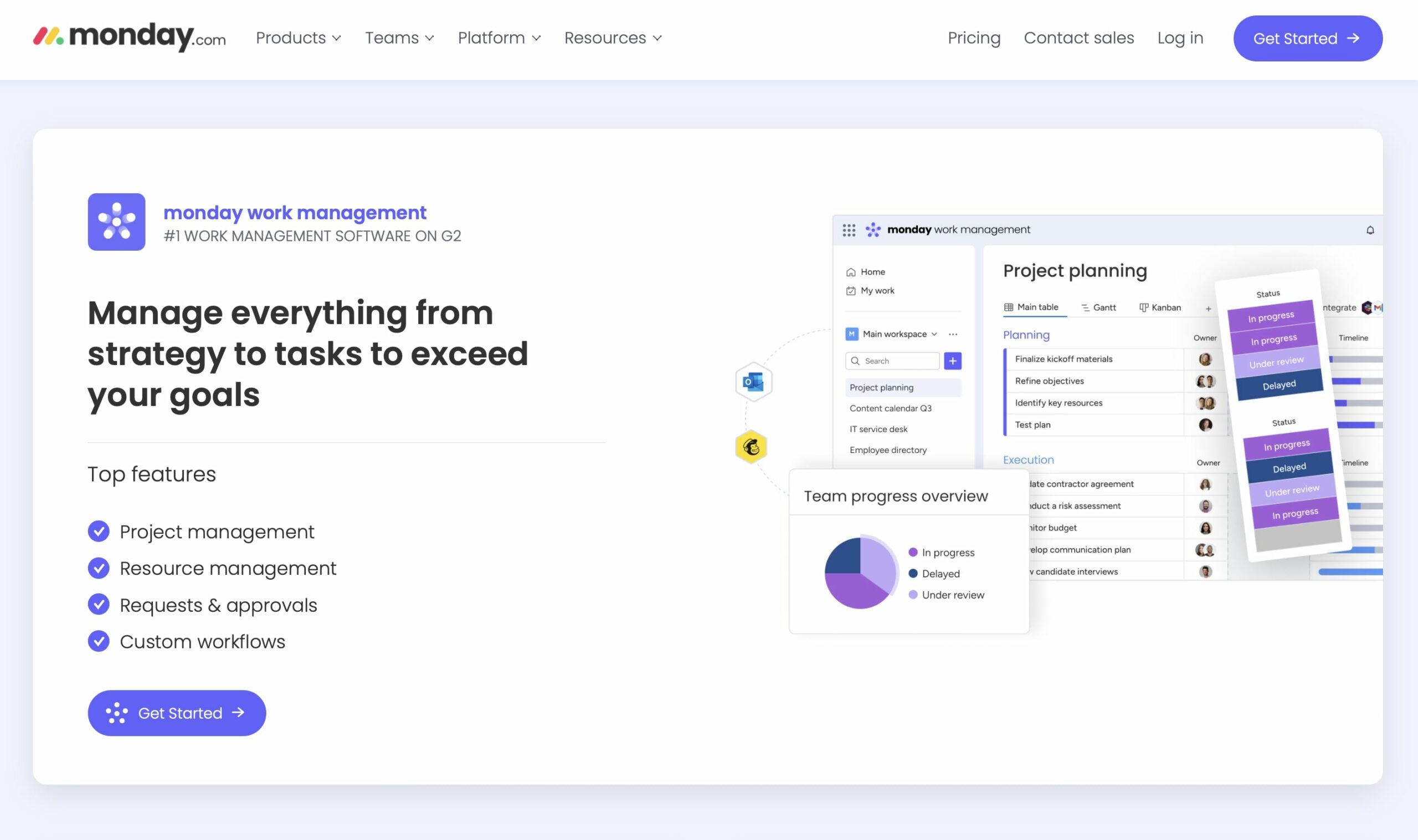
Monday.com is a cloud-based Work OS that lets teams build custom workflow apps and manage projects without writing a single line of code. What started as an internal communication tool at Wix.com called dapulse grew into a publicly traded company with $1.2 billion in annual revenue, 245,000 customers, and a presence in over 60% of Fortune 500 organizations.
TL;DR: Monday.com is a cloud Work OS founded in 2012 by Roy Mann and Eran Zinman as "dapulse," an internal tool at Wix. It rebranded in 2017, IPO'd on NASDAQ in 2021 at a $6.8B valuation, and now runs $1.2B in revenue across 245,000 customers. To build your own AI work system, try Taskade Genesis.
But where did it all start? How did a team of Israeli intelligence veterans build one of the biggest SaaS companies on the planet? And can Monday.com survive the AI revolution it's now trying to lead? In today's article, we take a deep dive into the complete history of Monday.com and where it's heading. 🔮
🤖 What Is Monday.com?
Monday.com came to life in 2012 in Tel Aviv, Israel, as a joint initiative of Roy Mann and Eran Zinman — two former IDF Unit 9900 intelligence veterans who met during their military service and later crossed paths again at Wix.com. The mission was deceptively simple — build a better way for teams to communicate and get work done.
"I've never agreed with the term 'Project Management' because it isn't really projects that we're managing, it's people."
Roy Mann, Co-CEO of Monday.com
The company has since spawned an impressive lineup of products including monday work management, monday CRM, monday dev, and monday service — all running on a shared Work OS infrastructure.
But all those things were just the beginning.
In 2025-2026, Monday.com is pivoting hard into AI with Monday Sidekick (an AI digital worker), Monday Magic (natural language to workflow), Monday Vibe (a "vibe coding" app builder that hit $1M ARR in 2.5 months), and Monday Agents (autonomous AI agents). With $1.62 billion in cash and $1.232 billion in FY2025 revenue, Monday.com is the clear revenue leader in the project management space.
So, let's wind back the clock and see where it all started.
🥚 The History of Monday.com
Intelligence Corps to SaaS: The Founding Story (2010-2012)
The Monday.com origin story begins not in a Silicon Valley garage, but in an Israeli military intelligence unit.
Roy Mann and Eran Zinman both served in IDF Unit 9900, one of Israel's elite intelligence units within the Intelligence Corps. Mann, who held a B.A. in Computer Science from IDC Herzliya, had previously co-founded SaveAnAlien.com and ntt.co.il before joining Wix.com as a senior technology leader. Zinman, armed with a B.Sc. in Electrical Engineering and Computer Science from Tel Aviv University, had been Head of R&D at Conduit Mobile (later Como) and co-founded Othersay.
Zinman's competitive instincts were forged long before enterprise software — in the world of real-time strategy games. His favorite: Command & Conquer: Red Alert 2:
"If you play the right games you can learn a lot from them, especially strategy games, because on one hand you need to see the big picture all the time, understand the strategy, understand what's going on — but also handle the tactics, know all the details, act quickly. I think that's kind of similar to running a business."
Eran Zinman, Co-CEO of Monday.com
Their paths converged when Mann, serving as a reservist, recruited Zinman to a special team he was leading. The bond forged in military intelligence would later prove critical — building a company requires the same kind of trust and operational discipline that intelligence work demands.
But before Monday.com, Zinman had to learn one of the hardest lessons in entrepreneurship — through failure. His first startup was a search engine for user reviews that he built for 14-15 months without ever showing it to customers:
"I ran out of money, personal money, and ran out of energy. I remember thinking to myself — I wasted all my resources, I must have learned something. After a lot of processing, I realized the reason I failed is that I was afraid to fail. I was so afraid of negative feedback, I was afraid people were going to be critical of my product. And I swore to myself that when I build my next company, I'm going to fail often, and I'm going to be happy about failure, because I want to learn as quickly as I can."
Eran Zinman on his first startup
That hard-won philosophy — fail fast, learn faster — would become part of Monday.com's DNA from day one.
After their service, both ended up at Wix.com, the Israeli website builder that would become a $15 billion public company. Zinman was working at Conduit while Mann was at Wix, and it was there, inside the scaling chaos of Wix, that the idea for Monday.com was born.
The problem they saw:
As Wix grew from a small startup to a company with hundreds of employees, internal communication started breaking down. Teams used email, spreadsheets, whiteboards, and word-of-mouth to track projects and coordinate work. Critical information fell through the cracks. Decisions were made in hallway conversations that never got documented.
Mann and Zinman — along with third co-founder Eran Kampf — decided to build an internal tool to fix it. A visual, intuitive platform where everyone could see what everyone else was working on. No more guessing, no more status meetings, no more "I thought you were handling that."
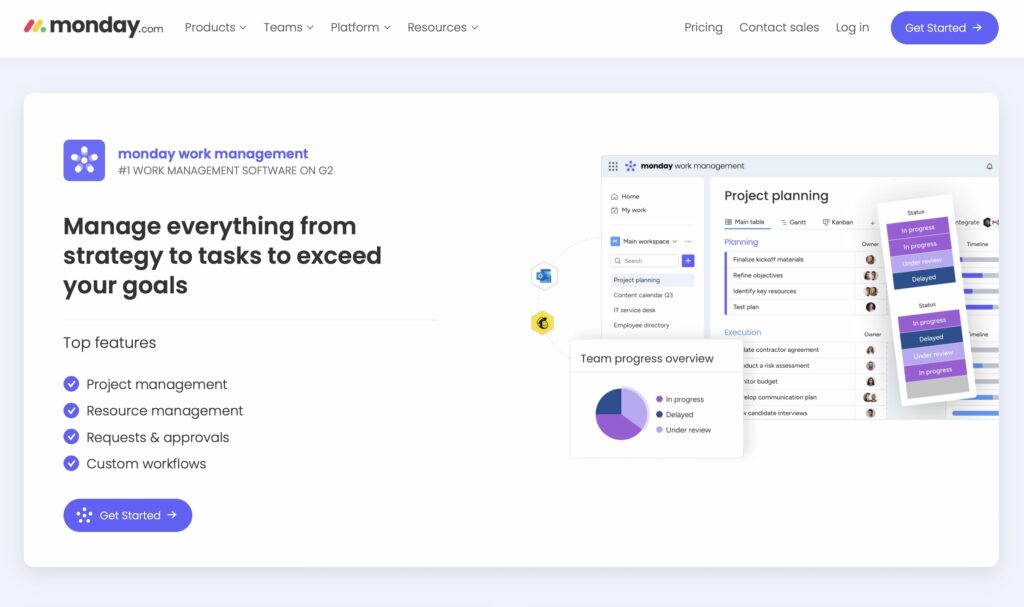
Monday.com's signature board view — the colorful, visual interface that helped dapulse stand out in a crowded project management market. Image credit: Monday.com
In February 2012, they spun the tool out of Wix as an independent company. Wix itself became the first customer — a fitting beginning for a product born from real organizational pain.
The founding team launched from a vacated apartment in Tel Aviv. No fancy offices, no ping-pong tables. Just a small team with a big conviction that traditional project management software was fundamentally broken.
The founding thesis was counterintuitive. Most founders try to build something nobody has thought of before. Mann and Zinman took the opposite approach — they went after a crowded market with a different philosophy:
"We said, look at the market today — CRM has Salesforce, but who's the leader for managing work and processes? Who is the number one vendor that people rely on to manage the core of their work? There was none. We just felt there's such a huge vacuum. But we said, we don't know exactly what's the solution for every business. We're going to give people the ability to customize for their needs, because they know best about what's right for their business. So since day one, nothing in the product is rigid. Everything is 100% flexible."
Eran Zinman on the founding thesis
That principle — radical customization over opinionated design — would differentiate Monday.com from every competitor that came before or after.
The dapulse Era: Building in the Shadows (2012-2017)
The company's original name was dapulse — and it would take two full years of development before the product was ready for commercial launch.
2012-2014: Building the Foundation
For two years, the dapulse team worked in relative obscurity. While competitors like Asana (founded 2008), Trello (launched 2011), and Basecamp had already established market presence, dapulse was quietly iterating on its core thesis: work management should be visual, intuitive, and people-centric.
The product that emerged was deliberately different from traditional project management tools. Instead of Gantt charts, dependencies, and resource allocation — the hallmarks of enterprise PM software — dapulse offered colorful boards with customizable columns. It looked more like a spreadsheet had a baby with a kanban board, and that was the point.
Key design principles:
- Visual first: Color-coded statuses made project health visible at a glance
- Customizable: Teams could build any workflow using boards, columns, and automations
- People-centric: Focus on who is doing what, not just task dependencies
- Low learning curve: Anyone could start using dapulse in minutes, not days
The Hidden Pivot
What most people don't know is that dapulse's first 18 months were actually focused on communication and collaboration, not work management. In the pre-Slack era, the team initially thought the opportunity was in team messaging — competing with Yammer and HipChat. But Zinman realized those tools felt like "nice to have" products, not tools managing the core work of businesses.
The pivot from communication to flexible work management happened after the team had spent 70-80% of their seed round. It was a make-or-break moment:
"Both Roy and I, we're software developers, so our natural instinct is to go to the office and write code. We always felt we were one feature away from getting the right product. After spending 70 or 80% of our seed round, we sat down and said — something is not working. It's not about the next feature. We need to talk more with customers."
Eran Zinman on the dapulse pivot
Instead of showing potential customers what they'd built, they went out and interviewed them about how they actually managed their businesses. That research triggered the pivot from a communication tool to the customizable work management platform that would define the company.
2014: Commercial Launch
dapulse commercially launched in 2014 and immediately attracted early adopters who were frustrated with the complexity of existing tools. The product resonated particularly well with non-technical teams — marketing departments, creative agencies, HR teams — who needed project visibility without the overhead of tools designed for software development.
The early adoption pattern told a clear story. Enterprise project management tools like Microsoft Project and Primavera were powerful but required training and certifications. Newer tools like Asana and Basecamp were simpler but still felt like they were designed by and for engineers. dapulse landed in a sweet spot — visual enough for a marketing coordinator to understand in minutes, but structured enough to manage real projects.
Zinman has a vivid memory of those earliest customers. He mounted a TV on the office wall with a custom dashboard showing the customer count — starting at six — with a Homer Simpson "woohoo!" sound effect that played every time a new customer signed up:
"I remember one day we sat down writing code and I hear this woohoo in the background and six turns into seven, seven turns into eight. One day we had three new paying customers in one day and I was so excited. I called Roy and told him, 'Look, we got three new customers in one day — we can conquer the world!'"
Eran Zinman on dapulse's first customers
Each customer was paying about $12 per seat — modest, but the exciting part was that they never had a sales conversation. Users found the product, understood it, and paid on their own. It felt like a machine that could scale.
August 2012: Seed Round
The company raised a $1.5 million seed round from Genesis Partners and Entrée Capital. It wasn't a massive round by Israeli startup standards, but it gave the team enough runway to keep building.
Genesis Partners was already one of Israel's most prominent venture firms, having backed companies like Wix, Outbrain, and ironSource. Their bet on dapulse reflected a conviction that the work management space was ripe for disruption — too many legacy tools, too little innovation in user experience.
But with 70-80% of the seed round spent and no clear product-market fit, the company was in a precarious position. It was Avi Eyal from Entrée Capital who made a pivotal decision:
"The typical investor, seeing that a company spent 80% of their seed round and didn't reach product-market fit, would kind of give up. But Avi told us, 'I believe in you guys, even though I don't know why. Don't go do an A round — just go, I'll give you the money, let's do a convertible, just scale what you're building.' If we had gone and tried to raise funds — it's a long process, especially when you don't have momentum — maybe the company wouldn't be what it is today."
Eran Zinman on the pivotal convertible note
2014-2017: Steady Growth
Over the next three years, dapulse grew methodically:
- Built a self-service growth engine powered by content marketing
- Expanded from Israel to international markets
- Developed integrations with popular tools (Slack, Google Drive, Dropbox)
- Created a template marketplace for common use cases
- Hit 18,000 paying customers by November 2017
But there was a problem. A big one.
The Name Problem
As the product gained traction, the team realized the name "dapulse" was working against them. Roy Mann later admitted the name "sounded like a rapper rather than a cloud software company." Customers misspelled it. Prospects confused it with other brands. Sales calls started with pronunciation corrections instead of product demos.
The team knew they needed a name that was:
- Instantly recognizable — no explanation needed
- Associated with work — the product's core purpose
- Globally universal — works in every language and culture
- Domain available — a premium .com address
They found their answer in the most universal symbol of the work week: Monday.
The Rebrand: dapulse Becomes Monday.com (November 2017)
On November 13, 2017, dapulse officially became Monday.com.
The domain was secured through Name Experts, a premium domain brokerage. The exact price was never disclosed, but premium single-word .com domains routinely sell for six to seven figures.
The rebrand was more than cosmetic. It signaled a strategic shift from "another project management tool" to something bigger — a universal platform for work. Monday is the day the world goes back to work. It's the fresh start, the clean slate, the moment when plans become action.
At the time of the rebrand, Monday.com had 18,000 paying customers and was generating approximately $13 million in annual revenue — a 202% growth rate. The rebrand gave them a name that matched their ambition.
Funding Acceleration
With the new name came fresh capital:
| Round | Date | Amount | Lead Investor | Valuation |
|---|---|---|---|---|
| Seed | Aug 2012 | $1.5M | Genesis Partners, Entrée Capital | — |
| Series A | Jun 2016 | $7.6M | Genesis Partners | — |
| Series B | Apr 2017 | $25M | Insight Venture Partners | — |
| Series C | Jul 2018 | $50M | Stripes Group | — |
| Series D | Jul 2019 | $150M | Sapphire Ventures | $1.9B |
The Series D in July 2019 was the milestone round — it valued Monday.com at $1.9 billion, officially crowning it a unicorn. From a vacated apartment in Tel Aviv to a $1.9 billion valuation in seven years.
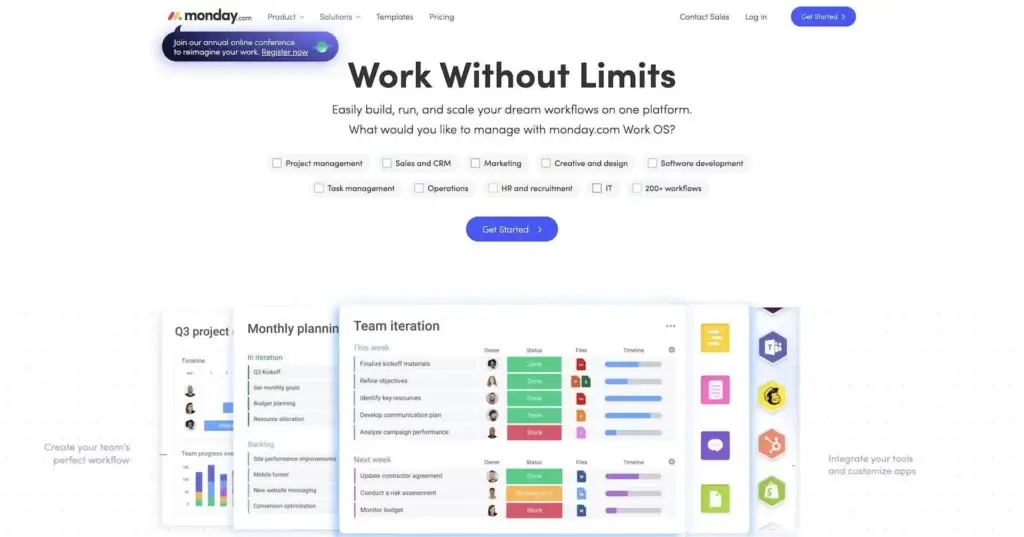
Monday.com's workflow interface with customizable dashboards, boards, and status columns. Image credit: Monday.com
The Marketing Machine: Growth at All Costs (2018-2021)
If there's one thing that defined Monday.com's rise, it was marketing. Not polite, measured SaaS marketing — aggressive, loud, impossible-to-ignore marketing.
The Numbers Tell the Story:
In 2019-2020, Monday.com was spending approximately 95% of its revenue on sales and marketing. That's not a typo. For every dollar they brought in, ninety-five cents went right back into advertising.
Where the money went:
- YouTube: Over 722 million views across their channels, mostly driven by paid ads
- Google Ads: Bidding aggressively on every project management keyword imaginable
- Facebook/Instagram: Retargeting campaigns that followed users across the internet
- Content marketing: Blog posts, comparison pages, template galleries
- Partnerships: Integrations with popular tools to expand reach
- Events: Trade shows, webinars, conferences
The strategy was simple: outspend everyone. While competitors like Asana and ClickUp focused on product-led growth, Monday.com carpet-bombed every digital advertising channel.
But "outspend everyone" is a strategy that only works if you spend efficiently. The secret weapon was an internal tool called Big Brain:
"We built a very powerful Performance Marketing engine internally — we call it Big Brain. It tracks every campaign, every user, every click, every view, every ad that any user saw, all the way through the signup funnel, conversion, expansion, and so on. We were very ambitious. We said we're going to build a huge company — we need to build our own tool."
Eran Zinman on Big Brain
The key insight was optimizing for cash flow, not SaaS metrics. While most SaaS companies tracked LTV/CAC ratios, Monday.com optimized for how fast they could recycle marketing dollars back into growth. They negotiated 90-day payment terms with ad platforms, AB-tested to maximize annual subscriptions, and optimized every step of the conversion funnel for speed:
"We managed to turn $5 million of money raised from investors into a $15 million Performance Marketing budget. We built a very efficient machine that recycles money and reinvested it back into the business. I think our customers have been the biggest investor of Monday.com — more money than we ever raised from investors."
One of the most surprising discoveries from the marketing machine: 70% of Monday.com's customers are non-tech companies — churches, hotels, retail chains, airplane manufacturers. Facebook was the channel that unlocked this audience, bringing in customers the team never expected to have and massively expanding the addressable market.
And it worked. Revenue grew from $13 million in 2017 to $161 million in 2020 — a 12x increase in three years. The growth trajectory was staggering: $6M → $18M → $50M → $120M ARR in three consecutive years.
Revenue Growth:
| Year | Revenue | YoY Growth |
|---|---|---|
| 2017 | ~$13M | ~202% |
| 2018 | ~$39M | ~200% |
| 2019 | $78.1M | ~100% |
| 2020 | $161.1M | ~106% |
| 2021 | $308.2M | ~91% |
But the marketing-heavy approach came with criticism. Some in the SaaS world questioned whether Monday.com was a great product or just a great marketing machine. The company's unit economics were scrutinized — when you spend $0.95 to earn $1.00, how sustainable is the business?
Monday.com's answer: it's an investment. Acquire the customers now, retain them later, and let the compounding economics of SaaS subscription revenue do the rest. And for the most part, that bet paid off.
The Super Bowl Gambit (February 2022)
In February 2022, Monday.com did something almost unheard of in B2B SaaS: it bought a 30-second commercial during Super Bowl LVI.
The cost: approximately $3.5 million for the ad inventory alone — before production costs, agency fees, and supporting campaigns. That was 10x what Monday.com had ever invested in a single campaign.
Monday.com became one of the very few B2B SaaS companies ever to buy Super Bowl airtime. While consumer brands like Coca-Cola, Budweiser, and Apple have long dominated the Super Bowl ad lineup, enterprise software companies had traditionally stayed away — the audience is too broad, the cost too high, the ROI too uncertain.
But Monday.com wasn't thinking about traditional ROI. They were thinking about brand. In a crowded market where Asana, ClickUp, Notion, and dozens of others were fighting for the same keywords and the same customers, a Super Bowl ad was a way to leapfrog the noise entirely.
Did it work? The brand awareness numbers spiked. Whether it translated directly into pipeline and revenue is harder to measure — and Monday.com has never publicly shared the results.
The Super Bowl ad was emblematic of Monday.com's broader philosophy: when everyone else zigs toward product-led growth, zag toward brand-building at massive scale. It's a strategy that only works if you have the cash to sustain it — and Monday.com, freshly flush with IPO capital, certainly did.
Monday.com's work management platform promotional video showcasing the visual board interface and team collaboration features.
The Work OS Vision: Monday 2.0 (February 2020)
One of the most significant strategic moves in Monday.com's history happened on February 4, 2020, when the company unveiled Monday 2.0 and repositioned itself from a project management tool to a "Work OS" — a work operating system.
What is a Work OS?
Monday.com defines a Work OS as an open platform where anyone can create the tools they need to run any aspect of their work. Instead of selling a fixed project management product with predetermined features, Monday.com would sell building blocks — boards, columns, automations, integrations, dashboards — that users could assemble into anything.
The strategic logic:
Traditional project management tools have a ceiling. Once you've built task management, timelines, and resource allocation, there's not much room to expand. But a "Work OS" has no ceiling — it can be a CRM, a helpdesk, a content calendar, an inventory tracker, a recruitment pipeline, or anything else a business needs.
By repositioning as a Work OS, Monday.com achieved three things:
- Expanded the addressable market: From ~$10B project management market to ~$50B+ work management market
- Increased seats per account: When the platform manages more business functions, more departments need access
- Reduced churn: When a company runs its CRM, project management, and IT helpdesk on Monday.com, switching costs become prohibitive
The Work OS repositioning laid the groundwork for Monday.com's multi-product strategy.
The Multi-Product Expansion (2022-2024)
Starting in 2022, Monday.com began launching dedicated products built on the Work OS infrastructure:
Going upmarket required something the founders had sworn they'd never do — build a sales team. Around the $40-50 million ARR mark, Mann and Zinman had an epiphany:
"One thing that Roy and I always said is we're never going to have a sales team in the company. And I remember we came to the board and said, 'Look, we're probably wrong and we have to have a sales team to scale the company to the next level.' Having a great product is not enough. When you want to scale within existing customers, they care about security, governance, help with onboarding. Software is not enough."
Eran Zinman on the decision to build sales
That decision — from zero salespeople to what is now a 1,000+ person sales organization — was one of the most pivotal in Monday.com's history. And it came from a hard lesson: being pulled upmarket by demand, not pushing into it prematurely.
monday CRM (2022)
The CRM product wasn't born from a boardroom strategy session — it was born from watching customers. Tens of thousands of accounts had already built their own CRMs on Monday.com's flexible boards, creating deals, dashboards, and full sales pipelines from scratch:
"I asked people, 'Why did you go through all that effort to build a full-fledged CRM when you could just buy an off-the-shelf product?' And they said, 'We want control. I have an idea of what's the best CRM for me. I don't want to use a rigid product. Our only other option was Salesforce — but the cost and complexity of customizing it...' So we said, let's package the Monday platform into a full-fledged CRM."
Eran Zinman on the origin of monday CRM
The CRM competes with Salesforce, HubSpot, and Pipedrive. Instead of building from scratch, Monday.com extended its Work OS building blocks with CRM-specific features: call recording, conversation analysis, email marketing, deal tracking, and pipeline reporting — all running on the same platform teams already used for project management.
monday dev (2023)
A software development management tool that competes with Jira, Linear, and Shortcut. Sprint planning, bug tracking, code repository integration, and release management — tailored for engineering teams but connected to the same Work OS.
monday service (2024)
An IT service management tool for internal ticketing, service requests, and IT operations — targeting the ServiceNow and Zendesk market.
The multi-product thesis:
Each new product brings new departments onto the platform. Marketing already uses monday work management. Now sales uses monday CRM. Engineering uses monday dev. IT uses monday service. All running on the same infrastructure, sharing the same data, connected through the same automations.
Zinman revealed that CRM revenue grew from nearly zero to $25 million in a single year — and he described the underlying philosophy as something most investors initially misunderstood:
"We didn't build a work management or project management tool from day one. We built the equivalent of force.com — a generic platform. Not about work management, not about CRM — just the building blocks. Work management was the first implementation. Then came CRM and Dev and Service. The effort it takes us to customize that platform as a CRM is minimal compared to the compound value we get."
Each new product brings new departments onto the platform, and Zinman pointed to the "Road to 1 Billion" as the ambition that drove the multi-product strategy. At $50M ARR, the team built a vertical dashboard displayed in every office around the world showing their position on the road to $1 billion (target: 2023 — they missed it by one year, hitting the milestone in 2024).
The result: higher revenue per account, deeper organizational penetration, and stickier customers.
By FY2025, the multi-product strategy was paying off:
- $50K+ ARR customers: 4,281 (+34% YoY) — representing 41% of total ARR
- $100K+ ARR customers: 1,756 (+45% YoY) — representing 28% of total ARR
- $500K+ ARR customers: 87 (+74% YoY)
- Net dollar retention: 110% overall, 116% for $50K+ accounts
The enterprise motion was working. Large customers were expanding their Monday.com usage across more departments, driving higher retention and revenue growth.
mondayDB: Building Custom Infrastructure (2023-2024)
Most SaaS companies run on standard databases — PostgreSQL, MySQL, MongoDB. Monday.com took a different path.
In 2023-2024, the company built mondayDB, a custom data infrastructure designed specifically for the Work OS workload patterns. The result: 5x faster query performance compared to their previous database architecture.
Why build a custom database? When your platform hosts millions of boards with billions of rows, and every board has different column types, custom automations, and real-time collaboration requirements, general-purpose databases start to creak. mondayDB was Monday.com's answer — a purpose-built engine optimized for exactly the kind of semi-structured, heavily queried data that a Work OS generates.
This was a significant engineering investment that signaled Monday.com's ambition: they weren't just building an application, they were building the infrastructure layer to support an entire ecosystem of applications.
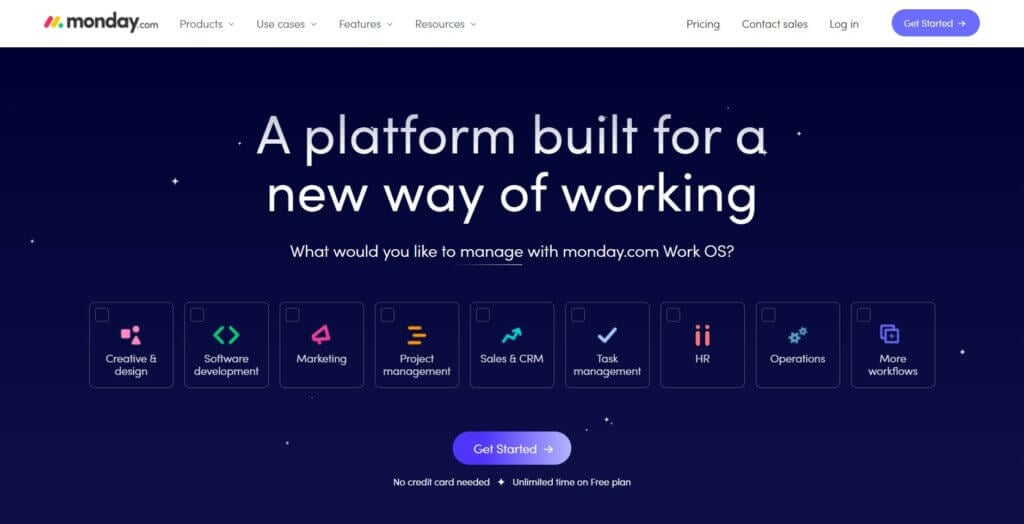
Monday.com's platform has evolved from a single project management tool to a multi-product Work OS with CRM, dev, and service management capabilities. Image credit: Monday.com
The IPO: From Tel Aviv to NASDAQ (June 2021)
On June 10, 2021, Monday.com went public on NASDAQ under the ticker symbol MNDY.
IPO Details:
- IPO Price: $155 per share (above the expected range of $125-$140)
- Shares Offered: 3.7 million shares
- Capital Raised: $574 million
- Valuation at IPO: $6.8 billion
- Opening Trade: $173.15 (+12% from IPO price)
- First Day Close: ~$178.87
- First Day Market Cap: ~$7.5 billion
The IPO was led by Goldman Sachs, and the strong pricing reflected Wall Street's appetite for high-growth SaaS companies in the post-pandemic era. Remote work had supercharged demand for collaboration tools, and Monday.com's growth metrics were exactly what public market investors wanted to see.
The IPO Day: An Anticlimax
Zinman shared a surprisingly human account of the biggest day in Monday.com's history:
"We go to NASDAQ, it's a beautiful ceremony. A few hours go by, I do a bunch of interviews on TV, newspapers, and it's like 4 or 5 PM and I look to my left — I see Roy doing interviews as well — and we're alone. Literally alone. Everybody left. We took off our blazers and walked to the hotel, like 25 minutes, with white t-shirts. I sat down on the bed and just stared at Netflix for 3 hours. That's the IPO day."
Eran Zinman on the anticlimax of IPO day
But the next morning made it real: "I opened my iPhone, opened the stocks app, and added Monday. I felt it throughout my whole body when I saw the Monday ticker inside. It just felt real."
The Zoom and Salesforce Play:
In one of the more interesting IPO footnotes, both Zoom and Salesforce purchased shares at the IPO price. When the stock popped 12% on day one, the two companies reportedly made approximately $23 million in profit — just from buying IPO shares and watching them appreciate on the first trading day.
It was a signal of strategic interest. Zoom and Salesforce weren't just making a quick trade — they were signaling potential future partnerships (or at least keeping a close eye on a company operating in adjacent markets).
Post-IPO Performance:
The stock continued climbing after the IPO, riding the broader tech bull market:
- Nov 9, 2021 (ATH): $444.70 per share — representing a 187% gain from IPO price
- Peak Market Cap: Over $20 billion
For a company that had started in a vacated apartment in Tel Aviv just nine years earlier, the numbers were staggering. Roy Mann and Eran Zinman had taken their dapulse internal tool from six customers and a vacated apartment to a $20 billion public company in under a decade.
The IPO also put Monday.com in rarefied Israeli tech company territory — alongside the likes of Wix (their corporate parent), CyberArk, and Check Point Software. Israel's "startup nation" reputation was well-earned, but Monday.com was proof that Israeli companies could scale into global SaaS leaders, not just get acquired early.
But the good times wouldn't last.
The Stock Crash: From $444 to $76 (2021-2026)
What goes up must come down — especially in tech stocks during a monetary tightening cycle.
Monday.com's stock followed the same trajectory as most high-growth SaaS companies after 2021:
- All-Time High (Nov 9, 2021): $444.70
- End of 2022: ~$120 (down 73% from ATH)
- Partial Recovery (2023-2024): Bounced between $150-$280
- Feb 9, 2026: $76.70 — a 22% drop in a single day
The February 2026 crash was triggered by two factors:
- Conservative FY2026 guidance: Monday.com guided for $1.452-$1.462 billion, representing just 18-19% growth — a significant deceleration from the 27% growth delivered in FY2025
- Withdrawn FY2027 targets: The company pulled its previously announced FY2027 guidance, spooking investors who interpreted it as a sign that management had lost confidence in their growth trajectory
The damage:
- 82% decline from all-time high
- 51% below the $155 IPO price
- Billions of dollars in shareholder value evaporated
- Employee stock-based compensation severely impaired
- Recruiting leverage diminished as equity packages lost value
The timeline of pain:
| Date | Price | Change | Event |
|---|---|---|---|
| Jun 10, 2021 | $155.00 | — | IPO |
| Nov 9, 2021 | $444.70 | +187% | All-time high |
| Dec 31, 2022 | ~$120 | -73% from ATH | Rate hike selloff |
| Mid-2024 | ~$220 | -51% from ATH | Partial recovery |
| Feb 9, 2026 | $76.70 | -82% from ATH | Guidance miss |
The stock price decline wasn't unique to Monday.com — Asana, ClickUp (private but down on secondary markets), and other work management companies faced similar headwinds. Rising interest rates made investors less willing to pay premium multiples for growth stocks, and the "return to office" narrative reduced some of the urgency around remote collaboration tools.
But Monday.com's decline was particularly brutal because of how high the stock had climbed during the 2021 euphoria. Investors who bought at the ATH were sitting on devastating losses.
Revenue Growth: The Billion-Dollar Milestone (2017-2026)
Despite the stock price turmoil, Monday.com's underlying business has been remarkably consistent. The company has grown revenue every single year since launch, crossing the billion-dollar threshold in FY2025.
Complete Revenue Timeline:
| Year | Revenue | YoY Growth |
|---|---|---|
| 2017 | ~$13M | ~202% |
| 2018 | ~$39M | ~200% |
| 2019 | $78.1M | ~100% |
| 2020 | $161.1M | ~106% |
| 2021 | $308.2M | ~91% |
| 2022 | $519.0M | ~68% |
| 2023 | $729.7M | ~41% |
| 2024 | $972.0M | ~33% |
| 2025 | $1.232B | ~27% |
| 2026 (guidance) | $1.452-$1.462B | ~18-19% |
What the numbers tell us:
Monday.com's growth has decelerated every year since 2018 — from 200%+ down to a projected 18-19% in 2026. That's the natural physics of SaaS at scale. It's much harder to grow 100% on a $1 billion base than on a $39 million base.
But the absolute numbers are impressive. Adding ~$260 million in net-new revenue in FY2025 (from $972M to $1.232B) is more revenue growth in a single year than the company's entire revenue base in 2021.
Competitive Revenue Positioning (FY2025):
| Company | Revenue | Status |
|---|---|---|
| Monday.com | $1.232B | Clear leader |
| Asana | ~$724M | #2 |
| ClickUp | ~$278M | #3 (estimated) |
| Notion | ~$250M+ | Private estimate |
Monday.com's revenue lead is commanding. It generates nearly as much as Asana and ClickUp combined. That scale advantage gives Monday.com more resources for R&D, sales, and — crucially — AI investment.
Path to profitability:
Monday.com's financial story isn't just about top-line growth. The company has also made significant progress on profitability. After years of operating losses driven by aggressive marketing spend, Monday.com achieved sustained positive operating cash flow and improving margins. The company's non-GAAP operating margin has expanded meaningfully — a sign that the "spend now, profit later" thesis that early critics questioned was, in fact, correct.
The shift from growth-at-all-costs to balanced growth-and-profitability mirrors a broader trend in SaaS. After the 2021-2022 valuation correction, public market investors started rewarding efficient growth over raw revenue growth. Monday.com's management team read the room and adjusted accordingly.
Customer Metrics: The Enterprise Push (FY2025)
Monday.com's customer base tells the story of a company successfully moving upmarket:
- ~245,000 total customers worldwide
- 60%+ of Fortune 500 are Monday.com customers
- 4,281 customers with $50K+ ARR (+34% YoY) — representing 41% of ARR
- 1,756 customers with $100K+ ARR (+45% YoY) — representing 28% of ARR
- 87 customers with $500K+ ARR (+74% YoY)
- Net dollar retention: 110% overall, 116% for $50K+ accounts
- Cash reserves: $1.62 billion
- Employees: ~2,508
- Gartner Magic Quadrant: Leader for Collaborative Work Management (2023 and 2024)
The $100K+ and $500K+ cohorts are growing fastest — 45% and 74% respectively. This is the multi-product strategy at work. When enterprises deploy monday CRM alongside monday work management, or add monday dev for engineering, the contract values multiply.
The 110% net dollar retention means the average customer is spending 10% more each year — a healthy expansion rate driven by seat growth and product cross-sell. For the $50K+ cohort, net retention hits 116%, indicating that large customers are expanding significantly.
The AI Pivot: Monday.com's AI-First Ambition (2023-2026)
Like every enterprise software company, Monday.com has declared itself "AI-first." But unlike many competitors whose AI features amount to a ChatGPT wrapper bolted onto existing functionality, Monday.com has invested in a more comprehensive AI strategy.
Phase 5: The AI-First Platform (2025+)
Monday.com's AI journey has unfolded across several product launches:
Monday Sidekick
The flagship AI feature — a context-aware digital worker that lives inside the Monday.com platform. Sidekick can:
- Process natural language requests and create automations
- Analyze board data and generate insights
- Draft updates, emails, and summaries
- Answer questions about projects and workflows
In FY2025, Monday Sidekick processed over 500,000 messages — a sign of meaningful adoption, though still early relative to Monday.com's 245,000 customer base.
Monday Magic
A feature that converts plain language descriptions into complete Monday.com solutions. Describe what you need — "I want a sales pipeline tracker with stages, probability scores, and automated follow-up reminders" — and Monday Magic generates the board, columns, automations, and dashboards.
Monday Vibe
Perhaps the most ambitious AI product. Monday Vibe is a "vibe coding" app builder that lets users create custom applications using natural language — no coding required.
Monday Vibe hit $1 million in annual recurring revenue in just 2.5 months, making it the fastest product launch in Monday.com's history. That speed-to-revenue suggests strong demand for low-code/no-code AI app builders among Monday.com's customer base.
The "vibe coding" concept — where users describe what they want and AI builds it — has emerged as one of the hottest trends in software development. Monday.com's execution here puts them in the same conversation as tools like Replit, Cursor, and Taskade Genesis.
Monday Agents
Autonomous AI agents designed for end-to-end workflow execution. Unlike Sidekick (which responds to human requests), Monday Agents can independently monitor conditions, trigger actions, and complete multi-step workflows without human intervention.
AI Workflows
Monday.com's automation engine executed 77 million AI-powered actions in FY2025 — automations that use AI to route, classify, prioritize, and process work items.
The AI question:
Zinman himself has a nuanced view of how AI will reshape Monday.com's business — and he sees it as opportunity, not threat:
"People use AI inside Monday and it's so easy for them. Instead of building a dedicated AI product, we just allowed our own customers to integrate AI into their own workflows. There will always be room for systems of record — nobody will be willing to put their future into an AI bot without having the ability to question what's going on, see dashboards, graphs, and all the data. Some of the work done by people will be done by AI, but the fundamental principle of why those tools exist is strong and will remain."
Eran Zinman on AI and the future of SaaS
On AI-driven pricing changes, he was direct: "A lot of SaaS tools have been very focused on seat count. Once you replace human labor with AI functionality, pricing should adjust and maybe be more focused on consumption in addition to seats."
Monday.com's AI features are impressive on paper, but they face a fundamental challenge: they're being layered onto a platform that wasn't designed for AI from the ground up. The Work OS was built as a visual, human-operated system — boards, columns, drag-and-drop. Retrofitting AI agents onto that foundation is a different challenge than building an AI-native platform from scratch.
This is the tension at the heart of every legacy SaaS company's AI strategy: how do you add intelligence to a product designed for manual workflows without breaking the experience that made customers love it in the first place?
The comparison to AI-native platforms is instructive. Tools like Taskade were designed from day one around the assumption that AI agents would be doing much of the work — the interface, data model, and automation engine were all built with AI execution as a first-class concept. Monday.com has to bridge a much wider gap: from a visual, human-operated board system to an AI-orchestrated execution platform.
That doesn't mean it can't be done. Salesforce successfully added Einstein AI to its CRM platform. Microsoft layered Copilot across Office 365. But both of those transitions took years and billions of dollars of investment — and neither is complete.
Monday.com's $1.62 billion in cash gives it the resources to make this transition. Whether it has the cultural willingness to cannibalize its own UI-centric experience in favor of AI-driven workflows is the more interesting question.
🏆 Monday.com vs. The Competition
Monday.com doesn't operate in a vacuum. The work management space is one of the most competitive categories in enterprise SaaS, with dozens of well-funded players fighting for the same customers.
The Competitive Landscape (2026):
| Company | Revenue | Founded | Positioning | Public/Private |
|---|---|---|---|---|
| Monday.com | $1.232B | 2012 | Work OS | Public (MNDY) |
| Asana | ~$724M | 2008 | Work Management | Public (ASAN) |
| ClickUp | ~$278M | 2017 | All-in-One | Private ($6B) |
| Notion | ~$250M+ | 2013 | Connected Workspace | Private ($11B) |
| Smartsheet | ~$1B+ | 2005 | Dynamic Work Platform | Public (SMAR) |
| Taskade | — | 2017 | AI-Native Workspace | Private |
vs. Asana:
Asana is Monday.com's most direct public market competitor. Both target similar customers, but Asana takes a more structured, opinionated approach to work management while Monday.com offers more customization. Monday.com's revenue advantage ($1.232B vs ~$724M) reflects its broader product portfolio and more aggressive go-to-market motion.
vs. ClickUp:
ClickUp follows the "one app to replace them all" philosophy — similar to Monday.com's Work OS vision but with even more built-in features (15+ views, native docs, chat, whiteboards). ClickUp has grown faster on a percentage basis but from a much smaller revenue base.
vs. Notion:
Notion carved out a different niche — databases, docs, and wikis rather than task management. But as Notion adds project management features and Monday.com adds documentation, the two platforms increasingly overlap.
vs. Taskade:
Taskade represents the AI-native approach to work management. While Monday.com is retrofitting AI onto an existing platform, Taskade was built from the ground up with AI agents, automation, and an app builder as core features. Taskade offers multiple project views (List, Board, Calendar, Table, Mind Map, Gantt, Org Chart), frontier models from top AI labs, and AI agents with built-in tools. For teams that want AI as the foundation rather than an add-on, Taskade represents a fundamentally different philosophy.
Gartner Recognition:
Monday.com has been named a Leader in the Gartner Magic Quadrant for Collaborative Work Management in both 2023 and 2024 — the highest recognition in the industry. This positioning validates Monday.com's strategy and gives enterprise buyers confidence in the platform.
Product Evolution Timeline
Looking at Monday.com's 14-year history, the product has gone through five distinct phases:
Phase 1 (2012-2019): Project Management Tool
The dapulse/Monday.com era. Visual boards, colorful statuses, basic automations. Competing with Asana, Trello, and Basecamp on ease of use and visual appeal.
Phase 2 (Feb 4, 2020): Work OS Repositioning
Monday 2.0 transforms the product from a fixed PM tool into a customizable platform. Open APIs, marketplace, advanced automations. The "Work OS" term enters the vocabulary.
Phase 3 (2022-2024): Multi-Product Expansion
monday CRM, monday dev, monday service — each new product extends the platform into new departments and use cases. Enterprise contracts grow. Fortune 500 penetration accelerates.
Phase 4 (2023-2024): Custom Infrastructure
mondayDB replaces third-party databases with custom-built data infrastructure. 5x faster queries. The company starts operating more like a platform company (think Salesforce) than a SaaS application company.
Phase 5 (2025+): AI-First Platform
Monday Sidekick, Magic, Vibe, and Agents represent the company's biggest bet yet. The question: can a platform built for human operators successfully transition to one where AI agents do the heavy lifting?
The Founders: Roy Mann and Eran Zinman
Roy Mann (Co-CEO)
Roy Mann has served as Co-CEO since Monday.com's founding in 2012. Before Monday.com, he was a senior technology leader at Wix.com, where he identified the internal communication problems that inspired the product. Mann previously co-founded SaveAnAlien.com and ntt.co.il, and holds a B.A. in Computer Science from IDC Herzliya.
Mann's approach to leadership has been shaped by his military intelligence background — a focus on clear communication, team visibility, and systematic execution. His quote about managing people rather than projects has become something of a company mantra.
Eran Zinman (Co-CEO)
Eran Zinman initially served as Monday.com's CTO before being promoted to Co-CEO in 2020 — a move that reflected the company's growing emphasis on product and engineering alongside go-to-market. Zinman was previously Head of R&D at Conduit Mobile (later Como), co-founded Othersay, and holds a B.Sc. in Electrical Engineering and Computer Science from Tel Aviv University.
The dual-CEO structure is unusual in tech but not unprecedented. Salesforce had Marc Benioff and Keith Block. Oracle had Safra Catz and Mark Hurd. The model works when the two leaders have complementary skills and a deep trust relationship — exactly what Mann and Zinman built during their military service.
Zinman described how the arrangement evolved naturally:
"When we started, Roy was the CEO and I was the CTO. About a week in, he told me, 'I want us to do everything together.' We'd meet investors and sometimes I would talk about the business and he would talk about technology, then the next meeting we'd switch roles. We got everybody confused. What's so special about him is that he has no ego — he wants to do what's best for the company, doesn't care about his own title."
The trust runs deep enough that to this day, the two co-CEOs walk home together almost every evening through Tel Aviv, spending hours talking through decisions, challenges, and the future of the company. It's an unconventional management practice — and it works.
Eran Kampf (Co-Founder)
The third co-founder, Eran Kampf, is no longer active at Monday.com. He now serves as VP of Engineering at Twingate, a zero-trust network access company. Kampf's departure is not uncommon in startup founding teams — not every co-founder stays through the IPO and beyond.
Controversies and Criticisms
No company reaches $1.2 billion in revenue without accumulating some controversies along the way.
Aggressive Marketing Spend
Spending 95% of revenue on sales and marketing drew criticism from SaaS analysts who questioned whether Monday.com was buying growth rather than earning it. The YouTube ad spend alone (722+ million views, mostly paid) made Monday.com ads nearly inescapable for anyone searching for productivity software.
The counterargument: it worked. Monday.com is the revenue leader in its category, and marketing efficiency has improved significantly — the company is now generating healthy operating margins as spending as a percentage of revenue has normalized.
Feature Bloat and Complexity
As Monday.com expanded from simple boards to a full Work OS with CRM, dev, service, AI agents, and custom databases, the product grew increasingly complex. New users face a steep learning curve, and critics argue the platform tries to do too much — sacrificing simplicity for comprehensiveness.
This is the classic all-in-one platform dilemma. Every new feature adds value for power users but complexity for newcomers. Monday.com's UX team has invested in onboarding flows, templates, and guided setups, but the challenge remains.
Pricing Complaints
Some customers have reported aggressive auto-upgrade billing practices, where account changes or seat additions trigger automatic plan upgrades with limited transparency. SaaS pricing is always a friction point, but Monday.com has drawn more criticism than most — likely because its customer base includes many small businesses that are price-sensitive.
Stock Price Decline
An 82% decline from ATH is painful for any public company. While the broader market contributed, Monday.com's conservative guidance and withdrawn targets amplified the sell-off. Employee morale and recruiting — both tied to stock-based compensation — are affected when shares trade below the IPO price.
BDS-Related Boycott Pressure
As an Israeli company, Monday.com has faced boycott, divestment, and sanctions (BDS) pressure from some advocacy groups. This has not materially impacted the business — Monday.com's customer base spans over 200 countries — but it's a factor that comes up in public discourse about the company.
YouTube Saturation
With over 722 million views on YouTube — the vast majority from paid ads — Monday.com became synonymous with aggressive pre-roll advertising. For a period in 2019-2021, it was nearly impossible to watch a productivity or business-related YouTube video without encountering a Monday.com ad. While effective at driving brand awareness, the saturation also generated backlash among users who felt the ads were inescapable and repetitive. Multiple Reddit threads and Twitter discussions emerged from users expressing frustration with the ad frequency — an ironic side effect of a campaign designed to make the brand unforgettable.
📊 Monday.com by the Numbers (FY2025)
A snapshot of where Monday.com stands today:
| Metric | Value |
|---|---|
| Annual Revenue | $1.232 billion |
| Revenue Growth | 27% YoY |
| Total Customers | ~245,000 |
| $50K+ ARR Customers | 4,281 (+34% YoY) |
| $100K+ ARR Customers | 1,756 (+45% YoY) |
| $500K+ ARR Customers | 87 (+74% YoY) |
| Net Dollar Retention | 110% (116% for $50K+) |
| Cash & Equivalents | $1.62 billion |
| Employees | ~2,508 |
| Stock Ticker | MNDY (NASDAQ) |
| IPO Price | $155/share |
| All-Time High | $444.70 (Nov 2021) |
| Fortune 500 Penetration | 60%+ |
| Gartner Position | Magic Quadrant Leader (CWM) |
| AI Sidekick Messages | 500K+ (FY2025) |
| AI Workflow Actions | 77 million (FY2025) |
| Monday Vibe Time to $1M ARR | 2.5 months |
🎙️ Inside the Co-CEO's Mind
In a revealing interview on 20VC, Eran Zinman offered a rare look inside the operating philosophy of Monday.com — from goal-setting to board management:
On goal-setting, Zinman's approach inverts conventional planning:
"Most people when they set goals, they try to figure out what they can do. I never think about it that way. I think about what I want to achieve, and then try to figure out a way to do it. When you build a plan bottom-up, people think about what they did last year with small adjustments. I always think about how we can do above and beyond — and that changes how people think about what can be done."
On board management, his number-one rule: never surprise the board. Monday.com built automated daily SMS reports into Big Brain that sent every board member the company's key performance metrics — every single day, whether the numbers were good or bad. By the time board meetings came, the numbers were already old news: "They knew the numbers better than I do. The board meeting was basically done on the numbers because they had full transparency."
On competition, Zinman has a visceral memory from his first startup: "Every time I saw a competitor, I felt this weird feeling in my stomach. I swore to myself I'm never going to do it again. I'm just going to focus on myself and my journey." It's advice he still follows — analyzing competitors rationally but refusing to let fear of competition drive strategy.
🔮 What's Next for Monday.com?
Monday.com faces a pivotal moment. The company has proven it can build a billion-dollar revenue business, acquire enterprise customers, and expand across multiple product categories. But the next chapter depends on answering a critical question: Can it become an AI-first platform?
The bull case:
- $1.62 billion in cash provides massive runway for AI investment
- 245,000 existing customers create a built-in distribution channel for AI features
- Multi-product strategy increases stickiness and expansion revenue
- Monday Vibe's rapid adoption ($1M ARR in 2.5 months) suggests customers want AI-native features
- mondayDB custom infrastructure provides a competitive moat
The bear case:
- Revenue growth is decelerating (from 200%+ to ~18-19% guidance)
- Stock is down 82% from ATH, limiting ability to use equity for acquisitions
- AI features are layered onto a legacy platform, not built AI-native
- Competition from AI-native platforms like Taskade that built agents and automation from day one
- Aggressive marketing spend culture may not translate to a product-led AI future
- Customer acquisition costs remain high relative to AI-native competitors
The FY2026 guidance ($1.452-$1.462B) suggests management expects growth to slow further. The withdrawn FY2027 targets add uncertainty. Monday.com isn't in trouble — it's a profitable, cash-rich business with a dominant market position — but the days of 100%+ growth are long gone.
The AI pivot is the company's best shot at reigniting growth. If Monday Sidekick, Magic, Vibe, and Agents gain real traction, they could drive expansion within the existing customer base and attract new customers looking for AI-powered work management. If the AI features feel bolted-on rather than native, customers may look elsewhere.
🐑 Before you go... Monday.com is adding AI piecemeal — Taskade was built AI-first with agents, automation, and an app builder from day one.
- 💬 AI Chat: Ask questions and get instant answers about your projects, tasks, and team activity — all powered by your Workspace DNA.
- 🤖 AI Agents: Unlike Monday.com's piecemeal approach, Taskade AI Agents can build entire custom apps from a single prompt — no configuration needed. Just describe your workflow and watch it come to life through vibe coding.
- ✏️ AI Assistant: Generate project plans, meeting notes, and task breakdowns with AI-powered templates tailored to your team's work patterns.
- 🔄 Workflow Generator: Build intelligent automations that connect your apps, tools, and data — powered by your workspace memory and 100+ integrations.
Sign up today and experience the future of work management — where living software adapts to your team, not the other way around.
🔗 Resources
- Monday.com Official Website
- Monday.com Investor Relations
- Monday.com Blog
- Monday.com Help Center
- Monday.com Developers
- Monday.com Template Center
- MNDY Stock — NASDAQ
- Taskade vs Monday.com Comparison
- Free Monday Magic Alternative
- Best Monday.com Alternatives 2026
💬 Frequently Asked Questions About Monday.com
What is Monday.com used for?
Monday.com is a Work OS (work operating system) used for project management, team collaboration, CRM, software development tracking, and IT service management. Teams use it to create custom workflows, track tasks, automate repetitive processes, and visualize work across departments. With four core products — monday work management, monday CRM, monday dev, and monday service — the platform serves marketing, sales, engineering, operations, and HR teams. For teams seeking an AI-native alternative with autonomous agents and multiple project views, Taskade offers a different approach to work management.
Who are Monday.com's co-founders?
Monday.com was co-founded in 2012 by Roy Mann (Co-CEO), Eran Zinman (Co-CEO), and Eran Kampf (no longer active, now VP of Engineering at Twingate). Mann and Zinman met in IDF Unit 9900 and later worked together at Wix.com, where they identified the internal communication challenges that inspired the product. Mann holds a B.A. in Computer Science from IDC Herzliya; Zinman holds a B.Sc. in Electrical Engineering and CS from Tel Aviv University.
How much revenue does Monday.com generate?
Monday.com generated $1.232 billion in FY2025 revenue, representing 27% year-over-year growth. The company has guided for $1.452-$1.462 billion in FY2026 (18-19% growth). Since its commercial launch, Monday.com has grown from $13 million (2017) to over $1.2 billion in eight years, making it the revenue leader in the project management and work management category — ahead of Asana ($724M) and ClickUp (~$278M estimated).
What is Monday.com's stock price history?
Monday.com went public on NASDAQ (ticker: MNDY) on June 10, 2021 at $155 per share, raising $574 million. The stock reached an all-time high of $444.70 on November 9, 2021. However, the stock has since declined approximately 82% from its ATH, falling to around $76.70 on February 9, 2026, after the company issued conservative FY2026 guidance and withdrew its FY2027 targets. The stock currently trades roughly 51% below the IPO price.
What is the difference between Monday.com and Asana?
Monday.com and Asana both offer project management capabilities but take different approaches. Monday.com positions itself as a "Work OS" — an open, customizable platform with building blocks for any workflow, plus dedicated products for CRM, dev, and service management. Asana focuses more narrowly on task and project management with a cleaner, more structured interface. Monday.com is more customizable and visual; Asana is more opinionated and streamlined. Monday.com has higher revenue ($1.232B vs ~$724M) and broader product surface area. For teams wanting AI-first work management with agents that execute autonomously, Taskade takes a fundamentally different approach.
What is Monday.com's pricing?
Monday.com offers tiered pricing based on seat count (minimum 3 seats on paid plans): Individual (Free, up to 2 seats), Basic ($9/seat/month), Standard ($12/seat/month), Pro ($19/seat/month), and Enterprise (custom pricing). Additional products like monday CRM and monday dev have separate pricing. AI features are being rolled into existing plans. For teams comparing Monday.com pricing alternatives, Taskade offers competitive pricing with AI agents included by default.
Is Monday.com worth using in 2026?
Monday.com remains a strong choice for teams that need a highly customizable, visual work management platform with enterprise-grade features. Its strengths include broad product portfolio (work management + CRM + dev + service), Fortune 500 adoption, Gartner Magic Quadrant Leadership, and growing AI capabilities. Potential concerns include pricing complexity, steep learning curve for advanced features, and AI features that are being layered onto a legacy platform rather than built AI-native. Teams seeking a simpler, AI-native alternative should evaluate Taskade, which was built from the ground up with AI agents and multiple project views.
What are Monday.com's AI features?
Monday.com's AI strategy includes four main products: Monday Sidekick (context-aware AI digital worker, 500K+ messages processed), Monday Magic (plain language to complete workflows), Monday Vibe (vibe coding app builder, $1M ARR in 2.5 months), and Monday Agents (autonomous AI for end-to-end workflows). The platform also executed 77 million AI-powered workflow actions in FY2025. These features represent Monday.com's pivot toward an AI-first platform, though critics note they are being added incrementally to an existing platform rather than built AI-native.
How many employees does Monday.com have?
As of FY2025, Monday.com employs approximately 2,508 people worldwide. The company is headquartered in Tel Aviv, Israel, with offices in New York, London, Sydney, Tokyo, and other major cities. The team has grown from the original three co-founders in a vacated Tel Aviv apartment to a global workforce spanning R&D, sales, marketing, customer success, and operations.
What was Monday.com originally called?
Monday.com was originally called dapulse from its founding in 2012 until its rebrand on November 13, 2017. The name was changed because co-founder Roy Mann said dapulse "sounded like a rapper rather than a cloud software company." The Monday.com name was chosen because Monday is the universal start of the work week, and the premium domain was secured through Name Experts. At the time of the rebrand, the company had 18,000 paying customers.
🧬 Build Your Own Work Management System
While Monday.com excels at customizable boards and enterprise workflow management, Taskade Genesis takes a fundamentally different approach: instead of assembling boards and columns, build custom intelligent apps from a single prompt.
Why teams are looking beyond traditional Work OS platforms:
- Vibe Coding: Describe your ideal workflow in plain language and watch Taskade build the app instantly — no board setup, custom fields, or column configuration required.
- Workspace DNA: Your projects become living memory. AI Agents learn from your work patterns, team communication, and project history to make intelligent decisions.
- Living Software: Unlike static boards that require manual updates, Taskade apps evolve with your team — adapting workflows, automating routine tasks, and suggesting optimizations based on actual usage.
- AI Agents: Train autonomous agents on your workspace data to handle research, content creation, project planning, and workflow orchestration — going beyond Monday Sidekick's request-response model to true autonomous execution.
- Multiple Project Views: List, Board, Calendar, Table, Mind Map, Gantt, and Org Chart — all AI-enhanced and interconnected.
Explore Taskade's intelligent work platform:
- Browse the Community Gallery to see custom apps built by teams worldwide
- Start with proven Templates and customize them with AI
- Connect your tools through 100+ Integrations with intelligent automation
- Compare Taskade vs Monday.com to see the difference